Categories
W1 World

Bohemian Grove and Elite Club Unmasked: Where the World’s Most Powerful Vanish from View

Introduction: Power Thrives in Secrecy

Each July, in a remote redwood forest in Monterey County, Northern California, some of the most influential men on Earth disappear behind guarded gates and armed checkpoints. This annual gathering, known as Bohemian Grove, has for over 150 years hosted presidents, CEOs, bankers, military brass, and global influencers for a two-week retreat far from the prying eyes of the public.

What happens there—amid towering trees and torch-lit rituals—remains largely a mystery. Officially, it’s a celebration of arts, music, and camaraderie. Unofficially, it’s rumored to be a place where world-shaping policies are born, future leaders are groomed, and strange rites blur the line between symbolic theater and occult performance.

From whispered tales of the Cremation of Care ceremony to hidden recordings and alleged deals brokered in private cabins, Bohemian Grove occupies a unique—and controversial—place in America’s power structure. Is it simply an elite summer camp, or is something deeper at work?

Boho Club – From Artists to Power Brokers

The Bohemian Club was founded in San Francisco in 1872, originally as a gathering for journalists, actors, writers, and artists. The name “Bohemian” reflected a spirit of counterculture and intellectual freedom. But by the late 19th century, the club had evolved into something much different—a place where wealth and power quietly took the reins.

As the years went by, the club began attracting America’s industrial and political elite. Railroad tycoons, Wall Street financiers, and future presidents joined its ranks. What began as a fraternity of free thinkers became a sanctum for global decision-makers, where art and influence fused into something more potent.

The club eventually purchased a 2,700-acre redwood grove near Monte Rio, California, and began hosting their annual July encampment there. From that point on, the Bohemian Grove became a meeting ground where policy, power, and secrecy intertwined.

Cremation of Care – Theater or Occult Ritual?

Perhaps the most infamous aspect of Bohemian Grove is the Cremation of Care, a nighttime ceremony performed at the start of each retreat. In it, robed men gather before a 40-foot stone owl—the club’s symbol—and conduct a mock sacrifice to rid themselves of “worldly concern.”

Participants burn an effigy named “Dull Care” in a fire-lit pageant involving incantations, music, and ritual drama. While club members describe it as harmless performance art—designed to release stress and open the way for uninhibited bonding—others see something more sinister.

The secrecy and symbolism have sparked allegations of paganism, occult worship, and even satanic undertones. In 2000, right-wing activist Alex Jones infiltrated the grove and filmed the Cremation of Care ceremony, fueling public suspicion and viral conspiracy theories.

Whether metaphor or mysticism, the ceremony is undeniably strange—and its symbolic abandonment of “care” by the powerful has become an unsettling metaphor for elite detachment from real-world consequences.

Presidents, Power Plays, and Locked Gates

Bohemian Grove’s guest list reads like a who’s who of American political history. Richard Nixon, Ronald Reagan, Dwight Eisenhower, and both Bush presidents attended. Nixon once called it “the most faggy goddamn thing you could imagine” but admitted its influence. Reagan and Nixon are said to have cemented their political alliance at the Grove in the 1960s.

Members of Congress, corporate titans, military generals, and global financiers also attend—often relaxing in the nude, drinking, and participating in high-end musical performances and mock plays. But amid the revelry, many believe serious conversations are taking place. While official club policy prohibits “business talk” during the retreat, numerous accounts suggest otherwise.

One of the most notable examples: the Manhattan Project, which some historians claim was first informally discussed at Bohemian Grove in the early 1940s. This pattern of “relaxation alongside influence” raises questions: How much world policy is quietly drafted here? Who gets access to this space? And who is left out?

Whistleblowers, Leaks, the Wall of Silence

Despite the Grove’s tight security, some details have emerged—leaked guest lists, whistleblower accounts, and investigative reports have shed light on what goes on beneath the redwoods.

Former attendees and staff have described a mix of opulent comfort, bizarre performances, drunken camaraderie, and pointed exclusion of women (who are not allowed full membership). Camps within the grove are often divided by status, with names like Mandalay, Caveman, and Owl’s Nest, each with their own culture and hierarchy.

Those who break the code of silence often face backlash. In addition to the Alex Jones footage, journalists like Philip Weiss (who infiltrated the Grove for Spy Magazine) and Jon Ronson (Them) have published first-hand accounts of the surreal experience.

Common themes emerge: ritualistic behavior, excessive alcohol consumption, and a strong sense of tribal identity among the ultra-elite. Yet, the Grove remains largely untouched by scandal or reform. Its private land, legal protections, and connections ensure a cloak of invulnerability few other institutions enjoy.

The Debate – Conspiracy or Consequence?

Bohemian Grove sits at the intersection of fact, speculation, and cultural anxiety. Is it truly a center of dark ritual and backroom governance—or just an eccentric vacation for powerful men?

For conspiracy theorists, the Grove is a symbol of the global elite’s unaccountable rule—a shadowy gathering where decisions are made without input from the public. The secrecy, the symbolism, and the guest list seem to confirm their worst fears.

For skeptics, it’s just an elitist version of a fraternity reunion, where political theater and ritualized bonding reinforce existing relationships but don’t necessarily determine the fate of the world.

Yet perhaps the truth lies somewhere in between. Even if no specific policies are signed, the relationships and understandings formed in such spaces are real. Trust, loyalty, and consensus—especially among those in power—are often built not in public forums, but in private rituals, shared myths, and secluded forests.

Conclusion: The Hidden Mirror of Power

Bohemian Grove remains a powerful symbol of secrecy, privilege, and ritual in modern political culture. Whether viewed as harmless tradition or a forum for elite consolidation, its existence forces us to ask uncomfortable questions about access, transparency, and who really shapes the future.

In an age where surveillance is constant and secrets are rare, Bohemian Grove stands out—not for what we know, but for what we’re not allowed to know. Its redwood canopy may hide laughter, theater, and old friendships—or it may conceal the quiet forging of tomorrow’s world order.

Either way, Bohemian Grove is not just a gathering. It is a ritual in its own right—a reflection of how power celebrates, shields, and sustains itself, out of sight, and far from accountability. In the shadows of the redwoods, the world’s most powerful men don’t just retreat from view—they remind us that true power often thrives where no one is watching.

Categories
W1 World

Eternal Egypt: How Pharaohs Engineered Immortality Through Tombs, Rituals, and Magic

Introduction: The Pharaohs’ Eternal Quest

The pharaohs of ancient Egypt were not merely kings—they were living gods, intermediaries between the divine and the mortal. But even gods, in human form, had to face death. What sets the pharaohs apart in human history is their extraordinary and sophisticated obsession with conquering mortality. Their belief in an eternal afterlife was not symbolic—it was literal, and they planned for it with staggering precision.

From the awe-inspiring Step Pyramid of Saqqara built for Djoser—the earliest colossal stone structure in history—to the iconic tomb of Tutankhamun, their quest for immortality gave rise to some of the most astonishing funerary practices ever devised. Blending spirituality, architecture, science, and magic, the Egyptians created a civilization where death was not an end, but the beginning of eternity.

Architecture – Building the Path to Eternity

In ancient Egypt, a pharaoh’s life was a preparation for the afterlife, and his tomb was his eternal vessel. The grandeur of Egyptian tomb architecture reflected not just status, but deeply held spiritual beliefs. The concept of “ma’at”—cosmic order—demanded balance and perfection in all things, especially in death.

The Step Pyramid of Saqqara, constructed around 2667 BCE for King Djoser, was the first monumental stone building ever built. Designed by the high priest and architect Imhotep, the structure broke from tradition—replacing low mastabas with a stacked, stairway-to-heaven formation. This architectural innovation symbolized a ladder to the gods, literally helping the pharaoh ascend to the heavens.

Later pharaohs, like Khufu, Khafre, and Menkaure, built the Great Pyramids of Giza, further refining this celestial journey. These structures weren’t just tombs—they were mathematical, spiritual, and symbolic engines, aligned with stars and cardinal points to help guide the pharaoh’s soul, or “ka,” to the afterlife.

Preserved – Mummification as Science, Ritual

For the pharaoh to live forever, his physical body had to be preserved. Mummification was both a sacred rite and a highly developed proto-scientific process. It took 70 days to complete and involved removing internal organs, drying the body with natron salt, and wrapping it in layers of linen—each stage accompanied by ritual prayers and incantations.

The body was not just a shell; it was essential for the soul’s return. The “ba” (spiritual personality) and “ka” (life force) could only reunite with the deceased if the body remained intact. Pharaohs were buried with elaborate funerary masks, amulets like the Eye of Horus, and magical items to protect their soul and guide them through the dangers of the underworld.

Recent discoveries, including X-ray scans and CT imaging of mummies, reveal the advanced anatomical understanding of Egyptian embalmers. For example, Tutankhamun’s mummification shows signs of chemical experimentation, possibly indicating attempts to preserve him more effectively—though these may have backfired, causing partial decomposition.

The Book of the Dead – Manual for the Afterlife

The journey through the afterlife was treacherous, filled with monsters, judgment, and divine tests. To navigate this perilous path, pharaohs were buried with The Book of the Dead, a collection of magical spells, hymns, and instructions compiled over centuries.

This “book” was not a single volume but a customized scroll placed in tombs, written in hieroglyphics on papyrus or linen. It served as a spiritual guidebook, helping the pharaoh overcome obstacles in the Duat (underworld) and pass the Weighing of the Heart—a divine judgment overseen by Osiris.

If the heart was lighter than the feather of Ma’at, the soul would achieve eternal life; if heavier, it would be devoured by the monstrous Ammit. Modern translations reveal that these texts also contain philosophical wisdom, not just superstition—reflecting a complex vision of morality, truth, and cosmic justice.

Hidden Tombs – Secret Traps and Royal Curses

Egyptian tombs were not only sacred spaces but fortresses of secrecy, designed to outwit grave robbers and preserve the pharaoh’s journey for eternity. The Valley of the Kings, the royal necropolis of the New Kingdom, is riddled with hidden chambers, decoy paths, and symbolic architecture.

Perhaps the most famous tomb is that of Tutankhamun, discovered by Howard Carter in 1922. Unlike most royal tombs, it was relatively intact. Its golden mask, nested sarcophagi, and thousands of artifacts stunned the world and offered unmatched insight into pharaonic burial rituals.

Tutankhamun’s tomb also sparked stories of curses—with mysterious deaths of several expedition members giving rise to the “Curse of the Pharaohs.” Though most scientists dismiss these as coincidence, some speculate on potential microbial dangers from sealed tombs or psychological stress triggered by the intense experience of such discoveries.

Modern Discoveries – Science vs Spirituality

The 21st century has brought a new golden age of Egyptology. With ground-penetrating radar, 3D scanning, and DNA analysis, researchers are uncovering lost tombs and rewriting what we know about ancient beliefs. Projects at Saqqara, Abydos, and the Valley of the Kings continue to reveal hidden chambers and cryptic inscriptions.

In 2020, a cache of over 100 sealed coffins was found near Saqqara—some untouched for 2,500 years. In 2023, a “digital unwrapping” of Amenhotep I’s mummy gave us the first 3D look at a pharaoh’s burial without physically disturbing it. These advances show that ancient rituals and modern science can coexist, illuminating not just how the pharaohs lived, but how they died—and what they believed came after.

Some researchers now believe there are still undiscovered tombs, possibly belonging to Nefertiti or even Imhotep, hiding behind false walls or under desert sands. Every new find brings us closer to understanding how deeply the Egyptians believed in the permanence of the soul.

Conclusion: When Death Was Just Beginning

For the pharaohs of ancient Egypt, death was not a final curtain—it was an initiation into a divine eternity. Through architecture, ritual, texts, and preservation, they built an elaborate system designed to cheat death and live forever. They didn’t just hope for immortality—they engineered it. From Djoser’s revolutionary step pyramid to the magical incantations buried with Tutankhamun, every element of their civilization served a single goal: to defy time.

And remarkably, in many ways, they succeeded. Thousands of years later, we still speak their names, study their bodies, marvel at their works, and ponder the mysteries they left behind. The pharaohs are not just remembered—they are still present. In doing so, they achieved exactly what they set out to do: cheat death and become eternal.

Categories
W1 World

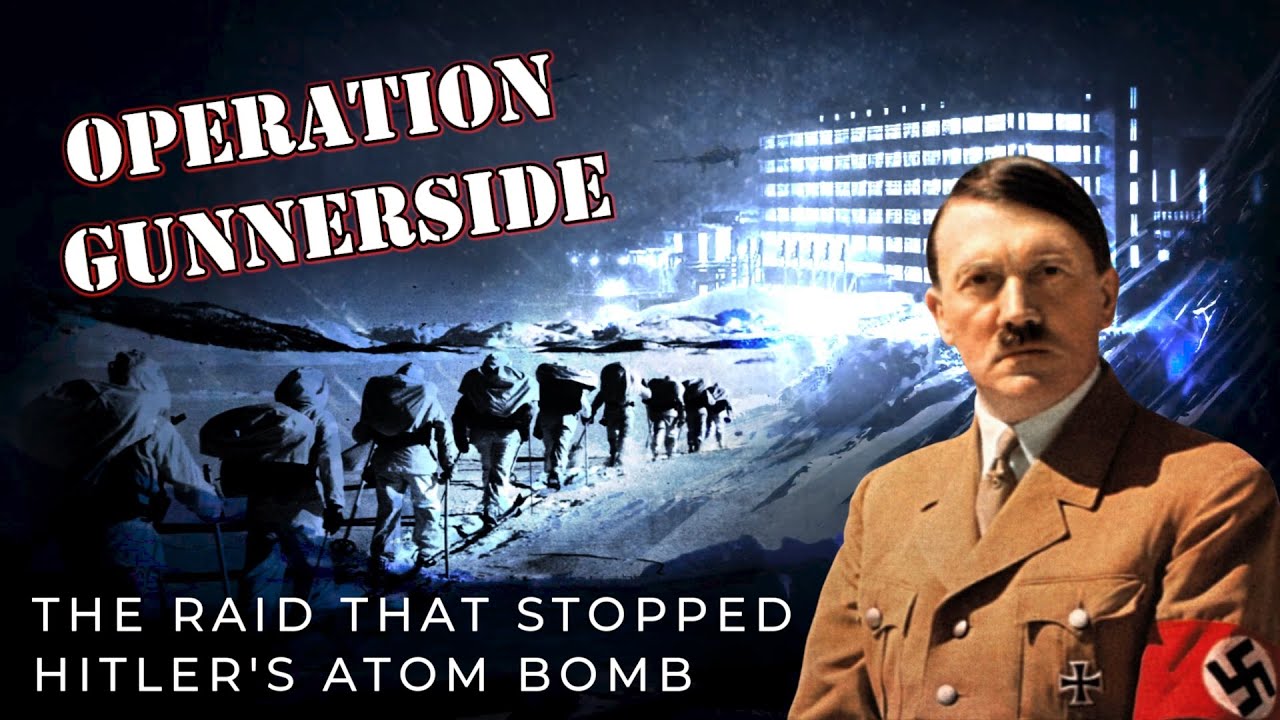
Operation Gunnerside: The Daring Sabotage Mission That Crippled Hitler’s Atomic Bomb Quest

Introduction: Six Men on Skis Changed History

In the frozen wilderness of Nazi-occupied Norway, six men on skis carried not just explosives, but the fate of the free world. In what the CIA would later call “the most successful act of sabotage in World War II,” a small team of elite Norwegian commandos infiltrated the heavily guarded Vemork heavy water facility in 1943. Their mission: to destroy the heart of Nazi Germany’s atomic bomb program.

Codenamed Operation Gunnerside, this daring mission combined meticulous British planning, local resistance bravery, and immense physical endurance. The raid succeeded where larger military offensives might have failed—by slipping past Nazi patrols, scaling cliffs in deep snow, and planting explosives under the enemy’s nose. The result was a crushing blow to Hitler’s nuclear ambitions—and a critical edge for the Allies in the race for the atomic bomb.

Nazi Nuclear Threat: Why Heavy Water Worked

During the early years of WWII, both Allied and Axis scientists were racing to unlock the secrets of nuclear fission. Germany, with its rich scientific tradition and access to resources, was seen as a frontrunner. But building an atomic bomb requires more than brilliant minds—it demands key materials, including deuterium oxide, better known as heavy water.

Heavy water is essential for moderating nuclear reactions in certain types of reactors, including the design Nazi scientists were pursuing. At the time, the only significant source of heavy water in Europe was the Vemork plant, perched high above a river gorge in southern Norway, and operated by the Norsk Hydro company. Once Germany invaded Norway in 1940, the facility fell into Nazi hands, and production of heavy water began to rise sharply.

British intelligence, alarmed by the prospect of a Nazi atomic weapon, prioritized the destruction of Vemork. Winston Churchill himself approved the mission. The question was how to do it—conventional bombing was too risky, and precision was impossible from the air due to the plant’s mountainous location. The answer lay in sabotage from the ground.

Covert Plan and Skilled Elite Commando Team

Enter the Norwegian resistance—a network of patriots working in secret to undermine Nazi control. From this network, the British Special Operations Executive (SOE) handpicked a group of skilled, physically hardened men familiar with the terrain. They would parachute into Norway, endure the harsh winter, and carry out the attack from behind enemy lines.

Operation Gunnerside was actually the second phase of the plan. An earlier attempt, Operation Freshman, had ended in tragedy when two gliders crashed, killing or capturing everyone on board. The survivors were executed by the Gestapo under Hitler’s infamous Commando Order. The pressure on Gunnerside was enormous—failure was not an option.

The Gunnerside team, led by Joachim Rønneberg, a 23-year-old Norwegian with exceptional survival skills, trained extensively in Scotland before deploying. They joined an advance party already in Norway and spent weeks skiing across frozen plateaus and hiding in mountain cabins, surviving on meager rations while evading German patrols. The terrain was so remote and treacherous that the operation’s success depended as much on endurance and secrecy as on explosives.

Infiltration and Sabotage: The Night of the Raid

On the night of February 27, 1943, after weeks of preparation, the commandos made their final approach to the Vemork facility. The plant sat atop a steep gorge, accessible only by a narrow bridge and surrounded by minefields and guards. Rather than take the obvious route, the saboteurs descended into the icy ravine and scaled the sheer cliff on the other side—a feat of near-superhuman strength and stealth.

Once inside the compound, they located the electrolysis chambers where heavy water was produced. In complete silence, they placed plastic explosives with delayed fuses and then escaped into the night. The raid lasted only 30 minutes, but the explosion destroyed the critical machinery and over 500 kilograms of heavy water, setting the Nazi atomic program back by months—if not years.

Miraculously, not a single shot was fired, and not one saboteur was captured or killed. They melted back into the snowy wilderness and evaded German search parties for days, ultimately rejoining the resistance or escaping to Sweden.

The Long-Term Impact: Delaying Hitler’s Bomb

The destruction of the Vemork plant dealt a devastating blow to German hopes for a nuclear weapon. Though the Nazis attempted to resume production, further sabotage and Allied bombing raids continued to disrupt operations. Eventually, in 1944, the Germans attempted to transport the remaining heavy water to Germany—but Norwegian resistance fighters once again intervened, sinking the ferry “Hydro” on Lake Tinn, killing the cargo and ensuring none of it reached the Reich.

Historians continue to debate just how close Hitler was to building an atomic bomb. Some argue the German program was disorganized and would have failed regardless; others believe that without the Gunnerside raid, the war—and the nuclear age—might have unfolded very differently.

What is clear is that Operation Gunnerside bought the Allies precious time. It allowed the Manhattan Project, already underway in the United States, to surge ahead without fear of German competition. When the first atomic bombs were dropped in 1945, Hitler’s dream of a nuclear weapon was long dead—thanks in part to six men on skis.

A Remarkable Legacy of Heroism and Precision

Operation Gunnerside has become a symbol of resistance, courage, and strategic excellence. The bravery of the Norwegian saboteurs has been honored in books, documentaries, and films, including “The Heroes of Telemark” (1965). But beyond the dramatization lies a deeper truth: this was a mission defined by preparation, precision, and minimal force—everything special operations aspire to be.

In a world now shaped by nuclear weapons, it’s sobering to remember how close those weapons came to being developed under the Nazis. Had Operation Gunnerside failed—had even one element gone wrong—history might have looked very different.

The mission’s success wasn’t just about blowing up machinery; it was about shaping the future of warfare and saving millions of lives. Even the CIA, in a 1990s retrospective, declared Gunnerside “the most successful act of sabotage in all of WWII,” a rare acknowledgment from an agency steeped in covert operations.

Conclusion: When Sabotage Changed the World

Operation Gunnerside stands as one of the clearest examples of how a small group of determined individuals can alter the course of history. Armed with little more than courage, cold weather gear, and carefully placed explosives, the Norwegian saboteurs struck a blow not only to Nazi science but to the very foundation of Hitler’s war strategy. Finally, their mission was not just about halting a bomb—it was about protecting humanity from the unthinkable.

In doing so, they demonstrated that strategy, sacrifice, and stealth could be more powerful than brute force. They didn’t just destroy a plant—they destroyed a future that could have ended in atomic fire across Europe. Today, the ruins of Vemork stand as a museum and a testament to this extraordinary mission. And the story of Operation Gunnerside remains a reminder that history can pivot on the silent footsteps of heroes in the snow.

Categories
W1 World

Battle of Jutland: The Bloody Naval Clash That Silently and Strategically Won World War I

Introduction: Greatest Naval Clash

The Battle of Jutland, fought from May 31 to June 1, 1916, was the largest and most dramatic naval engagement of the First World War. Involving 250 warships and over 100,000 sailors, it marked the first—and only—clash between the British Royal Navy’s Grand Fleet and the German High Seas Fleet. The battle unfolded in the icy waters of the North Sea, off the coast of Denmark’s Jutland Peninsula.

Initially perceived as a strategic blunder for the British, Jutland became the subject of controversy and public outcry. The Royal Navy, long hailed as the world’s greatest maritime force, suffered unexpectedly heavy losses in ships and sailors, leading many to question its competence and preparedness. Yet beneath the surface of disappointment lies a profound reality: Jutland was not the tactical victory Germany hoped for. It was a strategic triumph for Britain and the Allies, one that secured control of the seas and helped seal the fate of the German Empire.

A Battle Born of Blockade, Ambition

By 1916, Britain had imposed a devastating naval blockade on Germany, choking off critical supplies of food, fuel, and raw materials. Germany, a growing industrial power with limited access to overseas colonies, was highly dependent on imported goods. The blockade’s effects were crippling—not just economically, but socially and politically—causing widespread hardship, malnutrition, and unrest among the German population.

To break the blockade and regain initiative, the German Imperial Navy developed an ambitious plan. Admiral Reinhard Scheer, newly appointed commander of the High Seas Fleet, sought to isolate and destroy segments of the Royal Navy by using his faster, more modern battlecruisers under Vice-Admiral Franz von Hipper as bait. His goal was to lure the British out, inflict enough damage to weaken their naval superiority, and shift the balance of power in the North Sea.

However, British naval intelligence had a secret weapon—Room 40, a top-secret codebreaking unit within the Admiralty. They intercepted and deciphered German plans, allowing Admiral Sir John Jellicoe, commander of the Grand Fleet, and Vice-Admiral David Beatty, in charge of the Battlecruiser Fleet, to prepare an intercepting maneuver. The result was a fateful convergence of two massive fleets on the open seas.

The Clash Off the Coast of Denmark

The fleets met in the late afternoon on May 31, 1916, under grey skies and increasingly poor visibility. Initial contact was made between Beatty’s six battlecruisers and Hipper’s five, igniting a fierce duel. Within minutes, British ships began taking devastating hits. HMS Indefatigable exploded in a massive blast, sinking almost instantly and taking over a thousand crewmen with her. Soon after, HMS Queen Mary suffered a similar fate. These losses stunned observers and demoralized crews, raising alarms throughout the fleet.

Despite superior numbers, the British suffered from serious shortcomings. The early engagements revealed deep flaws in British naval doctrine, including poor ship design, lack of armor, and dangerous ammunition handling practices. Nonetheless, Beatty succeeded in drawing the Germans toward the main body of the Grand Fleet, where Admiral Jellicoe was poised for a major confrontation.

As night approached, Jellicoe executed a masterful tactical maneuver known as “crossing the T,” placing his battleships in an ideal position to unleash devastating broadsides against the oncoming German fleet. But poor visibility, evasive German tactics, and cautious decision-making limited the full impact of Jellicoe’s advantage.

The Hidden Causes of British Losses

Though the Royal Navy outnumbered the Germans in ships and guns, they lost more vessels—14 ships to Germany’s 11—and suffered over 6,000 casualties, more than twice the German toll. These figures shocked the British public and fueled political criticism. Yet recent research, including undersea exploration of the wrecks and analysis of wartime documents, offers deeper insight into why the Royal Navy suffered so heavily.

Outdated Tactical Doctrine: Many British admirals clung to 19th-century tactics despite the advent of modern naval technologies like radio communications, centralized fire control, and armor-piercing shells. Commanders lacked real-time situational awareness, leading to delays in action and missed opportunities to deliver decisive blows.

Design Flaws in British Ships: British battlecruisers were designed to prioritize speed over armor, a dangerous tradeoff. Their thin protection, especially around magazines and turrets, made them highly vulnerable to shellfire. When German shells hit, explosions often tore through entire decks, triggering catastrophic detonations.

Lax Ammunition Protocols: In pursuit of higher firing rates, British crews commonly stored extra powder charges outside of armored magazines. This reckless practice saved seconds but cost lives—once ignited by enemy shells, these charges amplified internal explosions, turning ships into floating infernos.

Meanwhile, German ships, though fewer in number, had superior armor distribution, compartmentalization, and disciplined handling of ammunition. Their heavy shells were also more effective at penetrating British defenses, contributing to the disparity in damage.

Tactical Stalemate, Strategic Victory

By the end of the night, the High Seas Fleet had managed to retreat under cover of darkness, avoiding total destruction. Superficially, it looked like a draw—or even a German win. However, this interpretation overlooks the strategic consequences of the battle.

After Jutland, the German navy never again seriously challenged the Royal Navy in surface combat. The High Seas Fleet remained largely confined to port for the remainder of the war, effectively ceding control of the North Sea to Britain. The Royal Navy, despite its losses, continued to enforce the blockade, tightening the economic noose around Germany.

Admiral Jellicoe was criticized by some for being overly cautious, but his restraint ensured that the British fleet—upon which the Empire’s security depended—remained intact. As Winston Churchill famously said, Jellicoe was “the only man on either side who could lose the war in an afternoon.” He chose prudence over glory—and in doing so, helped preserve the path to eventual victory.

Naval Aftermath and Transformation

In the months following Jutland, both navies undertook massive overhauls. The Royal Navy reevaluated its doctrines, improved ship designs, and implemented stricter ammunition safety procedures. Lessons from Jutland directly influenced the construction of newer battleship classes such as the Revenge-class and later the Queen Elizabeth-class, which balanced firepower, armor, and speed more effectively.

For Germany, the battle marked a turning point. Having failed to destroy the Grand Fleet, they shifted focus toward unrestricted submarine warfare—a strategy that would provoke neutral nations, including the United States, and help tip the balance of the war.

Moreover, the psychological toll on the German fleet was immense. Morale declined steadily, and by late 1918, widespread mutinies among German sailors broke out, playing a key role in the collapse of the German monarchy and the onset of revolution.

Footage, Shipwrecks, Living Memory

In the modern era, marine archaeologists have revisited the Jutland battlefield beneath the sea. The wrecks of HMS Invincible, Queen Mary, and several others lie undisturbed in deep water, serving as haunting underwater memorials. Remotely operated vehicles (ROVs) and sonar scans have revealed twisted hulls, collapsed gun turrets, and the scars of explosions that ended thousands of lives in an instant.

Previously classified naval records, survivor memoirs, and rare film footage now allow historians to reconstruct the battle with unprecedented accuracy. This new understanding reframes Jutland not as a failure, but as a critical juncture in the war’s outcome—a pyrrhic tactical loss that delivered a strategic masterstroke.

Conclusion: Victory Beneath the Loss

The Battle of Jutland was not the resounding triumph the British people had hoped for, nor was it the crushing defeat the Germans needed. Instead, it was something subtler but far more significant: a quiet turning point in a long and brutal war.

It exposed weaknesses in British naval operations, leading to necessary reforms. It paralyzed the German fleet and maintained Allied dominance at sea. It showed that modern naval warfare required not just courage and firepower, but strategy, adaptation, and technological superiority.

In hindsight, Jutland was not just a clash of ships—it was a collision of eras, tactics, and empires. Though thousands died, their sacrifice helped preserve Allied maritime supremacy, eventually enabling the blockade and reinforcements that would win the war on land. It was, in every sense, the battle that secretly won World War I.

Categories
W1 World

Ash Street Warzone: When Elite U.S. Army Rangers Took On the Crips in Suburban America

Introduction: Unseen War Breaks Out

In January 1989, a quiet residential neighborhood in Tacoma, Washington, became the backdrop for one of the most bizarre and explosive clashes in American street history. On one side stood the Crips—an infamous and violent street gang with roots in Los Angeles and a growing influence in the Pacific Northwest. On the other stood a group of U.S. Army Rangers—elite, highly trained soldiers stationed at nearby Fort Lewis. When these two forces collided on Ash Street, what unfolded was not a typical police call—it was a full-blown firefight that shook the nation.

The Ash Street Shootout blurred the lines between law, justice, and chaos. It raised questions that still resonate: Can elite soldiers be vigilantes? What happens when civilians, frustrated with law enforcement inaction, take matters into their own hands? And who is to blame when bullets start flying? The answers weren’t easy then, and they remain controversial to this day.

The shootout wasn’t just a clash between individuals—it was a symptom of deeper problems: institutional failure, eroded public trust, and the desperation that arises when people feel abandoned by the system. It showed how quickly the illusion of peace can collapse when communities are left to fend for themselves.

The Setup: One Man’s Breaking Point

Bill Foulk, a retired U.S. Army Ranger and Vietnam veteran, had bought a modest home on Ash Street with hopes of settling into a peaceful post-military life. But the neighborhood, like many parts of Tacoma at the time, was in decline. What had once been a safe middle-class area had become plagued with crime, drug activity, and increasing gang presence. Residents lived in fear, especially at night, as gunshots, vandalism, and intimidation became routine.

Foulk, trained to handle high-stress combat situations, couldn’t sit idly by. He began recording drug deals with a camcorder from his porch, kept detailed logs, and made dozens of complaints to local police. But the response was slow and ineffective. Determined not to be driven out, Foulk took matters into his own hands. He contacted fellow Rangers and soldiers he trusted, asking them to help protect his home and community. For him, it wasn’t just about safety—it was about reclaiming the neighborhood from lawlessness.

The Crips Move In: Expansion & Fear

By the late 1980s, the Crips had expanded far beyond their Los Angeles origins. Tacoma’s underserved neighborhoods provided fertile ground for recruitment and drug operations. Ash Street became one of their unofficial strongholds. The gang’s presence brought not just crime, but a climate of intimidation. Residents feared retaliation if they spoke out, and many did not trust the police to protect them.

Members of the Crips established a near-constant presence across from Foulk’s house, turning a rented property into a base of operations. From this location, they hosted parties, sold narcotics, and occasionally threatened residents. Foulk, ever watchful, was perceived as a dangerous agitator to their dominance. Over time, tensions escalated. The situation became a standoff—on one side, a gang staking its claim; on the other, a veteran determined not to back down.

The Night It All Finally Went Down

January 15, 1989, marked the boiling point. That evening, the gang hosted a loud party that escalated into a gathering of over 20 individuals, many suspected to be armed. Reports circulated that they intended to confront Foulk. Fearing a direct attack, Foulk called in reinforcements. Over a dozen Army Rangers and military friends arrived at his house, some off-duty, others on leave, all armed. They took defensive positions and waited.

As the night deepened, shouting between the two groups escalated. Then, without warning, gunfire erupted. Witnesses later claimed that the first shots came from the street toward Foulk’s property. The Rangers responded with military precision—returning fire, using their training to maintain cover and suppress threats. Neighbors dove to the floor as bullets flew across lawns and through windows. The exchange lasted several minutes, and though no one died, several people were wounded, and the street resembled a war zone.

When police finally arrived, they found a surreal scene—civilians in camouflage, armed and organized, facing off against known gang members. The scale and intensity of the shootout shocked even hardened law enforcement.

Vigilantes or Heroes in Uniform?

Public opinion quickly split. Some hailed Foulk and his comrades as heroes who stood up to gang violence when the authorities wouldn’t. To these supporters, the Rangers were not vigilantes—they were protectors, using their skills to defend an abandoned community. Media interviews with neighbors revealed both fear and gratitude, with many saying they felt safer knowing the Rangers were there.

Critics, however, saw the incident as dangerous vigilantism. They argued that even trained soldiers had no business taking the law into their own hands, especially in a civilian setting. Local officials feared the precedent—what if others followed suit? Would neighborhoods become battlegrounds of private justice?

The legal system had its own struggle. Foulk and the participating Rangers were detained and questioned extensively. Prosecutors considered charges, but ultimately, none were filed against the soldiers due to lack of evidence of unlawful conduct. Several gang members, however, faced prosecution for illegal weapons possession and inciting violence. Still, the debate raged in public forums and media for months.

Legal Fallout and Lasting Legacy

In the aftermath, Ash Street and the city of Tacoma became national talking points. The incident led to increased police funding in the area and reforms in gang intervention strategies. The city was forced to acknowledge the growing threat of gang activity, and new community outreach programs were launched to prevent future violence.

For the Army, the shootout raised complex questions about military conduct in civilian life. Soldiers were reminded of the legal boundaries they must respect off-base. However, the bond between service members and their communities remained a potent force. The Rangers involved never saw themselves as outlaws—they saw themselves as doing what they were trained to do: protect those who couldn’t protect themselves.

The Ash Street Shootout is now studied in criminal justice courses and military ethics discussions. It remains one of the few recorded instances of organized military-trained civilians engaging directly with a domestic gang in an urban setting—a clash where both sides brought firepower, but only one fought with discipline.

Conclusion: Discipline Meets Chaos

The Ash Street Shootout remains one of the most surreal episodes in modern American criminal history. A quiet street became a warzone, not in Iraq or Afghanistan, but in the Pacific Northwest. What began as a neighborhood dispute spiraled into a firefight involving one of the most feared gangs in the country and some of the most elite soldiers in the world.

Decades later, it still raises hard questions: What would you do if the law failed you? Can ordinary citizens—or even soldiers—draw a line in the sand without crossing into vigilantism? The shootout on Ash Street was more than a gun battle; it was a clash of order versus disorder, of community frustration against criminal terror.

Finally, in Bill Foulk’s front yard, military precision met street chaos—and for a few terrifying minutes, war came home. The echoes of that night still resonate, reminding America that sometimes, the battle for safety begins just beyond your doorstep.

Categories
W1 World

Shadow Empire: Dixie Mafia—America’s Deadliest Crime Syndicate That Terrorized the South

Introduction: Crime in the Cotton Shadows

They weren’t the Corleones. They didn’t sip fine wine or speak in Italian whispers. The Dixie Mafia was as American as moonshine and murder, a syndicate of criminals born in the heart of the Deep South. For decades, they ruled roadhouses, rigged courthouses, and operated out of small-town motels instead of mob mansions. They weren’t bound by codes of honor or family loyalty—only greed and violence.

From the backroads of Mississippi to the dusty streets of Louisiana and Arkansas, this loosely knit network of thieves, hitmen, and corrupt officials flourished beneath the radar. Most Americans have never heard of them—but those who have rarely forget. This is the story of the Dixie Mafia, a criminal underworld that made the South run red while the rest of the country looked away.

Origins: Moonshine, Mayhem, Mississippi Roots

The Dixie Mafia began as a ragtag group of bootleggers and hustlers in the 1950s and 60s. Born out of the moonshine culture in Mississippi, these early criminals operated in a world where rural poverty, political corruption, and weak law enforcement provided perfect cover. There were no official initiations, no loyalty oaths—just a shared understanding that everyone got paid, and snitches ended up dead.

Unlike the hierarchical Italian Mafia, the Dixie Mafia had no true “bosses.” It was more of a brand than a bureaucracy—a banner under which criminals could operate, share contacts, and access dirty lawmen and judges who looked the other way for a fee. This loose structure made the Dixie Mafia harder to dismantle, as its members operated independently yet benefited from a shared reputation of fear and violence.

Key Figures: The Ruthless Southern Godfathers

One of the most infamous names tied to the Dixie Mafia is Kirksey Nix, a career criminal who eventually operated from behind bars. Nix was tied to gambling rackets, contract killings, and a phone scam operation from prison that generated millions. His influence, even while incarcerated, showed just how decentralized yet dangerous this syndicate could be.

Other notable names included Jim “Big Jim” West, a gambler and enforcer, and Billy Burt, a brutal hitman for the Georgia faction. These weren’t subtle operators—they made their presence felt with violence, intimidation, and sheer audacity. Whether blowing up cars or rigging elections, they were a force unlike anything else in American crime history.

Ties to Power: Judges, Sheriffs, and Politicians

What made the Dixie Mafia so dangerous wasn’t just their willingness to kill—it was their ability to buy silence. Local sheriffs were frequently on the take, judges handed down favorable rulings, and politicians owed their careers to the syndicate’s muscle.

In one case, the corruption ran so deep that a Mississippi district attorney investigating the group was assassinated in broad daylight. Court files vanished, witnesses recanted, and no one was ever convicted. This wasn’t crime hiding from the law; this was crime wearing a badge.

Perhaps most controversially, whispers of Dixie Mafia involvement reached the orbit of Bill Clinton during his time as Governor of Arkansas. While no direct evidence implicated Clinton himself, several associates and events—like the Mena Airport drug smuggling operations—bore the hallmarks of Dixie Mafia involvement. The blurred lines between crime and politics were never more evident than in the shadowy corridors of Southern power.

Global Reach: Inside the Medellín Connection

While the Dixie Mafia started with moonshine and slot machines, by the 1980s, their ambitions went global. They found partners in the Medellín Cartel, becoming middlemen for Pablo Escobar’s empire. Drugs flowed north through the Gulf Coast, hidden in shrimp boats and private planes. In return, cash and favors went south.

This partnership transformed the Dixie Mafia from a regional menace into a transnational criminal force. DEA investigations in the 1980s and 90s uncovered Dixie Mafia figures acting as logistical liaisons for South American traffickers. Though many operations were busted, key figures escaped justice, hidden by layers of corruption and the chaos of jurisdictional confusion.

Roadhouses, Revenues: Controlling Small Towns

One of the Dixie Mafia’s most chilling strengths was its control over entire communities. In many Southern towns, the local economy, law enforcement, and justice system were all under their thumb. They ran roadhouses, illegal casinos, and truck stops that served as hubs for drug deals, prostitution rings, and black-market sales.

If someone crossed them, they vanished. Murders were often staged as accidents. And because many crimes occurred in jurisdictions without proper investigative resources, killings went unsolved. Journalists who got too curious were silenced, and families learned to keep their heads down. This wasn’t just organized crime—it was social control, exercised through fear and familiarity.

Decline and Resurgence: Where Are They Now?

By the late 1990s, federal crackdowns and internal betrayals began to unravel parts of the Dixie Mafia. RICO cases, witness flips, and changing political landscapes made it harder to operate as openly as before. Many leaders were arrested or died, and for a time, it seemed the empire was crumbling. But whispers remain.

In recent years, law enforcement has suggested that elements of the Dixie Mafia are still active—now operating in the opioid trade, cyber fraud, and local political manipulation. Their methods may have evolved, but the DNA remains the same: violence, corruption, and a deep-rooted connection to Southern life.

Conclusion: America’s Hidden Underworld

The Dixie Mafia didn’t need Hollywood to mythologize them. Their story is real—and more terrifying than fiction. While the nation watched films about New York mob bosses and Chicago hitmen, the Deep South was rotting from the inside. The Dixie Mafia blended in, wore no uniforms, and never spoke Sicilian—but they were deadly all the same.

Their crimes, though often overlooked by the national media, changed laws, killed public servants, and reshaped Southern politics. They remind us that organized crime doesn’t always wear Armani or operate out of cigar lounges—it can just as easily wear cowboy boots, shake your hand at the town fair, and run for sheriff. In the shadows of the South, the Dixie Mafia made its own rules. And for too long, no one dared to break them.

Categories
W1 World

The Secret War of Sir Christopher Lee: From Covert Battlefield Missions to Big Screen Legend

Introduction: The Man Behind the Myths

Sir Christopher Lee is best remembered as a towering presence on screen—Dracula, Saruman, Count Dooku. But behind his cinematic legacy lies a shadowy past more thrilling than any of his film roles. Before Hollywood, before Hammer Horror, Lee was a soldier and a spy. During World War II, he served with distinction in the Royal Air Force and was attached to British intelligence and special forces, including the SAS and the Special Operations Executive (SOE).

Some of his missions remain classified, adding an air of mystery to an already enigmatic man. This is the story of a war hero whose real life may have inspired fictional legends like James Bond, and whose experiences shaped him as both an actor and a man. Long before he wore fangs or wielded a wizard’s staff, he stared down real danger in the shadows of history.

The Making of a Warrior: Early Life, War

Born in 1922 to a military family, Christopher Frank Carandini Lee grew up in a world shaped by war and aristocracy. His father was a decorated army officer, and his mother came from Italian nobility. From an early age, Lee showed an interest in languages, history, and adventure.

Lee was fluent in several languages—skills that would later serve him well in intelligence work. When World War II broke out, Lee enlisted in the Royal Air Force. Initially grounded due to a vision problem, he nonetheless found ways to serve. His aptitude and demeanor quickly led him into intelligence roles, and eventually into elite covert units.

Into the Shadows: SOE, SAS, Missions

Lee was quietly recruited into the SOE—Special Operations Executive, Winston Churchill’s infamous spy organization, often referred to as “the Ministry of Ungentlemanly Warfare.” He also had ties with the SAS, the Special Air Service, known for its deadly raids behind enemy lines. His work included sabotage operations, tracking down Nazi war criminals, and assisting in the liberation of concentration camps.

Lee operated in North Africa, Italy, and possibly Eastern Europe. Although Lee remained tight-lipped about many of his missions, he once told interviewers, with a knowing smile, “Let’s just say I was involved in some very confidential things.”

Hunting Evil: Post-War Pursuit of Nazis

Following the war, Lee worked with the Central Registry of War Criminals and Security Suspects (CROWCASS), the organization tasked with identifying and capturing Nazi war criminals. It was grueling and emotionally exhausting work—digging through evidence of atrocities and helping bring fugitives to justice.

Lee was present at several interrogations and assisted with intelligence that led to arrests. This chapter of his life haunted him and shaped his profound sense of justice. He once said, “If I could take just one man down who committed such acts, it was all worth it.”

Silence and Secrecy: A Code That Endured

Throughout his life, Lee maintained a strict code of silence regarding his military service. He believed that talking too much would dishonor the memory of those who served and died. When Peter Jackson asked him how he knew what a man sounded like when stabbed in the back—a moment while filming The Lord of the Rings—Lee replied, “Because I know what it sounds like.”

This cryptic answer added to the legend, but it was rooted in real, harrowing experience. Even in his autobiography, he glossed over many wartime details, preserving the dignity and confidentiality of those turbulent years.

Hollywood and the Haunted Heroic Past

After the war, Lee returned to civilian life and eventually found his way to the silver screen. His imposing height, deep voice, and stoic demeanor made him perfect for villainous roles. But beneath the horror makeup and menacing characters was a man shaped by unimaginable experiences.

Lee’s time in war gave him an intensity and authenticity that few actors could match. He was not pretending to understand fear or death—he had lived it. His military discipline carried over into his acting career; he was professional, punctual, and precise.

A Real-Life Bond: Spy, Soldier, or Legend?

Many have speculated that Christopher Lee’s cousin, Ian Fleming, drew on Lee’s life for inspiration when creating James Bond. Fleming and Lee were close, and the timeline of Lee’s wartime service overlaps significantly with Fleming’s own intelligence work.

Like Bond, Lee was suave, multilingual, deadly when needed, and accustomed to moving through shadows. While Lee never confirmed the theory, he didn’t deny it either. The parallels are compelling: both were British, both were involved in secretive operations across Europe, and both had a cool, lethal charisma.

Recognition Long Overdue: Hidden Valor

Despite his service, Lee never boasted or sought recognition for his military contributions. It wasn’t until much later in life that many people learned of his wartime record. In 2009, he was knighted for his contributions to drama and charity—but his military service was mentioned with reverence.

Lee’s commitment to duty, silence, and integrity stood in stark contrast to the modern age of oversharing. Lee’s life serves as a reminder that true heroism often resides in humility. In truth, he was the myth behind the myth.

Legacy: From War Rooms to Wizardry

Sir Christopher Lee’s legacy is unique. Few people can claim to have fought Nazis and also portrayed wizards and Sith Lords. His war service adds a profound dimension to his performances. When you see him wield a sword or issue a grave warning as Saruman, remember: this was not an act.

This was a man who had looked evil in the face and lived to tell the tale—if only in hints and whispers. His roles in cinema become even more iconic when framed by the knowledge of the life he led before the camera rolled.

Conclusion: A Hero in Shadow and Light

Sir Christopher Lee lived many lives. Soldier, spy, actor, legend. His wartime service remains a lesser-known but essential part of his story. In a century marked by conflict and change, Lee stood as a bridge between the brutal realities of war and the magical worlds of film. He showed that heroism takes many forms—on the battlefield, on the screen, and in the quiet dignity of a life lived with purpose and honor.

Overall, the world may remember him for Dracula or Saruman, but behind those characters stood a real man—a man who once fought in the shadows to defend the light. Sir Christopher Lee’s legacy is more than cinematic—he lived a life so extraordinary, it rivaled even the legends he portrayed on screen. In many ways, he wasn’t just playing heroes and villains—he was living the kind of story most actors could only dream of.

Categories
W1 World

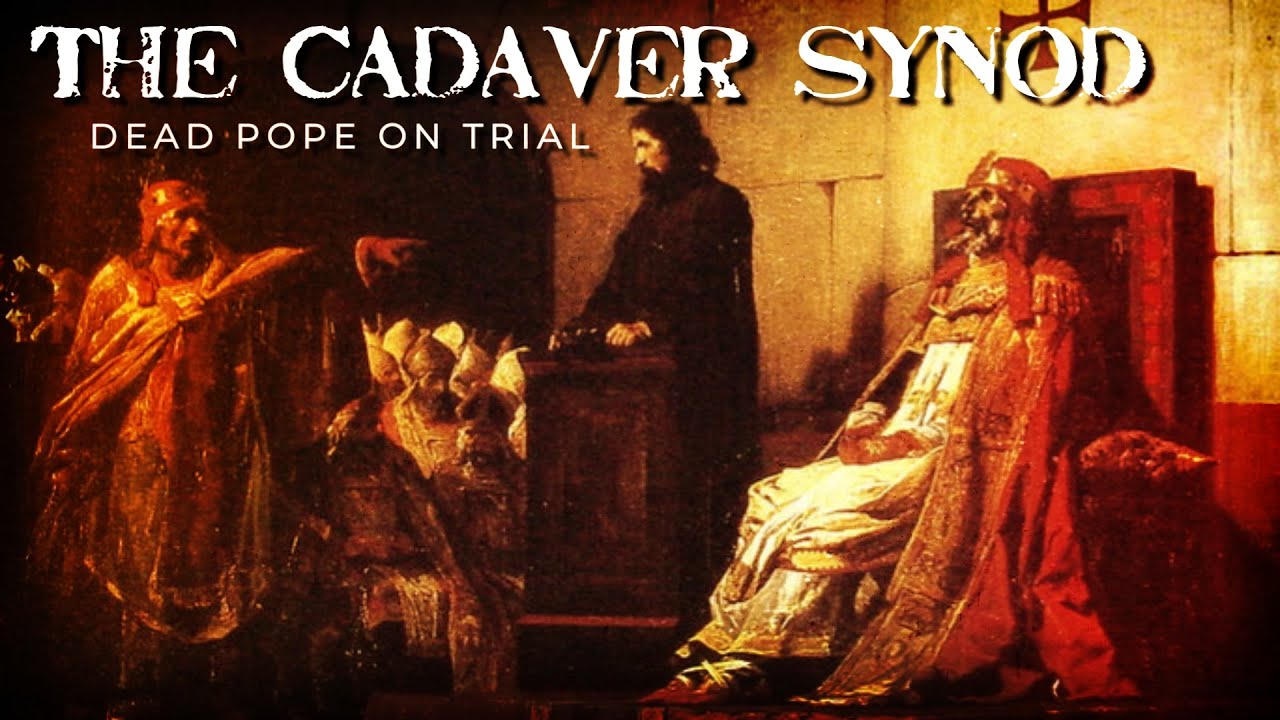
Dead Pope on Trial: The Cadaver Synod and the Twisted Power Struggles of the Medieval Papacy

Introduction: When Death Was No Defense

In January 897 A.D., one of the most bizarre and grotesque trials in human history took place—not in secret, not in fiction, but under the watchful eyes of the Catholic Church. The defendant? Pope Formosus, long dead and buried. Exhumed from his tomb, clad in papal vestments, and propped up on a throne, the corpse of Formosus faced a synod of bishops and a hostile successor, Pope Stephen VI, in what history would remember as the Cadaver Synod.

But this was no ordinary trial. It was a manifestation of medieval power struggles, revenge politics, and the often bloody intersection between the sacred and the profane. The Cadaver Synod wasn’t merely an act of religious madness—it reflected the deep political instability of Rome at the time, as papal authority collided with aristocratic ambition and imperial influence. To understand why a dead pope was put on trial, we must first understand the chaos that engulfed the Church in the late 9th century.

Power and Politics: Inside Medieval Papal States

The papacy of the 9th century was a far cry from the spiritual beacon it’s often imagined to be today. Instead, it was a political institution caught in a web of aristocratic rivalries, military alliances, and foreign interference—especially from the Holy Roman Empire. Popes were regularly installed and deposed by powerful Roman families or imperial factions seeking influence over Christendom.

Pope Formosus had a controversial past. Before his election, he had been excommunicated by Pope John VIII, accused of attempting to usurp the throne of Constantinople and refusing to return to Rome. Though the excommunication was lifted, the accusations lingered. When Formosus finally ascended to the papacy in 891, he aligned with Arnulf of Carinthia, a Frankish king vying for the imperial crown, directly opposing the interests of Lambert of Spoleto—a powerful aristocrat whose family considered the papal throne part of their inherited sphere.

This alliance made Formosus many enemies in Rome, especially among the Spoleto faction. After Formosus died in 896, Lambert’s loyalist Pope Stephen VI took the throne. What happened next was both vengeance and spectacle.

The Corpse on Trial: Gruesome Theater of Power

Pope Stephen VI, under pressure from the Spoletans, ordered Formosus’s corpse exhumed and brought before a church tribunal. The body, decomposed and rotting, was dressed in papal robes and seated on a throne in the Basilica of St. John Lateran. A deacon was appointed to “speak” on behalf of the dead pope, while Stephen presided as judge and accuser.

Formosus was charged with multiple crimes: violating canon law by becoming bishop of Rome while already bishop of another see, perjury, and conspiring with Arnulf against Lambert. The charges were rooted in actual church disputes of the time but were clearly politically motivated.

The trial was pure spectacle—medieval propaganda at its most grotesque. Witnesses were summoned, documents read aloud, and gestures of mockery made toward the corpse. In the end, the synod declared Formosus guilty. His papacy was annulled, his acts and ordinations invalidated, and his body stripped of its sacred vestments. Three fingers used for blessing were cut off, and the body was thrown into the Tiber River.

Aftermath: Riots, Retribution, and a Deadly Price

Stephen VI may have momentarily pleased his political patrons, but the grotesqueness of the Cadaver Synod backfired. The Roman public, deeply disturbed by the desecration of a former pope’s body, rose in outrage. Riots broke out in the streets of Rome. Stephen was arrested and imprisoned by his opponents, and soon after, he was strangled to death in his cell—ironically suffering the kind of posthumous disgrace he had tried to bestow on Formosus.

In the wake of this chaos, subsequent popes sought to distance themselves from the Cadaver Synod. Pope Theodore II and later Pope John IX convened synods that annulled Stephen’s decisions, declared the Cadaver Synod invalid, and reburied Formosus with honors. But the damage to the Church’s image and spiritual credibility was profound.

The spectacle also set a precedent for political manipulation of the papacy—a trend that would continue through the Middle Ages, reaching new levels during the Avignon Papacy and the Western Schism centuries later.

The Symbolism: Divine Justice or Vengeance?

The Cadaver Synod raises critical questions about the nature of justice, legitimacy, and power in a religious context. Was Stephen VI seeking justice, or merely revenge? Could a dead man truly be held accountable for his actions? The trial blurred the lines between law, theater, and ritual humiliation, using religious ceremony as a tool for political control.

Symbolically, the Cadaver Synod illustrates how the medieval Church—while often portrayed as purely spiritual—was deeply entangled in the same worldly power struggles that plagued secular rulers. Its ability to anoint kings, crown emperors, and excommunicate heretics made it a force to be both respected and feared. But as the Synod proved, that power could also be grotesquely abused.

Echoes Through History: The Cadaver Synod

The Cadaver Synod is still cited today as one of the strangest and most extreme abuses of power in ecclesiastical history. Historians and theologians alike debate its meaning, wondering whether it represents an isolated moment of madness or a deeper reflection of how vulnerable spiritual institutions are to temporal corruption.

While the Church officially buried the memory of the Synod in later centuries, it has remained a chilling reminder of how far leaders will go to rewrite history—even if they have to dig up the dead to do it.

Today, the Synod is studied not just by religious scholars, but also by legal historians, ethicists, and students of political theatre. Its bizarre images—a dead pope on trial, robed in regalia, accused by the living—linger in the imagination as a symbol of the extreme lengths humans will go to secure power and punish enemies.

Conclusion: Morbid Mirror of Medieval Power

The Cadaver Synod remains one of the most disturbing yet revealing episodes in the history of the Catholic Church. It was not merely a grotesque miscalculation—it was a manifestation of the madness that ensues when religious institutions are hijacked by political ambition. The trial of a dead pope, while deeply unsettling, forces us to confront the darker side of human nature and the institutions we build.

Beneath the spectacle lies a cautionary tale of unchecked power, blurred boundaries between church and state, and how history remembers the absurd as much as the righteous. In the end, the Cadaver Synod may be remembered not only for its horror, but for what it says about the men who believed they could judge the dead—and the system that allowed them to try.

Categories
W1 World

Ghosts on the Battlefield: History’s Deadliest Snipers and the Shadows They Left Behind

Introduction: Deadly Precision in the Shadows

They were never meant to be seen. The world’s deadliest snipers operated not in open confrontation, but in the ghostly realm of silence, patience, and a single well-placed bullet. They turned the battlefield into a psychological chessboard, unnerving entire armies and altering the course of wars from hidden vantage points.

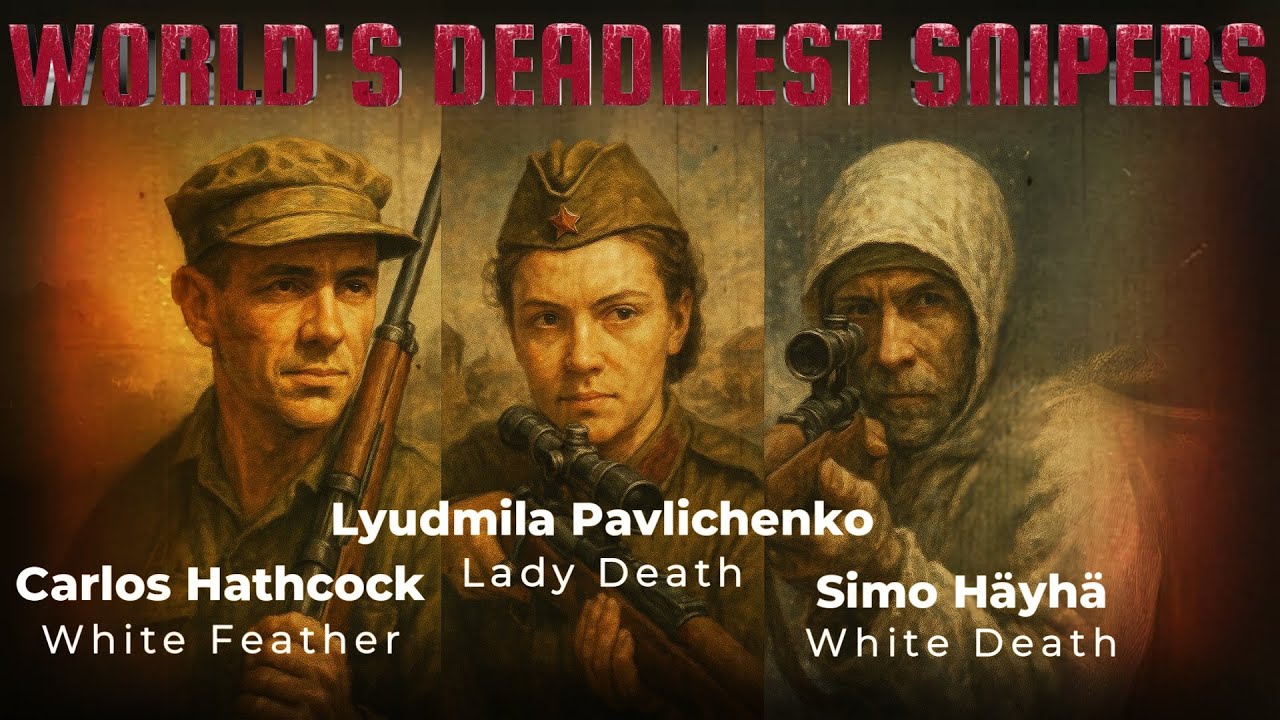
Snipers are more than just shooters—they are master tacticians, survivalists, and psychological weapons. In this article, we trace the lives and legends of three of the most lethal snipers in military history: Carlos Hathcock, Lyudmila Pavlichenko, and Simo Häyhä. Each hailed from different corners of the globe, but all shared one thing in common: they became mythic figures cloaked in deadly precision.

Carlos Hathcock: White Feather of Vietnam

In the dense, humid jungles of Vietnam, Gunnery Sergeant Carlos Hathcock II became a whispered nightmare among North Vietnamese troops. Born in Arkansas in 1942, Hathcock joined the U.S. Marine Corps at the age of 17, bringing with him a love for shooting that had defined his childhood.

What made Hathcock legendary wasn’t just his 93 confirmed kills—although many estimate the real number to be much higher—but his ability to stalk enemy lines for days, undetected. His most famous mission involved crawling over 1,500 yards of open field, inch-by-inch, for four days and three nights to eliminate a high-ranking North Vietnamese Army officer. He did it without being spotted once.

His use of a white feather in his bush hat led to a bounty being placed on his head, reportedly $30,000—the highest for any American sniper. The Viet Cong called him “White Feather Sniper”, and even elite enemy teams failed to track him down.

Hathcock’s legacy wasn’t just built on lethality, but on a code of discipline and honor. He later helped establish the U.S. Marine Corps Sniper School, shaping future generations of military marksmen. Severely burned while rescuing fellow Marines from a burning vehicle, Hathcock retired with a legacy unmatched and a spirit never broken.

Lyudmila Pavlichenko: Lady Death Rises

In the rubble-strewn battlefields of World War II, a young Soviet woman emerged as one of the most lethal snipers in history. Lyudmila Pavlichenko, nicknamed “Lady Death,” recorded 309 confirmed kills, including 36 enemy snipers, making her the most successful female sniper of all time.

Born in Ukraine in 1916, she was a student and amateur sharpshooter when the German invasion of the Soviet Union in 1941 changed her life. She joined the Red Army’s 25th Rifle Division and quickly became a symbol of Soviet resistance.

Pavlichenko fought in the sieges of Odessa and Sevastopol, enduring hellish trench warfare and constant German offensives. She was wounded four times but kept returning to the front. Her reputation spread not only due to her impressive kill count but also because she defied gender expectations, becoming a propaganda icon.

In 1942, the Soviet Union sent her on a goodwill tour of the United States, where she met Eleanor Roosevelt and gave speeches that shocked American audiences. One famous quote remains:

“I am 25 years old and I have killed 309 fascist invaders. Do you not think, gentlemen, that you have been hiding behind my back for too long?”

Pavlichenko retired from active service due to injury and trained other snipers for the rest of the war. Her life remains a testament to courage, intellect, and unflinching resolve.

Simo Häyhä: The White Death of Finland

The winter of 1939 was brutal in Finland, and the invading Soviet forces learned that the cold was the least of their problems. Simo Häyhä, a quiet Finnish farmer and hunter, became the most feared sniper of the Winter War—a 105-day conflict between Finland and the Soviet Union.

Nicknamed “The White Death,” Häyhä killed over 500 Soviet soldiers, with 505 confirmed sniper kills and an additional 200 with submachine guns, all in less than four months. Remarkably, he used iron sights, not a scope, to avoid the sun’s reflection and remain hidden in the snow.

Häyhä built snowbanks to conceal himself, kept snow in his mouth to prevent breath mist from giving away his position, and endured temperatures as low as -40°C. The Soviets tried everything—artillery, snipers, ambushes—to eliminate him, all in vain.

He was eventually hit by an explosive round that shattered his jaw and left him in a coma for a week. Yet, Häyhä survived, recovered, and lived until 2002. Despite his incredible kill count, he remained humble and quiet, rarely speaking about the war.

His battlefield genius, patience, and resilience have earned him legendary status in military circles and beyond.

Tools of the Trade: Lethal Sniper’s Edge

The common thread among these snipers wasn’t just deadly aim—it was discipline, patience, and intimate knowledge of terrain and human behavior. A great sniper blends into their environment, waits for the perfect moment, and disappears before anyone even realizes a shot was fired.

Whether using scoped rifles or iron sights, these warriors demonstrated that warfare isn’t only fought with massed troops and artillery. Sometimes, one person—hidden, silent, and unseen—can shape the entire outcome.

Snipers often had to endure isolation, extreme weather, and psychological strain, but those like Hathcock, Pavlichenko, and Häyhä turned these obstacles into advantages. Their kills weren’t just numbers—they were missions accomplished under impossible odds.

Legacy: When Shadows Become Legend

What makes the legacy of these snipers endure is not just the body count—it’s what they represented in their times. Carlos Hathcock became a symbol of the Marine Corps’ elite skill. Lyudmila Pavlichenko stood as a feminist icon of power in a male-dominated world. And Simo Häyhä showed how one man could hold the line against an army.

Today, militaries around the world continue to study their tactics. Modern sniper training programs—from the U.S. Navy SEALs to Russian Spetsnaz—teach lessons rooted in these legends’ real-life experiences.

Their stories remind us that in war, visibility does not equal power. The most dangerous threats are often the ones you never see coming.

Conclusion: Death in Silence, Legends in Echoes

The world’s most lethal snipers were not monsters—they were soldiers shaped by the brutal realities of their time. They didn’t seek fame, yet they became myths. They didn’t roar into battle—they waited in silence, letting their rifles speak only once.

Their names—White Feather, Lady Death, The White Death—have become part of military folklore. But behind the nicknames were real people, who endured loneliness, injury, and unimaginable tension. In the shadows of history, they remain not just as killers, but as symbols of strategic brilliance, resilience, and the haunting power of one well-aimed shot.

Categories
W1 World

From Fort to Palace: The Fall of Medieval Military Fortresses and the Rise of Regal Splendor

Introduction: From Battlefield to Fairytale

In the Middle Ages, castles loomed over the countryside as formidable military fortresses, centers of power, and homes to nobility. Built for defense and dominance, they were strategic strongholds that shaped the political and military landscapes of their time. Their towering walls and moats were not only barriers against invasion but symbols of authority and feudal control.

But as centuries passed, their thick walls and moats gave way to balconies, gardens, and banquets. Increasingly, castles transitioned into lavish residences that served more as symbols of authority and refinement than bastions of war. This transformation offers a window into the shifting currents of military technology, cultural ideals, and royal ambition.

Windsor Castle and the Royal Reinvention

One of the most striking examples of this shift is Windsor Castle during the reign of Edward III in the 14th century. Edward, a monarch steeped in chivalric ideals and a deep sense of royal prestige, initiated sweeping renovations that turned the fortress into a grand palace reflecting his imperial aspirations. At the heart of this transformation was the establishment of the Order of the Garter, Edward’s own revival of Arthurian legend. It brought together England’s most loyal and powerful knights in a circle modeled after the fabled Knights of the Round Table.

Windsor became more than a castle—it was a stage upon which the king dramatized his divine right to rule. The Garter ceremonies, held in St George’s Chapel, symbolized unity, loyalty, and the glamour of chivalry. These rituals helped elevate Edward’s image across Europe and left a lasting architectural and cultural legacy. The towered silhouette of Windsor no longer warned of incoming armies but stood as a proud emblem of royal continuity.

Warfare: Changing Tools, Changing Roles

The fading role of castles in warfare was also due to advancements in military technology. The arrival of gunpowder and cannon made even the thickest walls vulnerable. Siege warfare changed dramatically; traditional battlements and towers could no longer withstand prolonged bombardment. Cannons such as the French “Basilisk” or the Ottoman Empire’s famed bombards during the 1453 siege of Constantinople demonstrated the vulnerability of stone walls.

Castles began to lose their primary function as defensive structures. Instead, military priorities shifted to newer fortification designs such as star forts, which could better deflect artillery. As a result, many older castles were repurposed, abandoned, or rebuilt as elaborate homes reflecting Renaissance and Baroque ideals. Castles became showcases of heritage and wealth rather than frontline defenses.

Burg Eltz: Noble Identity Without the War

Burg Eltz in Germany illustrates a different aspect of this evolution. Nestled in the Moselle hills, this 15th-century stronghold is less about warfare and more about continuity and status. Remarkably untouched by conflict or decay, Burg Eltz survived because it adapted to changing times. Rather than being a garrison, it became a multigenerational home that balanced medieval design with increasing comfort.

Burg Eltz exemplifies how smaller noble families preserved their legacy without engaging in warfare. The castle’s elegant wooden balconies, intricate armory, and frescoed rooms speak to a period when appearance and symbolism mattered more than military readiness. The Eltz family maintained its independence through diplomacy and allegiance, allowing the castle to stand as a preserved monument to aristocratic life.

Loire Valley: Castles Become Grand Châteaux

Nowhere is the shift from fort to palace more visible than along the Loire Valley in France. By the 16th century, powerful nobles and royals commissioned opulent châteaux such as Chambord and Chenonceau—structures more akin to Renaissance palaces than medieval fortresses. They reflected ideals of leisure, proportion, and classical beauty, inspired by Italy’s flourishing art and architecture.

These châteaux were built not for war, but for entertainment, courtship, and artistic patronage. Wide staircases, decorative facades, and expansive gardens signaled a dramatic departure from defensive necessity. The Renaissance’s humanist values found a home in these buildings, where the celebration of intellect, beauty, and culture supplanted the grit of feudal struggle.

Chambord, with its iconic double helix staircase, is rumored to have been influenced by Leonardo da Vinci himself. The Loire châteaux became the blueprint for palaces across Europe, culminating in extravagant structures like Versailles. This trend represented a broader cultural pivot—royal and noble residences were now curated experiences, not military instruments.

Cardiff Castle and 19th-Century Gothic Revival

By the 19th century, the military function of castles was virtually obsolete, yet public fascination with them only grew. The Gothic Revival period saw a resurgence in castle building—not for defense, but for nostalgia, drama, and national pride. Cardiff Castle in Wales, extensively remodeled by the Marquess of Bute and architect William Burges, was transformed into a fantasy vision of the medieval past.

Richly decorated interiors, heraldic motifs, and whimsical towers gave Cardiff Castle an almost theatrical presence. This revival was part of a larger Victorian fascination with Gothic architecture, which found parallels in literature (such as Tennyson’s Arthurian poems) and historical fiction (like Sir Walter Scott’s Ivanhoe). These castles projected an idealized version of the Middle Ages, one that emphasized myth over history.

They also mirrored the British Empire’s self-image: powerful, ancient, and cultured. The medieval castle became a canvas for imperial identity and architectural storytelling.

Stone and Symbol: A Rich Legacy of Nostalgia

Though medieval castles have long since lost their role as military outposts, their cultural and architectural legacy continues to shape our world. Today, they serve as museums, tourist attractions, and filming locations, preserving a visual memory of power, romance, and resistance. The fantasy genre, from Game of Thrones to Harry Potter, has reinvigorated global fascination with castles, making them enduring icons of both history and imagination.

Their transformation from fortresses to palaces—and ultimately to symbols—reflects broader shifts in human society: from conflict to courtly life, from survival to splendor. The story of castles is not just about stone and steel; it’s about how civilizations evolve, repurpose their past, and enshrine their values in architecture that outlasts empires.

Why Castles Changed: Power, Prestige, Peace

So what truly caused the decline of the military fortress? The answer lies in a confluence of factors:

  • Advancements in warfare made stone walls ineffective.
  • Political centralization reduced the need for local lords to defend territory.
  • Economic growth allowed the elite to invest in luxury, not logistics.
  • Cultural movements like the Renaissance and Gothic Revival shifted architectural priorities toward beauty and symbolism.

Ultimately, castles changed because the world around them changed. Peace, prosperity, and progress allowed people to imagine a life beyond defense—a life of art, ideals, and architectural wonder.

Conclusion: Stones, Symbols, and Stories Past

Medieval castles may have lost their military relevance, but they gained something equally powerful—a lasting legacy as symbols of imagination, identity, and culture. From Edward III’s Arthurian vision at Windsor to the romantic daydream of Cardiff Castle, these fortresses evolved into stages for royal narratives and social aspiration.

Today, they survive not as outposts of war, but as monuments to history, where each stone tells a story—not just of battles fought, but of identities shaped, myths revived, and a world in transition. Their silent walls now echo with the legacy of changing empires, evolving tastes, and the enduring human desire to leave a mark on the landscape of time.

Categories
W1 World

Killdozer: Marvin Heemeyer’s Rampage That Shook America, Exposed Small-Town Corruption

A Bulldozer Became a Weapon

On June 4, 2004, a quiet welder named Marvin Heemeyer transformed a Colorado mountain town into a battleground. Sealed inside a homemade armored bulldozer, he left destruction in his wake—flattening buildings, tearing through businesses, and sparking one of the most infamous acts of domestic vengeance in modern American history.

Was Heemeyer simply a madman with a grudge? Or was he a symbol of a citizen crushed by a corrupt system? His story is complex, filled with frustration, paranoia, and a fierce belief in personal justice. For many, it remains one of the most chilling examples of how deep societal and personal grievances can erupt into violence.

The Man Behind the Machine

Born in South Dakota in 1951, Marvin Heemeyer was an ordinary man by most standards. A skilled welder and self-made businessman, he served in the U.S. Air Force before eventually settling in Granby, Colorado, a small town with fewer than 2,000 residents. In Granby, Heemeyer ran a successful muffler repair shop and was known for being friendly and competent.

But beneath the surface, Heemeyer harbored a strong sense of right and wrong, and a deep resentment toward what he perceived as injustice. He documented many of his frustrations in audio tapes and journals, later found by investigators. His writings showed a man who felt betrayed by the very institutions meant to protect him—local government, courts, and influential town figures.

A Zoning Dispute Turns Toxic

Heemeyer’s conflict with the town began when he purchased land for his muffler shop in 1992. The trouble escalated in the late 1990s when a concrete batch plant was approved for construction adjacent to his property. Heemeyer was deeply opposed to the project, believing it would block access to his shop, lower property value, and pollute the environment.

He tried to fight back through official channels, attending city council meetings, filing lawsuits, and petitioning local officials. But each attempt failed. Over time, Heemeyer began to believe he was the target of a conspiracy by local elites, including politicians, business owners, and even judges. His grievances intensified, and he became increasingly isolated and bitter.

“I was always willing to be reasonable until I had to be unreasonable,” he declared in a chilling posthumous recording.

To Heemeyer, the situation had become more than a property dispute—it was a battle for justice. And he believed he was losing.

Birth of the Brutal Killdozer

Unbeknownst to anyone, Heemeyer began working on his plan in secret. Over a year and a half, he transformed a Komatsu D355A bulldozer into an unstoppable armored vehicle in a metal shed on his property. He custom-fitted the bulldozer with steel-and-concrete armor plating—up to a foot thick in places—rendering it virtually impervious to bullets and small explosives.

Inside, he installed cameras protected by bulletproof glass and wired them to multiple monitors so he could see outside while completely sealed within. The interior was equipped with air circulation systems, gun ports, and even a cooling mechanism. Heemeyer stocked it with food and water, prepared for a prolonged standoff.

This was no spontaneous act of revenge. The Killdozer was a meticulously planned war machine, and Heemeyer had designed it with precision and intent. He was not just reacting—he was executing a mission.

Granby Under Fierce Siege

On the afternoon of June 4, 2004, Heemeyer climbed into the Killdozer, lowered the armor plating with a winch, and sealed himself inside forever. Around 3 p.m., the bulldozer smashed through the side of his muffler shop and began its path of destruction.

Heemeyer targeted buildings and businesses he believed had wronged him: the Granby town hall, the home of a former judge, the local newspaper office, a hardware store, and the concrete batch plant that started it all. Over the next two hours, he demolished 13 buildings, shocking the town and capturing the attention of the nation.

Police responded quickly, but their weapons were useless against the makeshift tank. Over 200 rounds were fired, and tear gas and flashbangs were deployed—all to no effect. SWAT teams attempted to use explosives and heavy machinery, but nothing stopped the Killdozer.

The rampage ended only when the machine crashed into a building and became stuck in a basement foundation. Unable to escape, and with law enforcement closing in, Heemeyer took his own life with a handgun.

Miraculously, despite the scale of destruction, no civilians were killed. Some believe Heemeyer deliberately avoided harming people, even as he destroyed property. Others argue it was sheer luck. Either way, the outcome added a layer of myth to his already extraordinary tale.

Marvin: Martyr or Madman?

In the years following the incident, Marvin Heemeyer became a controversial figure. To some, he was a dangerous domestic terrorist who could have easily caused mass casualties. To others, especially online, he became a folk hero—a modern-day vigilante who took a stand against an unjust system that ignored his cries for help.

Heemeyer’s recorded messages and writings paint a complex picture. He believed he was chosen by a higher power to carry out his mission, even referring to divine guidance in his plans. He likened himself to biblical figures who faced overwhelming odds in the pursuit of justice.

“God blessed me in advance for the task that I am about to undertake,” he said in one of his audio tapes.

Still, mental health professionals and critics argue that Heemeyer displayed signs of paranoia and delusion, and that his actions were those of a man disconnected from reality. The debate continues to this day: Was Marvin Heemeyer a martyr for the voiceless or a mentally unstable man who chose violence over reason?

Killdozer: Aftermath and Legacy

Granby was left shaken. The damage totaled over $7 million, and the emotional toll on the small community was immeasurable. Some of the buildings destroyed were never rebuilt, and the incident became a dark chapter in the town’s history.

Authorities dismantled the Killdozer and scrapped its parts, hoping to prevent it from becoming a shrine for anti-government extremists. Despite their efforts, Heemeyer’s story lived on, fueled by internet forums, documentaries, and conspiracy theories.

His journals and audio recordings, later released to the public, provide insight into the mind of a man who believed he had no other recourse. They also serve as a disturbing reminder of how unchecked grievance, isolation, and a sense of powerlessness can lead to devastating consequences.

Killdozer’s Message for America

Marvin Heemeyer’s story taps into a larger national narrative—one where individuals feel increasingly alienated from government and civic institutions. It reflects the growing chasm between citizens and bureaucracy, where red tape, perceived corruption, and loss of voice can lead people to the edge.

In an era of rising populism and anti-establishment sentiment, the Killdozer saga continues to resonate. It remains a cautionary tale, reminding us of what happens when democratic processes fail some individuals—and when frustration turns to fury.

A Warning in Steel and Rage

The Killdozer was more than a bulldozer. It was a manifestation of rage, a tank built from despair and meticulous engineering. Marvin Heemeyer believed the system had failed him, and rather than walk away, he chose to fight back—with steel, concrete, and fire. Whether he was a hero or a villain, his story forces us to confront uncomfortable truths: What happens when a person believes all avenues of justice are closed?

How do small-town disputes spiral into national tragedies? And how can a society prevent another Marvin Heemeyer from emerging from the shadows, armed with both skills and rage? In the end, Marvin Heemeyer’s rampage was a symbol. Not of justice, and not of madness alone—but of a moment when one man’s broken faith in the system led him to break everything around him.

Categories
W1 World

The Fall of Alejandro Mayorkas: The Bureaucrat Who Engineered America’s Border Breakdown

Introduction: From History-Maker to Headline-Maker

Alejandro Mayorkas once symbolized the American dream. As the first Latino and immigrant to head the U.S. Department of Homeland Security (DHS), his appointment under President Joe Biden was hailed as a progressive milestone. But by 2025, his name is more often associated with controversy than celebration. Under his leadership, the U.S. southern border witnessed record levels of illegal crossings, rising cartel activity, an explosion of fentanyl-related deaths, and the mysterious disappearance of thousands of migrant children.

Despite a historic impeachment by the House of Representatives, Mayorkas survived political fallout in the Senate, raising critical questions about accountability, governance, and the real cost of partisan loyalty. How did a man once heralded as a defender of America’s values become, as some have called him, “the most dangerous bureaucrat in the country”?

The Border Unravels: National Crisis by the Numbers

Under Mayorkas’s tenure, DHS faced what many experts and critics call an unprecedented breakdown in border control.

Record-Breaking Crossings
In fiscal year 2023 alone, over 2.4 million migrants were encountered at the U.S.-Mexico border—a staggering number, breaking all previous records. The sheer volume overwhelmed border facilities, strained local governments, and ignited fierce national debates about immigration, asylum policies, and national security.

Fentanyl and the Cartel Surge
Perhaps more alarming was the fentanyl crisis. According to the U.S. Drug Enforcement Administration, over 70,000 Americans died from synthetic opioid overdoses in 2023—much of it linked to fentanyl smuggled across the border. Critics argue that DHS under Mayorkas allowed transnational criminal organizations to exploit border weaknesses, enriching cartels and endangering American communities.

Missing Migrant Children
Equally damning were reports of over 85,000 unaccompanied migrant children who were released to sponsors by the Department of Health and Human Services, many of whom could not be subsequently located. Child welfare advocates decried a system “plagued by negligence,” accusing DHS and its partner agencies of failing to implement proper vetting or follow-up procedures.

Homeland Insecurity: Mayorkas Still Faces Congress

Mayorkas repeatedly appeared before Congress to defend his department’s policies, but his testimony often led to more questions than answers.

Accusations of Misleading Statements
Republican lawmakers accused Mayorkas of perjury, citing contradictions between his public testimony and internal DHS memos. In one widely circulated exchange, he claimed the border was “secure,” a statement many considered misleading, if not outright false, in the context of record-breaking illegal entries and rising narcotics trafficking.

Impeachment Proceedings
In February 2024, the House of Representatives voted to impeach Alejandro Mayorkas—marking only the second time in American history that a cabinet secretary had faced such action. The articles of impeachment charged him with “willful and systemic refusal to comply with the law” and “breach of public trust.”

But when the case reached the Senate, politics took center stage. Despite damning evidence and public pressure, the Senate failed to convict, largely along party lines. The acquittal was met with both celebration and outrage, depending on which side of the aisle one stood.

How Did We Get Here? Mayorkas’s Immigration Vision

To understand how Alejandro Mayorkas became such a polarizing figure, one must look at the ideological shift that took place within DHS during his leadership.

A Shift in Enforcement Philosophy
Mayorkas implemented policies aimed at reducing mass deportations and refocusing enforcement on “high-priority” threats. In theory, this would allow for more humane treatment of migrants and better allocation of resources. In practice, critics argue, it signaled a relaxation of enforcement that emboldened smugglers and overwhelmed border agencies.

The “Catch and Release” Resurgence
The reintroduction of catch-and-release policies—where apprehended migrants are released into the U.S. while awaiting court dates—was another controversial move. Critics pointed out that many migrants never appeared for their hearings, effectively disappearing into the country’s interior. Proponents of the policy argued that the asylum system was in dire need of reform and that the real problem was legislative gridlock, not enforcement discretion.

Senate’s Shield: Why Mayorkas Was Never Removed

The Senate’s failure to convict Mayorkas, despite a House impeachment, underscores a larger issue: the erosion of accountability in the federal bureaucracy.

Partisan Lines over Legal Merits
Even Democratic Senators privately admitted to concerns about Mayorkas’s handling of the border crisis, but few were willing to break ranks and vote for his removal. “The threshold for impeachment is high,” said one senator. “It’s not about performance; it’s about misconduct.” But for many Americans watching the chaos unfold, this legalistic framing felt like a cop-out.

Fear of Setting Precedent
There were also broader concerns about the precedent that a successful impeachment of a cabinet secretary might set. Would future congresses weaponize impeachment against every controversial bureaucrat? In the end, political caution triumphed over public dissatisfaction.

Fallout and the Future: What Mayorkas Leaves Behind

Whether viewed as a reformer who tried to humanize an inhumane system or a bureaucrat whose policies fueled a national crisis, Alejandro Mayorkas has left an indelible mark on U.S. immigration policy.

A Fractured Public
Public opinion polls show deep polarization. Among Republicans, Mayorkas is seen as emblematic of Biden’s failed border policy. Among Democrats, he is a scapegoat for broader systemic failures, unfairly targeted for political gain.

A System in Crisis
What remains undeniable is that the U.S. immigration system is in disarray. The infrastructure at the southern border is overwhelmed. The asylum process is backlogged by hundreds of thousands of cases. And the cartels continue to profit from a border in chaos.

Will Accountability Ever Come?
With the 2026 midterm elections looming, immigration will remain a top-tier issue. Whether Alejandro Mayorkas becomes a cautionary tale, a political martyr, or a footnote in history may ultimately depend on whether future leaders have the courage—and the consensus—to fix what’s broken.

Conclusion: Bureaucratic Power And Political Immunity

Alejandro Mayorkas’s rise and fall tell a larger story about American governance in the 21st century: how power can be wielded without oversight, and how political allegiances can protect even the most controversial public officials from consequence. His story is not just about the border—it’s about the fragility of accountability, the power of narrative, and the high cost of failure when lives, security, and national trust are at stake.

His tenure has exposed glaring weaknesses in the mechanisms meant to check executive power, particularly within sprawling bureaucracies like DHS. As communities grapple with the fallout—from overwhelmed shelters to rising overdose deaths—the demand for answers continues to grow. Whether America learns from this chapter remains to be seen.

Categories
W1 World

When Birds Defeated Bullets: The Bizarre True Tale of Australia’s Great Emu War of 1932

Introduction: A War Unlike Any Other

In the annals of military history, few conflicts are as strange or as oddly comical as the Great Emu War of 1932. It was a battle not between nations or ideologies, but between man and bird. Following World War I, Australia found itself facing a very peculiar crisis: tens of thousands of emus were migrating westward and destroying farmlands in Western Australia. Desperate to protect their crops, farmers turned to the government for help.

What followed was a full-blown military operation involving soldiers, machine guns, and one of nature’s most unyielding birds—the emu. This was not just a footnote in history—it was a large-scale effort involving military planning, logistical challenges, and public scrutiny. Yet despite the firepower and experience of the soldiers, the emus would emerge victorious. This article dives deep into one of the most absurd chapters of military history.

A Post-War Agricultural Economic Crisis

The roots of the Emu War lie in the economic and environmental conditions that plagued Australia after World War I. Many veterans, as part of a government resettlement plan, were given land in Western Australia to take up farming. Unfortunately, the land was often arid, infertile, and difficult to cultivate. Compounding their struggles, the Great Depression had just begun, further driving down crop prices and pushing farmers into desperation.

Adding to their troubles, emus—large, flightless birds native to Australia—began migrating from inland areas toward the coast. Drawn by the water sources and crops in the farmlands, these emus arrived in droves—estimated at 20,000 or more. They trampled fences, devoured wheat fields, and left chaos in their wake. Farmers were helpless against this avian onslaught and petitioned the government for military intervention.

Operation Emu: When Army Was Called In

Responding to the farmers’ cries for help, the Minister of Defence, Sir George Pearce, approved a plan to deploy soldiers armed with Lewis machine guns to take care of the emu problem. This was not a joke—the government treated it as a legitimate military operation. Major G.P.W. Meredith of the Royal Australian Artillery was put in command, and he was accompanied by two soldiers, equipped with 10,000 rounds of ammunition, and two Lewis guns.

The first phase of the operation began in November 1932. The idea was simple: locate the emus, open fire, and reduce their numbers dramatically. But this proved easier said than done. The emus, far from being easy targets, displayed remarkable agility and unpredictable group behavior. Instead of bunching together in convenient clusters, they scattered in small groups that were difficult to hit. The soldiers discovered that these birds were not only fast but seemingly had a sixth sense for danger.

The Birds Strike Back: Emu Evasion Tactics

The operation quickly turned into a farce. In one instance, the soldiers ambushed a group of over 1,000 emus, only to have their gun jam after just a few kills. The rest of the birds escaped into the scrubland. Another plan involved mounting a machine gun on a truck to chase down the emus, but the terrain was too rough, and the truck couldn’t keep up. The gunner couldn’t even aim properly due to the bouncing vehicle.

Emus often traveled in smaller flocks led by a large, dominant bird that appeared to serve as a lookout or commander. When soldiers opened fire, these leaders would dart off in unexpected directions, confusing the troops and scattering the rest of the flock. The birds proved nearly impossible to corner or trap, and each encounter ended with high ammunition use and very few birds downed.

Within a week, only a few hundred birds had been killed, and the operation had used up a significant portion of its allotted ammunition. Newspapers began mocking the effort, with headlines suggesting that the emus had outmaneuvered the army and won the war.

Political Embarrassment and Withdrawal

By the end of the first attempt in mid-November 1932, the operation had to be paused. In its first seven days, 2,500 rounds had only netted around 200 confirmed kills. That’s over 12 bullets per emu—not exactly a successful mission. The press ridiculed the military effort, and members of Parliament questioned why resources were being wasted this way.

Despite the embarrassment, a second campaign was launched later that same month with more planning and a new strategy. This time, the soldiers managed to kill about 986 emus with an estimated 9,860 bullets—still an extremely high ammunition-to-kill ratio. Eventually, the military withdrew altogether, and the war was officially declared a failure.

The Aftermath and the Bird’s Victory

In the end, it wasn’t firepower but fencing that ultimately provided some relief to the farmers. The government later supported the installation of exclusion barriers and promoted a bounty system that paid locals for each emu killed. Though it took time, these more conventional methods proved far more effective than military action.

The Great Emu War became the subject of satire and mockery, not just in Australia but around the world. Yet it also highlighted deeper issues: the difficulties of post-war resettlement, government mismanagement, and the unpredictable force of nature. It served as a reminder that even a highly trained military can be humbled by something as seemingly harmless as a bird.

The Emu War in Popular Culture

Since then, the Emu War has achieved near-mythic status in pop culture. It has inspired memes, songs, video games, and documentaries. It is frequently cited as an example of bureaucratic absurdity and the folly of overconfidence. For many Australians, it remains a source of humor and historical curiosity.

Despite the comical overtones, it’s also become a cautionary tale. Environmental mismanagement, ignoring the natural patterns of wildlife, and hastily turning to militaristic solutions can backfire spectacularly. The Emu War endures as a bizarre but potent metaphor for human misjudgment.

Conclusion: A Feathered Victory

The Great Emu War of 1932 remains one of the strangest conflicts ever recorded. What began as a serious attempt to protect farmlands ended in a spectacular—and public—failure. In a literal battle of bullets versus birds, the emus won hands down.

This unlikely episode in Australian history teaches us that brute force is not always the best solution, especially when facing an opponent adapted to the environment. It also reminds us that history is full of unexpected stories—where the victors don’t always wear uniforms, and sometimes, they have feathers instead.

Categories
W1 World

Heaven’s Gate and the Man Who Led 39 to Death: The Disturbing Story of Marshall Applewhite?

The Cult That Shocked America

In March 1997, police entered a luxurious mansion in Rancho Santa Fe, California, and uncovered a scene that would haunt America for decades: 39 people lying peacefully in bunk beds, covered with purple shrouds, all dressed identically in black shirts, sweatpants, and brand-new Nike Decades sneakers. Each of them had committed suicide as part of what they believed was an act of cosmic salvation.

They were all members of the Heaven’s Gate cult, led by a man named Marshall Applewhite. The mass suicide stunned the world not only for its scale but for its eerie calm and precision—raising haunting questions about how one man could convince so many educated, seemingly rational people to die for a belief in UFOs and ascension.

Who Was Marshall Applewhite?

Marshall Herff Applewhite Jr. was not always a cult leader. Born in Texas in 1931, he was the son of a Presbyterian minister and raised in a deeply religious household. Applewhite pursued a conventional life at first—earning a degree in philosophy and a master’s in music. He became a college music professor and was even married with children.

But his life took a drastic turn in the early 1970s after he was dismissed from his teaching position, allegedly due to an inappropriate relationship with a male student. Suffering from a nervous breakdown and searching for a new sense of purpose, Applewhite met Bonnie Nettles, a nurse with an interest in astrology and New Age spirituality. Together, they formed the philosophical core of what would later become Heaven’s Gate.

Applewhite and Nettles believed they were the “Two Witnesses” mentioned in the Book of Revelation and that they had been sent from another planet to help selected individuals ascend to a higher plane of existence. Their teachings combined elements of Christianity, science fiction, and conspiracy theory, creating a bizarre but strangely compelling belief system.

The Beliefs Behind Heaven’s Gate

The Heaven’s Gate theology was a confusing blend of apocalyptic Christianity, UFO mythology, and pseudoscience. Members believed that the Earth was on the verge of being “recycled,” and that only a select few would be saved by extraterrestrial beings traveling on a spaceship hidden behind the Hale-Bopp comet. According to Applewhite, in order to ascend—or “exit the human vehicle”—members had to purify themselves of earthly attachments, including sex, family, money, and individual identity.

Celibacy was a central doctrine, and at least eight male members, including Applewhite himself, underwent voluntary castration to remove any temptation of sexual urges. Members cut off all contact with their families, lived communally, and gave up their personal belongings. They were assigned new names, wore matching uniforms, and were subject to strict rules and surveillance. Over time, this isolation and regimentation created an echo chamber of belief where doubt was nearly impossible.

Heaven’s Gate: The Internet Age Cult

Heaven’s Gate was one of the first cults to take full advantage of the early internet. In the mid-1990s, the group ran a web design business called Higher Source to fund their activities. Their website, heavensgate.com, is still online today, preserved in its original form as a chilling digital artifact. Through their site and email lists, they recruited new members and disseminated Applewhite’s teachings.

The group saw the internet as a divine tool that allowed them to bypass traditional media and spread their message directly to “seekers.” This use of emerging technology gave them a sense of modernity and legitimacy and helped reinforce their sense of mission and urgency. It was also through the internet that many of the members first learned about the approaching Hale-Bopp comet, which they interpreted as the long-awaited sign to ascend.

The Shocking Final Exit: March 1997

As the Hale-Bopp comet approached Earth in 1997, Applewhite told his followers that their time had come. He believed that a spaceship trailing the comet would collect their souls, but only if they left their physical bodies behind. Over three days, in a carefully choreographed process, the group members consumed phenobarbital mixed with applesauce and vodka, followed by plastic bags placed over their heads to induce asphyxiation.

They died in waves—some helping others to die before taking their own lives. In total, 39 people (including Applewhite) perished in what remains one of the largest mass suicides on American soil. The chilling orderliness of the event—matching outfits, identical bags, and farewell videos recorded before the act—further disturbed the public and raised deeper questions about belief, vulnerability, and psychological manipulation.

What Made People Follow Him?

How could so many people be convinced to end their lives so willingly? Experts in psychology and cult behavior point to a number of factors. Many of the Heaven’s Gate members were intelligent, tech-savvy individuals who were searching for meaning in a fast-changing, uncertain world. The group offered them community, purpose, and clarity in an increasingly complex society.

Applewhite’s calm demeanor and soft-spoken charisma masked his authoritarian control. He presented himself not as a prophet or god but as a humble “teacher” helping his students evolve. Over time, this paternal dynamic created deep emotional dependency. The members weren’t coerced in the traditional sense—they were brainwashed into believing they were taking part in a divine mission.

The Cult’s Aftermath and Legacy

The media frenzy following the suicides focused on the cult’s strangeness—its obsession with UFOs, castration, and the internet. But beneath the sensationalism, Heaven’s Gate exposed real vulnerabilities in human psychology. It showed how intelligent, rational individuals could be swept into a delusional worldview when isolated and emotionally manipulated.

The incident also prompted deeper investigations into cult behavior, sparking broader conversations about religious freedom, mental health, and the power of charismatic leaders. It raised ethical questions for the press, law enforcement, and mental health professionals—how could this have been prevented? And what does it say about our society that such a tragedy could unfold so quietly?

A Cult’s Persistent Digital Ghost

Today, Heaven’s Gate lives on in the corners of the internet. Their website remains, and two surviving former members still maintain it, answering emails and sharing Applewhite’s teachings. For some, it’s a grim memorial; for others, a cautionary tale. In an age of misinformation and online radicalization, the Heaven’s Gate tragedy feels more relevant than ever.

We may never fully understand what drew 39 people to follow Marshall Applewhite into death, but their story reminds us that belief—when untethered from reality—can become deadly. The legacy of Heaven’s Gate is not just one of death, but a chilling warning about the seductive power of belonging, and how easily it can turn blind devotion into catastrophic destruction.

Categories
W1 World

The Hidden Roots of Global Slavery: White Slavery and What History Books Leave Out

Introduction: Story You Haven’t Heard

When people think of slavery, they often picture the transatlantic slave trade that brought millions of Africans to the Americas beginning in the 1600s. In the U.S., the year 1619 is frequently cited as the “beginning” of slavery. But the truth is far older, broader, and far more complex. Long before Africans were transported across the Atlantic, slavery had already carved a brutal legacy across continents—and millions of the enslaved were white.

This is not a denial of the immense suffering caused by African slavery. Rather, it is a call to expand our understanding. From Slavic and Irish slaves to captives taken by Islamic empires and Barbary pirates, the institution of slavery has been a foundational force in building many of the world’s most powerful civilizations. And yet, many of these stories remain obscured, if not outright erased, from mainstream education.

Slavery Before 1619: The Global Norm

Long before American colonists ever planted tobacco, slavery was already a common practice in Europe, Africa, and Asia. The term “slave” itself comes from the word “Slav”—a reference to the Slavic peoples of Eastern Europe who were taken in mass numbers during the Middle Ages and sold into bondage by the Byzantine Empire, Islamic Caliphates, and various European powers.

By the 9th century, Arab traders were capturing and purchasing Slavic people to work as soldiers, laborers, and harem attendants in the Islamic world. Entire villages were raided along the Danube River and beyond. These Slavs were so prevalent in slave markets that the word “slave” essentially became synonymous with “Slav.”

Irish Slavery: The Overlooked Chapter

The Irish too faced centuries of brutal oppression, including forced deportation and slavery. Under British colonial rule, particularly during the 17th century, tens of thousands of Irish men, women, and children were sent to the Caribbean and American colonies as indentured laborers and outright slaves.

While the term “indentured servant” is often used to soften the narrative, many Irish were forced into contracts under false pretenses or had no choice at all. The conditions they endured—back-breaking labor, whippings, starvation, and separation from families—were nearly indistinguishable from those experienced by African slaves.

It’s estimated that during the 1650s alone, over 50,000 Irish people were shipped to Barbados and other Caribbean islands, where they were auctioned off like cattle. The term “redlegs” later came to describe their sunburned skin and harsh existence.

The Barbary Slave Trade Across Europe

Between the 16th and 19th centuries, North African Barbary pirates raided European coastal towns from Italy and France to Ireland and Iceland. They captured an estimated 1 to 1.25 million Europeans, selling them into slavery in the Ottoman Empire and North Africa.

These captives were used for a range of purposes—domestic labor, construction, galley rowing, and sexual servitude. In some coastal towns, entire populations were abducted, never to return. And yet, this chapter is rarely included in Western curricula.

Some historians argue that the trauma of these events created generational fear in European coastal communities. In fact, European nations eventually began paying tributes—essentially protection money—to Barbary states just to avoid further attacks.

Islamic Empires and the Slave Economy

Slavery was also deeply embedded in Islamic empires for centuries. From the Abbasid Caliphate to the Ottoman Empire, enslaved people formed the backbone of economies, palaces, and military forces. Unlike in Western chattel slavery, where racial lineage often determined lifelong bondage, Islamic slavery was more fluid. Some slaves could earn freedom, rise to power, or convert and gain rights. But make no mistake—millions suffered and died in this system.

Enslaved individuals came from many regions: Sub-Saharan Africa, Central Asia, the Caucasus, and Europe. Mamluks (slave soldiers) became powerful rulers in Egypt. Eunuchs guarded harems. Women were trafficked into concubinage. The diversity of slavery in Islamic realms is a stark reminder that bondage was not uniquely European or African—it was a global institution.

Why This History of Slavery Was Erased

Why don’t we hear about this in school? One reason is that history is often written by those in power. The narratives taught in American and European schools frequently emphasize certain sufferings while minimizing others, often to preserve national myths or social cohesion.

Highlighting the suffering of white slaves could blur the line between victim and oppressor, which complicates the dominant narrative. Furthermore, acknowledging the full scope of global slavery would mean confronting uncomfortable truths about empires, religious institutions, and economic systems that are still celebrated today.

Another factor is race-based slavery’s unique horrors. The racial caste system established in the Americas left a generational legacy of racism and inequality that continues today. This system deserves its focused scrutiny. But broadening the conversation to include other enslaved groups doesn’t diminish that history—it enriches it.

The Economic Foundations of Slavery

Slavery, in all its forms, was an economic engine. Empires were built on unpaid labor. Whether it was the Roman Empire exploiting slaves from conquered lands, the Islamic caliphates using Central Asian captives, or the British colonists profiting from African and Irish labor, the pattern is unmistakable: slavery was about wealth, control, and expansion.

Nobel-winning economist Douglass North once argued that the institutional structure of slavery enabled capital accumulation and state formation across civilizations. Whether that institution was African chattel slavery or earlier systems, the economic motive remained central. Understanding this helps explain why slavery persisted for so long and why societies were willing to brutalize millions of people—it paid.

A More Complete Narrative of Slavery

None of this is to compare sufferings or establish a hierarchy of horrors. Every form of slavery was brutal. Every victim was human. What matters is recognizing that the history of slavery is not linear or monocultural. It’s vast, transnational, and deeply embedded in the rise of human civilizations.

By acknowledging the stories of Slavic, Irish, and other European slaves alongside those of African descent, we gain a fuller picture of our past—one that can better inform our present and future.

Conclusion: Uncovering Facts Vs Myths

History doesn’t lose meaning when it’s expanded. The tragedy of African slavery in America remains a moral stain that must never be forgotten. But alongside it, we must also uncover the buried chapters—the enslaved Slavs, the red-legged Irish, the kidnapped Europeans, and the empires that thrived on their misery.

Only then can we begin to understand the true global legacy of slavery—and why its echoes still shape the world we live in today. Only by uncovering every layer of slavery’s complex and global history can we truly understand its legacy—and begin to dismantle the myths that still shape our world today.

Categories
W1 World

The Golden State Killer Finally Unmasked: How Joseph DeAngelo Eluded Justice for 44 Years

Introduction: Face Behind Mask of Fear

For more than four decades, a nameless, faceless predator haunted California. Known by many names—the Visalia Ransacker, the East Area Rapist, the Original Night Stalker, and finally the Golden State Killer—he committed over 50 rapes, 13 confirmed murders, and more than 100 burglaries across the state between 1974 and 1986.

Then, in April 2018, a shocking revelation rocked the country: the monster behind the mask was Joseph James DeAngelo, a former police officer, Vietnam veteran, and seemingly ordinary suburban father. For 44 years, he had lived a double life—predator by night, family man by day—while victims waited, and investigators hunted shadows. This is the story of how he got away for so long, how he was finally caught, and how his case changed criminal investigations forever.

The Early Years: The Visalia Ransacker

Before he became infamous, DeAngelo was believed to be the Visalia Ransacker, a prowler responsible for over 100 break-ins in Visalia, California, between 1974 and 1975. His pattern was disturbing: he often entered homes when residents weren’t home, stole small items of sentimental value, and left signs of having lingered—sometimes rearranging furniture or leaving food uneaten.

It wasn’t until the murder of Claude Snelling in 1975—who was shot while trying to stop his daughter’s attempted kidnapping—that the threat escalated. The Ransacker disappeared shortly after, coinciding with DeAngelo’s transfer to a new police department. Authorities now believe this was his first known killing—and his transition into something darker.

East Area Rapist Terror: A Reign of Fear

From 1976 to 1979, the Sacramento suburbs were gripped by fear. A masked man—agile, organized, and sadistic—began a spree of sexual assaults and home invasions. Dubbed the East Area Rapist, he targeted single women at first, then couples. He would stalk victims beforehand, break into homes to unlock windows or unload guns, and return days or weeks later to attack.

His modus operandi was chilling: he often tied up the male partner, placed dishes on his back, and told him if he heard a sound, the woman would die. Then he would repeatedly rape and torment the woman for hours.

Despite composite sketches, stakeouts, and increased patrols, he eluded law enforcement. He changed jurisdictions frequently, and police departments were not yet fully cooperative or technologically connected, which allowed him to slip through the cracks.

Evolution into the Original Night Stalker

By 1979, the East Area Rapist seemed to disappear. But soon after, a new predator emerged in Southern California—more violent, more brutal. Known initially as the Original Night Stalker, he struck in Orange County, Ventura, and Santa Barbara, committing a series of double homicides and sexual assaults from 1979 to 1986.

It would take decades before authorities realized the East Area Rapist and the Original Night Stalker were the same man—a conclusion made possible only by the eventual use of DNA evidence.

During these years, DeAngelo was living a seemingly ordinary life. He had married, raised children, and worked as a mechanic after being fired from the police force for shoplifting. No one suspected the loving father and quiet neighbor to be the killer who had haunted California’s nightmares.

The Officer in Uniform with a Dark Secret

Perhaps the most shocking detail about Joseph DeAngelo is that during the height of his crime spree, he served as a police officer in Exeter and Auburn, California. His job gave him access to police tactics, radios, and inside knowledge of investigations—information he likely used to stay one step ahead of law enforcement.

When DeAngelo was fired in 1979 for shoplifting dog repellent and a hammer—tools associated with the rapist’s kit—his crimes didn’t stop, but they did shift locations, making him even harder to track.

That a man sworn to protect the public was in fact a sadistic predator added another layer of horror to his already grotesque legacy—a betrayal not just of his victims, but of the very badge he once wore.

How Forensic Genealogy Cracked the Case

For years, the Golden State Killer case went cold. But with the rise of DNA testing and genealogy databases, a new possibility emerged. In 2018, investigators uploaded crime scene DNA from the Golden State Killer to GEDmatch, a public genealogy website.

They built a family tree using distant relatives and narrowed down potential suspects. One name stood out: Joseph James DeAngelo, now a 72-year-old retiree living in Citrus Heights. Law enforcement began to surveil him, collecting DNA from items he discarded—like a tissue found in his trash.

The results were conclusive: DeAngelo’s DNA matched the Golden State Killer’s. On April 24, 2018, DeAngelo was arrested. The man who had stalked the night for decades had finally been unmasked.

The Victims Speak: Trauma and Closure

At DeAngelo’s 2020 sentencing hearing, over two dozen survivors and family members gave harrowing testimony about the devastation he caused. Some victims had waited over 40 years to confront their attacker in court.

Many described a lifetime of fear, PTSD, and broken relationships. Others expressed relief that justice had finally arrived. The courtroom became a place of collective catharsis—a reckoning with a past long shrouded in silence.

DeAngelo himself offered no explanation, only a brief statement: “I am truly sorry to everyone I’ve hurt.” For many, it rang hollow. He was sentenced to multiple life terms without parole, ensuring he would die in prison.

A Landmark: The Rise of Genetic Sleuthing

The Golden State Killer case was the first high-profile arrest using forensic genealogy, and it has since revolutionized how law enforcement approaches cold cases. It marked a turning point where family trees became investigative tools, bridging science and justice in unprecedented ways.

Since DeAngelo’s capture, dozens of other cold cases have been solved using similar techniques. The case prompted public debate about privacy and ethics, but it also proved the power of science in serving justice.

Investigators are now revisiting hundreds of unsolved crimes, hoping that DNA—and the public’s voluntary sharing of genetic information—can bring answers once thought lost to time.

Conclusion: The Justice Delivered, at Last

Joseph DeAngelo lived two lives: a trusted officer, father, and neighbor by day; a rapist, killer, and tormentor by night. For decades, he escaped accountability, hidden in plain sight. But in the end, he was brought down not by a confession or eyewitness, but by a strand of DNA—a silent witness that never forgets.

Finally, his capture not only delivered long-overdue justice to survivors and victims’ families but also transformed criminal investigations. The shadows he once thrived in are shrinking—and cold cases once thought unsolvable are warming in the light of science. The Golden State Killer was unmasked—and with him, a new era of justice began.

Categories
W1 World

The Ghost Blimp of WWII: The Unsolved Disappearance of L-8 and Its Missing Crew

Introduction: A Routine Patrol Gone Awry

On the morning of August 16, 1942, the U.S. Navy blimp L-8 took off from Treasure Island, San Francisco Bay, for what was expected to be a standard anti-submarine patrol along the California coast. On board were Lt. Ernest DeWitt Cody and Ensign Charles Ellis Adams—both experienced and competent naval officers. But within a few hours, L-8 would become one of the most perplexing enigmas in American military history.

The blimp returned without its crew. Not damaged. Not in distress. Just empty. Despite decades of speculation and investigation, the fate of the two men remains unknown. Their sudden disappearance mid-flight—leaving behind an airship in perfect working order—has baffled experts and fueled conspiracy theories. Was it a tragic accident, sabotage, or something stranger still?

Blimp L-8: Engineered for Safety, Not Secrecy

Originally a Goodyear civilian blimp, the L-8 had been repurposed by the U.S. Navy as part of its wartime effort to detect Japanese submarines off the Pacific coast. Its gasbag, filled with non-flammable helium, could carry a modest payload, including two depth charges, a .30-caliber machine gun, and standard radio equipment.

Though not glamorous or fast, the blimp was ideal for slow, careful surveillance. Its crew of two operated from a small gondola slung beneath the envelope, offering a wide field of vision. Mechanical failure was rare, and emergency protocols were simple. Most importantly, even if the engines failed, the L-8 could float gently to the ground.

The Timeline of the Blimp: What We Know

At 6:03 a.m., L-8 lifted off from Treasure Island for its routine patrol. The weather was clear, visibility was excellent, and the crew was in good spirits. Several hours into the mission, at 7:38 a.m., the blimp reported sighting an oil slick near the Farallon Islands—a possible sign of a Japanese submarine. That was the last transmission ever received from the crew.

From that point on, things got strange. A fishing vessel in the vicinity reported seeing the blimp hovering and circling the area, as if investigating. Later, beachgoers along the coast saw L-8 behaving oddly—flying lower than usual, drifting inland toward Daly City.

By 11:15 a.m., the blimp had crash-landed gently in a residential area, tangling its envelope in power lines and landing softly on a street. Firefighters and police rushed to the scene, expecting injured crewmen. Instead, they found no one aboard.

Condition of the Blimp: No Signs of Struggle

The L-8 was remarkably intact. Its radio was functional, the depth charges were armed but unused, and the parachutes, life raft, and survival gear were all still in place. The cockpit controls were undamaged, and the door was latched open, as if someone had exited voluntarily.

There were no bloodstains, no bullet holes, and no signs of forced entry or violence. The crew’s headsets were hanging neatly from their hooks.

The only anomaly? A microphone cord had snapped, and the door to the gondola was unlatched—unusual, but not evidence of disaster.

The Crewmen: Who Were the Missing Men?

Lt. Ernest DeWitt Cody, 27, was a decorated pilot with more than 800 hours of airship time. He had served in the Navy for years and was well-versed in blimp operations.

Ensign Charles Ellis Adams, 38, was a World War I veteran and seasoned airship engineer. He had worked with Goodyear on blimp construction and had flown countless hours without incident.

Both men were considered reliable, disciplined, and unlikely to panic or abandon ship without cause.

Theories & Speculations: Accident or Foul Play?

Over the years, a multitude of explanations has been proposed—some plausible, others fantastic. Here are the most enduring:

1. Accidental Fall or More

The simplest theory is that one crewman leaned too far out to inspect the oil slick and fell. The second man, trying to help, may have suffered the same fate. But this raises questions: Why no distress call? Why didn’t the remaining crewman attempt to take control or alert the base?

2. Sabotage or Abduction

Some suggest sabotage—perhaps the crew was attacked by an enemy agent on board or abducted by a Japanese submarine crew. But no wreckage, body, or evidence ever surfaced to support this. A sub surfacing that close to the coast during wartime would have been exceptionally risky.

3. Mutiny or Desertion

Though less likely, some have posited that one man attacked the other and jumped or parachuted. But no parachutes were missing, and neither man had personal issues that hinted at mental instability or intent to desert.

4. Supernatural or Extraterrestrial

As with many wartime mysteries, some have turned to the paranormal: alien abduction, time portals, or “sky gremlins” have all found their way into speculative literature. Entertaining, but lacking a shred of evidence.

Navy’s Probe: More Questions Than Answers

The Navy launched a full inquiry but found nothing definitive. Interviews, equipment checks, and re-enactments provided no breakthrough. The L-8 was repaired and returned to service, even flying missions again—though it carried a new, somber nickname: The Ghost Blimp.

Eventually, the incident was quietly closed, the disappearance chalked up as a wartime anomaly. The families of Cody and Adams were left with only grief and a handful of unanswered questions.

Legacy And Impact of the Ghost Blimp

In time, L-8 became a legend—a story passed down through military circles, aviation forums, and books about unsolved mysteries. The fact that a 150-foot airship could return without a scratch, yet with both crew members missing, remains one of the most chilling and unexplained incidents of World War II.

The gondola of L-8, once the centerpiece of the mystery, now resides in the National Naval Aviation Museum in Pensacola, Florida. Visitors can stand before it, peer into the cockpit, and wonder: what really happened in the skies over San Francisco that morning?

Conclusion: A Silent Flight Into History

The vanishing of the L-8’s crew remains a haunting reminder that even in an age of logic, engineering, and rigorous military discipline, some mysteries resist explanation. No evidence. No bodies. No distress. Just a slow, eerie return of a pilotless blimp gliding over rooftops—silent, ghostlike.

In a war filled with chaos and loss, the story of the Ghost Blimp stands apart—not as a tale of violence or sabotage, but of sheer, baffling absence. And in that silence, the mystery endures. To this day, the Ghost Blimp drifts through the pages of history not just as an unsolved case, but as a chilling echo of two men who vanished into thin air—leaving only silence behind.

Categories
W1 World

The True Horror Behind The Ghost and the Darkness: The Tsavo Man-Eaters Unleashed

Introduction: Terror Behind the Legend

Before The Ghost and the Darkness became a chilling 1996 Hollywood thriller, the events that inspired it were far more horrifying and real. In 1898, during the construction of a railway bridge over the Tsavo River in what is now Kenya, two man-eating lions unleashed a reign of terror that halted British colonial progress. Over the course of several months, these lions stalked, dragged away, and devoured scores of Indian and African laborers—men who had been brought in by the British to lay down the iron spine of empire.

Estimates of the death toll vary, but official records placed the number at around 35, while local accounts suggest it may have been more than 100. For months, fear gripped the work camps. Entire groups of laborers abandoned the project in panic, and the British colonial government found itself in the grip of a public relations nightmare, as word of the attacks spread to London and India.

Who Was John Henry Patterson?

Colonel John Henry Patterson, an Anglo-Irish military engineer, was the man tasked with overseeing the railway bridge construction. Though he came to Africa as an engineer, he would be forced to become a hunter, protector, and ultimately, a hero. Patterson’s life was transformed by the nightmare at Tsavo.

A veteran of the British Army and a man of considerable experience, Patterson had expected the challenges of wildlife, disease, and climate. But nothing prepared him for lions who showed no fear of humans, attacked at night, and displayed behavior that baffled even seasoned hunters. Patterson began keeping a detailed journal of the killings and his own increasingly desperate attempts to stop them.

The Hunt Begins: A Test of Wits and Will

With his workers fleeing and the project in jeopardy, Patterson set traps, built protective enclosures, and waited night after night with his rifle—sometimes lying in trees or on makeshift platforms—hoping to ambush the predators. The lions, however, continued to evade capture, growing increasingly bold. They tore through tents, broke through thorn fences (bomas), and even dragged men from locked railway cars.

The first lion was finally shot in December 1898 after weeks of relentless tracking. Patterson described how the massive beast took multiple gunshots before succumbing. Three weeks later, the second lion fell to his bullets, following another grueling series of stakeouts. Patterson posed with the slain animals, documenting them for British newspapers and scientific journals.

Why Did the Lions Hunt Humans?

The Tsavo man-eaters were unlike typical lions in behavior and physiology. When scientists at the Field Museum in Chicago later examined the lions—whose skins Patterson donated—they found something unusual. One of the lions had a severe dental abscess, leading researchers to theorize that the pain might have made it difficult to hunt natural prey. But this doesn’t fully explain why the pair became persistent man-eaters.

Some scholars point to the proximity of a slave trade route and the possibility that the lions may have scavenged human remains long before the railway project began. Others highlight the disruption of their natural habitat and prey by British rail activity. Whatever the root causes, these lions adapted to an unnatural behavior with deadly results.

The Tsavo Legacy: Fear and Fascination

The horror of the Tsavo attacks left an indelible mark on both colonial history and popular imagination. Newspapers sensationalized the man-eaters, calling them “demons” and “phantoms,” while Patterson became a reluctant celebrity. His 1907 memoir, The Man-Eaters of Tsavo, became a bestseller and was studied by naturalists, military men, and big game hunters for decades.

The lions’ bodies were eventually stuffed and mounted. Today, they are on display at the Field Museum of Natural History in Chicago, where they remain among the most visited exhibits—grim reminders of an episode that straddled myth and reality. Modern scientists continue to study the man-eaters, using isotopic analysis and forensic techniques to better understand how many humans they actually consumed.

Beyond the Jungle: Patterson’s Legacy

After Tsavo, Patterson’s career took unexpected turns. He served in World War I and later became a passionate Zionist, advocating for Jewish independence in Palestine. During the war, he commanded the Zion Mule Corps and later the Jewish Legion—precursors to the Israeli Defense Forces. Many Jewish leaders, including David Ben-Gurion, regarded him as a true friend of the Jewish people.

Despite his contributions, Patterson died in relative obscurity in California in 1947. It wasn’t until decades later that his remains were reburied in Israel with full military honors, a rare and symbolic act of recognition. Today, he’s remembered not just for his brush with death in Tsavo, but also as a forgotten ally in one of the world’s most enduring national movements.

Hollywood’s Version: Fact Vs Fiction

In 1996, the film The Ghost and the Darkness, starring Val Kilmer as Patterson and Michael Douglas as a fictional big-game hunter, brought the Tsavo story to modern audiences. While the film captures the terror and suspense of the lion attacks, it also takes significant liberties. Douglas’s character, for instance, is entirely fictional, added to boost drama and box office appeal.

Nonetheless, the film helped rekindle interest in Patterson’s story and the historical events behind it. For many, it was a first introduction to the dark chapter of colonial Africa and the psychological warfare between man and beast. The film may blur the line between myth and truth, but it undeniably honors the courage and resilience Patterson displayed.

Conclusion: When Nature Strikes Back

The story of the Tsavo man-eaters is more than a thrilling tale of survival. It’s a cautionary narrative about the limits of human dominance over nature, the vulnerabilities of colonial ambition, and the mysterious intelligence of predators. The lions weren’t just animals; they became symbols of nature’s ability to strike terror into even the most “civilized” of men.

Colonel Patterson’s bravery in the face of unimaginable horror endures as a compelling example of individual heroism. His legacy, though often overshadowed, speaks to the complex intersections of history, empire, and personal conviction. Today, the Tsavo lions remain frozen in time, not just in museum glass but in cultural memory—as grim totems of fear, resilience, and the haunting shadows where myth meets fact.

Categories
W1 World

Operation Northwoods: The U.S. Plot to Stage Attacks on Its Own Citizens to Justify War

Introduction: A Plan Conceived in Shadows

In 1962, during the height of Cold War paranoia, the United States military crafted a stunning and disturbing plan to manipulate public opinion and provoke war. This top-secret proposal—codenamed Operation Northwoods—was not an enemy plot or a foreign conspiracy. It was a document signed and approved by the U.S. Joint Chiefs of Staff, the nation’s highest-ranking military leaders.

The plan called for acts of terror against American citizens and assets, including fake hijackings, bombings, and orchestrated civilian deaths, all intended to create a pretext for invading Cuba. The idea was clear: create a sense of outrage so powerful that it would push the American people and Congress into supporting military intervention against Fidel Castro’s communist regime. The very people entrusted with protecting American lives had proposed sacrificing them to achieve geopolitical goals.

The Blueprint: Lies, Sabotage, and Sacrifice

Operation Northwoods was outlined in a detailed memorandum prepared by the U.S. Department of Defense. It offered a variety of false flag scenarios designed to fool the media, mislead the public, and provoke international condemnation of Cuba. The document included plans to blow up a U.S. ship in Guantánamo Bay and blame it on Cuban forces, stage a mock funeral for fictional victims of a fake Cuban attack, and even simulate the downing of a passenger airliner using a remotely-piloted drone disguised as a commercial aircraft.

These schemes weren’t just ideas thrown around in a brainstorming session—they were written in formal language, vetted by high-ranking military officials, and signed by General Lyman Lemnitzer, then Chairman of the Joint Chiefs of Staff. The plan suggested planting evidence, using actors to pose as victims, and manipulating news reports to generate maximum emotional and political impact.

Cuba: The Enemy Within America’s Sights

To understand Operation Northwoods, it’s important to place it within the geopolitical context of the time. After Fidel Castro’s revolution overthrew the U.S.-backed Batista regime in 1959, Cuba became a symbol of communist defiance just 90 miles from Florida. With Soviet support flowing to Havana, Washington feared that Cuba could become a launching pad for spreading communism throughout Latin America.

The failed Bay of Pigs invasion in 1961 was a humiliating blow to the U.S., and tensions only escalated as Castro’s regime tightened its grip. Operation Northwoods emerged from this frustration—a desperate and morally questionable attempt to regain control of the situation. Military leaders saw Cuba not just as a foreign adversary, but as a direct threat to national security and American influence in the hemisphere. Their willingness to fabricate attacks and kill innocents reflects how far they were willing to go to justify war.

Kennedy Says No: A President Draws the Line

When Operation Northwoods reached President John F. Kennedy, he was reportedly horrified. While JFK was no stranger to covert operations—he had authorized the Bay of Pigs invasion—Northwoods was an entirely different matter. It involved killing or endangering American citizens and deceiving the very people the government was sworn to serve. Kennedy flatly rejected the plan and moved to sideline the military leadership behind it. Soon after, General Lemnitzer was reassigned to NATO, and the operation was buried—never to be officially acted upon.

JFK’s decision to reject Northwoods showed a critical divide between civilian oversight and military ambition. His rejection is often viewed as a courageous stand, preventing a dark chapter in American history from ever taking place. However, some conspiracy theorists have speculated—without solid evidence—that his resistance to military overreach may have played a role in his eventual assassination.

Declassified Truth: What We Need to Know

Operation Northwoods remained hidden for decades. It was only in the 1990s—thanks to the JFK Assassination Records Review Board—that the document was declassified and revealed to the public. Americans were shocked to learn that their own military had seriously proposed carrying out terrorist attacks on U.S. soil. The revelation added fuel to long-standing suspicions about government secrecy, deep state activities, and the ethics of Cold War policy-making.

Operation Northwoods has since become a key case study in discussions of false flag operations and government accountability. It serves as a sobering reminder that even democratic nations are not immune to internal corruption, especially when the line between national interest and political ambition becomes blurred. The implications still resonate today, especially in a world where misinformation and political manipulation are widespread.

Operation Northwoods: A Cautionary Legacy

While Operation Northwoods was never executed, its mere existence raises disturbing questions. How many other plans—less audacious, perhaps, but equally unethical—were drafted and approved behind closed doors? How often are public sentiments and events manipulated in the name of national security? These are not hypothetical concerns.

Operation Northwoods remains a chilling example of institutional power willing to cross ethical lines when unchecked by civilian authority. It also reinforces the importance of transparency and whistleblowing in preserving democratic values. As Americans continue to debate the role of intelligence agencies, the limits of executive power, and the legacy of the Cold War, Operation Northwoods stands as a haunting benchmark of how far leaders might go when fear outweighs accountability.

Conclusion: The Shadows of a Cold War

Operation Northwoods exposes the disturbing depths to which a government can sink when fear and power converge. Though never implemented, the fact that such a plan was created, approved, and presented for execution should give all Americans pause. It serves as a powerful warning that national security must never come at the cost of truth, transparency, and the lives of those it is meant to protect. As long as history remembers this dark chapter, it may help prevent another like it from ever being written.

And in remembering, we reclaim our responsibility to question, challenge, and hold power to account—especially when it operates in the shadows. Operation Northwoods remains a sobering reminder of how easily democratic ideals can be compromised in the name of national interest. Its legacy challenges us to stay vigilant, question authority, and safeguard transparency in a world where secrecy can breed dangerous intent.

Categories
W1 World

Colfax 1873: The Massacre That Betrayed Reconstruction, Resurrected White Supremacy

Introduction: Easter Sunday Turned Tragic

On Easter Sunday, April 13, 1873, the town of Colfax, Louisiana, witnessed an atrocity so brutal it remains a stain on the history of American democracy. This rural settlement in Grant Parish became the battleground for one of the most violent racial confrontations during the Reconstruction era.

In the aftermath of the Civil War, newly freed Black citizens were trying to assert their constitutional rights, guaranteed under the 13th, 14th, and 15th Amendments. They sought to participate in local government and maintain control of a contested courthouse after a disputed election. But the dream of racial equality was met with an explosion of violence, as armed white supremacists laid siege to their hope, their community, and their very lives.

The Fragile Progress of Reconstruction

Reconstruction, the period from 1865 to 1877, was meant to rebuild the South and integrate formerly enslaved African Americans into political and civil life. Federal laws and Constitutional Amendments gave Black men the right to vote, hold office, and enjoy equal protection under the law.

In places like Grant Parish, freedmen took these rights seriously—forming local militias, voting blocs, and participating in government. But their progress was fiercely contested by many white Southerners, particularly former Confederates who viewed Black empowerment as a threat to their social dominance. Louisiana, still smoldering from the ashes of war, became a powder keg where politics and racial hatred ignited with deadly results.

The Election That Sparked a Massacre

In 1872, Louisiana’s gubernatorial election ended in bitter dispute, with both Democrats and Republicans claiming victory. At the parish level in Grant, a similar political battle played out. Black Republicans, representing the majority of the electorate, occupied the courthouse in Colfax to support the Republican claim.

Tensions soared. White Democrats, largely consisting of ex-Confederates and members of white supremacist groups like the White League and the Ku Klux Klan, considered the occupation illegitimate. Mobilizing hundreds of armed men, they plotted to retake the courthouse by force. On April 13, they acted—with devastating consequences.

Colfax Massacre: The Day of Blood

The massacre began with an organized assault by white militias. The courthouse, filled with around 150 Black defenders and supporters, became a burning trap. After the attackers set the building on fire, many occupants fled or surrendered. But instead of taking them as prisoners, the attackers executed them—some in groups, some individually. Survivors were hunted down and shot, their bodies discarded in the Red River or burned in mass graves.

Historians estimate that as many as 150 Black men were killed, the vast majority after they had laid down their arms. Only a handful of white attackers died, underscoring the one-sided nature of the violence. The scene was so gruesome that even some contemporary white newspapers expressed shock at the scale of the brutality.

The Aftermath: Justice Denied

Rather than outrage leading to justice, the response to the Colfax Massacre revealed the deep flaws in the federal commitment to Reconstruction. Federal officials initially tried to pursue charges under the Enforcement Acts, which were designed to protect Black citizens’ civil rights. Several attackers were arrested and indicted, leading to the landmark Supreme Court case, United States v. Cruikshank in 1876.

The Court’s ruling was catastrophic: it decided that the federal government had limited authority to prosecute private individuals for civil rights violations. By placing the burden of enforcement on individual states—many of which were actively hostile to Black rights—the ruling effectively gutted the protections of the 14th Amendment and rendered federal civil rights laws toothless. It was a signal to white supremacists across the South that racial violence would go unpunished.

The Collapse of Reconstruction

The Colfax Massacre became a symbol of the broader collapse of Reconstruction. Despite initial federal efforts, Northern political will to enforce racial justice waned. White Democrats regained political control across the South in what became known as the “Redemption.” Federal troops withdrew, Black political participation plummeted, and new state laws systematically stripped African Americans of their rights.

Jim Crow laws took root in this fertile soil of federal inaction and white resentment. The massacre was not an isolated incident but part of a broader campaign of racial terror meant to destroy Reconstruction and reassert white dominance. In many ways, the battle over the Colfax courthouse was the funeral of the Reconstruction dream.

The Lost Cause and Historical Amnesia

In the years that followed, white Southern historians and civic leaders rewrote the story of the Civil War and Reconstruction to suit their agenda. This became known as the Lost Cause narrative, which glorified Confederate soldiers and portrayed Reconstruction as a time of chaos, misrule, and Black incompetence.

In this retelling, massacres like Colfax were downplayed, rationalized, or completely ignored. A 1950s-era historical marker in Colfax claimed that the massacre was an event where whites “fought for white supremacy.” It wasn’t until the 21st century that efforts began to reassess the history with greater accuracy, and to recognize the massacre as an act of racial terrorism.

Why the Massacre Still Matters

The legacy of the Colfax Massacre is not confined to the 19th century. It resonates in today’s struggles over voting rights, racial justice, and historical memory. The same tactics of voter suppression, racially motivated violence, and distorted history echo in debates over Confederate monuments, gerrymandering, and educational curricula.

Remembering Colfax is not about assigning guilt but about understanding the systemic forces that have shaped—and continue to shape—American democracy. When civil rights are treated as negotiable and justice becomes selective, tragedies like Colfax become not just history, but warnings.

Conclusion: Truth, Memory, Reckoning

The Colfax Massacre stands as one of the deadliest examples of racial violence during Reconstruction, and its shadow looms over the history of American civil rights. It revealed the fragility of federal protection, the depth of racial hatred, and the extent to which white supremacy would go to reclaim power.

Today, remembering Colfax isn’t just about mourning the dead—it’s about demanding that the truth be told and justice be honored. Only by confronting the darkest chapters of our past can we hope to build a future where democracy lives up to its promise for all Americans.

Categories
W1 World

Clark Gable: The Hollywood Hero Who Fought on the Frontlines And Defied Hitler in WWII

From Stardom to Warfront

Clark Gable was more than just the “King of Hollywood.” By the late 1930s, his name was synonymous with cinematic excellence, and his role as Rhett Butler in Gone with the Wind had cemented his place in pop culture history. Adored by millions and envied by fellow actors, Gable had it all—wealth, fame, and charisma. But when World War II erupted, everything changed.

The attack on Pearl Harbor in 1941 stirred something deeper in the actor’s heart. Instead of staying in the safety of Tinseltown, Gable made a decision that would shock Hollywood: he volunteered for military service. His choice was a bold defiance of celebrity privilege and a testament to his deep sense of patriotism and loss.

The Death of Carole Lombard

One of the most heartbreaking turning points in Gable’s life was the tragic death of his beloved wife, actress Carole Lombard. In January 1942, Lombard was returning from a successful war bond rally when her plane crashed in Nevada, killing all aboard. Gable was devastated. Friends said he was never the same.

Many believe this personal tragedy spurred his enlistment—Lombard had died serving the war effort, and Gable wanted to honor her memory by doing the same. Shortly afterward, he joined the U.S. Army Air Forces, refusing any special treatment due to his fame. At 41, Gable was older than most recruits, but he insisted on serving as an equal, not as a movie star.

From Actor to Aerial Gunner

Gable trained rigorously at Miami and later at the gunnery school in Texas. Despite being a Hollywood icon, he endured the same grueling physical tests as any other soldier. He was assigned to the 351st Bomb Group and flew combat missions over Nazi-occupied Europe. Gable took to the skies in B-17 Flying Fortresses as an aerial gunner—one of the most dangerous jobs in the war.

Gable completed at least five combat missions over Germany, braving enemy fire, freezing altitudes, and the very real risk of never coming back. During one bombing run, shrapnel nearly missed his head, tearing through his boot and killing the man standing next to him. Gable never flinched. He earned the Air Medal and the Distinguished Flying Cross for his courage.

A Filmstar Behind Enemy Lines

While flying real combat missions, Gable also used his Hollywood skills to aid the war effort in another way: propaganda and recruitment. The U.S. government asked him to make a film that would boost morale and inspire enlistment. The result was Combat America, a documentary showcasing the bravery of American airmen.

Gable narrated the film and appeared throughout, but it wasn’t just acting—it was his real unit, real footage, and real emotion. The film was praised for its authenticity and became a powerful recruitment tool. Nazi Germany took notice of Gable’s involvement. Reportedly, Adolf Hitler offered a reward for Gable’s capture, dead or alive, recognizing the cultural threat he posed.

Gable’s Return to Civilian Life

Gable was honorably discharged in 1944 as a major. Unlike other stars who used the war as a PR opportunity, Gable returned without fanfare. He refused to capitalize on his service and quietly resumed his acting career. Though he returned to the big screen in films like The Hucksters and Mogambo, many said the war had changed him. He was more reserved, introspective, and less enchanted with the glitz of Hollywood.

Gable never remarried until the final years of his life, and many close to him believed he never fully recovered from Lombard’s death and the trauma of the war. Yet his service remained a badge of honor—a personal chapter he rarely spoke of but carried with quiet pride. That chapter, etched in loss and courage, shaped the man behind the legend far more than Hollywood ever could.

Final Days and a Quiet Farewell

In the final chapter of his life, Clark Gable began to slow down, both professionally and personally. After years of stardom, wartime service, and public appearances, he longed for a simpler life. In 1960, while filming The Misfits alongside Marilyn Monroe, Gable—though still commanding on screen—was visibly worn by years of physical strain and emotional loss. Just days after filming wrapped, he suffered a massive heart attack.

Gable passed away on November 16, 1960, at the age of 59, leaving behind a grieving nation and an unborn son, John Clark Gable. Though his death marked the end of a golden era, it also cemented his place as a true American icon—an actor, a soldier, and a man who lived with principle and died with quiet dignity.

Gable’s Lasting Legacy and Impact

Clark Gable’s decision to enlist during the peak of his fame broke the mold of Hollywood celebrity. He wasn’t the only star to serve—Jimmy Stewart, Henry Fonda, and others also joined the fight—but Gable’s story stood out because of his age, rank, and personal loss. He risked his life repeatedly and asked for no special treatment, embodying a kind of patriotism and humility that is rare in any era.

Today, his legacy endures not only through his classic films but also through his wartime bravery. Gable remains a symbol of courage—not just in the roles he played, but in the life he lived when the cameras stopped rolling. His decision to trade glamour for grit at the height of his fame speaks volumes about his character. In both reel and real life, Clark Gable stood tall when it mattered most.

Hollywood Hero, American Patriot

Clark Gable was more than a screen icon—he was a man who turned grief into action and fame into service. At a time when he could have hidden behind the lights of Hollywood, he chose to face the horrors of war head-on. His story reminds us that true heroism lies not in who you are, but in what you do when it matters most.

Clark Gable’s journey from the glitz of Hollywood to the grim skies of wartime Europe remains one of the most compelling examples of courage and conviction. In choosing duty over comfort, he proved that true heroism transcends the silver screen. His legacy reminds us that even icons can rise above fame to fight for something far greater—freedom, sacrifice, and country.

Categories
W1 World

Why Communism Works: A Brutal Satire of Utopian Promises, Totalitarian Realities

Introduction: The Price of Utopia

Communism, in its ideal form, promises a classless, stateless society built on cooperation and equality. It offers a dream of shared resources, the abolition of exploitation, and freedom from capitalist oppression. But history tells a darker tale. In practice, this utopian vision often gives rise to authoritarian regimes, mass suffering, and horrifying loss of life.

Through the brutal legacies of Stalin, Mao, and Pol Pot, we explore why communism—when turned into policy—so often collapses into tyranny. This article does not present a nuanced philosophical discussion; instead, it delivers a harsh, fact-based indictment of the historical outcomes of unchecked communist rule.

Stalin’s Soviet Union: Terror Behind the Curtain

Joseph Stalin’s reign over the Soviet Union from the 1920s to the 1950s is one of the bloodiest chapters in modern history. Rising to power after Lenin’s death, Stalin transformed the USSR into a totalitarian state through relentless purges, forced collectivization, and a cult of personality. The infamous Great Purge of the 1930s saw millions arrested, exiled, or executed under false pretenses. Even top Communist Party members and military leaders were not safe. Stalin weaponized fear to eliminate opposition, real or imagined.

Meanwhile, the forced collectivization of agriculture led to the Holodomor—an artificial famine in Ukraine that killed millions. Grain quotas were enforced with brutality, and dissenters were sent to gulags, Soviet labor camps infamous for inhumane conditions and staggering death rates. Stalin’s policies left the USSR industrialized but at the cost of tens of millions of lives. His version of communism traded freedom for fear and ideology for iron-fisted control. Any dream of equality was buried beneath the weight of state terror.

Mao’s China: Utopia Through Starvation

Mao Zedong promised a revolutionary new era for China—an end to imperialism, poverty, and inequality. Instead, he unleashed one of the deadliest social engineering experiments in history. His Great Leap Forward (1958–1962) sought rapid industrialization and agricultural reform by mobilizing peasants into communes and redirecting labor from farms to steel production. The result was catastrophic. Poor planning, inflated grain reports, and state propaganda led to mass famine. An estimated 30 to 45 million people died—many from starvation, others from execution or overwork.

But Mao didn’t stop there. In 1966, he launched the Cultural Revolution to purge capitalist and traditional elements from Chinese society. Red Guards—radical youth militia—were encouraged to attack intellectuals, destroy historical artifacts, and denounce their own families. Schools shut down. Chaos reigned. Thousands were killed, millions persecuted. Mao’s vision of communism consumed the very people it claimed to liberate. His legacy is a haunting reminder of the dangers of unchecked ideological zeal.

Pol Pot and the Khmer Rouge: Back to Year Zero

Pol Pot’s Khmer Rouge regime in Cambodia (1975–1979) took communist extremism to its most horrific extreme. Inspired by Maoist thought, Pol Pot envisioned an agrarian utopia, free from modernity, class distinctions, and even money. To realize this dream, he emptied cities, abolished currency, and forced urban dwellers into slave labor in the countryside. Intellectuals, professionals, and those who wore glasses were deemed enemies of the revolution.

What followed was genocide. Nearly a quarter of Cambodia’s population—about 1.7 to 2 million people—died from execution, starvation, disease, or overwork. The Tuol Sleng prison in Phnom Penh became infamous for torture and mass murder. Families were torn apart, religion was banned, and any sign of individuality was punished. Pol Pot’s vision of perfect equality produced unparalleled suffering. The Khmer Rouge collapsed only when Vietnam invaded and overthrew the regime in 1979, revealing a nation devastated by ideology-driven brutality.

Why “Real Communism” Always Fails

Defenders of communism often insist that the ideology has simply never been implemented “correctly.” But history suggests a different pattern: the systemic suppression of dissent, economic mismanagement, and human rights abuses appear consistently wherever communism has been tried at a national scale. Centralized planning eliminates competition and innovation. The promise of equality becomes a justification for silencing individual thought and enforcing conformity. Authoritarianism fills the power vacuum left by the dismantling of democratic institutions.

Every major communist regime has relied on propaganda, censorship, and state terror to maintain control. These aren’t accidents or betrayals of the doctrine—they are symptoms of the doctrine’s flaws when applied in the real world. The dream of a classless paradise becomes a nightmare precisely because of the unchecked power that the ideology demands. When the state owns everything, dissent becomes treason. True progress demands not blind faith in utopia, but critical thought, historical awareness, and unwavering respect for human dignity.

The Modern Myth and Its Appeal

Despite its grim history, communism still finds supporters today, often among those disillusioned with capitalism or inequality. The appeal of its promises—free healthcare, housing for all, and the end of poverty—is undeniable. But these ideals obscure the cost. The romanticization of revolution can blind people to the realities of authoritarian rule. In today’s polarized political climate, it’s more important than ever to confront history honestly and critically.

The ghosts of the 20th century’s failed revolutions should not be forgotten. Their stories serve as warnings about the seductive power of ideology and the danger of mistaking slogans for solutions. While reform is necessary in every society, extremism—whether economic, political, or ideological—inevitably breeds oppression. Only by remembering these dark chapters can we safeguard future generations from repeating the same catastrophic mistakes.

Conclusion: Never Again Forgotten

Communism, as practiced in the 20th century, promised freedom and delivered chains. The regimes of Stalin, Mao, and Pol Pot represent cautionary tales, not blueprints for justice. Their legacies should be studied not to revive their ideals, but to understand the horrors that arise when ideology overrides humanity.

This is why communism “works every time”—not in building utopias, but in creating suffering. The facts speak louder than any revolutionary chant. Let history be a mirror, not a blueprint. History has shown that when ideology overrides humanity, the cost is always measured in lives lost and freedoms destroyed.

Categories
W1 World

The Rothschild Legacy: Banking Empire, Global Power, and the Line Between Truth and Myth

Introduction: Power, Wealth, Global Speculation

For over two centuries, the name Rothschild has evoked images of immense wealth, unparalleled financial acumen, and secretive global influence. Their story begins in the cramped quarters of Frankfurt’s Jewish ghetto and stretches into the gilded halls of European power. Rising through skill, timing, and a profound understanding of international finance, the Rothschilds established one of the most powerful banking dynasties in history.

But with great wealth came great scrutiny—and a tidal wave of myths, rumors, and conspiracy theories that would haunt their legacy. They became synonymous with both capitalist success and shadowy manipulation, a duality that fueled endless fascination and suspicion. As their empire expanded across borders and generations, so too did the belief that the Rothschilds were pulling the strings of world affairs.

Origins in Frankfurt: The Founding of a Dynasty

The Rothschild dynasty began in the mid-18th century with Mayer Amschel Rothschild, a modest coin dealer and banker operating in the Judengasse (Jewish alley) of Frankfurt. His success stemmed from a keen understanding of currency markets, a deep trust from his clientele, and his ability to build relationships with influential figures—particularly Prince William of Hesse-Kassel. Mayer’s breakthrough came when he started managing large sums of money for German nobility, and his fortune expanded from there.

Recognizing that political instability in Europe required financial agility, Mayer implemented an innovative strategy: he placed each of his five sons in strategic European cities—London, Paris, Vienna, Naples, and Frankfurt. This allowed the family to establish a pan-European financial network, capable of transferring money, intelligence, and securities faster and more securely than traditional couriers. It became the backbone of their empire and set them apart from competitors.

Banking on Wars: Napoleonic Era and Beyond

The Napoleonic Wars marked the Rothschilds’ emergence as dominant players in global finance. Nathan Mayer Rothschild, stationed in London, became insental in financing Britain’s war efforts against Napoleon. His ability to move gold and credits across war-torn Europe enabled the British military to continue fighting when others faltered. The Rothschild network effectively acted as the wartime bank for much of Europe.

One particularly enduring legend claims that Nathan Rothschild used insider knowledge of Napoleon’s defeat at Waterloo in 1815 to manipulate the London stock exchange and amass a fortune. While historians dispute the specifics, the event became a symbol of the family’s ability to leverage information and timing for financial gain. Regardless of myth or fact, this period solidified their position as indispensable financiers of governments.

The Rothschild Reach: Monarchs, Railways, and Empires

Throughout the 19th century, the Rothschilds continued to grow their influence, becoming synonymous with modernization and economic development. They were key players in the construction of Europe’s railways, a vital industry that fueled the continent’s industrial revolution. They invested in mines, steel production, and communication technologies, transforming themselves into architects of economic infrastructure.

Their reach extended far beyond banking. They funded the Suez Canal, supported the building of the European telegraph system, and even provided financial assistance to stabilize economies following political upheaval. Kings, popes, and emperors often turned to the Rothschilds in times of financial distress, and their advice carried significant political weight. While they did not seek political office, their influence often exceeded that of elected officials.

Controversy: From Antisemitism to Modern Myths

The Rothschilds’ immense power and Jewish identity made them prime targets for antisemitism and paranoia. In the late 19th and early 20th centuries, they were demonized in tracts like The Protocols of the Elders of Zion, a notorious forgery that accused Jewish elites of conspiring to control the world. Although debunked, this hoax became a foundational text for antisemitic ideologies and fueled Nazi propaganda decades later.

To this day, the Rothschild name is often invoked in conspiracy circles as a symbol of hidden control—allegedly orchestrating wars, manipulating currencies, and steering international organizations from the shadows. These theories persist in part because the family has remained private, and because their real influence—while not omnipotent—was undeniably vast. In a world increasingly wary of elite power, the Rothschilds became the perfect scapegoat.

The Zionism Link and Conspiracy: Myth and Reality

The Rothschilds’ involvement in Zionism, particularly through Baron Edmond de Rothschild, has also been heavily mythologized. Edmond, part of the French branch of the family, supported early Jewish settlers in Palestine during the late 19th century. He financed agricultural projects, hospitals, and schools, earning him the title “Father of the Yishuv” (the Jewish community in Palestine).

Yet, this support was humanitarian and philanthropic, not political manipulation. Conspiracy theorists falsely claim the Rothschilds masterminded the creation of Israel for financial or imperial gain. In reality, Edmond’s efforts were motivated by Jewish solidarity and philanthropy, not a global plot. While the Rothschild name is honored in Israel—appearing on buildings and institutions—their actual role was one of support, not sovereignty.

Decline: From Banking Titans to Private Philanthropists

The 20th century brought significant changes to the Rothschild family’s role in global finance. The rise of nation-states, the expansion of government-run central banks, and the collapse of empires diminished their influence. The two World Wars devastated Europe’s old financial order, and much of the Rothschilds’ wealth and property in countries like Austria and Germany were lost to war or nationalization.

Despite this, the family adapted. Some Rothschild banks merged with modern institutions or pivoted to investment banking. Others turned their focus to cultural and scientific philanthropy. Today, the family still owns wineries, art collections, and charitable foundations that support everything from conservation to cancer research. Though no longer the world’s most powerful banking family, the Rothschilds remain relevant—albeit in quieter, more selective ways.

A Name Bigger Than the Truth?

Over time, the Rothschild name has transcended the family itself. It represents both the awe of economic achievement and the unease of financial centralization. They were pioneers of a new financial world, shaping modern capitalism and helping governments navigate the volatility of the 19th and early 20th centuries.

Yet their legacy is clouded by exaggerations and falsehoods. In the age of digital misinformation, the Rothschilds have become a symbol for everything from Illuminati theories to anti-globalist paranoia. Disentangling their real impact from fabricated claims requires a balanced view—one that neither vilifies nor deifies them.

Conclusion: Between Legacy and Legend

The Rothschilds left an indelible mark on the financial world and global history, but much of what we think we know about them is shaped more by myth than reality. Their true story is a fascinating journey through ambition, innovation, and the burden of visibility. In today’s world of misinformation, revisiting the facts behind their legacy is more important than ever.

Their rise reminds us how finance and politics often intertwine, and how even great influence can be twisted into dangerous fiction. As the world continues to grapple with wealth inequality and the role of elites, the Rothschild story remains a powerful lens through which to examine the intersection of money, myth, and modern power.

Categories
W1 World

The Real Tokyo Rose: Iva Toguri, Wartime Propaganda, and America’s Great Injustice

Introduction: The Myth of Tokyo Rose

During World War II, Allied troops stationed in the Pacific often heard English-speaking women’s voices broadcast over Japanese radio stations. These broadcasts, filled with propaganda and popular American music, were designed to demoralize Allied forces. Troops dubbed the mysterious female voice “Tokyo Rose,” a name that came to symbolize betrayal and manipulation.

But in reality, there was no single “Tokyo Rose.” Instead, the nickname became a media invention—one that would tragically ruin the life of Iva Toguri, a Japanese-American woman caught in the crosshairs of war, fear, and politics. Her story would unravel one of the most complex and misunderstood cases of wartime propaganda and postwar justice in American history.

Iva Toguri: The Woman Behind the Name

Iva Toguri was born in Los Angeles in 1916 to Japanese immigrant parents. She grew up as a patriotic American, attending UCLA and aspiring to study medicine. In 1941, she traveled to Japan to visit a sick relative and was stranded when Pearl Harbor was bombed and the U.S. entered the war. Refusing to renounce her American citizenship despite pressure from the Japanese government, Toguri was viewed with suspicion and forced to fend for herself in a hostile land.

Eventually, she found work at Radio Tokyo as a typist and later as a broadcaster under the pseudonym “Orphan Ann.” Her segment on the show The Zero Hour featured a mix of music, comedy, and scripted propaganda—but her actual role was far from the sinister one later portrayed. Unlike the image of Tokyo Rose as a seductive betrayer, Toguri’s broadcasts were largely benign, often sarcastic, and never included classified information. Her cheerful tone and lighthearted delivery were remembered by many GIs as entertaining, not threatening.

Wartime Hysteria and Media Sensationalism

As the war ended and American troops returned home, stories about “Tokyo Rose” took on a mythical dimension. The American public, reeling from the trauma of war, sought scapegoats. Sensationalized newspaper headlines and radio reports claimed that a treacherous woman had seduced soldiers over the airwaves, contributing to Allied losses. When Iva Toguri attempted to return to the U.S. in 1945, journalists offered large sums for exclusive interviews and pressured her into identifying herself as the infamous voice behind the broadcasts. Her admission—made under duress and without understanding the media storm to follow—would seal her fate.

The U.S. government, eager to appease a war-weary public, began building a case against her. Despite a lack of conclusive evidence, Toguri was arrested in 1945. Public opinion, fueled by years of anti-Japanese sentiment and inflammatory headlines, turned decisively against her. The media narrative now fully embraced the idea that she was Tokyo Rose, and a traitor.

The Rigged Trial and Conviction

Toguri was brought to trial in 1949 on eight counts of treason—the most serious charges any American civilian could face. The trial, held in San Francisco, lasted several months and drew national attention. Witnesses were flown in from across the Pacific, but many later admitted they were coerced or offered favors in exchange for testimony. Key exculpatory evidence was ignored, and the prosecution leaned heavily on a single broadcast that was never recorded or corroborated.

Ultimately, she was convicted on just one count of treason and sentenced to ten years in prison, of which she served more than six. The trial was widely criticized for its irregularities, including the pressure put on witnesses, prosecutorial misconduct, and the role of the press in influencing public opinion. Despite appeals and growing awareness of the miscarriage of justice, Toguri remained behind bars, a symbol of fear and vengeance rather than truth.

A Long Road to Justice

After her release in 1956, Toguri tried to rebuild her life in obscurity. She moved to Chicago, where she worked as a secretary and maintained a quiet existence. However, the stigma of being “Tokyo Rose” followed her everywhere. Over the years, investigative journalists and legal scholars began to revisit her case, uncovering the deeply flawed nature of her prosecution. In 1976, a team from 60 Minutes aired a segment that reignited public interest and revealed that government witnesses had lied under oath.

Spurred by renewed attention and public advocacy, President Gerald Ford granted Iva Toguri a full presidential pardon in 1977—on the same day America celebrated its bicentennial. It was a symbolic gesture that acknowledged not just her innocence but also the grave injustice done in the name of wartime loyalty and media frenzy.

Legacy and Lessons Learned

The story of Iva Toguri and the myth of Tokyo Rose offer a cautionary tale about how fear, prejudice, and sensationalism can converge to destroy innocent lives. Her experience is emblematic of a broader pattern of injustice faced by Japanese-Americans during and after WWII. The internment of over 100,000 Japanese-Americans, the stripping away of citizenship rights, and the vilification of people based on ethnicity remain dark chapters in American history.

Today, Toguri is remembered not as a traitor, but as a victim of political opportunism and media manipulation. Her story is taught in law schools, journalism courses, and history departments as a lesson in ethics, civil rights, and the importance of due process. It also underscores the dangers of trial by media and the power of government to rewrite personal narratives during times of crisis.

Conclusion: A Voice Misunderstood

Iva Toguri never betrayed her country—her only crime was being in the wrong place at the wrong time, and being the wrong race in the wrong era. Decades after the war ended, the truth about Tokyo Rose finally came to light, but it took far too long. Her story serves as a powerful reminder of how easily truth can be buried under the weight of fear and propaganda—and how vital it is to reclaim that truth in the name of justice.

Iva Toguri’s story serves as a cautionary tale of how truth can be sacrificed in the rush to assign blame. Her eventual pardon came too late to undo the damage—but it restored her dignity and rewrote her place in history. Her legacy now stands as a powerful reminder of resilience, integrity, and the enduring fight for justice in the face of national hysteria.

Categories
W1 World

Before the Conquest: How Native American Civilizations Flourished Across North America

Introduction: A Tapestry Before the Arrival

Long before European colonists set foot on the shores of North America, the continent was home to a vast array of complex, thriving Indigenous civilizations. These societies—spanning from the forests of the Northeast to the deserts of the Southwest and the plains of Canada—had their own systems of governance, agriculture, architecture, and trade. Far from being scattered or primitive, Native nations had developed sophisticated ways of life deeply rooted in harmony with the land and each other.

When French and English colonizers arrived and began claiming territory, they encountered not an empty wilderness, but a continent shaped and stewarded by countless generations of Indigenous people. What followed was centuries of displacement, disease, and cultural erasure—but the legacy of these early civilizations continues to challenge long-held myths about North American history.

Complex Societies Spanning a Continent

At the time of first contact, there were over 500 distinct Native nations in what is now Canada and the United States. Each had its own language, traditions, and social systems. The Haudenosaunee Confederacy (Iroquois), for example, was a powerful political alliance formed by five (later six) nations in the Northeast. It operated under a sophisticated constitution known as the Great Law of Peace—one that some scholars believe influenced the framing of the U.S. Constitution.

To the West, the Mississippian culture had built massive cities like Cahokia, with a population that rivaled or exceeded that of London in the 1200s. With ceremonial mounds, wide plazas, and complex trade networks stretching across the continent, Cahokia was a hub of commerce, spirituality, and governance.

Meanwhile, in the Southwest, the Ancestral Puebloans (often called Anasazi) constructed vast cliff dwellings and multi-story stone buildings in places like Chaco Canyon and Mesa Verde. These communities had highly developed irrigation systems and astronomical knowledge that aligned their structures with solar and lunar events.

Agriculture and Land Stewardship

Contrary to colonial myths of untouched wilderness, Native peoples across North America actively shaped the environment through sustainable agricultural and land-management practices. The “Three Sisters” method—planting corn, beans, and squash together—was widely used for its efficiency and nutritional value. The crops supported one another physically and chemically, enriching the soil and providing balanced diets.

In Canada, First Nations people such as the Wendat (Huron) cultivated large communal gardens, while coastal groups relied on salmon fisheries and sea harvesting. Plains nations such as the Blackfoot and Cree developed strategic methods of hunting buffalo that supported entire communities without depleting the species. Fire was also used intentionally to manage forests, clear underbrush, and promote the growth of certain plant species.

These techniques weren’t just about survival—they reflected deeply rooted cultural relationships with the land. Knowledge was passed down through generations via oral traditions, ensuring that stewardship remained central to Indigenous identity and livelihood. These methods maintained the ecological balance for generations, demonstrating a profound understanding of local ecosystems.

Trade and Cultural Exchange

Pre-contact Native America was a vast network of trade routes and cultural exchange. Shells from the Atlantic coast, obsidian from the Rocky Mountains, and copper from the Great Lakes have all been found thousands of miles from their origins. This indicates not only extensive travel but sophisticated economic systems. Art, language, and religious practices also moved along these routes.

Ceremonial traditions, songs, and stories were shared and adapted, fostering a dynamic cultural landscape that belies stereotypes of static or isolated tribes. The exchange of knowledge was equally important, with innovations in agriculture, medicine, and technology spreading across the continent. Native American communities not only traded goods but also exchanged ideas, forming a network of interconnected cultures. This vast, pre-existing web of exchange was disrupted only by the arrival of European colonization.

Governance and Diplomacy

Indigenous political systems were remarkably diverse and often more democratic than their European counterparts. The aforementioned Haudenosaunee Confederacy functioned on a council system where decisions were made by consensus, emphasizing collective well-being over individual power.

In the Pacific Northwest, complex social hierarchies and potlatch ceremonies governed distribution of wealth and leadership transitions. Among Plains nations, councils of elders or warrior societies made key decisions, and many groups selected leaders based on merit and wisdom rather than inheritance. These systems were not only effective but adaptable—many nations formed diplomatic alliances or adjusted their governance in response to changing conditions or new relationships.

Spirituality and Connection to the Land

Central to all Native American civilizations was a deep spiritual relationship with the land. Mountains, rivers, animals, and celestial bodies were not simply resources or scenery—they were sacred beings with which communities had reciprocal relationships. Ceremonies, storytelling, and everyday practices reinforced this connection.

Many Indigenous creation stories emphasize the interconnectedness of all life, and this worldview shaped everything from hunting rituals to political decisions. This spiritual foundation provided resilience through the catastrophic disruptions that followed colonization. It also fostered a profound sense of stewardship, ensuring that Indigenous peoples viewed themselves as caretakers of the land for future generations, rather than exploiters of its resources.

The Devastation of First Contact

The arrival of Europeans in the 15th and 16th centuries unleashed a wave of devastation. Disease, particularly smallpox, decimated Indigenous populations, often before direct contact even occurred. In some regions, it’s estimated that over 90% of the population perished within decades of first exposure.

As France and England vied for control of North America, Native nations were often caught in the crossfire—or manipulated into alliances that would later be betrayed. Land theft, violent conflict, forced displacement, and the destruction of cultural practices became systematic tools of colonization.

In Canada, treaties were frequently broken or imposed under coercion. Indigenous children were taken from their families and placed in residential schools where they were forbidden to speak their languages or practice their traditions—a practice that continued well into the 20th century.

Resilience and Continuity

Despite these assaults, Native American and First Nations cultures have survived. Many communities are now actively reviving languages, traditions, and governance structures that were suppressed for centuries. Indigenous scholars, artists, and leaders are reclaiming their stories and asserting their rights to land, self-determination, and cultural identity.

This resurgence is not only a reclaiming of the past but a powerful movement to shape the future, with Native communities leading efforts in environmental stewardship, education, and social justice. Modern recognition of Indigenous knowledge—particularly in areas like climate science, sustainable development, and conflict resolution—is also helping to reframe Native contributions not as relics of the past but as vital assets to the present and future.

Conclusion: Rewriting the Narrative

The history of North America did not begin with colonization—it stretches back thousands of years, woven through the lives of Indigenous civilizations that built cities, developed agriculture, governed with wisdom, and lived in balance with nature. Understanding and honoring this legacy is not just an academic exercise—it is a necessary step toward truth, reconciliation, and respect for the original stewards of this land.

The story of Native America before colonization is not one of loss, but of extraordinary achievement, resilience, and enduring wisdom. By acknowledging this rich history, we can begin to repair the damage done and build a more inclusive and equitable future for all peoples. This journey of recognition and healing is essential for the survival of both Native cultures and the broader society in which we all coexist.

Categories
W1 World

The Killer Clown: Unmasking the Horror of John Wayne Gacy and America’s Failure in Justice

Introduction: A Smiling Monster in Suburbia

John Wayne Gacy wasn’t just a name on the news; he was a neighbor, a respected businessman, a Democratic Party volunteer, and a smiling clown who entertained children at parties and hospitals. But beneath the carefully constructed mask of normalcy was a monstrous truth: Gacy was one of the most prolific serial killers in American history. Between 1972 and 1978, he raped, tortured, and murdered 33 young men and boys—most of whom were buried beneath the floorboards of his modest suburban Chicago home.

The chilling contradiction between Gacy’s public persona and his private depravity continues to haunt the American psyche. How did a man so deeply involved in his community commit such atrocities for so long without detection? This article dives into the terrifying double life of John Wayne Gacy and exposes how systemic failures allowed one of the most horrific murder sprees in U.S. history to unfold.

From Contractor to Clown: John Wayne Gacy’s Rise

Born in 1942 in Chicago, Gacy’s early life was marked by abuse, bullying, and rejection—particularly from his alcoholic father, who routinely belittled and beat him. Though Gacy suffered health problems and social difficulties, he sought validation through success. As an adult, he became a successful contractor and active member of the local community, even posing for photographs with politicians, including the First Lady of the United States.

But Gacy also harbored dark impulses that surfaced long before his infamous killing spree. In 1968, he was convicted of sexually assaulting a teenage boy in Iowa and served 18 months of a 10-year sentence. Despite this conviction, he managed to rebuild his life upon release, returning to Illinois and embedding himself deeper into society’s fabric. He even created an alter ego—“Pogo the Clown”—and began performing at local events, a disguise that would later become synonymous with terror.

Chamber of Horror: 8213 W. Summerdale Avenue

Gacy’s home in Norwood Park, a quiet neighborhood in northwest Chicago, appeared ordinary. But it concealed a house of horrors. After luring his victims—many of them teenage boys and young men—through offers of construction work, money, or simply a place to stay, Gacy would drug or overpower them. He often used handcuffs or a “magic trick” involving ropes before assaulting, torturing, and eventually strangling them.

The bodies were disposed of in the crawl space beneath his home or dumped in nearby rivers when space ran out. He lived among the corpses for years, unfazed by the stench or the evil surrounding him. Neighbors occasionally complained of foul smells, but Gacy always had an excuse: moisture, rats, sewage issues. Despite this, the horror remained hidden, and he continued his deadly routine without suspicion—until the investigation that would unravel his dark secrets.

Cracks in the Mask: The Investigation Begins

Gacy’s carefully maintained illusion began to crumble in December 1978 when 15-year-old Robert Piest vanished after telling his mother he was going to meet a man about a job. That man was Gacy. When Piest didn’t return home, his family reported him missing—setting off a chain of events that would finally expose the killer clown.

Detectives found Gacy’s name in connection with multiple disappearances. A background check revealed his earlier conviction, and a subsequent search of his home unearthed suspicious items, including driver’s licenses, handcuffs, and clothing that didn’t belong to him.

Gacy grew increasingly nervous as police surveillance intensified. Just days before Christmas, he confessed to his crimes—chillingly recounting the murders of 33 victims. The search of his property revealed the full extent of his atrocities. Investigators found body after body buried in his crawl space. The media dubbed him the “Killer Clown,” and the nation recoiled in horror.

America’s Failure: How Gacy Got Away With It

Perhaps the most disturbing part of the Gacy saga isn’t just the horror of his crimes—but how preventable they may have been. Time and again, warning signs were ignored or overlooked:

  • After his 1968 conviction, Gacy was released early for “good behavior.”
  • Complaints and missing person reports involving young men near his home were not thoroughly investigated.
  • A former employee had told police about being raped by Gacy, but the claim was dismissed.
  • His frequent interactions with minors—many of them runaways or marginalized youth—did not raise alarms in a society where such young people were often invisible to authorities.

The system failed Gacy’s victims long before their final moments. A mix of institutional negligence, societal indifference to at-risk youth, and a reluctance to see a “respectable” man as a threat created the perfect storm for Gacy’s horrors to go undetected.

John Wayne Gacy: Trial, Execution, and Legacy

Gacy was tried in 1980 and convicted of 33 counts of murder. His trial was a media spectacle, with lurid details of his crimes shocking the nation. He was sentenced to death and spent 14 years on death row before being executed by lethal injection in 1994. His case became one of the most infamous in American criminal history, symbolizing the darkest extremes of human depravity and the complexities of the justice system.

Even in prison, Gacy remained disturbingly performative. He painted clown portraits—many of which were sold at auction—and gave chilling interviews where he denied responsibility. He claimed he was “the 34th victim,” shifting blame to imaginary accomplices and phantom versions of himself. His behavior continued to unsettle those around him, showing his manipulative nature even behind bars.

His death did not end the fascination. To this day, Gacy is the subject of documentaries, books, and podcasts. His house was demolished, but the ground it stood on became a macabre symbol of the darkness that can hide behind a friendly face. His legacy endures not just through his gruesome acts but through society’s ongoing obsession with the true nature of evil.

Conclusion: Remembering the Victims

As sensational as the story of John Wayne Gacy remains, it’s critical not to lose sight of the real tragedy—his victims. Many were young men from troubled backgrounds, some estranged from their families or homeless, and all of them were failed by the very systems meant to protect them. Their names and lives are often overshadowed by the infamy of their killer, but they deserve remembrance.

The horror of Gacy’s crimes lies not just in their brutality but in the fact that they happened in plain sight—enabled by societal blind spots and a justice system that ignored the vulnerable. Today, the Gacy case serves as a grim reminder of the monsters who can hide in our communities—and the importance of listening to those who cry out, even if society would rather look away.

Categories
W1 World

The Betz Sphere: Unraveling the Mystery of America’s Most Bizarre and Unexplained Artifact

Introduction: A Mysterious Discovery

In 1974, a strange metallic object was discovered on Fort George Island, Florida, by the Betz family, sparking one of the most puzzling and enduring mysteries in American history. Known as the Betz Sphere, this seemingly ordinary object quickly captivated the imagination of the public, scientists, and government agencies alike. Its appearance, smooth and metallic, was nothing extraordinary at first glance, but the strange phenomena it exhibited soon turned it into a national enigma.

Over the years, the sphere has been the subject of countless theories, investigations, and speculations. Was it an alien artifact? A secret military device? Or perhaps an object with extraordinary properties that defied explanation? The story of the Betz Sphere is a tale of mystery, intrigue, and unanswered questions that continues to puzzle those who delve into it. Its legacy persists, stirring curiosity and sparking debates about the limits of our understanding of technology, physics, and the unknown.

The Shocking Discovery of the Betz Sphere

The story begins in March 1974, when the Betz family, residing on Fort George Island, stumbled upon a mysterious metallic sphere after a brush fire on their property. At first glance, the object appeared to be a simple ball, around 9 inches in diameter, with a smooth, metallic surface. The family initially thought it was a piece of discarded military equipment, but as they inspected it further, they realized it was far more unusual than anything they had encountered before.

The sphere was heavy, weighing about 22 pounds, and had strange markings on its surface, which only added to its intrigue. The Betz family was understandably baffled and unsure of what to make of it. They initially tried to move the sphere, but it seemed to have a will of its own. When they attempted to roll it, the object appeared to respond, moving in unpredictable ways, sometimes rolling back towards them, and at other times, moving in erratic directions.

This unusual behavior prompted the Betz family to share their discovery with others. Word quickly spread, and soon the sphere was the subject of intense curiosity and investigation. What seemed like an ordinary object turned into a mystery that would attract the attention of experts, government agencies, and conspiracy theorists alike.

Unexplained Phenomena: The Sphere’s Behavior

What truly set the Betz Sphere apart from other strange artifacts was the bizarre behavior it exhibited. As the Betz family continued to interact with it, they noticed that it seemed to respond to sounds, vibrations, and movements in ways that no ordinary object should. The sphere appeared to roll on its own, defying gravity in some instances, and even seemed to have an ability to change its direction without any physical influence.

One of the most well-known incidents occurred when the Betz family placed the sphere in their living room. When they played music or clapped their hands, the sphere would begin to roll, seemingly in time with the sounds. On one occasion, the sphere rolled towards the family dog, which was startled and backed away. This unusual behavior led to even more questions: Was it responding to sound? Was it somehow sensing its environment? Or was there something far more complex at play?

In addition to the sphere’s odd movement, there were reports of it emitting strange sounds. Some witnesses described hearing a high-pitched noise or a low hum emanating from the object, though no physical mechanism could be identified as the source of the sound. Some even reported that the sphere would vibrate or emit a pulsing energy when touched, further adding to its mystique.

The U.S. Navy’s Top-Secret Investigation

As word of the Betz Sphere spread, the U.S. government took notice. The mysterious object quickly became the subject of intense interest, and in the weeks following its discovery, the Betz family was contacted by the U.S. Navy. The Navy’s interest in the sphere seemed to indicate that it might be more than just an ordinary artifact.

In a series of investigations, the Navy conducted a series of tests on the Betz Sphere. The family was told that the object was being studied in connection with national security concerns, though the specifics of the investigation were never fully disclosed. Declassified documents revealed that Navy personnel observed the sphere’s strange movements and conducted experiments to determine its origins and purpose. However, they were unable to explain the object’s behavior, and some of the Navy officials involved in the investigation later stated that they believed the sphere might be of extraterrestrial origin.

Despite the Navy’s efforts to investigate the Betz Sphere, they never officially concluded what the object was. Some speculated that it might have been a secret military device, possibly a new piece of technology that was being tested, while others wondered if it could be something more otherworldly—an artifact from a distant civilization or a piece of alien technology.

Theories: Alien Artifact or Military Secret?

The Betz Sphere’s strange behavior and the secrecy surrounding the Navy’s investigation led to a number of theories about its origins and purpose. Some believed the object might be an alien artifact, possibly a probe or piece of technology sent to Earth by extraterrestrial beings. The way the sphere responded to sound and its unusual movement patterns suggested that it might be responding to some form of energy or frequency, which some theorists linked to extraterrestrial technology.

Others speculated that the Betz Sphere could be a secret military device. Given the proximity of the Betz family’s property to military installations and the Navy’s involvement in the investigation, it seemed plausible that the sphere might have been a new piece of military technology that had somehow been lost or discarded. Some even suggested that it could be a type of highly advanced sensor or communication device, capable of detecting vibrations, sounds, or even electromagnetic fields.

Still, other theories proposed that the Betz Sphere was simply an object with extraordinary physical properties that defied the laws of physics. The idea that it could exhibit such strange behavior without any external explanation led some to wonder whether the object was part of a scientific experiment or a natural phenomenon that had yet to be fully understood.

The Disappearance: A Final Chapter of Mystery

Despite the intense investigations and the widespread interest in the Betz Sphere, the object suddenly disappeared from public view. After several months of examination, the Betz family reported that the sphere had been taken from their home by individuals they did not recognize. It was later suggested that the object may have been confiscated by government agents, but no official explanation was ever provided.

The sudden disappearance of the Betz Sphere only deepened the mystery surrounding it. The object, which had captured the imaginations of so many, vanished without a trace, leaving behind a legacy of unanswered questions. Some believed that the sphere had been taken for further study, while others speculated that it had been destroyed to prevent further public interest.

Conclusion: An Enduring Mystery

The Betz Sphere remains one of the most enduring mysteries in American history. Despite numerous investigations, declassified documents, and expert analysis, the true nature of the object remains unknown. Was it an alien artifact? A secret military device? Or simply an object that defied explanation? The Betz Sphere continues to captivate those who seek to understand the unexplained, and its legacy lives on as one of the most bizarre unsolved mysteries of the 20th century.

The story of the Betz Sphere serves as a reminder that some mysteries may never be solved. It invites us to question the boundaries of human knowledge and to wonder what other strange artifacts or phenomena are waiting to be discovered in the world around us. Whether the Betz Sphere was a product of alien technology, government experimentation, or something else entirely, it remains a symbol of the unexplained, and it continues to fuel curiosity and speculation to this day.

Categories
W1 World

The Somme’s Bloody Toll: Why Hundreds of Thousands Paid the Price in a Devastating Battle

Introduction: Britain’s Darkest Battle

Few battles have left a deeper scar on British national memory than the Battle of the Somme. Fought from July 1 to November 18, 1916, it remains one of the deadliest and most haunting campaigns in human history. In just over four brutal months, the British Empire suffered around 420,000 casualties—killed, wounded, or missing—while their French allies lost another 200,000 men. German losses were even greater, with estimates of over 450,000 dead and wounded.

What began as a bold attempt to break the stalemate on the Western Front quickly descended into a nightmare of death, mud, and shattered hopes. The Battle of the Somme would come to symbolize the tragic and devastating cost of outdated military tactics clashing with the brutal and unforgiving realities of modern industrial warfare. In this article, we explore why the Somme proved so catastrophically deadly for Britain and examine whether the enormous human cost achieved any meaningful strategic goals.

Planning the Offensive at the Somme

The Somme offensive was originally intended to relieve the French Army, heavily engaged at Verdun, and to break through entrenched German defenses along a wide front. British commanders, led by General Sir Douglas Haig and General Sir Henry Rawlinson, believed that a prolonged artillery bombardment would decimate German positions, clearing the way for an easy infantry advance. Over 1.5 million shells were fired during a week-long barrage, which was expected to destroy enemy barbed wire, trenches, and fortifications.

However, many shells were defective, and German forces had constructed deep, reinforced bunkers that survived the bombardment with minimal losses. The British high command, confident of victory, ordered their soldiers to advance slowly and in tightly packed lines, believing resistance would be negligible. Tragically, these miscalculations would result in devastating casualties on the very first day.

Misjudgments and Overconfidence

One of the most fatal errors of the Somme campaign was the overconfidence of British military leadership. Senior commanders, many of whom had little experience with modern industrial warfare, continued to apply outdated 19th-century tactics against a technologically advanced enemy. The British Army was composed largely of newly raised volunteer units, known as Kitchener’s Army, whose enthusiasm was unmatched but whose training was often rushed and insufficient.

Planners assumed that slow, deliberate advances would be enough once German defenses were obliterated. They underestimated the ability of German troops to quickly man their machine guns once the bombardment ceased. The rigid attack orders left British troops marching across open fields, fully exposed to relentless fire from well-entrenched defenders. The result was catastrophic: nearly 60,000 British casualties on the first day alone, including more than 19,000 killed.

Outdated Tactics, New Technology

The Battle of the Somme revealed a tragic mismatch between old battlefield strategies and new technological realities. Warfare had changed dramatically with the advent of rapid-fire machine guns, heavy artillery, and intricate trench systems. However, military thinking had not kept pace. Traditional massed infantry assaults against fortified lines were no longer viable, but the British generals persisted with these approaches.

Barbed wire defenses were often still intact, forcing advancing troops to bunch up and become easy targets. While tanks made their first appearance during the Somme, their limited numbers, mechanical unreliability, and slow speeds meant they had little real impact. The commanders’ failure to adapt to the demands of industrialized warfare turned the battlefield into a slaughterhouse, where bravery alone was no match for machine guns and artillery shells.

The Heavy Toll on a Generation

The human cost of the Battle of the Somme for Britain was staggering and had long-lasting effects on society. The heavy casualties disproportionately affected young men, especially those from small towns and cities across Britain. Many “Pals Battalions”—units composed of men who had enlisted together from the same communities—were virtually wiped out in a single morning. Whole neighborhoods lost their youth and future leaders, creating a profound and collective grief that haunted Britain for decades.

The horror of the Somme helped destroy the romantic ideals of war that had characterized the pre-1914 era. Instead of glorious heroism, the dominant images of the First World War became mud, death, and futility. The trauma experienced by soldiers and their families back home contributed to a broader societal shift toward skepticism, disillusionment, and the questioning of traditional authority.

Gains Versus the Immense Costs

Historians have long debated whether the Somme achieved anything that justified its enormous price. In purely territorial terms, the gains were minimal—British and French forces advanced only about six miles over four months of fighting. Nevertheless, some argue that the battle played a crucial role in weakening the German Army, inflicting heavy casualties that the Germans could ill afford to replace.

Others maintain that the Somme exposed critical flaws in British military leadership, leading to reforms that ultimately contributed to victory in 1918. Still, it is difficult to ignore the sense that the battle epitomized the worst excesses of attritional warfare, where tens of thousands of lives were sacrificed for objectives that often seemed strategically insignificant. For many, the Somme remains a byword for senseless slaughter.

Lessons Learned From the Somme

Despite its catastrophic beginning, the Battle of the Somme forced important changes in British military doctrine. As the battle dragged on, commanders began to recognize the need for better coordination between artillery and infantry, improved communication systems, and greater tactical flexibility. New strategies such as creeping barrages, where artillery fire moved forward just ahead of advancing infantry, were developed to reduce exposure to enemy fire.

The early use of tanks, though ineffective at the Somme, sparked innovations that would lead to their decisive role later in the war. By learning painful lessons about how to fight a modern industrial war, the British Army gradually evolved into a more effective fighting force. Tragically, these improvements came too late for the hundreds of thousands who had already fallen on the fields of northern France.

The Lasting Legacy of the Somme

The legacy of the Battle of the Somme is deeply etched into British history and collective memory. The battlefields of France are now home to countless cemeteries and memorials, most notably the Thiepval Memorial, which honors over 72,000 missing soldiers. Annual commemorations ensure that the sacrifices of the Somme are not forgotten.

The battle also influenced literature, art, and popular culture, inspiring works that grapple with the horror and futility of war. In many ways, the Somme marked the end of a more innocent age, replacing optimism with a more cynical and questioning view of authority, empire, and the nature of war itself. It stands today as a solemn reminder of the terrible price of strategic miscalculation and human error on a grand scale.

Conclusion: The Somme’s Bitter Cost

The Battle of the Somme remains one of the most tragic episodes in British military history. It exemplified the terrible human cost of the First World War, the failures of outdated tactics, and the brutal realities of industrialized combat. While historians continue to debate whether the sacrifices were strategically necessary, there is no disputing that the fields of the Somme became a graveyard for a generation.

The battle reshaped Britain, leaving scars that lasted far beyond the war itself. Remembering the Somme is not only about honoring those who died but also about understanding the profound consequences of leadership, technology, and sacrifice in times of war. The fields of the Somme stand today as a solemn reminder of sacrifice, resilience, and the enduring lessons of unimaginable loss.

Categories
W1 World

The Fall of Charles Lindbergh: From Celebrated Hero to Controversial Pariah, Nazi Sympathizer

Introduction: America’s Tarnished Icon

Charles Lindbergh, the legendary aviator who captured the hearts of millions with his solo flight across the Atlantic, was once celebrated as a national hero. His 1927 achievement, flying from New York to Paris, not only made him an international icon but also symbolized the American spirit of adventure, determination, and progress. Yet, just a decade after this monumental achievement, Lindbergh’s reputation began to unravel, as his controversial political beliefs, alleged sympathies with Nazi Germany, and antisemitic remarks turned him from a beloved hero into a figure of national disgrace.

In this article, we explore the rapid fall of Charles Lindbergh, examining the ties that led to his association with controversial political movements and exploring the truth behind his actions and beliefs during a critical period in American history. Charles Lindbergh’s transformation from a national hero to a deeply polarizing figure is a tale of betrayal, disillusionment, and the complexities of patriotism.

Lindbergh’s Heroic Rise to Fame

Charles Lindbergh’s fame began in 1927 with his groundbreaking transatlantic flight. The 25-year-old pilot made history by flying nonstop from Roosevelt Field in New York to Le Bourget Field near Paris, covering 3,600 miles in a 33.5-hour journey. This feat, which earned him the Orteig Prize, made him the first person to complete a solo transatlantic flight, an achievement that was hailed as one of the greatest in aviation history.

The accomplishment not only made Lindbergh a household name but also captured the imagination of the American public, who saw in him a symbol of the nation’s technological prowess and pioneering spirit. With his success, Lindbergh became the embodiment of American exceptionalism, receiving accolades from across the globe and becoming a model for the American youth of the time.

But as quickly as he rose to fame, Lindbergh would see his image transform from that of a hero to one associated with controversy and suspicion.

Political Shifts and America First

In the 1930s, as the world moved toward World War II, Lindbergh’s political views began to shift in a direction that would cast a shadow over his previously untarnished image. An outspoken critic of American involvement in the conflict, Lindbergh became heavily involved in the America First Committee (AFC), a political organization that advocated for the United States’ neutrality and opposed intervention in Europe’s escalating war.

While many Americans sympathized with the committee’s anti-war stance, Lindbergh’s involvement in the AFC eventually led to much deeper controversies. His outspoken opposition to President Franklin D. Roosevelt’s foreign policies and his frequent criticism of the growing involvement of the United States in global affairs made him a target for criticism. But what truly set Lindbergh apart from other isolationists was the nature of his rhetoric and his increasing alignment with far-right political groups, which was seen by many as dangerous and irresponsible.

Ties to Nazi Germany and Controversy

One of the most contentious aspects of Lindbergh’s post-aviation career was his alleged sympathy toward Nazi Germany. Lindbergh’s public speeches during the late 1930s and early 1940s raised suspicions about his political leanings, particularly his admiration for Germany’s achievements in aviation and his criticism of British policies.

In 1939, Lindbergh traveled to Germany as part of a fact-finding mission, where he met with high-ranking Nazi officials, including Hermann Göring, the head of the Luftwaffe. Lindbergh’s visit to Germany, combined with his positive remarks about the country’s technological advancements, fueled accusations that he was aligning himself with Nazi ideology. His stance appeared to contrast sharply with the more widely held American position, which was growing increasingly hostile toward the Nazi regime.

During his speeches for the America First Committee, Lindbergh repeatedly praised Germany’s military buildup, suggesting that the United States should learn from Nazi technological advancements. He also expressed concerns about the influence of Jewish organizations in the U.S. government, further deepening his association with far-right groups.

Antisemitism and Divisive Remarks

One of the most damaging aspects of Lindbergh’s legacy was his alleged antisemitism. While Lindbergh was not openly hostile toward Jews in the way that Nazi leaders were, his comments and actions left a trail of suspicion. He was particularly vocal in his criticism of Jewish organizations that lobbied for U.S. intervention in World War II, claiming that these groups were driving the United States into war for their own interests.

In a 1941 speech in Des Moines, Iowa, Lindbergh stated: “We, and we alone, are the ones who should be making decisions about this country’s involvement in war.” He further blamed “the Jewish race” for pushing America toward conflict with Germany. These remarks sparked outrage, with many accusing him of being a covert antisemite who used his platform to promote discriminatory views.

While Lindbergh’s defenders later argued that he was simply expressing concern about the power of foreign influence in American politics, there was little doubt that his rhetoric had crossed a line. His words helped solidify his association with the far-right and cast a shadow over his legacy.

The Hero’s Sudden Fall from Grace

Lindbergh’s fall from grace was not swift; it was a gradual erosion of the public’s trust. His political views, including his alignment with the America First Committee and his criticisms of the U.S. government’s foreign policies, alienated many of his former supporters. However, it was his associations with Nazi Germany and his controversial remarks about Jewish Americans that ultimately tarnished his reputation beyond repair.

As the United States entered World War II following the attack on Pearl Harbor in December 1941, Lindbergh’s isolationist views became increasingly irrelevant. He was banned from making public speeches, and his reputation as a hero was deeply marred. The man who had once been hailed as a symbol of American courage and achievement now faced widespread scorn and distrust.

Redemption and Lasting Impact

In the years following the war, Lindbergh attempted to rehabilitate his image. He continued his career in aviation, working as a consultant for the U.S. government and participating in scientific and environmental causes. He even sought to distance himself from his past associations with Nazi Germany, writing a memoir in which he defended his wartime actions and sought to explain his earlier views.

Despite these efforts, Lindbergh’s reputation was never fully restored. His legacy remains deeply complicated, and he continues to be a polarizing figure in American history. Some view him as a tragic hero who was undone by his misguided political beliefs, while others see him as a symbol of betrayal and tarnished ideals.

Conclusion: From Hero to Pariah

The rise and fall of Charles Lindbergh serves as a cautionary tale about the dangers of ideological extremism and the fragility of public opinion. The aviator who once symbolized American innovation and bravery became, in the eyes of many, a symbol of misguided nationalism, antisemitism, and political hubris. His tarnished legacy is a reminder that even the brightest heroes can fall from grace when their actions and beliefs are called into question.

As time passes, Lindbergh’s contributions to aviation history remain significant, but his political views and controversial associations continue to overshadow his achievements. Ultimately, Lindbergh’s fall from grace is a tragic chapter in the story of American iconography—a reminder that heroes can fall, and once the pedestal is knocked down, the consequences can be far-reaching.

Categories
W1 World

Betrayal at Fort Hood: Ignored Warnings Before America’s Deadliest Military Base Shooting

Introduction: A Day of Unthinkable Tragedy and Betrayal

On November 5, 2009, Fort Hood—one of the largest and most important military installations in the United States—became the scene of unspeakable horror. Major Nidal Hasan, a U.S. Army psychiatrist, opened fire on his fellow soldiers in broad daylight, killing 13 and wounding more than 30 others. It was the deadliest mass shooting to ever occur on a U.S. military base.

But instead of acknowledging the attack as an act of terrorism fueled by radical ideology, government officials controversially labeled it “workplace violence.” Why was the truth downplayed? What institutional failures allowed a radicalized insider to plot and carry out a massacre without intervention? The answers reveal a sobering tale of ignored warnings, political sensitivity, and a tragic betrayal of trust.

The Killer: How Major Nidal Hasan Became Radicalized

Nidal Hasan was not an obscure figure quietly harboring dark ideas. He was an officer in the U.S. Army Medical Corps, entrusted with the mental health of soldiers returning from war. Yet, beneath the surface, Hasan was undergoing a dangerous transformation. Years before the shooting, Hasan began openly expressing extremist views, justifying suicide bombings and suggesting that Muslims in the military should be exempt from fighting fellow Muslims abroad.

His communications with radical cleric Anwar al-Awlaki, a known al-Qaeda figure based in Yemen, were intercepted by U.S. intelligence agencies. In these emails, Hasan asked questions about the religious justification for killing American soldiers. Although analysts flagged the messages as deeply concerning, higher-ups dismissed them, concluding they fell within the bounds of academic research. Meanwhile, Hasan’s behavior at Walter Reed Medical Center and later at Fort Hood continued to deteriorate, raising multiple red flags that were consistently ignored.

How the FBI and Army Failed to Stop a Known Threat

The Fort Hood shooting was not a surprise attack from a faceless enemy—it was a preventable disaster. Investigations after the massacre revealed a disturbing pattern of negligence across multiple agencies:

  • Intercepted Emails: The FBI was fully aware of Hasan’s email exchanges with Anwar al-Awlaki months before the shooting. Analysts who reviewed them expressed alarm, yet the case was dropped to avoid potential accusations of profiling or religious discrimination.
  • Disturbing Behavior Reports: Hasan’s colleagues and supervisors repeatedly warned about his radical views. He gave PowerPoint presentations framing the War on Terror as a war against Islam and described suicide bombers as “heroes.” Instead of reprimanding him, the Army quietly promoted him.
  • Cultural Sensitivities: The military leadership, worried about appearing intolerant toward Muslim soldiers, chose caution over confrontation. This environment of political correctness ultimately paralyzed the system that was supposed to safeguard service members.

The failure to act decisively, despite glaring evidence, allowed a self-radicalized soldier to remain armed, in uniform, and poised to kill.

The Attack: Unleashing Horror at the Heart of Fort Hood

On that tragic afternoon, Major Hasan entered the Soldier Readiness Processing Center—where troops were preparing for deployment—with a handgun in each hand. Shouting “Allahu Akbar!” he unleashed a brutal and calculated assault, firing more than 200 rounds in just minutes. Soldiers, most of them unarmed, scrambled for safety as the processing center, once a hub of energy and camaraderie, transformed into a battlefield soaked with blood.

Civilian police officer Kimberly Munley responded quickly, bravely confronting Hasan in a shootout, but she was critically wounded. It was Sgt. Mark Todd who ultimately managed to subdue Hasan, shooting him and ending the rampage. Hasan survived his wounds but was paralyzed from the waist down.

The human toll was devastating: 13 men and women lost their lives, including a pregnant soldier, and over 30 others suffered life-altering injuries. Families across America were shattered in the aftermath.

Government Denial, Survivor Betrayal, and Political Spin

In the aftermath of the shooting, many survivors faced not only their physical and emotional scars but also a battle for recognition. Initially labeled as “workplace violence” rather than terrorism, the attack denied victims the honors and benefits typically granted to those wounded in combat.

Survivors struggled with PTSD, financial hardship, and bureaucratic indifference. It wasn’t until years later—after mounting public outrage—that Congress passed legislation awarding Purple Hearts and extended benefits. For many, however, the long wait for justice only deepened their wounds. The lack of immediate recognition left many survivors feeling abandoned by the very system they had served.

Why It Was Labeled “Workplace Violence” Instead of Terrorism

Despite clear ideological motives, including Hasan’s own admission that he was acting to protect Taliban fighters in Afghanistan, the U.S. government labeled the attack “workplace violence.” This classification denied the victims the recognition and benefits usually granted to combat casualties or victims of terrorist attacks.

The decision, seen by many as politically motivated, sparked outrage. Critics argued that officials were more concerned with preserving the image of political correctness and avoiding stoking anti-Muslim sentiment than with telling the truth. Survivors and the families of the slain were left not only to grieve but also to fight for basic acknowledgment of the reality they had endured.

Survivors’ Long Battle for Recognition, Purple Hearts, Justice

The wounded soldiers faced a painful recovery—physically, emotionally, and financially. Many could not return to active duty and struggled to get the treatment and support they deserved. Worse, the designation of the attack as workplace violence denied them critical military honors, such as the Purple Heart, and the associated benefits, including medical coverage and compensation.

Led by voices like Sgt. Alonzo Lunsford, who survived seven gunshot wounds, survivors mounted a determined public and legal campaign for justice. It took nearly six years, but finally in 2015, Congress passed legislation reclassifying the attack as terrorism, granting Purple Hearts and full benefits to the victims. However, the years-long delay added insult to injury, deepening the survivors’ sense of betrayal by the very institution they had served.

How Political Sensitivities Undermined National Security

The Fort Hood massacre revealed how paralyzing fear of political backlash and accusations of discrimination can undermine national security. Both the FBI and Department of Defense had abundant evidence that Hasan posed a real and growing threat but chose to do nothing substantial.

A 2011 Senate Homeland Security Committee report concluded bluntly that the attack was “preventable.” It criticized a culture of bureaucratic paralysis where warning signs were ignored and difficult conversations about religious extremism were avoided for fear of controversy.

The report was a damning indictment of systemic failure—a clear warning that national security cannot be sacrificed on the altar of political correctness without grave consequences.

Conclusion: Preventing Future Betrayals Inside the Ranks

The tragedy of Fort Hood stands as a dark milestone in American history—a painful reminder that the threats facing the nation are not always from foreign enemies abroad, but sometimes from radicalized insiders within. Safeguarding military and civilian lives requires vigilance, honesty, and the courage to confront uncomfortable realities.

Institutions must prioritize security over political optics, ensuring that credible threats are taken seriously regardless of background, religion, or race. Ultimately, honoring the fallen of Fort Hood means learning from the mistakes that led to their deaths—and vowing never to let fear of offense outweigh the duty to protect. The Fort Hood tragedy remains a stark reminder of the devastating cost of ignored warnings and political denial.