Categories
W1 World

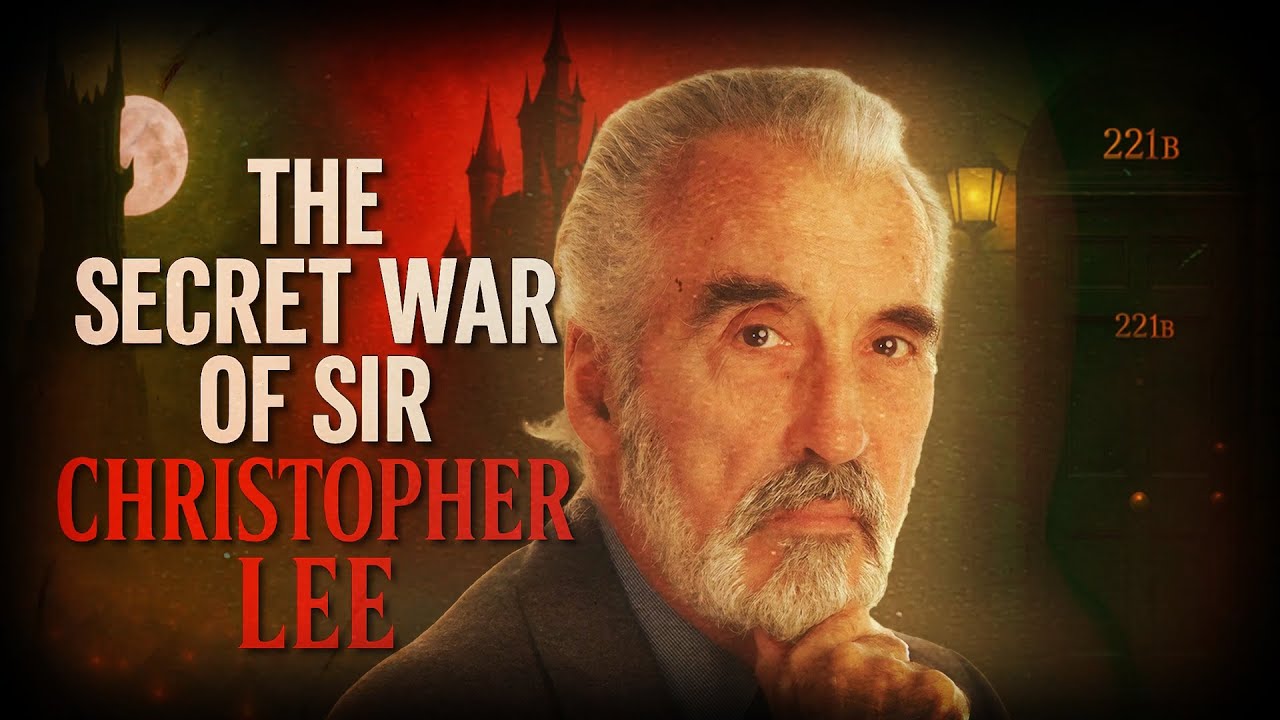
The Secret War of Sir Christopher Lee: From Covert Battlefield Missions to Big Screen Legend

Introduction: The Man Behind the Myths

Sir Christopher Lee is best remembered as a towering presence on screen—Dracula, Saruman, Count Dooku. But behind his cinematic legacy lies a shadowy past more thrilling than any of his film roles. Before Hollywood, before Hammer Horror, Lee was a soldier and a spy. During World War II, he served with distinction in the Royal Air Force and was attached to British intelligence and special forces, including the SAS and the Special Operations Executive (SOE).

Some of his missions remain classified, adding an air of mystery to an already enigmatic man. This is the story of a war hero whose real life may have inspired fictional legends like James Bond, and whose experiences shaped him as both an actor and a man. Long before he wore fangs or wielded a wizard’s staff, he stared down real danger in the shadows of history.

The Making of a Warrior: Early Life, War

Born in 1922 to a military family, Christopher Frank Carandini Lee grew up in a world shaped by war and aristocracy. His father was a decorated army officer, and his mother came from Italian nobility. From an early age, Lee showed an interest in languages, history, and adventure.

Lee was fluent in several languages—skills that would later serve him well in intelligence work. When World War II broke out, Lee enlisted in the Royal Air Force. Initially grounded due to a vision problem, he nonetheless found ways to serve. His aptitude and demeanor quickly led him into intelligence roles, and eventually into elite covert units.

Into the Shadows: SOE, SAS, Missions

Lee was quietly recruited into the SOE—Special Operations Executive, Winston Churchill’s infamous spy organization, often referred to as “the Ministry of Ungentlemanly Warfare.” He also had ties with the SAS, the Special Air Service, known for its deadly raids behind enemy lines. His work included sabotage operations, tracking down Nazi war criminals, and assisting in the liberation of concentration camps.

Lee operated in North Africa, Italy, and possibly Eastern Europe. Although Lee remained tight-lipped about many of his missions, he once told interviewers, with a knowing smile, “Let’s just say I was involved in some very confidential things.”

Hunting Evil: Post-War Pursuit of Nazis

Following the war, Lee worked with the Central Registry of War Criminals and Security Suspects (CROWCASS), the organization tasked with identifying and capturing Nazi war criminals. It was grueling and emotionally exhausting work—digging through evidence of atrocities and helping bring fugitives to justice.

Lee was present at several interrogations and assisted with intelligence that led to arrests. This chapter of his life haunted him and shaped his profound sense of justice. He once said, “If I could take just one man down who committed such acts, it was all worth it.”

Silence and Secrecy: A Code That Endured

Throughout his life, Lee maintained a strict code of silence regarding his military service. He believed that talking too much would dishonor the memory of those who served and died. When Peter Jackson asked him how he knew what a man sounded like when stabbed in the back—a moment while filming The Lord of the Rings—Lee replied, “Because I know what it sounds like.”

This cryptic answer added to the legend, but it was rooted in real, harrowing experience. Even in his autobiography, he glossed over many wartime details, preserving the dignity and confidentiality of those turbulent years.

Hollywood and the Haunted Heroic Past

After the war, Lee returned to civilian life and eventually found his way to the silver screen. His imposing height, deep voice, and stoic demeanor made him perfect for villainous roles. But beneath the horror makeup and menacing characters was a man shaped by unimaginable experiences.

Lee’s time in war gave him an intensity and authenticity that few actors could match. He was not pretending to understand fear or death—he had lived it. His military discipline carried over into his acting career; he was professional, punctual, and precise.

A Real-Life Bond: Spy, Soldier, or Legend?

Many have speculated that Christopher Lee’s cousin, Ian Fleming, drew on Lee’s life for inspiration when creating James Bond. Fleming and Lee were close, and the timeline of Lee’s wartime service overlaps significantly with Fleming’s own intelligence work.

Like Bond, Lee was suave, multilingual, deadly when needed, and accustomed to moving through shadows. While Lee never confirmed the theory, he didn’t deny it either. The parallels are compelling: both were British, both were involved in secretive operations across Europe, and both had a cool, lethal charisma.

Recognition Long Overdue: Hidden Valor

Despite his service, Lee never boasted or sought recognition for his military contributions. It wasn’t until much later in life that many people learned of his wartime record. In 2009, he was knighted for his contributions to drama and charity—but his military service was mentioned with reverence.

Lee’s commitment to duty, silence, and integrity stood in stark contrast to the modern age of oversharing. Lee’s life serves as a reminder that true heroism often resides in humility. In truth, he was the myth behind the myth.

Legacy: From War Rooms to Wizardry

Sir Christopher Lee’s legacy is unique. Few people can claim to have fought Nazis and also portrayed wizards and Sith Lords. His war service adds a profound dimension to his performances. When you see him wield a sword or issue a grave warning as Saruman, remember: this was not an act.

This was a man who had looked evil in the face and lived to tell the tale—if only in hints and whispers. His roles in cinema become even more iconic when framed by the knowledge of the life he led before the camera rolled.

Conclusion: A Hero in Shadow and Light

Sir Christopher Lee lived many lives. Soldier, spy, actor, legend. His wartime service remains a lesser-known but essential part of his story. In a century marked by conflict and change, Lee stood as a bridge between the brutal realities of war and the magical worlds of film. He showed that heroism takes many forms—on the battlefield, on the screen, and in the quiet dignity of a life lived with purpose and honor.

Overall, the world may remember him for Dracula or Saruman, but behind those characters stood a real man—a man who once fought in the shadows to defend the light. Sir Christopher Lee’s legacy is more than cinematic—he lived a life so extraordinary, it rivaled even the legends he portrayed on screen. In many ways, he wasn’t just playing heroes and villains—he was living the kind of story most actors could only dream of.

Categories
W1 World

When Birds Defeated Bullets: The Bizarre True Tale of Australia’s Great Emu War of 1932

Introduction: A War Unlike Any Other

In the annals of military history, few conflicts are as strange or as oddly comical as the Great Emu War of 1932. It was a battle not between nations or ideologies, but between man and bird. Following World War I, Australia found itself facing a very peculiar crisis: tens of thousands of emus were migrating westward and destroying farmlands in Western Australia. Desperate to protect their crops, farmers turned to the government for help.

What followed was a full-blown military operation involving soldiers, machine guns, and one of nature’s most unyielding birds—the emu. This was not just a footnote in history—it was a large-scale effort involving military planning, logistical challenges, and public scrutiny. Yet despite the firepower and experience of the soldiers, the emus would emerge victorious. This article dives deep into one of the most absurd chapters of military history.

A Post-War Agricultural Economic Crisis

The roots of the Emu War lie in the economic and environmental conditions that plagued Australia after World War I. Many veterans, as part of a government resettlement plan, were given land in Western Australia to take up farming. Unfortunately, the land was often arid, infertile, and difficult to cultivate. Compounding their struggles, the Great Depression had just begun, further driving down crop prices and pushing farmers into desperation.

Adding to their troubles, emus—large, flightless birds native to Australia—began migrating from inland areas toward the coast. Drawn by the water sources and crops in the farmlands, these emus arrived in droves—estimated at 20,000 or more. They trampled fences, devoured wheat fields, and left chaos in their wake. Farmers were helpless against this avian onslaught and petitioned the government for military intervention.

Operation Emu: When Army Was Called In

Responding to the farmers’ cries for help, the Minister of Defence, Sir George Pearce, approved a plan to deploy soldiers armed with Lewis machine guns to take care of the emu problem. This was not a joke—the government treated it as a legitimate military operation. Major G.P.W. Meredith of the Royal Australian Artillery was put in command, and he was accompanied by two soldiers, equipped with 10,000 rounds of ammunition, and two Lewis guns.

The first phase of the operation began in November 1932. The idea was simple: locate the emus, open fire, and reduce their numbers dramatically. But this proved easier said than done. The emus, far from being easy targets, displayed remarkable agility and unpredictable group behavior. Instead of bunching together in convenient clusters, they scattered in small groups that were difficult to hit. The soldiers discovered that these birds were not only fast but seemingly had a sixth sense for danger.

The Birds Strike Back: Emu Evasion Tactics

The operation quickly turned into a farce. In one instance, the soldiers ambushed a group of over 1,000 emus, only to have their gun jam after just a few kills. The rest of the birds escaped into the scrubland. Another plan involved mounting a machine gun on a truck to chase down the emus, but the terrain was too rough, and the truck couldn’t keep up. The gunner couldn’t even aim properly due to the bouncing vehicle.

Emus often traveled in smaller flocks led by a large, dominant bird that appeared to serve as a lookout or commander. When soldiers opened fire, these leaders would dart off in unexpected directions, confusing the troops and scattering the rest of the flock. The birds proved nearly impossible to corner or trap, and each encounter ended with high ammunition use and very few birds downed.

Within a week, only a few hundred birds had been killed, and the operation had used up a significant portion of its allotted ammunition. Newspapers began mocking the effort, with headlines suggesting that the emus had outmaneuvered the army and won the war.

Political Embarrassment and Withdrawal

By the end of the first attempt in mid-November 1932, the operation had to be paused. In its first seven days, 2,500 rounds had only netted around 200 confirmed kills. That’s over 12 bullets per emu—not exactly a successful mission. The press ridiculed the military effort, and members of Parliament questioned why resources were being wasted this way.

Despite the embarrassment, a second campaign was launched later that same month with more planning and a new strategy. This time, the soldiers managed to kill about 986 emus with an estimated 9,860 bullets—still an extremely high ammunition-to-kill ratio. Eventually, the military withdrew altogether, and the war was officially declared a failure.

The Aftermath and the Bird’s Victory

In the end, it wasn’t firepower but fencing that ultimately provided some relief to the farmers. The government later supported the installation of exclusion barriers and promoted a bounty system that paid locals for each emu killed. Though it took time, these more conventional methods proved far more effective than military action.

The Great Emu War became the subject of satire and mockery, not just in Australia but around the world. Yet it also highlighted deeper issues: the difficulties of post-war resettlement, government mismanagement, and the unpredictable force of nature. It served as a reminder that even a highly trained military can be humbled by something as seemingly harmless as a bird.

The Emu War in Popular Culture

Since then, the Emu War has achieved near-mythic status in pop culture. It has inspired memes, songs, video games, and documentaries. It is frequently cited as an example of bureaucratic absurdity and the folly of overconfidence. For many Australians, it remains a source of humor and historical curiosity.

Despite the comical overtones, it’s also become a cautionary tale. Environmental mismanagement, ignoring the natural patterns of wildlife, and hastily turning to militaristic solutions can backfire spectacularly. The Emu War endures as a bizarre but potent metaphor for human misjudgment.

Conclusion: A Feathered Victory

The Great Emu War of 1932 remains one of the strangest conflicts ever recorded. What began as a serious attempt to protect farmlands ended in a spectacular—and public—failure. In a literal battle of bullets versus birds, the emus won hands down.

This unlikely episode in Australian history teaches us that brute force is not always the best solution, especially when facing an opponent adapted to the environment. It also reminds us that history is full of unexpected stories—where the victors don’t always wear uniforms, and sometimes, they have feathers instead.

Categories
W1 World

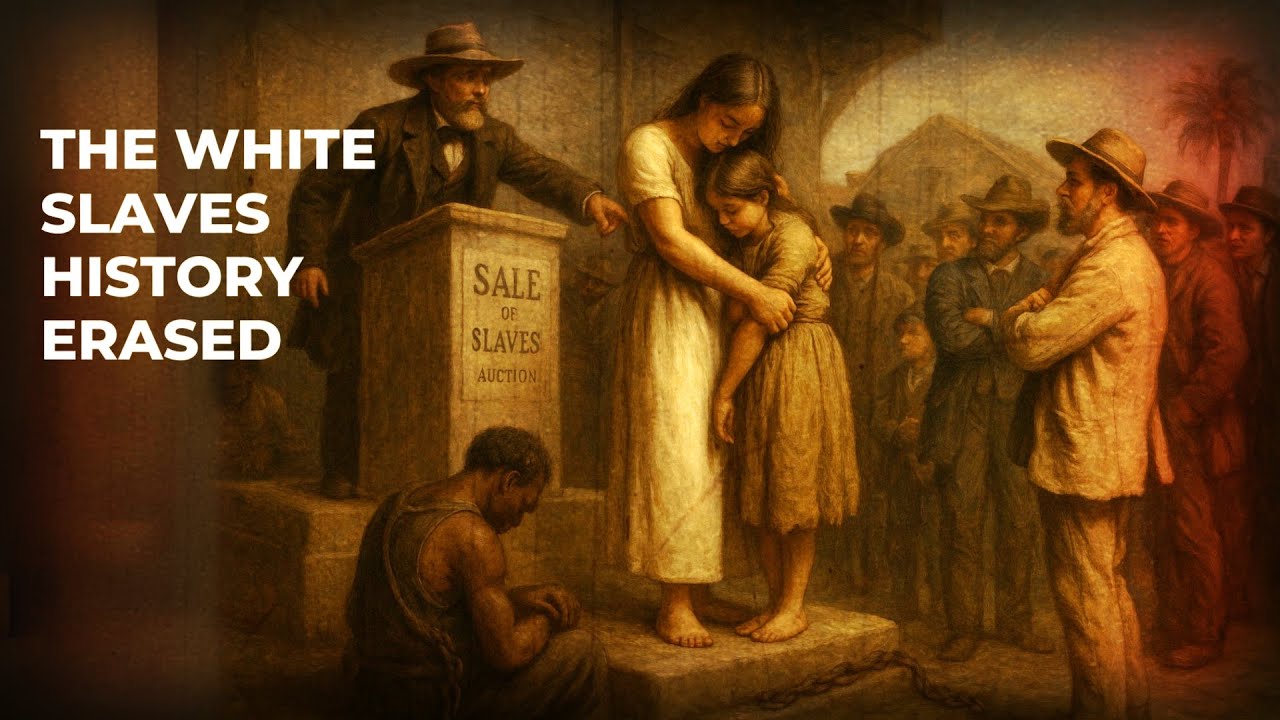
The Hidden Roots of Global Slavery: White Slavery and What History Books Leave Out

Introduction: Story You Haven’t Heard

When people think of slavery, they often picture the transatlantic slave trade that brought millions of Africans to the Americas beginning in the 1600s. In the U.S., the year 1619 is frequently cited as the “beginning” of slavery. But the truth is far older, broader, and far more complex. Long before Africans were transported across the Atlantic, slavery had already carved a brutal legacy across continents—and millions of the enslaved were white.

This is not a denial of the immense suffering caused by African slavery. Rather, it is a call to expand our understanding. From Slavic and Irish slaves to captives taken by Islamic empires and Barbary pirates, the institution of slavery has been a foundational force in building many of the world’s most powerful civilizations. And yet, many of these stories remain obscured, if not outright erased, from mainstream education.

Slavery Before 1619: The Global Norm

Long before American colonists ever planted tobacco, slavery was already a common practice in Europe, Africa, and Asia. The term “slave” itself comes from the word “Slav”—a reference to the Slavic peoples of Eastern Europe who were taken in mass numbers during the Middle Ages and sold into bondage by the Byzantine Empire, Islamic Caliphates, and various European powers.

By the 9th century, Arab traders were capturing and purchasing Slavic people to work as soldiers, laborers, and harem attendants in the Islamic world. Entire villages were raided along the Danube River and beyond. These Slavs were so prevalent in slave markets that the word “slave” essentially became synonymous with “Slav.”

Irish Slavery: The Overlooked Chapter

The Irish too faced centuries of brutal oppression, including forced deportation and slavery. Under British colonial rule, particularly during the 17th century, tens of thousands of Irish men, women, and children were sent to the Caribbean and American colonies as indentured laborers and outright slaves.

While the term “indentured servant” is often used to soften the narrative, many Irish were forced into contracts under false pretenses or had no choice at all. The conditions they endured—back-breaking labor, whippings, starvation, and separation from families—were nearly indistinguishable from those experienced by African slaves.

It’s estimated that during the 1650s alone, over 50,000 Irish people were shipped to Barbados and other Caribbean islands, where they were auctioned off like cattle. The term “redlegs” later came to describe their sunburned skin and harsh existence.

The Barbary Slave Trade Across Europe

Between the 16th and 19th centuries, North African Barbary pirates raided European coastal towns from Italy and France to Ireland and Iceland. They captured an estimated 1 to 1.25 million Europeans, selling them into slavery in the Ottoman Empire and North Africa.

These captives were used for a range of purposes—domestic labor, construction, galley rowing, and sexual servitude. In some coastal towns, entire populations were abducted, never to return. And yet, this chapter is rarely included in Western curricula.

Some historians argue that the trauma of these events created generational fear in European coastal communities. In fact, European nations eventually began paying tributes—essentially protection money—to Barbary states just to avoid further attacks.

Islamic Empires and the Slave Economy

Slavery was also deeply embedded in Islamic empires for centuries. From the Abbasid Caliphate to the Ottoman Empire, enslaved people formed the backbone of economies, palaces, and military forces. Unlike in Western chattel slavery, where racial lineage often determined lifelong bondage, Islamic slavery was more fluid. Some slaves could earn freedom, rise to power, or convert and gain rights. But make no mistake—millions suffered and died in this system.

Enslaved individuals came from many regions: Sub-Saharan Africa, Central Asia, the Caucasus, and Europe. Mamluks (slave soldiers) became powerful rulers in Egypt. Eunuchs guarded harems. Women were trafficked into concubinage. The diversity of slavery in Islamic realms is a stark reminder that bondage was not uniquely European or African—it was a global institution.

Why This History of Slavery Was Erased

Why don’t we hear about this in school? One reason is that history is often written by those in power. The narratives taught in American and European schools frequently emphasize certain sufferings while minimizing others, often to preserve national myths or social cohesion.

Highlighting the suffering of white slaves could blur the line between victim and oppressor, which complicates the dominant narrative. Furthermore, acknowledging the full scope of global slavery would mean confronting uncomfortable truths about empires, religious institutions, and economic systems that are still celebrated today.

Another factor is race-based slavery’s unique horrors. The racial caste system established in the Americas left a generational legacy of racism and inequality that continues today. This system deserves its focused scrutiny. But broadening the conversation to include other enslaved groups doesn’t diminish that history—it enriches it.

The Economic Foundations of Slavery

Slavery, in all its forms, was an economic engine. Empires were built on unpaid labor. Whether it was the Roman Empire exploiting slaves from conquered lands, the Islamic caliphates using Central Asian captives, or the British colonists profiting from African and Irish labor, the pattern is unmistakable: slavery was about wealth, control, and expansion.

Nobel-winning economist Douglass North once argued that the institutional structure of slavery enabled capital accumulation and state formation across civilizations. Whether that institution was African chattel slavery or earlier systems, the economic motive remained central. Understanding this helps explain why slavery persisted for so long and why societies were willing to brutalize millions of people—it paid.

A More Complete Narrative of Slavery

None of this is to compare sufferings or establish a hierarchy of horrors. Every form of slavery was brutal. Every victim was human. What matters is recognizing that the history of slavery is not linear or monocultural. It’s vast, transnational, and deeply embedded in the rise of human civilizations.

By acknowledging the stories of Slavic, Irish, and other European slaves alongside those of African descent, we gain a fuller picture of our past—one that can better inform our present and future.

Conclusion: Uncovering Facts Vs Myths

History doesn’t lose meaning when it’s expanded. The tragedy of African slavery in America remains a moral stain that must never be forgotten. But alongside it, we must also uncover the buried chapters—the enslaved Slavs, the red-legged Irish, the kidnapped Europeans, and the empires that thrived on their misery.

Only then can we begin to understand the true global legacy of slavery—and why its echoes still shape the world we live in today. Only by uncovering every layer of slavery’s complex and global history can we truly understand its legacy—and begin to dismantle the myths that still shape our world today.

Categories
W1 World

Profiting from Genocide: How US Corporations Fueled Nazi Germany’s War Machine, Holocaust

Introduction: A Capitalist Complicity Few Dare to Confront

World War II is often framed as a heroic battle between democracy and fascism, between the Allies and the Axis. Yet buried beneath this moral narrative lies a darker, more uncomfortable truth—several major American corporations maintained lucrative relationships with Nazi Germany, providing technology, fuel, vehicles, and even bureaucratic tools used to commit atrocities. While U.S. soldiers were dying on European soil, some U.S. companies were making profits from Hitler’s regime.

This article explores the disturbing history of how prominent firms like IBM, Ford, Coca-Cola, and Standard Oil chose profit over humanity, aiding a genocidal regime while millions were exterminated. These relationships, mostly obscured from mainstream historical narratives, raise hard questions about the ethics of capitalism and the responsibilities of corporations in times of moral crisis.

IBM and the Holocaust: Computing Systematic Death

Few corporations are as directly linked to the infrastructure of the Holocaust as International Business Machines (IBM). Under the leadership of CEO Thomas J. Watson, IBM’s German subsidiary—Dehomag—provided the punch-card machines and tabulating systems that allowed Nazi officials to systematically identify, classify, and ultimately exterminate Jews, Roma, and other persecuted groups.

These early proto-computers were used for everything from census data sorting to train logistics, even helping manage the deportation schedules to concentration camps like Auschwitz. While IBM claims it lost control of its German division after the war began, investigative research by authors like Edwin Black (“IBM and the Holocaust”) revealed that IBM continued to maintain technical support and oversight, even as the genocide was unfolding. IBM’s involvement reveals a chilling truth: bureaucratic efficiency enabled industrial-scale murder. And behind it all, a U.S.-based company silently counted its profits.

Ford Motor Company: Manufacturing for the Reich

The connection between Ford Motor Company and Nazi Germany runs deep and ideologically unsettling. Henry Ford, an avowed anti-Semite, was admired by Adolf Hitler—so much so that Ford was mentioned in Hitler’s own manifesto, Mein Kampf. Ford even received the Grand Cross of the German Eagle, the highest Nazi honor available to foreigners.

More than symbolic ties, Ford’s German subsidiary played a crucial role in manufacturing military vehicles and equipment for the Wehrmacht, particularly during the early years of the war. Allegations emerged that forced labor—including prisoners of war and concentration camp inmates—was used in Ford’s factories under Nazi control.

Though Ford executives later claimed ignorance, documents suggest that corporate headquarters in Dearborn remained aware of profits generated by their German operations. In the brutal calculus of war, Ford made a choice—to preserve assets and relationships with a fascist regime, even at the cost of complicity in human suffering.

Standard Oil and IG Farben: Fueling the Nazi War Machine

If IBM provided the brains and Ford the wheels, Standard Oil delivered the bloodline—fuel. Through complex partnerships, notably with Germany’s IG Farben (the chemical giant responsible for producing Zyklon B, the gas used in Auschwitz), Standard Oil provided crucial technology and materials to Nazi Germany.

Among the most damning collaborations was the synthetic rubber and fuel project called Buna, which was developed jointly by Standard Oil and IG Farben. These resources were vital for the Nazi war machine, especially as Allied blockades tightened access to natural oil.

Even as the U.S. entered the war, Standard Oil was accused of violating wartime restrictions, secretly funneling strategic resources to Germany via neutral countries. Despite some executives being investigated, the corporation faced little long-term accountability. Standard Oil’s actions spotlight how corporate interests can transcend national loyalty when profits are at stake—and how those decisions can have devastating consequences.

Coca-Cola: Quenching the Thirst of Nazi Fascism

During the 1930s and early 1940s, Coca-Cola became deeply embedded in Nazi Germany, navigating political shifts with remarkable agility. Its German bottling plants continued operating even after the war began, maintaining production for the Nazi populace and military.

But what’s perhaps most revealing is Coca-Cola’s invention of Fanta, created by its German branch during the war when ingredients to make Coke became unavailable due to trade restrictions. With fruit waste and whey, Coca-Cola’s team invented a new product specifically to cater to the German market under Hitler.

While Coca-Cola would later rebrand its wartime history, the creation of Fanta is a testament to corporate adaptability—even if it meant innovating under a fascist regime. It wasn’t until decades later that the company confronted this chapter of its past.

Corporate Profits and the Machinery of Genocide

These corporations were not fringe players. They were household names, pillars of American industry, and symbols of capitalist success. Their involvement in Nazi Germany was not only about logistics or opportunism—it was about making deliberate choices to protect business interests, even if that meant abetting one of history’s greatest crimes.

From supplying materials for gas chambers to facilitating forced labor, the contributions of U.S. corporations to the Nazi regime went well beyond passive trade. They helped build, run, and sustain the very system that enabled the Holocaust. In some cases, like IBM’s, their tools were instrumental to the administration of genocide. In others, like Ford and Standard Oil, their products and infrastructure kept the Nazi war machine running longer and more efficiently.

Post-War Amnesia: The Whitewashing of Corporate Guilt

Despite their wartime collaborations, few of these companies faced lasting consequences. Many settled quietly with the U.S. government or Holocaust survivor groups, without admitting guilt. In the post-war period, the narrative shifted to rebuilding and economic growth—justice for corporate collaboration was largely forgotten.

This lack of accountability speaks volumes about the era’s priorities. The onset of the Cold War and the desire to rebuild Germany as a buffer against Soviet influence meant sweeping inconvenient truths under the rug. Profitable corporations were not only protected—they were sometimes celebrated for their post-war contributions.

Even today, these companies continue to operate as global giants, with sanitized histories that often omit their darkest chapters. Only recently have independent researchers and historians begun to piece together the extent of their involvement.

Conclusion: The Profits That Enabled a Holocaust

The stories of IBM, Ford, Coca-Cola, and Standard Oil serve as cautionary tales. They reveal how capitalism, unchecked by ethics, can become complicit in atrocities. While the world rallied to defeat fascism militarily, segments of corporate America quietly supported it—behind the curtain of commerce and beneath the radar of public accountability.

It’s tempting to believe that such actions belong to a distant past. But the truth is, the moral failures of these corporations during the Holocaust highlight enduring questions about corporate responsibility, ethical capitalism, and the price of silence in the face of evil. To truly honor the victims of Nazi brutality, we must also confront the enablers—not just the soldiers and dictators, but also the executives and shareholders who put profits over lives.

Categories
W1 World

How PepsiCo Became the World’s Sixth Largest Navy—And Lost the Cold War Soda Battle

Introduction: When Soda Took on Superpowers

In the annals of Cold War history, where tales of espionage, brinkmanship, and ideological conflict dominate the narrative, one story stands out for its sheer audacity and absurdity. It is the story of how PepsiCo, an American soda company, briefly became the owner of one of the world’s largest naval forces—on paper. For a surreal stretch of time, Pepsi commanded more warships than most national militaries.

But how did a company known for bubbly beverages end up commanding a fleet of Soviet submarines and warships? This isn’t a corporate myth. It’s a true story of capitalism navigating communism, of a beverage becoming a diplomatic weapon, and of how one company’s ambition collided with geopolitical upheaval. Welcome to one of the Cold War’s most bizarre—and often overlooked—chapters.

Cracking the Soviet Market: Pepsi’s Unlikely Cold War Entry

In the late 1950s, the Soviet Union was still largely sealed off from the economic and cultural influences of the West. While missiles were pointed skyward and Berlin was divided, soft drinks were hardly a topic of strategic concern. But PepsiCo’s then-CEO Donald M. Kendall had other ideas. During the 1959 American National Exhibition in Moscow, Kendall staged a photo op that would become legendary: he offered Soviet Premier Nikita Khrushchev a glass of Pepsi, who was photographed sipping the capitalist drink in front of news cameras.

The image went global. To the West, it was a symbolic victory of consumer culture over communism. To the Soviet people, it was a first taste of something exotic, fizzy, and forbidden. That single event planted the seeds for Pepsi’s ambition to enter the Soviet market—a move that would take decades to fully realize but would ultimately catapult the company into a Cold War saga like no other.

The Deal That Changed History: Vodka for Cola

The Soviet Union couldn’t pay for foreign goods using its ruble, a non-convertible currency with no value on the international market. But the USSR did have a prized export: vodka. In 1972, PepsiCo and the Soviet government struck a revolutionary barter deal: Pepsi syrup concentrate would be shipped into the USSR, and in return, the Soviets would give the company exclusive rights to export and sell Stolichnaya vodka in the United States and other Western markets.

This deal was groundbreaking. It made Pepsi the first American product to be legally sold in the Soviet Union, giving the company a monopoly on an enormous and previously untapped market. Soviets, many of whom had never experienced Western consumer products, began associating Pepsi with modernity and global relevance. It was a small bubble of capitalism in a sea of planned economy—and it worked. Pepsi’s brand became embedded in Soviet culture.

Warship Trade: When Pepsi Became a Naval Superpower

By the late 1980s, the Soviet Union’s financial system was under intense strain. The existing barter system wasn’t enough to satisfy the growing demand for Pepsi products across the USSR. So in 1989, a new and vastly expanded barter agreement was reached—but this time, vodka wasn’t the only thing on the table.

In a jaw-dropping twist, the Soviets offered 17 submarines, a missile cruiser, a frigate, and a destroyer as partial payment to PepsiCo. These vessels were outdated and decommissioned, but they were real, tangible military assets. For a brief moment in 1989, PepsiCo became the sixth-largest naval power in the world, outgunning dozens of actual countries in terms of fleet size.

Pepsi didn’t keep the ships, of course. They quickly sold them for scrap to a Swedish company. But that didn’t stop CEO Donald Kendall from joking with national security officials, “We’re disarming the Soviet Union faster than you are.” The story became a sensational example of corporate reach and Cold War absurdity—proof that in capitalism, anything is negotiable.

Soda as Soft Power: A Cold War Marketing Coup

Pepsi’s foray into the USSR was more than a business strategy—it was a powerful exercise in soft diplomacy. Through clever branding, cultural adaptation, and high-level negotiations, Pepsi inserted itself into a society where Western influence was almost entirely banned. For many Soviet citizens, Pepsi wasn’t just a drink. It was a glimpse into a freer world, where choice and abundance were not just ideological concepts but daily realities.

The success of the Pepsi strategy also showed how brands can transcend politics and ideology, especially during times of global tension. The ability to penetrate an adversarial superpower’s market was a major coup—not just for Pepsi, but for American capitalism at large. It demonstrated how corporate strategy could achieve what traditional diplomacy often failed to accomplish.

Coca-Cola’s Comeback: Victory in a Post-Soviet World

While Pepsi’s strategy looked genius in the 1980s, the collapse of the Soviet Union in 1991 changed everything. The centrally planned economy disintegrated overnight, and with it, Pepsi’s barter-based agreements. Suddenly, the Russian market opened up to full capitalist competition—and Coca-Cola, which had been excluded from the USSR, surged in like a tidal wave.

With aggressive marketing, better infrastructure, and broader international reach, Coca-Cola quickly overtook Pepsi as the preferred soft drink in the newly capitalist countries of the former USSR. Pepsi’s Cold War monopoly turned into a peacetime disadvantage. The company had invested in a political system that no longer existed, while its rival started fresh in a new, competitive marketplace. Ironically, the company that had gone so far as to own warships to maintain its market share in the East couldn’t stop Coca-Cola from winning the cola war once the Cold War ended.

Conclusion: Business, Cold War, and Bubbles

The story of the Pepsi Navy remains one of the most surreal and telling examples of how deeply intertwined business, politics, and ideology became during the Cold War. It’s a reminder that corporations can sometimes operate as quasi-nations, using the tools of diplomacy, negotiation, and even military power—however symbolic—to achieve their goals. This strange chapter also reflects how quickly geopolitical tides can turn.

Pepsi’s victory in the USSR was built on a system that ultimately could not last. When that system collapsed, so too did the foundations of its cola empire in the East. Still, for one bizarre and sparkling moment in history, a soda company had a fleet of submarines, the ear of Soviet leadership, and a navy ranking above Brazil, Turkey, and even some NATO allies. That’s not just brand power. That’s Cold War corporate history at its wildest.

Categories
W1 World

The Darkest Day in Mormon History: Unraveling the Untold Story of Mountain Meadows Massacre

Introduction: The Tragic Prelude to a Dark and Grim Chapter

In 1857, a tragedy unfolded in the remote mountain meadows of southern Utah that would become one of the darkest chapters in American history. A wagon train of 137 emigrants—men, women, and children—was ruthlessly slaughtered by a Mormon militia and their Native American allies. The Mountain Meadows Massacre, as it would later be called, remains a chilling reminder of the violence and fanaticism that sometimes accompanied the westward expansion of the United States. Despite its gravity, the true story of the massacre was long buried, denied, and misrepresented by the Mormon Church and surrounding communities.

In this article, we uncover the full timeline of the massacre, shedding light on the history, motivations, and events that led to the tragedy. From the founding of the Church of Jesus Christ of Latter-day Saints (LDS) to the rise of Brigham Young, the Utah War, and the anti-Mormon sentiment that permeated much of the 19th-century American West, we delve into the complex confluence of factors that shaped this brutal act of violence. We also examine the long-lasting impact on the victims’ families, the Mormon community, and the Mormon Church’s eventual acknowledgment of its involvement in the massacre more than 150 years later.

The Origins of the LDS Church and the Rise of Brigham Young

The roots of the Mountain Meadows Massacre trace back to the founding of the LDS Church in the early 19th century. Joseph Smith, a young man from upstate New York, claimed to have been visited by God and Jesus Christ, who instructed him to restore the true church. In 1830, Smith published the Book of Mormon, which he said was translated from ancient texts revealed to him through divine means. His revelations, coupled with his controversial teachings, quickly attracted followers, but they also sparked fierce opposition from both religious and secular communities.

As the LDS Church grew, so did tensions with surrounding communities. In Missouri, members of the faith faced violent persecution, resulting in the Mormon Exodus to Illinois, where they built the thriving city of Nauvoo. However, Joseph Smith’s assassination in 1844 created a leadership vacuum, and Brigham Young emerged as the leader of the church, guiding the Mormons westward in search of religious freedom. In 1847, Young and his followers reached the Utah Territory, which was then part of Mexico, and established Salt Lake City as the heart of their faith.

Brigham Young, a charismatic and authoritative leader, played a pivotal role in the events leading up to the Mountain Meadows Massacre. His rise to power was marked by intense religious fervor and a deep distrust of the U.S. government. Young viewed the federal government as a hostile force, and this sentiment would later contribute to the mounting tensions between the Mormons and the U.S. military.

The Utah War and Paranoia: Rising Tensions Escalate Quickly

By the mid-1850s, the Utah Territory was becoming a flashpoint for conflict. The U.S. government, concerned with the Mormon Church’s influence and autonomy, sent federal troops to Utah to assert its control over the area. This move, known as the Utah War, further fueled the Mormons’ distrust of the federal government and its authority. Brigham Young’s leadership became more authoritarian as he sought to protect the church’s interests in the face of mounting external pressure.

At the same time, Young and other Mormon leaders began to feel increasingly vulnerable and isolated. Their isolation in the Utah desert, coupled with the encroachment of non-Mormon settlers, created a volatile atmosphere. The tensions culminated in a climate of fear and paranoia, especially regarding the increasing number of emigrants traveling westward. Among these settlers was the ill-fated wagon train that would soon become the target of a violent massacre.

The Wagon Train and Mountain Meadows: A Fateful Journey

In early 1857, a wagon train of 137 emigrants from Arkansas set out for California. These settlers were largely made up of families seeking to establish new lives in the West, and their journey through the Utah Territory was meant to be a peaceful passage. However, by the time they arrived in the Mountain Meadows, they had unknowingly crossed paths with a deadly force.

The emigrants were traveling along the California Trail when they were intercepted by Mormon militia forces led by local leaders in southern Utah. The Mormons, who had been building a growing sense of distrust and hostility towards outsiders, saw the Arkansas settlers as potential threats. Adding to the paranoia, the emigrants were suspected of being affiliated with the U.S. military and had a reputation for being “pro-government.”

As tensions mounted, a decision was made by Mormon leaders to eliminate the wagon train as a potential threat. The militia, with the support of several hundred Native American allies, launched a brutal attack on the unsuspecting settlers. Over the course of several days, the majority of the men, women, and children in the wagon train were killed, with only a few survivors left to witness the aftermath.

The Massacre and Aftermath: Brutality and Consequences

On September 11, 1857, the massacre reached its bloody conclusion. The emigrants were lured into a false sense of security by promises of safe passage, only to be ambushed and slaughtered. In total, 120 men, women, and children were murdered, with the survivors—including children—being taken into captivity. The bodies of the victims were stripped and left to rot, and the entire area was covered up as the local militia tried to erase any evidence of the atrocity.

For decades, the true story of the Mountain Meadows Massacre was concealed by the Mormon Church and the militia involved. The cover-up extended far beyond the immediate aftermath, with little to no information about the massacre reaching the public. The bodies of the victims were buried hastily, and the incident remained a well-kept secret for many years.

As time passed, the massacre slowly began to come to light. Investigations in the late 19th century, including those conducted by the U.S. government, were largely unsuccessful in bringing the perpetrators to justice. The Mormon Church, under Brigham Young’s leadership, maintained a firm stance of denial, placing blame on the Native American allies who had been complicit in the attack.

The Mormon Church’s Acknowledgment and Road to Justice

It was not until the late 20th century that the true scale of the Mountain Meadows Massacre began to be widely acknowledged. The LDS Church’s refusal to take responsibility for its role in the atrocity created a continued source of tension between the church, the U.S. government, and the descendants of the victims. In the 1990s, a series of investigations and historical inquiries led to the eventual uncovering of key documents that revealed the church’s involvement.

In 1999, after more than 140 years of denial, the LDS Church finally issued a formal apology for its role in the massacre, acknowledging that the deaths of the emigrants were the result of actions taken by Mormon militia members. However, by that time, many of the key perpetrators had long since passed away, and the victims’ families had already been through generations of suffering and loss.

Conclusion: The Legacy of the Mountain Meadows Massacre

The Mountain Meadows Massacre remains one of the darkest and most controversial episodes in American religious history. It was a tragedy fueled by a combination of religious fervor, political paranoia, and violent fanaticism. For the Mormon Church, it was an event that would stain its legacy for over a century. The massacre not only cost the lives of 120 innocent people but also left a lasting scar on the relationship between the Mormon community, the U.S. government, and the families of the victims.

It serves as a painful reminder of the complex and often violent history of religious movements, especially in the context of 19th-century American frontier life. While the LDS Church has made steps toward reconciliation with the descendants of the victims, the wounds of the massacre remain a tragic part of American history. For many, it is a story of faith gone wrong, of a community driven to desperation and violence in the face of perceived threats, and a somber chapter that should never be forgotten.

Categories
W1 World

When the Sky Spoke Back: 12 UFO Encounters That Shook the World and Still Haunt Us

Introduction: When the Sky Speaks in Secrets

From the eerie silence of rural backroads to the buzzing skies over military installations, reports of unidentified flying objects—or UFOs—have fascinated, terrified, and confounded people for decades. Long dismissed as fringe fantasy or Cold War paranoia, many of these encounters are now drawing renewed attention, thanks to declassified documents, military whistleblowers, and shifting public sentiment.

This article delves into twelve of the most chilling, bizarre, and persistently unexplained UFO encounters in modern history. Whether you’re a skeptic, a believer, or somewhere in between, these stories may leave you questioning not just what’s out there—but what else we’ve been kept from knowing. From shadowy government programs to eyewitness accounts lost in time, the truth may be stranger than fiction.

The Gorman Dogfight – Aerial Pursuit Over North Dakota

In 1948, Lieutenant George Gorman, a seasoned World War II fighter pilot, engaged in a bizarre and unexplained dogfight with a glowing orb over Fargo, North Dakota. Flying his P-51 Mustang, Gorman chased the object for nearly 27 minutes. Despite executing high-speed maneuvers, the object outpaced and outmaneuvered his aircraft with alarming ease. The Air Force investigation, part of Project Sign, offered no satisfactory explanation. Was it experimental technology—or something else entirely? Gorman’s credibility and detailed report made this one of the earliest and most puzzling UFO confrontations in American history.

The Flatwoods Monster Encounter – Fear in the Fog

On a September evening in 1952, several children and adults in Flatwoods, West Virginia, claimed to have encountered a towering, glowing-eyed entity surrounded by toxic mist. Witnesses described the creature as at least 10 feet tall with a spade-shaped head and claw-like hands. The stench in the air made some of the witnesses nauseous. While skeptics later suggested it was a barn owl and misidentified natural phenomena, the military’s swift interest in the case—and the lasting trauma experienced by witnesses—suggest a deeper mystery.

The Hopkinsville Siege – A Night of Terror

In 1955, a rural Kentucky family was terrorized by what they described as small, metallic-skinned creatures with clawed hands and glowing yellow eyes. The family reportedly shot at the beings for hours, but no trace of them was ever found. Law enforcement took the reports seriously, documenting bullet holes and shell casings. This encounter, dubbed the Hopkinsville Goblins case, remains one of the most bizarre and credible close encounters on record. Even skeptics admit the witnesses seemed genuinely terrified.

The Kecksburg Crash – America’s Roswell of the East

On December 9, 1965, a bell-shaped object reportedly crashed into the woods near Kecksburg, Pennsylvania. Eyewitnesses claimed to see a metallic craft covered in strange symbols. Within hours, military personnel cordoned off the area, removing the object under tight security. The official explanation was a meteor, but declassified documents suggest an intense interest from the U.S. government. Some theorize it was a Soviet satellite, others believe it was an extraterrestrial craft.

Eisenhower’s Secret Alien Meeting – The President Disappears

In 1954, President Dwight D. Eisenhower mysteriously vanished for several hours during a trip to Palm Springs. The official story was emergency dental surgery, but whistleblowers later claimed he had secretly met with extraterrestrials at Edwards Air Force Base. The alleged meeting included discussions about technology and human experimentation. While no solid evidence has ever emerged, the story refuses to fade—fueling speculation about high-level contact with alien races.

Nixon & Gleason’s Alien Body Revelation – A Shocking Secret

According to actress Beverly McKittrick, comedian Jackie Gleason was once shown an alien body stored at a U.S. military base by President Richard Nixon himself. The story goes that Nixon, trusting Gleason as a friend, drove him unescorted to a secure hangar at Homestead Air Force Base in Florida. Gleason was reportedly never the same afterward. The tale, bizarre and unverifiable, still fascinates researchers due to the high-profile individuals involved.

The Entity of Tsarichina – Bulgaria’s Forbidden Zone

In the early 1990s, Bulgarian military officials sealed off the village of Tsarichina to conduct a secret excavation. Villagers reported strange lights, booming sounds, and disembodied voices. Soldiers allegedly experienced intense psychological effects. Some believe the military uncovered an ancient alien artifact—or even a dormant being. The site remains off-limits, and the government has never fully explained what happened. It’s become a focal point for Eastern European UFO lore.

The Falcon Lake Incident – Burned by the Unknown

In 1967, Canadian prospector Stefan Michalak encountered a landed spacecraft in Manitoba’s Falcon Lake region. As he approached, he was hit by a blast of hot gas through a vent in the craft, causing severe burns in a grid-like pattern. Michalak suffered long-term health problems and radiation-like symptoms. The Canadian and U.S. governments investigated but found no clear answers. His detailed account and physical evidence make it one of the most compelling UFO cases in North America.

The Alien Battle of 1979 – War in the Skies?

Alleged leaked Soviet documents describe a 1979 firefight between Soviet forces and alien entities at a remote military base. The aliens reportedly used energy weapons that vaporized several soldiers before retreating. While there is no way to verify the authenticity of the documents, Russian defectors and former KGB agents have alluded to strange encounters. If true, it raises disturbing questions about extraterrestrial hostility—and government preparedness.

The Iraqi Stargate Conspiracy – Ancient Tech, Modern War

Some conspiracy theorists believe that Saddam Hussein’s regime discovered ancient Sumerian technology—possibly alien in origin—beneath the sands of Iraq. Dubbed the “Iraqi Stargate,” this alleged portal to another dimension may have drawn U.S. military interest beyond oil or weapons. Though no credible proof exists, the theory gained traction after mysterious artifacts were seized by American forces and whisked away under high security. It taps into long-standing myths of alien influence on ancient Mesopotamian civilizations.

The Reed Alien Encounter – A Freezer and a Stick

In one of the strangest UFO reports on record, Seattle man Dan Reed claimed in the late 1990s to have killed an alien that murdered his dog—using only a wooden stick. He stored the being’s body in a freezer for several weeks before reporting it. Authorities found no evidence, and many dismissed it as a hoax. But UFO researchers remain divided, especially given Reed’s consistent testimony and lack of motive for fabrication.

Project Blue Beam – The Weaponization of Wonder

Project Blue Beam is a controversial theory alleging that NASA and global elites plan to simulate a fake alien invasion—or a divine return—using advanced holographic technology. The goal, theorists claim, is to unite the world under a new authoritarian regime. While often dismissed as fringe speculation, technological advances in AR and deepfake video make the idea less implausible today than it once seemed. What was once pure science fiction may now be a dangerous reality.

Conclusion: History Rewritten in the Skies

From high-level government officials to terrified families and confused soldiers, these UFO encounters span decades and continents. Each case, strange and often unexplained, contributes to a larger puzzle that humanity has yet to fully solve. Whether evidence of extraterrestrial life, secret military tech, or mass psychological phenomena, these stories endure because they challenge what we think we know—and force us to confront what might lie beyond.

Perhaps the real question isn’t whether they’re true, but why we’re still so desperate to forget them. In the shadows of secrecy and speculation, these UFO stories remind us that the truth might be far stranger—and closer—than we ever imagined. Whatever the truth may be, these tales challenge us to keep looking up—and to question what we think we know about our place in the universe.

Categories
W1 World

Fueled by Pervitin: How Nazi Germany’s Secret Drug Powered the Blitzkrieg Onslaught

The Secret Stimulant That Powered the Nazi War Machine

When the world witnessed the lightning-fast advance of German forces across Europe in the early years of World War II, many credited superior tactics, disciplined training, and ruthless efficiency. However, beneath the surface of these seemingly unstoppable advances lay a hidden factor—one that would not be fully understood until years later.

This invisible chemical weapon coursed through the veins of the Wehrmacht, providing an artificial boost to their endurance and aggression. That weapon was methamphetamine, a powerful stimulant that kept soldiers awake for days, suppressed fear, and created a sense of invincibility. The widespread use of this drug, known commercially as Pervitin, became a vital yet controversial part of Nazi Germany’s military strategy, playing a key role in the success of its early campaigns.

Pervitin: The Miracle Pill of the Third Reich

Methamphetamine was first synthesized in the late 19th century, but its potential as a stimulant wasn’t fully realized until the 1930s. In Germany, pharmaceutical companies marketed the drug under the brand name Pervitin, advertising it as a cure for fatigue, depression, and lack of motivation.

The drug quickly became popular among civilians, students, and professionals who sought an edge in their daily lives. Doctors even prescribed it to housewives who struggled with the demands of domestic life. Its stimulating effects, which included increased alertness, heightened energy, and a euphoric sense of confidence, made it particularly attractive.

Recognizing its potential for military use, Nazi officials and military strategists saw Pervitin as a way to enhance the performance of their troops. Millions of pills were distributed among Wehrmacht soldiers, officers, tank crews, and pilots to maintain peak performance during grueling campaigns.

The drug allowed them to stay awake for extended periods, endure extreme physical exertion, and suppress emotions such as fear and doubt. As a result, the German military incorporated Pervitin into its strategy, believing it to be a key factor in their ability to strike with unparalleled speed and aggression.

Blitzkrieg and the Role of Pervitin in Early Nazi Victories

Germany’s Blitzkrieg, or “lightning war,” was a military strategy designed to achieve rapid victories through overwhelming force and speed. The technique combined the use of fast-moving armored divisions, air support, and well-coordinated infantry attacks to break through enemy lines before they had time to mount an effective defense. In the invasions of Poland in 1939 and France in 1940, this approach proved devastatingly effective, allowing German forces to conquer vast territories in record time.

Pervitin played a crucial role in the execution of Blitzkrieg. Soldiers consumed the stimulant in large quantities, often going for days without sleep as they advanced deep into enemy territory. German tank crews, infantry units, and Luftwaffe pilots relied on Pervitin to maintain their endurance and combat effectiveness.

During the invasion of France, for instance, troops were ordered to take part in the D-IX Experiment, in which they consumed methamphetamine-laced chocolates to sustain their energy levels. Reports from the time describe Wehrmacht troops marching and fighting for up to three consecutive days without sleep, giving them a tactical advantage that enemy forces struggled to counter.

While Pervitin contributed to Germany’s initial successes, its long-term effects on soldiers were less favorable. The prolonged use of methamphetamines led to severe exhaustion, erratic behavior, and, in some cases, fatal overdoses. As the war progressed, the drawbacks of mass drug consumption among troops became increasingly apparent.

The Dark Side: Addiction, Psychosis, and Breakdown

Despite its short-term benefits, Pervitin soon proved to be a double-edged sword. The very stimulant that gave Nazi soldiers their superhuman endurance also led to widespread addiction, severe psychological disturbances, and crippling withdrawal symptoms. Soldiers who had become dependent on the drug often suffered from extreme paranoia, hallucinations, and violent mood swings when they were unable to obtain their next dose.

Some experienced nervous breakdowns in the field, lashing out at their comrades or displaying irrational and reckless behavior that put their entire units at risk. Medical reports from the time detailed cases of soldiers suffering from acute exhaustion after days of continuous combat without sleep. Some collapsed from physical and mental burnout, while others displayed symptoms of extreme aggression, psychosis, and suicidal tendencies.

Commanders, who initially saw Pervitin as a valuable tool, began to recognize that the erratic behavior and severe health consequences associated with its use could compromise military effectiveness. The impact of methamphetamine abuse extended beyond the lower ranks of the military. High-ranking Nazi officials, including Adolf Hitler, were known to rely on a cocktail of drugs administered by Hitler’s personal physician, Dr. Theodor Morell.

Hitler’s erratic decision-making, tremors, and overall declining health in the latter years of the war have been linked to his heavy use of amphetamines, opioids, and other substances. His increasing reliance on chemical stimulants likely contributed to the strategic blunders that led to Germany’s downfall.

The Allied Response and the End of the Nazi Drug Experiment

As Nazi forces faced growing challenges on multiple fronts, the limitations of their drug-fueled strategy became evident. By the time Germany launched its invasion of the Soviet Union in 1941, the initial advantages provided by Pervitin had begun to fade. The harsh winter conditions, logistical failures, and fierce Soviet resistance exposed the weaknesses of an exhausted and chemically dependent army.

The illusion of invincibility created by methamphetamine use was shattered as German forces suffered devastating losses in battles such as Stalingrad and Kursk. The Allies, aware of Germany’s use of stimulants, also experimented with their own versions of performance-enhancing drugs. British and American troops were given amphetamines, such as Benzedrine, to maintain alertness during prolonged missions.

However, these substances were administered with more caution, and their use was not as widespread or reckless as in the Wehrmacht. While stimulants provided temporary advantages, military strategists increasingly recognized that reliance on drugs could not compensate for poor planning, dwindling resources, or the psychological toll of prolonged combat.

The revelation of Nazi Germany’s extensive use of methamphetamines remains one of the most unsettling aspects of World War II. For decades, the full extent of Pervitin’s role in the Nazi war machine remained obscured, but today, it serves as a cautionary tale about the dangers of using drugs as a means of enhancing military performance.

The Legacy of Nazi Drug Use in Modern Warfare

While the use of stimulants in warfare has not disappeared, modern militaries face ongoing ethical and medical debates about their impact on soldiers. Today, concerns about drug use in the armed forces persist, as advancements in pharmaceuticals continue to push the boundaries of human endurance and cognition.

The story of Nazi Germany’s reliance on methamphetamines is more than just a historical curiosity—it is a stark reminder of how science, war, and desperation can intersect in dangerous and unintended ways. The Blitzkrieg may have been powered by strategy and machinery, but its soldiers were fueled by something far more insidious: an artificial high that, in the end, contributed to their own destruction.

Categories
W1 World

Nephilim, Giants, Bigfoot: Unraveling Military Encounters, Ancient Legends, Cryptid Mysteries

Introduction: Giants in History and Mythology

Throughout history, legends of giants have been deeply woven into the folklore and religious traditions of many cultures. From the biblical Nephilim to the towering beings of Greek and Norse mythology, accounts of larger-than-life humanoids have persisted for centuries.

In Native American legends, tales of giant, red-haired cannibals terrorizing tribes have been passed down through generations. The Paiute tribe of Nevada, for example, tells the story of the Si-Te-Cah, a race of giants that once roamed North America. Could these myths be based on real encounters with beings that defy conventional explanations?

The Giant of Kandahar: A Chilling Military Encounter

One of the most terrifying and well-documented alleged encounters with a giant occurred in Afghanistan during the early 2000s. According to reports from military sources, an elite squad of U.S. soldiers on patrol in the remote mountains near Kandahar disappeared without explanation. When a second team was sent to investigate, they encountered a massive humanoid, estimated to be over 12 feet tall, with long, fiery red hair and piercing eyes.

The creature was said to have emerged from a cave, wielding a massive spear, and immediately attacked the soldiers. The squad allegedly engaged in a firefight with the giant before finally bringing it down after sustained gunfire. The body of the creature was supposedly transported by military aircraft to an undisclosed location, but no official record of the event has been made public. Could this be a cover-up of an extraordinary discovery, or is it simply a fabricated legend?

The Rock Apes of Vietnam: Cryptids or Phantoms?

During the Vietnam War, U.S. and Viet Cong soldiers reported encounters with mysterious, bipedal creatures known as “Rock Apes.” These cryptids, described as being over six feet tall, covered in reddish or dark fur, and exhibiting incredible strength, were said to roam the dense jungles of Southeast Asia. Soldiers recounted terrifying nighttime attacks where these creatures would hurl large rocks at their positions, leading to deadly confrontations.

Some veterans claim to have seen entire groups of these creatures moving through the jungle, exhibiting intelligence and organization. Skeptics argue that these sightings were misidentifications of local wildlife, such as gibbons or orangutans, but the sheer number of reports from both American and Vietnamese soldiers suggests that something unusual was out there. Could these Rock Apes be an undiscovered species, or were they supernatural entities haunting the battlefield?

The Bigfoot War of 1855: A Forgotten Conflict

In the annals of cryptid lore, one of the most fascinating yet obscure stories involves an alleged battle between Native American tribes and a group of aggressive Bigfoot-like creatures in 1855. According to some accounts, a band of settlers and indigenous warriors were repeatedly harassed by large, hairy, humanoid beings in the forests of what is now Oklahoma.

The creatures reportedly attacked livestock and raided camps, leading the settlers and tribesmen to organize a counterattack. A fierce battle ensued, with both sides suffering casualties. In the end, the humans reportedly set fire to a cave where the creatures had taken refuge, sealing their fate. Skeptics dismiss this as pure folklore, but could this event hint at a hidden history of human-Bigfoot interactions that have been covered up or forgotten?

The Solomon Island Giants: Forgotten Race?

The Solomon Islands, an archipelago in the South Pacific, are home to legends of enormous, human-like beings that supposedly inhabit the dense jungles and remote mountain regions. These giants, described as standing between 10 and 15 feet tall, are said to possess extraordinary strength and an uncanny ability to evade capture. Local islanders have spoken of encounters with these beings for generations, claiming that they sometimes abduct people and vanish into the wilderness.

In the 20th century, Australian soldiers stationed on the islands during World War II reportedly witnessed these giants firsthand. Some military engineers tasked with building airstrips and roads encountered strange footprints measuring over two feet long, leading to speculation that these creatures were not mere myths. Could the Solomon Island Giants be surviving members of an ancient race, or is there another explanation for these sightings?

Giants and the Nephilim Connection

Biblical texts reference the Nephilim, described as giants born from the union of fallen angels and human women. These beings, often depicted as warriors of immense power, were said to have existed before and after the Great Flood. Some researchers and conspiracy theorists suggest that the giants reported in modern military encounters could be remnants of these ancient beings, hidden away in remote regions of the world.

The connection between biblical giants and alleged real-world sightings raises intriguing questions about whether myths and history are more intertwined than we realize. If these giants once roamed the Earth, could they still exist in isolated pockets, away from human civilization?

Myth, Misidentification, or Truth?

Skeptics argue that reports of giants and cryptids in military history are exaggerated accounts influenced by fear, cultural mythology, and the chaos of war. Psychological stress, lack of visibility, and high-adrenaline situations can lead to misidentifications of animals or even other humans.

However, others believe that these encounters represent legitimate evidence of unknown entities that have remained elusive due to government cover-ups, classified research, or the simple difficulty of proving their existence in remote, inaccessible locations. As new evidence emerges and interest in cryptozoology continues to grow, the debate over the existence of giants and other mysterious creatures remains as heated as ever.

Conclusion: Legends That Refuse to Die

From the terrifying Giant of Kandahar to the enigmatic Solomon Island Giants, military encounters with cryptids and legendary beings continue to fascinate and mystify. Whether these stories are based on real events, exaggerated tales, or a mixture of both, they highlight the deep human fascination with the unknown.

As long as people continue to explore the uncharted corners of our world, the possibility remains that one day, we may uncover the truth behind these age-old legends. Until then, the stories of giants, Nephilim, and Bigfoot will continue to walk the fine line between myth and reality, leaving us to wonder: What else is out there, waiting to be discovered?

Categories
W1 World

Yeren: China’s Elusive Bigfoot and the Unsolved Mystery That Continues to Baffle Experts

Introduction

Deep in the remote, mist-covered mountains of China, a legend has persisted for centuries. It tells of the Yeren—a towering, ape-like creature that has baffled scientists, fascinated cryptid hunters, and terrified local villagers. Often compared to North America’s Bigfoot and the Himalayan Yeti, the Yeren is said to roam the dense forests of the Shennongjia region, a vast and largely unexplored wilderness.

Could this be an undiscovered species of primate, a surviving remnant of ancient human ancestors, or merely an enduring piece of Chinese folklore? With countless eyewitness reports, government-led investigations, and the discovery of strange footprints, the mystery surrounding the Yeren continues to capture the world’s imagination.

The Ancient and Mysterious Legend of the Yeren

For centuries, stories of the Yeren have been passed down through generations, with written records dating as far back as the Tang Dynasty (618–907 AD). Descriptions of the creature depict it as a massive, humanoid beast covered in reddish-brown fur, towering between six and eight feet tall. Unlike ordinary apes, the Yeren is said to walk upright like a human, exhibiting both intelligence and immense physical strength. Some folklore even claims that it possesses a deep understanding of its environment, evading hunters and researchers with an almost supernatural ability.

The remote and rugged terrain of China’s Hubei Province, particularly the Shennongjia Forest, has long been associated with the Yeren. Ancient Chinese texts refer to “wild men” inhabiting the mountains, describing them as both benevolent and fearsome. Some legends suggest that the Yeren could be a guardian spirit of the forest, protecting nature from human intrusion. Despite centuries of storytelling, the reports of encounters have not diminished. Instead, they have only grown more frequent in modern times, fueling speculation that something truly mysterious is lurking in the Chinese wilderness.

Eyewitness Encounters and Mysterious Evidence

Hundreds of people have claimed to see the Yeren, ranging from local villagers and hunters to military personnel and scientists. Witnesses frequently describe a massive, muscular creature with human-like facial features, deep-set eyes, and an intelligent, almost sorrowful gaze. Some encounters tell of the Yeren moving silently through the trees with surprising speed and agility, while others report loud, guttural howls echoing through the mountains at night.

In addition to sightings, physical evidence has been found. Strange footprints, far larger than those of any known primate, have been discovered deep in the Shennongjia Forest. Plaster casts of these prints reveal unique characteristics, differing from those of bears or other native wildlife. Local hunters and researchers have also stumbled upon tufts of reddish-brown hair caught on tree branches or scattered along remote trails. These samples, when analyzed, have yet to provide definitive proof of an unknown species, but their origins remain unexplained.

The most compelling pieces of evidence come from accounts of close encounters. In one instance, a group of farmers in the 1970s reported seeing a Yeren from a short distance, describing its powerful build, large feet, and long arms. Some even claimed that it appeared to be as curious about them as they were about it, watching from the shadows before disappearing into the forest. These reports have led many to believe that the Yeren, if real, may be an intelligent and elusive creature, avoiding human contact deliberately.

Scientific Investigations and Government Interest

Unlike many cryptid legends dismissed as mere folklore, the Chinese government has taken the Yeren mystery seriously. In the 1970s, an official expedition was launched to investigate the increasing number of sightings. Teams of researchers, including zoologists, anthropologists, and trackers, ventured into the forests to collect evidence. They interviewed villagers, analyzed footprints, and studied local wildlife in an attempt to determine whether an undiscovered primate species could exist. While no living specimen was found, the accumulation of testimonies and footprint evidence kept the investigation open.

In the decades that followed, additional state-funded expeditions have continued. Some researchers suggest that the Yeren could be a surviving relic population of Gigantopithecus, an extinct giant ape that once roamed parts of Asia. Fossil evidence indicates that Gigantopithecus stood over nine feet tall and weighed more than 1,000 pounds. If a small group of these apes had somehow survived deep within the dense forests of China, it could explain many of the Yeren reports. However, no conclusive fossil remains of a modern descendant have been discovered.

Despite the lack of definitive proof, interest in the Yeren remains high. The Shennongjia Nature Reserve, now a protected area, continues to draw cryptozoologists and adventurers hoping to catch a glimpse of the elusive creature. Even government researchers admit that the region’s biodiversity is still not fully understood, leaving open the possibility that an unknown species could be hiding in the wilderness.

Myth, Misidentification, or Undiscovered Species?

Skeptics argue that Yeren sightings could be the result of misidentified animals, such as bears walking on their hind legs or large macaques seen at a distance. The reddish-brown fur often described could match the coat of certain primates native to the region. Others believe that the Yeren legend may have originated from cultural myths, with stories evolving over time into what is now perceived as a real cryptid.

Some scientists propose that the Yeren could be an undiscovered species of primate, possibly a distant relative of the orangutan or a hybrid between known ape species. Given that vast portions of China’s forests remain largely unexplored, the idea that a large, elusive creature could still exist is not entirely implausible. Additionally, some anthropologists suggest that the Yeren could be linked to early hominids, an isolated group of human ancestors that managed to survive in the wilderness for thousands of years.

Whatever the explanation, the sheer number of reported sightings, combined with the physical evidence, makes it difficult to dismiss the Yeren as pure fantasy. The continued search for answers ensures that this mystery remains alive in both scientific circles and popular culture.

Conclusion

The Yeren stands as one of the most enduring cryptid mysteries in the world. Unlike many mythical creatures confined to folklore, the Yeren has sparked real scientific investigations, eyewitness testimonies, and government interest. Whether it is an undiscovered species, a surviving relic of the past, or a legend that refuses to die, the Yeren continues to intrigue believers and skeptics alike.

Overall, as long as the dense forests of China remain largely unexplored, the possibility of discovering something extraordinary still exists. Until definitive proof emerges, the Yeren will remain an enigma—one that fuels the human imagination and reminds us of the mysteries that may still be hidden in the wild.

Categories
W1 World

The Dark Origins of Big Pharma: Rockefeller’s Empire and The Fall of Natural Medicine

Introduction: A Shift in Healthcare

Modern medicine as we know it wasn’t shaped by doctors alone—it was engineered by John D. Rockefeller. In the early 20th century, Rockefeller and his vast oil empire played a crucial role in transforming healthcare into a pharmaceutical-dominated industry. By promoting synthetic, patented drugs while sidelining natural remedies and alternative medicine, Rockefeller shifted the course of medical practice. This calculated move not only revolutionized healthcare but also established a powerful monopoly that continues to shape modern medicine.

Was this transformation a breakthrough for public health, or a calculated move to maximize profits? Did Rockefeller create Big Pharma to advance science—or to secure financial control over the medical industry? Exploring this hidden story reveals a startling truth about the origins of Big Pharma and why natural treatments were pushed aside in favor of prescription drugs.

The Rise of Rockefeller’s Empire

John D. Rockefeller was one of the most influential and wealthiest figures of the early 20th century, controlling Standard Oil and amassing unprecedented wealth. With such power, he sought to expand his influence into other sectors, and healthcare became a strategic target.

In the early 1900s, healthcare in the United States was diverse, with herbal medicine, homeopathy, and traditional remedies being widely practiced. Physicians used a combination of treatments based on natural sources, including plants and minerals. However, Rockefeller recognized the potential to control the medical industry by promoting synthetic drugs—products that could be patented and sold at high margins.

To achieve this, Rockefeller funded the infamous Flexner Report of 1910. Commissioned by the Carnegie Foundation and heavily influenced by Rockefeller’s financial backing, the report called for major reforms in medical education. The report recommended closing many natural and homeopathic medical schools while promoting universities that focused on pharmaceutical-based treatments. As a result, traditional medicine was marginalized, and synthetic drugs became the primary focus of healthcare.

The Gradual Fall of Natural Remedies

With Rockefeller’s powerful influence guiding medical education and funding, natural medicine faced systematic suppression. Herbalists, chiropractors, and holistic healers were gradually pushed to the fringes of society. Doctors who practiced alternative medicine were discredited, and the medical establishment began to favor pharmaceutical treatments as the gold standard.

Meanwhile, pharmaceutical companies flourished, developing patented drugs that generated immense profits. Rockefeller’s investments ensured that these companies thrived, creating a medical monopoly that relied on synthetic solutions rather than holistic healing. The shift away from natural remedies was not merely about improving healthcare—it was about building a profit-driven industry that Rockefeller could dominate.

The Flexner Report’s Role in Reform

A crucial element in Rockefeller’s strategy was the Flexner Report, commissioned in 1910 and funded by the Rockefeller and Carnegie foundations. The report evaluated medical schools across North America, promoting those that emphasized pharmaceutical-based treatments while condemning institutions that taught holistic medicine. As a result, medical schools that practiced traditional or alternative medicine were forced to close or adapt to Rockefeller’s pharmaceutical-centered model. This shift fundamentally altered medical education, ensuring future doctors prioritized prescription drugs over alternative therapies.

The Flexner Report’s impact extended beyond medical schools, influencing healthcare systems and policies across the continent. By promoting a standardized, scientific approach to medicine, it contributed to the rise of large pharmaceutical companies and their dominance in the medical field. However, this reform also marginalized alternative medicine and holistic approaches, narrowing the scope of medical practice and shaping the way future generations of doctors viewed patient care. The long-term effects of this shift are still evident today in the prioritization of pharmaceutical interventions over other forms of healing.

The Birth of a Pharmaceutical Empire

Rockefeller’s strategic influence extended beyond medical schools and research institutions. Through funding and partnerships, he established organizations such as the American Medical Association (AMA), which played a significant role in promoting pharmaceutical-based treatments while discrediting alternative medicine. The AMA’s influence, combined with Rockefeller-backed medical schools, ensured that doctors graduating from these institutions were trained to rely on pharmaceutical solutions.

Pharmaceutical companies under Rockefeller’s influence quickly dominated the market. Synthetic drugs replaced natural treatments, and patented medications became the cornerstone of healthcare. While these developments led to significant scientific advancements, they also created a powerful pharmaceutical industry that prioritized profit over holistic well-being.

The Suppression of Alternative Medicine

One of the most concerning outcomes of Rockefeller’s influence was the deliberate suppression of alternative medicine. Natural treatments that had been used for centuries were increasingly labeled as “unscientific” or “quackery.” Herbal medicine, acupuncture, and homeopathy faced mounting criticism as pharmaceutical companies gained control of medical discourse.

Research into natural remedies was heavily underfunded, while pharmaceutical innovations received substantial financial support. Consequently, many effective natural treatments were forgotten or dismissed, leaving synthetic drugs as the primary option for treating illness.

The Lasting Impact on Modern Medicine

Rockefeller’s control over medicine left a lasting legacy that continues to shape healthcare today. The pharmaceutical industry now dominates medical practice, with doctors frequently prescribing drugs as the primary solution to health problems. While some synthetic medications have undeniably improved health outcomes, the suppression of natural remedies has limited access to alternative treatments that may offer safer, more holistic approaches.

The modern healthcare system’s reliance on patented drugs has also contributed to soaring medical costs and the overprescription of medications. Rockefeller’s calculated move to monopolize healthcare ensured that pharmaceutical companies would remain central to medicine—often at the expense of alternative therapies.

Further Theories and Speculations

While Rockefeller’s role in creating Big Pharma is well-documented, debates continue about the true motivations behind his actions. Some argue that Rockefeller’s influence was driven by a desire to improve public health through science-based treatments. Others believe his efforts were primarily financial, designed to create a profitable monopoly that suppressed cheaper, natural alternatives.

Critics suggest that the Flexner Report, while promoting standardization in medical education, strategically dismantled competition from alternative medicine. This calculated approach ensured that pharmaceutical companies aligned with Rockefeller’s interests would dominate healthcare for decades.

Conclusion: Revolution or Monopoly?

The dark origins of Big Pharma reveal a troubling truth about the modern medical industry. What began as a strategic effort by John D. Rockefeller to expand his financial empire ultimately reshaped healthcare into a profit-driven system. By pushing synthetic drugs while suppressing natural remedies, Rockefeller created a medical monopoly that continues to influence how medicine is practiced today.

While pharmaceutical advancements have saved countless lives, the deliberate marginalization of alternative treatments raises important questions about corporate control in healthcare. Understanding Rockefeller’s role in the rise of Big Pharma is crucial in exploring the ongoing debate about healthcare choices, natural remedies, and the true motivations behind modern medicine’s reliance on prescription drugs.

Categories
W1 World

The Falcon Lake UFO Incident: The Most Credible and Mysterious Alien Encounter in History

Introduction: An Unexplainable Encounter

The Falcon Lake Incident remains one of the most well-documented and chilling UFO encounters in history, standing out due to the physical evidence left behind and the lasting impact on those who investigated it. On May 20, 1967, Stefan Michalak, a Polish-Canadian prospector and amateur geologist, claimed to have encountered a strange flying craft deep in the vast and remote wilderness of Manitoba, Canada.

Michalak’s experience, marked by bizarre burns, radiation traces, and an extensive government investigation, has left lingering questions about what really happened that day. Was it an alien spacecraft, a top-secret military experiment, or something beyond human comprehension? Decades later, this case continues to intrigue researchers, skeptics, and UFO enthusiasts alike.

UFO Sightings Before Falcon Lake Incident

While the Falcon Lake Incident remains one of the most famous UFO encounters, it was far from the first of its kind. By the mid-20th century, reports of unidentified flying objects had surged dramatically, particularly following the infamous 1947 Roswell incident in the United States. The Cold War era fueled interest in aerial phenomena, with governments worldwide keeping an eye on the skies, concerned that these sightings might indicate advanced foreign technology or other unknown threats.

In Canada, UFO reports had become increasingly common by the 1960s, with numerous sightings recorded across the country. The Royal Canadian Air Force (RCAF) had even begun keeping official records of these mysterious sightings, though most were dismissed as misidentified aircraft, weather balloons, or natural atmospheric phenomena. However, what set the Falcon Lake case apart from other reports was the presence of tangible physical evidence—something that no other UFO case had so convincingly presented.

The UFO Encounter: What Happened?

Stefan Michalak was an experienced outdoorsman and prospector who frequently ventured into the wilderness in search of minerals. On May 20, 1967, he was near Falcon Lake, a remote and rugged area known for its rich geological deposits, when he noticed two strange, glowing objects descending from the sky. The objects appeared metallic, shining brightly as they maneuvered above the treetops. One of them eventually flew away, while the other landed on a rocky outcrop nearby, piquing Michalak’s curiosity.

As he cautiously approached the mysterious craft, he described it as a metallic, disc-shaped object about 35 feet in diameter with a grid-like opening on its exterior. The craft emitted a strange humming sound, and Michalak claimed to hear muffled voices inside, leading him to believe it might be a secret military aircraft or some kind of experimental vehicle. Attempting to communicate, he called out in English and other languages, but he received no response.

When he reached out to touch the craft, he was shocked to find that the metal surface was so hot that it burned his gloves. Suddenly, without warning, the object emitted a blast of intense heat from its side, knocking Michalak to the ground. The blast set his clothes on fire and left him with severe burns on his chest and abdomen, forming a distinctive grid-like pattern that eerily matched the craft’s exterior vents. Disoriented, nauseous, and in excruciating pain, he managed to stumble back through the dense forest, eventually finding his way to his hotel before seeking medical attention. In the following weeks, he experienced persistent symptoms, including headaches, dizziness, unexplained weight loss, and a lingering metallic taste in his mouth. These symptoms baffled doctors, who struggled to determine the cause of his condition.

The Aftermath and Govt Investigation

News of Michalak’s harrowing encounter quickly spread, attracting widespread attention from both the public and government authorities. The Royal Canadian Mounted Police (RCMP), the Royal Canadian Air Force (RCAF), and even the United States Air Force (USAF) launched investigations into the incident. Officials visited the site where Michalak claimed the UFO had landed and discovered unusual traces of radiation, along with small fragments of metal embedded in the rocks. These findings added an extra layer of mystery to the case, as no conventional explanation could account for them.

Despite extensive inquiries, no conclusive explanation was ever provided. Government officials examined Michalak’s burns and medical reports but found no clear cause that aligned with any known industrial or environmental exposure. Some skeptics suggested that he had fabricated the event, but the physical evidence—his injuries, the radiation traces, and the metallic debris—made such claims difficult to substantiate. The Canadian government eventually declassified its reports on the case, but they failed to offer a definitive answer. Michalak himself remained steadfast in his account until his passing in 1999, insisting that he had encountered something beyond human technology.

The Ongoing UFO Debate and Theories

The Falcon Lake Incident has sparked numerous theories and debates over the decades. Many UFO researchers argue that Michalak’s encounter was an authentic extraterrestrial event, citing the physical evidence and the level of government interest as compelling proof. Some experts have likened his burns to radiation exposure, suggesting that whatever he encountered emitted an intense energy source unlike any known aircraft or machinery.

Others believe that Michalak may have inadvertently stumbled upon a classified military experiment, possibly involving a secret aircraft or prototype weapon being tested in the remote Canadian wilderness. This theory, while plausible, does not fully explain the strange design of the craft, the unexplained injuries, or the mysterious voices he claimed to have heard.

Skeptics argue that Michalak may have misinterpreted the event or even fabricated parts of his story, though no solid evidence has been presented to debunk his claims entirely. His sincerity and reluctance to profit from the encounter lend credibility to his account, and his physical symptoms remain an enduring enigma.

Conclusion: A UFO Mystery That Endures

The Falcon Lake Incident remains one of the most perplexing and credible UFO cases in history. Unlike many other sightings that rely solely on eyewitness testimony, this event left behind tangible evidence, extensive official investigations, and lasting physical effects on the witness. Despite decades of analysis, no definitive explanation has been found, and the case continues to captivate researchers and UFO enthusiasts worldwide.

Was Stefan Michalak the victim of an extraterrestrial encounter? Did he unknowingly witness a top-secret military experiment? Or was it something else entirely, beyond our current understanding? Whatever the truth may be, the Falcon Lake Incident stands as a powerful reminder that some mysteries still elude human comprehension. Until concrete answers emerge, it will remain one of the most fascinating and unsolved UFO encounters in history.

Categories
W1 World

The Duke Lacrosse Scandal: A Shocking Tale of Injustice, Media Hysteria, and Deception

Introduction: A Case That Gripped the Nation

In 2006, the United States was captivated by an explosive legal drama that unfolded at Duke University in Durham, North Carolina. Three members of the university’s lacrosse team—David Evans, Collin Finnerty, and Reade Seligmann—were accused of raping Crystal Mangum, a part-time student at North Carolina Central University who worked as a stripper. The allegations triggered a national debate on race, privilege, and the American justice system. However, what emerged in the following months was a shocking tale of prosecutorial misconduct, media frenzy, and a wrongful prosecution that ultimately collapsed under scrutiny.

The case became a flashpoint for discussions on issues of race and gender in the United States. Many were quick to see it as an example of privileged white athletes abusing a vulnerable Black woman, while others warned against rushing to conclusions without proper evidence. As the investigation progressed, however, it became clear that the case was built on falsehoods and that the accused players were being railroaded in a politically and racially charged atmosphere.

The Allegations and the Media Firestorm

The incident allegedly occurred on the night of March 13, 2006, during a party hosted by Duke lacrosse players at an off-campus house. Mangum, who had been hired as an exotic dancer, later claimed that she was assaulted by multiple players in a bathroom. Within days, the case captured national headlines, and racial tensions in Durham ran high. The media, activists, and local politicians quickly condemned the players, painting them as symbols of privilege and entitlement.

The case was further fueled by a narrative that played into longstanding racial and socioeconomic divisions. Duke University, an elite institution with a predominantly white student body, was contrasted against Mangum, a Black woman from a struggling background. Protests erupted on campus and in the city, with widespread calls for justice. The media coverage was relentless, and the accused players faced public vilification before any substantial evidence had been presented.

National media outlets ran sensationalized coverage, often relying on incomplete or misleading information. Pundits and activists labeled the case as emblematic of broader societal issues, drawing comparisons to historical injustices against Black women. Some professors at Duke publicly criticized the lacrosse team, further intensifying the scrutiny against the players. The rush to judgment was immediate and overwhelming, with little regard for due process.

The Role of District Attorney Mike Nifong

Durham County District Attorney Mike Nifong played a pivotal role in the escalation of the case. Running for re-election at the time, Nifong aggressively pursued the case, making inflammatory public statements and painting the accused as guilty before any trial proceedings began. He emphasized racial injustice and used the case to gain political traction, further inflaming public opinion.

However, as the case developed, it became clear that Nifong’s conduct was deeply problematic. He withheld exculpatory evidence, including DNA results that showed no link between the accused players and Mangum. He also engaged in unethical behavior, such as instructing the police to conduct highly suggestive photo lineups. These actions would later lead to his disbarment and criminal contempt charges.

Nifong’s tactics were widely criticized by legal experts, who accused him of abusing his office for political gain. His refusal to drop the case, even as evidence mounted against the allegations, raised serious concerns about prosecutorial integrity. In the end, his career was ruined by his reckless pursuit of a conviction at all costs.

The Evidence Begins to Unravel

As the investigation progressed, glaring inconsistencies in Mangum’s story emerged. Her initial accounts of the attack changed multiple times, and her credibility was called into question. Medical examinations showed no signs of trauma consistent with her claims, and multiple alibis placed the accused players away from the scene at the time of the alleged assault.

Defense attorneys presented strong evidence proving the innocence of the lacrosse players. Cell phone records, ATM receipts, and witness testimony contradicted Mangum’s allegations. By December 2006, the North Carolina State Bar filed ethics charges against Nifong, citing his misconduct in handling the case.

Moreover, DNA testing revealed that Mangum had engaged in sexual activity with multiple men, none of whom were members of the Duke lacrosse team. This crucial piece of evidence, deliberately concealed by Nifong, further demonstrated that the case was baseless. As more inconsistencies emerged, public opinion began to shift, and calls for justice for the falsely accused players grew louder.

The Charges Are Finally Dropped

By April 2007, North Carolina Attorney General Roy Cooper took over the case and, after an extensive review, dropped all charges against the players. In a rare move, Cooper declared them “innocent,” not merely stating that there was insufficient evidence but affirming their complete exoneration. He described the case as a “rush to accuse” and heavily criticized Nifong’s handling of the investigation.

The fallout from the wrongful prosecution was immense. The lacrosse players filed lawsuits against the city of Durham and various officials, seeking damages for their suffering. Nifong was disbarred and even spent a night in jail for criminal contempt of court. The case became a cautionary tale about prosecutorial overreach and the dangers of media-driven justice.

The Lasting Impact and Lessons Learned

The Duke Lacrosse Scandal left an indelible mark on the American legal and media landscape. It highlighted the dangers of rushing to judgment in highly charged cases, especially when race and class divisions are involved. The scandal also underscored the importance of due process, ethical prosecutorial conduct, and responsible journalism.

For Duke University, the scandal led to a period of deep introspection. The university faced criticism for its handling of the case, particularly its initial failure to support the accused students. In the years following, reforms were introduced to ensure better legal protections for students and to avoid similar instances of premature judgment.

The media, too, faced backlash for its handling of the case. Many outlets later acknowledged their failure to approach the story with journalistic caution, instead prioritizing sensationalism over accuracy. The case became a crucial lesson in the importance of media responsibility and the perils of publicizing unverified accusations.

Conclusion: A Case of Injustice and Redemption

The Duke Lacrosse Scandal remains one of the most infamous wrongful prosecution cases in modern American history. It exposed deep flaws in the justice system, the influence of public opinion on legal proceedings, and the role of media sensationalism in shaping narratives. While the accused players were eventually exonerated, the ordeal left lasting scars on their lives. It serves as a stark reminder that in the pursuit of justice, fairness, integrity, and the presumption of innocence must never be compromised.

Beyond its immediate impact, the case also sparked broader discussions about prosecutorial misconduct, racial and class tensions, and the responsibilities of the media in high-profile legal battles. It became a textbook example of how a rush to judgment—fueled by political ambitions and public outrage—can lead to devastating consequences. The scandal prompted reforms in legal ethics and journalistic standards, serving as a cautionary tale for future cases where public perception threatens to overshadow the fundamental principles of justice.

Categories
W1 World

Mongolian Death Worm: Uncovering the Secrets of the Gobi Desert’s Most Terrifying Legend

Introduction: The Mongolian Death Worm

The name alone conjures images of a monstrous, otherworldly creature lurking beneath the sands of the Gobi Desert. For generations, Mongolian nomads have spoken in hushed tones about the Olgoi-Khorkhoi—literally translating to “large intestine worm” due to its supposed resemblance to a bloated, red, blood-filled organ. This cryptid is said to be around five feet long, with reports occasionally exaggerating its length to ten feet. It is alleged to possess horrifying abilities, including the power to spray corrosive acid, paralyze victims with a deadly electric shock, and kill instantly upon contact.

The Mongolian Death Worm is one of the most fearsome cryptids in the world of folklore, yet no concrete evidence has ever been found to prove its existence. The desert-dwelling creature is said to remain hidden beneath the sands for most of the year, only emerging during the rainy season. It is believed to hunt by sensing vibrations and can strike with lethal precision.

Despite the skepticism from mainstream scientists, reports of this terrifying worm have persisted for centuries. Local herders claim to have lost livestock to the beast, and even some explorers who have ventured deep into the Gobi Desert claim to have seen strange, snake-like creatures moving beneath the dunes. But does the Mongolian Death Worm truly exist, or is it simply a cautionary tale passed down through generations?

Eyewitness Accounts and Cultural Significance

One of the earliest Western accounts of the Mongolian Death Worm comes from Roy Chapman Andrews, an American paleontologist and adventurer who explored the Gobi Desert in the 1920s. Though he dismissed the worm as a myth, he noted that Mongolian locals firmly believed in its existence and spoke of it with great fear and respect. According to their descriptions, the worm was highly aggressive and capable of killing humans and animals alike with its deadly venom and electrical discharges.

Other explorers have followed in Andrews’ footsteps, attempting to uncover the truth behind the legend. Czech cryptozoologist Ivan Mackerle spent years investigating the creature, gathering accounts from local herders who described how the worm would appear after heavy rainfall and could strike down camels, horses, and even people. In his expeditions, Mackerle used seismic equipment and small explosives to try to detect movement beneath the sand but found no definitive proof of the creature’s existence.

Stories about the worm have been passed down through Mongolian culture for generations, making it a staple of local folklore. It is often portrayed as a harbinger of death, with tales of entire caravans vanishing without a trace after encountering the beast. Some believe the worm is a supernatural entity rather than a biological creature, a protector of the desert that punishes those who disturb its domain. Others think it could be a real but extremely elusive predator, avoiding human contact much like other reclusive species.

Scientific Explanations: Myth or Reality?

While cryptozoologists and thrill-seekers continue to search for the Mongolian Death Worm, mainstream scientists offer a more rational explanation. Many experts argue that the worm is nothing more than a legend, possibly inspired by real but misidentified animals. The Gobi Desert is home to a variety of strange and little-studied creatures, including burrowing reptiles, venomous snakes, and even large worms that could explain some of the reported sightings.

One leading theory is that the stories of the Mongolian Death Worm stem from encounters with a type of desert snake, such as the sand boa. Sand boas are known for their burrowing abilities and reddish-brown coloration, which could match the descriptions of the worm. Another possibility is that the death worm is a misidentified species of lizard, such as the Tartar sand boa or the Mongolian death adder—both of which have been known to reside in the region and exhibit aggressive behavior when disturbed.

The reported ability to discharge electricity is another point of contention. While no known terrestrial animal can generate electricity in the way described, certain aquatic creatures, like electric eels and some species of catfish, are capable of emitting powerful shocks. However, the extreme arid environment of the Gobi makes it unlikely that an electrically-charged species could thrive there.

The idea of the worm spraying deadly acid, though terrifying, is also not unheard of in the natural world. Some insects and reptiles possess venomous or defensive chemical sprays, such as the bombardier beetle, which can shoot a boiling, toxic spray at its enemies. It is possible that exaggerated accounts of such defensive mechanisms led to the belief that the Mongolian Death Worm has similar capabilities.

In Search of the Truth Behind the Legend

Despite a lack of definitive proof, the search for the Mongolian Death Worm continues. Numerous expeditions have been launched to locate the creature, ranging from amateur adventurers to serious scientific researchers. However, the extreme conditions of the Gobi Desert make exploration difficult. Its vast, desolate landscapes, harsh weather, and shifting sands create an environment where even well-documented species can remain hidden from human observation.

Modern advances in technology, such as drone surveillance, remote sensing, and thermal imaging, have given cryptozoologists new tools in their quest for the creature. However, no conclusive evidence has been found. If the worm does exist, it may be an incredibly rare, elusive species, or perhaps it lives in an area that remains largely unexplored.

There is also the possibility that the Mongolian Death Worm, if it ever existed, is now extinct. Climate change and human activity have dramatically altered the Gobi Desert, leading to the disappearance of many species. If the death worm was a real creature, it may have succumbed to environmental changes long before modern researchers had a chance to document it.

Conclusion: A Mystery Continues to Endure

The Mongolian Death Worm remains one of the most enduring and chilling legends in the realm of cryptozoology. Whether it is a real, undiscovered species or a myth passed down through generations, its legend continues to captivate and terrify. The idea of a deadly, flesh-eating worm lurking beneath the sands of the Gobi Desert is enough to ignite the imagination of explorers, scientists, and storytellers alike.

As long as reports of sightings persist, the search will continue. Until definitive proof emerges, the Mongolian Death Worm will remain one of the world’s greatest unsolved mysteries—an enigma that blurs the line between myth and reality, hidden beneath the sands of time. Perhaps one day, new discoveries or advanced technology will finally shed light on the truth behind this elusive creature.

Until then, the legend of the Mongolian Death Worm will continue to inspire curiosity and fear in equal measure. Whether it exists or not, the Mongolian Death Worm serves as a reminder of how much remains unknown in the vast and mysterious world we inhabit. The desert holds its secrets tightly, and until they are revealed, the legend will live on.

Categories
W1 World

Exposing the Hidden Chains: Uncovering Truth Behind Modern Slavery in Sub-Saharan Africa

Introduction: Persistence of Slavery in Modern Era

Slavery was formally abolished centuries ago, but in many parts of the world, it continues to exist in various forms, often hidden from public view. Sub-Saharan Africa, in particular, remains a hotbed for modern slavery, where millions of people—both children and adults—are subjected to forced labor, human trafficking, and debt bondage. Despite global efforts to eliminate these practices, such as international agreements, legal frameworks, and humanitarian interventions, modern slavery continues to thrive due to a combination of factors.

Corruption, economic disparity, political instability, and a lack of enforcement are key contributors to its persistence. Furthermore, the global demand for resources, often extracted through unethical means, creates an economic incentive for the exploitation of vulnerable populations. In many cases, victims of slavery are marginalized and voiceless, trapped in an invisible system that perpetuates human suffering.

Child Labor and Exploitative Industries

Modern slavery in Sub-Saharan Africa is multifaceted, encompassing not only the traditional forms of forced labor but also specific industries and sectors that have become notorious for their exploitation of human beings, especially children. From the dangerous conditions in mining operations to forced labor in agriculture, the sheer scope of human rights abuses is staggering.

A critical area of concern is child labor, which is rampant in resource extraction industries, such as the mining of cobalt and diamonds. In addition, people, including men, women, and children, are coerced into servitude in conflict zones, where they face violence, threats, and inhuman working conditions. These individuals are often trapped in a cycle of poverty, unable to break free due to the structural nature of exploitation in these industries.

The Cobalt Mines of the DR Congo (DRC)

The Democratic Republic of the Congo (DRC) is home to some of the largest cobalt reserves in the world, an essential mineral used in the production of lithium-ion batteries that power many of the electronic devices that have become an integral part of modern life, including smartphones, laptops, and electric vehicles. However, while these devices continue to fuel global technological advancement, the people working in cobalt mines in the DRC, many of them children as young as seven, face harrowing conditions.

The mining process is often done by hand using rudimentary tools, and workers descend into narrow, unstable tunnels, putting themselves at great risk. Tunnels collapse frequently, and fatal accidents are common. In addition to the dangers, miners are paid only a fraction of what their labor is worth—sometimes earning as little as one dollar per day.

The global demand for cobalt, driven by the tech industry’s insatiable need for the material, only intensifies the exploitation, leaving entire families trapped in poverty and unable to escape these dangerous and degrading working conditions. Unfortunately, multinational corporations, many of which rely on these materials, have been slow to implement ethical sourcing policies, leaving the exploitation of workers unchallenged and largely unchecked.

Blood Diamonds: A Currency for Warlords

Blood diamonds, also known as conflict diamonds, have been infamous for their role in financing violence and perpetuating wars across Sub-Saharan Africa. In countries such as Sierra Leone, Angola, and the Central African Republic, diamond mining operations have been overtaken by armed militias, who force civilians—men, women, and children—to work in these mines under the threat of violence and even death.

The diamonds extracted from these mines are sold to fund the purchasing of weapons, further escalating the conflicts in these regions. The Kimberley Process, an international certification scheme launched in 2003, was designed to prevent the flow of conflict diamonds into global markets, but it has been widely criticized for its failure to fully address the problem.

Smuggling, corruption, and a lack of effective enforcement mechanisms have allowed the blood diamond trade to persist, enabling warlords and violent factions to maintain control over territories and perpetuate cycles of violence. Despite global efforts to stop the trade, blood diamonds continue to serve as a profitable commodity in the hands of those who exploit vulnerable populations.

Who Profits from Modern Slavery?

The question of who benefits from modern slavery in Sub-Saharan Africa is complex and multifaceted. While victims suffer in silence, several powerful actors profit from their exploitation. The primary beneficiaries include:

  • Warlords and Armed Groups: These groups benefit directly from forced labor in conflict zones, using the proceeds to fund their operations, purchase arms, and consolidate power in regions destabilized by war. The exploitation of civilians becomes an integral part of their strategy to control territory and maintain dominance.
  • Corrupt Government Officials: In many cases, local governments and officials either turn a blind eye to the abuses or actively facilitate human trafficking and exploitation. Corruption at all levels—from local law enforcement to government leaders—creates an environment where human rights violations go unpunished, and perpetrators are rarely held accountable.
  • Multinational Corporations: Large corporations, particularly in industries such as electronics, fashion, and agriculture, often indirectly benefit from modern slavery. These companies rely on cheap labor and resources extracted through exploitative means to maximize profits. Despite claiming to adhere to ethical standards, many corporations have opaque supply chains, making it difficult to trace the origins of raw materials. This lack of transparency enables the continued exploitation of vulnerable populations.
  • Human Traffickers: Human traffickers play a central role in the modern slavery system, luring individuals, often through false promises of better job opportunities or a brighter future, only to force them into servitude. These trafficking networks operate across borders and are highly organized, exploiting the desperation of vulnerable populations who are often seeking a way out of poverty.

Why Hasn’t the World Stopped It?

Despite widespread awareness of modern slavery and human trafficking, particularly in Sub-Saharan Africa, efforts to eradicate these practices have been largely ineffective. Global organizations, including the United Nations (UN), the International Labour Organization (ILO), and a myriad of non-governmental organizations (NGOs), have launched numerous initiatives aimed at combating forced labor and human trafficking. However, the problem persists due to several key obstacles:

  1. Lack of Enforcement: While laws prohibiting forced labor and trafficking exist in many countries, they are often poorly enforced. Corruption and weak legal systems in many Sub-Saharan African countries allow perpetrators to operate with impunity. In some cases, government officials are directly complicit in the exploitation, hindering any meaningful action against traffickers or employers who engage in forced labor.
  2. Economic Interests: Many governments, particularly in resource-rich countries, are often more concerned with economic development and maintaining power than with protecting human rights. The exploitation of cheap labor is often seen as a means to boost national economies, making efforts to combat modern slavery a low priority.
  3. Inadequate Resources: Despite the existence of international frameworks and human rights organizations, NGOs and other groups working to combat slavery often lack the funding and manpower necessary to confront the issue on a large scale. Without sufficient resources, these organizations are unable to address the root causes of slavery or provide the necessary support for victims.
  4. Complex Supply Chains: The global economy is heavily reliant on supply chains that often involve unethical practices in the extraction and production of raw materials. The complexity and opacity of these supply chains make it difficult to trace the origin of labor, allowing exploitation to continue unchecked in many industries.

Why Is Modern Slavery Rarely Talked About?

Despite its severity, modern slavery in Africa often goes unreported or is overshadowed by other geopolitical issues. Several factors contribute to this silence:

  • Media Blackout: Modern slavery, especially in Sub-Saharan Africa, is rarely given significant media attention. The issue is often seen as too complex or distant to generate the level of public outrage necessary to spur meaningful change. Mainstream media outlets tend to prioritize more politically charged topics, leaving modern slavery to remain a low-profile issue.
  • Complicity of Powerful Entities: Many large corporations, government bodies, and international organizations have vested interests in maintaining the status quo. By downplaying the extent of exploitation, these entities can avoid scrutiny and continue to profit from cheap labor and unethical practices.
  • Consumer Apathy: In many developed nations, consumers remain largely unaware of the conditions under which many products are made. There is often little awareness or concern regarding the origins of raw materials or the labor involved in their production. This apathy allows unethical practices to persist, as companies continue to supply goods without being held accountable for their impact on vulnerable populations.
  • Colonial Legacy: The focus on historical forms of slavery, particularly the transatlantic slave trade, often overshadows the ongoing reality of modern-day slavery in Africa. The colonial legacy, which involved the exploitation of African labor and resources, has left lasting scars on the continent. As a result, contemporary forms of exploitation are often viewed through the lens of past injustices, without addressing the current crisis.

What Can Be Done to Eradicate Modern Slavery?

The fight against modern slavery in Sub-Saharan Africa requires coordinated, multifaceted action at the global, national, and local levels. Several measures can be taken to combat this crisis:

  1. Stronger Regulations and Enforcement: Governments must strengthen legal frameworks, enforce anti-slavery laws, and hold corrupt officials accountable. This also includes ensuring that law enforcement agencies are properly trained and resourced to combat trafficking and exploitation.
  2. Corporate Accountability: Companies must be held accountable for the conditions under which their products are made. This includes implementing transparent and ethical sourcing practices and taking steps to ensure that no part of their supply chain involves forced labor or human trafficking.
  3. Consumer Awareness: Educating consumers about the origins of the products they purchase can drive demand for ethical goods. Fair trade certification and greater transparency in supply chains can help consumers make informed choices that support ethical practices.
  4. Support for Victims: Governments and NGOs must allocate more resources to rehabilitation programs for individuals who have escaped modern slavery. This includes providing psychological support, vocational training, and legal assistance to help former slaves reintegrate into society.
  5. International Pressure: The global community must exert diplomatic and economic pressure on countries that perpetuate modern slavery, urging them to adopt stronger human rights protections and hold perpetrators accountable.

Conclusion: Shedding Light on a Dark Reality

Modern slavery in Sub-Saharan Africa remains one of the most egregious human rights violations of our time. While international organizations, governments, and corporations claim to be working towards a solution, real change requires coordinated global action. It is essential that the world comes together to break the chains of modern slavery and ensure that those responsible for the exploitation of vulnerable populations are held accountable.

Through stronger laws, corporate responsibility, consumer activism, and continued international pressure, it is possible to end this hidden crime and restore dignity to those who have suffered for far too long. To truly break the chains of modern slavery, it is imperative that the global community rises to confront the realities of exploitation, ensuring justice, dignity, and freedom for the millions still trapped in its grip.

Categories
W1 World

The Power and Controversy of George Soros: King Maker, Philanthropist, and Financial Titan

Introduction

George Soros is a name that evokes strong reactions from both admirers and critics across the political and economic spectrum. A self-made billionaire, hedge fund manager, and one of the most influential philanthropists in modern history, Soros has been at the forefront of shaping global political, economic, and social landscapes. His initiatives have championed democracy, human rights, and open societies worldwide, but his financial activities and deep involvement in political affairs have made him a target of criticism, conspiracy theories, and government opposition. While some see him as a beacon of progressive change, others view him as a financial predator with an agenda that undermines national sovereignty and economic stability. In this detailed exploration, we delve into the complexities of George Soros’ life, his financial empire, his philanthropic efforts, and the controversies that continue to surround him.

The Many Faces of George Soros

Few individuals in modern history have been as polarizing as George Soros. Depending on whom you ask, he is either a philanthropist dedicated to promoting democracy and human rights or a manipulative financier accused of destabilizing economies for personal gain. Soros has been hailed as a “King Maker,” a “World Changer,” and a champion of progressive causes. At the same time, critics have labeled him a “villain,” a “robber baron,” and even a “war criminal.” His immense influence in global finance and politics has drawn admiration and suspicion in equal measure. Understanding Soros requires a deep dive into his life, career, and the broad impact of his actions on nations and economies across the world.

Early Life and Escape from the Nazis

George Soros was born György Schwartz in Budapest, Hungary, in 1930. His early years were marked by the horrors of World War II, an era that saw widespread persecution of Jewish communities. As a Jewish teenager, he survived the Nazi occupation of Hungary by assuming a false identity, an experience that would shape his worldview. He and his family evaded capture through resourcefulness and a keen understanding of survival under oppressive regimes. In 1947, he emigrated to the United Kingdom, enrolling at the prestigious London School of Economics, where he studied under the renowned philosopher Karl Popper. Popper’s ideas on open societies and the dangers of totalitarianism would later become central to Soros’ philanthropic mission and political activism, influencing his lifelong efforts to promote democracy and human rights around the world.

The Road to Financial Power

Soros entered the world of finance in the 1950s, working in various merchant banks before founding his own hedge fund, the Quantum Fund, in 1973. Through high-risk, high-reward investments, he built an immense fortune, becoming one of the most successful investors of his generation. Perhaps his most famous financial move came in 1992 when he “broke the Bank of England” by shorting the British pound, making an estimated $1 billion in a single day. This move, known as Black Wednesday, forced the UK to withdraw from the European Exchange Rate Mechanism (ERM) and solidified Soros’ reputation as a financial genius. However, this success also earned him the ire of national governments and financial regulators, who viewed his speculative tactics as dangerous to economic stability. His role in influencing financial markets through aggressive currency trading has made him both a legend and a controversial figure in global economics.

Philanthropy and Political Influence

Soros has funneled billions into his Open Society Foundations (OSF), which supports democracy, human rights, education, and economic development worldwide. His foundation has played a critical role in funding civil society movements, independent media, and academic institutions, particularly in Eastern Europe, where he has sought to help former communist states transition to liberal democracies. His involvement in post-Soviet transitions in countries like Ukraine and Georgia has earned him both praise and suspicion. To many, he is a hero fighting for liberal democracy, transparency, and justice. To others, he is an unelected power broker who wields influence over sovereign nations for his own ideological and economic agenda. His philanthropic efforts extend beyond political causes—Soros has also donated heavily to public health initiatives, higher education, and humanitarian aid, attempting to reshape the global order according to his vision of an open society.

Accusations and Controversies

Critics accuse Soros of meddling in national affairs and destabilizing governments through his vast financial and political networks. Some blame him for currency crises, arguing that his speculative activities have led to economic collapses that disproportionately harm the most vulnerable populations. Others believe he funds progressive and radical causes to erode traditional societal structures and weaken national identities. In Hungary, his native country, the government under Prime Minister Viktor Orbán has vilified him as a public enemy, blaming him for mass immigration policies, cultural decay, and an alleged push toward globalist governance.

There are also darker conspiracy theories surrounding Soros, particularly among far-right groups. Some claim he is behind efforts to manipulate global political systems, using his wealth to control economies and elections. While many of these accusations lack substantial evidence and are rooted in misinformation or anti-Semitic tropes, the sheer scale of his influence means that he remains a lightning rod for controversy in political and financial circles worldwide.

The Legacy of a “King Maker”

Despite the controversy, Soros’ impact on the world is undeniable. He has shaped financial markets, influenced political revolutions, and contributed vast sums to humanitarian causes. Whether one views him as a savior or a manipulator, his actions have left an indelible mark on global politics and economics. His efforts to promote democracy and social justice have reshaped nations, but his aggressive financial strategies and political influence have sparked intense debate over the ethical implications of his power.

Conclusion

George Soros remains one of the most enigmatic and influential figures of the 21st century. His ability to shape markets, influence elections, and fund social change has made him both a revered and reviled figure. His story is one of immense success, ambition, and controversy—an embodiment of the dual nature of power in a globalized world. While he will continue to be celebrated for his contributions to human rights and democracy, he will also be scrutinized for his financial and political maneuvers. In the end, George Soros’ legacy will be debated for generations, as he stands as a testament to the intersection of wealth, ideology, and influence in shaping history.

Categories
W1 World

Project Blue Beam: Ultimate Deception, Global Manipulation, and the Rise of a New World Order

Introduction

Project Blue Beam is one of the most chilling and controversial conspiracy theories ever proposed. It suggests that governments, particularly the United States, are developing advanced holographic technology to stage a fake alien invasion or a fabricated religious event. The alleged purpose? To manipulate humanity into accepting a New World Order (NWO). This theory, first introduced by Canadian journalist Serge Monast in the 1990s, has fueled speculation about secret government projects, advanced psychological warfare, and mind control. But is there any truth to it, or is it merely another conspiracy myth?

Origins of Project Blue Beam

Serge Monast, a journalist and conspiracy theorist, introduced Project Blue Beam in his 1994 book. He claimed that NASA and the United Nations were working together on a secretive plan to use holographic technology and electromagnetic waves to simulate a global religious awakening or an alien invasion. According to Monast, this deception would create a crisis so severe that people would willingly submit to a centralized world government. He argued that this was a necessary step for the elite to establish total control over the population.

Monast’s theories gained traction in alternative media circles, especially among those already skeptical of government transparency. His sudden death in 1996 under mysterious circumstances has only fueled further speculation. Supporters of the theory believe that Monast was silenced to prevent him from revealing too much about secret government activities.

The Alleged Four Phases of Project Blue Beam

Monast outlined a four-phase plan for Project Blue Beam:

  1. Discrediting Religious Beliefs – The first phase involves manipulating historical and archaeological discoveries to undermine traditional religious beliefs, paving the way for a new global religion controlled by the elite.
  2. Holographic Projections – The second phase involves massive holographic projections in the sky, depicting religious figures such as Jesus, Buddha, or Muhammad. These projections would supposedly communicate in different languages, leading followers to believe they were witnessing the return of their deity.
  3. Electronic Telepathic Communication – The third phase allegedly involves the use of advanced electromagnetic waves to implant thoughts and voices directly into people’s minds. This technology, according to the theory, would convince individuals that they were receiving divine or extraterrestrial messages.
  4. A Simulated Global Crisis – The final phase includes orchestrating events such as a fake alien invasion or an artificially created apocalyptic scenario. The resulting global panic would allow the elite to impose martial law, eliminate dissenters, and establish a centralized world government.

Connections to NASA, HAARP, and Psychological Warfare

The theory of Project Blue Beam often intertwines with other conspiracy theories involving secretive government projects. Many theorists link it to HAARP (High-Frequency Active Auroral Research Program), a real U.S. research initiative studying the ionosphere. Some claim that HAARP’s capabilities extend to weather manipulation and mind control, making it a potential tool for executing Project Blue Beam.

NASA is also frequently accused of playing a role in the alleged plan. Some believe the agency has been developing advanced projection technology that could create lifelike images in the sky, tricking people into believing supernatural or extraterrestrial events are occurring. Though no credible evidence supports this claim, the secrecy surrounding classified military projects continues to fuel speculation.

Psychological warfare has long been a tool used by intelligence agencies to manipulate public perception. Government projects such as MK-Ultra, which experimented with mind control techniques, provide historical precedence for covert operations aimed at controlling populations. Could Project Blue Beam be an extension of these past experiments?

Examining the Evidence: Fact or Fiction?

Despite the widespread belief in Project Blue Beam among conspiracy theorists, no concrete evidence has ever been presented to support its existence. The claims rely primarily on Monast’s writings, which lacked verifiable sources or documents. Additionally, modern technology has yet to demonstrate the ability to project convincing three-dimensional images on a global scale or implant thoughts directly into people’s minds.

Governments do possess sophisticated psychological warfare tools, but the level of coordination required for a worldwide deception of this scale remains highly improbable. While classified military projects undoubtedly exist, they are more likely focused on conventional warfare, surveillance, and cyber operations rather than staging a fake alien invasion or religious event.

The Influence of Project Blue Beam on Modern Conspiracy Theories

Project Blue Beam has significantly influenced the broader landscape of conspiracy theories. Many believers connect it to the increasing number of UFO sightings, suggesting that recent government disclosures about unidentified aerial phenomena (UAPs) are part of a slow-drip campaign to prepare the public for a staged alien event. Others argue that technological advances in virtual reality and artificial intelligence indicate that we are closer than ever to achieving the kind of mass deception Monast described.

Social media has played a crucial role in keeping the theory alive, with YouTube videos, online forums, and alternative news sites continuing to promote the idea. The theory has evolved over time, incorporating elements of 5G fears, digital identity programs, and concerns about mass surveillance.

Conclusion

Project Blue Beam remains one of the most sensational conspiracy theories ever conceived. While it presents a compelling and dystopian narrative, there is little to no factual evidence to support its claims. Advances in technology and psychological warfare are real, but the idea of an orchestrated global deception using holograms and mind control remains within the realm of speculation.

However, the theory raises legitimate questions about government secrecy, the potential misuse of emerging technologies, and the power of psychological manipulation. Whether Project Blue Beam is real or not, it serves as a reminder of the importance of transparency, critical thinking, and vigilance in an era of rapid technological advancement.

Categories
W1 World

The Real Rambo: Roy Benavidez and His Heroism in the Face of Death in Vietnam

Introduction

War has a way of creating legends, but few stories of heroism rival even the greatest fiction. In the heart of the Vietnam War, wounded, outnumbered, and facing impossible odds, one man, Roy Benavidez, defied death itself—again and again. His bravery, resilience, and sheer willpower would earn him the Medal of Honor and a place in military history as one of the most remarkable warriors of the 20th century.

Roy Benavidez’s courage and resilience in the face of overwhelming adversity stand as a testament to the unwavering spirit of a soldier who refused to surrender. His story is one of extraordinary sacrifice, proving that true heroism is forged in moments of absolute peril.

A Tough Beginning: The Making of a Warrior

Roy P. Benavidez was born in 1935 in Lindenau, Texas, to a poor Mexican-American family. Orphaned at a young age, he grew up under the harsh realities of segregation and discrimination. Despite these hardships, he developed an unbreakable spirit and a determination to rise above his circumstances.

As a teenager, Benavidez worked in the fields and performed various odd jobs to help support his family. However, he yearned for a better future, and in 1955, he joined the U.S. Army. This decision set him on the path that would ultimately define his legacy. He endured rigorous training, first as a paratrooper and later as a Green Beret, specializing in covert operations and guerrilla warfare.

The Mission: A Desperate Call for Help

On May 2, 1968, during the height of the Vietnam War, a 12-man Special Forces reconnaissance team was ambushed by a battalion of North Vietnamese soldiers in the jungles of Cambodia. The situation was dire, and the team was nearly wiped out. When the call for an emergency extraction came, Benavidez, stationed at Loc Ninh, volunteered without hesitation.

Armed with only a knife and medical supplies, he boarded a helicopter and flew into the battlefield. As soon as he touched down, he sprinted toward the stranded soldiers, despite facing withering enemy fire. Within moments, he was shot multiple times, but he pressed on, determined to save his fellow soldiers.

Roy Benavidez: A One-Man Army

Benavidez’s bravery that day was nothing short of extraordinary. Wounded in the leg, face, and head, he continued to drag and carry wounded soldiers to the rescue helicopter. He armed himself with weapons from fallen comrades and returned fire while administering medical aid.

As the evacuation continued, Benavidez was hit by grenade shrapnel and stabbed with a bayonet in hand-to-hand combat. Yet, he fought back, killing his attacker and continuing his mission. Bleeding profusely and barely able to stand, he refused to leave until every soldier was accounted for.

After six grueling hours of battle, Benavidez finally collapsed from his wounds as he was loaded onto the last helicopter. By then, he had saved at least eight men and killed countless enemy combatants. His heroism went far beyond the call of duty.

The Aftermath: A Battle for Recognition

Doctors at the base assumed Benavidez was dead upon arrival. He was placed in a body bag, but as they were about to zip it shut, he spat in the doctor’s face to signal that he was still alive. His survival was nothing short of miraculous. Over the next year, he underwent multiple surgeries and a painful recovery process.

Initially, Benavidez was awarded the Distinguished Service Cross for his bravery. However, his fellow soldiers and commanding officers pushed for a proper recognition of his actions. After years of advocacy, President Ronald Reagan finally awarded him the Medal of Honor in 1981. During the ceremony, Reagan remarked, “If the story of his heroism were a movie script, you would not believe it.”

Roy Benavidez: A Legacy of Inspiration

After retiring from the military, Benavidez dedicated his life to helping veterans and inspiring young Americans. He traveled across the country, sharing his story and emphasizing the importance of resilience, discipline, and patriotism. His speeches and personal accounts inspired countless individuals, proving that courage is not just about battlefield heroics but about perseverance in the face of adversity.

Roy Benavidez passed away in 1998, but his legacy endures. His name graces schools, streets, and military facilities, ensuring that future generations remember his sacrifices and bravery. His story is a testament to the unbreakable human spirit, proving that true heroes do not seek glory—they simply do what must be done.

Conclusion

Roy Benavidez was more than just a soldier; he was a legend. His story stands as one of the most awe-inspiring examples of courage and sacrifice in American military history. From a tough childhood to the battlefields of Vietnam, his journey was one of relentless determination and selflessness. His actions on May 2, 1968, earned him a place among the greatest warriors of all time, proving that real heroes walk among us.

Roy Benavidez’s legacy is a powerful reminder of the bravery, sacrifice, and unbreakable will that define the greatest warriors in history. His name lives on as an inspiration to soldiers and civilians alike, proving that one person’s determination can change the course of history.

Categories
W1 World

William Hearst and the Origins of Fake News: How Yellow Journalism Shaped Modern Media

Introduction

The concept of “fake news” has become a heated topic in modern media discourse, but its roots stretch back over a century to one man—William Randolph Hearst. A media tycoon, Hearst built an empire on sensationalism, exaggeration, and outright fabrication. His newspapers thrived on scandal, controversy, and emotionally charged headlines, shaping public opinion in ways that still echo today. Before television and digital media, Hearst’s influence on journalism set the stage for what would later be recognized as “yellow journalism”—a style that prioritized entertainment over facts and propaganda over truth.

At a time when newspapers were the primary source of information, Hearst and his competitors engaged in a ruthless battle for readership, often at the expense of factual reporting. From inflaming the Spanish-American War with dubious claims to distorting political narratives, Hearst played a pivotal role in shifting journalism from objective reporting to biased storytelling. The modern-day crisis of media credibility can, in many ways, be traced back to his tactics. Understanding Hearst’s legacy offers insight into how media manipulation, misinformation, and agenda-driven reporting became integral to journalism—and how this influence persists in today’s news landscape.

The Birth of Sensationalism

William Randolph Hearst was one of the most influential figures in the history of American journalism. Born in 1863, he built a media empire that shaped public opinion and, in many cases, manipulated it for political and personal gain. His brand of journalism, later dubbed “yellow journalism,” relied on sensationalism, exaggeration, and outright fabrication to sell newspapers. This practice, which continues to influence modern media, raises important questions about the integrity of journalism and the power of mass media in shaping perceptions.

Hearst’s journey into journalism began when he took control of The San Francisco Examiner in 1887, transforming it into a powerful tool for exposing corruption and stirring controversy. However, it was his acquisition of The New York Journal in 1895 that solidified his role in the history of fake news. Determined to outsell his rival Joseph Pulitzer’s New York World, Hearst pushed his newspapers to focus on scandal, crime, and sensational headlines that often blurred the lines between truth and fiction.

The Spanish-American War and Manufactured News

One of the most infamous examples of Hearst’s influence on journalism was his role in the Spanish-American War of 1898. His newspapers aggressively pushed the narrative that Spain was mistreating Cuba, printing exaggerated and often false reports to sway public sentiment in favor of American intervention. The most notorious example of this came after the mysterious sinking of the USS Maine in Havana Harbor. Without concrete evidence, Hearst’s papers ran headlines blaming Spain and demanding war, leading to the rallying cry: “Remember the Maine! To Hell with Spain!”

This brand of sensationalist reporting played a significant role in escalating tensions and pushing the United States into war. The phrase attributed to Hearst, “You furnish the pictures, I’ll furnish the war,” although likely apocryphal, encapsulates the reckless abandon with which he wielded the power of the press.

The Rise of Yellow Journalism

The term “yellow journalism” originated from the fierce competition between Hearst’s New York Journal and Pulitzer’s New York World. The two newspapers engaged in a circulation war, constantly one-upping each other with more outrageous stories, scandalous reports, and eye-catching illustrations. Hearst’s newspapers often fabricated or exaggerated details to captivate readers, with little concern for journalistic ethics.

This approach had far-reaching effects. While it did expose corruption and societal issues, it also set a precedent for profit-driven sensationalism in journalism. Modern media, especially in the age of social media, continues to bear the marks of this era, with news outlets prioritizing clickbait, outrage-driven reporting, and partisan narratives over factual accuracy.

Hearst’s Political Ambitions and Media Manipulation

Hearst was not merely a newspaper tycoon; he was also an ambitious politician. He used his media empire to advance his political career, running for various offices, including mayor of New York City and governor of New York. Though he never achieved his highest political ambitions, his control over public opinion through his newspapers was undeniable.

He used his papers to endorse candidates, smear opponents, and promote his personal ideologies. This blend of media and political power foreshadowed the rise of modern media moguls who leverage their platforms to influence elections and policy decisions. The ethical concerns surrounding the merger of journalism and politics continue to be a pressing issue today.

The Legacy of Fake News

Although Hearst’s influence began to wane in the mid-20th century, his impact on journalism remains. The techniques he perfected—sensational headlines, emotionally charged stories, and the blending of news and entertainment—have become hallmarks of modern media. Today, the term “fake news” is widely used to describe the deliberate spreading of misinformation, a practice that can be traced directly back to Hearst’s yellow journalism.

With the rise of 24-hour news networks, online media, and social media platforms, the sensationalist tactics pioneered by Hearst have found new life. Outlets across the political spectrum use emotionally charged language, selective reporting, and misleading headlines to drive engagement, just as Hearst’s papers did over a century ago. The result is an increasingly divided public, skeptical of mainstream journalism and vulnerable to misinformation.

The Erosion of Trust in Journalism

Public trust in the media has reached historic lows, mirroring the skepticism that arose during the era of yellow journalism. Many media outlets today prioritize ratings and readership over journalistic integrity, creating an environment where truth is often secondary to narrative. Whether it’s politically motivated reporting, agenda-driven coverage, or outright fabrication, modern journalism continues to grapple with the legacy of William Hearst.

The irony is that while many today decry fake news as a recent phenomenon, its roots stretch back to the very foundations of American journalism. The decline of traditional media credibility can be traced back to the practices established by Hearst, who prioritized influence over accuracy, setting the stage for the media landscape we see today.

Can Journalism Regain Its Integrity?

The question remains: Can journalism recover from the legacy of yellow journalism and the ongoing erosion of trust? While the media industry continues to evolve, the responsibility ultimately falls on both journalists and consumers. News organizations must prioritize ethical reporting, fact-checking, and transparency, while readers must remain discerning, questioning sources and seeking out diverse perspectives.

Efforts to combat misinformation through independent fact-checking organizations and stricter journalistic standards offer hope, but the damage caused by decades of sensationalism and manipulation is not easily undone. The media’s role as the “fourth estate” remains critical in a functioning democracy, but its credibility must be rebuilt through integrity and accountability.

Conclusion

William Hearst’s legacy is a double-edged sword. While he revolutionized journalism and made it more accessible to the masses, he also introduced the dangerous precedent of prioritizing sensationalism over truth. His influence continues to shape the media landscape, from the hyper-partisan news cycle to the rise of misinformation. Understanding his role in shaping modern journalism is crucial in addressing the challenges of today’s media environment. The lesson from Hearst’s era is clear: journalism wields immense power, and with that power comes the responsibility to inform rather than manipulate.

If history is any guide, the fight for truthful journalism is far from over, and the battle against fake news is one that society must continue to wage. William Randolph Hearst’s legacy is a stark reminder of how media, when driven by profit and power, can shape public perception through sensationalism rather than truth. As modern journalism grapples with credibility issues, the lessons of yellow journalism serve as both a warning and a call for a return to integrity in reporting. In an era where misinformation spreads rapidly, the need for honest and accountable journalism has never been more vital.

Categories
W1 World

Davy Jones: The True Legend, Dark Origins, and Mysterious Tales of Infamous Pirate of the Deep

Introduction

Davy Jones—the name itself conjures images of ghostly ships, treacherous seas, and a doomed fate awaiting sailors who dare to cross him. Whether through maritime folklore or the blockbuster Pirates of the Caribbean films, his legend has endured for centuries. But how much of the tale is based on truth? Was Davy Jones a real pirate, or is he purely the creation of sailors’ superstitions? The real story behind Davy Jones is a fascinating blend of historical accounts, seafaring myths, and eerie legends that have shaped his reputation as the feared ruler of the deep.

The Myth and the Man

Whether through old legends or the blockbuster Pirates of the Caribbean film series, most people have heard of Davy Jones and his infamous “locker.” The character in the movies, portrayed as the cursed captain of the Flying Dutchman, is a grotesque sea monster with tentacles for a beard. While entertaining, this cinematic depiction strays far from the real origins of the legend. The truth about Davy Jones is steeped in maritime folklore, superstitions, and historical uncertainties, making it one of the most enduring myths of the sea.

The name Davy Jones first appeared in print in 1726, in The Four Years Voyages of Capt. George Roberts, a book attributed to Daniel Defoe. This reference describes Jones as a malevolent spirit that haunts sailors and drags them to a watery grave. A few decades later, Tobias Smollett’s The Adventures of Peregrine Pickle (1751) gave the first detailed description of Davy Jones’s Locker, explaining it as the seabed where drowned sailors are sent. But was Davy Jones just a mythical embodiment of sailors’ fears, or was there a real historical figure behind the legend?

Theories Behind the Name

There are several theories about the origin of Davy Jones, each offering a fascinating glimpse into history and maritime traditions.

  1. A Real Pirate? Some historians suggest that Davy Jones may have been a real pirate. A sailor-turned-pirate named David Jones reportedly operated in the Indian Ocean during the 1630s. However, there is little concrete evidence linking him to the legend.
  2. A Drunken Tavern Owner? Another theory suggests that Davy Jones was a British pub owner who would drug unsuspecting sailors and sell them to ship captains. This interpretation paints Jones as a trickster rather than a supernatural force.
  3. A Demon of the Sea? Some linguistic experts suggest that “Davy” comes from “duppy,” a West Indian term for a ghost or spirit, and “Jones” from the biblical Jonah, who was swallowed by a great fish. This explanation portrays Davy Jones as a personification of death at sea, rather than a historical figure.

Davy Jones’s Locker – The Seaman’s Nightmare

The phrase Davy Jones’s Locker is still used today as a nautical term for the bottom of the ocean, where drowned sailors are said to rest. To sailors of old, the sea was an unforgiving and often supernatural force. Storms could appear out of nowhere, ships could vanish without a trace, and dangerous creatures were believed to lurk beneath the waves.

The idea of an undersea afterlife was a powerful one. It served as both a cautionary tale and a poetic explanation for the many who perished at sea. Even today, shipwrecks are often described as being “sent to Davy Jones’s Locker.”

The Flying Dutchman Connection

One of the biggest misconceptions in popular culture is the idea that Davy Jones was the captain of the Flying Dutchman, the ghost ship doomed to sail forever. In truth, the Flying Dutchman is a separate legend that dates back to the 17th century. The ship’s cursed captain, sometimes called Vanderdecken, was said to have defied God and was punished to roam the oceans for eternity.

So, how did these two legends become intertwined? The likely answer is that over time, stories of ghost ships and supernatural captains merged in sailors’ folklore. This blending of myths was further cemented by books, songs, and eventually Hollywood films.

Davy Jones in Literature and Popular Culture

The legend of Davy Jones found its way into literature long before it became a Hollywood sensation. Washington Irving, the author of The Legend of Sleepy Hollow, referenced Davy Jones in The Adventures of the Black Fisherman (1824). Later, Herman Melville, in Moby-Dick (1851), mentioned the locker as a place of doom for sailors.

Modern audiences were introduced to Davy Jones in a new way with Disney’s Pirates of the Caribbean film series. Bill Nighy’s portrayal of the squid-faced villain added a fresh layer of mystique to the character. In the movies, Jones is a former sailor who, after being betrayed in love, makes a deal with the sea goddess Calypso and becomes the captain of the Flying Dutchman. His role as a villain in the films, while entertaining, is vastly different from the historical myths that inspired him.

The Legacy of Davy Jones

Davy Jones is one of the most enduring figures in maritime folklore. He represents the fears and superstitions of seafarers who braved the unknown dangers of the deep. Whether as a malevolent spirit, a lost sailor, or a trickster, the legend of Davy Jones continues to thrive, passed down from generation to generation.

Even though the true origins of Davy Jones remain unclear, his legacy lives on in books, movies, and the language of sailors. He is a reminder of how myths evolve over time, merging history and fiction into legends that refuse to sink into obscurity.

Conclusion

The story of Davy Jones is one of myth, mystery, and the power of storytelling. While Hollywood has taken creative liberties with the legend, the original folklore is no less fascinating. Whether he was a real pirate, a demon of the sea, or just a symbol of sailors’ fears, Davy Jones has secured his place in maritime history. And for those lost to the ocean’s depths, his locker remains an eternal resting place in the minds of seafarers and storytellers alike.

Categories
W1 World

Sorrell Booke: The Untold Truth of Boss Hogg – Actor, Spy, War Hero, and American Patriot

Introduction: The Man Behind Boss Hogg

Many remember Sorrell Booke as the greedy, scheming, and often comedic villain Boss Hogg from the beloved 1970s TV show The Dukes of Hazzard. His portrayal of the white-suited, cigar-chomping county commissioner made him an unforgettable television icon. However, beyond the fictional corruption of Hazzard County, Booke was far more than just a gifted character actor. He was a highly educated man, a fluent linguist, and a real-life patriot with a classified military background. His achievements before Hollywood remain largely unknown, but they reveal a man of remarkable intelligence, dedication, and service to his country.

Early Life and Education

Sorrell Booke was born on January 4, 1930, in Buffalo, New York. From an early age, he displayed an exceptional intellect and a natural talent for performance. He pursued higher education at Columbia University, where he earned a degree in literature. Later, he attended Yale University’s drama school, honing his craft and preparing for a life in the performing arts.

Booke was also a gifted linguist, fluent in multiple languages, including Russian, Japanese, French, Spanish, and Italian. His language skills would later play a critical role in his military service, which was far more complex than many realize.

A Classified Military Career

While Booke’s career in Hollywood is well-documented, his military service remains shrouded in mystery. During the Korean War, he served as a military intelligence officer for the U.S. Army. Some reports suggest that he was involved in highly sensitive operations, including espionage and psychological warfare. Given his fluency in multiple languages, it is believed that he worked in counterintelligence, monitoring enemy communications and possibly interrogating prisoners of war.

Due to the classified nature of his service, many details remain undisclosed to the public. However, those who knew him personally acknowledged his deep sense of duty and the seriousness with which he viewed his time in the military. Unlike the bumbling Boss Hogg, Booke was a man of immense intelligence, strategy, and patriotism.

A Rising Star in Hollywood

After his military service, Booke transitioned into acting, bringing with him the discipline and dedication he had developed during his years in the Army. He quickly established himself as a versatile performer, appearing in numerous films and television shows throughout the 1960s and 1970s.

Booke’s credits included roles in Dr. Kildare, Mission: Impossible, and All in the Family, showcasing his ability to take on both serious and comedic roles. His talent did not go unnoticed, and in 1979, he landed the role that would define his career—Jefferson Davis “Boss” Hogg in The Dukes of Hazzard.

The Making of Boss Hogg

Boss Hogg was written as a corrupt and gluttonous Southern politician, but Booke’s portrayal elevated the character to legendary status. Despite being the antagonist, Boss Hogg became a beloved figure due to Booke’s impeccable comedic timing, expressive performance, and undeniable charm.

Interestingly, Booke was nothing like his on-screen persona. Unlike the overweight, conniving character he played, Booke was a fit, disciplined professional who took his craft seriously. He even wore a fat suit to appear larger on-screen. His dedication to the role turned what could have been a one-dimensional villain into a television legend.

Beyond Hazzard County: A Lasting Legacy

Although The Dukes of Hazzard ended in 1985, Booke continued working in Hollywood, taking on various roles in television and voice acting. He lent his voice to several animated series, including Garfield and Friends, and remained active in the industry until his passing in 1994.

Despite his success in Hollywood, Booke never sought the spotlight. He was known for his humility, professionalism, and unwavering dedication to his craft. His colleagues often spoke of his generosity and the respect he commanded both on and off the set.

Conclusion: More Than Just an Actor

Sorrell Booke’s life was far more extraordinary than many realize. While millions remember him as the larger-than-life Boss Hogg, few know about his brilliant mind, linguistic mastery, and secret military service. He was not just a great actor—he was a patriot who served his country with distinction.

His story is a testament to the many layers a person can have beneath their public persona. Whether on the battlefield, on stage, or behind the camera, Booke left a legacy that continues to inspire and intrigue. As much as he played the part of a corrupt small-town villain, in reality, Sorrell Booke was a true American hero.

Categories
W1 World

Djinn of the Afghan War: The Haunting Mystery of OP Rock and Marines’ Supernatural Encounters

Introduction

During the war in Afghanistan, stories of the supernatural often intertwined with the harsh realities of combat. Soldiers and Marines stationed in remote outposts reported eerie encounters that defied logic, blurring the line between myth and reality. One such tale emerged from OP Rock, a desolate Marine Corps outpost where an enemy beyond the Taliban seemed to lurk in the shadows—the Djinn. This enigmatic presence, feared in Middle Eastern folklore for centuries, left many questioning what they had truly encountered in the darkness of war.

A War Beyond the Physical Realm

The war in Afghanistan was a brutal conflict, marked by insurgent attacks, relentless firefights, and the psychological toll of an ever-present enemy. But among the countless war stories, one stands apart—not for its strategic significance, but for its chilling, supernatural elements. At an isolated Marine Corps outpost known as OP Rock, a group of US Marines faced not only the Taliban but something else, something unseen yet deeply terrifying. Whispers of the Djinn began to circulate among the soldiers, an entity of Middle Eastern folklore that had allegedly made its presence known in the eerie Afghan landscape. But was this merely war-induced paranoia, or did they truly encounter something beyond human understanding?

The Desolation of OP Rock

OP Rock was a remote outpost in the Helmand Province, a barren, sun-scorched land where danger lurked in every shadow. Positioned far from reinforcements, the Marines stationed there had to rely on each other for survival. The Taliban presence in the region was strong, and the soldiers were constantly on edge. But soon, it wasn’t just enemy combatants they feared—it was something far more elusive.

Reports began surfacing of strange occurrences: eerie whispers in the wind, shadowy figures disappearing into the darkness, and an unshakable feeling of being watched. Some Marines claimed to hear voices speaking in an unknown language, while others described the sensation of an unseen force brushing against them. Equipment malfunctions, unexplained radio interference, and sudden temperature drops added to the growing unease. As the stories spread, one name kept surfacing—the Djinn.

Djinn: Ancient Beings of Fire and Shadow

The Djinn are supernatural creatures deeply rooted in Islamic and Middle Eastern folklore. Described as beings of smokeless fire, they are said to exist in a parallel world, capable of interacting with humans in both benevolent and malevolent ways. Unlike spirits or ghosts, Djinn are considered sentient and possess free will, capable of choosing their actions—whether to help, harm, or simply observe.

Legends of Djinn have circulated for centuries, often linked to desolate places such as caves, deserts, and abandoned ruins—locations not unlike OP Rock. Afghan locals, well-versed in these stories, warned the Marines to respect the land and avoid certain areas at night. But in the heat of war, such warnings were easy to dismiss—until strange occurrences made them reconsider.

Eyewitness Accounts: Fear in the Dark

Several Marines recounted chilling experiences that defied rational explanation. One soldier reported waking up in the middle of the night to see a tall, shadowy figure standing at the edge of the outpost. When he raised his weapon, the figure vanished into thin air. Another described hearing a voice calling his name from outside the perimeter, only to find nothing there when he investigated.

Perhaps the most unsettling story came from a Marine who claimed to have seen a shape darting between the rocks, moving faster than any human could. He fired at it, only to hear an unnatural, guttural laugh echoing in the darkness. The next morning, he found no traces of blood or footprints—only the unsettling knowledge that something had been watching them.

Some Marines, hardened by combat, dismissed the encounters as stress-induced hallucinations. Others, however, remained convinced that something unnatural was sharing the outpost with them.

Psychological Warfare or Paranormal Encounter?

The horrors of war take a toll on even the most seasoned soldiers. Sleep deprivation, extreme stress, and the isolation of OP Rock could have contributed to heightened paranoia and hallucinations. Studies on combat stress indicate that prolonged exposure to high-threat environments can trigger auditory and visual hallucinations, making soldiers more susceptible to supernatural interpretations of mundane occurrences.

However, those who experienced the encounters firsthand rejected the idea that their fear was mere paranoia. Some pointed to the region’s long history of supernatural folklore, suggesting that what they encountered was not a figment of their imagination but a manifestation of something ancient.

The Local Perspective: Warnings from Afghan Villagers

For the Afghan people, the Djinn are not mere myth—they are a reality woven into the fabric of daily life. Local villagers warned the Marines about disturbing certain areas, cautioning that supernatural entities had long inhabited the land. Some claimed that past encounters with the Djinn had led to misfortune, illness, or even death.

One elder recounted an old tale of a soldier from a previous war who had laughed at the warnings, only to be found days later, lost in the desert, raving about voices and figures that tormented him. The locals firmly believed that OP Rock stood on cursed ground and that the Marines had unknowingly provoked forces beyond their understanding.

Lingering Questions: What Really Happened at OP Rock?

The accounts from OP Rock remain a subject of speculation. Was it the psychological strain of war? The power of suggestion? Or did the Marines truly encounter something beyond human comprehension? The answers remain elusive, but the stories persist, passed down among those who served in the region.

As the years go by, the legend of the Djinn of the Afghan War continues to intrigue both skeptics and believers alike. Whether the stories were a byproduct of war or a genuine brush with the supernatural, one thing is certain—OP Rock remains a place of mystery, where the boundaries between the real and the unknown blur.

The Thin Line Between Reality and Myth

War is often described as hell, a place where the mind is pushed to its limits, and the ordinary rules of existence seem to break down. For the Marines at OP Rock, the conflict wasn’t just against a visible enemy but against the unseen as well. Whether the Djinn were real or imagined, their presence left a lasting mark on those who served there, a haunting reminder that sometimes, the greatest threats are the ones we cannot see. As the Marines who lived through the events at OP Rock will attest, the Afghan war had its fair share of terrors—but some of them may have been far older than the conflict itself.

Categories
W1 World

The 1988 Bishopville Lizardman Mystery: Unveiling the Terror of Scape Ore Swamp Legend

Introduction

The year 1988 brought an eerie tale to the forefront in the small town of Bishopville, South Carolina. Reports of a terrifying creature lurking near Scape Ore Swamp—a scaly, seven-foot-tall humanoid dubbed the “Lizardman”—sent shockwaves through the community. This strange being reportedly attacked vehicles, left behind enormous three-toed footprints, and ignited a frenzy of fear and fascination.

What started as a local oddity soon spiraled into a national sensation, attracting cryptozoologists, curious tourists, and skeptical investigators alike. The legend of the Bishopville Lizardman remains an enduring mystery, blending fear, wonder, and intrigue that continues to grip imaginations decades later.

The Birth of a Legend

During the summer of 1988, the small town of Bishopville, South Carolina, became the unlikely epicenter of one of the strangest tales in American folklore. Sheriff Liston Truesdale, a man known for his no-nonsense approach, was called to investigate an unusual report on a sandy dead end off a dirt road. Accompanied by reporter Jan Easterling, what they encountered that day sparked a frenzy of fear, speculation, and intrigue.

A local resident claimed that their car had been attacked and vandalized by an unknown creature. Deep gashes marred the paintwork, the side mirrors were torn away, and mysterious, three-toed footprints surrounded the vehicle. Witness accounts described an enormous, scaly creature—part man, part reptile. Thus, the legend of the Bishopville Lizardman was born.

The First Encounter

The initial sighting of the Lizardman came from Christopher Davis, a 17-year-old local. On June 29, 1988, Davis was returning home late at night after a shift at work when his car suffered a flat tire near Scape Ore Swamp, a secluded area just outside Bishopville. Davis recounted how, while fixing the tire, he saw a seven-foot-tall creature emerge from the darkness.

“It was green, wet-like, about seven feet tall, and had three fingers, red eyes, and scales like a lizard,” Davis described. Panicked, he jumped into his car as the creature reportedly lunged at him, leaving deep scratches on the roof. Davis sped away, shaken but unharmed, and his account quickly captured local attention.

The Investigation

Sheriff Truesdale initially approached the case with skepticism but couldn’t dismiss the growing number of reports from locals. Over the next few weeks, residents claimed to have encountered the Lizardman or found evidence of its existence—damaged vehicles, livestock mysteriously killed, and unusual footprints.

The sheriff’s department even made plaster casts of the three-toed footprints found near Scape Ore Swamp. Although some experts dismissed them as a hoax, the prints fueled the media frenzy. Local and national news outlets descended on Bishopville, turning the once-quiet town into a hub of paranormal investigation.

The Impact on Bishopville

The Lizardman sightings thrust Bishopville into the spotlight, attracting tourists, cryptozoologists, and skeptics alike. Vendors sold Lizardman T-shirts, figurines, and memorabilia, while local businesses saw a surge in visitors. For a town struggling economically, the Lizardman became an unlikely boon.

However, not everyone embraced the newfound fame. Some locals feared ridicule, worried that the town would forever be associated with a far-fetched tale. Others were concerned about safety, as hunters armed with rifles combed the swamp, hoping to catch—or kill—the elusive creature.

Scientific Theories and Skepticism

As the Lizardman legend grew, so did attempts to explain the phenomenon. Scientists and skeptics proposed several theories:

  1. A Misidentified Animal: Some suggested the sightings could be attributed to a bear suffering from mange, which might give it a scaly, otherworldly appearance.
  2. Mass Hysteria: The media frenzy and widespread fear may have led people to interpret ordinary events—like a car vandalized by animals—as evidence of a monster.
  3. Hoax: Critics argued that the Lizardman was nothing more than an elaborate hoax, possibly orchestrated by locals seeking fame or financial gain.

Despite these theories, the lack of concrete evidence ensured that the mystery remained unsolved.

The Legacy of the Lizardman

While reports of the Lizardman dwindled in the years following 1988, the story has endured in South Carolina’s folklore. Scape Ore Swamp remains a site of fascination for paranormal enthusiasts, and occasional sightings or claims of Lizardman activity still make headlines.

The legend has also become a cultural touchstone, inspiring books, documentaries, and even a Lizardman Festival held in Bishopville. For many, the story is a reminder of how mystery and imagination can captivate the human spirit.

Conclusion

The 1988 Bishopville Lizardman terror may never be fully explained, but it has secured its place in the annals of cryptid lore. Whether a product of fear, misidentification, or something truly extraordinary, the tale of the Lizardman continues to spark curiosity and debate.

As Sheriff Truesdale once remarked, “Whether you believe it or not, the Lizardman brought something unique to our little town—something we’ll never forget.” Decades later, the legend lives on, drawing both skeptics and believers to Scape Ore Swamp in search of answers to a mystery that refuses to fade.

Categories
W1 World

The Lockerbie Bombing: Pan Am Flight 103, Its Aftermath, and the Global Quest for Justice

Introduction

The Lockerbie bombing of Pan Am Flight 103 on December 21, 1988, stands as one of the most significant and tragic events in the history of international terrorism. This catastrophic attack claimed the lives of 270 people, including 259 aboard the plane and 11 residents of Lockerbie, a small Scottish town, shattering countless families and leaving a lasting scar on the global community.

Beyond the profound human toll, the bombing had far-reaching political, legal, and security implications, shaping counterterrorism efforts for decades. It also highlighted the resilience of victims’ families, the solidarity of the international community, and the global determination to pursue justice, no matter how long it takes. This article delves into the background, the investigation, and the lasting legacy of this devastating event.

The Events of December 21, 1988

Pan Am Flight 103 was a transatlantic flight traveling from Frankfurt, Germany, to Detroit, Michigan, via London and New York. On this fateful day, the Boeing 747 aircraft had just departed Heathrow Airport in London en route to New York when, approximately 38 minutes into the flight, a bomb concealed within a suitcase detonated. The explosion caused the aircraft to break apart at 31,000 feet, scattering debris over an extensive area around Lockerbie.

The immediate aftermath was horrifying. Witnesses in Lockerbie described hearing a thunderous roar as flaming wreckage descended from the sky. Entire homes were destroyed, and the town’s quiet streets became a scene of chaos and devastation. Among the 270 victims were 190 Americans, 43 British citizens, and individuals from 19 other nations, making the attack a truly international tragedy.

The Investigation: Britain’s Largest Criminal Inquiry

The investigation into the Lockerbie bombing became Britain’s largest criminal inquiry, led by its smallest police force, the Dumfries and Galloway Constabulary. With the support of international agencies, including the FBI and Scotland Yard, investigators embarked on the arduous task of piecing together what had occurred.

The breakthrough came when forensic experts discovered fragments of a Toshiba cassette recorder and a piece of a Samsonite suitcase, both of which had been used to conceal the explosive device. Further analysis revealed that the bomb had been triggered by a digital timer, and the explosive material was Semtex, a powerful plastic explosive. The fragments of clothing found in the suitcase were traced to a shop in Malta, leading investigators to identify Abdelbaset al-Megrahi and Lamin Khalifah Fhimah, two Libyan intelligence operatives, as the prime suspects.

In 1991, indictments were issued against al-Megrahi and Fhimah. However, extraditing the suspects proved to be a complex diplomatic challenge. Libya’s leader, Muammar Gaddafi, initially refused to hand them over, leading to years of negotiations and United Nations sanctions against Libya. It was not until 1999 that Gaddafi agreed to surrender the suspects for trial in a specially convened court in the Netherlands.

The Trial and Its Aftermath

The trial of Abdelbaset al-Megrahi and Lamin Khalifah Fhimah began in 2000, with Scottish judges presiding under Scots law at a court in Camp Zeist, the Netherlands. In 2001, al-Megrahi was convicted of 270 counts of murder and sentenced to life imprisonment, while Fhimah was acquitted. Al-Megrahi’s conviction was met with mixed reactions, with some families of the victims expressing relief that justice had been served, while others questioned the strength of the evidence against him.

In 2009, al-Megrahi was released on compassionate grounds by the Scottish government due to his terminal cancer diagnosis. This decision sparked controversy, with critics arguing that his release undermined the gravity of his crimes and the suffering of the victims’ families. Al-Megrahi’s death in 2012 did little to quell the debates surrounding his conviction, as some continued to claim that he had been a scapegoat and that others were involved in the attack.

The Broader Implications of the Lockerbie Bombing

The Lockerbie bombing had profound implications for international aviation security. In the wake of the attack, airlines and governments introduced stricter measures to prevent similar incidents. These included enhanced baggage screening, improved passenger identification protocols, and increased cooperation among international security agencies. The bombing also underscored the importance of intelligence sharing in counterterrorism efforts, as agencies worked together to identify and apprehend those responsible.

Politically, the attack strained relations between Libya and the West. The United Nations imposed sanctions on Libya in 1992, including an arms embargo and a freeze on Libyan assets, to pressure Gaddafi’s regime to cooperate with the investigation. These sanctions remained in place until 2003, when Libya accepted responsibility for the bombing, agreed to pay $2.7 billion in compensation to the victims’ families, and renounced terrorism. This marked a turning point in Libya’s international relations, though the legacy of the Lockerbie bombing continued to cast a shadow.

The attack also highlighted the resilience and determination of the victims’ families. Many became outspoken advocates for justice, pressing governments to hold those responsible accountable and to improve aviation security. Their efforts helped ensure that the lessons of Lockerbie would not be forgotten.

The Enduring Legacy

More than three decades after the Lockerbie bombing, its legacy endures. The attack remains a stark reminder of the devastating consequences of terrorism and the importance of vigilance in safeguarding public safety. It also serves as a testament to the resilience of communities like Lockerbie, which have worked to rebuild and honor the memory of those lost.

In Lockerbie itself, memorials and annual services commemorate the victims, ensuring that their lives are not forgotten. The event has also been the subject of extensive academic and journalistic analysis, with questions about the motives, perpetrators, and broader implications continuing to be explored.

Conclusion

As one of the deadliest terrorist attacks of the 20th century, the Lockerbie bombing has left an indelible mark on history. It shaped the course of counterterrorism policy, strengthened international cooperation, and underscored the enduring impact of such tragedies on individuals, communities, and nations. It also highlighted the importance of honoring the victims through ongoing efforts to promote peace and prevent future acts of terror.

The lessons of Lockerbie remain as relevant today as they were in 1988, reminding us of the need for vigilance, justice, and compassion in the face of adversity. The Lockerbie bombing stands as a harrowing reminder of the devastating impact of terrorism, the resilience of communities in the face of tragedy, and the unyielding global commitment to seeking justice and ensuring such horrors are never repeated.

Categories
W1 World

Gene Roddenberry’s Visionary Predictions: How Star Trek Shaped Our Technological, Social Future

Introduction

There has probably never been a more impactful and iconic television program than the original Star Trek series, which ran from September 1966 to June 1969. The groundbreaking show was the creation of Gene Roddenberry, a writer and producer who was truly ahead of his time. His visionary ideas not only revolutionized television but also inspired generations to imagine a brighter, more inclusive future. Through Star Trek, Roddenberry offered a blueprint for humanity’s potential, incorporating advanced technologies, progressive social values, and a hopeful outlook for the future of human civilization. This article delves into Roddenberry’s predictions, analyzing their influence and relevance today.

Technology That Became Reality

One of the most remarkable aspects of Star Trek is its uncanny ability to predict technological advancements. Devices that seemed fantastical in the 1960s have since become everyday tools. The show’s communicators, for instance, bear a striking resemblance to modern cell phones. Motorola’s engineers even credited Star Trek as an inspiration for the development of the first mobile phones. Today, smartphones have surpassed the fictional communicators, integrating features like video calls and internet access—innovations that were also envisioned in Roddenberry’s universe.

Another striking prediction was the PADD (Personal Access Display Device), a gadget used by Star Trek characters to read and interact with information. The PADD is an obvious precursor to today’s tablets, such as the iPad and Android devices. Similarly, the concept of voice-activated computers, epitomized by the ship’s computer aboard the USS Enterprise, has materialized in technologies like Siri, Alexa, and Google Assistant. These tools, once the stuff of science fiction, are now integral to daily life.

Beyond personal gadgets, Star Trek also predicted advances in medical technology. The show’s tricorder, a handheld device used to diagnose illnesses and injuries, inspired the development of real-world medical scanners. Today, portable ultrasound devices, wearable health monitors, and AI-driven diagnostic tools echo the functionality of the tricorder. These innovations highlight how Roddenberry’s vision continues to influence scientific research and development.

Social Progress and Inclusivity

Roddenberry’s vision extended beyond technology to encompass social and cultural evolution. In a time of profound social upheaval, Star Trek presented a utopian future where humanity had overcome many of its most pressing issues, including racism, sexism, and war. The show’s diverse cast was groundbreaking, featuring actors of different ethnic backgrounds working together as equals. Nichelle Nichols’ portrayal of Lieutenant Uhura, an African-American woman in a leadership role, was especially significant during the Civil Rights Movement. Her presence inspired figures like Dr. Martin Luther King Jr. and future NASA astronaut Mae Jemison.

The show also addressed issues like gender equality and international cooperation. Characters like Pavel Chekov, a Russian officer, and Hikaru Sulu, an Asian-American helmsman, represented a hopeful vision of global unity during the Cold War. Roddenberry’s commitment to inclusivity was further demonstrated through the first interracial kiss on American television, shared between Captain Kirk and Lieutenant Uhura. This moment challenged societal norms and underscored the show’s progressive ethos.

Roddenberry’s emphasis on collaboration and equality resonated with audiences and set a standard for diversity in media. While many of the social issues addressed by Star Trek persist today, the show’s optimistic portrayal of humanity’s capacity for growth remains a source of inspiration.

Exploration and Diplomacy

At its core, Star Trek was a celebration of exploration and discovery. The show’s tagline, “To boldly go where no man has gone before,” encapsulated Roddenberry’s belief in humanity’s boundless potential. The USS Enterprise’s missions were not solely about charting new star systems but also about fostering understanding and cooperation with alien species. This emphasis on diplomacy and peaceful coexistence reflected Roddenberry’s optimism about humanity’s future.

The Prime Directive, a cornerstone of Star Trek’s philosophy, prohibited interference with the development of less advanced civilizations. This principle underscored the importance of respecting other cultures and emphasized ethical responsibility. While the Prime Directive often posed moral dilemmas for the crew, it highlighted the complexities of real-world diplomacy and international relations.

Roddenberry’s focus on exploration and diplomacy has parallels in contemporary efforts to address global challenges. Initiatives like the International Space Station and multinational space missions reflect the spirit of cooperation and curiosity that defined Star Trek. As humanity prepares for ventures like the colonization of Mars and the search for extraterrestrial life, Roddenberry’s vision remains as relevant as ever.

The Ethical Use of Technology

Roddenberry’s predictions were not just about technological breakthroughs but also about their ethical implications. In Star Trek, advanced technologies often came with moral and philosophical questions. For example, the creation of artificial intelligence in characters like Data from Star Trek: The Next Generation prompted discussions about the nature of consciousness and the rights of sentient beings. These themes resonate today as society grapples with issues surrounding AI ethics, privacy, and the potential risks of advanced technologies.

The show also explored the consequences of genetic engineering and other forms of human enhancement. Episodes dealing with the eugenics wars and characters like Khan Noonien Singh served as cautionary tales about the misuse of scientific advancements. Roddenberry’s nuanced approach to technology emphasized the need for responsibility and foresight in its application—a message that remains crucial in today’s rapidly evolving world.

A Vision of Hope

Perhaps the most enduring aspect of Roddenberry’s legacy is his unwavering optimism. In an era marked by the Vietnam War, the Civil Rights Movement, and the Cold War, Star Trek offered a vision of hope and unity. Roddenberry believed that humanity’s best days lay ahead and that progress was not only possible but inevitable. This hopeful outlook has made Star Trek a timeless and universal story, resonating with audiences across generations.

Roddenberry’s vision continues to inspire movements advocating for a better future. From the push for renewable energy and sustainable development to efforts to promote social justice and equality, his ideas remain a guiding light. The optimistic message of Star Trek encourages individuals and societies to strive for a world where technology serves humanity, diversity is celebrated, and cooperation triumphs over conflict.

Conclusion

Gene Roddenberry’s Star Trek was far more than a television show; it was a cultural phenomenon that shaped how people think about the future. His predictions about technology, social progress, and exploration have not only come true in many cases but have also inspired countless innovations and movements. Through his visionary storytelling, Roddenberry challenged viewers to imagine a world where humanity’s potential is fully realized. His legacy lives on, reminding us that the future is ours to create.

Categories
W1 World

J’ba Fofi: Unraveling the Enigma of Legendary Congolese Giant Spider That Defies Science

Introduction: The J’ba Fofi Legend

Spiders have fascinated and terrified humans for centuries. From their intricate webs to their predatory instincts, these creatures have secured a place in folklore, science, and our deepest fears. Among the vast variety of spiders known to science, none seem as unsettling or captivating as the mythical J’ba Fofi. Described as a giant spider with a leg span of up to six feet, the J’ba Fofi is said to lurk in the unexplored jungles of the Congo Basin, preying on unsuspecting creatures and even humans. This tale of the Congolese Giant Spider blurs the line between fact and folklore, igniting the imagination of adventurers, scientists, and cryptozoologists alike.

Unveiling the J’ba Fofi Saga

The story of the J’ba Fofi originates from the dense rainforests of Central Africa, a region teeming with life yet shrouded in mystery. Locals have recounted tales of massive spiders for generations, often passing these chilling accounts down through oral traditions. The name “J’ba Fofi” translates roughly to “giant spider” in the local language, and these arachnids are said to be as large as small vehicles, their hairy bodies blending into the jungle terrain. Their ability to weave enormous webs and ambush prey has become a centerpiece of these stories, adding an extra layer of dread to their already terrifying description.

Many villagers claim the J’ba Fofi isn’t just a story—it’s a real predator. Their accounts describe the spider’s habit of constructing camouflaged burrows lined with a silken trap, enabling it to snare unsuspecting animals that wander too close. These vivid stories are not merely tales of caution; they are perceived warnings about a creature deeply entrenched in the fabric of local mythology.

Sightings: Fact or Folklore?

Despite its mythical reputation, several alleged sightings of the J’ba Fofi have been reported, some of which originate from Western explorers. In one notable account from the 1930s, a British couple traveling through the Congo reportedly encountered a massive spider crossing their path. Described as being roughly the size of a car tire, the spider left an indelible mark on the couple’s memories.

Cryptozoologist William J. Gibbons, known for his expeditions in Africa, has collected numerous testimonies from locals. These accounts consistently depict a spider far larger than any scientifically recognized species. According to Gibbons, villagers have detailed encounters with the J’ba Fofi constructing intricate traps, capturing prey, and even attacking small animals. Though these accounts lack photographic or physical evidence, their consistency over time has led some to believe in the creature’s existence.

Possible Explanations: Fact or Folklore?

The existence of the J’ba Fofi remains unverified by mainstream science, leaving room for speculation and debate. Several theories attempt to explain the phenomenon:

Undiscovered Species – Cryptid Hysteria

The Congo Basin is one of the least explored regions on Earth, with vast stretches of untouched wilderness. It is entirely possible that unknown species, including giant arachnids, could inhabit these remote areas. Cryptozoologists argue that the J’ba Fofi could represent a surviving species of prehistoric spiders, such as the extinct Megarachne, which roamed the Earth millions of years ago. Such phenomena are not uncommon in remote areas with rich oral traditions.

Could It Be a Prehistoric Relic?

The idea that the J’ba Fofi might represent an undiscovered or ancient species excites many cryptozoologists. The extinct Megarachne, a prehistoric spider-like creature, is often cited as a possible ancestor to the J’ba Fofi. This species lived millions of years ago and reached sizes that make the stories of the J’ba Fofi seem plausible. Proponents of this theory argue that the Congo Basin’s isolation and rich biodiversity could support such a creature’s survival.

Misidentification of Known Arachnids

Skeptics argue that the J’ba Fofi may simply be a case of misidentification. The Congo is home to several large spider species, such as tarantulas, which could appear more fearsome when seen in the low light of the jungle or during an adrenaline-fueled encounter. These sightings could be exaggerated over time, transforming a normal spider into a legendary beast.

Psychological and Cultural Interpretations

In African folklore, spiders are often symbolic of cunning and danger. The J’ba Fofi might serve as a cultural representation of these traits, amplified by fear and storytelling. Such myths are common in regions where dangerous animals coexist with human populations, acting as cautionary tales that pass on survival knowledge.

Scientific Challenges in Verification

The dense jungles of the Congo present unique challenges to scientific exploration. Thick vegetation, extreme weather, and dangerous wildlife make it one of the least accessible regions on Earth. For a creature like the J’ba Fofi, which may be nocturnal or reclusive, these factors make detection even more difficult. Moreover, spiders are elusive creatures that leave minimal traceable evidence compared to mammals or birds. Without physical remains, webs, or clear photographs, proving the existence of the J’ba Fofi remains an elusive goal.

What If the J’ba Fofi Is Real?

If the J’ba Fofi exists, its discovery would revolutionize the fields of arachnology, cryptozoology, and evolutionary biology. A spider of such colossal proportions would provide invaluable insights into arachnid physiology, survival mechanisms, and adaptations in the wild. It could also lead to the re-evaluation of what we know about the limits of spider size and the ecosystems that support such creatures.

From an ecological standpoint, the J’ba Fofi’s role in the food chain would be of significant interest. As a predator of considerable size, it would need a substantial and reliable food source, which could include small mammals, birds, and possibly reptiles. Studying its behavior and habitat could shed light on how such a species has managed to remain hidden while thriving in the dense Congo rainforest.

Cryptozoology and the Quest for the J’ba Fofi

The search for cryptids like the J’ba Fofi is often met with skepticism from mainstream science, but cryptozoology enthusiasts persist. Expeditions into the Congo Basin have been launched with the hope of uncovering evidence, ranging from physical remains to high-resolution photographs. These searches often utilize advanced technologies such as drones, thermal imaging, and motion-sensing cameras to scan the dense foliage and capture any signs of movement.

Despite these efforts, tangible proof remains elusive. Critics argue that the lack of evidence weakens the credibility of the J’ba Fofi’s existence, while believers counter that the creature’s remote habitat and possible nocturnal habits make it extremely difficult to track. This tug-of-war between skepticism and belief keeps the legend alive, fueling further exploration and speculation.

The Cultural Significance of the J’ba Fofi

To the local communities in the Congo, the J’ba Fofi is more than just a story—it’s a symbol of the mysterious and untamed power of nature. These tales serve as a reminder of humanity’s vulnerability in the face of the unknown, inspiring awe and respect for the natural world. In many ways, the legend of the J’ba Fofi mirrors other cryptid stories around the world, such as Bigfoot in North America or the Loch Ness Monster in Scotland.

The J’ba Fofi also highlights the importance of preserving indigenous knowledge. The oral traditions surrounding the spider may hold clues to its existence, offering insights into local ecosystems and wildlife behavior that modern science has yet to uncover. By respecting and studying these stories, researchers can build a more holistic understanding of the natural world.

The Science of Arachnid Gigantism

For a spider to reach the size described in J’ba Fofi sightings, several biological factors would need to align. Spiders rely on their exoskeletons for support, which limits their growth due to the structural limitations of chitin. Additionally, spiders breathe through a system of book lungs and tracheae, which restrict oxygen flow as body size increases. These physiological constraints make the existence of a spider as large as the J’ba Fofi unlikely—but not impossible.

Theories about prehistoric oxygen levels suggest that larger arachnids might have thrived in the past when atmospheric oxygen was higher. If the J’ba Fofi exists, it may possess unique adaptations that allow it to overcome these constraints, offering a groundbreaking case study in evolutionary biology.

A World of Wonder and Mystery

Whether the J’ba Fofi is a real creature lurking in the shadows of the Congo or merely a figment of human imagination, its story captures the enduring allure of the unknown. It challenges us to consider the limits of our knowledge and the mysteries that still await discovery in the natural world.

For explorers, scientists, and cryptozoologists, the J’ba Fofi represents the thrill of the hunt for something extraordinary. For the rest of us, it’s a reminder that the world is full of wonder, teeming with stories that blur the lines between reality and myth. The legend of the J’ba Fofi may or may not lead to the discovery of a giant spider, but it undoubtedly keeps the spirit of curiosity alive.

Conclusion: A Mystery Worth Exploring

The J’ba Fofi, whether real or mythical, remains a fascinating subject that straddles the boundary between science and folklore. Its legend is a testament to the mysteries that still linger in the world’s uncharted territories, reminding us of nature’s boundless capacity to surprise and inspire. As long as the dense jungles of the Congo remain unexplored, the story of the J’ba Fofi will endure, sparking debates, expeditions, and the enduring hope of uncovering the truth.

Categories
W1 World

Charles Manson: Mastermind of America’s Most Infamous Cult and His Enduring Legacy of Evil

Introduction: The Twisted Saga of Charles Manson

Charles Manson, a name that sends chills down spines, remains one of the most infamous figures in American criminal history. Leading the notorious Manson Family, Manson orchestrated a series of brutal murders that captivated and horrified the world. His story, however, extends far beyond the gruesome acts committed by his followers. Beneath the surface lies a complex narrative of manipulation, psychological control, and a relentless quest for chaos, even from behind bars. This article delves into the lesser-known aspects of Manson’s life and crimes, drawing from firsthand accounts, including the insights of Judge Charles H. Older, who presided over Manson’s trial.

The Cult Leader’s Rise to Infamy

Charles Manson’s ascent to infamy was rooted in his ability to manipulate and control. Emerging during the late 1960s, a period marked by social upheaval and countercultural movements, Manson exploited the era’s vulnerabilities. With a combination of charm, charisma, and a warped ideology, he attracted a group of disenfranchised young people who became his devoted followers. Manson’s philosophy, a twisted mix of racial hatred and apocalyptic visions, was encapsulated in his concept of “Helter Skelter.” He believed that an imminent race war would result in societal collapse, positioning himself and his followers as the architects of a new world order. His followers, seeking purpose and belonging, fell under his spell, willing to commit heinous acts at his command.

The Murders That Shocked the World

The crimes committed by the Manson Family in August 1969 remain some of the most chilling in American history. The murder of actress Sharon Tate, who was eight months pregnant, along with four others in her home, sent shockwaves through Hollywood and beyond. The following night, Manson’s followers brutally murdered Leno and Rosemary LaBianca. These acts were not random; they were meticulously planned to incite the racial war Manson prophesied. The sheer savagery of the killings, coupled with the bizarre messages left at the crime scenes, including “PIG” scrawled in blood, left the public and law enforcement reeling. The gruesome nature of the crimes and the high-profile status of the victims ensured that the Manson Family would become a focal point of media attention and public horror.

The Trial of Charles Manson

The trial of Charles Manson and his followers became a spectacle, drawing unprecedented media coverage and public fascination. Lasting nine months, it was one of the longest and most expensive trials in American history. Prosecutor Vincent Bugliosi presented a case that exposed Manson’s manipulative tactics and his cult’s blind obedience. The trial revealed how Manson, without physically committing the murders himself, wielded such influence that his followers executed his commands without hesitation. Manson’s bizarre courtroom behavior, including carving an “X” into his forehead (later modified into a swastika), served to underscore his dangerous persona. Judge Charles H. Older played a pivotal role in maintaining order during the chaotic proceedings, ensuring that justice was served despite the circus-like atmosphere.

Manson’s Machinations from Behind Bars

Even after his conviction, Charles Manson’s influence did not wane. From within the confines of prison, he continued to communicate with the outside world, maintaining a grip on some of his followers and attracting new adherents. Reports indicate that Manson orchestrated further plans for violence and disruption, using coded messages and manipulating his admirers from afar. His ability to inspire acts of violence even from behind bars highlighted the persistent danger he posed. This ongoing influence raised serious concerns for law enforcement and the judicial system, illustrating the challenges of fully containing Manson’s reach.

Judge Charles H. Older, who observed Manson’s behavior closely, noted that Manson’s manipulative nature extended beyond the courtroom. Older’s accounts provide a chilling insight into Manson’s relentless pursuit of power and chaos, even when stripped of his physical freedom. Manson’s post-conviction activities serve as a stark reminder of his enduring threat and the profound impact of his ideology on vulnerable individuals.

The Legacy of Fear and Fascination

The story of Charles Manson and the Manson Family has been immortalized in popular culture, becoming the subject of countless books, films, and documentaries. This enduring fascination is driven by the bizarre and brutal nature of the crimes, Manson’s cult leader persona, and the psychological grip he held over his followers. The Manson case also sparked broader societal discussions about the nature of evil, the susceptibility of individuals to charismatic manipulation, and the socio-cultural factors that allowed such a cult to emerge. It became emblematic of the darker aspects of the 1960s counterculture, highlighting the potential for radical movements to devolve into violence under the influence of a deranged leader.

Insights from Judge Charles H. Older

Judge Older’s reflections on the Manson trial provide invaluable context to the legal and psychological complexities of the case. His firsthand experiences shed light on Manson’s courtroom tactics, including attempts to intimidate and manipulate jurors and disrupt proceedings. Older’s steadfastness in maintaining judicial decorum ensured that the trial remained focused on the evidence and the law, despite Manson’s theatrical attempts to derail it. His insights also underscore the resilience required of the judiciary in the face of high-profile, emotionally charged cases, where public opinion and media scrutiny are intense.

Conclusion: The Enduring Shadow of Charles Manson

Charles Manson’s legacy is one of horror and manipulation, a grim reminder of how charismatic individuals can exploit societal vulnerabilities to orchestrate unspeakable violence. His life, both before and after his conviction, showcases a relentless pursuit of control and chaos. The insights from Judge Charles H. Older and others involved in the case highlight the challenges of dealing with such a complex and dangerous figure. Manson’s story continues to captivate and terrify, serving as a cautionary tale about the destructive potential of extremist ideologies and the power of manipulation.

Categories
W1 World

The Deep State Unveiled: Exploring the Hidden Power Struggles Shaping America’s Government

Introduction

The term “Deep State” has become a focal point of intense debate in political discourse, particularly within the United States. The concept suggests that a clandestine network of power exists within the government, operating independently of elected officials and influencing national policies and decisions. While proponents argue that the Deep State is a reality, opponents dismiss it as a conspiracy theory. This article delves into the origins, arguments, and evidence surrounding the Deep State, exploring both sides of this contentious issue.

Origins of the Deep State Concept

The idea of a Deep State isn’t unique to the United States. The term originated in Turkey during the mid-20th century, referring to a shadowy coalition of military officials, intelligence operatives, and other elites who allegedly manipulated the government to maintain their power. Over time, the concept migrated to other countries and became a lens through which some view hidden influences in government.

In the U.S., the notion of a Deep State gained prominence in the 2010s, particularly during the Trump administration. Supporters of the theory argue that entrenched bureaucrats, intelligence agencies, and other non-elected officials are working behind the scenes to thwart the will of the people and undermine the administration’s agenda.

Evidence Cited by Proponents

Proponents of the Deep State theory point to several instances they believe support their claims:

  1. Leaks and Whistleblowers: Numerous leaks of classified information and internal government communications have fueled suspicions of internal sabotage. High-profile whistleblowers, such as Edward Snowden and Chelsea Manning, revealed extensive surveillance programs and government misconduct, leading some to believe in a hidden network of power.
  2. Unelected Bureaucracy: The federal bureaucracy comprises millions of employees who are not elected and often remain in their positions regardless of changes in administration. Critics argue that these career officials can wield significant influence over policy implementation, sometimes contrary to the directives of elected leaders.
  3. Intelligence Community Actions: The actions of the FBI, CIA, and other intelligence agencies have come under scrutiny, particularly in relation to surveillance practices and alleged political interference. The handling of investigations into political figures, such as the Russia probe, has been cited as evidence of an internal effort to influence political outcomes.
  4. Media and Big Tech Allegations: Some argue that the media and major technology companies collude with government insiders to shape public perception and suppress dissenting voices, further suggesting the existence of a coordinated effort to control the narrative.

Counterarguments by Skeptics

Critics of the Deep State theory dismiss these claims as unsubstantiated and based on paranoia. They offer several counterarguments:

  1. Checks and Balances: The U.S. government operates under a system of checks and balances designed to prevent any single entity from gaining unchecked power. Skeptics argue that the mechanisms of democracy, such as congressional oversight and judicial review, are sufficient to prevent the emergence of a shadow government.
  2. Complexity of Government: The sheer size and complexity of the federal government make it implausible for a secretive cabal to control its operations. Critics argue that what is perceived as a Deep State is often the result of bureaucratic inertia, competing interests, and the natural challenges of governance.
  3. Transparency and Accountability: Opponents point to the numerous oversight bodies, audits, and public disclosures that hold government agencies accountable. They contend that the level of scrutiny applied to government actions makes it difficult for any secretive group to operate undetected for long.
  4. Political Polarization: Many skeptics view the Deep State narrative as a product of political polarization, used to delegitimize opponents and explain away political setbacks. They argue that framing bureaucratic resistance as part of a sinister plot oversimplifies the complexities of policy disagreements and governance.

The Role of Media and Public Perception

The media plays a crucial role in shaping public perception of the Deep State. Right-leaning outlets often amplify claims of a hidden government conspiracy, while left-leaning media dismiss such claims as baseless. This polarized coverage contributes to the division in public opinion, with a significant portion of the population believing in the existence of a Deep State.

Public opinion polls have shown that belief in the Deep State varies widely, often along partisan lines. A 2018 Monmouth University poll found that a majority of Americans, across political affiliations, believed in the possibility of a Deep State, although the degree of belief differed between Republicans and Democrats.

Implications and Consequences

The debate over the Deep State has significant implications for trust in government and democratic institutions. Belief in a hidden government can erode confidence in public officials and the electoral process, leading to increased cynicism and political disengagement. On the other hand, dismissing concerns about undue influence can alienate those who feel their voices are not heard, fueling further distrust and division.

The controversy also impacts governance, as accusations of Deep State interference can undermine the legitimacy of government actions and create a hostile environment for public servants. This can lead to a chilling effect, where officials are reluctant to make decisions or speak out for fear of being labeled as part of the Deep State.

Conclusion

The concept of a Deep State remains one of the most polarizing and debated topics in contemporary U.S. politics. While proponents argue that there is substantial evidence of a hidden network wielding power, skeptics maintain that such claims are unfounded and fueled by political partisanship. As the debate continues, it is crucial for citizens to critically evaluate the evidence, consider multiple perspectives, and remain vigilant in holding government institutions accountable. Whether the Deep State is a reality or a myth, the conversation it sparks reflects deeper concerns about transparency, power, and trust in democratic governance.

Categories
W1 World

Starfish Prime: The 1962 Nuclear Test That Illuminated the Sky and Shook the World

Introduction

On July 9th, 1962, the world witnessed an unprecedented spectacle that etched a lasting mark on both the heavens and human history. The event, known as Starfish Prime, was part of a series of high-altitude nuclear tests conducted by the United States during the height of the Cold War. This experiment, intended to explore the effects of nuclear explosions in space, illuminated the night sky in ways that had never been seen before. However, its dazzling display came with a host of unexpected and far-reaching consequences that almost altered the trajectory of mankind.

The Genesis of Starfish Prime

Starfish Prime was born out of a competitive and tense geopolitical landscape. The Cold War had thrust the United States and the Soviet Union into a fierce arms race, each nation striving to outdo the other in nuclear capabilities. In this context, the United States initiated Operation Fishbowl, a series of nuclear tests conducted in the Earth’s upper atmosphere and outer space. Starfish Prime, the most famous of these tests, aimed to study the impact of nuclear explosions in space, particularly concerning their potential to disrupt enemy communications and missile systems.

The Detonation: A Spectacle in the Sky

At 9:00 PM Hawaii Standard Time, a Thor rocket carrying a W49 thermonuclear warhead was launched from Johnston Atoll, a remote island in the Pacific. The warhead detonated at an altitude of 400 kilometers, well above the Earth’s atmosphere. The explosion was visible across a vast expanse of the Pacific, including parts of Hawaii, New Zealand, and even as far as Australia.

The detonation produced a spectacular aurora-like display, lighting up the night sky with vibrant colors and a massive artificial radiation belt. This visual phenomenon, caused by the interaction of the explosion’s high-energy electrons with the Earth’s magnetic field, lasted for several minutes and was seen by thousands of people. For many, it was a mesmerizing sight, reminiscent of the auroras typically seen near the polar regions.

The Fallout: Unforeseen Consequences

Despite its breathtaking display, Starfish Prime’s aftermath revealed a darker side to this scientific endeavor. The explosion created an intense electromagnetic pulse (EMP) that disrupted electronic equipment and power grids across a significant portion of the Pacific region. In Hawaii, streetlights went out, telephone services were interrupted, and radio communications were severely affected. The EMP effects were much stronger than anticipated, highlighting the vulnerability of modern infrastructure to such phenomena.

Moreover, the nuclear detonation injected a substantial amount of high-energy particles into the Earth’s magnetosphere, forming a new radiation belt. This artificial belt persisted for several years, posing a threat to satellites and space missions. Several satellites, including some of the earliest communication satellites, were damaged or destroyed due to increased radiation exposure, leading to significant financial and technological setbacks.

The Global Response: A Turning Point

The dramatic consequences of Starfish Prime sparked international concern and debate about the safety and ethics of high-altitude nuclear tests. The test underscored the potential for catastrophic consequences, not just for the immediate area but for the entire planet. The disruption of communication systems and the damage to space assets served as a wake-up call for the global community.

In the wake of Starfish Prime, there was a growing momentum towards establishing agreements to limit nuclear testing. This culminated in the signing of the Partial Test Ban Treaty in 1963, which prohibited nuclear tests in the atmosphere, outer space, and under water. The treaty marked a significant step towards controlling the proliferation of nuclear weapons and reducing the risks associated with nuclear testing.

The Legacy of Starfish Prime

Starfish Prime remains a stark reminder of the unpredictable nature of nuclear technology and its potential to disrupt the delicate balance of our planet’s systems. The test not only demonstrated the destructive power of nuclear weapons but also highlighted the vulnerability of modern technological infrastructure to high-altitude nuclear detonations.

In the decades since Starfish Prime, the understanding of EMP effects has advanced significantly. Today, the potential for EMP attacks is a key consideration in national security strategies, and efforts to harden critical infrastructure against such threats are ongoing. The lessons learned from Starfish Prime have informed policies and practices aimed at mitigating the risks of nuclear and non-nuclear EMP events.

Conclusion

The night of July 9th, 1962, remains etched in history as a moment when humanity’s technological ambitions reached new heights—quite literally. Starfish Prime’s brilliant display in the night sky was a spectacle of scientific achievement, but it also served as a sobering lesson in the far-reaching and often unpredictable consequences of nuclear testing. As we continue to navigate the complexities of nuclear technology, the legacy of Starfish Prime serves as a poignant reminder of the need for caution, foresight, and international cooperation in the pursuit of scientific and military advancements.

Categories
W1 World

From Nazi Germany to Global Icon: The Wartime Origins of Fanta and Coca-Cola’s Comeback

Introduction

The history of Coca-Cola during World War II is a fascinating tale of global branding, ingenuity, and adaptation under extreme circumstances. While the beverage symbolized American culture, its German subsidiary found ways to thrive even under the Nazi regime. Coca-Cola not only became Adolf Hitler’s preferred non-alcoholic drink but also played a pivotal role at high-profile Nazi events and within German society.

When wartime restrictions disrupted Coca-Cola production in Germany, necessity spurred the invention of Fanta, a drink that would go on to become one of Europe’s most popular sodas. This story highlights the intersection of business, politics, and innovation during one of history’s most turbulent eras.

Coca-Cola’s Birth and Rise in Nazi Germany

Coca-Cola, an American soft drink brand, experienced exponential growth in Germany during the 1930s. By the time Adolf Hitler rose to power, Coca-Cola was deeply entrenched in German society, symbolizing modernity and indulgence. Despite Hitler’s staunch anti-American rhetoric, Coca-Cola was reportedly his beverage of choice, as he abstained from alcohol. The drink was prominently featured at Nazi Party events, alongside traditional beers and wines, making it a staple at both civilian and official gatherings.

Germany became one of Coca-Cola’s most lucrative markets, with millions of cases sold annually. The German military also embraced the beverage, consuming it in vast quantities. By 1939, Germany accounted for a significant portion of Coca-Cola’s global sales, showcasing the brand’s widespread appeal and its ability to adapt to local markets.

Coca-Cola’s German Operations Under Nazi Rule

The Coca-Cola Company’s German subsidiary, led by Max Keith, faced unique challenges as the Nazi regime tightened its grip on the country. Keith, a resourceful and pragmatic businessman, navigated the political landscape with remarkable skill. While ensuring the brand thrived, Keith avoided direct association with Nazi ideology, focusing instead on expanding Coca-Cola’s reach.

To maintain the brand’s relevance, advertising campaigns subtly aligned with the nationalistic sentiments of the time. Slogans and imagery reflected the prevailing cultural ethos without overtly endorsing the Nazi regime. This careful balancing act allowed Coca-Cola GmbH to continue its operations and grow its market share, even as tensions between Germany and the United States escalated.

The Advent of WWII and Coca-Cola’s Challenges

When World War II began in 1939, Coca-Cola faced unprecedented challenges. Trade restrictions and supply chain disruptions made it increasingly difficult to import the syrup essential for Coca-Cola production. By 1941, when the United States officially entered the war, direct trade between the two nations ceased entirely, leaving Coca-Cola’s German subsidiary in a precarious position.

Max Keith, determined to sustain operations, explored alternative solutions. With the iconic Coca-Cola syrup no longer available, Keith and his team began experimenting with locally sourced ingredients. Their goal was to create a new beverage that could fill the void left by Coca-Cola’s absence. This effort led to the invention of Fanta, a citrus-flavored soda that would become a cultural phenomenon.

The Birth of Fanta: A Wartime Necessity

Fanta was born out of necessity and ingenuity. Using ingredients readily available in wartime Germany, such as whey (a byproduct of cheese production) and apple pomace (the remnants of pressed apples), Keith and his team developed a unique recipe. The resulting beverage was a refreshing soda with a distinct citrus flavor, well-suited to the German palate. Fanta quickly gained popularity, earning Adolf Hitler’s personal endorsement.

This approval elevated the drink’s status, making it a preferred choice for civilians and military personnel alike. Fanta became the most successful non-alcoholic beverage in wartime Europe, demonstrating the power of innovation and adaptability during times of scarcity. By the war’s end, Fanta had established itself as a household name in Germany and beyond. Its widespread popularity reflected the German population’s appetite for accessible luxuries, even amidst the hardships of war.

Coca-Cola’s Remarkable Post-War Revival

After World War II, Coca-Cola wasted no time reclaiming its position in the German market. The company also prioritized rebuilding relationships with local distributors and customers to regain trust. This included launching targeted advertising campaigns to reintroduce its products to a war-weary population. The company’s global leadership, recognizing the potential of Fanta, decided to incorporate it into their permanent product lineup. This decision marked the beginning of Fanta’s evolution into a global brand, with new flavors introduced to cater to diverse consumer preferences.

Coca-Cola’s resurgence in post-war Germany was nothing short of remarkable. It expanded its marketing efforts to emphasize unity and renewal in a recovering nation. The company also invested in modern production facilities to meet the growing demand. The company leveraged its strong brand recognition and the goodwill generated by Fanta’s wartime success to rebuild its operations. By the 1950s, Coca-Cola had regained its status as a symbol of modernity and prosperity, solidifying its place in German society.

The Legacy of Coca-Cola and Fanta in Germany

The intertwined history of Coca-Cola and Fanta during World War II offers valuable insights into the complexities of conducting business in politically charged environments. It highlights the balance between corporate survival and ethical considerations during times of crisis. This narrative serves as a case study in how businesses adapt to geopolitical realities. Coca-Cola’s German subsidiary, under Max Keith’s leadership, managed to navigate the challenges of operating under the Third Reich while maintaining its corporate identity. Fanta’s creation, driven by necessity, showcased the ingenuity and resilience of the company’s leadership.

Today, both Coca-Cola and Fanta remain iconic brands in Germany and around the world. Their continued success underscores the lasting impact of innovative strategies developed during challenging periods. They continue to evolve, embracing sustainability and changing consumer preferences. Their shared history during one of the most tumultuous periods in modern history serves as a testament to the power of adaptability and innovation in overcoming adversity.

Conclusion

The story of Coca-Cola and Fanta during World War II is a fascinating chapter in the history of global business. It highlights how creativity and determination can lead to success, even in the face of seemingly insurmountable challenges. From Coca-Cola’s rise in Nazi Germany to the wartime invention of Fanta, this tale underscores the enduring impact of ingenuity and resilience.

As Fanta continues to thrive as a global brand, its origins serve as a reminder of the extraordinary ways businesses can adapt and innovate during times of crisis. This remarkable history also illustrates how global brands can navigate complex political landscapes while maintaining their identity and laying the groundwork for future success.