Categories
W1 World

Killdozer: Marvin Heemeyer’s Rampage That Shook America, Exposed Small-Town Corruption

A Bulldozer Became a Weapon

On June 4, 2004, a quiet welder named Marvin Heemeyer transformed a Colorado mountain town into a battleground. Sealed inside a homemade armored bulldozer, he left destruction in his wake—flattening buildings, tearing through businesses, and sparking one of the most infamous acts of domestic vengeance in modern American history.

Was Heemeyer simply a madman with a grudge? Or was he a symbol of a citizen crushed by a corrupt system? His story is complex, filled with frustration, paranoia, and a fierce belief in personal justice. For many, it remains one of the most chilling examples of how deep societal and personal grievances can erupt into violence.

The Man Behind the Machine

Born in South Dakota in 1951, Marvin Heemeyer was an ordinary man by most standards. A skilled welder and self-made businessman, he served in the U.S. Air Force before eventually settling in Granby, Colorado, a small town with fewer than 2,000 residents. In Granby, Heemeyer ran a successful muffler repair shop and was known for being friendly and competent.

But beneath the surface, Heemeyer harbored a strong sense of right and wrong, and a deep resentment toward what he perceived as injustice. He documented many of his frustrations in audio tapes and journals, later found by investigators. His writings showed a man who felt betrayed by the very institutions meant to protect him—local government, courts, and influential town figures.

A Zoning Dispute Turns Toxic

Heemeyer’s conflict with the town began when he purchased land for his muffler shop in 1992. The trouble escalated in the late 1990s when a concrete batch plant was approved for construction adjacent to his property. Heemeyer was deeply opposed to the project, believing it would block access to his shop, lower property value, and pollute the environment.

He tried to fight back through official channels, attending city council meetings, filing lawsuits, and petitioning local officials. But each attempt failed. Over time, Heemeyer began to believe he was the target of a conspiracy by local elites, including politicians, business owners, and even judges. His grievances intensified, and he became increasingly isolated and bitter.

“I was always willing to be reasonable until I had to be unreasonable,” he declared in a chilling posthumous recording.

To Heemeyer, the situation had become more than a property dispute—it was a battle for justice. And he believed he was losing.

Birth of the Brutal Killdozer

Unbeknownst to anyone, Heemeyer began working on his plan in secret. Over a year and a half, he transformed a Komatsu D355A bulldozer into an unstoppable armored vehicle in a metal shed on his property. He custom-fitted the bulldozer with steel-and-concrete armor plating—up to a foot thick in places—rendering it virtually impervious to bullets and small explosives.

Inside, he installed cameras protected by bulletproof glass and wired them to multiple monitors so he could see outside while completely sealed within. The interior was equipped with air circulation systems, gun ports, and even a cooling mechanism. Heemeyer stocked it with food and water, prepared for a prolonged standoff.

This was no spontaneous act of revenge. The Killdozer was a meticulously planned war machine, and Heemeyer had designed it with precision and intent. He was not just reacting—he was executing a mission.

Granby Under Fierce Siege

On the afternoon of June 4, 2004, Heemeyer climbed into the Killdozer, lowered the armor plating with a winch, and sealed himself inside forever. Around 3 p.m., the bulldozer smashed through the side of his muffler shop and began its path of destruction.

Heemeyer targeted buildings and businesses he believed had wronged him: the Granby town hall, the home of a former judge, the local newspaper office, a hardware store, and the concrete batch plant that started it all. Over the next two hours, he demolished 13 buildings, shocking the town and capturing the attention of the nation.

Police responded quickly, but their weapons were useless against the makeshift tank. Over 200 rounds were fired, and tear gas and flashbangs were deployed—all to no effect. SWAT teams attempted to use explosives and heavy machinery, but nothing stopped the Killdozer.

The rampage ended only when the machine crashed into a building and became stuck in a basement foundation. Unable to escape, and with law enforcement closing in, Heemeyer took his own life with a handgun.

Miraculously, despite the scale of destruction, no civilians were killed. Some believe Heemeyer deliberately avoided harming people, even as he destroyed property. Others argue it was sheer luck. Either way, the outcome added a layer of myth to his already extraordinary tale.

Marvin: Martyr or Madman?

In the years following the incident, Marvin Heemeyer became a controversial figure. To some, he was a dangerous domestic terrorist who could have easily caused mass casualties. To others, especially online, he became a folk hero—a modern-day vigilante who took a stand against an unjust system that ignored his cries for help.

Heemeyer’s recorded messages and writings paint a complex picture. He believed he was chosen by a higher power to carry out his mission, even referring to divine guidance in his plans. He likened himself to biblical figures who faced overwhelming odds in the pursuit of justice.

“God blessed me in advance for the task that I am about to undertake,” he said in one of his audio tapes.

Still, mental health professionals and critics argue that Heemeyer displayed signs of paranoia and delusion, and that his actions were those of a man disconnected from reality. The debate continues to this day: Was Marvin Heemeyer a martyr for the voiceless or a mentally unstable man who chose violence over reason?

Killdozer: Aftermath and Legacy

Granby was left shaken. The damage totaled over $7 million, and the emotional toll on the small community was immeasurable. Some of the buildings destroyed were never rebuilt, and the incident became a dark chapter in the town’s history.

Authorities dismantled the Killdozer and scrapped its parts, hoping to prevent it from becoming a shrine for anti-government extremists. Despite their efforts, Heemeyer’s story lived on, fueled by internet forums, documentaries, and conspiracy theories.

His journals and audio recordings, later released to the public, provide insight into the mind of a man who believed he had no other recourse. They also serve as a disturbing reminder of how unchecked grievance, isolation, and a sense of powerlessness can lead to devastating consequences.

Killdozer’s Message for America

Marvin Heemeyer’s story taps into a larger national narrative—one where individuals feel increasingly alienated from government and civic institutions. It reflects the growing chasm between citizens and bureaucracy, where red tape, perceived corruption, and loss of voice can lead people to the edge.

In an era of rising populism and anti-establishment sentiment, the Killdozer saga continues to resonate. It remains a cautionary tale, reminding us of what happens when democratic processes fail some individuals—and when frustration turns to fury.

A Warning in Steel and Rage

The Killdozer was more than a bulldozer. It was a manifestation of rage, a tank built from despair and meticulous engineering. Marvin Heemeyer believed the system had failed him, and rather than walk away, he chose to fight back—with steel, concrete, and fire. Whether he was a hero or a villain, his story forces us to confront uncomfortable truths: What happens when a person believes all avenues of justice are closed?

How do small-town disputes spiral into national tragedies? And how can a society prevent another Marvin Heemeyer from emerging from the shadows, armed with both skills and rage? In the end, Marvin Heemeyer’s rampage was a symbol. Not of justice, and not of madness alone—but of a moment when one man’s broken faith in the system led him to break everything around him.


Categories
W1 World

The Fall of Alejandro Mayorkas: The Bureaucrat Who Engineered America’s Border Breakdown

Introduction: From History-Maker to Headline-Maker

Alejandro Mayorkas once symbolized the American dream. As the first Latino and immigrant to head the U.S. Department of Homeland Security (DHS), his appointment under President Joe Biden was hailed as a progressive milestone. But by 2025, his name is more often associated with controversy than celebration. Under his leadership, the U.S. southern border witnessed record levels of illegal crossings, rising cartel activity, an explosion of fentanyl-related deaths, and the mysterious disappearance of thousands of migrant children.

Despite a historic impeachment by the House of Representatives, Mayorkas survived political fallout in the Senate, raising critical questions about accountability, governance, and the real cost of partisan loyalty. How did a man once heralded as a defender of America’s values become, as some have called him, “the most dangerous bureaucrat in the country”?

The Border Unravels: National Crisis by the Numbers

Under Mayorkas’s tenure, DHS faced what many experts and critics call an unprecedented breakdown in border control.

Record-Breaking Crossings
In fiscal year 2023 alone, over 2.4 million migrants were encountered at the U.S.-Mexico border—a staggering number, breaking all previous records. The sheer volume overwhelmed border facilities, strained local governments, and ignited fierce national debates about immigration, asylum policies, and national security.

Fentanyl and the Cartel Surge
Perhaps more alarming was the fentanyl crisis. According to the U.S. Drug Enforcement Administration, over 70,000 Americans died from synthetic opioid overdoses in 2023—much of it linked to fentanyl smuggled across the border. Critics argue that DHS under Mayorkas allowed transnational criminal organizations to exploit border weaknesses, enriching cartels and endangering American communities.

Missing Migrant Children
Equally damning were reports of over 85,000 unaccompanied migrant children who were released to sponsors by the Department of Health and Human Services, many of whom could not be subsequently located. Child welfare advocates decried a system “plagued by negligence,” accusing DHS and its partner agencies of failing to implement proper vetting or follow-up procedures.

Homeland Insecurity: Mayorkas Still Faces Congress

Mayorkas repeatedly appeared before Congress to defend his department’s policies, but his testimony often led to more questions than answers.

Accusations of Misleading Statements
Republican lawmakers accused Mayorkas of perjury, citing contradictions between his public testimony and internal DHS memos. In one widely circulated exchange, he claimed the border was “secure,” a statement many considered misleading, if not outright false, in the context of record-breaking illegal entries and rising narcotics trafficking.

Impeachment Proceedings
In February 2024, the House of Representatives voted to impeach Alejandro Mayorkas—marking only the second time in American history that a cabinet secretary had faced such action. The articles of impeachment charged him with “willful and systemic refusal to comply with the law” and “breach of public trust.”

But when the case reached the Senate, politics took center stage. Despite damning evidence and public pressure, the Senate failed to convict, largely along party lines. The acquittal was met with both celebration and outrage, depending on which side of the aisle one stood.

How Did We Get Here? Mayorkas’s Immigration Vision

To understand how Alejandro Mayorkas became such a polarizing figure, one must look at the ideological shift that took place within DHS during his leadership.

A Shift in Enforcement Philosophy
Mayorkas implemented policies aimed at reducing mass deportations and refocusing enforcement on “high-priority” threats. In theory, this would allow for more humane treatment of migrants and better allocation of resources. In practice, critics argue, it signaled a relaxation of enforcement that emboldened smugglers and overwhelmed border agencies.

The “Catch and Release” Resurgence
The reintroduction of catch-and-release policies—where apprehended migrants are released into the U.S. while awaiting court dates—was another controversial move. Critics pointed out that many migrants never appeared for their hearings, effectively disappearing into the country’s interior. Proponents of the policy argued that the asylum system was in dire need of reform and that the real problem was legislative gridlock, not enforcement discretion.

Senate’s Shield: Why Mayorkas Was Never Removed

The Senate’s failure to convict Mayorkas, despite a House impeachment, underscores a larger issue: the erosion of accountability in the federal bureaucracy.

Partisan Lines over Legal Merits
Even Democratic Senators privately admitted to concerns about Mayorkas’s handling of the border crisis, but few were willing to break ranks and vote for his removal. “The threshold for impeachment is high,” said one senator. “It’s not about performance; it’s about misconduct.” But for many Americans watching the chaos unfold, this legalistic framing felt like a cop-out.

Fear of Setting Precedent
There were also broader concerns about the precedent that a successful impeachment of a cabinet secretary might set. Would future congresses weaponize impeachment against every controversial bureaucrat? In the end, political caution triumphed over public dissatisfaction.

Fallout and the Future: What Mayorkas Leaves Behind

Whether viewed as a reformer who tried to humanize an inhumane system or a bureaucrat whose policies fueled a national crisis, Alejandro Mayorkas has left an indelible mark on U.S. immigration policy.

A Fractured Public
Public opinion polls show deep polarization. Among Republicans, Mayorkas is seen as emblematic of Biden’s failed border policy. Among Democrats, he is a scapegoat for broader systemic failures, unfairly targeted for political gain.

A System in Crisis
What remains undeniable is that the U.S. immigration system is in disarray. The infrastructure at the southern border is overwhelmed. The asylum process is backlogged by hundreds of thousands of cases. And the cartels continue to profit from a border in chaos.

Will Accountability Ever Come?
With the 2026 midterm elections looming, immigration will remain a top-tier issue. Whether Alejandro Mayorkas becomes a cautionary tale, a political martyr, or a footnote in history may ultimately depend on whether future leaders have the courage—and the consensus—to fix what’s broken.

Conclusion: Bureaucratic Power And Political Immunity

Alejandro Mayorkas’s rise and fall tell a larger story about American governance in the 21st century: how power can be wielded without oversight, and how political allegiances can protect even the most controversial public officials from consequence. His story is not just about the border—it’s about the fragility of accountability, the power of narrative, and the high cost of failure when lives, security, and national trust are at stake.

His tenure has exposed glaring weaknesses in the mechanisms meant to check executive power, particularly within sprawling bureaucracies like DHS. As communities grapple with the fallout—from overwhelmed shelters to rising overdose deaths—the demand for answers continues to grow. Whether America learns from this chapter remains to be seen.

Categories
W1 World

When Birds Defeated Bullets: The Bizarre True Tale of Australia’s Great Emu War of 1932

Introduction: A War Unlike Any Other

In the annals of military history, few conflicts are as strange or as oddly comical as the Great Emu War of 1932. It was a battle not between nations or ideologies, but between man and bird. Following World War I, Australia found itself facing a very peculiar crisis: tens of thousands of emus were migrating westward and destroying farmlands in Western Australia. Desperate to protect their crops, farmers turned to the government for help.

What followed was a full-blown military operation involving soldiers, machine guns, and one of nature’s most unyielding birds—the emu. This was not just a footnote in history—it was a large-scale effort involving military planning, logistical challenges, and public scrutiny. Yet despite the firepower and experience of the soldiers, the emus would emerge victorious. This article dives deep into one of the most absurd chapters of military history.

A Post-War Agricultural Economic Crisis

The roots of the Emu War lie in the economic and environmental conditions that plagued Australia after World War I. Many veterans, as part of a government resettlement plan, were given land in Western Australia to take up farming. Unfortunately, the land was often arid, infertile, and difficult to cultivate. Compounding their struggles, the Great Depression had just begun, further driving down crop prices and pushing farmers into desperation.

Adding to their troubles, emus—large, flightless birds native to Australia—began migrating from inland areas toward the coast. Drawn by the water sources and crops in the farmlands, these emus arrived in droves—estimated at 20,000 or more. They trampled fences, devoured wheat fields, and left chaos in their wake. Farmers were helpless against this avian onslaught and petitioned the government for military intervention.

Operation Emu: When Army Was Called In

Responding to the farmers’ cries for help, the Minister of Defence, Sir George Pearce, approved a plan to deploy soldiers armed with Lewis machine guns to take care of the emu problem. This was not a joke—the government treated it as a legitimate military operation. Major G.P.W. Meredith of the Royal Australian Artillery was put in command, and he was accompanied by two soldiers, equipped with 10,000 rounds of ammunition, and two Lewis guns.

The first phase of the operation began in November 1932. The idea was simple: locate the emus, open fire, and reduce their numbers dramatically. But this proved easier said than done. The emus, far from being easy targets, displayed remarkable agility and unpredictable group behavior. Instead of bunching together in convenient clusters, they scattered in small groups that were difficult to hit. The soldiers discovered that these birds were not only fast but seemingly had a sixth sense for danger.

The Birds Strike Back: Emu Evasion Tactics

The operation quickly turned into a farce. In one instance, the soldiers ambushed a group of over 1,000 emus, only to have their gun jam after just a few kills. The rest of the birds escaped into the scrubland. Another plan involved mounting a machine gun on a truck to chase down the emus, but the terrain was too rough, and the truck couldn’t keep up. The gunner couldn’t even aim properly due to the bouncing vehicle.

Emus often traveled in smaller flocks led by a large, dominant bird that appeared to serve as a lookout or commander. When soldiers opened fire, these leaders would dart off in unexpected directions, confusing the troops and scattering the rest of the flock. The birds proved nearly impossible to corner or trap, and each encounter ended with high ammunition use and very few birds downed.

Within a week, only a few hundred birds had been killed, and the operation had used up a significant portion of its allotted ammunition. Newspapers began mocking the effort, with headlines suggesting that the emus had outmaneuvered the army and won the war.

Political Embarrassment and Withdrawal

By the end of the first attempt in mid-November 1932, the operation had to be paused. In its first seven days, 2,500 rounds had only netted around 200 confirmed kills. That’s over 12 bullets per emu—not exactly a successful mission. The press ridiculed the military effort, and members of Parliament questioned why resources were being wasted this way.

Despite the embarrassment, a second campaign was launched later that same month with more planning and a new strategy. This time, the soldiers managed to kill about 986 emus with an estimated 9,860 bullets—still an extremely high ammunition-to-kill ratio. Eventually, the military withdrew altogether, and the war was officially declared a failure.

The Aftermath and the Bird’s Victory

In the end, it wasn’t firepower but fencing that ultimately provided some relief to the farmers. The government later supported the installation of exclusion barriers and promoted a bounty system that paid locals for each emu killed. Though it took time, these more conventional methods proved far more effective than military action.

The Great Emu War became the subject of satire and mockery, not just in Australia but around the world. Yet it also highlighted deeper issues: the difficulties of post-war resettlement, government mismanagement, and the unpredictable force of nature. It served as a reminder that even a highly trained military can be humbled by something as seemingly harmless as a bird.

The Emu War in Popular Culture

Since then, the Emu War has achieved near-mythic status in pop culture. It has inspired memes, songs, video games, and documentaries. It is frequently cited as an example of bureaucratic absurdity and the folly of overconfidence. For many Australians, it remains a source of humor and historical curiosity.

Despite the comical overtones, it’s also become a cautionary tale. Environmental mismanagement, ignoring the natural patterns of wildlife, and hastily turning to militaristic solutions can backfire spectacularly. The Emu War endures as a bizarre but potent metaphor for human misjudgment.

Conclusion: A Feathered Victory

The Great Emu War of 1932 remains one of the strangest conflicts ever recorded. What began as a serious attempt to protect farmlands ended in a spectacular—and public—failure. In a literal battle of bullets versus birds, the emus won hands down.

This unlikely episode in Australian history teaches us that brute force is not always the best solution, especially when facing an opponent adapted to the environment. It also reminds us that history is full of unexpected stories—where the victors don’t always wear uniforms, and sometimes, they have feathers instead.

Categories
W1 World

Heaven’s Gate and the Man Who Led 39 to Death: The Disturbing Story of Marshall Applewhite?

The Cult That Shocked America

In March 1997, police entered a luxurious mansion in Rancho Santa Fe, California, and uncovered a scene that would haunt America for decades: 39 people lying peacefully in bunk beds, covered with purple shrouds, all dressed identically in black shirts, sweatpants, and brand-new Nike Decades sneakers. Each of them had committed suicide as part of what they believed was an act of cosmic salvation.

They were all members of the Heaven’s Gate cult, led by a man named Marshall Applewhite. The mass suicide stunned the world not only for its scale but for its eerie calm and precision—raising haunting questions about how one man could convince so many educated, seemingly rational people to die for a belief in UFOs and ascension.

Who Was Marshall Applewhite?

Marshall Herff Applewhite Jr. was not always a cult leader. Born in Texas in 1931, he was the son of a Presbyterian minister and raised in a deeply religious household. Applewhite pursued a conventional life at first—earning a degree in philosophy and a master’s in music. He became a college music professor and was even married with children.

But his life took a drastic turn in the early 1970s after he was dismissed from his teaching position, allegedly due to an inappropriate relationship with a male student. Suffering from a nervous breakdown and searching for a new sense of purpose, Applewhite met Bonnie Nettles, a nurse with an interest in astrology and New Age spirituality. Together, they formed the philosophical core of what would later become Heaven’s Gate.

Applewhite and Nettles believed they were the “Two Witnesses” mentioned in the Book of Revelation and that they had been sent from another planet to help selected individuals ascend to a higher plane of existence. Their teachings combined elements of Christianity, science fiction, and conspiracy theory, creating a bizarre but strangely compelling belief system.

The Beliefs Behind Heaven’s Gate

The Heaven’s Gate theology was a confusing blend of apocalyptic Christianity, UFO mythology, and pseudoscience. Members believed that the Earth was on the verge of being “recycled,” and that only a select few would be saved by extraterrestrial beings traveling on a spaceship hidden behind the Hale-Bopp comet. According to Applewhite, in order to ascend—or “exit the human vehicle”—members had to purify themselves of earthly attachments, including sex, family, money, and individual identity.

Celibacy was a central doctrine, and at least eight male members, including Applewhite himself, underwent voluntary castration to remove any temptation of sexual urges. Members cut off all contact with their families, lived communally, and gave up their personal belongings. They were assigned new names, wore matching uniforms, and were subject to strict rules and surveillance. Over time, this isolation and regimentation created an echo chamber of belief where doubt was nearly impossible.

Heaven’s Gate: The Internet Age Cult

Heaven’s Gate was one of the first cults to take full advantage of the early internet. In the mid-1990s, the group ran a web design business called Higher Source to fund their activities. Their website, heavensgate.com, is still online today, preserved in its original form as a chilling digital artifact. Through their site and email lists, they recruited new members and disseminated Applewhite’s teachings.

The group saw the internet as a divine tool that allowed them to bypass traditional media and spread their message directly to “seekers.” This use of emerging technology gave them a sense of modernity and legitimacy and helped reinforce their sense of mission and urgency. It was also through the internet that many of the members first learned about the approaching Hale-Bopp comet, which they interpreted as the long-awaited sign to ascend.

The Shocking Final Exit: March 1997

As the Hale-Bopp comet approached Earth in 1997, Applewhite told his followers that their time had come. He believed that a spaceship trailing the comet would collect their souls, but only if they left their physical bodies behind. Over three days, in a carefully choreographed process, the group members consumed phenobarbital mixed with applesauce and vodka, followed by plastic bags placed over their heads to induce asphyxiation.

They died in waves—some helping others to die before taking their own lives. In total, 39 people (including Applewhite) perished in what remains one of the largest mass suicides on American soil. The chilling orderliness of the event—matching outfits, identical bags, and farewell videos recorded before the act—further disturbed the public and raised deeper questions about belief, vulnerability, and psychological manipulation.

What Made People Follow Him?

How could so many people be convinced to end their lives so willingly? Experts in psychology and cult behavior point to a number of factors. Many of the Heaven’s Gate members were intelligent, tech-savvy individuals who were searching for meaning in a fast-changing, uncertain world. The group offered them community, purpose, and clarity in an increasingly complex society.

Applewhite’s calm demeanor and soft-spoken charisma masked his authoritarian control. He presented himself not as a prophet or god but as a humble “teacher” helping his students evolve. Over time, this paternal dynamic created deep emotional dependency. The members weren’t coerced in the traditional sense—they were brainwashed into believing they were taking part in a divine mission.

The Cult’s Aftermath and Legacy

The media frenzy following the suicides focused on the cult’s strangeness—its obsession with UFOs, castration, and the internet. But beneath the sensationalism, Heaven’s Gate exposed real vulnerabilities in human psychology. It showed how intelligent, rational individuals could be swept into a delusional worldview when isolated and emotionally manipulated.

The incident also prompted deeper investigations into cult behavior, sparking broader conversations about religious freedom, mental health, and the power of charismatic leaders. It raised ethical questions for the press, law enforcement, and mental health professionals—how could this have been prevented? And what does it say about our society that such a tragedy could unfold so quietly?

A Cult’s Persistent Digital Ghost

Today, Heaven’s Gate lives on in the corners of the internet. Their website remains, and two surviving former members still maintain it, answering emails and sharing Applewhite’s teachings. For some, it’s a grim memorial; for others, a cautionary tale. In an age of misinformation and online radicalization, the Heaven’s Gate tragedy feels more relevant than ever.

We may never fully understand what drew 39 people to follow Marshall Applewhite into death, but their story reminds us that belief—when untethered from reality—can become deadly. The legacy of Heaven’s Gate is not just one of death, but a chilling warning about the seductive power of belonging, and how easily it can turn blind devotion into catastrophic destruction.

Categories
W1 World

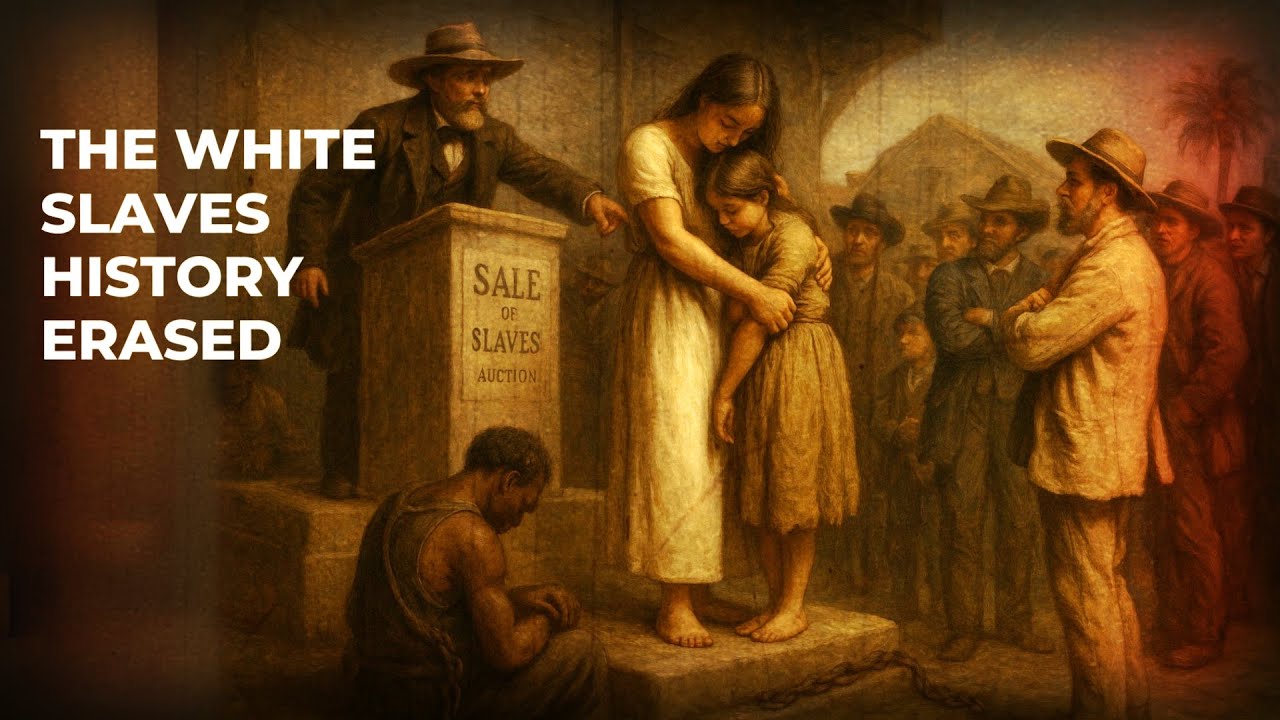
The Hidden Roots of Global Slavery: White Slavery and What History Books Leave Out

Introduction: Story You Haven’t Heard

When people think of slavery, they often picture the transatlantic slave trade that brought millions of Africans to the Americas beginning in the 1600s. In the U.S., the year 1619 is frequently cited as the “beginning” of slavery. But the truth is far older, broader, and far more complex. Long before Africans were transported across the Atlantic, slavery had already carved a brutal legacy across continents—and millions of the enslaved were white.

This is not a denial of the immense suffering caused by African slavery. Rather, it is a call to expand our understanding. From Slavic and Irish slaves to captives taken by Islamic empires and Barbary pirates, the institution of slavery has been a foundational force in building many of the world’s most powerful civilizations. And yet, many of these stories remain obscured, if not outright erased, from mainstream education.

Slavery Before 1619: The Global Norm

Long before American colonists ever planted tobacco, slavery was already a common practice in Europe, Africa, and Asia. The term “slave” itself comes from the word “Slav”—a reference to the Slavic peoples of Eastern Europe who were taken in mass numbers during the Middle Ages and sold into bondage by the Byzantine Empire, Islamic Caliphates, and various European powers.

By the 9th century, Arab traders were capturing and purchasing Slavic people to work as soldiers, laborers, and harem attendants in the Islamic world. Entire villages were raided along the Danube River and beyond. These Slavs were so prevalent in slave markets that the word “slave” essentially became synonymous with “Slav.”

Irish Slavery: The Overlooked Chapter

The Irish too faced centuries of brutal oppression, including forced deportation and slavery. Under British colonial rule, particularly during the 17th century, tens of thousands of Irish men, women, and children were sent to the Caribbean and American colonies as indentured laborers and outright slaves.

While the term “indentured servant” is often used to soften the narrative, many Irish were forced into contracts under false pretenses or had no choice at all. The conditions they endured—back-breaking labor, whippings, starvation, and separation from families—were nearly indistinguishable from those experienced by African slaves.

It’s estimated that during the 1650s alone, over 50,000 Irish people were shipped to Barbados and other Caribbean islands, where they were auctioned off like cattle. The term “redlegs” later came to describe their sunburned skin and harsh existence.

The Barbary Slave Trade Across Europe

Between the 16th and 19th centuries, North African Barbary pirates raided European coastal towns from Italy and France to Ireland and Iceland. They captured an estimated 1 to 1.25 million Europeans, selling them into slavery in the Ottoman Empire and North Africa.

These captives were used for a range of purposes—domestic labor, construction, galley rowing, and sexual servitude. In some coastal towns, entire populations were abducted, never to return. And yet, this chapter is rarely included in Western curricula.

Some historians argue that the trauma of these events created generational fear in European coastal communities. In fact, European nations eventually began paying tributes—essentially protection money—to Barbary states just to avoid further attacks.

Islamic Empires and the Slave Economy

Slavery was also deeply embedded in Islamic empires for centuries. From the Abbasid Caliphate to the Ottoman Empire, enslaved people formed the backbone of economies, palaces, and military forces. Unlike in Western chattel slavery, where racial lineage often determined lifelong bondage, Islamic slavery was more fluid. Some slaves could earn freedom, rise to power, or convert and gain rights. But make no mistake—millions suffered and died in this system.

Enslaved individuals came from many regions: Sub-Saharan Africa, Central Asia, the Caucasus, and Europe. Mamluks (slave soldiers) became powerful rulers in Egypt. Eunuchs guarded harems. Women were trafficked into concubinage. The diversity of slavery in Islamic realms is a stark reminder that bondage was not uniquely European or African—it was a global institution.

Why This History of Slavery Was Erased

Why don’t we hear about this in school? One reason is that history is often written by those in power. The narratives taught in American and European schools frequently emphasize certain sufferings while minimizing others, often to preserve national myths or social cohesion.

Highlighting the suffering of white slaves could blur the line between victim and oppressor, which complicates the dominant narrative. Furthermore, acknowledging the full scope of global slavery would mean confronting uncomfortable truths about empires, religious institutions, and economic systems that are still celebrated today.

Another factor is race-based slavery’s unique horrors. The racial caste system established in the Americas left a generational legacy of racism and inequality that continues today. This system deserves its focused scrutiny. But broadening the conversation to include other enslaved groups doesn’t diminish that history—it enriches it.

The Economic Foundations of Slavery

Slavery, in all its forms, was an economic engine. Empires were built on unpaid labor. Whether it was the Roman Empire exploiting slaves from conquered lands, the Islamic caliphates using Central Asian captives, or the British colonists profiting from African and Irish labor, the pattern is unmistakable: slavery was about wealth, control, and expansion.

Nobel-winning economist Douglass North once argued that the institutional structure of slavery enabled capital accumulation and state formation across civilizations. Whether that institution was African chattel slavery or earlier systems, the economic motive remained central. Understanding this helps explain why slavery persisted for so long and why societies were willing to brutalize millions of people—it paid.

A More Complete Narrative of Slavery

None of this is to compare sufferings or establish a hierarchy of horrors. Every form of slavery was brutal. Every victim was human. What matters is recognizing that the history of slavery is not linear or monocultural. It’s vast, transnational, and deeply embedded in the rise of human civilizations.

By acknowledging the stories of Slavic, Irish, and other European slaves alongside those of African descent, we gain a fuller picture of our past—one that can better inform our present and future.

Conclusion: Uncovering Facts Vs Myths

History doesn’t lose meaning when it’s expanded. The tragedy of African slavery in America remains a moral stain that must never be forgotten. But alongside it, we must also uncover the buried chapters—the enslaved Slavs, the red-legged Irish, the kidnapped Europeans, and the empires that thrived on their misery.

Only then can we begin to understand the true global legacy of slavery—and why its echoes still shape the world we live in today. Only by uncovering every layer of slavery’s complex and global history can we truly understand its legacy—and begin to dismantle the myths that still shape our world today.

Categories
W1 World

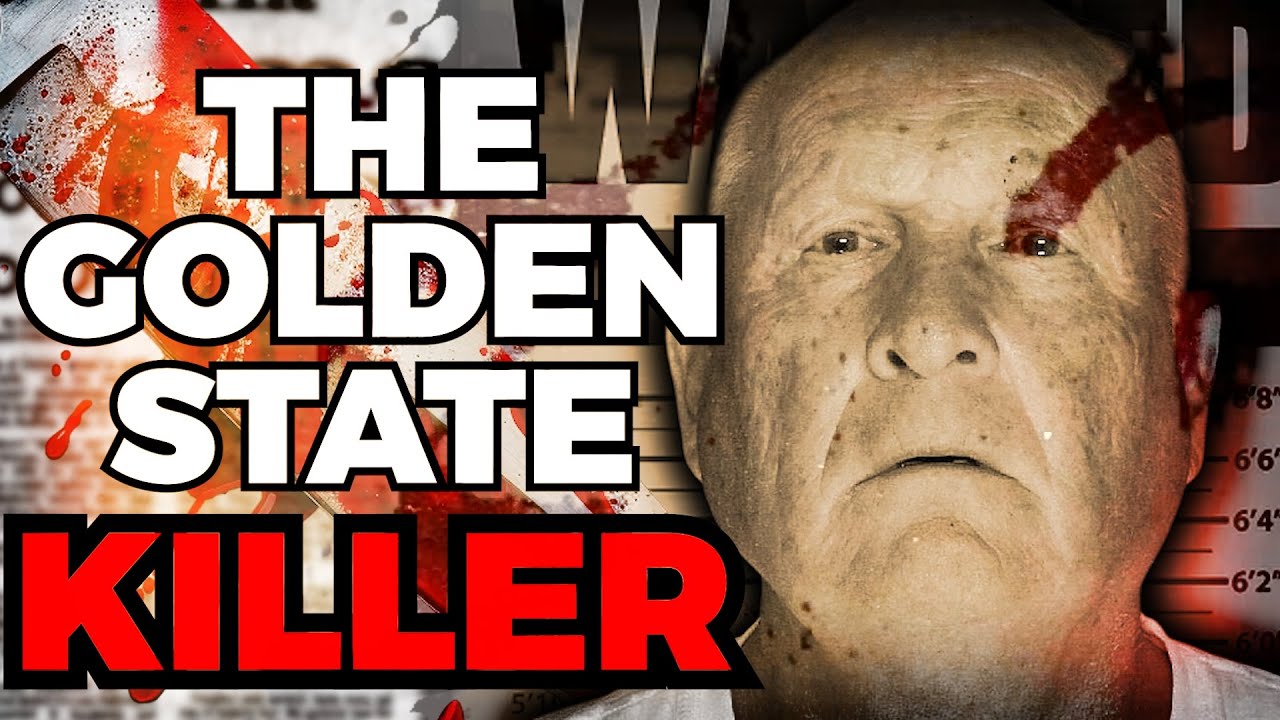
The Golden State Killer Finally Unmasked: How Joseph DeAngelo Eluded Justice for 44 Years

Introduction: Face Behind Mask of Fear

For more than four decades, a nameless, faceless predator haunted California. Known by many names—the Visalia Ransacker, the East Area Rapist, the Original Night Stalker, and finally the Golden State Killer—he committed over 50 rapes, 13 confirmed murders, and more than 100 burglaries across the state between 1974 and 1986.

Then, in April 2018, a shocking revelation rocked the country: the monster behind the mask was Joseph James DeAngelo, a former police officer, Vietnam veteran, and seemingly ordinary suburban father. For 44 years, he had lived a double life—predator by night, family man by day—while victims waited, and investigators hunted shadows. This is the story of how he got away for so long, how he was finally caught, and how his case changed criminal investigations forever.

The Early Years: The Visalia Ransacker

Before he became infamous, DeAngelo was believed to be the Visalia Ransacker, a prowler responsible for over 100 break-ins in Visalia, California, between 1974 and 1975. His pattern was disturbing: he often entered homes when residents weren’t home, stole small items of sentimental value, and left signs of having lingered—sometimes rearranging furniture or leaving food uneaten.

It wasn’t until the murder of Claude Snelling in 1975—who was shot while trying to stop his daughter’s attempted kidnapping—that the threat escalated. The Ransacker disappeared shortly after, coinciding with DeAngelo’s transfer to a new police department. Authorities now believe this was his first known killing—and his transition into something darker.

East Area Rapist Terror: A Reign of Fear

From 1976 to 1979, the Sacramento suburbs were gripped by fear. A masked man—agile, organized, and sadistic—began a spree of sexual assaults and home invasions. Dubbed the East Area Rapist, he targeted single women at first, then couples. He would stalk victims beforehand, break into homes to unlock windows or unload guns, and return days or weeks later to attack.

His modus operandi was chilling: he often tied up the male partner, placed dishes on his back, and told him if he heard a sound, the woman would die. Then he would repeatedly rape and torment the woman for hours.

Despite composite sketches, stakeouts, and increased patrols, he eluded law enforcement. He changed jurisdictions frequently, and police departments were not yet fully cooperative or technologically connected, which allowed him to slip through the cracks.

Evolution into the Original Night Stalker

By 1979, the East Area Rapist seemed to disappear. But soon after, a new predator emerged in Southern California—more violent, more brutal. Known initially as the Original Night Stalker, he struck in Orange County, Ventura, and Santa Barbara, committing a series of double homicides and sexual assaults from 1979 to 1986.

It would take decades before authorities realized the East Area Rapist and the Original Night Stalker were the same man—a conclusion made possible only by the eventual use of DNA evidence.

During these years, DeAngelo was living a seemingly ordinary life. He had married, raised children, and worked as a mechanic after being fired from the police force for shoplifting. No one suspected the loving father and quiet neighbor to be the killer who had haunted California’s nightmares.

The Officer in Uniform with a Dark Secret

Perhaps the most shocking detail about Joseph DeAngelo is that during the height of his crime spree, he served as a police officer in Exeter and Auburn, California. His job gave him access to police tactics, radios, and inside knowledge of investigations—information he likely used to stay one step ahead of law enforcement.

When DeAngelo was fired in 1979 for shoplifting dog repellent and a hammer—tools associated with the rapist’s kit—his crimes didn’t stop, but they did shift locations, making him even harder to track.

That a man sworn to protect the public was in fact a sadistic predator added another layer of horror to his already grotesque legacy—a betrayal not just of his victims, but of the very badge he once wore.

How Forensic Genealogy Cracked the Case

For years, the Golden State Killer case went cold. But with the rise of DNA testing and genealogy databases, a new possibility emerged. In 2018, investigators uploaded crime scene DNA from the Golden State Killer to GEDmatch, a public genealogy website.

They built a family tree using distant relatives and narrowed down potential suspects. One name stood out: Joseph James DeAngelo, now a 72-year-old retiree living in Citrus Heights. Law enforcement began to surveil him, collecting DNA from items he discarded—like a tissue found in his trash.

The results were conclusive: DeAngelo’s DNA matched the Golden State Killer’s. On April 24, 2018, DeAngelo was arrested. The man who had stalked the night for decades had finally been unmasked.

The Victims Speak: Trauma and Closure

At DeAngelo’s 2020 sentencing hearing, over two dozen survivors and family members gave harrowing testimony about the devastation he caused. Some victims had waited over 40 years to confront their attacker in court.

Many described a lifetime of fear, PTSD, and broken relationships. Others expressed relief that justice had finally arrived. The courtroom became a place of collective catharsis—a reckoning with a past long shrouded in silence.

DeAngelo himself offered no explanation, only a brief statement: “I am truly sorry to everyone I’ve hurt.” For many, it rang hollow. He was sentenced to multiple life terms without parole, ensuring he would die in prison.

A Landmark: The Rise of Genetic Sleuthing

The Golden State Killer case was the first high-profile arrest using forensic genealogy, and it has since revolutionized how law enforcement approaches cold cases. It marked a turning point where family trees became investigative tools, bridging science and justice in unprecedented ways.

Since DeAngelo’s capture, dozens of other cold cases have been solved using similar techniques. The case prompted public debate about privacy and ethics, but it also proved the power of science in serving justice.

Investigators are now revisiting hundreds of unsolved crimes, hoping that DNA—and the public’s voluntary sharing of genetic information—can bring answers once thought lost to time.

Conclusion: The Justice Delivered, at Last

Joseph DeAngelo lived two lives: a trusted officer, father, and neighbor by day; a rapist, killer, and tormentor by night. For decades, he escaped accountability, hidden in plain sight. But in the end, he was brought down not by a confession or eyewitness, but by a strand of DNA—a silent witness that never forgets.

Finally, his capture not only delivered long-overdue justice to survivors and victims’ families but also transformed criminal investigations. The shadows he once thrived in are shrinking—and cold cases once thought unsolvable are warming in the light of science. The Golden State Killer was unmasked—and with him, a new era of justice began.

Categories
W1 World

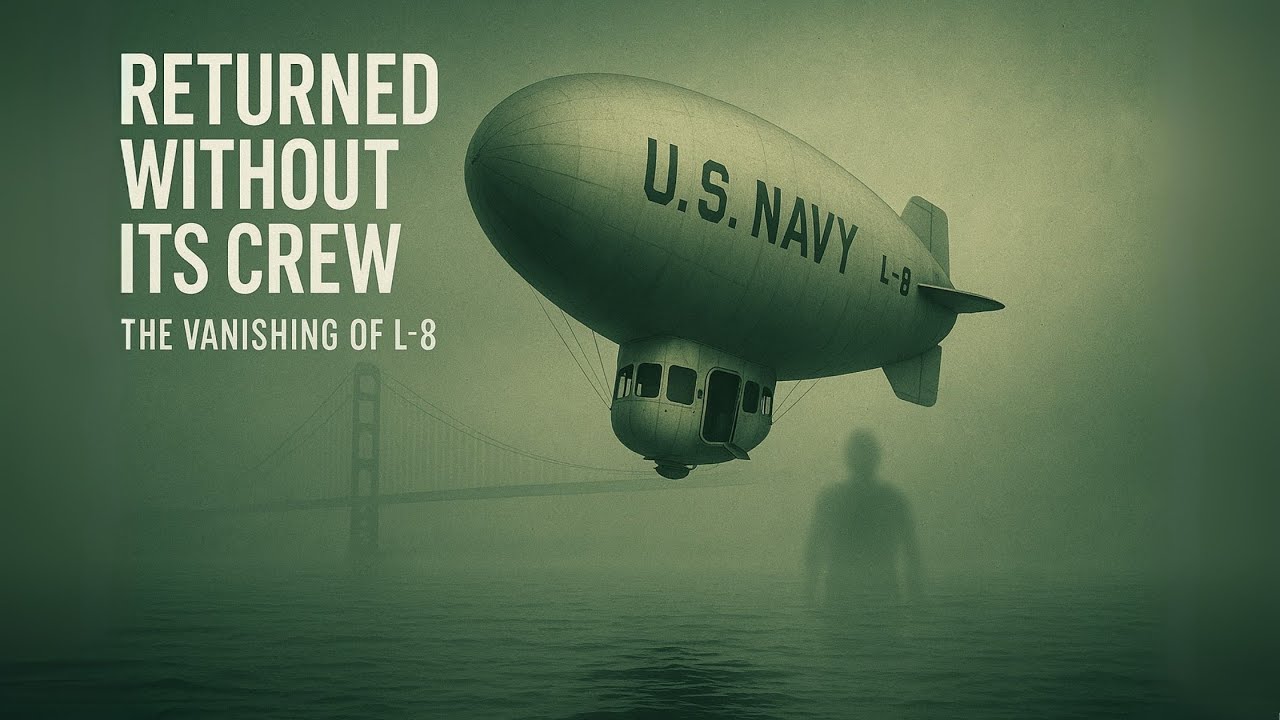
The Ghost Blimp of WWII: The Unsolved Disappearance of L-8 and Its Missing Crew

Introduction: A Routine Patrol Gone Awry

On the morning of August 16, 1942, the U.S. Navy blimp L-8 took off from Treasure Island, San Francisco Bay, for what was expected to be a standard anti-submarine patrol along the California coast. On board were Lt. Ernest DeWitt Cody and Ensign Charles Ellis Adams—both experienced and competent naval officers. But within a few hours, L-8 would become one of the most perplexing enigmas in American military history.

The blimp returned without its crew. Not damaged. Not in distress. Just empty. Despite decades of speculation and investigation, the fate of the two men remains unknown. Their sudden disappearance mid-flight—leaving behind an airship in perfect working order—has baffled experts and fueled conspiracy theories. Was it a tragic accident, sabotage, or something stranger still?

Blimp L-8: Engineered for Safety, Not Secrecy

Originally a Goodyear civilian blimp, the L-8 had been repurposed by the U.S. Navy as part of its wartime effort to detect Japanese submarines off the Pacific coast. Its gasbag, filled with non-flammable helium, could carry a modest payload, including two depth charges, a .30-caliber machine gun, and standard radio equipment.

Though not glamorous or fast, the blimp was ideal for slow, careful surveillance. Its crew of two operated from a small gondola slung beneath the envelope, offering a wide field of vision. Mechanical failure was rare, and emergency protocols were simple. Most importantly, even if the engines failed, the L-8 could float gently to the ground.

The Timeline of the Blimp: What We Know

At 6:03 a.m., L-8 lifted off from Treasure Island for its routine patrol. The weather was clear, visibility was excellent, and the crew was in good spirits. Several hours into the mission, at 7:38 a.m., the blimp reported sighting an oil slick near the Farallon Islands—a possible sign of a Japanese submarine. That was the last transmission ever received from the crew.

From that point on, things got strange. A fishing vessel in the vicinity reported seeing the blimp hovering and circling the area, as if investigating. Later, beachgoers along the coast saw L-8 behaving oddly—flying lower than usual, drifting inland toward Daly City.

By 11:15 a.m., the blimp had crash-landed gently in a residential area, tangling its envelope in power lines and landing softly on a street. Firefighters and police rushed to the scene, expecting injured crewmen. Instead, they found no one aboard.

Condition of the Blimp: No Signs of Struggle

The L-8 was remarkably intact. Its radio was functional, the depth charges were armed but unused, and the parachutes, life raft, and survival gear were all still in place. The cockpit controls were undamaged, and the door was latched open, as if someone had exited voluntarily.

There were no bloodstains, no bullet holes, and no signs of forced entry or violence. The crew’s headsets were hanging neatly from their hooks.

The only anomaly? A microphone cord had snapped, and the door to the gondola was unlatched—unusual, but not evidence of disaster.

The Crewmen: Who Were the Missing Men?

Lt. Ernest DeWitt Cody, 27, was a decorated pilot with more than 800 hours of airship time. He had served in the Navy for years and was well-versed in blimp operations.

Ensign Charles Ellis Adams, 38, was a World War I veteran and seasoned airship engineer. He had worked with Goodyear on blimp construction and had flown countless hours without incident.

Both men were considered reliable, disciplined, and unlikely to panic or abandon ship without cause.

Theories & Speculations: Accident or Foul Play?

Over the years, a multitude of explanations has been proposed—some plausible, others fantastic. Here are the most enduring:

1. Accidental Fall or More

The simplest theory is that one crewman leaned too far out to inspect the oil slick and fell. The second man, trying to help, may have suffered the same fate. But this raises questions: Why no distress call? Why didn’t the remaining crewman attempt to take control or alert the base?

2. Sabotage or Abduction

Some suggest sabotage—perhaps the crew was attacked by an enemy agent on board or abducted by a Japanese submarine crew. But no wreckage, body, or evidence ever surfaced to support this. A sub surfacing that close to the coast during wartime would have been exceptionally risky.

3. Mutiny or Desertion

Though less likely, some have posited that one man attacked the other and jumped or parachuted. But no parachutes were missing, and neither man had personal issues that hinted at mental instability or intent to desert.

4. Supernatural or Extraterrestrial

As with many wartime mysteries, some have turned to the paranormal: alien abduction, time portals, or “sky gremlins” have all found their way into speculative literature. Entertaining, but lacking a shred of evidence.

Navy’s Probe: More Questions Than Answers

The Navy launched a full inquiry but found nothing definitive. Interviews, equipment checks, and re-enactments provided no breakthrough. The L-8 was repaired and returned to service, even flying missions again—though it carried a new, somber nickname: The Ghost Blimp.

Eventually, the incident was quietly closed, the disappearance chalked up as a wartime anomaly. The families of Cody and Adams were left with only grief and a handful of unanswered questions.

Legacy And Impact of the Ghost Blimp

In time, L-8 became a legend—a story passed down through military circles, aviation forums, and books about unsolved mysteries. The fact that a 150-foot airship could return without a scratch, yet with both crew members missing, remains one of the most chilling and unexplained incidents of World War II.

The gondola of L-8, once the centerpiece of the mystery, now resides in the National Naval Aviation Museum in Pensacola, Florida. Visitors can stand before it, peer into the cockpit, and wonder: what really happened in the skies over San Francisco that morning?

Conclusion: A Silent Flight Into History

The vanishing of the L-8’s crew remains a haunting reminder that even in an age of logic, engineering, and rigorous military discipline, some mysteries resist explanation. No evidence. No bodies. No distress. Just a slow, eerie return of a pilotless blimp gliding over rooftops—silent, ghostlike.

In a war filled with chaos and loss, the story of the Ghost Blimp stands apart—not as a tale of violence or sabotage, but of sheer, baffling absence. And in that silence, the mystery endures. To this day, the Ghost Blimp drifts through the pages of history not just as an unsolved case, but as a chilling echo of two men who vanished into thin air—leaving only silence behind.

Categories
W1 World

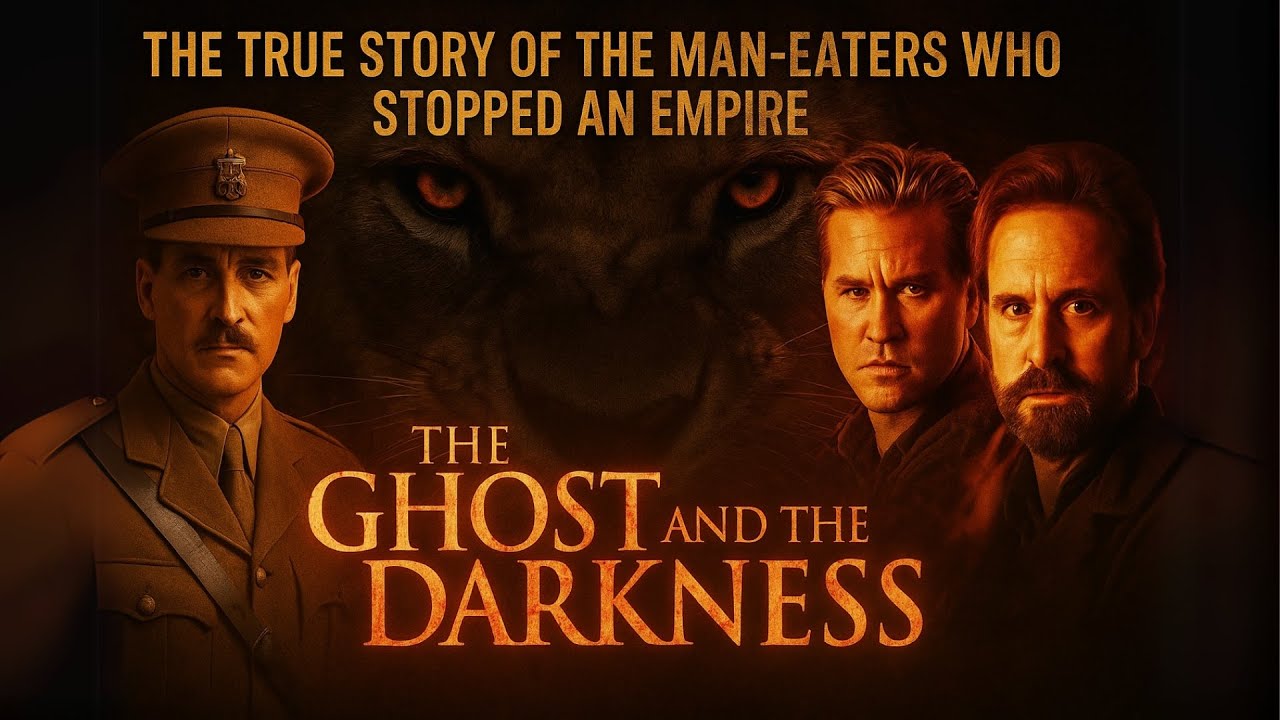
The True Horror Behind The Ghost and the Darkness: The Tsavo Man-Eaters Unleashed

Introduction: Terror Behind the Legend

Before The Ghost and the Darkness became a chilling 1996 Hollywood thriller, the events that inspired it were far more horrifying and real. In 1898, during the construction of a railway bridge over the Tsavo River in what is now Kenya, two man-eating lions unleashed a reign of terror that halted British colonial progress. Over the course of several months, these lions stalked, dragged away, and devoured scores of Indian and African laborers—men who had been brought in by the British to lay down the iron spine of empire.

Estimates of the death toll vary, but official records placed the number at around 35, while local accounts suggest it may have been more than 100. For months, fear gripped the work camps. Entire groups of laborers abandoned the project in panic, and the British colonial government found itself in the grip of a public relations nightmare, as word of the attacks spread to London and India.

Who Was John Henry Patterson?

Colonel John Henry Patterson, an Anglo-Irish military engineer, was the man tasked with overseeing the railway bridge construction. Though he came to Africa as an engineer, he would be forced to become a hunter, protector, and ultimately, a hero. Patterson’s life was transformed by the nightmare at Tsavo.

A veteran of the British Army and a man of considerable experience, Patterson had expected the challenges of wildlife, disease, and climate. But nothing prepared him for lions who showed no fear of humans, attacked at night, and displayed behavior that baffled even seasoned hunters. Patterson began keeping a detailed journal of the killings and his own increasingly desperate attempts to stop them.

The Hunt Begins: A Test of Wits and Will

With his workers fleeing and the project in jeopardy, Patterson set traps, built protective enclosures, and waited night after night with his rifle—sometimes lying in trees or on makeshift platforms—hoping to ambush the predators. The lions, however, continued to evade capture, growing increasingly bold. They tore through tents, broke through thorn fences (bomas), and even dragged men from locked railway cars.

The first lion was finally shot in December 1898 after weeks of relentless tracking. Patterson described how the massive beast took multiple gunshots before succumbing. Three weeks later, the second lion fell to his bullets, following another grueling series of stakeouts. Patterson posed with the slain animals, documenting them for British newspapers and scientific journals.

Why Did the Lions Hunt Humans?

The Tsavo man-eaters were unlike typical lions in behavior and physiology. When scientists at the Field Museum in Chicago later examined the lions—whose skins Patterson donated—they found something unusual. One of the lions had a severe dental abscess, leading researchers to theorize that the pain might have made it difficult to hunt natural prey. But this doesn’t fully explain why the pair became persistent man-eaters.

Some scholars point to the proximity of a slave trade route and the possibility that the lions may have scavenged human remains long before the railway project began. Others highlight the disruption of their natural habitat and prey by British rail activity. Whatever the root causes, these lions adapted to an unnatural behavior with deadly results.

The Tsavo Legacy: Fear and Fascination

The horror of the Tsavo attacks left an indelible mark on both colonial history and popular imagination. Newspapers sensationalized the man-eaters, calling them “demons” and “phantoms,” while Patterson became a reluctant celebrity. His 1907 memoir, The Man-Eaters of Tsavo, became a bestseller and was studied by naturalists, military men, and big game hunters for decades.

The lions’ bodies were eventually stuffed and mounted. Today, they are on display at the Field Museum of Natural History in Chicago, where they remain among the most visited exhibits—grim reminders of an episode that straddled myth and reality. Modern scientists continue to study the man-eaters, using isotopic analysis and forensic techniques to better understand how many humans they actually consumed.

Beyond the Jungle: Patterson’s Legacy

After Tsavo, Patterson’s career took unexpected turns. He served in World War I and later became a passionate Zionist, advocating for Jewish independence in Palestine. During the war, he commanded the Zion Mule Corps and later the Jewish Legion—precursors to the Israeli Defense Forces. Many Jewish leaders, including David Ben-Gurion, regarded him as a true friend of the Jewish people.

Despite his contributions, Patterson died in relative obscurity in California in 1947. It wasn’t until decades later that his remains were reburied in Israel with full military honors, a rare and symbolic act of recognition. Today, he’s remembered not just for his brush with death in Tsavo, but also as a forgotten ally in one of the world’s most enduring national movements.

Hollywood’s Version: Fact Vs Fiction

In 1996, the film The Ghost and the Darkness, starring Val Kilmer as Patterson and Michael Douglas as a fictional big-game hunter, brought the Tsavo story to modern audiences. While the film captures the terror and suspense of the lion attacks, it also takes significant liberties. Douglas’s character, for instance, is entirely fictional, added to boost drama and box office appeal.

Nonetheless, the film helped rekindle interest in Patterson’s story and the historical events behind it. For many, it was a first introduction to the dark chapter of colonial Africa and the psychological warfare between man and beast. The film may blur the line between myth and truth, but it undeniably honors the courage and resilience Patterson displayed.

Conclusion: When Nature Strikes Back

The story of the Tsavo man-eaters is more than a thrilling tale of survival. It’s a cautionary narrative about the limits of human dominance over nature, the vulnerabilities of colonial ambition, and the mysterious intelligence of predators. The lions weren’t just animals; they became symbols of nature’s ability to strike terror into even the most “civilized” of men.

Colonel Patterson’s bravery in the face of unimaginable horror endures as a compelling example of individual heroism. His legacy, though often overshadowed, speaks to the complex intersections of history, empire, and personal conviction. Today, the Tsavo lions remain frozen in time, not just in museum glass but in cultural memory—as grim totems of fear, resilience, and the haunting shadows where myth meets fact.

Categories
W1 World

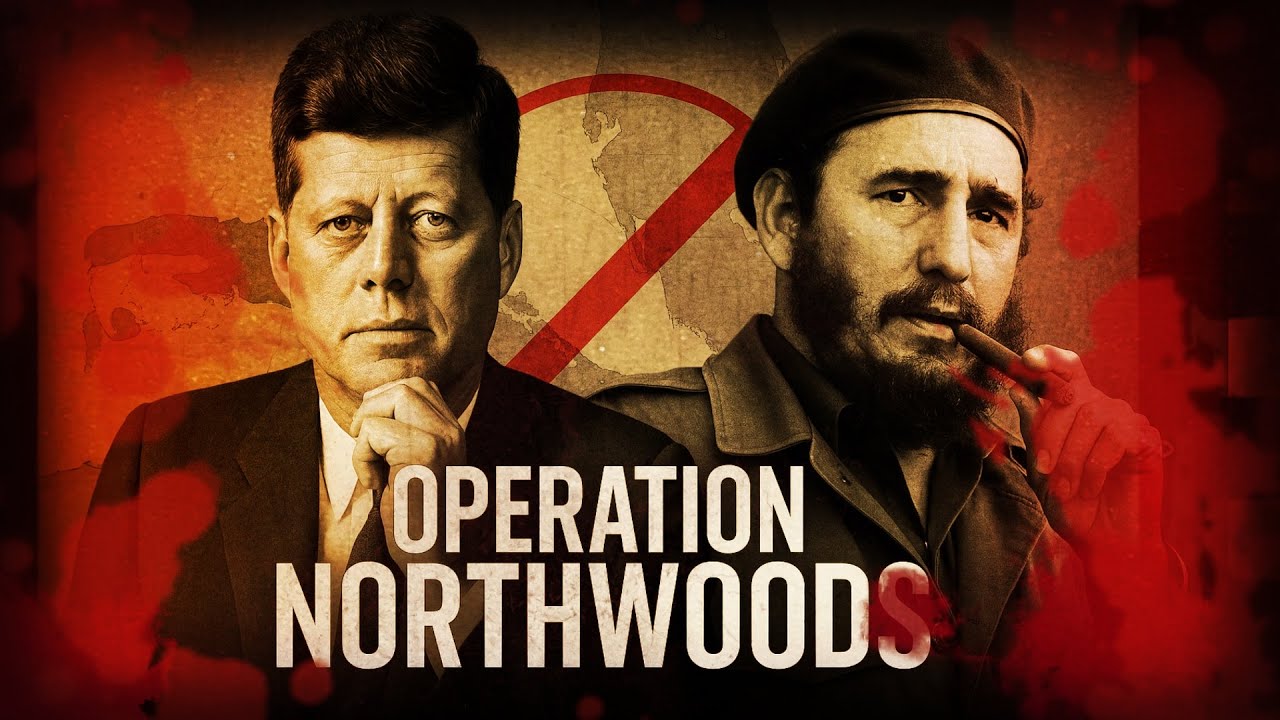
Operation Northwoods: The U.S. Plot to Stage Attacks on Its Own Citizens to Justify War

Introduction: A Plan Conceived in Shadows

In 1962, during the height of Cold War paranoia, the United States military crafted a stunning and disturbing plan to manipulate public opinion and provoke war. This top-secret proposal—codenamed Operation Northwoods—was not an enemy plot or a foreign conspiracy. It was a document signed and approved by the U.S. Joint Chiefs of Staff, the nation’s highest-ranking military leaders.

The plan called for acts of terror against American citizens and assets, including fake hijackings, bombings, and orchestrated civilian deaths, all intended to create a pretext for invading Cuba. The idea was clear: create a sense of outrage so powerful that it would push the American people and Congress into supporting military intervention against Fidel Castro’s communist regime. The very people entrusted with protecting American lives had proposed sacrificing them to achieve geopolitical goals.

The Blueprint: Lies, Sabotage, and Sacrifice

Operation Northwoods was outlined in a detailed memorandum prepared by the U.S. Department of Defense. It offered a variety of false flag scenarios designed to fool the media, mislead the public, and provoke international condemnation of Cuba. The document included plans to blow up a U.S. ship in Guantánamo Bay and blame it on Cuban forces, stage a mock funeral for fictional victims of a fake Cuban attack, and even simulate the downing of a passenger airliner using a remotely-piloted drone disguised as a commercial aircraft.

These schemes weren’t just ideas thrown around in a brainstorming session—they were written in formal language, vetted by high-ranking military officials, and signed by General Lyman Lemnitzer, then Chairman of the Joint Chiefs of Staff. The plan suggested planting evidence, using actors to pose as victims, and manipulating news reports to generate maximum emotional and political impact.

Cuba: The Enemy Within America’s Sights

To understand Operation Northwoods, it’s important to place it within the geopolitical context of the time. After Fidel Castro’s revolution overthrew the U.S.-backed Batista regime in 1959, Cuba became a symbol of communist defiance just 90 miles from Florida. With Soviet support flowing to Havana, Washington feared that Cuba could become a launching pad for spreading communism throughout Latin America.

The failed Bay of Pigs invasion in 1961 was a humiliating blow to the U.S., and tensions only escalated as Castro’s regime tightened its grip. Operation Northwoods emerged from this frustration—a desperate and morally questionable attempt to regain control of the situation. Military leaders saw Cuba not just as a foreign adversary, but as a direct threat to national security and American influence in the hemisphere. Their willingness to fabricate attacks and kill innocents reflects how far they were willing to go to justify war.

Kennedy Says No: A President Draws the Line

When Operation Northwoods reached President John F. Kennedy, he was reportedly horrified. While JFK was no stranger to covert operations—he had authorized the Bay of Pigs invasion—Northwoods was an entirely different matter. It involved killing or endangering American citizens and deceiving the very people the government was sworn to serve. Kennedy flatly rejected the plan and moved to sideline the military leadership behind it. Soon after, General Lemnitzer was reassigned to NATO, and the operation was buried—never to be officially acted upon.

JFK’s decision to reject Northwoods showed a critical divide between civilian oversight and military ambition. His rejection is often viewed as a courageous stand, preventing a dark chapter in American history from ever taking place. However, some conspiracy theorists have speculated—without solid evidence—that his resistance to military overreach may have played a role in his eventual assassination.

Declassified Truth: What We Need to Know

Operation Northwoods remained hidden for decades. It was only in the 1990s—thanks to the JFK Assassination Records Review Board—that the document was declassified and revealed to the public. Americans were shocked to learn that their own military had seriously proposed carrying out terrorist attacks on U.S. soil. The revelation added fuel to long-standing suspicions about government secrecy, deep state activities, and the ethics of Cold War policy-making.

Operation Northwoods has since become a key case study in discussions of false flag operations and government accountability. It serves as a sobering reminder that even democratic nations are not immune to internal corruption, especially when the line between national interest and political ambition becomes blurred. The implications still resonate today, especially in a world where misinformation and political manipulation are widespread.

Operation Northwoods: A Cautionary Legacy

While Operation Northwoods was never executed, its mere existence raises disturbing questions. How many other plans—less audacious, perhaps, but equally unethical—were drafted and approved behind closed doors? How often are public sentiments and events manipulated in the name of national security? These are not hypothetical concerns.

Operation Northwoods remains a chilling example of institutional power willing to cross ethical lines when unchecked by civilian authority. It also reinforces the importance of transparency and whistleblowing in preserving democratic values. As Americans continue to debate the role of intelligence agencies, the limits of executive power, and the legacy of the Cold War, Operation Northwoods stands as a haunting benchmark of how far leaders might go when fear outweighs accountability.

Conclusion: The Shadows of a Cold War

Operation Northwoods exposes the disturbing depths to which a government can sink when fear and power converge. Though never implemented, the fact that such a plan was created, approved, and presented for execution should give all Americans pause. It serves as a powerful warning that national security must never come at the cost of truth, transparency, and the lives of those it is meant to protect. As long as history remembers this dark chapter, it may help prevent another like it from ever being written.

And in remembering, we reclaim our responsibility to question, challenge, and hold power to account—especially when it operates in the shadows. Operation Northwoods remains a sobering reminder of how easily democratic ideals can be compromised in the name of national interest. Its legacy challenges us to stay vigilant, question authority, and safeguard transparency in a world where secrecy can breed dangerous intent.

Categories
W1 World

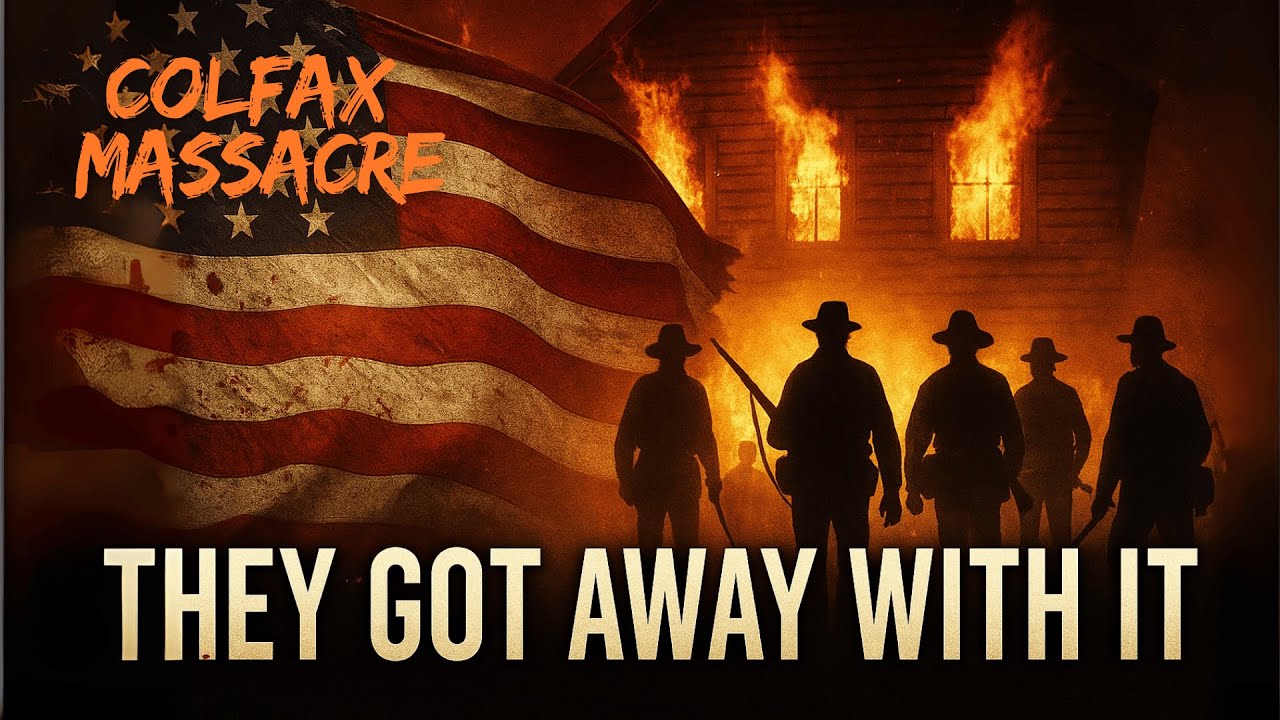
Colfax 1873: The Massacre That Betrayed Reconstruction, Resurrected White Supremacy

Introduction: Easter Sunday Turned Tragic

On Easter Sunday, April 13, 1873, the town of Colfax, Louisiana, witnessed an atrocity so brutal it remains a stain on the history of American democracy. This rural settlement in Grant Parish became the battleground for one of the most violent racial confrontations during the Reconstruction era.

In the aftermath of the Civil War, newly freed Black citizens were trying to assert their constitutional rights, guaranteed under the 13th, 14th, and 15th Amendments. They sought to participate in local government and maintain control of a contested courthouse after a disputed election. But the dream of racial equality was met with an explosion of violence, as armed white supremacists laid siege to their hope, their community, and their very lives.

The Fragile Progress of Reconstruction

Reconstruction, the period from 1865 to 1877, was meant to rebuild the South and integrate formerly enslaved African Americans into political and civil life. Federal laws and Constitutional Amendments gave Black men the right to vote, hold office, and enjoy equal protection under the law.

In places like Grant Parish, freedmen took these rights seriously—forming local militias, voting blocs, and participating in government. But their progress was fiercely contested by many white Southerners, particularly former Confederates who viewed Black empowerment as a threat to their social dominance. Louisiana, still smoldering from the ashes of war, became a powder keg where politics and racial hatred ignited with deadly results.

The Election That Sparked a Massacre

In 1872, Louisiana’s gubernatorial election ended in bitter dispute, with both Democrats and Republicans claiming victory. At the parish level in Grant, a similar political battle played out. Black Republicans, representing the majority of the electorate, occupied the courthouse in Colfax to support the Republican claim.

Tensions soared. White Democrats, largely consisting of ex-Confederates and members of white supremacist groups like the White League and the Ku Klux Klan, considered the occupation illegitimate. Mobilizing hundreds of armed men, they plotted to retake the courthouse by force. On April 13, they acted—with devastating consequences.

Colfax Massacre: The Day of Blood

The massacre began with an organized assault by white militias. The courthouse, filled with around 150 Black defenders and supporters, became a burning trap. After the attackers set the building on fire, many occupants fled or surrendered. But instead of taking them as prisoners, the attackers executed them—some in groups, some individually. Survivors were hunted down and shot, their bodies discarded in the Red River or burned in mass graves.

Historians estimate that as many as 150 Black men were killed, the vast majority after they had laid down their arms. Only a handful of white attackers died, underscoring the one-sided nature of the violence. The scene was so gruesome that even some contemporary white newspapers expressed shock at the scale of the brutality.

The Aftermath: Justice Denied

Rather than outrage leading to justice, the response to the Colfax Massacre revealed the deep flaws in the federal commitment to Reconstruction. Federal officials initially tried to pursue charges under the Enforcement Acts, which were designed to protect Black citizens’ civil rights. Several attackers were arrested and indicted, leading to the landmark Supreme Court case, United States v. Cruikshank in 1876.

The Court’s ruling was catastrophic: it decided that the federal government had limited authority to prosecute private individuals for civil rights violations. By placing the burden of enforcement on individual states—many of which were actively hostile to Black rights—the ruling effectively gutted the protections of the 14th Amendment and rendered federal civil rights laws toothless. It was a signal to white supremacists across the South that racial violence would go unpunished.

The Collapse of Reconstruction

The Colfax Massacre became a symbol of the broader collapse of Reconstruction. Despite initial federal efforts, Northern political will to enforce racial justice waned. White Democrats regained political control across the South in what became known as the “Redemption.” Federal troops withdrew, Black political participation plummeted, and new state laws systematically stripped African Americans of their rights.

Jim Crow laws took root in this fertile soil of federal inaction and white resentment. The massacre was not an isolated incident but part of a broader campaign of racial terror meant to destroy Reconstruction and reassert white dominance. In many ways, the battle over the Colfax courthouse was the funeral of the Reconstruction dream.

The Lost Cause and Historical Amnesia

In the years that followed, white Southern historians and civic leaders rewrote the story of the Civil War and Reconstruction to suit their agenda. This became known as the Lost Cause narrative, which glorified Confederate soldiers and portrayed Reconstruction as a time of chaos, misrule, and Black incompetence.

In this retelling, massacres like Colfax were downplayed, rationalized, or completely ignored. A 1950s-era historical marker in Colfax claimed that the massacre was an event where whites “fought for white supremacy.” It wasn’t until the 21st century that efforts began to reassess the history with greater accuracy, and to recognize the massacre as an act of racial terrorism.

Why the Massacre Still Matters

The legacy of the Colfax Massacre is not confined to the 19th century. It resonates in today’s struggles over voting rights, racial justice, and historical memory. The same tactics of voter suppression, racially motivated violence, and distorted history echo in debates over Confederate monuments, gerrymandering, and educational curricula.

Remembering Colfax is not about assigning guilt but about understanding the systemic forces that have shaped—and continue to shape—American democracy. When civil rights are treated as negotiable and justice becomes selective, tragedies like Colfax become not just history, but warnings.

Conclusion: Truth, Memory, Reckoning

The Colfax Massacre stands as one of the deadliest examples of racial violence during Reconstruction, and its shadow looms over the history of American civil rights. It revealed the fragility of federal protection, the depth of racial hatred, and the extent to which white supremacy would go to reclaim power.

Today, remembering Colfax isn’t just about mourning the dead—it’s about demanding that the truth be told and justice be honored. Only by confronting the darkest chapters of our past can we hope to build a future where democracy lives up to its promise for all Americans.

Categories
W1 World

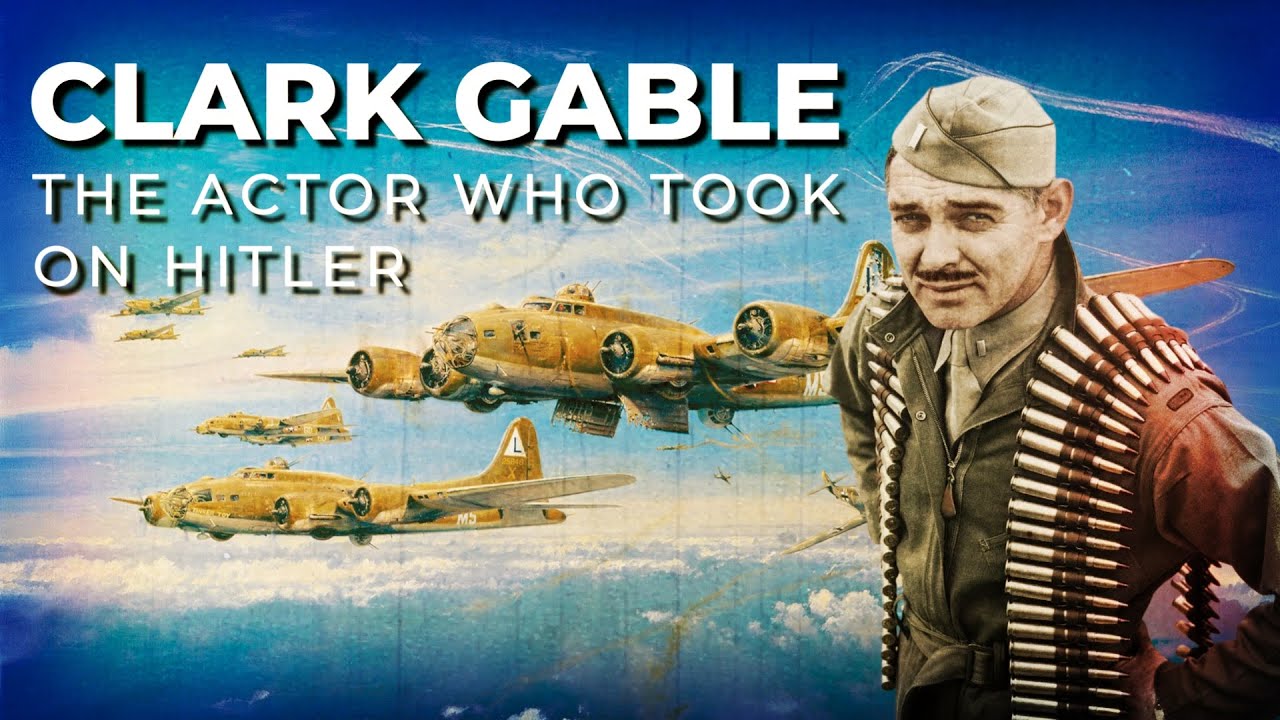
Clark Gable: The Hollywood Hero Who Fought on the Frontlines And Defied Hitler in WWII

From Stardom to Warfront

Clark Gable was more than just the “King of Hollywood.” By the late 1930s, his name was synonymous with cinematic excellence, and his role as Rhett Butler in Gone with the Wind had cemented his place in pop culture history. Adored by millions and envied by fellow actors, Gable had it all—wealth, fame, and charisma. But when World War II erupted, everything changed.

The attack on Pearl Harbor in 1941 stirred something deeper in the actor’s heart. Instead of staying in the safety of Tinseltown, Gable made a decision that would shock Hollywood: he volunteered for military service. His choice was a bold defiance of celebrity privilege and a testament to his deep sense of patriotism and loss.

The Death of Carole Lombard

One of the most heartbreaking turning points in Gable’s life was the tragic death of his beloved wife, actress Carole Lombard. In January 1942, Lombard was returning from a successful war bond rally when her plane crashed in Nevada, killing all aboard. Gable was devastated. Friends said he was never the same.

Many believe this personal tragedy spurred his enlistment—Lombard had died serving the war effort, and Gable wanted to honor her memory by doing the same. Shortly afterward, he joined the U.S. Army Air Forces, refusing any special treatment due to his fame. At 41, Gable was older than most recruits, but he insisted on serving as an equal, not as a movie star.

From Actor to Aerial Gunner

Gable trained rigorously at Miami and later at the gunnery school in Texas. Despite being a Hollywood icon, he endured the same grueling physical tests as any other soldier. He was assigned to the 351st Bomb Group and flew combat missions over Nazi-occupied Europe. Gable took to the skies in B-17 Flying Fortresses as an aerial gunner—one of the most dangerous jobs in the war.

Gable completed at least five combat missions over Germany, braving enemy fire, freezing altitudes, and the very real risk of never coming back. During one bombing run, shrapnel nearly missed his head, tearing through his boot and killing the man standing next to him. Gable never flinched. He earned the Air Medal and the Distinguished Flying Cross for his courage.

A Filmstar Behind Enemy Lines

While flying real combat missions, Gable also used his Hollywood skills to aid the war effort in another way: propaganda and recruitment. The U.S. government asked him to make a film that would boost morale and inspire enlistment. The result was Combat America, a documentary showcasing the bravery of American airmen.

Gable narrated the film and appeared throughout, but it wasn’t just acting—it was his real unit, real footage, and real emotion. The film was praised for its authenticity and became a powerful recruitment tool. Nazi Germany took notice of Gable’s involvement. Reportedly, Adolf Hitler offered a reward for Gable’s capture, dead or alive, recognizing the cultural threat he posed.

Gable’s Return to Civilian Life

Gable was honorably discharged in 1944 as a major. Unlike other stars who used the war as a PR opportunity, Gable returned without fanfare. He refused to capitalize on his service and quietly resumed his acting career. Though he returned to the big screen in films like The Hucksters and Mogambo, many said the war had changed him. He was more reserved, introspective, and less enchanted with the glitz of Hollywood.

Gable never remarried until the final years of his life, and many close to him believed he never fully recovered from Lombard’s death and the trauma of the war. Yet his service remained a badge of honor—a personal chapter he rarely spoke of but carried with quiet pride. That chapter, etched in loss and courage, shaped the man behind the legend far more than Hollywood ever could.

Final Days and a Quiet Farewell

In the final chapter of his life, Clark Gable began to slow down, both professionally and personally. After years of stardom, wartime service, and public appearances, he longed for a simpler life. In 1960, while filming The Misfits alongside Marilyn Monroe, Gable—though still commanding on screen—was visibly worn by years of physical strain and emotional loss. Just days after filming wrapped, he suffered a massive heart attack.

Gable passed away on November 16, 1960, at the age of 59, leaving behind a grieving nation and an unborn son, John Clark Gable. Though his death marked the end of a golden era, it also cemented his place as a true American icon—an actor, a soldier, and a man who lived with principle and died with quiet dignity.

Gable’s Lasting Legacy and Impact

Clark Gable’s decision to enlist during the peak of his fame broke the mold of Hollywood celebrity. He wasn’t the only star to serve—Jimmy Stewart, Henry Fonda, and others also joined the fight—but Gable’s story stood out because of his age, rank, and personal loss. He risked his life repeatedly and asked for no special treatment, embodying a kind of patriotism and humility that is rare in any era.

Today, his legacy endures not only through his classic films but also through his wartime bravery. Gable remains a symbol of courage—not just in the roles he played, but in the life he lived when the cameras stopped rolling. His decision to trade glamour for grit at the height of his fame speaks volumes about his character. In both reel and real life, Clark Gable stood tall when it mattered most.

Hollywood Hero, American Patriot

Clark Gable was more than a screen icon—he was a man who turned grief into action and fame into service. At a time when he could have hidden behind the lights of Hollywood, he chose to face the horrors of war head-on. His story reminds us that true heroism lies not in who you are, but in what you do when it matters most.

Clark Gable’s journey from the glitz of Hollywood to the grim skies of wartime Europe remains one of the most compelling examples of courage and conviction. In choosing duty over comfort, he proved that true heroism transcends the silver screen. His legacy reminds us that even icons can rise above fame to fight for something far greater—freedom, sacrifice, and country.

Categories
W1 World

Why Communism Works: A Brutal Satire of Utopian Promises, Totalitarian Realities

Introduction: The Price of Utopia

Communism, in its ideal form, promises a classless, stateless society built on cooperation and equality. It offers a dream of shared resources, the abolition of exploitation, and freedom from capitalist oppression. But history tells a darker tale. In practice, this utopian vision often gives rise to authoritarian regimes, mass suffering, and horrifying loss of life.

Through the brutal legacies of Stalin, Mao, and Pol Pot, we explore why communism—when turned into policy—so often collapses into tyranny. This article does not present a nuanced philosophical discussion; instead, it delivers a harsh, fact-based indictment of the historical outcomes of unchecked communist rule.

Stalin’s Soviet Union: Terror Behind the Curtain

Joseph Stalin’s reign over the Soviet Union from the 1920s to the 1950s is one of the bloodiest chapters in modern history. Rising to power after Lenin’s death, Stalin transformed the USSR into a totalitarian state through relentless purges, forced collectivization, and a cult of personality. The infamous Great Purge of the 1930s saw millions arrested, exiled, or executed under false pretenses. Even top Communist Party members and military leaders were not safe. Stalin weaponized fear to eliminate opposition, real or imagined.

Meanwhile, the forced collectivization of agriculture led to the Holodomor—an artificial famine in Ukraine that killed millions. Grain quotas were enforced with brutality, and dissenters were sent to gulags, Soviet labor camps infamous for inhumane conditions and staggering death rates. Stalin’s policies left the USSR industrialized but at the cost of tens of millions of lives. His version of communism traded freedom for fear and ideology for iron-fisted control. Any dream of equality was buried beneath the weight of state terror.

Mao’s China: Utopia Through Starvation

Mao Zedong promised a revolutionary new era for China—an end to imperialism, poverty, and inequality. Instead, he unleashed one of the deadliest social engineering experiments in history. His Great Leap Forward (1958–1962) sought rapid industrialization and agricultural reform by mobilizing peasants into communes and redirecting labor from farms to steel production. The result was catastrophic. Poor planning, inflated grain reports, and state propaganda led to mass famine. An estimated 30 to 45 million people died—many from starvation, others from execution or overwork.

But Mao didn’t stop there. In 1966, he launched the Cultural Revolution to purge capitalist and traditional elements from Chinese society. Red Guards—radical youth militia—were encouraged to attack intellectuals, destroy historical artifacts, and denounce their own families. Schools shut down. Chaos reigned. Thousands were killed, millions persecuted. Mao’s vision of communism consumed the very people it claimed to liberate. His legacy is a haunting reminder of the dangers of unchecked ideological zeal.

Pol Pot and the Khmer Rouge: Back to Year Zero

Pol Pot’s Khmer Rouge regime in Cambodia (1975–1979) took communist extremism to its most horrific extreme. Inspired by Maoist thought, Pol Pot envisioned an agrarian utopia, free from modernity, class distinctions, and even money. To realize this dream, he emptied cities, abolished currency, and forced urban dwellers into slave labor in the countryside. Intellectuals, professionals, and those who wore glasses were deemed enemies of the revolution.

What followed was genocide. Nearly a quarter of Cambodia’s population—about 1.7 to 2 million people—died from execution, starvation, disease, or overwork. The Tuol Sleng prison in Phnom Penh became infamous for torture and mass murder. Families were torn apart, religion was banned, and any sign of individuality was punished. Pol Pot’s vision of perfect equality produced unparalleled suffering. The Khmer Rouge collapsed only when Vietnam invaded and overthrew the regime in 1979, revealing a nation devastated by ideology-driven brutality.

Why “Real Communism” Always Fails

Defenders of communism often insist that the ideology has simply never been implemented “correctly.” But history suggests a different pattern: the systemic suppression of dissent, economic mismanagement, and human rights abuses appear consistently wherever communism has been tried at a national scale. Centralized planning eliminates competition and innovation. The promise of equality becomes a justification for silencing individual thought and enforcing conformity. Authoritarianism fills the power vacuum left by the dismantling of democratic institutions.

Every major communist regime has relied on propaganda, censorship, and state terror to maintain control. These aren’t accidents or betrayals of the doctrine—they are symptoms of the doctrine’s flaws when applied in the real world. The dream of a classless paradise becomes a nightmare precisely because of the unchecked power that the ideology demands. When the state owns everything, dissent becomes treason. True progress demands not blind faith in utopia, but critical thought, historical awareness, and unwavering respect for human dignity.

The Modern Myth and Its Appeal

Despite its grim history, communism still finds supporters today, often among those disillusioned with capitalism or inequality. The appeal of its promises—free healthcare, housing for all, and the end of poverty—is undeniable. But these ideals obscure the cost. The romanticization of revolution can blind people to the realities of authoritarian rule. In today’s polarized political climate, it’s more important than ever to confront history honestly and critically.

The ghosts of the 20th century’s failed revolutions should not be forgotten. Their stories serve as warnings about the seductive power of ideology and the danger of mistaking slogans for solutions. While reform is necessary in every society, extremism—whether economic, political, or ideological—inevitably breeds oppression. Only by remembering these dark chapters can we safeguard future generations from repeating the same catastrophic mistakes.

Conclusion: Never Again Forgotten

Communism, as practiced in the 20th century, promised freedom and delivered chains. The regimes of Stalin, Mao, and Pol Pot represent cautionary tales, not blueprints for justice. Their legacies should be studied not to revive their ideals, but to understand the horrors that arise when ideology overrides humanity.

This is why communism “works every time”—not in building utopias, but in creating suffering. The facts speak louder than any revolutionary chant. Let history be a mirror, not a blueprint. History has shown that when ideology overrides humanity, the cost is always measured in lives lost and freedoms destroyed.

Categories
W1 World

The Rothschild Legacy: Banking Empire, Global Power, and the Line Between Truth and Myth

Introduction: Power, Wealth, Global Speculation

For over two centuries, the name Rothschild has evoked images of immense wealth, unparalleled financial acumen, and secretive global influence. Their story begins in the cramped quarters of Frankfurt’s Jewish ghetto and stretches into the gilded halls of European power. Rising through skill, timing, and a profound understanding of international finance, the Rothschilds established one of the most powerful banking dynasties in history.

But with great wealth came great scrutiny—and a tidal wave of myths, rumors, and conspiracy theories that would haunt their legacy. They became synonymous with both capitalist success and shadowy manipulation, a duality that fueled endless fascination and suspicion. As their empire expanded across borders and generations, so too did the belief that the Rothschilds were pulling the strings of world affairs.

Origins in Frankfurt: The Founding of a Dynasty

The Rothschild dynasty began in the mid-18th century with Mayer Amschel Rothschild, a modest coin dealer and banker operating in the Judengasse (Jewish alley) of Frankfurt. His success stemmed from a keen understanding of currency markets, a deep trust from his clientele, and his ability to build relationships with influential figures—particularly Prince William of Hesse-Kassel. Mayer’s breakthrough came when he started managing large sums of money for German nobility, and his fortune expanded from there.

Recognizing that political instability in Europe required financial agility, Mayer implemented an innovative strategy: he placed each of his five sons in strategic European cities—London, Paris, Vienna, Naples, and Frankfurt. This allowed the family to establish a pan-European financial network, capable of transferring money, intelligence, and securities faster and more securely than traditional couriers. It became the backbone of their empire and set them apart from competitors.

Banking on Wars: Napoleonic Era and Beyond

The Napoleonic Wars marked the Rothschilds’ emergence as dominant players in global finance. Nathan Mayer Rothschild, stationed in London, became insental in financing Britain’s war efforts against Napoleon. His ability to move gold and credits across war-torn Europe enabled the British military to continue fighting when others faltered. The Rothschild network effectively acted as the wartime bank for much of Europe.

One particularly enduring legend claims that Nathan Rothschild used insider knowledge of Napoleon’s defeat at Waterloo in 1815 to manipulate the London stock exchange and amass a fortune. While historians dispute the specifics, the event became a symbol of the family’s ability to leverage information and timing for financial gain. Regardless of myth or fact, this period solidified their position as indispensable financiers of governments.

The Rothschild Reach: Monarchs, Railways, and Empires

Throughout the 19th century, the Rothschilds continued to grow their influence, becoming synonymous with modernization and economic development. They were key players in the construction of Europe’s railways, a vital industry that fueled the continent’s industrial revolution. They invested in mines, steel production, and communication technologies, transforming themselves into architects of economic infrastructure.

Their reach extended far beyond banking. They funded the Suez Canal, supported the building of the European telegraph system, and even provided financial assistance to stabilize economies following political upheaval. Kings, popes, and emperors often turned to the Rothschilds in times of financial distress, and their advice carried significant political weight. While they did not seek political office, their influence often exceeded that of elected officials.

Controversy: From Antisemitism to Modern Myths

The Rothschilds’ immense power and Jewish identity made them prime targets for antisemitism and paranoia. In the late 19th and early 20th centuries, they were demonized in tracts like The Protocols of the Elders of Zion, a notorious forgery that accused Jewish elites of conspiring to control the world. Although debunked, this hoax became a foundational text for antisemitic ideologies and fueled Nazi propaganda decades later.

To this day, the Rothschild name is often invoked in conspiracy circles as a symbol of hidden control—allegedly orchestrating wars, manipulating currencies, and steering international organizations from the shadows. These theories persist in part because the family has remained private, and because their real influence—while not omnipotent—was undeniably vast. In a world increasingly wary of elite power, the Rothschilds became the perfect scapegoat.

The Zionism Link and Conspiracy: Myth and Reality

The Rothschilds’ involvement in Zionism, particularly through Baron Edmond de Rothschild, has also been heavily mythologized. Edmond, part of the French branch of the family, supported early Jewish settlers in Palestine during the late 19th century. He financed agricultural projects, hospitals, and schools, earning him the title “Father of the Yishuv” (the Jewish community in Palestine).

Yet, this support was humanitarian and philanthropic, not political manipulation. Conspiracy theorists falsely claim the Rothschilds masterminded the creation of Israel for financial or imperial gain. In reality, Edmond’s efforts were motivated by Jewish solidarity and philanthropy, not a global plot. While the Rothschild name is honored in Israel—appearing on buildings and institutions—their actual role was one of support, not sovereignty.

Decline: From Banking Titans to Private Philanthropists

The 20th century brought significant changes to the Rothschild family’s role in global finance. The rise of nation-states, the expansion of government-run central banks, and the collapse of empires diminished their influence. The two World Wars devastated Europe’s old financial order, and much of the Rothschilds’ wealth and property in countries like Austria and Germany were lost to war or nationalization.

Despite this, the family adapted. Some Rothschild banks merged with modern institutions or pivoted to investment banking. Others turned their focus to cultural and scientific philanthropy. Today, the family still owns wineries, art collections, and charitable foundations that support everything from conservation to cancer research. Though no longer the world’s most powerful banking family, the Rothschilds remain relevant—albeit in quieter, more selective ways.

A Name Bigger Than the Truth?

Over time, the Rothschild name has transcended the family itself. It represents both the awe of economic achievement and the unease of financial centralization. They were pioneers of a new financial world, shaping modern capitalism and helping governments navigate the volatility of the 19th and early 20th centuries.

Yet their legacy is clouded by exaggerations and falsehoods. In the age of digital misinformation, the Rothschilds have become a symbol for everything from Illuminati theories to anti-globalist paranoia. Disentangling their real impact from fabricated claims requires a balanced view—one that neither vilifies nor deifies them.

Conclusion: Between Legacy and Legend

The Rothschilds left an indelible mark on the financial world and global history, but much of what we think we know about them is shaped more by myth than reality. Their true story is a fascinating journey through ambition, innovation, and the burden of visibility. In today’s world of misinformation, revisiting the facts behind their legacy is more important than ever.

Their rise reminds us how finance and politics often intertwine, and how even great influence can be twisted into dangerous fiction. As the world continues to grapple with wealth inequality and the role of elites, the Rothschild story remains a powerful lens through which to examine the intersection of money, myth, and modern power.

Categories
W1 World

The Real Tokyo Rose: Iva Toguri, Wartime Propaganda, and America’s Great Injustice

Introduction: The Myth of Tokyo Rose

During World War II, Allied troops stationed in the Pacific often heard English-speaking women’s voices broadcast over Japanese radio stations. These broadcasts, filled with propaganda and popular American music, were designed to demoralize Allied forces. Troops dubbed the mysterious female voice “Tokyo Rose,” a name that came to symbolize betrayal and manipulation.

But in reality, there was no single “Tokyo Rose.” Instead, the nickname became a media invention—one that would tragically ruin the life of Iva Toguri, a Japanese-American woman caught in the crosshairs of war, fear, and politics. Her story would unravel one of the most complex and misunderstood cases of wartime propaganda and postwar justice in American history.

Iva Toguri: The Woman Behind the Name

Iva Toguri was born in Los Angeles in 1916 to Japanese immigrant parents. She grew up as a patriotic American, attending UCLA and aspiring to study medicine. In 1941, she traveled to Japan to visit a sick relative and was stranded when Pearl Harbor was bombed and the U.S. entered the war. Refusing to renounce her American citizenship despite pressure from the Japanese government, Toguri was viewed with suspicion and forced to fend for herself in a hostile land.

Eventually, she found work at Radio Tokyo as a typist and later as a broadcaster under the pseudonym “Orphan Ann.” Her segment on the show The Zero Hour featured a mix of music, comedy, and scripted propaganda—but her actual role was far from the sinister one later portrayed. Unlike the image of Tokyo Rose as a seductive betrayer, Toguri’s broadcasts were largely benign, often sarcastic, and never included classified information. Her cheerful tone and lighthearted delivery were remembered by many GIs as entertaining, not threatening.

Wartime Hysteria and Media Sensationalism

As the war ended and American troops returned home, stories about “Tokyo Rose” took on a mythical dimension. The American public, reeling from the trauma of war, sought scapegoats. Sensationalized newspaper headlines and radio reports claimed that a treacherous woman had seduced soldiers over the airwaves, contributing to Allied losses. When Iva Toguri attempted to return to the U.S. in 1945, journalists offered large sums for exclusive interviews and pressured her into identifying herself as the infamous voice behind the broadcasts. Her admission—made under duress and without understanding the media storm to follow—would seal her fate.

The U.S. government, eager to appease a war-weary public, began building a case against her. Despite a lack of conclusive evidence, Toguri was arrested in 1945. Public opinion, fueled by years of anti-Japanese sentiment and inflammatory headlines, turned decisively against her. The media narrative now fully embraced the idea that she was Tokyo Rose, and a traitor.

The Rigged Trial and Conviction

Toguri was brought to trial in 1949 on eight counts of treason—the most serious charges any American civilian could face. The trial, held in San Francisco, lasted several months and drew national attention. Witnesses were flown in from across the Pacific, but many later admitted they were coerced or offered favors in exchange for testimony. Key exculpatory evidence was ignored, and the prosecution leaned heavily on a single broadcast that was never recorded or corroborated.

Ultimately, she was convicted on just one count of treason and sentenced to ten years in prison, of which she served more than six. The trial was widely criticized for its irregularities, including the pressure put on witnesses, prosecutorial misconduct, and the role of the press in influencing public opinion. Despite appeals and growing awareness of the miscarriage of justice, Toguri remained behind bars, a symbol of fear and vengeance rather than truth.

A Long Road to Justice

After her release in 1956, Toguri tried to rebuild her life in obscurity. She moved to Chicago, where she worked as a secretary and maintained a quiet existence. However, the stigma of being “Tokyo Rose” followed her everywhere. Over the years, investigative journalists and legal scholars began to revisit her case, uncovering the deeply flawed nature of her prosecution. In 1976, a team from 60 Minutes aired a segment that reignited public interest and revealed that government witnesses had lied under oath.

Spurred by renewed attention and public advocacy, President Gerald Ford granted Iva Toguri a full presidential pardon in 1977—on the same day America celebrated its bicentennial. It was a symbolic gesture that acknowledged not just her innocence but also the grave injustice done in the name of wartime loyalty and media frenzy.

Legacy and Lessons Learned

The story of Iva Toguri and the myth of Tokyo Rose offer a cautionary tale about how fear, prejudice, and sensationalism can converge to destroy innocent lives. Her experience is emblematic of a broader pattern of injustice faced by Japanese-Americans during and after WWII. The internment of over 100,000 Japanese-Americans, the stripping away of citizenship rights, and the vilification of people based on ethnicity remain dark chapters in American history.

Today, Toguri is remembered not as a traitor, but as a victim of political opportunism and media manipulation. Her story is taught in law schools, journalism courses, and history departments as a lesson in ethics, civil rights, and the importance of due process. It also underscores the dangers of trial by media and the power of government to rewrite personal narratives during times of crisis.

Conclusion: A Voice Misunderstood

Iva Toguri never betrayed her country—her only crime was being in the wrong place at the wrong time, and being the wrong race in the wrong era. Decades after the war ended, the truth about Tokyo Rose finally came to light, but it took far too long. Her story serves as a powerful reminder of how easily truth can be buried under the weight of fear and propaganda—and how vital it is to reclaim that truth in the name of justice.

Iva Toguri’s story serves as a cautionary tale of how truth can be sacrificed in the rush to assign blame. Her eventual pardon came too late to undo the damage—but it restored her dignity and rewrote her place in history. Her legacy now stands as a powerful reminder of resilience, integrity, and the enduring fight for justice in the face of national hysteria.