Categories
W1 World

Operation Gunnerside: The Daring Sabotage Mission That Crippled Hitler’s Atomic Bomb Quest

Introduction: Six Men on Skis Changed History

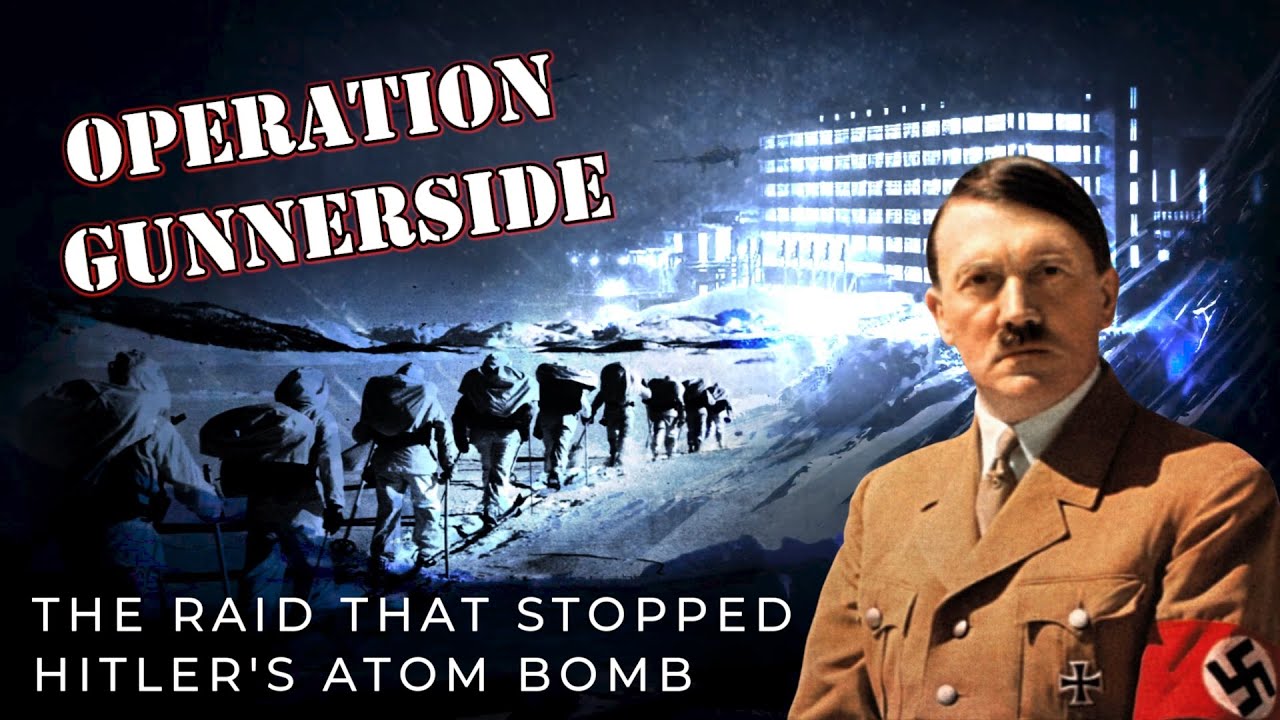
In the frozen wilderness of Nazi-occupied Norway, six men on skis carried not just explosives, but the fate of the free world. In what the CIA would later call “the most successful act of sabotage in World War II,” a small team of elite Norwegian commandos infiltrated the heavily guarded Vemork heavy water facility in 1943. Their mission: to destroy the heart of Nazi Germany’s atomic bomb program.

Codenamed Operation Gunnerside, this daring mission combined meticulous British planning, local resistance bravery, and immense physical endurance. The raid succeeded where larger military offensives might have failed—by slipping past Nazi patrols, scaling cliffs in deep snow, and planting explosives under the enemy’s nose. The result was a crushing blow to Hitler’s nuclear ambitions—and a critical edge for the Allies in the race for the atomic bomb.

Nazi Nuclear Threat: Why Heavy Water Worked

During the early years of WWII, both Allied and Axis scientists were racing to unlock the secrets of nuclear fission. Germany, with its rich scientific tradition and access to resources, was seen as a frontrunner. But building an atomic bomb requires more than brilliant minds—it demands key materials, including deuterium oxide, better known as heavy water.

Heavy water is essential for moderating nuclear reactions in certain types of reactors, including the design Nazi scientists were pursuing. At the time, the only significant source of heavy water in Europe was the Vemork plant, perched high above a river gorge in southern Norway, and operated by the Norsk Hydro company. Once Germany invaded Norway in 1940, the facility fell into Nazi hands, and production of heavy water began to rise sharply.

British intelligence, alarmed by the prospect of a Nazi atomic weapon, prioritized the destruction of Vemork. Winston Churchill himself approved the mission. The question was how to do it—conventional bombing was too risky, and precision was impossible from the air due to the plant’s mountainous location. The answer lay in sabotage from the ground.

Covert Plan and Skilled Elite Commando Team

Enter the Norwegian resistance—a network of patriots working in secret to undermine Nazi control. From this network, the British Special Operations Executive (SOE) handpicked a group of skilled, physically hardened men familiar with the terrain. They would parachute into Norway, endure the harsh winter, and carry out the attack from behind enemy lines.

Operation Gunnerside was actually the second phase of the plan. An earlier attempt, Operation Freshman, had ended in tragedy when two gliders crashed, killing or capturing everyone on board. The survivors were executed by the Gestapo under Hitler’s infamous Commando Order. The pressure on Gunnerside was enormous—failure was not an option.

The Gunnerside team, led by Joachim Rønneberg, a 23-year-old Norwegian with exceptional survival skills, trained extensively in Scotland before deploying. They joined an advance party already in Norway and spent weeks skiing across frozen plateaus and hiding in mountain cabins, surviving on meager rations while evading German patrols. The terrain was so remote and treacherous that the operation’s success depended as much on endurance and secrecy as on explosives.

Infiltration and Sabotage: The Night of the Raid

On the night of February 27, 1943, after weeks of preparation, the commandos made their final approach to the Vemork facility. The plant sat atop a steep gorge, accessible only by a narrow bridge and surrounded by minefields and guards. Rather than take the obvious route, the saboteurs descended into the icy ravine and scaled the sheer cliff on the other side—a feat of near-superhuman strength and stealth.

Once inside the compound, they located the electrolysis chambers where heavy water was produced. In complete silence, they placed plastic explosives with delayed fuses and then escaped into the night. The raid lasted only 30 minutes, but the explosion destroyed the critical machinery and over 500 kilograms of heavy water, setting the Nazi atomic program back by months—if not years.

Miraculously, not a single shot was fired, and not one saboteur was captured or killed. They melted back into the snowy wilderness and evaded German search parties for days, ultimately rejoining the resistance or escaping to Sweden.

The Long-Term Impact: Delaying Hitler’s Bomb

The destruction of the Vemork plant dealt a devastating blow to German hopes for a nuclear weapon. Though the Nazis attempted to resume production, further sabotage and Allied bombing raids continued to disrupt operations. Eventually, in 1944, the Germans attempted to transport the remaining heavy water to Germany—but Norwegian resistance fighters once again intervened, sinking the ferry “Hydro” on Lake Tinn, killing the cargo and ensuring none of it reached the Reich.

Historians continue to debate just how close Hitler was to building an atomic bomb. Some argue the German program was disorganized and would have failed regardless; others believe that without the Gunnerside raid, the war—and the nuclear age—might have unfolded very differently.

What is clear is that Operation Gunnerside bought the Allies precious time. It allowed the Manhattan Project, already underway in the United States, to surge ahead without fear of German competition. When the first atomic bombs were dropped in 1945, Hitler’s dream of a nuclear weapon was long dead—thanks in part to six men on skis.

A Remarkable Legacy of Heroism and Precision

Operation Gunnerside has become a symbol of resistance, courage, and strategic excellence. The bravery of the Norwegian saboteurs has been honored in books, documentaries, and films, including “The Heroes of Telemark” (1965). But beyond the dramatization lies a deeper truth: this was a mission defined by preparation, precision, and minimal force—everything special operations aspire to be.

In a world now shaped by nuclear weapons, it’s sobering to remember how close those weapons came to being developed under the Nazis. Had Operation Gunnerside failed—had even one element gone wrong—history might have looked very different.

The mission’s success wasn’t just about blowing up machinery; it was about shaping the future of warfare and saving millions of lives. Even the CIA, in a 1990s retrospective, declared Gunnerside “the most successful act of sabotage in all of WWII,” a rare acknowledgment from an agency steeped in covert operations.

Conclusion: When Sabotage Changed the World

Operation Gunnerside stands as one of the clearest examples of how a small group of determined individuals can alter the course of history. Armed with little more than courage, cold weather gear, and carefully placed explosives, the Norwegian saboteurs struck a blow not only to Nazi science but to the very foundation of Hitler’s war strategy. Finally, their mission was not just about halting a bomb—it was about protecting humanity from the unthinkable.

In doing so, they demonstrated that strategy, sacrifice, and stealth could be more powerful than brute force. They didn’t just destroy a plant—they destroyed a future that could have ended in atomic fire across Europe. Today, the ruins of Vemork stand as a museum and a testament to this extraordinary mission. And the story of Operation Gunnerside remains a reminder that history can pivot on the silent footsteps of heroes in the snow.
Categories
W1 World

Operation Northwoods: The U.S. Plot to Stage Attacks on Its Own Citizens to Justify War

Introduction: A Plan Conceived in Shadows

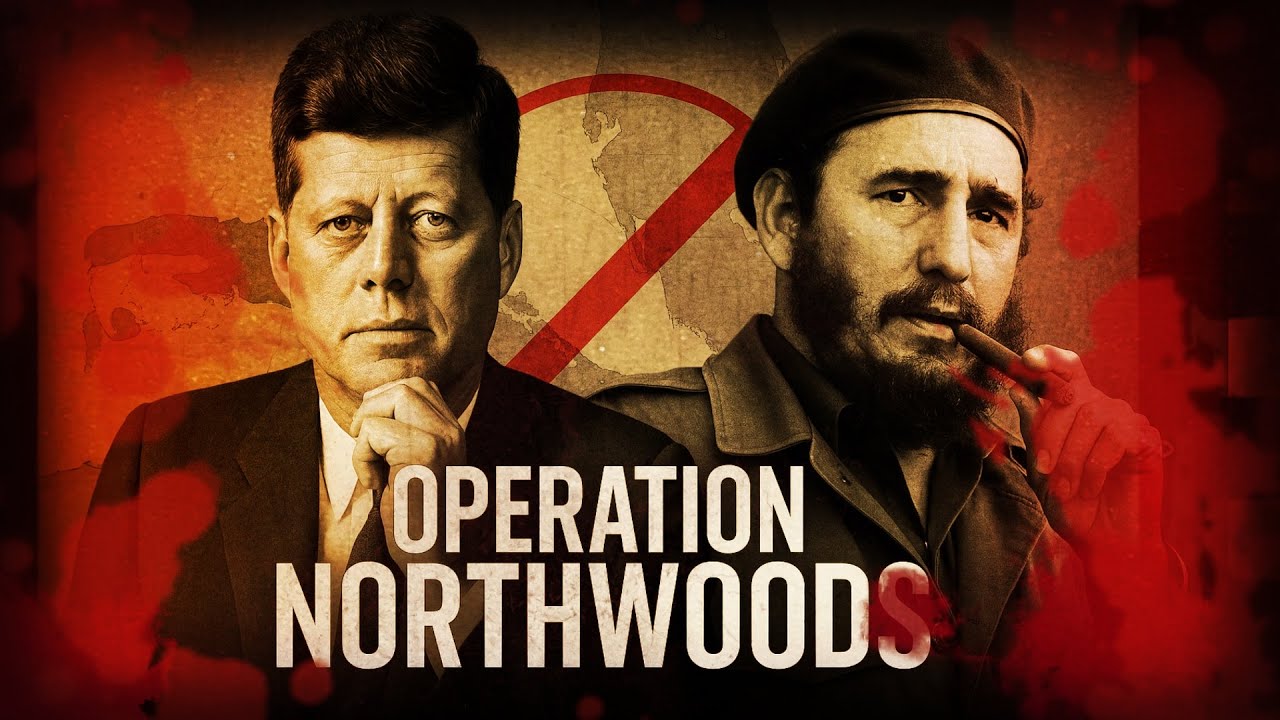
In 1962, during the height of Cold War paranoia, the United States military crafted a stunning and disturbing plan to manipulate public opinion and provoke war. This top-secret proposal—codenamed Operation Northwoods—was not an enemy plot or a foreign conspiracy. It was a document signed and approved by the U.S. Joint Chiefs of Staff, the nation’s highest-ranking military leaders.

The plan called for acts of terror against American citizens and assets, including fake hijackings, bombings, and orchestrated civilian deaths, all intended to create a pretext for invading Cuba. The idea was clear: create a sense of outrage so powerful that it would push the American people and Congress into supporting military intervention against Fidel Castro’s communist regime. The very people entrusted with protecting American lives had proposed sacrificing them to achieve geopolitical goals.

The Blueprint: Lies, Sabotage, and Sacrifice

Operation Northwoods was outlined in a detailed memorandum prepared by the U.S. Department of Defense. It offered a variety of false flag scenarios designed to fool the media, mislead the public, and provoke international condemnation of Cuba. The document included plans to blow up a U.S. ship in Guantánamo Bay and blame it on Cuban forces, stage a mock funeral for fictional victims of a fake Cuban attack, and even simulate the downing of a passenger airliner using a remotely-piloted drone disguised as a commercial aircraft.

These schemes weren’t just ideas thrown around in a brainstorming session—they were written in formal language, vetted by high-ranking military officials, and signed by General Lyman Lemnitzer, then Chairman of the Joint Chiefs of Staff. The plan suggested planting evidence, using actors to pose as victims, and manipulating news reports to generate maximum emotional and political impact.

Cuba: The Enemy Within America’s Sights

To understand Operation Northwoods, it’s important to place it within the geopolitical context of the time. After Fidel Castro’s revolution overthrew the U.S.-backed Batista regime in 1959, Cuba became a symbol of communist defiance just 90 miles from Florida. With Soviet support flowing to Havana, Washington feared that Cuba could become a launching pad for spreading communism throughout Latin America.

The failed Bay of Pigs invasion in 1961 was a humiliating blow to the U.S., and tensions only escalated as Castro’s regime tightened its grip. Operation Northwoods emerged from this frustration—a desperate and morally questionable attempt to regain control of the situation. Military leaders saw Cuba not just as a foreign adversary, but as a direct threat to national security and American influence in the hemisphere. Their willingness to fabricate attacks and kill innocents reflects how far they were willing to go to justify war.

Kennedy Says No: A President Draws the Line

When Operation Northwoods reached President John F. Kennedy, he was reportedly horrified. While JFK was no stranger to covert operations—he had authorized the Bay of Pigs invasion—Northwoods was an entirely different matter. It involved killing or endangering American citizens and deceiving the very people the government was sworn to serve. Kennedy flatly rejected the plan and moved to sideline the military leadership behind it. Soon after, General Lemnitzer was reassigned to NATO, and the operation was buried—never to be officially acted upon.

JFK’s decision to reject Northwoods showed a critical divide between civilian oversight and military ambition. His rejection is often viewed as a courageous stand, preventing a dark chapter in American history from ever taking place. However, some conspiracy theorists have speculated—without solid evidence—that his resistance to military overreach may have played a role in his eventual assassination.

Declassified Truth: What We Need to Know

Operation Northwoods remained hidden for decades. It was only in the 1990s—thanks to the JFK Assassination Records Review Board—that the document was declassified and revealed to the public. Americans were shocked to learn that their own military had seriously proposed carrying out terrorist attacks on U.S. soil. The revelation added fuel to long-standing suspicions about government secrecy, deep state activities, and the ethics of Cold War policy-making.

Operation Northwoods has since become a key case study in discussions of false flag operations and government accountability. It serves as a sobering reminder that even democratic nations are not immune to internal corruption, especially when the line between national interest and political ambition becomes blurred. The implications still resonate today, especially in a world where misinformation and political manipulation are widespread.

Operation Northwoods: A Cautionary Legacy

While Operation Northwoods was never executed, its mere existence raises disturbing questions. How many other plans—less audacious, perhaps, but equally unethical—were drafted and approved behind closed doors? How often are public sentiments and events manipulated in the name of national security? These are not hypothetical concerns.

Operation Northwoods remains a chilling example of institutional power willing to cross ethical lines when unchecked by civilian authority. It also reinforces the importance of transparency and whistleblowing in preserving democratic values. As Americans continue to debate the role of intelligence agencies, the limits of executive power, and the legacy of the Cold War, Operation Northwoods stands as a haunting benchmark of how far leaders might go when fear outweighs accountability.

Conclusion: The Shadows of a Cold War

Operation Northwoods exposes the disturbing depths to which a government can sink when fear and power converge. Though never implemented, the fact that such a plan was created, approved, and presented for execution should give all Americans pause. It serves as a powerful warning that national security must never come at the cost of truth, transparency, and the lives of those it is meant to protect. As long as history remembers this dark chapter, it may help prevent another like it from ever being written.

And in remembering, we reclaim our responsibility to question, challenge, and hold power to account—especially when it operates in the shadows. Operation Northwoods remains a sobering reminder of how easily democratic ideals can be compromised in the name of national interest. Its legacy challenges us to stay vigilant, question authority, and safeguard transparency in a world where secrecy can breed dangerous intent.

Categories
W1 World

Operation Nimrod: The SAS, Iranian Embassy Siege, and the High-Stakes Drama of 1980

Introduction: A Crisis That Captivated the World

The Iranian Embassy siege of 1980 in London stands as one of the most dramatic and defining moments in modern counterterrorism history. The crisis not only spotlighted the volatile aftermath of the Iranian Revolution but also brought the British Special Air Service (SAS) into the international limelight. The daring rescue mission, dubbed Operation Nimrod, unfolded on live television, capturing global attention and highlighting the complex interplay of politics, terrorism, and military precision.

This article explores the origins of the siege, the events that unfolded, and how the SAS executed one of the most successful counterterrorism operations of its time. Beyond the action, the incident also serves as a lens through which to examine the underlying causes of conflict and the human cost of political oppression. It also highlights the complexities of navigating political tensions, where the actions of a few can spark international crises with long-lasting consequences.

The Iranian Revolution and Its Ripple Effects

The roots of the Iranian Embassy siege lie in the seismic political upheaval of the 1979 Iranian Revolution. The overthrow of Shah Mohammad Reza Pahlavi, a Western-backed monarch, marked the rise of Ayatollah Khomeini’s Islamic Republic. While Khomeini’s government was hailed by many as a triumph over autocratic rule, it quickly revealed an authoritarian streak of its own.

Among those who bore the brunt of the new regime’s policies were the Sunni Arab population of Khuzestan, an oil-rich province bordering Iraq. These Sunni Arabs, often referred to as Ahwazi Arabs, had long faced discrimination under the Shah’s regime. However, their situation worsened under Khomeini, as his Shi’a-centric policies marginalized Sunni communities further. Calls for autonomy and greater representation were met with brutal repression, including arrests, executions, and the systematic silencing of dissenting voices.

The plight of the Sunni Arabs remained largely unnoticed by the international community. Frustrated and desperate, members of this marginalized group decided to take extreme measures to draw attention to their cause. This desperation would manifest in the form of a hostage crisis that shook the world.

The Iranian Embassy Hostage Crisis

On April 30, 1980, six armed men from the Democratic Revolutionary Front for the Liberation of Arabistan (DRFLA) stormed the Iranian Embassy in London. Armed with machine guns, grenades, and explosives, they quickly subdued the embassy staff and visitors, taking 26 hostages.

The group’s demands were clear: they wanted the release of 91 Arab prisoners held in Iran and safe passage out of the United Kingdom. The DRFLA also sought to broadcast their grievances to the world, particularly the international media, in a bid to shed light on the plight of Khuzestan’s Sunni Arabs.

The siege immediately became a high-stakes international incident. The British government, led by Prime Minister Margaret Thatcher, faced immense pressure to resolve the crisis without bowing to the militants’ demands. Negotiators worked tirelessly, but the situation grew increasingly tense as the days dragged on.

The Role of the SAS in the Crisis

When the crisis reached its breaking point, the British government turned to the Special Air Service (SAS), an elite special forces unit with a reputation for excellence in counterterrorism operations. The SAS’s Counter Revolutionary Warfare (CRW) wing was specifically tasked with preparing for and responding to hostage situations like the one at the Iranian Embassy.

Planning and Strategy

The SAS approached the operation with meticulous planning. Using embassy blueprints, the team practiced mock drills in a specially constructed replica of the building. Their strategy involved a simultaneous assault on multiple entry points to disorient the hostage-takers and swiftly neutralize the threat.

The operators were equipped with state-of-the-art weapons, including Heckler & Koch MP5 submachine guns, stun grenades, and ballistic shields. The team also devised a contingency plan to adapt to any unforeseen developments during the assault.

The Assault: Operation Nimrod

On May 5, after six days of negotiations failed and the militants executed a hostage, the SAS launched Operation Nimrod. At precisely 7:07 PM, the assault began, marking the climax of the tense standoff.

The Execution

  1. The Breach:
    Explosive charges shattered the embassy’s windows and doors, creating multiple entry points for the SAS operatives. The deafening blasts and sudden chaos disoriented the militants, giving the SAS a crucial advantage.
  2. Room-to-Room Clearing:
    The operatives systematically moved through the building, using flashbang grenades to stun the hostage-takers. Despite the confined and chaotic environment, the SAS demonstrated remarkable precision, eliminating five of the six militants without harming the hostages.
  3. Hostage Rescue:
    The hostages were quickly evacuated while the SAS ensured the building was secure. The entire operation lasted just 17 minutes, a testament to the unit’s training and efficiency.

Aftermath and International Impact

The resolution of the Iranian Embassy siege was hailed as a triumph for the SAS and a landmark moment in counterterrorism history. The operatives’ professionalism and precision drew praise from around the world, solidifying the SAS’s reputation as one of the premier special forces units.

Broader Implications

  1. Counterterrorism Strategy:
    Operation Nimrod became a blueprint for modern counterterrorism operations. It demonstrated the importance of preparation, intelligence, and rapid execution in resolving hostage situations.
  2. Political Repercussions:
    While the operation was a tactical success, it also underscored the ongoing instability in the Middle East. The plight of the Sunni Arabs in Khuzestan, which had sparked the crisis, remained unresolved, highlighting the need for political solutions to underlying grievances.
  3. Media Influence:
    The live television broadcast of the assault brought counterterrorism operations into the public eye. It underscored the role of media in shaping public perceptions of terrorism and security responses.

Lessons Learned from Operation Nimrod

Tactical Innovation

The SAS’s success in Operation Nimrod highlighted the importance of innovation and adaptability in counterterrorism. Their use of stun grenades, coordinated assaults, and room-clearing techniques set a new standard for hostage rescue missions. These tactics not only ensured the safety of the hostages but also minimized collateral damage, showcasing the SAS’s precision and professionalism. Furthermore, their ability to adapt to an evolving situation underscored the critical role of preparation and training in modern counterterrorism strategies.

Addressing Root Causes

The crisis also served as a reminder that terrorism often stems from unresolved social and political issues. While military operations can resolve immediate threats, lasting peace requires addressing the grievances that drive people to extremism. Governments must focus on creating dialogue and providing equitable opportunities to marginalized communities to prevent such crises from recurring. Neglecting these underlying issues risks perpetuating cycles of violence and extremism that continue to destabilize regions and endanger lives.

Conclusion: A Legacy of Courage and Complexity

The Iranian Embassy siege and the subsequent Operation Nimrod remain a defining chapter in counterterrorism history. The SAS’s bravery and skill demonstrated the effectiveness of elite forces in resolving high-stakes crises. However, the incident also serves as a poignant reminder of the human cost of political oppression and the far-reaching consequences of regional instability.

As the world continues to grapple with the challenges of terrorism and political conflict, the lessons of 1980 remain as relevant as ever. By understanding the complexities of such events, governments and societies can strive to build a more secure and just world for all. The siege also underscores the importance of international cooperation in addressing the root causes of such crises and in developing coordinated responses to terrorism.

Categories
W1 World

Operation Fast and Furious: How a U.S. Gun-Walking Program Turned Into a Tragic Scandal

Introduction: A Controversial Operation

Operation Fast and Furious was a U.S. government initiative designed to track illegal gun sales and trace them to Mexican drug cartels. Launched as part of the broader Project Gunrunner, the operation had a controversial and catastrophic outcome. It became a massive public relations disaster for the Obama Administration and led to significant criticism of key figures such as Attorney General Eric Holder, ATF Director Kenneth E. Melson, and other officials involved. The failure of the operation became evident after the death of U.S. Border Patrol Agent Brian Terry and hundreds of others in Mexico, who were killed with firearms linked to the operation.

What was intended to dismantle criminal networks turned into a scandal that exacerbated violence in Mexico and raised questions about government oversight and accountability. Additionally, the inability to track the thousands of firearms that flowed into cartel hands further worsened the crisis, undermining the original goals of the operation. Investigations into the program would reveal a series of missteps and poor communication among agencies, sparking widespread outrage and numerous congressional hearings.

The Concept Behind Operation Fast and Furious

The operation began with seemingly good intentions. Its goal was to identify the major players in Mexico’s violent drug cartels by allowing guns to be purchased illegally in the U.S. and then traced back to high-level cartel members. This concept is known as “gun-walking,” where firearms are intentionally allowed to cross into criminal hands so that authorities can track their final destination and build a case against the cartels.

Fast and Furious was implemented by the Bureau of Alcohol, Tobacco, Firearms, and Explosives (ATF) as part of Project Gunrunner, a larger operation aimed at reducing arms trafficking across the U.S.-Mexico border. The ATF believed that by allowing guns to be sold to straw buyers (individuals who purchase guns legally and then sell them to criminals), they would be able to track the firearms to the cartels and take down key members. In theory, it seemed like a proactive approach to tackling the escalating cartel violence.

What Went Wrong with the Operation?

However, in practice, Operation Fast and Furious was deeply flawed. One of the primary issues was the lack of coordination between U.S. law enforcement agencies and Mexican authorities. While the guns were allowed to cross the border, there was little to no tracking of the weapons once they entered Mexico. The ATF lost track of over 2,000 firearms that had been sold under the operation.

Another major problem was that the weapons sold to these criminals were often high-powered assault rifles, capable of inflicting massive damage. The lack of proper tracking and communication allowed these firearms to be used in numerous crimes, both in the U.S. and Mexico, leading to the deaths of countless people, including U.S. citizens. Among the most notable victims was Border Patrol Agent Brian Terry, whose murder in December 2010 became a turning point in public awareness and outrage over the operation.

The Death of Brian Terry: A Turning Point

Brian Terry’s death was the catalyst for widespread outrage and scrutiny of Operation Fast and Furious. Terry was killed in a shootout near the U.S.-Mexico border in Arizona, and it was later discovered that two of the firearms found at the scene had been part of the Fast and Furious operation. This discovery sparked immediate controversy and led to calls for accountability from the highest levels of government.

Terry’s death also brought attention to the fact that hundreds of Mexicans had been killed with guns linked to the operation. The failure of U.S. law enforcement to track the firearms raised serious questions about the effectiveness and ethics of the program.

Political Fallout and Government Accountability

The political fallout from Operation Fast and Furious was immense, with the Obama Administration facing heavy criticism. Attorney General Eric Holder became the central figure in the controversy, as many called for his resignation, arguing that he had failed to oversee the ATF properly. Holder testified before Congress multiple times, and while he admitted that mistakes were made, he denied having prior knowledge of the details of the operation.

In 2012, the House of Representatives voted to hold Eric Holder in contempt of Congress for failing to provide documents related to the operation. This marked the first time in U.S. history that a sitting Attorney General was held in contempt. The controversy further fueled partisan tensions, with Republicans accusing the Obama Administration of a cover-up and Democrats defending Holder and criticizing the operation’s handling.

The ATF Director at the time, Kenneth E. Melson, was also heavily criticized for his role in overseeing the operation. Melson testified that he had not been fully briefed on the scope of Fast and Furious and that he had been misled by his subordinates. Despite this, his leadership came under fire, and he eventually resigned in the wake of the scandal.

Impact on U.S.-Mexico Relations

The Fast and Furious operation severely strained relations between the U.S. and Mexico. Mexican officials were outraged to learn that thousands of guns had been allowed to flow into their country without their knowledge or consent. Many of these weapons were used in high-profile violent crimes, further fueling the drug war and destabilizing certain regions in Mexico.

The Mexican government demanded answers from the U.S., and there were calls for greater cooperation and transparency between the two nations regarding arms trafficking. The fallout from Fast and Furious only deepened the mistrust between U.S. and Mexican law enforcement agencies, which had already been struggling to collaborate effectively on border security issues.

Legacy and Lessons Learned

In the aftermath of the Operation Fast and Furious scandal, several reforms were proposed and implemented to prevent a similar situation from occurring in the future. The ATF revised its policies on gun-tracking operations and placed greater emphasis on coordination with other federal agencies and foreign governments.

The operation also reignited the gun control debate in the U.S. Critics of lax gun laws pointed to Fast and Furious as an example of how easily firearms could fall into the hands of criminals. The failure of the operation demonstrated the dangers of poor oversight in gun-related operations and highlighted the broader issue of arms trafficking across the U.S.-Mexico border.

While the controversy surrounding Fast and Furious may have faded from public view in recent years, its impact continues to resonate in discussions about law enforcement practices, government accountability, and U.S.-Mexico relations.

Conclusion: A Failed Operation

Operation Fast and Furious will forever be remembered as one of the most ill-conceived and disastrous law enforcement operations in modern U.S. history. What began as an effort to disrupt Mexican drug cartels ended up exacerbating violence and causing unnecessary deaths on both sides of the border. The political fallout and strained U.S.-Mexico relations serve as a reminder of the importance of accountability and transparency in government operations.

Finally, while the program may have failed, the lessons learned from it have led to important changes in how law enforcement agencies handle sensitive and high-risk operations. The legacy of Operation Fast and Furious serves as a stark reminder of the consequences of poor oversight and mismanagement in government programs. Ultimately, it stands as a cautionary tale for future operations aimed at curbing crime without unintended collateral damage.

Categories
W1 World

Operation Carpetbagger: The Top-Secret Mission That Sabotaged Nazi Europe from Within

Introduction

World War II was a global conflict characterized by large-scale battles, secret intelligence operations, and daring missions that often tipped the balance of power. Among these clandestine efforts was Operation Carpetbagger, a top-secret mission designed to support resistance fighters and sabotage Nazi efforts in occupied Europe. Conducted primarily between January and September 1944, this operation involved specially modified B-24D Liberator bombers flying under the cover of night, delivering weapons, supplies, and agents deep into enemy territory. The courage, skill, and determination of the crews who carried out these perilous flights played a crucial role in weakening Nazi control and aiding the Allied war effort from within.

Origins of Operation Carpetbagger

As the Nazi regime extended its grip over much of Europe, the Allies recognized the importance of resistance movements operating in occupied territories. These underground forces, composed of brave men and women, were instrumental in gathering intelligence, disrupting enemy operations, and staging acts of sabotage. However, they needed supplies, weapons, and communication tools to maximize their effectiveness.

In response to this need, the Office of Strategic Services (OSS) — the forerunner of the CIA — and the British Special Operations Executive (SOE) devised a plan to covertly deliver these essentials to the resistance. This initiative became known as Operation Carpetbagger.

The operation primarily targeted France, Belgium, the Netherlands, and Norway, where resistance movements were actively fighting back against Nazi control. The mission was not just about material support; it also involved the deployment of highly trained OSS and SOE agents who worked alongside local resistance groups to coordinate sabotage efforts and gather intelligence vital to the Allied cause.

The Role of the B-24 Liberator

The Consolidated B-24D Liberator, a heavy bomber, became the aircraft of choice for Operation Carpetbagger. This decision was influenced by the plane’s long range, large cargo capacity, and ability to be modified for special missions. Originally designed for high-altitude bombing raids, the B-24 was retrofitted for low-altitude, nighttime operations, essential for the success of the operation.

Several modifications were made to adapt the B-24 for its new role. The bomb bay was converted to hold parachutes, containers, and other cargo instead of bombs. To minimize detection by enemy radar and spotlights, the aircraft were painted matte black. The nose and tail guns were removed to lighten the load, and special navigational equipment was installed to help pilots locate remote drop zones in the dark.

One of the most critical adjustments was the use of “Rebecca” and “Eureka” radio beacons, which allowed ground operatives in occupied Europe to guide the bombers to precise drop locations. Resistance fighters on the ground would light fires or use other signals to indicate where the supplies should be released.

The Missions: Courage Under Fire

Operation Carpetbagger officially began on January 4, 1944, with missions originating from airbases in the United Kingdom, particularly at Harrington, Northamptonshire. The 492nd and 801st Bombardment Groups (Provisional) were assigned the task of conducting these covert flights, with pilots and crew members handpicked for their skill, bravery, and ability to operate in extreme conditions.

Each mission was fraught with danger. Flying at low altitudes over enemy territory, the B-24s faced anti-aircraft fire, the threat of German night fighters, and the ever-present risk of mechanical failure. The margin for error was minimal, and any misstep could result in the plane being shot down or crashing in hostile territory.

Crews were extensively trained not only in night flying but also in the nuances of the secretive nature of their mission. This included practicing low-level flying, as missions often required pilots to fly at altitudes as low as 500 feet to avoid detection. They also rehearsed precise parachute drops, as timing and accuracy were critical to ensuring the supplies reached the intended recipients.

Among the brave airmen who participated in Operation Carpetbagger was Colonel Clifford Heflin, one of the key figures behind the operation’s success. His leadership and tactical insight helped the 492nd and 801st Bombardment Groups carry out hundreds of successful missions, delivering tons of supplies and dozens of agents behind enemy lines.

Key Players in Operation Carpetbagger

While Colonel Heflin was a key leader, the success of Operation Carpetbagger was a collective effort involving many unsung heroes. Among the notable participants was Major William C. Bailey, who played a crucial role in coordinating the operation’s logistics. His ability to streamline the supply chain ensured that the necessary equipment reached the B-24s for each mission.

Another important figure was Captain John P. R. “Jack” Fuller, a navigator whose expertise in navigating the treacherous night skies of Europe was vital. Fuller’s knowledge of radio navigation and radar systems allowed the B-24s to evade detection and reach their targets.

Additionally, many OSS and SOE agents who parachuted into occupied territories during Operation Carpetbagger became legends in their own right. These individuals, such as Virginia Hall (an American spy known as “The Limping Lady” due to her prosthetic leg), operated deep within enemy territory, providing intelligence, organizing sabotage operations, and coordinating supply drops.

Impact on the Resistance and the War

Operation Carpetbagger had a significant impact on the course of the war in Europe. By providing resistance groups with the resources they needed, the operation helped disrupt key German supply lines, communications, and military infrastructure. Resistance fighters, armed with Allied weapons and explosives, carried out countless acts of sabotage, from blowing up bridges and railways to attacking Nazi convoys.

The operation also played a critical role in preparations for D-Day, the Allied invasion of Normandy on June 6, 1944. Resistance groups, bolstered by the supplies and support they received through Operation Carpetbagger, carried out diversionary attacks and gathered intelligence on German troop movements, helping to ensure the success of the invasion.

In total, Operation Carpetbagger flew more than 3,000 sorties, delivering nearly 5,000 tons of supplies and deploying hundreds of agents into occupied Europe. Its contribution to the success of the Allied war effort cannot be overstated, as it significantly weakened Nazi control and laid the groundwork for the liberation of Europe.

Conclusion

Operation Carpetbagger remains one of the most daring and secretive missions of World War II. The courage of the men who flew the B-24 Liberators, coupled with the bravery of the OSS and SOE agents who risked their lives behind enemy lines, played a pivotal role in the defeat of Nazi Germany. Their efforts not only armed and supported resistance movements but also helped to erode the Nazi war machine from within, proving that even in the darkest of times, acts of courage and defiance can make a difference. This clandestine operation exemplified the strategic importance of unconventional warfare and laid the groundwork for modern special operations in future conflicts.

Categories
W1 World

Operation Overlord: The D-Day Invasion and Its Pivotal Role in World War II

Introduction

Operation Overlord, the codename for the Allied invasion of Normandy, France, on June 6, 1944, stands as one of the most significant military operations in history. It marked the turning point in World War II, leading to the liberation of Western Europe from Nazi occupation. The operation was meticulously planned and executed, involving unparalleled coordination of sea, air, and land forces. Understanding Operation Overlord requires delving into its context, planning, execution, and the aftermath that reshaped the course of the war.

The Prelude to D-Day

The roots of Operation Overlord can be traced back to the early years of World War II. After the fall of France in 1940, the Allies faced the daunting task of planning a return to mainland Europe to defeat Nazi Germany. Initial American bombing raids began in August 1942, targeting German-occupied territories in France, Belgium, Norway, and Holland. By 1943, Allied bombers were striking targets within Germany itself, weakening the enemy’s industrial and military capabilities.

In North Africa and Sicily, Allied forces achieved significant victories by 1943, and by early 1944, they had established a foothold in Italy. However, these victories, while important, were stepping stones towards the primary objective: the invasion of France. The liberation of Western Europe was essential to dismantling the Nazi regime, and for this, a massive and coordinated invasion was necessary.

Planning Operation Overlord

Operation Overlord was the result of meticulous planning by Allied leaders, including General Dwight D. Eisenhower, who was appointed Supreme Commander of the Allied Expeditionary Force. The planning phase involved extensive coordination among the United States, United Kingdom, Canada, and other Allied nations. The complexity of the operation required detailed strategies covering logistics, intelligence, deception, and the precise timing of various phases.

One of the key elements of the plan was the selection of Normandy as the invasion site. Although the Pas-de-Calais region was closer to England and heavily fortified by the Germans, the Allies chose Normandy to achieve the element of surprise. Extensive reconnaissance missions and intelligence-gathering efforts were undertaken to ensure the success of the invasion.

A critical component of the planning was Operation Bodyguard, a comprehensive deception strategy designed to mislead the Germans about the actual invasion site. Through fake radio transmissions, double agents, and the creation of phantom armies, the Allies successfully convinced the Germans that the invasion would occur at Pas-de-Calais, diverting their attention and resources away from Normandy.

Execution of the Invasion

The execution of Operation Overlord began in the early hours of June 6, 1944, known as D-Day. The invasion involved a massive amphibious assault, preceded by extensive aerial and naval bombardment to soften German defenses. The operation comprised five beachheads along the Normandy coast, codenamed Utah, Omaha, Gold, Juno, and Sword.

Airborne Operations: The invasion began with airborne drops by American and British paratroopers in the early hours of June 6. The objective was to secure key bridges, roads, and strategic points behind enemy lines to disrupt German reinforcements and fortifications. Despite heavy losses and scattered drops, the airborne forces achieved many of their objectives, creating chaos and confusion among the German defenders.

Amphibious Assault: At dawn, the seaborne invasion commenced. Thousands of landing craft, supported by naval gunfire and air support, transported infantry and armored divisions to the beaches. Utah and Omaha beaches were assigned to American forces, while British and Canadian troops landed at Gold, Juno, and Sword beaches.

The landings at Utah Beach went relatively smoothly, with minimal resistance. However, at Omaha Beach, American forces faced fierce resistance from well-entrenched German positions. The rough seas, obstacles, and intense enemy fire resulted in heavy casualties. Despite the initial setbacks, the sheer determination and bravery of the troops enabled them to secure the beachhead by the end of the day.

The British and Canadian landings at Gold, Juno, and Sword beaches also encountered varying degrees of resistance. At Juno Beach, Canadian forces faced strong defenses but managed to push inland, while British troops at Gold and Sword beaches made significant progress, linking up with airborne forces and securing key objectives.

Aftermath and Impact

The successful landings on D-Day marked the beginning of the end for Nazi Germany. By the end of June 6, over 156,000 Allied troops had landed in Normandy, establishing a crucial foothold in Europe. The initial success of Operation Overlord was followed by weeks of intense fighting as the Allies sought to expand their beachheads and push inland.

One of the most significant achievements of the Normandy invasion was the eventual capture of the port of Cherbourg, which allowed the Allies to bring in vast quantities of men, equipment, and supplies. The Battle of Normandy, which lasted from June to August 1944, saw the Allies break out of the beachhead and advance towards Paris. By late August, Paris was liberated, and the German forces were in full retreat.

The success of Operation Overlord had several far-reaching implications:

  1. Strategic Advantage: The invasion opened a new front in Western Europe, forcing the Germans to fight a two-front war as the Soviet Union advanced from the east. This stretched German resources and hastened their defeat.
  2. Boosted Morale: The invasion demonstrated the effectiveness of Allied cooperation and significantly boosted the morale of both the military and civilian populations in the Allied countries.
  3. Liberation of Europe: The success of D-Day led to the liberation of France and other occupied territories in Western Europe, paving the way for the eventual defeat of Nazi Germany in May 1945.

Conclusion

Finally, Operation Overlord was a monumental undertaking that showcased the ingenuity, bravery, and determination of the Allied forces. The invasion of Normandy on D-Day was not just a pivotal moment in World War II but also a testament to the power of strategic planning and international cooperation. The success of this operation not only turned the tide against Nazi Germany but also laid the groundwork for the post-war reconstruction of Europe and the establishment of a lasting peace.

Categories
W2 World

Operation Bernhard: The $3 Billion Nazi Forgery of WW2 Unveiled

Introduction:

In the shadows of the Second World War, the Nazis hatched a diabolical plot to undermine the British war effort, and their weapon of choice was not artillery or espionage but rather, paper. Operation Bernhard, the clandestine project that unfolded under the auspices of SS Intelligence, would go down in history as the largest currency forgery scheme ever recorded. This audacious plan involved counterfeiting over three billion pounds, a staggering sum at today’s value. The workforce behind this sinister plot?

A group of 104 Jewish prisoners confined to a special workshop within the Sachsenhausen concentration camp near Berlin. As the threat of death loomed over them, these prisoners skillfully produced banknotes that the Bank of England would later dub as “the most dangerous forgeries ever seen.” Now, for the first time, four survivors of this operation speak out about their forced collaboration with the Nazis, the fate of the counterfeit millions, and the miraculous circumstances that allowed them to survive and share this harrowing tale.

The Genesis of Operation Bernhard:

Amidst the chaos of World War II, the Nazi regime sought unorthodox ways to weaken their adversaries. Operation Bernhard emerged as a sinister plan to flood the British economy with counterfeit banknotes, creating economic havoc and sowing distrust in the financial system. The choice of currency forgery, a seemingly unconventional weapon, proved to be a stroke of tactical brilliance.

The Workforce: Prisoners of Sachsenhausen:

The 104-strong workforce behind Operation Bernhard was composed entirely of Jewish prisoners held in the hellish confines of Sachsenhausen concentration camp. These skilled craftsmen were forced into a specially designated workshop where they were compelled, under the constant threat of death, to replicate British banknotes with unparalleled precision. Their survival depended on their ability to master the art of forgery, a skill set they never imagined would become their ticket to staying alive.

The Production of “Dangerous Forgeries”:

Under the watchful eyes of their Nazi captors, the prisoners at Sachsenhausen meticulously recreated the intricate details of British banknotes. The quality of their forgeries was so exceptional that the Bank of England later acknowledged them as “the most dangerous forgeries ever seen.” The operation’s success hinged on the Nazis’ ability to introduce these counterfeit bills into circulation without detection.

Survival Against All Odds:

For the first time, four survivors of Operation Bernhard recount their chilling experiences. Forced into a Faustian bargain with their captors, they reveal the daily horrors they faced in the workshop, the constant fear of execution, and the toll this collaboration took on their psyche. Their tales of resilience and resourcefulness, often driven by a desire to outsmart their oppressors, offer a unique perspective on the human spirit’s capacity to endure even in the darkest of times.

Fate of the Counterfeit Millions:

As Operation Bernhard reached its zenith, the question arises: What became of the fake millions meticulously produced by the Jewish prisoners? The trail of counterfeit currency weaves through the annals of history, raising intriguing questions about the economic impact of the forgeries and the extent to which they penetrated the British financial system.

Legacy and Reflection:

Operation Bernhard stands as a testament to the Nazis’ sinister ingenuity and the resilience of those ensnared in their machinations. The survivors’ voices add a poignant layer to this dark chapter of history, emphasizing the complexity of their choices and the indomitable human spirit that enabled them to endure against all odds. As we reflect on Operation Bernhard, we are reminded that even in the face of unimaginable cruelty, stories of survival and defiance emerge, offering a beacon of hope amid the shadows of the past.

Conclusion

In the shadowy realms of World War II, Operation Bernhard emerges as a chilling testament to the Nazis’ twisted ingenuity and the human spirit’s capacity to endure amid unspeakable horrors. The convergence of a diabolical plan to destabilize the British economy and the forced collaboration of Jewish prisoners in the heart of Sachsenhausen concentration camp created a saga of economic subterfuge and survival against all odds.

The four survivors who bravely recount their experiences shine a light on the darkest corners of history, underscoring the complexities of choice and the indomitable will that allowed them to navigate through the malevolent landscape of Operation Bernhard. As we contemplate the legacy of this nefarious scheme, we are reminded that even amidst the darkest chapters of humanity, tales of resilience, defiance, and the triumph of the human spirit can emerge, offering a profound reflection on the enduring power of hope in the face of unimaginable adversity.

Categories
W4 World

The Daring Raid on Germany’s Dams: Operation Chastise to Flood the Ruhr Valley

Operation Chastise, also known as the Dambusters raid, was a daring mission carried out by the Royal Air Force (RAF) during World War II. The objective of the mission was to destroy several dams in the Ruhr Valley, a key industrial region in Germany, by using a new weapon known as the bouncing bomb. The raid, which took place on the night of May 16-17, 1943, was a remarkable achievement of British ingenuity and bravery, but it came at a heavy cost.

The idea for the raid came from Barnes Wallis, an engineer who had developed the bouncing bomb. The bomb was designed to bounce over water and hit a target at a precise angle, making it ideal for attacking dams. Wallis proposed that the RAF use the bouncing bomb to destroy the dams in the Ruhr Valley, which provided hydroelectric power to the region’s factories and infrastructure.

The plan called for a squadron of Lancaster bombers, specially modified to carry the bouncing bomb, to fly at a low altitude over the water and drop the bombs onto the dams. The bombs would then bounce across the water and detonate against the dam wall, causing massive damage and flooding the valley below.

The crews assigned to the mission were made up of some of the most skilled and courageous pilots and navigators in the RAF. They underwent extensive training to learn how to fly at a low altitude, often just a few feet above the water, and drop the bouncing bombs with precision.

On the night of the raid, the crews faced a number of challenges. The weather was poor, with low clouds and rain making it difficult to see the targets. The dams were also heavily defended, with anti-aircraft guns and searchlights lining the shore.

As the planes took off from their base in England, they encountered another unexpected obstacle. The airfield was shrouded in fog, making it difficult for the crews to see where they were going. Several planes collided on the runway, and some had to abort the mission before they even took off.

Despite these setbacks, the crews pressed on, determined to complete their mission. They flew at a low altitude, hugging the water to avoid detection by German radar. When they reached the dams, they dropped the bouncing bombs with incredible accuracy, hitting several of the targets and causing massive explosions.

The dams were breached, and the water rushed through the valley, causing widespread flooding and damage to the factories and infrastructure below. The mission was a remarkable success, and it dealt a significant blow to Germany’s war effort.

However, the cost of the raid was high. Of the 133 young men who flew on the mission, only 80 survived. Many were shot down by anti-aircraft fire or crashed into the water. Others were taken prisoner by the Germans and held as prisoners of war.

The bravery and sacrifice of the Dambusters crews was widely recognized, and they became heroes in Britain and around the world. The raid also demonstrated the incredible ingenuity and determination of the British people during a time of war.

In the years since the raid, there has been much debate about its effectiveness. Some have questioned whether the damage caused by the flooding was worth the loss of life and resources. Others argue that the raid was a key turning point in the war, and that it helped to weaken Germany’s industrial capacity and morale.

It is difficult to say exactly what would have been the outcome of the war without the involvement of the Dambusters crews and Operation Chastise. However, it is clear that the raid on Germany’s dams was a significant blow to the German war effort.

The destruction of the dams caused widespread flooding in the Ruhr Valley, which disrupted the production of vital war materials, such as steel and coal. The damage also forced the German military to divert resources to repair the dams and prevent further flooding, which may have affected their ability to carry out other military operations.

Moreover, the success of the raid boosted morale for the Allied forces and had a significant psychological impact on the German population. It showed that Germany was not invincible and that the Allies were capable of carrying out daring and successful raids deep within enemy territory.

Overall, while it is impossible to say for certain, it is likely that the outcome of the war would have been different without the involvement of the Dambusters and Operation Chastise. The raid had a significant impact on the German war effort and provided a morale boost for the Allies.

In conclusion, Operation Chastise was a daring and innovative mission carried out by the Dambusters crews in an effort to disrupt Germany’s industrial production and weaken its war effort. Despite the challenges and obstacles they faced, the crews managed to successfully breach two major dams and cause significant damage to the Ruhr Valley.

The operation was not without its cost, as a significant number of young men lost their lives in the mission. However, their sacrifice and bravery demonstrated the unwavering determination of the Allied forces to defeat Germany and bring an end to the war.

The impact of Operation Chastise was felt far beyond the immediate aftermath of the mission. It forced Germany to divert resources and personnel to repair the damage done to the dams, and disrupted its industrial production capabilities. It also demonstrated the ingenuity and technological advances of the Allies, and inspired future military innovations.

Regardless of the debate, there is no doubt that Operation Chastise was a remarkable achievement of British military strategy and bravery. The Dambusters crews risked everything to complete their mission, and their sacrifice will never be forgotten. Overall, Operation Chastise was a remarkable achievement and a testament to the courage and sacrifice of the Dambusters crews. Their legacy will continue to inspire future generations and serve as a reminder of the human cost of war.

Categories
W4 World

The Battle of the Hochwald Gap: Canadian Forces’ Pivotal Role in World War II

In the final stages of World War II, Canadian forces played a pivotal role in a tank operation that would prove to be a major turning point in the conflict. This operation, known as the Battle of the Hochwald Gap, was a critical step in opening up the German heartland to Allied forces.

The Hochwald Gap was a heavily defended area of the German Siegfried Line, a network of fortifications that stretched across Germany. It was a key obstacle that had to be overcome in order to push the Allied advance further into Germany. The Germans had positioned their troops and artillery in a series of defensive positions, making the area almost impenetrable.

The Canadian forces were tasked with breaking through the Hochwald Gap and clearing the way for the Allied advance. The operation was led by the 1st Canadian Army, which included the 2nd and 3rd Canadian Infantry Divisions, the 4th Canadian Armoured Division, and the British 43rd Division.

The battle began on February 26, 1945, with a massive artillery barrage on the German defenses. The Canadian forces then launched a fierce assault, with tanks and infantry advancing towards the enemy positions. The Germans fought back with artillery and anti-tank guns, but the Canadians managed to push through their defenses and make steady progress.

The battle was intense and brutal, with both sides suffering heavy casualties. The Canadians faced a determined enemy who was fighting for their homeland and their lives. However, the Canadians were well-prepared and well-equipped, with superior tanks and artillery. They also had the advantage of surprise, as the Germans did not expect such a massive attack in the dead of winter.

Despite the difficult terrain and weather conditions, the Canadian forces continued to push forward. By March 2, they had broken through the Hochwald Gap and secured the area. The Germans were forced to retreat, and the way was clear for the Allied forces to advance towards the heart of Germany.

The Battle of the Hochwald Gap was a major victory for the Canadian forces and a critical turning point in the war. It opened up the German heartland to the Allies and paved the way for the final defeat of Nazi Germany.

The success of the operation was due to the bravery, skill, and determination of the Canadian forces, as well as their superior tanks and artillery. The Canadians had proven themselves to be a formidable fighting force, and their contribution to the Allied victory in World War II cannot be overstated.

The Canadian contribution to World War II was significant and played a pivotal role in the ultimate outcome of the war. Without the contributions of the Canadian military, the war may have taken a different course, and the fate of the world would have been altered.

In the Italian Campaign, the Canadian forces played a crucial role in the success of the Allied invasion of Italy. They faced a determined German enemy and difficult terrain, but their perseverance and bravery helped to push the Germans out of Italy. Without the Canadian contribution, the invasion may have stalled, and the Germans may have been able to hold onto Italy for longer, potentially affecting the outcome of the war.

Similarly, in the Blockbuster Tank Operation, the Canadians played a critical role in breaking through the German defenses and opening up the German heartland to the Allied forces. Without this operation, the Allies may have faced a much more protracted and difficult battle to reach the heart of Germany.

Here are some statistics related to the Canadian contribution to World War II:

  • Over 1.1 million Canadians served in the armed forces during World War II.
  • Of those, over 45,000 Canadians lost their lives and another 55,000 were wounded.
  • Canada’s contribution to the Allied war effort was significant, with the country’s industrial output increasing by 70% during the war years.
  • Canada produced over 800,000 military vehicles, including tanks, trucks, and aircraft.
  • The Royal Canadian Navy was the third-largest navy in the world by the end of the war, with over 400 vessels and 100,000 personnel.
  • Canadian forces played a significant role in several key battles, including the D-Day invasion of Normandy, the Battle of the Atlantic, the Battle of Ortona, and the Battle of the Rhineland.
  • Canada was also instrumental in the development of key technologies, such as the jet engine and radar, that helped turn the tide of the war in the Allies’ favor.
  • The contributions of Canadian forces and civilians were crucial to the ultimate defeat of Nazi Germany and the Axis powers in World War II.

Overall, the Canadian contribution to World War II cannot be underestimated. Their efforts played a significant role in the Allied victory and helped to shape the course of the war. Without their contributions, the war may have taken a different turn, and the world we live in today may be vastly different.

It is important to recognize and honor the sacrifices made by Canadian soldiers in World War II and to acknowledge the role they played in securing peace and freedom for future generations. Their contribution is a testament to the bravery, courage, and determination of the Canadian people, and their legacy should never be forgotten.

In conclusion, the Battle of the Hochwald Gap was a critical moment in World War II, and the Canadian forces played a vital role in its success. Their bravery and skill in the face of a determined enemy were crucial in breaking through the German defenses and opening up the heart of Germany to the Allies. The operation was a testament to the courage and sacrifice of the Canadian soldiers who fought in the war, and their legacy continues to be remembered and celebrated today.

Categories
W4 World

Daring Missions and Secret Operations of Nazi Germany During World War II: Successes and Failures

During World War II, Nazi Germany carried out a series of secret and daring operations that continue to intrigue historians and military experts to this day. Some of these missions were highly successful, while others ended in disaster. In this article, we will take a closer look at some of the most notable secret operations carried out by Nazi Germany during the war.

One of the most famous of these missions was the Gran Sasso raid in 1943, which involved the daring rescue of Italian dictator Benito Mussolini. Mussolini had been overthrown and imprisoned by the Italian government, but Hitler was determined to rescue him and restore him to power. The mission was carried out by a special unit of the Waffen-SS, who landed gliders on top of the Gran Sasso mountain in Italy, where Mussolini was being held captive. The raid was a complete success, and Mussolini was freed without a shot being fired.

Another notable secret operation carried out by Nazi Germany was the assassination of the American-appointed mayor of Aachen, Franz Oppenhoff, in March 1945. Oppenhoff had been appointed by the Americans to help rebuild the city, but the Nazis saw him as a traitor and a threat to their power. A group of SS soldiers infiltrated the city and carried out the assassination, which was one of the last acts of Nazi terror before the end of the war.

Other secret operations carried out by Nazi Germany included the sinking of Allied ships by German U-boats, the sabotage of Allied factories and infrastructure, and the infiltration of Allied intelligence networks. These operations were carried out by highly trained and skilled operatives, who were often willing to risk everything for the success of their mission.

One of the most notable examples of this was the operation carried out by the German spy Hans-Thilo Schmidt, who infiltrated the British intelligence service during the war. Schmidt was able to provide the Germans with valuable intelligence about British operations, and his work may have contributed to the success of the German U-boat campaign in the Atlantic.

However, not all of the secret operations carried out by Nazi Germany were successful. One example of this was Operation Greif, a plan to infiltrate German soldiers into American lines during the Battle of the Bulge. The plan was a complete failure, with the German soldiers being quickly captured or killed by the Americans.

Nazi Germany was known for carrying out a number of secret operations during World War II, some of which were successful and others that were unsuccessful. One of the most successful operations carried out by Nazi Germany was the use of the Enigma machine, a cipher machine used to encrypt secret messages. The Germans believed the Enigma was unbreakable, but the British intelligence agency, Bletchley Park, was able to crack the code, giving the Allies a significant advantage in the war.

Another successful operation carried out by the Germans was the sabotage of the Norwegian heavy water plant at Vemork. Heavy water was necessary for the production of nuclear weapons, and the Germans were attempting to develop a nuclear bomb. The sabotage of the heavy water plant prevented the Germans from obtaining the necessary materials for the development of a nuclear weapon.

On the other hand, there were also unsuccessful operations carried out by Nazi Germany, such as the failed attempt to assassinate Winston Churchill in 1940. The plan involved bombing Churchill’s plane during a flight, but the plan was foiled when Churchill’s plane was diverted due to bad weather.

Another unsuccessful operation was the Ardennes offensive, also known as the Battle of the Bulge, which was a surprise attack launched by the Germans against the Allied forces in December 1944. The attack initially caught the Allies off guard and caused significant casualties, but ultimately failed to achieve its objectives and resulted in a major defeat for the Germans.

If these tactics had been carried out more efficiently, it could have had a significant impact on the outcome of the war. If the Enigma machine had remained unbroken, it could have allowed the Germans to communicate more effectively, potentially changing the outcome of key battles. If the Norwegian heavy water plant had not been sabotaged, the Germans may have been successful in developing a nuclear weapon, which would have changed the course of the war. If the Ardennes offensive had been successful, it could have forced the Allies to negotiate a peace settlement.

Overall, the success or failure of these secret operations played a significant role in the outcome of World War II. If the Germans had been more successful in their tactics, the war could have potentially ended differently.

In conclusion, the secret operations carried out by Nazi Germany during World War II continue to fascinate and intrigue military experts and historians to this day. These missions were often daring, dangerous, and highly skilled, and some of them were successful in achieving their objectives. However, others ended in disaster, and the true extent of Nazi Germany’s secret operations may never be fully known.

Categories
W4 World

Operation Barbarossa: The Beginning of the End for Nazi Germany and the Rise of Superpowers

Operation Barbarossa was the code name for Nazi Germany’s invasion of the Soviet Union during World War II. Launched on June 22, 1941, it was the largest military operation in history, involving more than three million soldiers and marking the beginning of the largest and bloodiest conflict in human history. The invasion of the Soviet Union was a turning point in the Second World War and would irreversibly change the world.

The origins of Operation Barbarossa can be traced back to the Nazi ideology of Lebensraum, or “living space,” which called for the expansion of Germany’s borders to the east in order to provide the German people with more land and resources. Adolf Hitler saw the Soviet Union as a vast territory ripe for conquest, and the invasion of the Soviet Union was seen as a crucial step towards achieving his ultimate goal of European domination.

The invasion of the Soviet Union began with a massive surprise attack along a 2,900 km front, from the Baltic Sea in the north to the Black Sea in the south. The German army advanced rapidly, and within weeks had captured millions of Soviet prisoners and advanced hundreds of kilometers into Soviet territory. The Soviets were caught off guard and suffered huge losses in men and material.

However, the German advance began to falter as they encountered fierce resistance from the Soviet army and the harsh Russian winter. The Soviet Union’s vast territory and ability to fight a war of attrition meant that the Germans were unable to achieve a quick victory. As the war dragged on, the Soviet Union’s industrial might and ability to mobilize its resources proved to be decisive, and the tide began to turn against the Germans.

Operation Barbarossa had profound and far-reaching consequences. First, it had an immediate impact on the course of the war. The Soviet Union was a key ally of the Western Allies, and the German invasion of the Soviet Union forced the Allies to fight a two-front war. This placed a huge strain on the Allied war effort and required them to devote significant resources to the Eastern Front.

Second, the invasion of the Soviet Union was the beginning of the end for Nazi Germany. The vast resources and manpower of the Soviet Union were critical in turning the tide of the war against the Germans, and the defeat of the German army on the Eastern Front marked the beginning of the end for the Nazi regime.

Third, the invasion of the Soviet Union led to the death of millions of people, both soldiers and civilians. The war in the East was characterized by atrocities on both sides, with millions of people being killed or dying from starvation, disease, and other causes. The Holocaust, in which millions of Jews and other minorities were systematically murdered by the Nazis, was also a direct result of Operation Barbarossa.

Fourth, the invasion of the Soviet Union had profound geopolitical consequences. The Soviet Union emerged from the war as a superpower, with a massive military and industrial base. The war also led to the spread of communism to Eastern Europe and the formation of the Warsaw Pact, which served as a counterbalance to the North Atlantic Treaty Organization (NATO).

Finally, the invasion of the Soviet Union marked the beginning of the end of European colonialism. The war led to the decline of the European powers and the rise of the United States and the Soviet Union as superpowers. The war also led to the rise of nationalist movements in Asia and Africa, and the eventual decolonization of these regions.

In conclusion, Operation Barbarossa was a turning point in the Second World War and had far-reaching consequences for the world. It marked the beginning of the largest and bloodiest conflict in human history, led to the death of millions of people, and irreversibly changed the political map of the world. The war in the East was characterized by atrocities on both sides, and its legacy is still felt today.

If Operation Barbarossa had not happened, the course of World War II would have been significantly different. Germany would have avoided a two-front war and may have been able to consolidate its gains in Europe. The United States may not have entered the war, as its involvement was partly driven by the Japanese attack on Pearl Harbor, which was a response to the American embargo on Japan. Without the war in the East, the Soviet Union may not have been weakened to the extent that it was, and may have emerged from the war as a stronger global power.

Moreover, the Holocaust, which was largely carried out in Eastern Europe, may not have happened on the same scale. Additionally, the post-war division of Europe may have looked very different without the Soviet Union’s significant gains in Eastern Europe as a result of their victory in the war. Overall, the world would have been vastly different without Operation Barbarossa, and it’s difficult to say what the long-term consequences would have been.

Operation Barbarossa was a catastrophic event that demonstrated the brutal reality of war and the horrors that can occur when nationalist and expansionist ambitions are allowed to go unchecked. The lessons learned from this conflict continue to shape international relations today and serve as a stark reminder of the devastating consequences of global conflict. Ultimately, Operation Barbarossa was a pivotal moment in human history, and its legacy will continue to be felt for generations to come.

Categories
W4 World

Operation Bodyguard: The Art of Deception in Warfare and Its Enduring Legacy

Operation Bodyguard, a massive Allied deception campaign, played a crucial role in the success of the D-Day invasion of Normandy on June 6, 1944. The operation was a carefully crafted plan to deceive the Germans about the time and location of the Allied invasion of Western Europe, which ultimately played a significant role in the success of the operation.

The Allies’ primary goal was to convince the Germans that the Normandy landings were a diversionary tactic to distract them from the real invasion site in Pas de Calais. To achieve this objective, the Allies launched a complex and elaborate deception campaign involving a range of tactics.

One of the most effective strategies employed by the Allies was the creation of an entire fake army, the First United States Army Group (FUSAG), under the command of General George S. Patton. The Allies went to great lengths to make FUSAG look like a legitimate army, complete with inflatable tanks, fake radio transmissions, and even fake campgrounds. The deception worked, and the Germans believed that the bulk of the Allied forces would land in Pas de Calais, not Normandy.

Another important component of the deception campaign was Operation Fortitude. This involved creating a false impression of Allied troop movements in the build-up to the invasion. The Allies used double agents to plant misleading information and created fake radio transmissions and documents to make the Germans believe that the Allies would land in Norway or the Mediterranean, not Normandy.

Operation Bodyguard also involved a wide range of smaller deceptions, including fake plans for landings in Greece and Sardinia and a range of other misleading information and communications.

The deception campaign was so successful that the Germans believed the Normandy landings were a diversionary tactic even after the invasion had begun. They were slow to react to the real invasion site, giving the Allies a crucial advantage in the early stages of the battle.

Operation Bodyguard played a crucial role in the success of D-Day, which in turn marked a turning point in World War II. By deceiving the Germans about the location and timing of the invasion, the Allies were able to gain a strategic advantage and establish a foothold in Europe. This paved the way for further Allied victories and ultimately led to the defeat of Germany.

But the impact of Operation Bodyguard extended beyond just the immediate outcome of the war. The use of deception tactics in warfare was not a new concept, but the scale and sophistication of Bodyguard set a new standard. The techniques and strategies developed during Bodyguard have since been studied and emulated by military forces around the world.

Moreover, the success of Bodyguard highlighted the importance of intelligence and deception in modern warfare. This led to a greater emphasis on intelligence gathering and analysis, as well as the development of new technologies and methods for deception and disinformation.

In addition, Bodyguard demonstrated the power of coordinated and integrated planning and execution. The various deception plans and operations were seamlessly integrated with the overall D-Day invasion plan, which required a high level of coordination and collaboration among the Allied forces.

Today, Operation Bodyguard is widely recognized as a crucial element of the Allied success on D-Day and in the larger context of World War II. The operation was a remarkable feat of military deception, requiring careful planning, resourcefulness, and innovation. It helped to mislead the German forces and enabled the Allies to secure a foothold in Normandy, leading to the eventual defeat of Nazi Germany.

Beyond its significance in the war, Operation Bodyguard remains a fascinating example of the power of strategic deception in military operations. It has inspired subsequent generations of military planners and scholars, who have studied its tactics and lessons in detail. The operation demonstrated that even in the most dire of circumstances, careful planning and creativity can tip the balance of power and turn the tide of a conflict.

Furthermore, the success of Operation Bodyguard set a precedent for the use of strategic deception in subsequent conflicts. It remains a reminder that in times of war, victory often goes to those who are able to out-think, out-maneuver, and out-deceive their enemies.

Overall, Operation Bodyguard had a significant impact on the outcome of World War II and the evolution of modern warfare. Its legacy can still be felt today in the way military forces approach intelligence gathering, deception tactics, and strategic planning.

In conclusion, Operation Bodyguard was a critical part of the success of the D-Day invasion of Normandy. The deception campaign employed a range of tactics, from inflatable tanks to false documents and radio transmissions, to mislead the Germans about the time and location of the Allied invasion. The success of Operation Bodyguard highlights the importance of deception in modern warfare and the value of creative and unconventional strategies in achieving victory.

Categories
W5 World

The Secret Operation Paperclip: How the US Hired Nazi Scientists to Gain Advantage in Cold War

Operation Paperclip was a secret program launched by the United States Office of Strategic Services (OSS) during the final stages of World War II. Its mission was to recruit top German scientists, engineers, and technicians, including Nazi Party members and war criminals, to work for the U.S. government on various projects, particularly in the fields of rocketry, aeronautics, and chemical and biological warfare.

The program was conducted under the code name “Operation Overcast” and later renamed “Operation Paperclip.” It was designed to gain a technological edge over the Soviet Union during the early years of the Cold War. The U.S. government believed that German scientists possessed advanced knowledge in areas critical to national security and that this knowledge could be used to develop new weapons and technologies.

Under Operation Paperclip, more than 1,600 German scientists, technicians, and engineers were brought to the United States, including Wernher von Braun, a leading rocket scientist and former member of the Nazi Party. Many of these individuals had been directly involved in war crimes and atrocities committed by the Nazi regime.

The U.S. government worked to conceal the pasts of these scientists and protect them from prosecution for their wartime activities. This included falsifying their personnel records and obscuring their Nazi affiliations. In some cases, U.S. officials even provided false testimony to protect these individuals from investigation and prosecution by international tribunals.

Despite controversy surrounding the program, it is credited with jumpstarting America’s space program and leading to major advancements in technology and national security. However, critics argue that Operation Paperclip compromised American values and morals by providing a safe haven for former war criminals and Nazi Party members.

The full story of Operation Paperclip highlights the complexities of scientific advancement, national security, and moral responsibility in times of war and peace. It remains a controversial topic to this day and serves as a reminder of the difficult decisions and trade-offs made by governments during times of crisis.

Following the end of World War II, the U.S. Army’s Counter Intelligence Corps began the secret Operation Paperclip, which aimed to recruit German scientists, engineers, and technicians, including some who were involved in Nazi war crimes, to work for the United States. The program was run by the Joint Intelligence Objectives Agency (JIOA) and was initially focused on acquiring the German rocket program, which would later be used by the U.S. to develop its own rocket technology for the space race.

Under Operation Paperclip, over 1,500 German scientists, engineers, and technicians were brought to the United States, including famous figures like rocket scientist Wernher von Braun. The recruits were given new identities and security clearances to keep their pasts and war crimes secret. Some were also offered immunity from prosecution for their past actions.

The operation was met with controversy, as many of the scientists recruited had been involved in war crimes and human experimentation during the Nazi regime. The JIOA went to great lengths to conceal the pasts of these scientists, going so far as to suppress evidence of their involvement in war crimes during the program’s background checks.

Despite the controversy, Operation Paperclip was viewed as a strategic success, as it helped the U.S. develop a technological edge during the Cold War. However, the program’s ethics have been heavily scrutinized and remain a subject of debate to this day.

Under the program, the US government also worked to provide new identities for these scientists, as many had questionable backgrounds and associations with the Nazi regime. This allowed them to work on classified projects for the government, including the development of rockets and other advanced technologies.

The program was not without controversy, as many criticized the US for essentially granting amnesty to former Nazi scientists and giving them access to sensitive information. However, supporters of the program argued that it was necessary in order to prevent valuable scientific knowledge from falling into the hands of the Soviet Union.

Today, Operation Paperclip remains a contentious part of US history, with some arguing that it helped spur American technological advancements while others view it as a moral compromise that undermined the country’s values. Regardless, the program played a significant role in shaping the post-World War II era and continues to be studied and debated by historians and policymakers alike.

As the years went on, some of the scientists brought over in Operation Paperclip became valuable contributors to American science and technology. However, the program also sparked controversy, as many Americans questioned the ethics of allowing former Nazi scientists to work in the United States.

Additionally, the CIA’s use of former Nazi officials for intelligence gathering and clandestine operations was also criticized. Operation Paperclip remains a contentious part of American history, raising important questions about the role of science and technology in national security and the ethical implications of working with former enemies.