Categories
W1 World

Eternal Egypt: How Pharaohs Engineered Immortality Through Tombs, Rituals, and Magic

Introduction: The Pharaohs’ Eternal Quest

The pharaohs of ancient Egypt were not merely kings—they were living gods, intermediaries between the divine and the mortal. But even gods, in human form, had to face death. What sets the pharaohs apart in human history is their extraordinary and sophisticated obsession with conquering mortality. Their belief in an eternal afterlife was not symbolic—it was literal, and they planned for it with staggering precision.

From the awe-inspiring Step Pyramid of Saqqara built for Djoser—the earliest colossal stone structure in history—to the iconic tomb of Tutankhamun, their quest for immortality gave rise to some of the most astonishing funerary practices ever devised. Blending spirituality, architecture, science, and magic, the Egyptians created a civilization where death was not an end, but the beginning of eternity.

Architecture – Building the Path to Eternity

In ancient Egypt, a pharaoh’s life was a preparation for the afterlife, and his tomb was his eternal vessel. The grandeur of Egyptian tomb architecture reflected not just status, but deeply held spiritual beliefs. The concept of “ma’at”—cosmic order—demanded balance and perfection in all things, especially in death.

The Step Pyramid of Saqqara, constructed around 2667 BCE for King Djoser, was the first monumental stone building ever built. Designed by the high priest and architect Imhotep, the structure broke from tradition—replacing low mastabas with a stacked, stairway-to-heaven formation. This architectural innovation symbolized a ladder to the gods, literally helping the pharaoh ascend to the heavens.

Later pharaohs, like Khufu, Khafre, and Menkaure, built the Great Pyramids of Giza, further refining this celestial journey. These structures weren’t just tombs—they were mathematical, spiritual, and symbolic engines, aligned with stars and cardinal points to help guide the pharaoh’s soul, or “ka,” to the afterlife.

Preserved – Mummification as Science, Ritual

For the pharaoh to live forever, his physical body had to be preserved. Mummification was both a sacred rite and a highly developed proto-scientific process. It took 70 days to complete and involved removing internal organs, drying the body with natron salt, and wrapping it in layers of linen—each stage accompanied by ritual prayers and incantations.

The body was not just a shell; it was essential for the soul’s return. The “ba” (spiritual personality) and “ka” (life force) could only reunite with the deceased if the body remained intact. Pharaohs were buried with elaborate funerary masks, amulets like the Eye of Horus, and magical items to protect their soul and guide them through the dangers of the underworld.

Recent discoveries, including X-ray scans and CT imaging of mummies, reveal the advanced anatomical understanding of Egyptian embalmers. For example, Tutankhamun’s mummification shows signs of chemical experimentation, possibly indicating attempts to preserve him more effectively—though these may have backfired, causing partial decomposition.

The Book of the Dead – Manual for the Afterlife

The journey through the afterlife was treacherous, filled with monsters, judgment, and divine tests. To navigate this perilous path, pharaohs were buried with The Book of the Dead, a collection of magical spells, hymns, and instructions compiled over centuries.

This “book” was not a single volume but a customized scroll placed in tombs, written in hieroglyphics on papyrus or linen. It served as a spiritual guidebook, helping the pharaoh overcome obstacles in the Duat (underworld) and pass the Weighing of the Heart—a divine judgment overseen by Osiris.

If the heart was lighter than the feather of Ma’at, the soul would achieve eternal life; if heavier, it would be devoured by the monstrous Ammit. Modern translations reveal that these texts also contain philosophical wisdom, not just superstition—reflecting a complex vision of morality, truth, and cosmic justice.

Hidden Tombs – Secret Traps and Royal Curses

Egyptian tombs were not only sacred spaces but fortresses of secrecy, designed to outwit grave robbers and preserve the pharaoh’s journey for eternity. The Valley of the Kings, the royal necropolis of the New Kingdom, is riddled with hidden chambers, decoy paths, and symbolic architecture.

Perhaps the most famous tomb is that of Tutankhamun, discovered by Howard Carter in 1922. Unlike most royal tombs, it was relatively intact. Its golden mask, nested sarcophagi, and thousands of artifacts stunned the world and offered unmatched insight into pharaonic burial rituals.

Tutankhamun’s tomb also sparked stories of curses—with mysterious deaths of several expedition members giving rise to the “Curse of the Pharaohs.” Though most scientists dismiss these as coincidence, some speculate on potential microbial dangers from sealed tombs or psychological stress triggered by the intense experience of such discoveries.

Modern Discoveries – Science vs Spirituality

The 21st century has brought a new golden age of Egyptology. With ground-penetrating radar, 3D scanning, and DNA analysis, researchers are uncovering lost tombs and rewriting what we know about ancient beliefs. Projects at Saqqara, Abydos, and the Valley of the Kings continue to reveal hidden chambers and cryptic inscriptions.

In 2020, a cache of over 100 sealed coffins was found near Saqqara—some untouched for 2,500 years. In 2023, a “digital unwrapping” of Amenhotep I’s mummy gave us the first 3D look at a pharaoh’s burial without physically disturbing it. These advances show that ancient rituals and modern science can coexist, illuminating not just how the pharaohs lived, but how they died—and what they believed came after.

Some researchers now believe there are still undiscovered tombs, possibly belonging to Nefertiti or even Imhotep, hiding behind false walls or under desert sands. Every new find brings us closer to understanding how deeply the Egyptians believed in the permanence of the soul.

Conclusion: When Death Was Just Beginning

For the pharaohs of ancient Egypt, death was not a final curtain—it was an initiation into a divine eternity. Through architecture, ritual, texts, and preservation, they built an elaborate system designed to cheat death and live forever. They didn’t just hope for immortality—they engineered it. From Djoser’s revolutionary step pyramid to the magical incantations buried with Tutankhamun, every element of their civilization served a single goal: to defy time.

And remarkably, in many ways, they succeeded. Thousands of years later, we still speak their names, study their bodies, marvel at their works, and ponder the mysteries they left behind. The pharaohs are not just remembered—they are still present. In doing so, they achieved exactly what they set out to do: cheat death and become eternal.

Categories
W1 World

Dead Pope on Trial: The Cadaver Synod and the Twisted Power Struggles of the Medieval Papacy

Introduction: When Death Was No Defense

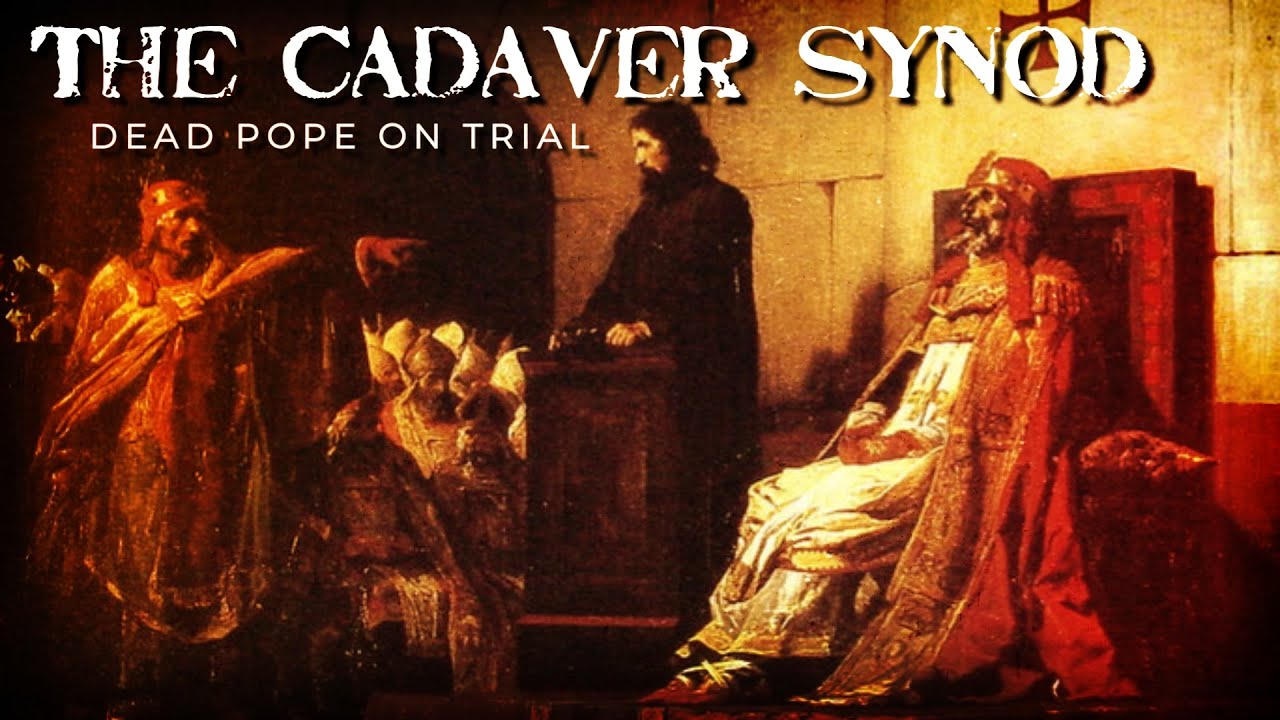
In January 897 A.D., one of the most bizarre and grotesque trials in human history took place—not in secret, not in fiction, but under the watchful eyes of the Catholic Church. The defendant? Pope Formosus, long dead and buried. Exhumed from his tomb, clad in papal vestments, and propped up on a throne, the corpse of Formosus faced a synod of bishops and a hostile successor, Pope Stephen VI, in what history would remember as the Cadaver Synod.

But this was no ordinary trial. It was a manifestation of medieval power struggles, revenge politics, and the often bloody intersection between the sacred and the profane. The Cadaver Synod wasn’t merely an act of religious madness—it reflected the deep political instability of Rome at the time, as papal authority collided with aristocratic ambition and imperial influence. To understand why a dead pope was put on trial, we must first understand the chaos that engulfed the Church in the late 9th century.

Power and Politics: Inside Medieval Papal States

The papacy of the 9th century was a far cry from the spiritual beacon it’s often imagined to be today. Instead, it was a political institution caught in a web of aristocratic rivalries, military alliances, and foreign interference—especially from the Holy Roman Empire. Popes were regularly installed and deposed by powerful Roman families or imperial factions seeking influence over Christendom.

Pope Formosus had a controversial past. Before his election, he had been excommunicated by Pope John VIII, accused of attempting to usurp the throne of Constantinople and refusing to return to Rome. Though the excommunication was lifted, the accusations lingered. When Formosus finally ascended to the papacy in 891, he aligned with Arnulf of Carinthia, a Frankish king vying for the imperial crown, directly opposing the interests of Lambert of Spoleto—a powerful aristocrat whose family considered the papal throne part of their inherited sphere.

This alliance made Formosus many enemies in Rome, especially among the Spoleto faction. After Formosus died in 896, Lambert’s loyalist Pope Stephen VI took the throne. What happened next was both vengeance and spectacle.

The Corpse on Trial: Gruesome Theater of Power

Pope Stephen VI, under pressure from the Spoletans, ordered Formosus’s corpse exhumed and brought before a church tribunal. The body, decomposed and rotting, was dressed in papal robes and seated on a throne in the Basilica of St. John Lateran. A deacon was appointed to “speak” on behalf of the dead pope, while Stephen presided as judge and accuser.

Formosus was charged with multiple crimes: violating canon law by becoming bishop of Rome while already bishop of another see, perjury, and conspiring with Arnulf against Lambert. The charges were rooted in actual church disputes of the time but were clearly politically motivated.

The trial was pure spectacle—medieval propaganda at its most grotesque. Witnesses were summoned, documents read aloud, and gestures of mockery made toward the corpse. In the end, the synod declared Formosus guilty. His papacy was annulled, his acts and ordinations invalidated, and his body stripped of its sacred vestments. Three fingers used for blessing were cut off, and the body was thrown into the Tiber River.

Aftermath: Riots, Retribution, and a Deadly Price

Stephen VI may have momentarily pleased his political patrons, but the grotesqueness of the Cadaver Synod backfired. The Roman public, deeply disturbed by the desecration of a former pope’s body, rose in outrage. Riots broke out in the streets of Rome. Stephen was arrested and imprisoned by his opponents, and soon after, he was strangled to death in his cell—ironically suffering the kind of posthumous disgrace he had tried to bestow on Formosus.

In the wake of this chaos, subsequent popes sought to distance themselves from the Cadaver Synod. Pope Theodore II and later Pope John IX convened synods that annulled Stephen’s decisions, declared the Cadaver Synod invalid, and reburied Formosus with honors. But the damage to the Church’s image and spiritual credibility was profound.

The spectacle also set a precedent for political manipulation of the papacy—a trend that would continue through the Middle Ages, reaching new levels during the Avignon Papacy and the Western Schism centuries later.

The Symbolism: Divine Justice or Vengeance?

The Cadaver Synod raises critical questions about the nature of justice, legitimacy, and power in a religious context. Was Stephen VI seeking justice, or merely revenge? Could a dead man truly be held accountable for his actions? The trial blurred the lines between law, theater, and ritual humiliation, using religious ceremony as a tool for political control.

Symbolically, the Cadaver Synod illustrates how the medieval Church—while often portrayed as purely spiritual—was deeply entangled in the same worldly power struggles that plagued secular rulers. Its ability to anoint kings, crown emperors, and excommunicate heretics made it a force to be both respected and feared. But as the Synod proved, that power could also be grotesquely abused.

Echoes Through History: The Cadaver Synod

The Cadaver Synod is still cited today as one of the strangest and most extreme abuses of power in ecclesiastical history. Historians and theologians alike debate its meaning, wondering whether it represents an isolated moment of madness or a deeper reflection of how vulnerable spiritual institutions are to temporal corruption.

While the Church officially buried the memory of the Synod in later centuries, it has remained a chilling reminder of how far leaders will go to rewrite history—even if they have to dig up the dead to do it.

Today, the Synod is studied not just by religious scholars, but also by legal historians, ethicists, and students of political theatre. Its bizarre images—a dead pope on trial, robed in regalia, accused by the living—linger in the imagination as a symbol of the extreme lengths humans will go to secure power and punish enemies.

Conclusion: Morbid Mirror of Medieval Power

The Cadaver Synod remains one of the most disturbing yet revealing episodes in the history of the Catholic Church. It was not merely a grotesque miscalculation—it was a manifestation of the madness that ensues when religious institutions are hijacked by political ambition. The trial of a dead pope, while deeply unsettling, forces us to confront the darker side of human nature and the institutions we build.

Beneath the spectacle lies a cautionary tale of unchecked power, blurred boundaries between church and state, and how history remembers the absurd as much as the righteous. In the end, the Cadaver Synod may be remembered not only for its horror, but for what it says about the men who believed they could judge the dead—and the system that allowed them to try.

Categories
W1 World

The Real Doctor Frankenstein: Giovanni Aldini and His Shocking Quest to Resurrect the Dead

The Inspiration Behind Frankenstein: Science or Fiction?

The tale of Frankenstein, penned by Mary Shelley in 1818, is often seen as a mere work of gothic fiction, a chilling story of man’s attempt to play God. However, beneath the layers of fantasy lies a shocking reality—one deeply rooted in real-life scientific experiments that took place during the late 18th and early 19th centuries. Giovanni Aldini, an Italian physicist and nephew of the famous scientist Luigi Galvani, conducted disturbing experiments with electricity, attempting to restore life to the dead. His work not only horrified his contemporaries but also left an indelible mark on literature, inspiring the legend of Frankenstein and shaping the way society viewed the boundaries of science and morality.

Aldini’s gruesome demonstrations, often performed before stunned audiences, involved jolting lifeless bodies with powerful electric currents. The violent convulsions of the corpses—eyes fluttering open, limbs twitching, and mouths gasping as if drawing breath—blurred the line between life and death. Though his experiments never truly revived the dead, they fueled both scientific curiosity and public terror, raising unsettling questions about the nature of existence and the ethical limits of scientific exploration.

Giovanni Aldini: Obsessed with Reanimating the Dead

Born in 1762 in Bologna, Italy, Giovanni Aldini was a scientist who became one of the most controversial figures in the history of medical and electrical research. He was deeply fascinated by the idea that electricity could be the key to unlocking the mysteries of life itself. His obsession with this idea stemmed from his uncle’s discovery of animal electricity, which demonstrated that electrical impulses could cause muscle contractions in dead frogs. Rather than viewing this as a mere physiological reaction, Aldini believed that electricity might hold the power to not just trigger movement, but to actually restore consciousness to the dead.

Determined to test his theories, Aldini embarked on a series of radical experiments, applying electrical currents to the lifeless bodies of animals and, eventually, human corpses. His work was far more than a simple scientific curiosity—it became a macabre spectacle that fascinated, terrified, and often disgusted those who witnessed it. He saw himself as a visionary pushing the limits of scientific knowledge, but many of his critics viewed him as a reckless madman playing God, tampering with forces he did not fully understand.

The Horrifying Public Experiments with Electricity

One of Aldini’s most infamous and widely discussed experiments took place in 1803 at the Royal College of Surgeons in London. The subject of this gruesome display was the recently executed body of George Forster, a man hanged for the murder of his wife and child. Aldini, eager to prove his theories on electrical reanimation, attached electrodes to various parts of Forster’s body and applied strong currents of electricity. What happened next sent shockwaves through the audience.

As the electricity surged through Forster’s corpse, his limbs began to jerk violently, his fingers clenched into fists, and his eyes flickered open. At one point, the corpse’s chest began to rise and fall as though it were attempting to breathe, and, in a particularly terrifying moment, the body briefly sat upright. The reaction from the crowd was immediate—some believed they had just witnessed a miracle, while others ran from the room, convinced that Aldini had succeeded in raising the dead. Some medical professionals in attendance, though more skeptical, were still unsettled by the implications of what they had just seen.

Despite the extraordinary spectacle, Aldini’s experiment ultimately failed to bring Forster back to life. However, it did ignite widespread discussions about the role of electricity in the human body and its potential applications in medicine. Aldini’s public demonstrations made headlines across Europe, earning him a reputation as both a scientific pioneer and a disturbing showman.

The Ethics and Legal Controversies of Aldini’s Work

Aldini’s experiments raised profound ethical and legal questions, many of which remain relevant in scientific debates today. Religious leaders were among the most vocal critics of his work, condemning his experiments as acts of blasphemy. They argued that life and death were sacred matters determined by divine will, and that Aldini’s attempts to reanimate corpses were an unacceptable overreach into the domain of God. Others in the scientific community questioned whether his research had any real merit or if it was merely a grotesque spectacle designed to attract attention and fame.

There were also legal concerns regarding the use of human corpses for experimentation. The bodies Aldini used were often those of executed criminals, and while laws of the time allowed for their use in scientific research, many questioned whether this was ethical. Did these individuals, even in death, have the right to dignity? Could their bodies be used for scientific progress without their consent? These questions fueled debates that would later shape medical ethics and the regulation of human experimentation.

Despite the controversy, Aldini remained steadfast in his belief that his work had medical value. He proposed that controlled electrical stimulation could be used to treat mental illnesses and neurological disorders. He even suggested that electricity might one day help revive people who had drowned or suffered from other fatal accidents. While many dismissed his ideas as fantasy, some of his concepts laid the groundwork for early forms of electrotherapy, an approach that is still used in modern medicine for treating conditions like severe depression and epilepsy.

The Lasting Impact: Science, Literature, Medicine

Although Aldini’s ultimate dream of reviving the dead never became reality, his work left an undeniable mark on both science and popular culture. His experiments contributed to the growing understanding of bioelectricity, influencing future research in neurology, cardiology, and emergency medicine. Some of his work also foreshadowed the development of defibrillators, which use controlled electrical shocks to restart the heart in cases of cardiac arrest.

More famously, Aldini’s chilling public demonstrations are believed to have inspired Mary Shelley’s Frankenstein. Shelley, who wrote her novel in 1818—just 15 years after Aldini’s most famous experiments—was well aware of the scientific discussions of her time. Her character, Victor Frankenstein, embodies the dangerous pursuit of knowledge without ethical restraint, mirroring Aldini’s real-life quest to conquer death. Whether intentionally or not, Aldini became immortalized as the closest real-world equivalent to Shelley’s fictional scientist.

The Dark Legacy of Reanimation Experiments

The fascination with reviving the dead did not end with Aldini. His work inspired generations of scientists and writers, fueling both scientific progress and gothic horror. Over the centuries, advancements in medical science—such as defibrillation, organ transplants, and cryonics—have turned once-unthinkable ideas into reality. However, ethical concerns remain. The quest to extend life, whether through artificial intelligence, genetic modification, or extreme life-support technologies, echoes Aldini’s experiments in many ways. It raises the same fundamental question humanity has struggled with for centuries: Should we pursue science without limits, or are there boundaries that should never be crossed?

Giovanni Aldini’s legacy stands as a cautionary tale of ambition, curiosity, and the potential dangers of unrestrained scientific exploration. While his experiments contributed to medical advancements, they also blurred the line between scientific progress and moral transgression. Whether viewed as a pioneering scientist or a real-life Doctor Frankenstein, Aldini’s influence continues to haunt the worlds of science, ethics, and literature today.

Categories
P1 People UN

Girls for Sale in India: The Dark Story of the Missing, Abused, Exploited, and the Forgotten

Introduction

The tragedy of human trafficking, particularly involving young girls, has cast a long, dark shadow over India for decades. This pervasive crisis is a deeply entrenched issue that reveals the intersection of gender inequality, poverty, and organized crime. While global awareness has grown, efforts to address the crisis often feel like a drop in an ocean of sorrow. According to a 2017 United Nations report, a child is abducted every eight minutes in India, and the majority of those abducted are girls.

A third of these children are never found, leaving families torn apart by grief and despair. The harsh reality is that many of these missing girls are sold into sexual slavery, labor trafficking, or even organ harvesting. This article delves into the history and context behind this ongoing catastrophe, looks at the current situation, and asks a critical question: what is being done to rescue the missing girls of India before they are lost forever?

The Dark Roots of Human Trafficking in India

Human trafficking in India is not a new phenomenon. For centuries, the country has struggled with caste-based exploitation, child labor, and gender-based violence. India’s patriarchal culture has historically devalued female lives, leading to an alarming preference for boys over girls in many regions. The widespread use of female infanticide and sex-selective abortions highlights the degree to which girls are seen as burdens rather than blessings. This cultural devaluation of girls makes them more vulnerable to abduction and trafficking.

The trafficking crisis worsened in the late 20th century as rapid urbanization, poverty, and unemployment led to mass migration to cities. Rural families, desperate for survival, often sent their children to cities for work, believing they were securing a better future. However, many of these children never arrived at their intended destinations. Instead, they were intercepted by traffickers who exploited their vulnerability.

The UN Report: A Glimpse into the Horrors

The 2017 United Nations report on human trafficking in India painted a grim picture, exposing the scale of the crisis. The report tracked the cases of two girls who went missing, representing the stories of thousands who disappear each year. One of the girls was abducted from her village and sold into the sex trade in a major Indian city. Her fate remains unknown. The second girl was trafficked for labor and endured years of abuse before being rescued by an NGO. The story of these two girls is emblematic of the wider tragedy, where the most vulnerable are preyed upon, often with no recourse for justice.

The report also shed light on the struggle of a single man’s journey to find his missing daughter. His battle against bureaucracy, corruption, and apathy was a heartbreaking representation of the system’s failure to protect India’s children. He followed every lead, from traffickers’ dens to corrupt police officers, but each path led to a dead end. For many parents, the emotional toll of searching for a missing daughter is exacerbated by the realization that time is working against them; the longer a girl remains missing, the less likely she is to be found.

The Human Trafficking Network: From Villages to Cities

Traffickers often operate within intricate, well-organized networks. Girls are kidnapped or lured from their homes under false pretenses—promises of employment, marriage, or a better life. Once taken, they are transported far from their homes to cities like Mumbai, Kolkata, or Delhi, where they are sold into prostitution or forced labor. Some are even trafficked across borders into countries like Nepal and Bangladesh, where legal and jurisdictional challenges make rescue even more difficult.

The traffickers themselves range from small-time criminals to powerful syndicates. There are cases where family members, friends, or even police officers are complicit in the trade. Corruption is endemic, making it nearly impossible for victims’ families to trust law enforcement or expect help from local authorities. In some instances, trafficked girls are sold multiple times, each transaction diminishing their chances of ever being rescued.

The Impact on Families and Communities

When a girl is taken, it’s not just her life that is destroyed. Her family and community are forever marked by the loss. Families are often financially ruined by the costs of searching for their missing children. Many must quit their jobs to scour cities and slums in desperate attempts to find their daughters. Even when girls are returned, they are often so traumatized that their reintegration into society is fraught with challenges. Many return as survivors of sexual violence, making them socially stigmatized in their conservative communities.

The emotional and psychological impact on the victims is profound. The trauma of sexual exploitation, abuse, and enslavement often leaves these girls with lifelong scars. Counseling and rehabilitation services are woefully inadequate, and few victims receive the care they need to recover.

What’s Being Done Now?

In recent years, the Indian government and international organizations have stepped up efforts to combat human trafficking. The introduction of anti-trafficking laws has been a positive development, but enforcement remains patchy. The Trafficking of Persons (Prevention, Protection, and Rehabilitation) Bill, introduced in 2018, aimed to provide a comprehensive framework for combating trafficking. It emphasized prevention, rescue, and rehabilitation, while also punishing traffickers with harsher penalties. However, critics argue that the bill has loopholes and lacks the resources for effective implementation.

Non-governmental organizations (NGOs) like Bachpan Bachao Andolan, Prajwala, and the Kailash Satyarthi Children’s Foundation continue to play a crucial role in rescuing trafficked girls and advocating for stricter laws. These organizations work in tandem with law enforcement agencies to conduct rescue operations, provide legal assistance to victims, and help reintegrate survivors into society. Yet, despite their tireless efforts, the scale of trafficking in India remains overwhelming.

Technology and Innovation: A New Hope?

There has been growing use of technology in the fight against human trafficking. Digital tools such as facial recognition software and social media tracking are now being deployed to trace missing children. In 2018, India’s Ministry of Women and Child Development launched an online portal called “TrackChild,” which helps authorities track and rescue missing children.

In addition, grassroots campaigns like “Operation Smile” by the Indian police aim to locate missing children and reunite them with their families. These efforts have had some success, but the enormity of the problem continues to challenge both authorities and activists.

Looking Ahead: A Global Crisis

Human trafficking, particularly of girls, is not an issue confined to India. It is part of a global crisis that affects millions of women and children around the world. Efforts to combat this menace must be global and multi-faceted, combining legal reforms, international cooperation, technological innovation, and grassroots activism.

For India, the journey toward eradicating human trafficking is long, and the road is fraught with challenges. But with concerted effort, sustained pressure, and continued advocacy, there is hope that the voices of the missing and the dead will one day be heard, and the traffickers who prey on the most vulnerable will be brought to justice.

Conclusion

In the face of this profound crisis, the fight to rescue India’s missing girls and dismantle the human trafficking networks remains a formidable challenge. While legal reforms, technological innovations, and grassroots efforts provide glimpses of hope, the systemic issues of poverty, corruption, and gender inequality continue to fuel the trafficking industry. Lasting change requires a unified, global response that prioritizes prevention, protection, and justice for the victims. Only by addressing the root causes and empowering vulnerable communities can India—and the world—begin to turn the tide against the exploitation of its most vulnerable citizens.

Categories
W1 World

Unveiling the Enigmatic Encounter: The Girl in Georgia Who Communicated with the Dead

In the tranquil suburbs of Georgia, a peculiar tale unfurled, captivating the attention of locals and beyond. Andy and Lisa Wyrick found themselves in a realm where the boundaries between the seen and the unseen blurred, all because of their four-year-old daughter, Heidi, and her purported encounters with the departed.

It all began innocuously enough, as Heidi regaled her parents with tales of her imaginary playmates. Among them was “Mr. Gordy,” a spectral figure resembling an elderly man who delighted in pushing her on the swing. However, it was Heidi’s mention of “Con” that sent shivers down her parents’ spines—a description of a young man allegedly missing an arm and adorned with blood.

Lisa, perturbed by her daughter’s vivid imagination, confided in a neighbor about Heidi’s imaginary companions. To her astonishment, the neighbor revealed a startling revelation—both Mr. Gordy and Con were not figments of Heidi’s imagination but once-living residents of the area who had long since passed away.

The revelation plunged the Wyricks into a whirlpool of disbelief and fascination. How could Heidi, a mere child, have knowledge of individuals she had never met, let alone individuals who had departed from the realm of the living long before her birth?

As word of Heidi’s encounters spread, so too did speculation and intrigue. Some dismissed the phenomenon as mere childhood fantasy, attributing Heidi’s tales to an overactive imagination. Yet, others found themselves drawn to the possibility of a deeper, more profound explanation—one that transcended the boundaries of conventional understanding.

The Wyricks found themselves inundated with inquiries, both from curious neighbors and skeptical onlookers. Amidst the clamor, they grappled with their own internal turmoil—striving to reconcile their daughter’s inexplicable experiences with the rational confines of reality.

In their quest for answers, the Wyricks turned to experts in the realms of psychology, parapsychology, and the occult. Skeptics sought to debunk Heidi’s encounters through scientific scrutiny, attributing her tales to suggestibility or subconscious cues gleaned from her surroundings. However, others approached the phenomenon with an open mind, exploring the possibility of extrasensory perception or communication with the spirit world.

As the debate raged on, Heidi’s encounters continued unabated, defying attempts at rationalization. Each interaction with Mr. Gordy and Con seemed to deepen the mystery, as Heidi relayed details and insights that defied logical explanation.

For the Wyricks, Heidi’s experiences became a catalyst for introspection and spiritual exploration. They found solace in the possibility that their daughter possessed a unique gift—an ability to bridge the gap between the living and the dead, offering glimpses into realms beyond the comprehension of mortal minds.

Yet, with enlightenment came trepidation, as the Wyricks grappled with the implications of Heidi’s purported abilities. They found themselves torn between embracing the inexplicable and shielding their daughter from the scrutiny and skepticism of the outside world.

Amidst the speculation and debate surrounding Heidi’s encounters, one fact remained indisputable—the uncanny accuracy of her descriptions of Mr. Gordy and Con. Records confirmed that both individuals had indeed lived in the area, their lives and tragic ends aligning eerily with Heidi’s accounts. This verifiable connection served as a tantalizing thread linking the mundane with the mystical, prompting further inquiry into the enigmatic nature of Heidi’s communion with the departed.

In the end, the tale of the girl in Georgia who communicated with the dead remained shrouded in ambiguity. To some, it stood as a testament to the resilience of belief in the face of skepticism—a reminder that mysteries abound in the uncharted territories of human consciousness. To others, it served as a cautionary tale—a reminder of the dangers of delving too deeply into realms beyond our comprehension.

Regardless of interpretation, Heidi’s encounters left an indelible mark on those who bore witness to her inexplicable experiences. In a world governed by the tangible and the known, her tale served as a poignant reminder that truth, in all its myriad forms, is often stranger than fiction.

Categories
W2 World

The Gruesome Mystery of Tadcaster Castle: Unraveling the Life and Death of a Medieval Woman

Introduction

In the serene landscapes of Yorkshire, nestled amid rolling hills and picturesque countryside, lies Tadcaster Castle—a place with a history as rich and complex as the English countryside itself. Tadcaster Castle, like many ancient structures, holds secrets buried deep within its walls. One such secret emerged in a most chilling and mysterious manner—an ancient skeleton, that of a medieval woman, discovered within the castle’s confines. This discovery has set off a flurry of excitement among archaeologists and historians, who now endeavor to piece together the gruesome jigsaw of her life and death, shedding light on both her personal history and the castle’s past.

The Discovery

The tale of this medieval enigma began with a routine excavation within Tadcaster Castle’s grounds. As archaeologists meticulously unearthed layers of history, they stumbled upon a macabre find—an intact human skeleton, carefully laid to rest beneath centuries of earth and debris. What sets this discovery apart is not just the presence of the skeleton, but the fact that it belonged to a woman. In medieval times, the narratives of women were often overshadowed by those of men, making this discovery all the more significant.

The gruesome nature of the find immediately raised questions. Was this woman a victim of foul play, or had she met her demise under more natural circumstances? To answer these questions, experts embarked on a journey to unravel the mystery of Tadcaster Castle’s medieval skeleton.

The History of Tadcaster Castle

To understand the context of this discovery, we must first delve into the history of Tadcaster Castle itself. The castle, which dates back to the 11th century, has witnessed centuries of wars, political intrigue, and societal changes. It played a crucial role during the tumultuous medieval period, serving as a defensive stronghold against invading forces and as a symbol of power and authority.

Over the years, Tadcaster Castle changed hands multiple times, with various noble families holding sway within its walls. Each era brought new renovations, extensions, and modifications, leaving behind layers of history to be explored by modern archaeologists. The castle’s history is a tapestry of medieval England, marked by the rise and fall of dynasties, the clash of knights in shining armor, and the echoes of long-forgotten voices.

Piecing Together the Woman’s Life

As the medieval woman’s skeleton was carefully extracted from its resting place, experts embarked on a multidisciplinary journey to learn about her life and death. The analysis of skeletal remains, combined with historical records and scientific techniques, began to yield fascinating insights into her existence.

First and foremost, the woman’s age at the time of death was estimated to be in her late twenties or early thirties. This alone raised questions about her social status and the circumstances of her demise. Historians compared her age to the life expectancy of medieval women and found that she had lived beyond the average age, suggesting she may have had access to better living conditions and healthcare.

Furthermore, the examination of her bones provided intriguing clues about her health and lifestyle. Skeletal anomalies and evidence of wear and tear on her bones hinted at a life of physical labor, possibly manual work or agricultural tasks. This information suggested that she belonged to the working class, shedding light on the diversity of individuals who once inhabited Tadcaster Castle.

The Analysis of Trauma

One of the most chilling aspects of the investigation was the discovery of trauma on the woman’s remains. This trauma included signs of injuries to her skull and limbs, leading to a disturbing question: had she met a violent end?

Forensic analysis played a pivotal role in answering this question. The examination of the skull revealed evidence of a significant blow, likely inflicted by a blunt object. This traumatic injury, combined with signs of healed fractures in her limbs, painted a grim picture of a life marked by violence and hardship.

Historians speculated that the woman may have been a resident of Tadcaster Castle or its surrounding village, subjected to the perils of medieval life. The castle, with its history of sieges and battles, could have been a place where violence was not uncommon. Alternatively, her injuries could have been the result of domestic violence or accidents related to her work.

The woman’s injuries told a story of survival against the odds, highlighting the resilience of individuals in medieval times and the challenges they faced in a world fraught with danger.

The Burial Ritual

Another intriguing aspect of the discovery was the way in which the woman had been buried. Her body was found carefully placed within a simple, unadorned grave—a stark contrast to the lavish burials often associated with medieval nobility.

The simplicity of her burial raised questions about her social standing and the cultural practices of her time. Was she a commoner buried with minimal ceremony, or did her burial reflect a departure from traditional customs?

Archaeologists theorized that her burial might have been influenced by religious beliefs or societal factors. Further research into burial practices and funerary customs of the period may provide additional insights into the woman’s identity and the circumstances surrounding her death.

Conclusion

The discovery of the medieval woman’s skeleton at Tadcaster Castle has opened a window into the past, offering a glimpse of life and death in medieval England. As experts continue to analyze her remains and piece together the puzzle of her existence, they shed light not only on her individual story but also on the complex history of the castle itself.

This gruesome mystery serves as a reminder of the resilience and struggles of individuals in a bygone era, where life was marked by violence, hardship, and uncertainty. As the research unfolds, the medieval woman of Tadcaster Castle becomes more than just a skeleton; she becomes a symbol of the enduring quest to uncover the hidden stories of the past, giving a voice to those who have long been forgotten by history.

Categories
W4 World

Supernatural Encounters: The Mysterious World of Children Communicating with the Dead

Throughout history, there have been countless stories of haunted houses and paranormal encounters. Among these stories are some that are particularly fascinating, those involving children who claim to be able to speak with the dead. These stories have been reported all over the world, from Europe to Asia and beyond. In this article, we will explore some of the most compelling haunted house stories involving children and their supposed ability to communicate with the deceased.

  1. One of the most well-known cases of children communicating with the dead occurred in the late 1800s in Hydesville, New York. The Fox sisters, Margaret, Kate, and Leah, claimed to be able to communicate with the spirit of a murdered peddler. The sisters gained fame and fortune for their supposed abilities, and their story helped to spark the spiritualist movement of the late 19th century.
  2. Another famous case of children communicating with the dead is the Enfield Poltergeist case, which took place in the UK in the late 1970s. Two sisters, Janet and Margaret Hodgson, claimed to be haunted by a malevolent spirit who spoke through Janet. The case was widely covered by the media and investigated by paranormal researchers, but its veracity remains a subject of debate.
  3. Moving to Asia, there is the story of the Japanese boy who claimed to be able to communicate with his deceased grandmother. In this case, the boy would frequently play with his grandmother’s spirit, and even invite her to tea parties with his friends. The boy’s parents were initially skeptical, but were eventually convinced of the veracity of their son’s claims when he revealed details about his grandmother’s life that he could not have known otherwise.
  4. In India, there is the story of the haunted house in Delhi that was reportedly inhabited by a ghost who communicated through a young girl. The girl claimed that the ghost was that of a woman who had been murdered in the house years earlier. The case attracted the attention of local authorities, and the girl was subjected to rigorous questioning to determine the authenticity of her claims.
  5. In Thailand, there is the case of a young boy who was said to be possessed by the spirit of his deceased grandmother. The boy reportedly communicated with his grandmother’s spirit, and even took on some of her personality traits. The case gained widespread attention in Thailand, and the boy was eventually taken to a Buddhist monastery for exorcism.
  6. Philippines – A young girl named Jodi claimed to be able to see and communicate with the spirit of her deceased grandmother. The grandmother’s spirit would allegedly visit Jodi at night and tell her stories from her life. The case gained attention in the Philippines and was even covered by local news outlets.
  7. Scotland – In the 17th century, a young girl named Christian Shaw claimed to be able to communicate with the devil and other evil spirits. She accused several people in her town of witchcraft and was a key witness in their trials. The case gained notoriety and was known as the Paisley Witch Trials.
  8. Mexico – In the 1920s, a young girl named Magdalena Solís claimed to be a divine prophet and could communicate with the spirits of the dead. She formed a cult and convinced her followers to engage in human sacrifice. The case gained international attention and Magdalena was eventually arrested and sentenced to life in prison.
  9. In Spain, there is the story of the children of Belmez. In 1971, a house in the town of Belmez was found to have mysterious faces appearing on the floor. The faces were said to be those of deceased relatives, and the family claimed that the faces would change and move on their own. The family’s children were said to be able to communicate with the faces, and the case attracted widespread attention in Spain.
  10. In Italy, there is the story of the “Little House of Ghosts” in the town of Borgo San Dalmazzo. The house was said to be haunted by the spirits of two young girls who had died in the house many years earlier. The spirits would reportedly communicate with the living through knocking sounds and movements of objects in the house. The case was investigated by paranormal researchers, and remains a popular topic of discussion in Italy to this day.
  11. Georgia, USA – In the 1980s, a young girl named Heather claimed to be able to see and communicate with ghosts in her family’s house. The family hired a psychic investigator, who found evidence of a spirit inhabiting the home. The case gained media attention and was even the subject of a made-for-TV movie.
  12. Connecticut, USA – In the 1970s, the Snedeker family moved into a former funeral home in Connecticut, and their son claimed to be able to see and communicate with the spirits of the deceased. The family experienced a range of paranormal phenomena, including strange smells and physical attacks. The case was later investigated by paranormal researchers and inspired the film “The Haunting in Connecticut.”

These are just a few examples of the many haunted house stories involving children who claim to be able to communicate with the dead. While some of these stories may be the result of overactive imaginations or attempts to gain attention, others remain unexplained to this day. Whatever the case may be, these stories continue to captivate and intrigue people around the world, and serve as a reminder that the world is full of mysteries that we may never fully understand.

Categories
W4 World

The Evolution of Our Fear of the Dead: From Ancient Times to the Present Day

From ancient times to the present day, the dead have been a source of fascination and fear for human beings. Many cultures throughout history have had complex rituals and beliefs surrounding death and the afterlife. However, there is also a darker side to our relationship with the dead, one that involves fear, horror, and even the mutilation of corpses.

One of the main reasons why people fear the dead is the fear of the unknown. Death is a mysterious and inevitable part of life, and despite centuries of scientific and medical advancements, it remains one of the great mysteries of the universe. This fear of the unknown can be heightened by the fact that death is often associated with pain, suffering, and the decay of the body.

Another factor that contributes to our fear of the dead is cultural and religious beliefs. Many cultures throughout history have believed in the existence of malevolent spirits, ghosts, and other supernatural entities that are said to be able to harm the living. These beliefs have often been reinforced by myths, legends, and folklore, which have depicted the dead as powerful, vengeful, and unpredictable.

In some cases, this fear of the dead has led to extreme measures being taken to protect the living. In ancient times, people believed that the spirits of the dead could be harmful to the living, and they often went to great lengths to prevent the dead from returning to the world of the living. This included mutilating the corpses of loved ones to prevent them from coming back as malevolent spirits.

One of the most famous examples of this practice is the ancient Egyptian practice of mummification. The Egyptians believed that by preserving the bodies of their dead through mummification, they could ensure that the spirits of the deceased could safely pass on to the afterlife without harming the living.

In some cultures, the fear of the dead has led to the development of elaborate burial rituals and funerary practices. These practices are designed to honor the dead and ensure that their spirits can rest peacefully in the afterlife. However, they can also be seen as a way of appeasing the dead and preventing them from returning to the world of the living.

In modern times, our fear of the dead has taken on new forms. Horror movies, television shows, and literature have depicted the dead as monsters, zombies, and other terrifying creatures. These depictions have played on our primal fears and anxieties about death and the unknown, and have helped to fuel a multi-billion dollar entertainment industry.

Despite our fear of the dead, there is also a deep fascination with death and the afterlife. Many people are drawn to the mysteries of death, and there is a growing interest in exploring the nature of consciousness, the soul, and the afterlife. This fascination with death has led to the development of new fields of study, such as near-death experiences, psychic phenomena, and paranormal investigations.

Throughout history, different cultures and societies have had varying attitudes towards the fear of the dead. Some cultures have revered the dead, while others have feared them. In this article, we will explore how people’s mindset about the fear of the dead has evolved over the years, decades, and centuries, as well as contemporary thinking on the topic.

In ancient Egypt, death was seen as a transitional phase from life to the afterlife. The Egyptians believed that if the body was preserved, the soul could continue to live in the afterlife. This belief led to the practice of mummification, which involved the removal of internal organs and the application of embalming fluid to preserve the body. The Egyptians held the dead in high esteem and believed that they could communicate with them through various rituals.

In medieval Europe, the fear of the dead was prevalent, particularly during times of plague and other epidemics. People believed that the dead could come back to life as vampires or zombies, and that they could spread disease and death. This belief led to the practice of burying the dead with a stake through the heart or a brick in the mouth to prevent them from rising from the grave. The fear of the dead was also reflected in art and literature, such as the story of Dracula.

In some cultures, such as the Day of the Dead in Mexico and Dia de Finados in Brazil, the dead are celebrated and remembered. The Day of the Dead, which takes place on November 1st and 2nd, is a time when families gather to remember their deceased loved ones and celebrate their lives. In Brazil, Dia de Finados is a day when families visit cemeteries and offer prayers for their dead relatives.

In Asia, the fear of the dead is deeply rooted in religious beliefs and cultural practices. In many Asian countries, such as China and Japan, ancestors are highly respected and honored, and their spirits are believed to continue to exist and influence the lives of their descendants. Ancestral worship and elaborate funeral rituals are still commonplace in many Asian cultures, and there is a strong sense of duty to maintain and respect the memory of the dead. However, the fear of restless and vengeful spirits is also prevalent, and many superstitions and rituals are performed to appease the dead and protect the living from their wrath.

In the USA, the fear of the dead has been shaped by a variety of cultural and historical factors. In early American history, there was a strong religious belief in the existence of ghosts and spirits, and many people believed that the dead could return to haunt the living. The fear of death and the unknown was also heightened by the brutal reality of war and disease. In modern times, the fear of the dead has been perpetuated by popular culture, including horror movies and haunted house attractions. However, there are also many people who do not fear the dead and instead view death as a natural part of the human experience.

In Africa, the fear of the dead is often tied to traditional beliefs and practices surrounding death and the afterlife. In many African cultures, death is viewed as a transition to another realm of existence, rather than an end to life. The dead are believed to have the power to influence the living and are often venerated through elaborate funeral rites and ancestor worship. However, there is also a fear of the unknown and the supernatural, and many African cultures have rituals and customs to protect against malevolent spirits and the dangers of the afterlife.

In contemporary times, the fear of the dead has decreased in many societies, particularly in Western cultures. The dead are often seen as a natural part of the life cycle, and death is viewed as a transition to a different state of being. However, there are still some cultures where the fear of the dead is prevalent. For example, in parts of Africa, the fear of the dead is still widespread, and there are many taboos and rituals associated with death and burial.

Overall, people’s mindset about the fear of the dead has evolved over the years and varies from culture to culture. While some cultures revere the dead, others fear them. In contemporary times, the fear of the dead has decreased in many societies, although it still remains prevalent in some cultures. Ultimately, the fear of the dead reflects our attitudes towards life, death, and the afterlife, and it is shaped by our cultural beliefs and traditions.

In conclusion, our fear of the dead is deeply ingrained in human history and culture. From ancient times to the present day, the dead have been a source of fascination, terror, and mystery. Whether we see the dead as malevolent spirits or as a gateway to the afterlife, our relationship with the dead will continue to shape our beliefs, fears, and cultural practices for generations to come.

Categories
W4 World

Exploring Mysteries of Sodom and Gomorrah: Did These Biblical Cities Really Exist?

The story of Sodom and Gomorrah, as told in the Bible, has long fascinated scholars and laypeople alike. The tale of their destruction by God has been interpreted as a warning against the perils of sin, but the physical existence of these ancient cities has remained a mystery. However, recent archaeological evidence suggests that not only did Sodom and Gomorrah exist, but that they may have been destroyed in a catastrophic event about 5,000 years ago, with the ruins now lying beneath the waters of the Dead Sea.

For years, scholars and explorers have searched for evidence of these cities in the desolate region near the Dead Sea. Some have suggested that the cities may have been destroyed by an earthquake or some other natural disaster, while others have speculated that they were the victims of an early nuclear attack. However, until recently, no definitive proof of their existence had been found.

Recent archaeological findings have brought new hope to those who believe in the existence of Sodom and Gomorrah. Excavations at the site of Tall el-Hammam, located on the east bank of the Jordan River, have revealed the ruins of a large, fortified city dating back to the Early Bronze Age, around the time when the Bible says Sodom and Gomorrah would have existed. Archaeologists have also found evidence of a massive, sudden fire that destroyed the city, suggesting that it may have been the biblical city of Sodom.

Moreover, the discovery of a layer of ash at the nearby site of Bab edh-Dhra has further fueled speculation that this may have been the site of Gomorrah. The ash layer, which is more than 10 feet thick in some places, has been dated to around the same time period as the destruction of Tall el-Hammam, suggesting that it may be the result of a catastrophic event that occurred around 5,000 years ago.

While these findings are certainly tantalizing, there is still no conclusive proof that Tall el-Hammam was actually Sodom or that Bab edh-Dhra was Gomorrah. However, the evidence gathered so far suggests that there may be much more to be discovered beneath the waters of the Dead Sea.

Recent explorations using sonar and underwater cameras have revealed a number of intriguing structures on the seabed, including what appears to be a large circular structure that some have suggested may be the remains of an ancient city.

The story of Sodom and Gomorrah is well-known in biblical tradition, with the two cities famously destroyed by God as a punishment for their immoral behavior. However, there has been a lack of strong archaeological evidence for their existence, leading some to question whether the story is merely a metaphorical warning against sin.

Older studies, such as those conducted by archaeologist William F. Albright in the 1920s and 30s, suggested that Sodom and Gomorrah may have been located in the southern Jordan Valley, but no conclusive evidence was found to confirm this. Additionally, some scholars have proposed that the story of their destruction was a mythological tale adapted from ancient Near Eastern flood narratives.

However, recent geological and archaeological studies have suggested that the cities may have indeed existed and been destroyed by a natural catastrophe around 5,000 years ago. This theory is based on evidence of a massive landslide into the Dead Sea, which could have caused tsunamis and seismic activity that destroyed the cities and submerged their remains under the waters of the Dead Sea.

Further excavations and research into the area have revealed the presence of sulfur and other elements associated with burning, which supports the biblical account of the cities’ fiery destruction. Additionally, pottery and other artifacts have been found that date to the time period when Sodom and Gomorrah were believed to have existed, further adding to the likelihood of their historical reality.

In summary, while older studies and skeptical interpretations of the biblical account cast doubt on the existence of Sodom and Gomorrah, new geological and archaeological evidence suggests that they may have indeed existed and been destroyed by a natural catastrophe. As research in the area continues, we may learn even more about these ancient cities and the events that led to their demise.

The search for Sodom and Gomorrah may still be ongoing, but the recent archaeological discoveries suggest that we may be closer than ever before to uncovering the truth behind these ancient cities. And, whether or not the ruins of Sodom and Gomorrah are ever found, their story will continue to fascinate and inspire people for generations to come.

In conclusion, the question of whether Sodom and Gomorrah truly existed and were destroyed by divine intervention remains a mystery. While recent discoveries in the region of the Dead Sea have provided some tantalizing clues, there is still much research to be done before any definitive conclusions can be drawn. Nevertheless, the ongoing efforts of archaeologists and historians to uncover the truth about these legendary cities serve as a reminder of the enduring power of myth and the never-ending quest for knowledge.

Categories
W4 World

The Dead Sea Scrolls: Unveiling the Secrets of the World’s Oldest Biblical Manuscripts

Introduction

The Dead Sea Scrolls are one of the most significant archaeological discoveries of the 20th century. Discovered in 1947 in the Qumran caves near the Dead Sea, these ancient documents offer a glimpse into the religious and cultural life of the people who lived in the region over 2,000 years ago. In this article, we will explore the discovery of the Dead Sea Scrolls, their historical and religious significance, and the ongoing debate surrounding their interpretation.

Discovery of the Dead Sea Scrolls

In 1947, a young Bedouin shepherd named Muhammed edh-Dhib was tending his flock near the Dead Sea when he stumbled upon a cave that contained a collection of ancient scrolls. The scrolls, which were written on parchment and papyrus, were eventually sold to an antiques dealer in Bethlehem, who then sold them to scholars and collectors around the world.

The importance of these scrolls was soon recognized, and in 1949, the Jordanian Department of Antiquities launched an official excavation of the Qumran caves. Over the next decade, eleven caves were discovered, containing thousands of fragments of over 900 different texts.

Historical and Religious Significance

The Dead Sea Scrolls are a collection of Jewish texts that date back to the Second Temple period, which lasted from 516 BCE to 70 CE. They include fragments from every book of the Hebrew Bible except for the Book of Esther, as well as many other writings that are not part of the biblical canon. These include works related to Jewish law, liturgy, and history, as well as apocalyptic texts that provide insight into the beliefs and practices of the Jewish sects that lived in the region during that time.

One of the most significant texts found among the Dead Sea Scrolls is the Isaiah Scroll, which contains a complete copy of the Book of Isaiah. This scroll, which dates back to the second century BCE, is the oldest known copy of the Book of Isaiah and has helped scholars better understand the transmission and evolution of the Hebrew Bible.

The Dead Sea Scrolls have also shed light on the diversity of Judaism during the Second Temple period. Scholars have identified three distinct Jewish sects that lived in the region: the Essenes, the Pharisees, and the Sadducees. The scrolls found at Qumran are believed to have been written by the Essenes, a reclusive and ascetic community that practiced ritual purity and communal living.

Debate and Interpretation

Despite the wealth of information contained in the Dead Sea Scrolls, their interpretation remains a subject of debate among scholars. One of the most contentious issues is the relationship between the Qumran community and early Christianity. Some scholars have argued that the Qumran community was an early Christian sect, while others see them as a precursor to the Pharisees or the Essenes.

Another issue is the dating of the scrolls. While some of the scrolls have been definitively dated to the Second Temple period, others have been dated to later periods, raising questions about their authenticity and provenance.

Full Story of Dead Sea Scrolls

The discovery of the Dead Sea Scrolls in 1947 was a major archaeological breakthrough that has shed new light on ancient Jewish and early Christian beliefs. For centuries, people had speculated about the existence of a library of sacred texts hidden away somewhere in the Judean desert. The scrolls, written in Hebrew and Aramaic, contain copies of many books of the Old Testament, as well as other Jewish writings from the Second Temple period.

Before the discovery of the scrolls, scholars had assumed that the Hebrew Bible, or Old Testament, had been fixed in its current form by the time of Jesus. However, the scrolls showed that there were many variations of biblical texts in circulation during this period, and that the texts were not yet fully standardized. The scrolls also contained a number of previously unknown Jewish texts, which gave new insights into the beliefs and practices of ancient Judaism.

The scrolls were discovered in a series of caves near the Dead Sea, in what is now Israel, by a Bedouin shepherd searching for a lost goat. Over the next few years, a number of other scrolls were found in the same area, by both Bedouin and archaeologists. The discovery was initially kept secret, and the scrolls were sold on the black market to dealers and collectors.

Eventually, the Israeli government became involved, and a team of scholars was assembled to study the scrolls. The first complete translation of the scrolls into English was published in the 1950s, and subsequent research has uncovered many new insights into the religious and cultural context of the scrolls.

One of the most surprising discoveries was that the texts appear to have been written by a Jewish sect known as the Essenes, who lived in the Judean desert around the time of Jesus. This has led to speculation that Jesus may have had some connection to the Essenes, or may have been influenced by their teachings.

Some scholars have argued that the scrolls also contain evidence of an early form of Christianity, which was more diverse and less centralized than the Christianity that emerged in later centuries. However, this theory remains controversial, and many scholars maintain that the scrolls are primarily a product of Jewish sectarianism.

In recent years, new technologies have been used to study the scrolls, including multispectral imaging and DNA analysis. These techniques have revealed new details about the physical structure and composition of the scrolls, as well as the materials and techniques used to produce them.

Overall, the discovery of the Dead Sea Scrolls has had a profound impact on our understanding of the history of Judaism, Christianity, and the Bible. While many questions remain unanswered, the scrolls continue to fascinate and inspire scholars and laypeople alike, and new discoveries are likely to be made in the years to come.

Conclusion

The discovery of the Dead Sea Scrolls has had a profound impact on our understanding of Jewish history, religion, and culture. Their preservation and eventual publication have allowed scholars to better understand the origins of the Hebrew Bible, the diversity of Judaism during the Second Temple period, and the complex interplay between Jewish sects and early Christianity. As new scrolls are discovered and old ones are reexamined, the study of the Dead Sea Scrolls continues to provide new insights into one of the most important periods in human history.

Categories
W5 World

Unearthing the Past: Medieval Skeletal Remains Tell Tales of Life, Death and Conflict

Introduction

Medieval skeletal remains have a fascinating story to tell. From the struggles of daily life to the horrors of war, examining the bones of those who came before us can provide a glimpse into a world long gone. Among the most intriguing stories revealed by medieval skeletal remains are those of violence and conflict. The analysis of these remains can also provide insight into the medical knowledge and practices of the time, as well as shed light on the diets and lifestyles of our medieval ancestors. Furthermore, advances in technology and forensic science are constantly uncovering new details and uncovering previously unknown aspects of medieval life.

Medieval Life, Death and Conflict: An Overview

The remains of medieval people offer a unique perspective into the daily lives, struggles, and challenges faced by those who lived in the past. Through analyzing the skeletal remains of individuals, we can uncover a plethora of stories about their experiences, from pagan rituals and the cruelty of life to tales of violence and conflict. Medieval skeletal remains also reveal stories of violence and conflict.

For example, analysis of the remains of Richard III, the King of England who died in 1485 at the Battle of Bosworth, showed that he suffered numerous injuries in his final battle, including two fatal blows to the head. Similarly, skeletal remains found in a mass grave in Durham, England, suggest that the individuals buried there were executed prisoners. The remains show evidence of multiple blunt force injuries to the skull, indicating that they were likely beaten to death.

These findings shed light on the brutal nature of medieval justice and the realities of life during times of war and political upheaval. Despite the sometimes grim nature of the stories revealed by these remains, they serve as a reminder of the resilience and perseverance of people in the face of adversity. The bones of the past continue to teach us about the world that was and inspire us to learn more about the people who came before us.

The Battle of Bosworth: A King’s Fatal Injuries

One such story comes from the remains of King Richard III, who died at the Battle of Bosworth in 1485. Analysis of his skeletal remains revealed numerous injuries, including two fatal blows to the head. This suggests that Richard III fought valiantly in his final battle before succumbing to his wounds. It also sheds light on the brutal nature of medieval warfare, where even a king was not immune to violence.

The discovery of Richard III’s remains in a car park in Leicester, England in 2012 sparked renewed interest in his life and reign. His skeletal remains have provided valuable insights into his physical appearance, health, and cause of death. The injuries found on his skull match historical accounts of his final battle, and the discovery of a curvature in his spine has led to new theories about his appearance and the possible impact it had on his reign. The analysis of Richard III’s skeletal remains continues to shed light on this fascinating period of history.

A Grim Discovery in Durham: Evidence of Brutal Executions

Another example comes from a mass grave discovered in Durham, England. The skeletal remains found in the grave suggest that the individuals buried there were executed prisoners. The bones show evidence of multiple blunt force injuries to the skull, indicating that they were likely beaten to death. This chilling discovery provides insight into the harsh realities of medieval justice and the punishment that awaited those who crossed the wrong people.

The mass grave in Durham is not unique. In fact, mass graves containing the remains of executed prisoners have been discovered all over Europe, dating back to medieval times. These grisly finds speak to the political instability and constant power struggles that characterized the Middle Ages. Those who fell afoul of the ruling powers could face brutal and summary punishment, with no regard for their humanity. The skeletal remains of these individuals provide a stark reminder of the violence and cruelty that was all too common in medieval Europe.

Medieval Violence and Conflict: Insights from Skeletal Remains

But the stories revealed by medieval skeletal remains are not all gruesome. Some provide insight into the everyday lives of people from centuries past. For example, the remains of a young woman found in a medieval burial site in Denmark showed signs of scoliosis, a condition that causes curvature of the spine. This suggests that even those with physical limitations were able to live and function in society, despite the challenges they faced.

Another example comes from the remains of a medieval knight found buried in Scotland. Analysis of his bones showed evidence of osteoarthritis, a common condition that causes joint pain and stiffness. Despite this, the knight’s bones also revealed that he was a skilled horseman, with evidence of a prominent muscle attachment on his thigh bone. This suggests that even in the face of physical challenges, people in the Middle Ages were able to adapt and excel in their chosen pursuits.

Conclusion

The skeletal remains of medieval people offer a fascinating glimpse into a world long gone. From tales of violence and conflict to insights into daily life, these bones have much to teach us about the past. While the stories they reveal may be at times grim, they remind us that even in the face of adversity, people were able to adapt and persevere. Studying the skeletal remains of our medieval ancestors is not only important for understanding the past, but also for appreciating how far we have come in terms of advancements in medicine, technology, and human rights.

Categories
W7 World

The Gotland Mass Grave: Uncovering the Buried Mysteries of Medieval Times

Introduction

The island of Gotland, off the coast of Sweden, is home to a dark and mysterious past. In 2018, a mass grave was discovered containing the remains of over 1,000 individuals. The bones were dated back to the 13th century, during a time of political and social unrest in Scandinavia. This grave presents a unique opportunity to uncover the secrets of medieval warfare and the lives of those who fought and died in the conflicts that shaped the region. As we uncover the secrets hidden in the bones of the dead from medieval times, we begin to understand the harsh realities of war and the struggles of those who fought for their beliefs.

The Gotland Mass Grave: An Overview

The Gotland Mass Grave is a historical site located on the Swedish island of Gotland, where archaeologists discovered a mass grave in 1990. The grave contained the remains of over 1,000 people who died in a violent event during the 13th century. Since then, researchers have been investigating the site to uncover the mystery of what happened and who these people were.

This article will take you on a journey through the battlegrounds and battlefields, towns and villages, churches and burial grounds of Gotland, to explore the secrets hidden in the bones of the dead from medieval times. It will delve into the history of the island and the events that led to the burial of so many people in one location, as well as the scientific methods used to uncover clues about their lives and deaths.

The Gotland mass grave serves as a stark reminder of the brutal violence that was commonplace in medieval times. It also provides an opportunity for archaeologists and historians to gain insights into the lives and deaths of those who lived during this period. The excavation and analysis of the remains can reveal information about the individuals’ health, diet, and even social status. Furthermore, it can help to shed light on the broader historical context of the time, including the wars and conflicts that were waged across Europe.

The History of Gotland

Gotland has been inhabited for over 8,000 years, with evidence of human activity dating back to the Stone Age. Throughout its history, the island has been a strategic location due to its position in the Baltic Sea. Gotland was once a bustling hub of trade and commerce, attracting merchants from across Europe. However, it was also a site of frequent conflict between rival powers vying for control of the region.

The Discovery of the Mass Grave

In 2018, construction workers stumbled upon a mass grave containing the remains of over 1,000 individuals. The bones were found in a disorganized pile, suggesting that they had been hastily buried. The location of the grave, near the town of Visby, is significant as it was the site of a major battle in 1361 between Danish and Gotlandic forces. However, the bones in the mass grave date back to the 13th century, raising questions about their origins.

Investigating the Grave

Experts have been examining the remains to try and uncover the story behind the mass grave. The bones have revealed signs of violence, with many of the individuals suffering from head injuries, sword cuts, and blunt force trauma. The presence of women and children among the dead suggests that the conflict was not limited to men of fighting age. The grave also contained a large number of foreign-born individuals, indicating that Gotland was a site of conflict between various nations.

Unraveling the Mystery

The discovery of the mass grave has shed new light on the complex history of Gotland and the violence that shaped the region. Further analysis of the bones may reveal more information about the individuals buried in the grave, such as their diet and living conditions. The mass grave serves as a stark reminder of the human cost of war and the importance of understanding our past to avoid repeating it.

Ongoing Researches

Many researchers and archaeologists have been conducting studies and investigations at historical sites, including battlegrounds and battlefields, towns and villages, churches and burial grounds, to search for clues and insights into the past. The discovery of the Gotland mass grave is just one example of the important findings that have been made through these efforts. Through the careful examination of bones and other remains, experts can piece together the stories of those who lived and died in the medieval era, shedding light on important aspects of history and culture.

Conclusion

The Gotland Mass Grave remains a fascinating and enigmatic piece of history. It is a testament to the violence and upheaval that shaped Scandinavia in the medieval period. Through careful examination of the bones and historical records, we can begin to piece together the story of the individuals who fought and died in the conflicts that have been buried beneath the earth for centuries. The buried mysteries of the Gotland Mass Grave remind us of the importance of preserving history and learning from the past to shape a better future.

Categories
W5 World

Ancient Road of the Dead: Unraveling the Secrets of the Nazca Lines and the Nazca People

Introduction

The Nazca Lines are one of the most fascinating and mysterious wonders of the world. The ancient geoglyphs were created by the Nazca people in southern Peru between 400 and 650 AD. They are made up of hundreds of massive lines, geometric shapes, and stylized figures that stretch across the desert floor for more than 50 miles. One of the most famous of these geoglyphs is the Road of the Dead, a hauntingly beautiful pathway lined with ancient tombs and temples that leads visitors on a journey through time.

Ancient Road of the Dead: An Overview

The Ancient Road of The Dead, also known as the Nazca Lines, is a series of massive geoglyphs etched into the arid landscape of the Nazca Desert in southern Peru. These incredible designs, which depict a wide range of animals, humans, and geometric patterns, were created by the Nazca people over 2,000 years ago. The Nazca civilization was a pre-Columbian society that thrived in the region between 200 BCE and 600 CE.

Despite their incredible artistic achievements, the Nazca people remain shrouded in mystery, as very little is known about their daily lives, customs, and beliefs. The Nazca Lines have become one of the world’s most enigmatic and fascinating archaeological wonders, attracting thousands of visitors each year who are eager to uncover the secrets of this ancient civilization.

The Nazca People: In the History of the Road

The Nazca people were a pre-Columbian civilization that flourished in the Andean region of South America. They were known for their advanced irrigation systems, impressive pottery, and intricate textiles. However, it is their mysterious geoglyphs that have captured the world’s imagination.

The Nazca Lines were discovered by chance in the 1920s, when a pilot flew over the desert and spotted the enormous shapes etched into the sand. Since then, scientists and researchers have been trying to unlock the secrets of the Nazca Lines. Some believe that they were created as a form of communication with the gods, while others suggest that they were used for astronomical purposes.

The Significance of the Nazca Lines

The Road of the Dead is one of the most enigmatic and fascinating of all the Nazca Lines. This ancient pathway winds its way through the desert, passing by tombs and temples that have been left largely intact for centuries. It is believed that the pathway was used for ceremonial purposes, as well as for burials and other important rituals. The Nazca Lines remain a mystery, and their significance continues to fascinate researchers, historians, and tourists from around the world. Some researchers believe that the Nazca Lines may have had astronomical and religious significance for the ancient Nazca people.

Walking the Road of the Dead

Walking the Road of the Dead is an awe-inspiring experience that transports visitors back in time to a world that is shrouded in mystery and wonder. As you follow the winding path through the desert, you can’t help but be struck by the sheer scale and complexity of the Nazca Lines. The geoglyphs are so large that they can only be fully appreciated from the air, yet they are still incredibly impressive when viewed up close. Walking on the Road of the Dead not only provides a glimpse into the ancient past, but it also allows for interaction with local communities and their customs, providing a unique cultural experience.

Exploring the Ruins Along the Nazca Lines

One of the most fascinating aspects of the Road of the Dead is the way that it seems to blend seamlessly into the surrounding landscape. The ancient Nazca people were skilled engineers and architects, and they were able to create pathways and structures that were perfectly in tune with the natural environment. As you walk along the pathway, you can see how the tombs and temples were carefully designed to blend in with the desert terrain. The ruins along the Nazca Lines offer a glimpse into the fascinating history and culture of the Nazca people, allowing visitors to better understand and appreciate their legacy.

Preserving the Legacy of the Nazca Lines

Despite decades of research, the Nazca Lines continue to be shrouded in mystery. There is still so much that we don’t know about this ancient civilization and the incredible geoglyphs that they left behind. However, walking the Road of the Dead is an incredible opportunity to experience this fascinating culture up close and to marvel at their impressive achievements. It is a journey that will stay with you for a lifetime. The preservation of this important cultural site is crucial for the education and enjoyment of future generations, and for the continued appreciation of the Moche civilization’s remarkable legacy.

Conclusion

Walking the ancient road of the dead is not just a physical journey but also a spiritual one. It takes visitors back in time to a fascinating and enigmatic period of history, providing a glimpse into the beliefs and customs of the Moche civilization. The road offers a unique opportunity to connect with the past and gain a deeper understanding of the rich cultural heritage of Peru. Walking in the footsteps of ancient people who walked the same path over 1,500 years ago is an experience that is truly unforgettable.

Categories
W5 World

The Battle of Visby: Remembering Gotland’s Last Stand Against the Danish Invasion

Introduction

The Battle of Visby in 1361, also known as Visby’s Last Stand, was a brutal and tragic event that took place in the walled town of Visby in Sweden. King Valdemar and his Danish army attacked the town on Midsummer, leading to the slaughter of over 1,800 townspeople, including many feudal peasants who had been hastily recruited to defend the town. Today, the legacy of this event is still felt in Gotland, where the first mass grave was discovered in 1905, and excavations continue to uncover the remains of those who fell.

An Overview

The Battle of Visby is remembered not only as a tragic event in Gotland’s history but also as an example of the brutality of medieval warfare. It serves as a reminder of how devastating armed conflicts can be, especially for ordinary people caught in the middle of political and military struggles. The excavation and study of the mass graves in Visby have also provided valuable insights into the lives of medieval people, their health, diet, and the weapons and tactics used in warfare.

In the summer of 1361, the walled town of Visby in Gotland, Sweden became the site of a brutal battle between King Valdemar and his Danish army and a hastily recruited army of feudal peasants. Despite the town’s wealthy merchants looking on, the peasants were slaughtered by the Danes right outside the main gates, resulting in the deaths of around 1,800 townsfolk. In 1905, the first mass grave at Visby was discovered and since then, over 1,185 bodies have been recovered with many more still waiting to be excavated. This event, known as Visby’s Last Stand, serves as a reminder of the brutality and devastation of medieval warfare.

The Prosperous Town of Visby

On Midsummer 1361, the town of Visby, located on the island of Gotland in Sweden, was under attack by King Valdemar and his Danish army. The town was a prosperous trading center, home to rich merchants and a thriving economy. However, the town was not prepared for the Danish assault, and a hastily recruited army of feudal peasants was unable to defend the town against the well-trained and well-equipped Danish forces. The Battle of Visby marked a turning point in Nordic history and is remembered as one of the most brutal and deadly conflicts in the region’s history.

The Brutal Assault of the Danish Army

The Danes easily breached the town’s walls and proceeded to massacre the townspeople. The fighting was particularly brutal outside the main gates, where the Danish forces cut down the peasant army in a matter of minutes. The rich merchants of Visby watched helplessly as their town was laid to waste, with over 1800 townsfolk killed in the most brutal and clinical way. The Danish forces showed no mercy during the attack, even killing those who sought refuge in churches and hospitals. The massacre left a lasting impact on the town of Visby and the island of Gotland, shaping their histories for centuries to come.

The Aftermath and the Discovery of Mass Graves

The Battle of Visby left a lasting impact on the town and its people. The once-prosperous town was left in ruins, with many of its citizens either dead or enslaved. The battle also had a profound impact on Sweden’s relationship with Denmark, with tensions between the two nations remaining high for decades to come. In 1905, the first mass grave at Visby was discovered, and over the years, more than 1185 bodies have been recovered from the site. Many more are believed to be still buried beneath the town’s streets, awaiting excavation. The mass graves serve as a haunting reminder of the brutal nature of warfare and the devastating toll it can take on innocent civilians.

The Legacy of Visby’s Last Stand

The Battle of Visby stands as a testament to the horrors of war and the devastating impact it can have on civilians caught in the crossfire. The mass graves found in Visby serve as a reminder of the brutal and senseless violence that can occur during times of conflict. The battle also highlights the importance of being prepared for potential attacks and the need for strong defenses to protect against invasion. Ultimately, the story of Visby’s last stand is a tragic one, but it serves as a warning to future generations of the devastating consequences of war.

Conclusion

The Battle of Visby stands as a stark reminder of the brutality of medieval warfare and the devastating toll it could take on civilian populations. It also highlights the importance of preserving historical sites and artifacts, such as the mass graves in Visby, in order to honor the memory of those who suffered and died in the past. As we continue to learn more about the events of Visby’s Last Stand, we can gain a deeper understanding of the struggles and sacrifices of our ancestors and the impact they had on shaping the world we live in today.

Categories
W7 World

Surviving the Middle Ages: A Story of Disease, Death and Despair

Introduction

The Middle Ages, spanning from the 5th to the 15th century, was a time of great upheaval and hardship in Europe. One of the most terrifying aspects of this era was the prevalence of deadly diseases that ravaged the population, often killing thousands in a matter of weeks. The Medieval period was characterized by widespread epidemics that ravaged Europe and Asia. From the Black Death to the Dancing Plague, the diseases of the Middle Ages were some of the most gruesome and deadly in history. In this article, we explore some of the most gruesome diseases that plagued the Middle Ages.

Diseases of the Middle Ages: An Overview

The Middle Ages, a period spanning from the 5th to the 15th century, was marked by widespread poverty, unsanitary living conditions, and limited medical knowledge. As a result, a number of deadly diseases ravaged populations across Europe and beyond, leading to widespread suffering and death. Here is a brief overview of some of the deadliest diseases of the Middle Ages.

One of the most infamous diseases of the Middle Ages was the bubonic plague, also known as the Black Death. This disease was caused by the bacterium Yersinia pestis, which was carried by fleas that infested rats. The first recorded outbreak of the bubonic plague in Europe occurred in the mid-14th century, and it is estimated to have killed up to 50 million people over the course of several decades. Symptoms included fever, vomiting, and the appearance of painful buboes, or swellings, in the lymph nodes.

Another devastating disease of the Middle Ages was leprosy, a chronic bacterial infection that affects the skin, nerves, and mucous membranes. Leprosy was particularly feared because it was believed to be highly contagious, and sufferers were often shunned and ostracized from society. The disease was endemic in many parts of Europe throughout the Middle Ages, but it was eventually brought under control with the introduction of antibiotics in the mid-20th century.

Other diseases that afflicted the Middle Ages included smallpox, tuberculosis, and cholera. Smallpox, a highly contagious viral disease, was responsible for numerous epidemics throughout history and is estimated to have killed up to 500 million people in the 20th century alone. Tuberculosis, a bacterial infection that primarily affects the lungs, was widespread during the Middle Ages and remained a major cause of death until the introduction of antibiotics in the 20th century. Cholera, a bacterial infection that causes severe diarrhea and dehydration, was also a common killer during the Middle Ages and continued to cause epidemics well into the modern era.

Despite the widespread suffering and death caused by these diseases, the Middle Ages also saw important advances in medicine and public health. For example, the development of quarantine measures helped to limit the spread of infectious diseases, while the creation of hospitals provided a more organized and effective way to care for the sick and injured. Additionally, the study of anatomy and physiology paved the way for a better understanding of the human body and the development of new medical treatments.

Timeline of Diseases in the Middle Ages

Here is a timeline of some of the most gruesome diseases of the Middle Ages.

  • 5th-6th centuries: First recorded outbreak of bubonic plague in the Eastern Roman Empire
  • 11th-13th centuries: Outbreaks of leprosy throughout Europe, particularly in areas with poor sanitation and hygiene
  • 14th century: Black Death sweeps across Europe, killing an estimated 30-50% of the population
  • 15th century: Syphilis, a sexually transmitted disease, first appears in Europe
  • 16th century: Smallpox epidemics ravage the New World following the arrival of European colonizers
  • 17th-18th centuries: Tuberculosis becomes a major cause of death in Europe
  • 19th century: Cholera epidemics spread across Europe, leading to the development of modern public health measures such as improved sanitation and clean water systems
  • 20th century: Antibiotics and vaccines are developed, leading to the eradication or near-eradication of many deadly diseases

The Most Gruesome Diseases Of The Middle Ages

Here is the list of some of the most gruesome diseases of the Middle Ages.

The Black Death:

The Black Death, also known as the Bubonic Plague, was one of the deadliest pandemics in human history. It swept across Europe in the mid-14th century, killing an estimated 25 million people in just five years. The disease was caused by the bacterium Yersinia pestis, which was carried by fleas that infested rats. The symptoms of the Black Death included fever, chills, and painful swelling of the lymph nodes, which turned black and oozed pus.

Smallpox

Smallpox was another deadly disease that plagued the Middle Ages. It was highly contagious and had a mortality rate of around 30%. The disease caused fever, chills, and a characteristic rash of pustules that covered the body. Smallpox killed millions of people over the centuries, but was finally eradicated in the late 20th century thanks to the development of a vaccine.

Typhus

Typhus was a highly infectious disease that was spread by lice. It was common in times of war and famine, and often broke out in crowded and unsanitary conditions. The symptoms of typhus included fever, headache, and a characteristic rash. If left untreated, the disease could lead to delirium, coma, and death.

Cholera

Cholera was a water-borne disease that was responsible for several epidemics in the Middle Ages. The disease was caused by the bacterium Vibrio cholerae, which was present in contaminated water and food. Cholera caused severe diarrhea and vomiting, which led to dehydration and death. The disease was particularly deadly in urban areas where sanitation was poor.

Leprosy

Leprosy, also known as Hansen’s disease, was a chronic infectious disease that affected the skin, nerves, and mucous membranes. The disease caused disfiguring skin lesions and nerve damage, which could lead to blindness, paralysis, and loss of fingers and toes. Leprosy was highly stigmatized in the Middle Ages and sufferers were often ostracized and shunned by society.

Conclusion

The diseases of the Middle Ages were gruesome and deadly, and their impact on the population was profound. However, the lessons learned from these epidemics led to advances in medicine and public health that have saved countless lives over the centuries. Despite the devastating impact of these diseases, the Middle Ages also saw advancements in medical knowledge and practices, such as the use of quarantine and the development of vaccines. Today, the legacy of these diseases serves as a reminder of the fragility of human life and the importance of public health measures in preventing and controlling outbreaks.

Categories
W7 World

The Pre-Egyptian Mummies: Chinchorro People Who Pioneered the Mummification

Introduction

When we think of mummification, the first civilization that comes to mind is ancient Egypt. However, recent discoveries have revealed that the practice of preserving the dead through mummification predates the Egyptians by thousands of years. One of the most notable tribe who mummified their dead before Egyptians did was the Chinchorro. The Chinchorro people and their mummification practices may have been unknown to the world for centuries, but their legacy has proven to be enduring. In this article, we will explore the mysterious people who first developed this practice and the techniques they used to achieve it.

Mummified Dead Before the Egyptians: An Overview

For centuries, the ancient Egyptians have been associated with the practice of mummification, a process of preserving the dead to ensure that the body remains intact for the afterlife. However, recent discoveries have shown that the Chinchorro people of modern-day Chile and Peru were the earliest known civilization to practice mummification, thousands of years before the Egyptians. In this article, we will explore the fascinating history of the Chinchorro people and their unique approach to mummification, offering a glimpse into the beliefs and practices of one of the world’s earliest civilizations.

However, there were cultures other than Chinchorro that practiced mummification before the ancient Egyptians. For example, the people of the Andes in South America also practiced mummification around the same time as the Chinchorro. Additionally, there is evidence of mummification practices in other parts of the world, such as the Tarim Basin in China and the Guanches of the Canary Islands. However, the Chinchorro are notable for their unique approach to mummification and their early adoption of the practice, which predates the Egyptian mummies by thousands of years.

The Chinchorro People and Mummification Practices

The Chinchorro people, who inhabited the coast of modern-day Chile and Peru between 7000 BCE and 1500 BCE, were the earliest known civilization to practice mummification. Unlike the Egyptians, who mummified only the bodies of their pharaohs and elite members of society, the Chinchorro mummified everyone, regardless of social status. While little is known about their society, recent archaeological discoveries have shed light on their unique approach to mummification, which predates the ancient Egyptians by thousands of years.

The Chinchorro mummification process involved the removal of the organs and the skin, which was then treated with a mixture of ash and clay. The body was then stuffed with materials such as straw and reeds, and the skin was reattached. The body was then covered with a layer of ash and clay, and painted to resemble the living. The mummies were also often buried with personal belongings and offerings, such as tools, jewelry, and food, to ensure that they would have everything they needed in the afterlife.

The Chinchorro People’s Purpose of Mummification

The purpose of mummification among the Chinchorro people was not just to preserve the body, but also to keep the spirit of the deceased alive. They believed that the mummified bodies were still able to participate in daily life and that the spirit of the deceased could protect the living. Their purpose of mummification was to preserve the body for the afterlife. However, their beliefs surrounding the afterlife were different from those of the Egyptians. While the Egyptians believed in a journey to the afterlife and a judgment of the soul, the Chinchorro believed that the dead continued to live among the living and were an important part of their society.

Culture of the Chinchorro People

The Chinchorro people were known for their advanced fishing skills, and their reliance on the sea led them to develop an intricate relationship with it. They also had a unique mortuary practice that involved the mummification of their dead. The Chinchorro mummies are some of the oldest mummies in the world, predating even the ancient Egyptians by several thousand years. They were created through a complex process that involved removing the organs and tissue from the body and replacing them with a mixture of ash, mud, and plants. The mummies were then wrapped in cloth and sometimes adorned with masks or other decorations.

The Chinchorro people believed that death was not the end of life, but rather a continuation of it in the afterlife. This belief is reflected in their mortuary practices, which included burying the mummies in an upright position facing the sea, so that they could continue to watch over their community and maintain their connection to the ocean. The Chinchorro culture was highly respected and admired by other indigenous groups in the area for their technological advancements, artistic abilities, and their connection to the sea. Today, their legacy lives on in the form of their mummies, which continue to fascinate and inspire people around the world.

Legacy of the Chinchorro People

The Chinchorro people’s practice of mummification was forgotten until the 20th century when archaeologists began to uncover their mummies. Today, their mummies are highly valued for their historical significance and are studied to learn more about their culture and way of life. The Chinchorro mummies offer a unique perspective on the practice of mummification and the beliefs surrounding death and the afterlife in one of the earliest known civilizations. Their influence can still be felt today, as the discovery of their mummies has sparked a renewed interest in the study of ancient South American cultures and their contributions to human history.

Conclusion

The Chinchorro people’s discovery of mummification and their unique approach to preserving the dead has provided us with an invaluable insight into the beliefs and practices of one of the world’s earliest civilizations. It is a reminder that there is still so much to discover and learn from the people who came before us. By studying the Chinchorro mummies, we can gain a greater understanding of the beliefs and practices of one of the world’s earliest civilizations and their contributions to the history of human culture.