Categories
W1 World

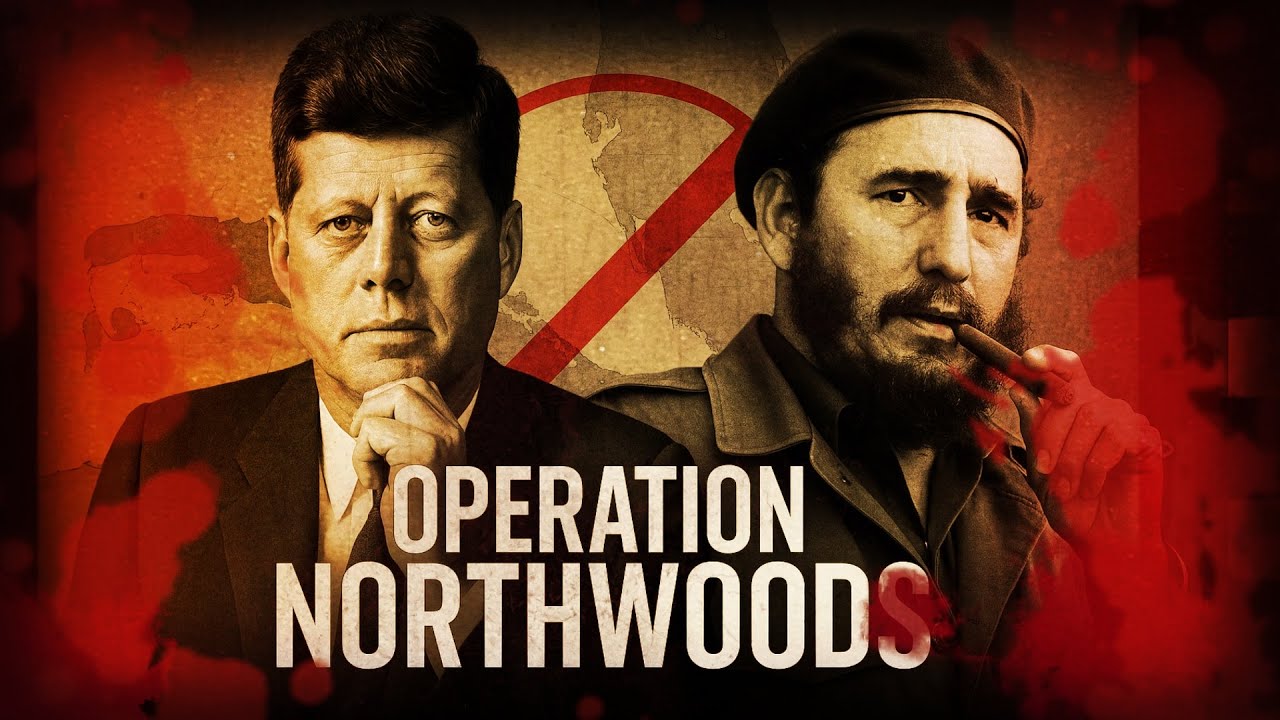
Operation Northwoods: The U.S. Plot to Stage Attacks on Its Own Citizens to Justify War

Introduction: A Plan Conceived in Shadows

In 1962, during the height of Cold War paranoia, the United States military crafted a stunning and disturbing plan to manipulate public opinion and provoke war. This top-secret proposal—codenamed Operation Northwoods—was not an enemy plot or a foreign conspiracy. It was a document signed and approved by the U.S. Joint Chiefs of Staff, the nation’s highest-ranking military leaders.

The plan called for acts of terror against American citizens and assets, including fake hijackings, bombings, and orchestrated civilian deaths, all intended to create a pretext for invading Cuba. The idea was clear: create a sense of outrage so powerful that it would push the American people and Congress into supporting military intervention against Fidel Castro’s communist regime. The very people entrusted with protecting American lives had proposed sacrificing them to achieve geopolitical goals.

The Blueprint: Lies, Sabotage, and Sacrifice

Operation Northwoods was outlined in a detailed memorandum prepared by the U.S. Department of Defense. It offered a variety of false flag scenarios designed to fool the media, mislead the public, and provoke international condemnation of Cuba. The document included plans to blow up a U.S. ship in Guantánamo Bay and blame it on Cuban forces, stage a mock funeral for fictional victims of a fake Cuban attack, and even simulate the downing of a passenger airliner using a remotely-piloted drone disguised as a commercial aircraft.

These schemes weren’t just ideas thrown around in a brainstorming session—they were written in formal language, vetted by high-ranking military officials, and signed by General Lyman Lemnitzer, then Chairman of the Joint Chiefs of Staff. The plan suggested planting evidence, using actors to pose as victims, and manipulating news reports to generate maximum emotional and political impact.

Cuba: The Enemy Within America’s Sights

To understand Operation Northwoods, it’s important to place it within the geopolitical context of the time. After Fidel Castro’s revolution overthrew the U.S.-backed Batista regime in 1959, Cuba became a symbol of communist defiance just 90 miles from Florida. With Soviet support flowing to Havana, Washington feared that Cuba could become a launching pad for spreading communism throughout Latin America.

The failed Bay of Pigs invasion in 1961 was a humiliating blow to the U.S., and tensions only escalated as Castro’s regime tightened its grip. Operation Northwoods emerged from this frustration—a desperate and morally questionable attempt to regain control of the situation. Military leaders saw Cuba not just as a foreign adversary, but as a direct threat to national security and American influence in the hemisphere. Their willingness to fabricate attacks and kill innocents reflects how far they were willing to go to justify war.

Kennedy Says No: A President Draws the Line

When Operation Northwoods reached President John F. Kennedy, he was reportedly horrified. While JFK was no stranger to covert operations—he had authorized the Bay of Pigs invasion—Northwoods was an entirely different matter. It involved killing or endangering American citizens and deceiving the very people the government was sworn to serve. Kennedy flatly rejected the plan and moved to sideline the military leadership behind it. Soon after, General Lemnitzer was reassigned to NATO, and the operation was buried—never to be officially acted upon.

JFK’s decision to reject Northwoods showed a critical divide between civilian oversight and military ambition. His rejection is often viewed as a courageous stand, preventing a dark chapter in American history from ever taking place. However, some conspiracy theorists have speculated—without solid evidence—that his resistance to military overreach may have played a role in his eventual assassination.

Declassified Truth: What We Need to Know

Operation Northwoods remained hidden for decades. It was only in the 1990s—thanks to the JFK Assassination Records Review Board—that the document was declassified and revealed to the public. Americans were shocked to learn that their own military had seriously proposed carrying out terrorist attacks on U.S. soil. The revelation added fuel to long-standing suspicions about government secrecy, deep state activities, and the ethics of Cold War policy-making.

Operation Northwoods has since become a key case study in discussions of false flag operations and government accountability. It serves as a sobering reminder that even democratic nations are not immune to internal corruption, especially when the line between national interest and political ambition becomes blurred. The implications still resonate today, especially in a world where misinformation and political manipulation are widespread.

Operation Northwoods: A Cautionary Legacy

While Operation Northwoods was never executed, its mere existence raises disturbing questions. How many other plans—less audacious, perhaps, but equally unethical—were drafted and approved behind closed doors? How often are public sentiments and events manipulated in the name of national security? These are not hypothetical concerns.

Operation Northwoods remains a chilling example of institutional power willing to cross ethical lines when unchecked by civilian authority. It also reinforces the importance of transparency and whistleblowing in preserving democratic values. As Americans continue to debate the role of intelligence agencies, the limits of executive power, and the legacy of the Cold War, Operation Northwoods stands as a haunting benchmark of how far leaders might go when fear outweighs accountability.

Conclusion: The Shadows of a Cold War

Operation Northwoods exposes the disturbing depths to which a government can sink when fear and power converge. Though never implemented, the fact that such a plan was created, approved, and presented for execution should give all Americans pause. It serves as a powerful warning that national security must never come at the cost of truth, transparency, and the lives of those it is meant to protect. As long as history remembers this dark chapter, it may help prevent another like it from ever being written.

And in remembering, we reclaim our responsibility to question, challenge, and hold power to account—especially when it operates in the shadows. Operation Northwoods remains a sobering reminder of how easily democratic ideals can be compromised in the name of national interest. Its legacy challenges us to stay vigilant, question authority, and safeguard transparency in a world where secrecy can breed dangerous intent.

Categories
W1 World

How PepsiCo Became the World’s Sixth Largest Navy—And Lost the Cold War Soda Battle

Introduction: When Soda Took on Superpowers

In the annals of Cold War history, where tales of espionage, brinkmanship, and ideological conflict dominate the narrative, one story stands out for its sheer audacity and absurdity. It is the story of how PepsiCo, an American soda company, briefly became the owner of one of the world’s largest naval forces—on paper. For a surreal stretch of time, Pepsi commanded more warships than most national militaries.

But how did a company known for bubbly beverages end up commanding a fleet of Soviet submarines and warships? This isn’t a corporate myth. It’s a true story of capitalism navigating communism, of a beverage becoming a diplomatic weapon, and of how one company’s ambition collided with geopolitical upheaval. Welcome to one of the Cold War’s most bizarre—and often overlooked—chapters.

Cracking the Soviet Market: Pepsi’s Unlikely Cold War Entry

In the late 1950s, the Soviet Union was still largely sealed off from the economic and cultural influences of the West. While missiles were pointed skyward and Berlin was divided, soft drinks were hardly a topic of strategic concern. But PepsiCo’s then-CEO Donald M. Kendall had other ideas. During the 1959 American National Exhibition in Moscow, Kendall staged a photo op that would become legendary: he offered Soviet Premier Nikita Khrushchev a glass of Pepsi, who was photographed sipping the capitalist drink in front of news cameras.

The image went global. To the West, it was a symbolic victory of consumer culture over communism. To the Soviet people, it was a first taste of something exotic, fizzy, and forbidden. That single event planted the seeds for Pepsi’s ambition to enter the Soviet market—a move that would take decades to fully realize but would ultimately catapult the company into a Cold War saga like no other.

The Deal That Changed History: Vodka for Cola

The Soviet Union couldn’t pay for foreign goods using its ruble, a non-convertible currency with no value on the international market. But the USSR did have a prized export: vodka. In 1972, PepsiCo and the Soviet government struck a revolutionary barter deal: Pepsi syrup concentrate would be shipped into the USSR, and in return, the Soviets would give the company exclusive rights to export and sell Stolichnaya vodka in the United States and other Western markets.

This deal was groundbreaking. It made Pepsi the first American product to be legally sold in the Soviet Union, giving the company a monopoly on an enormous and previously untapped market. Soviets, many of whom had never experienced Western consumer products, began associating Pepsi with modernity and global relevance. It was a small bubble of capitalism in a sea of planned economy—and it worked. Pepsi’s brand became embedded in Soviet culture.

Warship Trade: When Pepsi Became a Naval Superpower

By the late 1980s, the Soviet Union’s financial system was under intense strain. The existing barter system wasn’t enough to satisfy the growing demand for Pepsi products across the USSR. So in 1989, a new and vastly expanded barter agreement was reached—but this time, vodka wasn’t the only thing on the table.

In a jaw-dropping twist, the Soviets offered 17 submarines, a missile cruiser, a frigate, and a destroyer as partial payment to PepsiCo. These vessels were outdated and decommissioned, but they were real, tangible military assets. For a brief moment in 1989, PepsiCo became the sixth-largest naval power in the world, outgunning dozens of actual countries in terms of fleet size.

Pepsi didn’t keep the ships, of course. They quickly sold them for scrap to a Swedish company. But that didn’t stop CEO Donald Kendall from joking with national security officials, “We’re disarming the Soviet Union faster than you are.” The story became a sensational example of corporate reach and Cold War absurdity—proof that in capitalism, anything is negotiable.

Soda as Soft Power: A Cold War Marketing Coup

Pepsi’s foray into the USSR was more than a business strategy—it was a powerful exercise in soft diplomacy. Through clever branding, cultural adaptation, and high-level negotiations, Pepsi inserted itself into a society where Western influence was almost entirely banned. For many Soviet citizens, Pepsi wasn’t just a drink. It was a glimpse into a freer world, where choice and abundance were not just ideological concepts but daily realities.

The success of the Pepsi strategy also showed how brands can transcend politics and ideology, especially during times of global tension. The ability to penetrate an adversarial superpower’s market was a major coup—not just for Pepsi, but for American capitalism at large. It demonstrated how corporate strategy could achieve what traditional diplomacy often failed to accomplish.

Coca-Cola’s Comeback: Victory in a Post-Soviet World

While Pepsi’s strategy looked genius in the 1980s, the collapse of the Soviet Union in 1991 changed everything. The centrally planned economy disintegrated overnight, and with it, Pepsi’s barter-based agreements. Suddenly, the Russian market opened up to full capitalist competition—and Coca-Cola, which had been excluded from the USSR, surged in like a tidal wave.

With aggressive marketing, better infrastructure, and broader international reach, Coca-Cola quickly overtook Pepsi as the preferred soft drink in the newly capitalist countries of the former USSR. Pepsi’s Cold War monopoly turned into a peacetime disadvantage. The company had invested in a political system that no longer existed, while its rival started fresh in a new, competitive marketplace. Ironically, the company that had gone so far as to own warships to maintain its market share in the East couldn’t stop Coca-Cola from winning the cola war once the Cold War ended.

Conclusion: Business, Cold War, and Bubbles

The story of the Pepsi Navy remains one of the most surreal and telling examples of how deeply intertwined business, politics, and ideology became during the Cold War. It’s a reminder that corporations can sometimes operate as quasi-nations, using the tools of diplomacy, negotiation, and even military power—however symbolic—to achieve their goals. This strange chapter also reflects how quickly geopolitical tides can turn.

Pepsi’s victory in the USSR was built on a system that ultimately could not last. When that system collapsed, so too did the foundations of its cola empire in the East. Still, for one bizarre and sparkling moment in history, a soda company had a fleet of submarines, the ear of Soviet leadership, and a navy ranking above Brazil, Turkey, and even some NATO allies. That’s not just brand power. That’s Cold War corporate history at its wildest.

Categories
W1 World

Seduced by ‘Romeo Spies’: The Untold Stories of Women Betrayed in the Cold War Sexpionage

Introduction: A Love That Was Never Real

The Cold War was not just a clash of ideologies, military strategies, and covert operations—it was also a battlefield of human desires and emotions. Amid the tension between East and West, espionage took on many forms, but few were as insidious or psychologically devastating as “sexpionage.” One of the most chilling examples of this was the covert activities orchestrated by the East German intelligence service, the Stasi. At the height of the Cold War, Stasi agents, specifically those working for the HVA (Main Directorate for Reconnaissance), were dispatched to West Germany, particularly Bonn, to seduce women working in embassies or government ministries.

These “Romeo Spies” exploited the vulnerabilities of single, often lonely women, seducing them to extract valuable state secrets. Among the many women caught in this web of deception were Gabriele Kliem and Margaret Hike. Both had no idea that their lovers were secret agents working for the Stasi until they were arrested for treason. Their stories reveal the tragic personal cost of espionage and the emotional toll it took on those unwittingly ensnared in Cold War intelligence operations.

The Man Without a Face: Markus Wolf’s Shadowy Legacy

Markus Wolf, the elusive and feared head of the HVA, was one of the Cold War’s most formidable figures. Known as the “Man Without a Face” due to the lack of photographic evidence of his appearance for many years, Wolf orchestrated some of East Germany’s most successful espionage operations. His strategic mind and profound understanding of human psychology made him a pioneer in using emotions as a tool of warfare. Wolf recognized that espionage was not just about gathering information but about manipulating human emotions—specifically, love and trust.

Under his leadership, the HVA developed a sophisticated network of spies who specialized in seduction and long-term manipulation. These “Romeo Spies” were attractive, well-trained men whose sole mission was to infiltrate the personal lives of women working in sensitive positions, especially those in West Germany. Wolf’s approach was unique because it did not rely on force or blackmail; instead, he weaponized love and loneliness, making the emotional betrayal all the more devastating. His shadowy legacy left a trail of broken lives in its wake, and to this day, his tactics remain a stark reminder of the human cost of espionage.

Gabriele Kliem: A Victim of the Romeo Trap

Gabriele Kliem was one such woman who fell victim to the “Romeo Trap.” Kliem worked in a high-level position within the West German government, an ideal target for East German spies. Like many others, Kliem was hardworking, dedicated, and deeply patriotic. But her personal life was marked by isolation, a fact that made her vulnerable to the carefully orchestrated schemes of the Stasi. When Kliem met her “Romeo,” an East German agent posing as a charming West German man, she believed she had finally found love. The relationship blossomed quickly, and she felt a deep emotional connection to her lover, who seemed to offer the affection and companionship she had long desired.

What she didn’t know was that every intimate conversation, every moment of vulnerability, was being carefully monitored and recorded by her lover, who was trained to extract critical information from her. Over time, Kliem began to share sensitive details from her work, believing she was helping her partner with innocuous personal affairs. She had no idea that she was, in fact, passing on top-secret intelligence to the Stasi, contributing to the Cold War espionage efforts of East Germany.

Margaret Hike: A Parallel Story of Betrayal

Margaret Hike’s story mirrors that of Gabriele Kliem in many ways. Hike, also employed in a sensitive position within a West German government ministry, found herself the target of a similar operation. Lonely and longing for connection, Hike was drawn into a whirlwind romance with a man who, unbeknownst to her, was a Stasi agent. Like Kliem, Hike believed her lover was a kind, supportive West German, eager to build a life with her. Their relationship unfolded over months, with her “Romeo” slowly gaining her trust and affection.

When he began subtly requesting information related to her work, she saw it as an innocent gesture of support for a man she loved. Hike, too, had no idea that her partner’s true mission was to gather state secrets for the East German regime. The years she spent with him were filled with emotional intimacy and trust, making the eventual revelation of his identity as a spy all the more devastating. When Hike was finally arrested and charged with treason, she was left grappling with the profound sense of betrayal—not just of her country, but of her heart.

The Tactics of Seduction: How Romeo Spies Worked

The methods employed by the Romeo Spies were as sophisticated as they were cruel. The agents did not rely solely on physical attraction; rather, their true weapon was emotional manipulation, which was far more effective and long-lasting. These agents were carefully selected for their charm, patience, and psychological acumen. Before being deployed, they underwent extensive training in human behavior, learning how to identify vulnerable women who were isolated, lonely, or dissatisfied with their personal lives. The Stasi did not use coercion or threats; their strategy was to make the women feel cherished and loved.

By the time the agents requested access to classified information, the women were so emotionally invested in the relationship that they often complied without hesitation, believing they were helping someone they loved. The emotional manipulation was so subtle that many of these women, including Kliem and Hike, were unaware they were even engaging in espionage. Their devotion to their partners blinded them to the reality of the situation, making the eventual revelation all the more heartbreaking. These relationships often lasted for years, with the women completely unaware that their lives were part of a broader, cold, and calculated espionage operation.

The Psychological Impact on Victims

The psychological toll on women like Gabriele Kliem and Margaret Hike was immense. For both women, the relationships they had invested in so deeply were revealed to be lies. The emotional devastation of discovering that the most significant relationships of their lives had been based on deceit was compounded by the legal consequences they faced for treason. These women were not professional spies; they were ordinary citizens who had been manipulated into betraying their country, often without fully realizing what they were doing. The guilt and shame that followed were overwhelming.

Many of the women who fell victim to the Romeo Spies struggled with feelings of self-blame, wondering how they could have been so easily deceived. For Kliem and Hike, the arrest and subsequent trial were just the beginning of their emotional ordeal. Even after serving their sentences, they were left to deal with the profound sense of betrayal, not just from their lovers but from the very system they had believed in and served. The emotional scars left by these experiences were deep, and many women, including Kliem and Hike, struggled for years to rebuild their lives in the aftermath of their public humiliation and private heartbreak.

Markus Wolf’s Legacy and the Fallout of Sexpionage

Markus Wolf’s legacy as the architect of sexpionage remains one of the most effective, yet morally questionable, strategies in the history of espionage. Under his leadership, the HVA successfully infiltrated critical institutions in West Germany and gathered valuable intelligence that played a significant role in the East-West standoff. The “Romeo Spies” were not unique to the HVA—other intelligence agencies, including the KGB and CIA, also used sexpionage to varying degrees—but it was the East Germans under Wolf who perfected the strategy.

By the time the Berlin Wall fell and the Cold War ended, the full extent of the Stasi’s operations was still not entirely known, and many victims, like Kliem and Hike, continued to grapple with the emotional fallout. Wolf’s methods demonstrated the power of exploiting human emotions, showing that love and loneliness could be just as effective as any military operation or political strategy. However, the cost of this success was borne by the women who had been manipulated and betrayed, leaving a dark and painful legacy in the annals of Cold War history.

The Role of Women in Cold War Espionage

While many women, like Gabriele Kliem and Margaret Hike, were victims of Romeo Spies, it is important to recognize that women also played active roles in Cold War espionage. On both sides of the Iron Curtain, women served as couriers, informants, and even spies, often exploiting the fact that they were underestimated by their male counterparts. Female agents could gather intelligence with less suspicion, and their roles were critical in numerous clandestine operations. In some cases, women were even used as “Juliet Spies,” sent to seduce men in positions of power and extract information.

The dual role of women—as both victims and active participants in espionage—underscores the complexity of Cold War intelligence operations. For many women, the Cold War was not just a geopolitical struggle; it was a deeply personal one, played out in secret meetings, coded messages, and, tragically, in relationships built on lies.

Conclusion: The Cold War’s Cruelest Betrayal

The stories of Gabriele Kliem, Margaret Hike, and the Romeo Spies serve as powerful reminders of the human cost of espionage. In the shadowy world of Cold War intelligence, emotions became weapons, and love was manipulated for political gain. While Hollywood may glamorize the life of a spy, the reality was far more devastating for those who unwittingly became pawns in a much larger game.

For women like Kliem and Hike, the betrayal they experienced was not just of their country, but of their hearts—a personal tragedy that lingered long after the Cold War ended. The emotional stakes were as high as the political ones, as women navigated a dangerous world where trust could easily be exploited, and loyalty could be weaponized against them.