Categories
W1 World

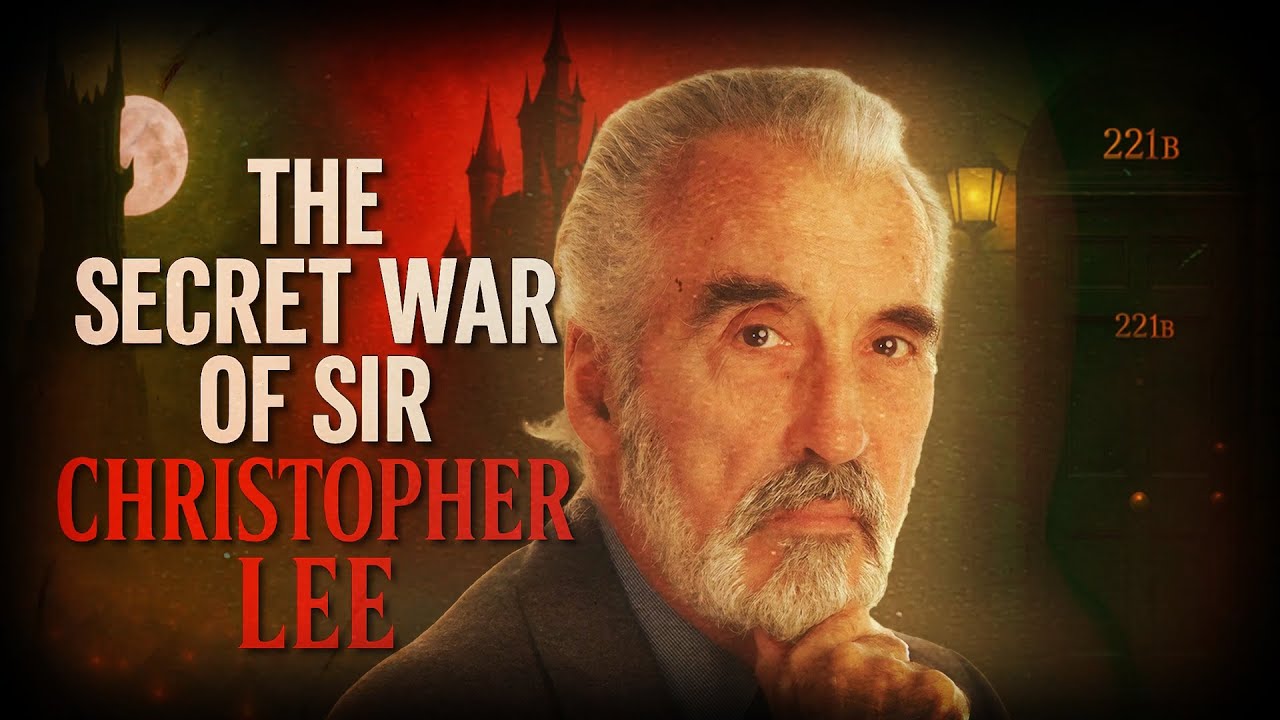
The Secret War of Sir Christopher Lee: From Covert Battlefield Missions to Big Screen Legend

Introduction: The Man Behind the Myths

Sir Christopher Lee is best remembered as a towering presence on screen—Dracula, Saruman, Count Dooku. But behind his cinematic legacy lies a shadowy past more thrilling than any of his film roles. Before Hollywood, before Hammer Horror, Lee was a soldier and a spy. During World War II, he served with distinction in the Royal Air Force and was attached to British intelligence and special forces, including the SAS and the Special Operations Executive (SOE).

Some of his missions remain classified, adding an air of mystery to an already enigmatic man. This is the story of a war hero whose real life may have inspired fictional legends like James Bond, and whose experiences shaped him as both an actor and a man. Long before he wore fangs or wielded a wizard’s staff, he stared down real danger in the shadows of history.

The Making of a Warrior: Early Life, War

Born in 1922 to a military family, Christopher Frank Carandini Lee grew up in a world shaped by war and aristocracy. His father was a decorated army officer, and his mother came from Italian nobility. From an early age, Lee showed an interest in languages, history, and adventure.

Lee was fluent in several languages—skills that would later serve him well in intelligence work. When World War II broke out, Lee enlisted in the Royal Air Force. Initially grounded due to a vision problem, he nonetheless found ways to serve. His aptitude and demeanor quickly led him into intelligence roles, and eventually into elite covert units.

Into the Shadows: SOE, SAS, Missions

Lee was quietly recruited into the SOE—Special Operations Executive, Winston Churchill’s infamous spy organization, often referred to as “the Ministry of Ungentlemanly Warfare.” He also had ties with the SAS, the Special Air Service, known for its deadly raids behind enemy lines. His work included sabotage operations, tracking down Nazi war criminals, and assisting in the liberation of concentration camps.

Lee operated in North Africa, Italy, and possibly Eastern Europe. Although Lee remained tight-lipped about many of his missions, he once told interviewers, with a knowing smile, “Let’s just say I was involved in some very confidential things.”

Hunting Evil: Post-War Pursuit of Nazis

Following the war, Lee worked with the Central Registry of War Criminals and Security Suspects (CROWCASS), the organization tasked with identifying and capturing Nazi war criminals. It was grueling and emotionally exhausting work—digging through evidence of atrocities and helping bring fugitives to justice.

Lee was present at several interrogations and assisted with intelligence that led to arrests. This chapter of his life haunted him and shaped his profound sense of justice. He once said, “If I could take just one man down who committed such acts, it was all worth it.”

Silence and Secrecy: A Code That Endured

Throughout his life, Lee maintained a strict code of silence regarding his military service. He believed that talking too much would dishonor the memory of those who served and died. When Peter Jackson asked him how he knew what a man sounded like when stabbed in the back—a moment while filming The Lord of the Rings—Lee replied, “Because I know what it sounds like.”

This cryptic answer added to the legend, but it was rooted in real, harrowing experience. Even in his autobiography, he glossed over many wartime details, preserving the dignity and confidentiality of those turbulent years.

Hollywood and the Haunted Heroic Past

After the war, Lee returned to civilian life and eventually found his way to the silver screen. His imposing height, deep voice, and stoic demeanor made him perfect for villainous roles. But beneath the horror makeup and menacing characters was a man shaped by unimaginable experiences.

Lee’s time in war gave him an intensity and authenticity that few actors could match. He was not pretending to understand fear or death—he had lived it. His military discipline carried over into his acting career; he was professional, punctual, and precise.

A Real-Life Bond: Spy, Soldier, or Legend?

Many have speculated that Christopher Lee’s cousin, Ian Fleming, drew on Lee’s life for inspiration when creating James Bond. Fleming and Lee were close, and the timeline of Lee’s wartime service overlaps significantly with Fleming’s own intelligence work.

Like Bond, Lee was suave, multilingual, deadly when needed, and accustomed to moving through shadows. While Lee never confirmed the theory, he didn’t deny it either. The parallels are compelling: both were British, both were involved in secretive operations across Europe, and both had a cool, lethal charisma.

Recognition Long Overdue: Hidden Valor

Despite his service, Lee never boasted or sought recognition for his military contributions. It wasn’t until much later in life that many people learned of his wartime record. In 2009, he was knighted for his contributions to drama and charity—but his military service was mentioned with reverence.

Lee’s commitment to duty, silence, and integrity stood in stark contrast to the modern age of oversharing. Lee’s life serves as a reminder that true heroism often resides in humility. In truth, he was the myth behind the myth.

Legacy: From War Rooms to Wizardry

Sir Christopher Lee’s legacy is unique. Few people can claim to have fought Nazis and also portrayed wizards and Sith Lords. His war service adds a profound dimension to his performances. When you see him wield a sword or issue a grave warning as Saruman, remember: this was not an act.

This was a man who had looked evil in the face and lived to tell the tale—if only in hints and whispers. His roles in cinema become even more iconic when framed by the knowledge of the life he led before the camera rolled.

Conclusion: A Hero in Shadow and Light

Sir Christopher Lee lived many lives. Soldier, spy, actor, legend. His wartime service remains a lesser-known but essential part of his story. In a century marked by conflict and change, Lee stood as a bridge between the brutal realities of war and the magical worlds of film. He showed that heroism takes many forms—on the battlefield, on the screen, and in the quiet dignity of a life lived with purpose and honor.

Overall, the world may remember him for Dracula or Saruman, but behind those characters stood a real man—a man who once fought in the shadows to defend the light. Sir Christopher Lee’s legacy is more than cinematic—he lived a life so extraordinary, it rivaled even the legends he portrayed on screen. In many ways, he wasn’t just playing heroes and villains—he was living the kind of story most actors could only dream of.

Categories
W1 World

Fueled by Pervitin: How Nazi Germany’s Secret Drug Powered the Blitzkrieg Onslaught

The Secret Stimulant That Powered the Nazi War Machine

When the world witnessed the lightning-fast advance of German forces across Europe in the early years of World War II, many credited superior tactics, disciplined training, and ruthless efficiency. However, beneath the surface of these seemingly unstoppable advances lay a hidden factor—one that would not be fully understood until years later.

This invisible chemical weapon coursed through the veins of the Wehrmacht, providing an artificial boost to their endurance and aggression. That weapon was methamphetamine, a powerful stimulant that kept soldiers awake for days, suppressed fear, and created a sense of invincibility. The widespread use of this drug, known commercially as Pervitin, became a vital yet controversial part of Nazi Germany’s military strategy, playing a key role in the success of its early campaigns.

Pervitin: The Miracle Pill of the Third Reich

Methamphetamine was first synthesized in the late 19th century, but its potential as a stimulant wasn’t fully realized until the 1930s. In Germany, pharmaceutical companies marketed the drug under the brand name Pervitin, advertising it as a cure for fatigue, depression, and lack of motivation.

The drug quickly became popular among civilians, students, and professionals who sought an edge in their daily lives. Doctors even prescribed it to housewives who struggled with the demands of domestic life. Its stimulating effects, which included increased alertness, heightened energy, and a euphoric sense of confidence, made it particularly attractive.

Recognizing its potential for military use, Nazi officials and military strategists saw Pervitin as a way to enhance the performance of their troops. Millions of pills were distributed among Wehrmacht soldiers, officers, tank crews, and pilots to maintain peak performance during grueling campaigns.

The drug allowed them to stay awake for extended periods, endure extreme physical exertion, and suppress emotions such as fear and doubt. As a result, the German military incorporated Pervitin into its strategy, believing it to be a key factor in their ability to strike with unparalleled speed and aggression.

Blitzkrieg and the Role of Pervitin in Early Nazi Victories

Germany’s Blitzkrieg, or “lightning war,” was a military strategy designed to achieve rapid victories through overwhelming force and speed. The technique combined the use of fast-moving armored divisions, air support, and well-coordinated infantry attacks to break through enemy lines before they had time to mount an effective defense. In the invasions of Poland in 1939 and France in 1940, this approach proved devastatingly effective, allowing German forces to conquer vast territories in record time.

Pervitin played a crucial role in the execution of Blitzkrieg. Soldiers consumed the stimulant in large quantities, often going for days without sleep as they advanced deep into enemy territory. German tank crews, infantry units, and Luftwaffe pilots relied on Pervitin to maintain their endurance and combat effectiveness.

During the invasion of France, for instance, troops were ordered to take part in the D-IX Experiment, in which they consumed methamphetamine-laced chocolates to sustain their energy levels. Reports from the time describe Wehrmacht troops marching and fighting for up to three consecutive days without sleep, giving them a tactical advantage that enemy forces struggled to counter.

While Pervitin contributed to Germany’s initial successes, its long-term effects on soldiers were less favorable. The prolonged use of methamphetamines led to severe exhaustion, erratic behavior, and, in some cases, fatal overdoses. As the war progressed, the drawbacks of mass drug consumption among troops became increasingly apparent.

The Dark Side: Addiction, Psychosis, and Breakdown

Despite its short-term benefits, Pervitin soon proved to be a double-edged sword. The very stimulant that gave Nazi soldiers their superhuman endurance also led to widespread addiction, severe psychological disturbances, and crippling withdrawal symptoms. Soldiers who had become dependent on the drug often suffered from extreme paranoia, hallucinations, and violent mood swings when they were unable to obtain their next dose.

Some experienced nervous breakdowns in the field, lashing out at their comrades or displaying irrational and reckless behavior that put their entire units at risk. Medical reports from the time detailed cases of soldiers suffering from acute exhaustion after days of continuous combat without sleep. Some collapsed from physical and mental burnout, while others displayed symptoms of extreme aggression, psychosis, and suicidal tendencies.

Commanders, who initially saw Pervitin as a valuable tool, began to recognize that the erratic behavior and severe health consequences associated with its use could compromise military effectiveness. The impact of methamphetamine abuse extended beyond the lower ranks of the military. High-ranking Nazi officials, including Adolf Hitler, were known to rely on a cocktail of drugs administered by Hitler’s personal physician, Dr. Theodor Morell.

Hitler’s erratic decision-making, tremors, and overall declining health in the latter years of the war have been linked to his heavy use of amphetamines, opioids, and other substances. His increasing reliance on chemical stimulants likely contributed to the strategic blunders that led to Germany’s downfall.

The Allied Response and the End of the Nazi Drug Experiment

As Nazi forces faced growing challenges on multiple fronts, the limitations of their drug-fueled strategy became evident. By the time Germany launched its invasion of the Soviet Union in 1941, the initial advantages provided by Pervitin had begun to fade. The harsh winter conditions, logistical failures, and fierce Soviet resistance exposed the weaknesses of an exhausted and chemically dependent army.

The illusion of invincibility created by methamphetamine use was shattered as German forces suffered devastating losses in battles such as Stalingrad and Kursk. The Allies, aware of Germany’s use of stimulants, also experimented with their own versions of performance-enhancing drugs. British and American troops were given amphetamines, such as Benzedrine, to maintain alertness during prolonged missions.

However, these substances were administered with more caution, and their use was not as widespread or reckless as in the Wehrmacht. While stimulants provided temporary advantages, military strategists increasingly recognized that reliance on drugs could not compensate for poor planning, dwindling resources, or the psychological toll of prolonged combat.

The revelation of Nazi Germany’s extensive use of methamphetamines remains one of the most unsettling aspects of World War II. For decades, the full extent of Pervitin’s role in the Nazi war machine remained obscured, but today, it serves as a cautionary tale about the dangers of using drugs as a means of enhancing military performance.

The Legacy of Nazi Drug Use in Modern Warfare

While the use of stimulants in warfare has not disappeared, modern militaries face ongoing ethical and medical debates about their impact on soldiers. Today, concerns about drug use in the armed forces persist, as advancements in pharmaceuticals continue to push the boundaries of human endurance and cognition.

The story of Nazi Germany’s reliance on methamphetamines is more than just a historical curiosity—it is a stark reminder of how science, war, and desperation can intersect in dangerous and unintended ways. The Blitzkrieg may have been powered by strategy and machinery, but its soldiers were fueled by something far more insidious: an artificial high that, in the end, contributed to their own destruction.

Categories
W1 World

War Gaming Against the U-Boat Threat: How Britain Outsmarted the Nazi Peril in WWII

Introduction: The U-Boat Threat for Britain

At the outbreak of World War II, the German Kriegsmarine launched an aggressive campaign to strangle Britain’s supply lines using their formidable fleet of U-boats. These stealthy submarines prowled the Atlantic, targeting merchant ships carrying vital food, fuel, and war materials to the British Isles. The German High Command, under Admiral Karl Dönitz, believed that an all-out U-boat offensive could force Britain into submission by cutting off its lifeline. This strategy, known as the Battle of the Atlantic, became one of the most significant threats to the survival of the United Kingdom.

As the war progressed, the U-boats wreaked havoc on Allied convoys. German wolf packs—groups of submarines coordinating their attacks—sank thousands of tons of shipping, creating shortages that threatened Britain’s war effort. The Royal Navy, stretched thin and struggling to keep merchant vessels safe, needed a game-changing strategy. It was within this desperate scenario that war gaming emerged as a crucial tool in countering the U-boat menace.

The Role of Vera Laughton Mathews and the WRENS

During the early years of the war, Britain saw the reformation of the Women’s Royal Naval Service (WRENS) under the leadership of Vera Laughton Mathews. Tasked with playing an integral role in the war effort, the WRENS initially performed administrative and logistical duties. However, Mathews had a broader vision—one that would see women taking a more direct role in naval operations.

With the Royal Navy struggling to develop counter-U-boat tactics, the Admiralty sought innovative solutions. This led to the creation of the Western Approaches Tactical Unit (WATU) in 1942, a top-secret department dedicated to analyzing and simulating naval battles. It was here that Mathews pushed for the inclusion of WRENS in war gaming exercises, recognizing their analytical capabilities and attention to detail.

Women were soon assigned to work with experienced naval officers in what would become one of the most influential tactical teams of the war. Their mission was clear: study U-boat attack patterns, develop counter-strategies, and refine convoy defense tactics using war gaming simulations.

The Return of a War Gaming Mastermind

To spearhead this initiative, the Royal Navy turned to Captain Gilbert Roberts, a retired naval officer and a seasoned expert in war gaming. Roberts had previously engaged in naval war games before the war and was known for his strategic acumen. Now recalled to service, he was given the monumental task of devising a way to neutralize the U-boat threat using war gaming techniques.

War gaming had long been used in military strategy, but Roberts took it to a new level. Instead of merely using it as a theoretical exercise, he applied it to real-world scenarios, simulating U-boat attacks and defensive maneuvers on an operational scale. Working closely with the WRENS and experienced naval commanders, Roberts began reconstructing recorded U-boat attacks to analyze weaknesses in Allied convoy defenses.

The War Gaming Room: Simulating Naval Battles

Inside the Western Approaches Tactical Unit, a specially designed war gaming room became the nerve center of counter-U-boat operations. Large tabletop maps represented the Atlantic, with wooden ship models indicating convoy movements and U-boat positions. The WRENS, acting as enemy submarines, moved pieces based on actual attack reports, recreating the tactics employed by German commanders.

Through these simulations, patterns began to emerge. The team discovered that U-boats often targeted the edges of convoys, exploited gaps in escort coverage, and coordinated night attacks to maximize damage. By studying these vulnerabilities, the team devised innovative countermeasures, such as the “Raspberry” maneuver—a sudden, coordinated turn by convoy ships to disrupt U-boat attack patterns.

One of the most significant breakthroughs came when the team identified the importance of aggressive escort tactics. Rather than reacting defensively to U-boat attacks, convoy escorts were trained to take the offensive, actively hunting down submarines before they could strike. This approach led to the refinement of the “Hunter-Killer” groups—dedicated warships that sought out and engaged enemy submarines before they could inflict damage.

Implementing the Strategies at Sea

Armed with these newly developed tactics, Royal Navy commanders put the WATU strategies into action. Escort captains underwent specialized training based on the war gaming exercises, equipping them with the knowledge to predict and counter U-boat movements.

The results were remarkable. Convoy survival rates improved significantly, and the losses inflicted by U-boats began to decline. One of the earliest tests of these tactics came in 1943 when a British convoy successfully repelled multiple U-boat attacks using aggressive escort maneuvers learned through war gaming.

The impact of WATU’s work extended beyond the Royal Navy. The United States Navy, recognizing the effectiveness of British war gaming techniques, adopted similar training methods for their anti-submarine warfare efforts. The collaboration between British and American forces in implementing these strategies played a key role in turning the tide of the Battle of the Atlantic.

The Legacy of WATU and War Gaming

By the time World War II ended, the war gaming efforts at WATU had contributed significantly to the Allied victory in the Atlantic. The ability to simulate battles and predict enemy behavior provided the Royal Navy with a strategic edge over the once-dominant U-boat forces.

Captain Gilbert Roberts and the WRENS received recognition for their contributions, though their role remained classified for many years. Today, historians acknowledge the pioneering work of WATU in advancing modern military strategy. The principles of war gaming developed during the war continue to influence military planning and simulation-based training programs across the world.

Moreover, the success of the WRENS in a traditionally male-dominated sphere laid the groundwork for greater inclusion of women in military strategy and operational roles. Their analytical skills and dedication helped shift perceptions, paving the way for more integrated armed forces in the post-war years.

Conclusion: The Innovation and Strategy

The fight against the U-boat peril was not won solely through superior firepower but through intelligence, strategy, and innovative thinking. The use of war gaming by Britain’s Western Approaches Tactical Unit demonstrated that understanding the enemy’s tactics and simulating combat scenarios could change the course of battle.

Led by the foresight of Captain Gilbert Roberts and driven by the determination of the WRENS, the war gaming initiative proved to be a decisive factor in securing Britain’s supply lines and ensuring the survival of the war effort. The lessons learned from WATU’s work remain relevant today, serving as a testament to the power of strategy, adaptation, and unconventional problem-solving in warfare.

Categories
W1 World

Unmasking the Lasting Myth: The Truth Behind Hitler’s Death and the Enduring Escape Theories

Introduction

Since the end of World War II, the question of Adolf Hitler’s death has intrigued historians, researchers, and conspiracy theorists alike. On April 30, 1945, as the Allies closed in on Berlin, Hitler allegedly committed suicide in his bunker. Yet, despite abundant evidence and eyewitness accounts, theories that he escaped continued to thrive. Why do these stories persist? What is fact, and what is fantasy?

This article delves into the documented evidence of Hitler’s death, examines the origins of the escape theory, and explores why the myth of Hitler’s survival endures even in light of historical facts, shedding light on the cultural and psychological factors that fuel its persistence. It seeks to separate fact from fiction, revealing how history and myth became entwined in the story of Hitler’s final days.

Hitler’s Last Days in the Berlin Bunker

By April 1945, the Nazi regime was on the brink of collapse. The Soviet army had encircled Berlin, and Allied forces were advancing across Europe. Inside the Führerbunker—a fortified underground shelter in Berlin—Hitler, his closest aides, and high-ranking officials faced an inevitable defeat. Reports from bunker occupants describe a deteriorated Hitler, who suffered from physical and mental exhaustion, weighed down by the reality of Germany’s impending defeat.

On April 30, 1945, Hitler reportedly took his own life alongside his wife, Eva Braun, who had joined him in the bunker days earlier. After confirming their deaths, Hitler’s staff followed his orders to burn the bodies, fearing they would be taken by the Soviets as war trophies. Soviet forces arrived at the bunker shortly after, discovering partially burned bodies believed to be Hitler and Braun.

Despite the thorough Soviet investigation and supporting testimonies from those present, the question of Hitler’s escape would persist for years, driven by conspiracy theories and misinformation.

The Birth of the Escape Myth

The origins of the Hitler escape theory can be traced back to the immediate post-war period. The Soviet Union, which was first to arrive in Berlin, was initially secretive about the details of Hitler’s death, sparking speculation and confusion. Soviet leader Joseph Stalin himself fueled rumors by suggesting that Hitler may have escaped, likely for political reasons to keep suspicion and tension alive among the Allies.

In the months following the war, reports emerged suggesting Hitler had fled Berlin. Sightings were reported across the globe—from Spain to South America—giving rise to the theory that he had used a network of Nazi sympathizers to escape justice. The sparsity of concrete evidence, combined with sensationalized media reports, contributed to public intrigue and a desire to believe in the possibility of Hitler’s survival.

Evidence Confirming Hitler’s Death

Despite the rumors, a wealth of evidence confirms Hitler’s death in Berlin on April 30, 1945. The most compelling pieces of evidence include:

  1. Eyewitness Testimonies: Multiple individuals in the bunker, including personal staff and military officials, provided consistent accounts of Hitler’s suicide. His longtime valet, Heinz Linge, and his secretary, Traudl Junge, among others, described the atmosphere in the bunker, the moments leading up to his death, and the aftermath of discovering his body.
  2. Forensic Evidence: Soviet forces recovered partially burned remains near the bunker that were identified as belonging to Hitler and Eva Braun. In 1946, Soviet autopsy reports concluded that the bodies matched the descriptions of Hitler and Braun, including identifying features such as Hitler’s dental work. Decades later, in 2000, the Russian government revealed skull fragments they claimed were Hitler’s, though later DNA testing in 2009 raised questions about the specific fragment, this did not undermine the overall evidence of Hitler’s death in the bunker.
  3. Personal Effects and Documents: Items such as Hitler’s will, personal letters, and various belongings were found in the bunker, indicating he had no plans to leave Berlin. Hitler had reportedly expressed his intention to die in the city rather than be captured or flee, a conviction he shared openly with close aides.

This body of evidence overwhelmingly supports the historical account that Hitler did, in fact, die by suicide in Berlin in April 1945.

The Persistence of the Escape Theory

Despite conclusive evidence, the theory that Hitler escaped continues to capture the public imagination. Several factors contribute to the endurance of this myth:

  1. Soviet Secrecy and Misinformation: The initial Soviet secrecy surrounding Hitler’s death, combined with Stalin’s own suggestions that he may have escaped, sowed seeds of doubt. This lack of transparency created an information vacuum, allowing speculation to thrive in the years following the war.
  2. Psychological Denial and the “Evil Unpunished” Concept: The idea that someone as notorious as Hitler could escape justice strikes a deep psychological chord. Many found it difficult to accept that Hitler’s life ended quietly in a bunker rather than in a public trial. Believing he escaped offers an alternative narrative where justice could still be served, even if only hypothetically.
  3. Sensationalism and Media Influence: Numerous books, movies, and documentaries have explored or sensationalized the idea of Hitler’s escape. Films, books, and shows featuring fictionalized accounts of his flight to Argentina, for example, have amplified public interest. Some historians suggest that these accounts reflect a fascination with “what if” scenarios that tap into a shared desire for intrigue and unresolved mysteries.
  4. Post-War Sightings and False Reports: Reports of Hitler sightings in South America and other regions emerged in the post-war years, supported by rumors that several high-ranking Nazis had fled to Argentina and Brazil. Although these reports were largely discredited, the existence of real Nazi escapees, such as Josef Mengele and Adolf Eichmann, lent some credibility to the notion that Hitler himself might have survived.
  5. Modern Conspiracy Theories and Online Communities: In the digital age, conspiracy theories can spread quickly and find new audiences online. Forums and social media platforms have amplified and sustained interest in Hitler escape theories, often presenting them as “hidden truths” ignored by mainstream historians. The allure of forbidden knowledge or hidden history sustains these theories and attracts readers who prefer alternative narratives.

Debunking the Myths: What Historians and Experts Say

Historians and experts have consistently debunked Hitler escape theories, emphasizing the abundance of evidence confirming his death in Berlin. Ian Kershaw, a prominent historian on Hitler, notes that there is “no reason to doubt the overwhelming evidence” and dismisses escape theories as “fantasies.” Kershaw and other experts argue that the psychological denial surrounding Hitler’s death contributes to the fascination with his supposed escape, rather than any factual basis.

Most historians agree that the rumors persist not because of credible evidence but due to a mixture of human curiosity, denial, and the thirst for mystery. The available documents, testimonies, and forensic evidence form a comprehensive account of Hitler’s last days, one that experts say holds up even under intense scrutiny.

Why the Truth Matters: Reflecting on Hitler’s Death and Legacy

Understanding the truth behind Hitler’s death is significant not only for historical accuracy but also for its moral implications. Believing that Hitler escaped allows a lingering doubt, a loophole in justice for one of history’s most infamous criminals. Acknowledging the facts reinforces the understanding that the Nazi regime ended in unequivocal defeat, with its leader’s death marking the collapse of its terror.

The escape theories also highlight a broader tendency in history to romanticize or dramatize events. As compelling as “what if” scenarios may be, they risk overshadowing real historical lessons. Recognizing Hitler’s demise as a symbol of total defeat and accountability for his crimes serves as a more potent reminder of the dangers posed by authoritarianism and extremist ideologies.

Conclusion

The myth of Hitler’s escape endures, but it is rooted more in fantasy than fact. The abundant evidence, from eyewitness accounts to forensic findings, supports the historical conclusion that Hitler died by suicide in his Berlin bunker on April 30, 1945. Though the idea of his escape continues to captivate imaginations, it ultimately serves as a reminder of the power of rumor and denial.

By understanding the truth behind Hitler’s death and rejecting unfounded escape theories, we affirm the significance of historical truth in confronting the atrocities of the past. Finally, Hitler’s death was not a mystery but a definitive end to one of history’s darkest chapters—a truth that stands as a vital testament to the consequences of unchecked power and hatred.

Categories
W1 World

Redefining Boundaries: The Global Impact of World War II’s Aftermath

The aftermath of World War II, the most destructive event in human history, brought about profound changes on a global scale. The war’s end marked a significant turning point, leading to the redrawing of national boundaries, the rise and fall of empires, and a new geopolitical landscape characterized by the division between democratic freedom in the West and authoritarian repression in the East. This article explores the transformative effects of World War II and the factors that led to the bifurcation of the world into two distinct spheres of influence.

The Redrawing of the Map

One of the most immediate consequences of World War II was the redrawing of national boundaries. Europe, the epicenter of the conflict, witnessed significant territorial changes. Germany, the primary aggressor, was divided into four occupation zones controlled by the United States, the Soviet Union, the United Kingdom, and France. This division laid the groundwork for the eventual establishment of two separate German states: the Federal Republic of Germany (West Germany) and the German Democratic Republic (East Germany).

In Eastern Europe, the Soviet Union expanded its influence, incorporating the Baltic states (Estonia, Latvia, and Lithuania) and gaining control over territories such as Eastern Poland, Bessarabia, and Northern Bukovina. Poland itself was shifted westward, losing territory to the Soviet Union but gaining former German lands. These changes were part of a broader Soviet strategy to create a buffer zone against potential future invasions.

In Asia, the aftermath of World War II saw the end of Japanese imperial expansion. Japan was stripped of its overseas territories, including Korea, Taiwan, and Manchuria. Korea was divided along the 38th parallel into Soviet and American occupation zones, eventually leading to the creation of two separate states: North Korea and South Korea. The independence movements in Asia and Africa also gained momentum, leading to the decolonization of many regions and the birth of new nations.

The Collapse of Major Empires

The war accelerated the decline of major European empires. The British Empire, weakened by the immense cost of the war, began to dismantle its colonial holdings. India, the “jewel in the crown,” gained independence in 1947, followed by the partition into India and Pakistan. The independence of Burma (Myanmar) and Ceylon (Sri Lanka) soon followed.

The French Empire faced similar challenges. The war had weakened French control over its colonies, and independence movements gained strength. In 1945, Vietnam declared its independence from France, leading to the First Indochina War. Algeria’s fight for independence culminated in the Algerian War, which ultimately led to Algeria gaining independence in 1962.

Other European powers, such as the Netherlands and Belgium, also faced decolonization pressures. The Dutch East Indies (Indonesia) and the Belgian Congo (Democratic Republic of Congo) achieved independence in the years following the war. The process of decolonization continued throughout the mid-20th century, fundamentally altering the political landscape of Asia and Africa.

The Birth of the United Nations

In the wake of World War II, the international community sought to establish a framework for preventing future conflicts and promoting peace. The result was the creation of the United Nations (UN) in 1945. The UN aimed to provide a platform for dialogue and cooperation among nations, addressing issues related to security, human rights, and development.

The establishment of the UN marked a significant shift in international relations, reflecting the lessons learned from the failures of the League of Nations. The UN Charter emphasized the principles of sovereign equality, non-interference in domestic affairs, and the peaceful resolution of disputes. The formation of specialized agencies, such as the World Health Organization (WHO) and the United Nations Educational, Scientific and Cultural Organization (UNESCO), further demonstrated the commitment to global cooperation.

The Emergence of the Cold War

While the end of World War II brought relief and hope for many, it also set the stage for a new conflict: the Cold War. The ideological differences between the United States and the Soviet Union, coupled with their respective spheres of influence, led to a protracted struggle for global dominance.

The division of Europe into Eastern and Western blocs was a key feature of the Cold War. The United States and its Western allies promoted democracy, capitalism, and individual freedoms, while the Soviet Union and its Eastern European satellites enforced communist ideologies and centralized control. This division was symbolized by the Iron Curtain, a term popularized by Winston Churchill to describe the boundary separating the free West from the repressive East.

The Cold War manifested in various forms, including political, economic, and military confrontations. The Marshall Plan, initiated by the United States in 1948, aimed to rebuild and stabilize Western European economies to prevent the spread of communism. In response, the Soviet Union established the Council for Mutual Economic Assistance (COMECON) to coordinate economic activities among its Eastern European allies.

Military alliances further solidified the division. The North Atlantic Treaty Organization (NATO) was formed in 1949 as a collective defense pact among Western nations, while the Warsaw Pact, established in 1955, united the Soviet Union and its Eastern European allies in a similar defense arrangement. These alliances created a balance of power that deterred direct conflict but fueled proxy wars and arms races.

The Impact on Global Politics and Society

The aftermath of World War II reshaped global politics and society in profound ways. The war’s devastation highlighted the need for international cooperation and humanitarian efforts. The Universal Declaration of Human Rights, adopted by the UN in 1948, set forth fundamental human rights and freedoms that nations were urged to uphold.

Economically, the war accelerated technological advancements and industrial growth. The United States emerged as the dominant economic power, leading efforts to rebuild war-torn Europe and Japan. The Bretton Woods Conference in 1944 established the International Monetary Fund (IMF) and the World Bank, laying the foundation for a new global economic order.

Socially, the war brought about significant changes in attitudes and norms. The contributions of women and minorities to the war effort challenged traditional gender roles and racial discrimination, paving the way for civil rights movements in the subsequent decades. The horrors of the Holocaust and other wartime atrocities also prompted a reevaluation of human rights and the necessity of preventing genocide and crimes against humanity.

In conclusion, the aftermath of World War II was a period of immense transformation and complexity. The war’s end brought about the redrawing of national boundaries, the collapse of major empires, and the emergence of new nations. The establishment of the United Nations reflected a collective desire for peace and cooperation, while the onset of the Cold War highlighted the deep ideological divisions between East and West.

The impact of World War II continues to resonate in contemporary global politics, economics, and society. The lessons learned from the war and its aftermath remain relevant, reminding us of the importance of international cooperation, the protection of human rights, and the pursuit of peace in an ever-changing world.

Categories
W1 World

The Gurkha Who Defeated 200 Japanese Soldiers: A Tale of Valor in WWII

In the waning days of World War II, as the tide turned in favor of the Allies, the dense jungles and treacherous terrain of Burma (now Myanmar) became the stage for countless acts of bravery and sacrifice. Among these, the extraordinary stand of a lone Gurkha rifleman against overwhelming Japanese forces stands out as a testament to courage and resilience. This is the story of the Gurkha who, despite severe injuries, single-handedly held off and defeated 200 Japanese soldiers.

The valor displayed by this solitary soldier is not just a remarkable feat of combat but also a powerful narrative of determination and heroism. His actions during a critical juncture in the Burma Campaign highlight the significant contributions and sacrifices made by the Gurkhas, whose legacy of bravery continues to be celebrated.

The Context: Burma Campaign

By 1945, the Allied forces were making significant strides in the Burma Campaign, a critical theater of the war in the Pacific. British forces, alongside their colonial troops and Chinese allies, were pushing back against the Japanese occupation. The Irrawaddy River, a major geographical barrier in central Burma, was a strategic focal point. In May 1945, British forces crossed this river and advanced towards the Prome-Taungup road, encountering stiff resistance from Japanese troops.

The Japanese, realizing the inevitability of their defeat, began to retreat on May 9, 1945. In an effort to prevent their escape, the British deployed two companies of the 4th Gurkha Rifles, known for their fierce fighting skills and unwavering loyalty. The Gurkhas, recruited from the rugged hills of Nepal, were renowned for their bravery and combat prowess.

The Battle: Night of May 9, 1945

As the Gurkhas moved to intercept the retreating Japanese forces, they found themselves surrounded in the darkness. The Japanese, determined to break through and regroup, launched a series of relentless assaults. Amidst this chaos, one Gurkha rifleman’s actions would become legendary.

This unnamed rifleman had already suffered grievous injuries. He had lost the fingers of his right hand and sustained severe shrapnel wounds. Despite these debilitating injuries, he continued to fight, refusing to abandon his position. Utilizing his bolt-action rifle with his left hand, he maintained a steady rate of fire throughout the night, repelling wave after wave of Japanese attacks.

The Lone Stand

In the pitch-black night, the rifleman’s resolve and tactical acumen were tested to their limits. The Japanese troops, well aware of the critical need to break through the Gurkha positions, attacked repeatedly. Each time, they were met with a hail of bullets from the determined Gurkha, who, despite his injuries, displayed incredible marksmanship and composure under fire.

His ability to reload and fire accurately with his non-dominant hand, under such extreme conditions, was nothing short of remarkable. His position became a focal point of resistance, drawing the enemy’s attention and preventing them from advancing further. The sound of his rifle echoed through the jungle, a stark reminder of the indomitable spirit of the Gurkhas.

Dawn’s Aftermath

As dawn broke over the battlefield, the full extent of the rifleman’s valor became apparent. The ground around his post was littered with the bodies of Japanese soldiers. It was estimated that he had single-handedly killed or incapacitated up to 200 enemy combatants. His extraordinary stand had not only stalled the Japanese advance but had also given his comrades the critical time needed to regroup and counter-attack.

The rifleman’s injuries were severe, and he was eventually evacuated for medical treatment. His actions, however, had already etched his name into the annals of military history. The courage and tenacity he displayed exemplified the fighting spirit of the Gurkhas, who have long been celebrated for their bravery and loyalty.

Legacy and Recognition

The story of this lone Gurkha rifleman is a powerful reminder of the extraordinary feats of individual soldiers during the chaos of war. While his name may not be widely known, his actions resonate as a symbol of heroism and self-sacrifice. His bravery under unimaginable conditions highlights the remarkable capabilities of soldiers who fight not just for victory, but for their comrades and their honor.

The Gurkha regiments, with their storied history and countless acts of bravery, have earned a revered place in military lore. Their motto, “Kaphar hunnu bhanda marnu ramro” (Better to die than to live like a coward), captures the essence of their valor and commitment. The rifleman’s stand in Burma is a shining example of this ethos. His legacy endures in the continued respect and admiration for the Gurkhas, who remain an elite force known for their indomitable spirit and unwavering loyalty.

In the grand tapestry of World War II, countless acts of heroism and sacrifice contributed to the eventual Allied victory. The story of the Gurkha rifleman who defeated 200 Japanese soldiers stands out as a singular example of individual bravery against overwhelming odds. His actions on that fateful night in May 1945 not only thwarted the enemy’s plans but also embodied the unyielding spirit of the Gurkhas.

As we reflect on the past, it is stories like these that remind us of the extraordinary human capacity for courage and resilience. The legacy of the Gurkha rifleman’s stand in Burma continues to inspire and remind us of the profound sacrifices made by so many during one of the most challenging periods in human history. His tale is a beacon of valor, underscoring the timeless truth that even in the darkest hours, the strength of the human spirit can prevail.

Categories
W1 World

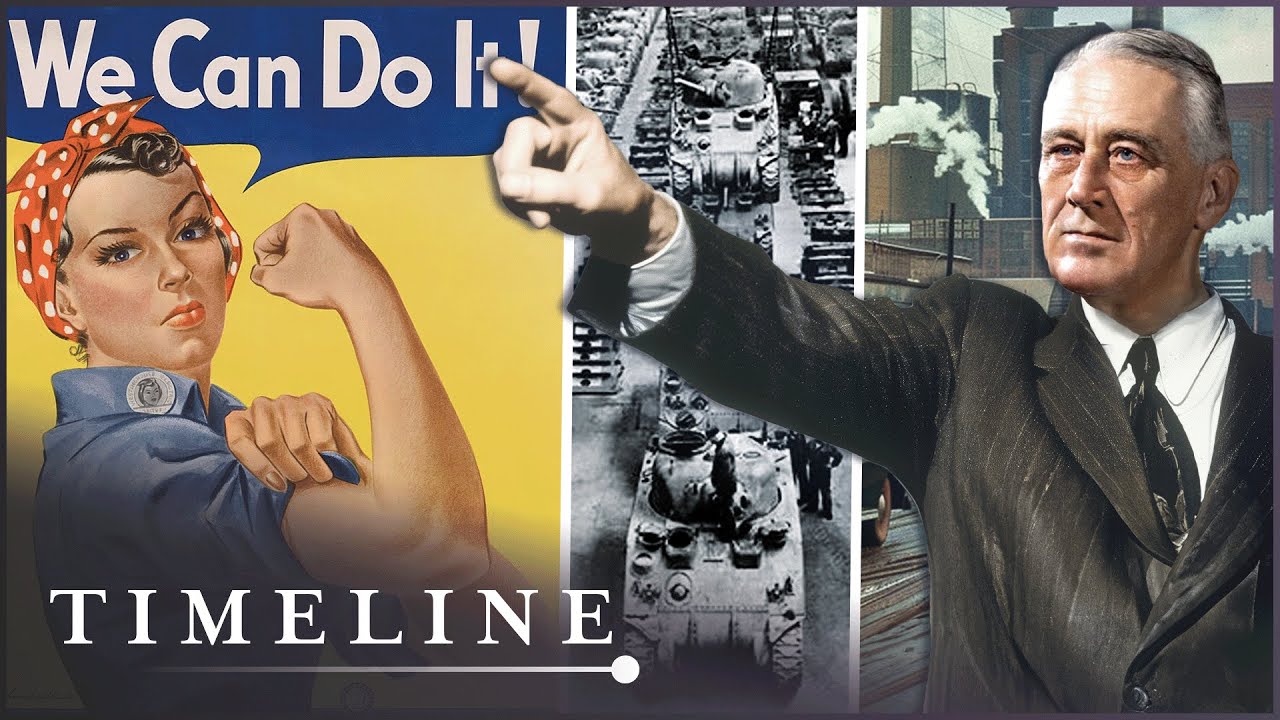
Franklin D. Roosevelt: How a Visionary Leader Shaped the World Before WWII

Franklin Delano Roosevelt (FDR) is often remembered as one of the most influential presidents of the 20th century, primarily due to his leadership during World War II. However, FDR’s impact on the United States and the world began long before the outbreak of the global conflict. His early political career, economic policies, and visionary leadership laid the foundation for his wartime strategies and the post-war world order.

Early Life and Political Beginnings

Born on January 30, 1882, into a wealthy and politically prominent family, Franklin D. Roosevelt was primed for a life of public service. He was a distant cousin of President Theodore Roosevelt, who served as a significant role model. FDR’s privileged upbringing allowed him to attend prestigious schools, including Groton School and Harvard University. His early exposure to politics and public affairs set the stage for his future career.

Roosevelt’s political journey began in earnest when he was elected as a New York State Senator in 1910. As a Democrat, he quickly made a name for himself by challenging the dominant Tammany Hall political machine, advocating for progressive reforms. His commitment to public service and reform caught the attention of national leaders, leading to his appointment as Assistant Secretary of the Navy under President Woodrow Wilson in 1913.

Assistant Secretary of the Navy

FDR’s tenure as Assistant Secretary of the Navy was pivotal in shaping his understanding of global affairs and military strategy. Serving from 1913 to 1920, he played a crucial role in expanding and modernizing the U.S. Navy, advocating for a strong naval presence as essential to national security. His work during World War I, including overseeing naval operations and logistics, provided him with invaluable experience in military administration and strategic planning.

Roosevelt’s efforts to improve naval preparedness and innovation, such as supporting the development of new technologies and tactics, demonstrated his forward-thinking approach. This experience would later inform his decisions during World War II, where naval power played a critical role in the Allied victory.

Overcoming Personal Challenges

In 1921, Roosevelt was struck by polio, which left him paralyzed from the waist down. This personal challenge profoundly influenced his character and leadership style. Demonstrating remarkable resilience, he refused to be defined by his disability. He engaged in rigorous physical therapy and remained active in public life, founding the Georgia Warm Springs Foundation to help others suffering from polio.

Roosevelt’s battle with polio instilled in him a deep sense of empathy and determination, traits that would define his presidency. His ability to overcome adversity inspired many Americans and reinforced his image as a strong and compassionate leader.

Governor of New York

Roosevelt’s return to politics culminated in his election as Governor of New York in 1928. As governor, he implemented a series of progressive reforms aimed at addressing the economic challenges of the Great Depression. His administration focused on relief for the unemployed, public works projects, and social welfare programs. These efforts were a precursor to his New Deal policies as President.

FDR’s tenure as governor demonstrated his commitment to using government as a tool for positive change. His proactive approach to economic and social issues earned him national recognition and set the stage for his presidential campaign.

The New Deal

Elected as the 32nd President of the United States in 1932, Roosevelt inherited a nation crippled by the Great Depression. His response was the New Deal, a series of ambitious programs and policies aimed at providing relief, recovery, and reform. The New Deal fundamentally transformed the role of the federal government in American life, establishing a social safety net and regulatory framework that persists to this day.

The New Deal included a wide range of initiatives, such as the Civilian Conservation Corps (CCC), the Public Works Administration (PWA), the Social Security Act, and the National Recovery Administration (NRA). These programs created jobs, supported economic growth, and introduced social welfare measures that protected vulnerable populations.

FDR’s New Deal was not without controversy. Critics argued that it expanded government power too far and stifled free enterprise. However, Roosevelt’s policies were broadly popular and helped restore public confidence in the government during a period of severe economic hardship.

Foreign Policy Before WWII

Even before World War II, Roosevelt was keenly aware of the global political landscape and the growing threats posed by totalitarian regimes. His foreign policy was characterized by a commitment to internationalism and a belief in the importance of collective security.

One of his early actions was the recognition of the Soviet Union in 1933, aiming to open diplomatic and trade relations. Roosevelt believed that engaging with the USSR could counterbalance the rising power of Nazi Germany and Imperial Japan.

Roosevelt also championed the Good Neighbor Policy, which aimed to improve relations with Latin American countries. By renouncing military intervention and promoting mutual cooperation, he sought to foster stability and solidarity in the Western Hemisphere. This policy not only strengthened diplomatic ties but also secured regional support during the impending global conflict.

The Road to War

As the situation in Europe and Asia deteriorated in the late 1930s, Roosevelt took steps to prepare the United States for the possibility of war. He advocated for military preparedness and supported the Lend-Lease Act of 1941, which provided crucial aid to Allied nations, particularly Britain and the Soviet Union.

Roosevelt’s foresight in recognizing the threats posed by Axis powers and his efforts to support Allied nations were instrumental in positioning the United States as a leader in the global fight against fascism. His famous Four Freedoms speech in 1941 outlined a vision for a world based on freedom of speech, freedom of worship, freedom from want, and freedom from fear, setting the ideological foundation for America’s role in the war and post-war world.

Legacy and Impact

Franklin D. Roosevelt’s impact on the United States and the world extends far beyond his leadership during World War II. His early political career, progressive reforms, and innovative policies laid the groundwork for the modern welfare state and redefined the role of government in society. His commitment to internationalism and collective security shaped U.S. foreign policy for decades.

FDR’s legacy is one of resilience, vision, and transformative leadership. His ability to navigate the nation through the Great Depression and World War II established him as one of the most consequential figures in American history. Roosevelt’s actions before the war, from the New Deal to his diplomatic initiatives, played a crucial role in shaping the post-war world and ensuring that the United States emerged as a global leader.

In conclusion, Franklin D. Roosevelt’s legacy was forged long before the outbreak of World War II. His early career, progressive reforms, and forward-thinking policies set the stage for his wartime leadership and the establishment of a new world order. FDR’s contributions continue to resonate, reminding us of the enduring impact of visionary leadership in times of crisis.

Categories
W1 World

Decoding the Deadly Weaponry: German War Trains in WWII

Introduction:

During the tumultuous years of World War II, the strategic landscape was shaped not only by the prowess of armies on the battlefield but also by the intricate web of logistical networks that sustained their operations. Among these vital arteries of supply and reinforcement, the rail networks of German-occupied Europe stood as linchpins of the Axis war machine, enabling the swift movement of troops, equipment, and essential supplies to the front lines. Recognizing the critical importance of disrupting enemy logistics, Allied planners devised comprehensive strategies to target key elements of the German rail infrastructure.

The Casablanca Conference of January 1943 marked a turning point in this regard, as Allied leaders crafted the Pointblank Directive, which prioritized the destruction of essential German war assets, including aircraft factories, shipyards, and, notably, rail networks. This directive laid the groundwork for a sustained aerial campaign against German rail infrastructure, setting the stage for one of the most relentless and impactful air campaigns of the war.

The Importance of Rail Networks in WWII:

Railways, serving as the arteries of military logistics, played a vital role in facilitating the movement of troops, equipment, and supplies during World War II. In German-occupied territories, the efficiency of the rail network was crucial for sustaining the war effort, enabling the rapid transportation of resources from production centers to frontline units. The strategic significance of these railways did not escape the attention of Allied strategists, who recognized the potential impact of disrupting enemy supply lines on weakening the German war machine.

The Genesis of the Pointblank Directive:

The formulation of the Pointblank Directive at the Casablanca Conference represented a concerted effort by Allied leaders to systematically dismantle German military capabilities. By prioritizing key targets, including rail networks, the directive aimed to disrupt the flow of supplies and reinforcements to German forces, thereby undermining their ability to sustain prolonged military operations. The directive laid the foundation for coordinated air attacks on vital industrial and logistical hubs, signaling a shift towards strategic bombing as a primary means of warfare.

The Vulnerability of German War Trains:

German war trains, indispensable for logistical support, presented lucrative targets for Allied air attacks. As these trains traversed through enemy territory, they were exposed to the constant threat of strafing runs and bombing raids by Allied aircraft. The vulnerability of these locomotives and their cargo made them prime targets for disrupting enemy supply lines and impeding the movement of troops and materiel. To counteract this threat, German authorities devised a series of defensive measures aimed at safeguarding their rail infrastructure.

German Countermeasures and Defensive Strategies:

To protect their war trains from Allied air attacks, German forces implemented a combination of active and passive defensive measures. Tactical fighter aircraft were tasked with providing aerial cover for trains in transit, engaging Allied fighters and bombers to deter them from targeting vulnerable locomotives and cargo. Additionally, anti-aircraft batteries were strategically positioned along railway lines to provide ground-based defense against low-flying aircraft. Furthermore, camouflage techniques and decoy tactics were employed to deceive Allied pilots and disrupt their targeting capabilities.

The Impact of Allied Bombing Campaigns:

Despite German efforts to safeguard their rail networks, Allied bombing campaigns inflicted significant damage on German war trains and infrastructure. Persistent aerial attacks disrupted railway lines, rendering them impassable and severing crucial supply routes. Marshalling yards and repair facilities became primary targets, further hampering German logistical capabilities and exacerbating supply shortages for Axis forces. The cumulative effect of these bombing raids weakened the German war machine and contributed to the eventual Allied victory in the conflict.

The Legacy of Targeting Enemy Logistics:

The targeting of German war trains during World War II underscores the strategic importance of disrupting enemy logistics in modern warfare. The Pointblank Directive and subsequent Allied bombing campaigns against rail infrastructure demonstrated the effectiveness of strategic aerial bombardment in undermining enemy capabilities. The lessons learned from these operations continue to shape military doctrine and strategy, emphasizing the importance of targeting enemy supply lines to achieve strategic objectives.

Conclusion:

In the annals of military history, the targeting of German war trains during World War II stands as a testament to the enduring importance of logistics in shaping the outcome of conflict. The Allied efforts to disrupt Axis supply lines, epitomized by the Pointblank Directive and subsequent bombing campaigns, played a pivotal role in weakening the German war machine and hastening the end of the conflict. The legacy of these operations reverberates through contemporary military doctrine, underscoring the enduring relevance of targeting enemy logistics in modern warfare.

As we reflect on the harrowing toll and triumph of the German war trains in World War II, let us also remember the countless individuals whose lives were affected by the relentless aerial campaigns, from the brave pilots who flew perilous missions to the civilians caught in the crossfire below. Their sacrifices serve as a poignant reminder of the human cost of war and the imperative of preserving peace for future generations.

Categories
W1 World

Marie Thérèse Coincoin: A Slave Master’s Story in Antebellum America

Introduction:

In the annals of American history, the narrative of slavery is often depicted as a binary struggle between oppressors and the oppressed. However, the reality is far more nuanced, as evidenced by individuals like Marie Thérèse Coincoin, whose life challenges simplistic notions of power and complicity. Born into slavery in August 1742 in Natchitoches Parish, Louisiana, Marie Thérèse Coincoin defied conventional roles and expectations, emerging as a prominent figure in the complex tapestry of antebellum America.

Amidst the backdrop of systemic oppression and racial hierarchy, Marie Thérèse Coincoin’s narrative emerges as a compelling testament to the complexities of life under slavery. Her story exemplifies the intricate interplay of agency, survival, and resilience within the context of slavery, inviting us to explore the multifaceted dynamics of power and identity in the pre-Civil War South. Her remarkable journey challenges conventional narratives, prompting a deeper examination of the diverse experiences and strategies employed by individuals navigating the harsh realities of antebellum society.

Marie Thérèse Coincoin: A Legacy of Complexity

The 1830 U.S. census reveals a startling statistic: 3,776 free blacks owned 12,907 black slaves, a phenomenon predominantly observed in port cities such as Savannah, Georgia; Charleston, South Carolina; and New Orleans. Among these unconventional slave owners, Marie Thérèse Coincoin occupies a unique place in history, challenging prevailing narratives of race, gender, and power dynamics in antebellum America. Her story sheds light on the complexities of identity, agency, and survival in a society rife with contradictions and inequities.

The Enigmatic Figure of Marie Thérèse Coincoin:

Marie Thérèse Coincoin’s life defies easy categorization. While she was born into slavery, she navigated the intricate social hierarchies of colonial Louisiana with remarkable tenacity and resilience. A Louisiana Creole of African descent, Marie Thérèse Coincoin rose to prominence not only as a slave owner but also as a savvy businesswoman and landowner in her own right. Her story challenges conventional narratives of victimhood and subjugation, offering a complex portrait of agency and empowerment in the face of systemic oppression.

Navigating the Complexities of Ownership:

As a slave owner, Marie Thérèse Coincoin occupied a precarious position within the rigid hierarchy of antebellum society. While some may view her ownership of slaves as evidence of complicity in the institution of slavery, closer examination reveals a more nuanced reality. Many of the individuals “owned” by Marie Thérèse Coincoin were likely family members or loved ones whom she sought to protect and, if possible, liberate from bondage. Her ownership of slaves must be understood within the broader context of survival and resistance in a society built on exploitation and inequality.

Marie Thérèse Coincoin’s Entrepreneurial Spirit:

Beyond her role as a slave owner, Marie Thérèse Coincoin demonstrated remarkable entrepreneurial acumen, engaging in various business ventures that allowed her to accumulate wealth and influence in colonial Louisiana. She leveraged her resources to purchase land and establish successful enterprises, defying the constraints imposed by her status as a woman of color in a deeply stratified society. Her achievements serve as a testament to the resilience and resourcefulness of marginalized individuals in the face of systemic oppression.

Legacy and Historical Context:

Marie Thérèse Coincoin’s legacy raises profound questions about power, privilege, and agency in the context of slavery. Her ability to navigate the complexities of antebellum society speaks to the resilience and resourcefulness of marginalized communities in the face of oppression. While her actions may defy easy moral categorization, they invite us to reexamine our understanding of historical actors and the complex forces that shaped their lives. In grappling with the legacy of individuals like Marie Thérèse Coincoin, we are compelled to confront the uncomfortable truths of America’s past and reckon with the enduring legacies of slavery and its aftermath.

Conclusion:

In the tapestry of American history, the story of Marie Thérèse Coincoin serves as a powerful reminder of the complexities of human experience and the ambiguities of power and complicity. Her life challenges us to move beyond simplistic narratives of victimhood and villainy, urging us to confront the multifaceted realities of slavery and its aftermath. As we continue to reckon with the legacies of America’s past, the story of Marie Thérèse Coincoin reminds us of the importance of grappling with nuance and complexity in our understanding of history and its enduring impact on our world today.

Marie Thérèse Coincoin’s journey resonates as a testament to the resilience and agency of marginalized individuals, offering insights into the enduring struggles for freedom and dignity that shape our collective history. Her legacy prompts a deeper reflection on the complexities of power dynamics and the moral ambiguities inherent in systems of oppression. Through her resilience and determination, Marie Thérèse Coincoin’s story becomes a beacon of hope, illuminating the path towards a more equitable and just future for all. Her story serves as a sobering reminder of the complex and often painful realities of history, urging us to acknowledge the full spectrum of human experiences and injustices.

Categories
W2 World

Operation Bernhard: The $3 Billion Nazi Forgery of WW2 Unveiled

Introduction:

In the shadows of the Second World War, the Nazis hatched a diabolical plot to undermine the British war effort, and their weapon of choice was not artillery or espionage but rather, paper. Operation Bernhard, the clandestine project that unfolded under the auspices of SS Intelligence, would go down in history as the largest currency forgery scheme ever recorded. This audacious plan involved counterfeiting over three billion pounds, a staggering sum at today’s value. The workforce behind this sinister plot?

A group of 104 Jewish prisoners confined to a special workshop within the Sachsenhausen concentration camp near Berlin. As the threat of death loomed over them, these prisoners skillfully produced banknotes that the Bank of England would later dub as “the most dangerous forgeries ever seen.” Now, for the first time, four survivors of this operation speak out about their forced collaboration with the Nazis, the fate of the counterfeit millions, and the miraculous circumstances that allowed them to survive and share this harrowing tale.

The Genesis of Operation Bernhard:

Amidst the chaos of World War II, the Nazi regime sought unorthodox ways to weaken their adversaries. Operation Bernhard emerged as a sinister plan to flood the British economy with counterfeit banknotes, creating economic havoc and sowing distrust in the financial system. The choice of currency forgery, a seemingly unconventional weapon, proved to be a stroke of tactical brilliance.

The Workforce: Prisoners of Sachsenhausen:

The 104-strong workforce behind Operation Bernhard was composed entirely of Jewish prisoners held in the hellish confines of Sachsenhausen concentration camp. These skilled craftsmen were forced into a specially designated workshop where they were compelled, under the constant threat of death, to replicate British banknotes with unparalleled precision. Their survival depended on their ability to master the art of forgery, a skill set they never imagined would become their ticket to staying alive.

The Production of “Dangerous Forgeries”:

Under the watchful eyes of their Nazi captors, the prisoners at Sachsenhausen meticulously recreated the intricate details of British banknotes. The quality of their forgeries was so exceptional that the Bank of England later acknowledged them as “the most dangerous forgeries ever seen.” The operation’s success hinged on the Nazis’ ability to introduce these counterfeit bills into circulation without detection.

Survival Against All Odds:

For the first time, four survivors of Operation Bernhard recount their chilling experiences. Forced into a Faustian bargain with their captors, they reveal the daily horrors they faced in the workshop, the constant fear of execution, and the toll this collaboration took on their psyche. Their tales of resilience and resourcefulness, often driven by a desire to outsmart their oppressors, offer a unique perspective on the human spirit’s capacity to endure even in the darkest of times.

Fate of the Counterfeit Millions:

As Operation Bernhard reached its zenith, the question arises: What became of the fake millions meticulously produced by the Jewish prisoners? The trail of counterfeit currency weaves through the annals of history, raising intriguing questions about the economic impact of the forgeries and the extent to which they penetrated the British financial system.

Legacy and Reflection:

Operation Bernhard stands as a testament to the Nazis’ sinister ingenuity and the resilience of those ensnared in their machinations. The survivors’ voices add a poignant layer to this dark chapter of history, emphasizing the complexity of their choices and the indomitable human spirit that enabled them to endure against all odds. As we reflect on Operation Bernhard, we are reminded that even in the face of unimaginable cruelty, stories of survival and defiance emerge, offering a beacon of hope amid the shadows of the past.

Conclusion

In the shadowy realms of World War II, Operation Bernhard emerges as a chilling testament to the Nazis’ twisted ingenuity and the human spirit’s capacity to endure amid unspeakable horrors. The convergence of a diabolical plan to destabilize the British economy and the forced collaboration of Jewish prisoners in the heart of Sachsenhausen concentration camp created a saga of economic subterfuge and survival against all odds.

The four survivors who bravely recount their experiences shine a light on the darkest corners of history, underscoring the complexities of choice and the indomitable will that allowed them to navigate through the malevolent landscape of Operation Bernhard. As we contemplate the legacy of this nefarious scheme, we are reminded that even amidst the darkest chapters of humanity, tales of resilience, defiance, and the triumph of the human spirit can emerge, offering a profound reflection on the enduring power of hope in the face of unimaginable adversity.

Categories
W2 World

The Forgotten Horrors: WWII POWs Forced to Build the Thai-Burma Railway

Introduction:

As the pages of history turn, unveiling the untold stories of World War II, one of the darkest chapters surfaces — the brutal exploitation of prisoners of war (POWs) and forced local labor by the Japanese. Among the countless tales of suffering, the construction of the Thai-Burma Railway stands out as one of the worst atrocities committed during the war. This article delves into the harrowing true stories of survivors who endured the horrors of forced labor and captivity, their memories etched into the fabric of history as a haunting reminder of the brutality they endured.

The Forgotten Railway Project:

The Thai-Burma Railway, also known as the Death Railway, was conceived by the Japanese to establish a supply route between Thailand and Burma. Thousands of Allied POWs, along with forced local laborers, were conscripted into the construction project. The conditions were deplorable, and the prisoners faced extreme hardships, ranging from malnutrition to brutal treatment by their captors.

Living Hell on Earth:

The POWs involved in the construction of the Death Railway faced a living hell. Subjected to forced labor in grueling conditions, they were pushed to the limits of physical and mental endurance. The tropical climate, rampant diseases, and lack of proper medical care turned the construction camps into death traps. The infamous Bridge on the River Kwai, immortalized in literature and film, became a symbol of the suffering endured by those forced to build it.

Survivors’ Testimonies:

Decades after the war, survivors of the Death Railway project bear witness to the atrocities they endured. Their memories, vivid as though it were yesterday, recount the daily struggles for survival, the constant threat of disease and death, and the brutality of their Japanese captors. These testimonies serve as a poignant reminder of the resilience of the human spirit even in the face of unimaginable cruelty.

The Toll on Mental and Physical Health:

The survivors, now in their twilight years, continue to grapple with the enduring effects of their traumatic experiences. Many suffer from physical ailments resulting from the extreme labor conditions and lack of medical care during captivity. The mental scars, too, run deep, affecting their lives long after the war ended. The toll on their well-being is a stark testament to the lasting impact of wartime atrocities.

Japanese War Crimes Trials:

The construction of the Thai-Burma Railway was not only a physical ordeal for the POWs but also a blatant violation of international law. The Japanese responsible for the brutal treatment of Allied prisoners faced justice at the War Crimes Trials following the war. The trials, while bringing some perpetrators to account, also highlighted the need for global recognition of the gravity of wartime atrocities committed against POWs and civilians.

Legacy and Remembrance:

As time marches on, the legacy of the Death Railway project remains etched in history as a somber reminder of the human cost of war. Memorials and museums along the railway’s route stand as silent witnesses to the suffering endured by those who were forced to build it. The survivors, often known as the “Forgotten Army,” continue to advocate for remembrance and recognition of their ordeal, ensuring that the world does not forget the atrocities committed on the Thai-Burma Railway.

Acknowledging the Sacrifices of WWII POWs

As the last witnesses to the construction of the Thai-Burma Railway enter their twilight years, it becomes increasingly urgent to honor their legacy. These unsung heroes, who endured unimaginable hardships, deserve our deepest gratitude and respect. Commemorative efforts, from memorials along the Death Railway to educational initiatives, play a crucial role in ensuring that the sacrifices of these POWs are not consigned to oblivion.

It is our responsibility to carry their stories forward, teaching future generations about the resilience of the human spirit in the face of brutality, and to reaffirm our commitment to a world where such atrocities have no place. The bravery of the Forgotten Army must be eternally etched in the annals of history, serving as a poignant reminder of the cost of war and the indomitable strength of those who endured it.

Conclusion:

The stories of the WWII POWs forced to build the Thai-Burma Railway are a testament to the resilience of the human spirit in the face of unspeakable cruelty. As we listen to the survivors’ testimonies, their voices echo through time, urging us to remember the horrors they endured. The construction of the Death Railway stands as a dark chapter in history, one that must be acknowledged and remembered to ensure that the sacrifices of those who suffered are never in vain.

Categories
W2 World

Forgotten Valor: Shedding Light on the Stories of Singaporean Servicemen in World War II

Introduction

The fall of Singapore on February 15, 1942, stands as a grim chapter in British military history, famously described by Winston Churchill as the “worst disaster.” However, amidst this colossal defeat, the stories of the Singaporean servicemen who fought valiantly for the Allies in World War II remain largely untold. These brave individuals, often overlooked by history, traversed continents and endured unimaginable hardships in service of their country and the Allied cause.

Battlefronts Across Continents

In Europe, Singaporean servicemen were deployed alongside British forces in critical battles against Nazi Germany. From the evacuation of Dunkirk to the Normandy landings, they played pivotal roles in key operations despite facing discrimination and challenges within the ranks. Their contributions ranged from frontline combat to logistical support, demonstrating their commitment to the Allied cause and their determination to defend freedom against tyranny.

On the other side of the world, Singaporean soldiers fought in the jungles of Southeast Asia, engaging Japanese forces in fierce battles for control of strategic territories. They endured grueling conditions, including harsh terrain, tropical diseases, and relentless enemy attacks. Despite the formidable challenges they faced, these servicemen displayed remarkable courage and resilience as they fought to protect their homeland and uphold the principles of liberty and justice.

Forgotten Sacrifices in Europe

In the European theater, Singaporean servicemen were thrust into the heart of some of the war’s most intense battles. From the beaches of Normandy to the hedgerows of France, they fought alongside Allied forces, often serving in segregated units due to racial prejudices. Despite facing discrimination and hostility, these soldiers proved their mettle on the battlefield, earning respect and admiration for their bravery and determination in the face of adversity.

Many Singaporean servicemen made the ultimate sacrifice in Europe, laying down their lives in defense of freedom and democracy. Their names may be absent from many history books, but their valor and sacrifice are etched into the annals of World War II. As we commemorate the heroes of the past, let us ensure that the contributions of Singaporean servicemen are not forgotten, and that their legacy continues to inspire future generations to strive for peace and justice.

Perilous Seas and Skies

The North Atlantic Ocean became a battleground where Singaporean sailors braved treacherous waters to escort vital convoys and engage enemy submarines. Their duties encompassed convoy protection, anti-submarine warfare, and amphibious operations, with each mission carrying the constant threat of enemy attacks and the unforgiving elements of the sea.

Meanwhile, Singaporean airmen soared through the skies over southern China, engaging in dogfights against Japanese forces in defense of Allied territories. Operating aircraft such as the Hawker Hurricane and the Supermarine Spitfire, these pilots showcased exceptional skill and valor, despite facing superior enemy numbers and formidable aerial defenses.

Endurance in Captivity

For those captured by the enemy, the horrors of war extended beyond the battlefield into the confines of Japanese prisoner-of-war camps. Singaporean servicemen endured unimaginable hardships, subjected to forced labor, starvation, and brutal interrogation methods at the hands of their captors.

Despite the physical and psychological toll of their captivity, these prisoners exhibited remarkable resilience, drawing strength from camaraderie and solidarity with fellow captives. Their unwavering determination to survive, coupled with acts of kindness and support within the confines of the camp, served as beacons of hope amidst the darkness of captivity.

Remembering Their Legacy

The stories of these Singaporean servicemen, though often overlooked, serve as a testament to their courage, sacrifice, and resilience in the face of adversity. Their contributions to the Allied war effort played a significant role in shaping the outcome of World War II, yet their experiences remain largely overshadowed by broader historical narratives.

Through interviews with veterans’ families and insights from leading World War II experts, we can shed light on the forgotten struggles and triumphs of these unsung heroes. By honoring their legacy and preserving their stories for future generations, we ensure that the sacrifices of Singaporean servicemen are never forgotten, and their courage continues to inspire new generations to come.

Conclusion

Finally, as we uncover the forgotten stories of these courageous Singaporeans who fought against the Nazis in Europe, we pay homage to their indomitable spirit and unwavering commitment to the cause of freedom. Through their acts of valor and sacrifice, they exemplify the finest traditions of courage, resilience, and solidarity that define the human spirit in times of adversity. As their tales are brought to light, we stand united in honoring their legacy and ensuring that their sacrifices are never forgotten.

Categories
W2 World

The Dawn of a New Era: 1945 and the Shaping of the Post-War World

Introduction

As the year 1945 dawned, the world stood on the precipice of a new era. The tide of World War II had turned decisively in favor of the Allies, and the eventual defeat of the Axis powers seemed inevitable. However, amidst the final military campaigns in Europe and the Pacific, a different kind of struggle was unfolding – a power struggle among the wartime allies for control over the post-war world order.

At the heart of this struggle were the three major Allied powers: the Soviet Union, Britain, and America. This narrative thread delves into the intricate web of military victories, political maneuvering, and diplomatic negotiations that shaped the destiny of nations and defined the global landscape for decades to come.

The Military Campaigns: Europe and the Pacific

At the outset of 1945, the Allied forces were engaged in two major theaters of war – Europe and the Pacific. In Europe, the Allies had achieved significant victories, including the liberation of France and the relentless advance towards Germany. The Battle of the Bulge, a last-ditch German offensive, had been repelled, and the Allies were poised for a final assault on Nazi Germany’s heartland.

Concurrently, the Pacific theater witnessed the culmination of the island-hopping campaign, bringing Allied forces closer to the Japanese home islands. However, fierce resistance and bloody battles, such as the Battle of Okinawa, prolonged the conflict and exacted a heavy toll on both sides.

The Political Infighting Among the Big Three Allies

While the military campaigns raged on, behind the scenes, the leaders of the Allied powers were engaged in intense political maneuvering and negotiations. The “Big Three” – Soviet Premier Joseph Stalin, British Prime Minister Winston Churchill, and American President Franklin D. Roosevelt (later succeeded by Harry S. Truman) – each sought to shape the post-war world according to their own visions and interests. The Yalta Conference in February 1945 served as a pivotal moment in this power struggle.

Here, the leaders of the Allied powers convened to discuss the reorganization of Europe and the establishment of a new international order. While the conference resulted in agreements on the division of Germany and the formation of the United Nations, underlying tensions and competing agendas foreshadowed future conflicts. Moreover, the death of President Roosevelt in April 1945 and his replacement by Truman added another layer of complexity to the negotiations and dynamics among the Allies.

Defining the Post-War World

The outcome of the negotiations among the Big Three would indeed define the course of global history for the next half-century. The division of Europe into spheres of influence, with the Soviet Union dominating the Eastern bloc and the Western powers asserting control in the West, laid the foundation for the Cold War. The emergence of the United States as a superpower, wielding unprecedented influence on the world stage, reshaped geopolitics and diplomacy.

Furthermore, the dropping of atomic bombs on Hiroshima and Nagasaki brought a swift end to the war with Japan but ushered in a new era of nuclear proliferation and the threat of mutually assured destruction. The post-war reconstruction efforts, spearheaded by the United States through initiatives like the Marshall Plan, aimed to rebuild war-torn nations and foster economic stability and prosperity.

The Birth of the United Nations

Amidst the chaos and uncertainty of post-war reconstruction, another significant development emerged: the establishment of the United Nations (UN). Conceived as a forum for international cooperation and conflict resolution, the UN aimed to prevent future wars and promote peace and prosperity worldwide. The creation of the UN Charter in June 1945 laid the groundwork for a new era of multilateral diplomacy, where nations could come together to address global challenges and pursue common goals.

With its headquarters in New York City, the UN symbolized a renewed commitment to collective security and the pursuit of a more peaceful and just world order. From the ruins of war emerged a new world order, forged through hardship and resilience, laying the foundation for a more hopeful future, where the lessons learned from the past continue to guide us toward peace and progress.

Conclusion

The year 1945 marked the culmination of years of sacrifice, struggle, and determination. It was a year of triumph and tragedy, of victory and uncertainty. The legacy of the events of 1945 continues to shape the world we live in today – from the geopolitical rivalries of the Cold War to the principles of international cooperation embodied by the United Nations.

As we reflect on the significance of this pivotal year, we are reminded of the enduring impact of the decisions made and the actions taken in the crucible of history. From the ruins of war emerged a new world order, forged through hardship and resilience, laying the foundation for a more hopeful future. Finally, the year 1945 remains a beacon of hope and a reminder of the enduring human spirit.

Categories
W2 World

Turkey’s Neutrality and Historical Reflections in World War II and the Holocaust

Introduction:

The aftermath of World War I saw the emergence of a reformed Turkey under the leadership of its first president, Mustafa Kemal Atatürk. His vision aimed at modernizing the country and aligning it with the global community, marking a departure from the Ottoman Empire’s past.

Atatürk’s vision not only encompassed modernization but also encompassed a seismic shift from the Ottoman Empire’s centuries-old legacy. His reforms sought to establish a secular, democratic state, championing societal progress, gender equality, and education as pillars of a new, forward-looking Turkey.

Turkey’s Neutral Stance in World War II:

Throughout World War II, Turkey maintained a stance of neutrality, a strategic decision stemming from its desire to avoid entanglement in the conflict while navigating delicate geopolitical circumstances. Atatürk’s legacy of modernization drove Turkey’s focus on internal development and neutrality, steering clear of alliances and commitments that might draw the nation into the war.

Turkey’s neutrality wasn’t solely a product of internal aims; it also stemmed from its geographic positioning between conflicting powers. Situated at the crossroads of Europe and Asia, with a history deeply rooted in diverse cultures, Turkey aimed to safeguard its territorial integrity and navigate the shifting dynamics of global politics without being embroiled in the tumult of war.

This strategic neutrality, while reflecting Atatürk’s vision, also served as a shield against potential threats to Turkey’s sovereignty, allowing the nation to focus on its internal stability and progress amidst the chaos of a world at war.

The Perception of Neutrality and Business with Germany:

Turkey takes pride in its proclaimed neutrality during World War II and has historically highlighted its stance as evidence of being uninvolved in the Holocaust. Despite this neutrality, Turkey maintained significant economic ties with Germany, conducting trade and business transactions throughout the war years. This association has been a subject of historical analysis and debate regarding Turkey’s role vis-à-vis the Holocaust.

The economic collaboration between Turkey and Germany during World War II remains a complex facet of Turkey’s historical narrative. While emphasizing its neutrality, Turkey’s substantial trade relations with Germany raise ethical questions about complicity or inadvertent support for Nazi Germany’s war efforts.

Historians explore the nuances of this economic association, dissecting the extent to which Turkey’s trade activities might have inadvertently contributed to the broader machinery of the Nazi regime, prompting ongoing discussions about the ethical implications of economic engagements amid a catastrophic humanitarian crisis like the Holocaust.

Turkey’s Position in the Holocaust Narrative:

The narrative surrounding Turkey’s involvement or lack thereof in the Holocaust remains nuanced. While Turkey officially remained neutral and didn’t actively participate in the Holocaust, the extent of its awareness of the genocide against the Jewish population in Europe remains a topic of discussion among historians.

Some argue that Turkey, being a neutral nation, had limited access to information about the atrocities committed by the Nazis against the Jewish population. However, others point to diplomatic channels and intelligence networks, suggesting that Turkish officials might have been aware, to varying degrees, of the genocide unfolding in Europe.

Turkish-German Relations and Economic Realities:

The robust economic ties between Turkey and Germany during World War II raise questions about the extent of Turkey’s moral stance amid the Holocaust. While maintaining neutrality, Turkey engaged in substantial trade with Germany, exporting raw materials and importing manufactured goods, which, to some extent, supported the German war machine.

The complexities of economic interdependence and strategic neutrality during wartime create a nuanced understanding of Turkey’s historical position. While not directly involved in the Holocaust, Turkey’s economic dealings with Germany raise ethical questions regarding its perceived neutrality in the context of the genocide.

Post-War Reflections and Turkey’s Holocaust Narrative:

Mustafa Kemal Atatürk’s vision for Turkey post-World War I shaped the nation’s trajectory and pursuit of modernization. His reforms aimed at transforming Turkey into a secular, Western-oriented state focused on economic development and societal progress. Atatürk’s legacy played a significant role in shaping Turkey’s neutrality during World War II and continues to influence the nation’s identity and policies.

In the aftermath of World War II, Turkey’s retrospective examination of its stance during the Holocaust era has evolved. Historians, policymakers, and society at large engage in ongoing discussions and research to reassess Turkey’s historical position, seeking a clearer understanding of the nation’s role, responsibilities, and ethical considerations amid the Holocaust. This introspection contributes to shaping a more comprehensive and nuanced understanding of Turkey’s place in World War II history and its relationship with the Holocaust.

Modern Reflections and Historical Reckoning:

In contemporary times, Turkey continues to grapple with its historical position during World War II and the Holocaust. Discussions and research aim to shed light on Turkey’s awareness, actions, and ethical responsibilities concerning the genocide, prompting a reevaluation of the nation’s historical narrative.

The examination of Turkey’s role during World War II and its perceived neutrality offers insights into the intricate balance between strategic interests, economic realities, and historical responsibilities within the broader context of a nation navigating complex geopolitical landscapes.

Conclusion:

Turkey’s stance of neutrality during World War II, while showcasing a commitment to internal modernization and strategic caution, raises questions about the nation’s awareness and ethical position vis-à-vis the Holocaust. The complex interplay between economic ties, neutrality, and historical perspectives underscores the nuanced nature of Turkey’s role in one of history’s darkest chapters.

As discussions and research continue, Turkey grapples with reconciling its historical stance with the moral complexities surrounding its position during World War II and the Holocaust. This ongoing dialogue prompts Turkey to confront the multifaceted layers of its past, fostering a deeper understanding of the nation’s role and ethical responsibilities in a complex historical landscape, shaping its collective memory and future perspectives.

Categories
W2 World

An American Odyssey: How America Learned of the End of World War II

Introduction

The end of World War II marked a momentous chapter in history, and how the American public received the news of this monumental event was as diverse as the theaters of war in which the conflict had unfolded. From the Battle of the Bulge in Europe to the fierce Pacific campaigns on Leyte and Iwo Jima, the road to victory was fraught with challenges.

The war’s conclusion was punctuated by significant events, including the passing of President Franklin D. Roosevelt, the deaths of Axis leaders Mussolini and Hitler, and the unprecedented use of atomic bombs against Japan. In this article, we delve into the various ways in which the American public learned of the end of World War II and the mixed emotions that accompanied this historic moment.

The Battle of the Bulge and the European Theater

As 1945 dawned, the European Theater of World War II was still ablaze with conflict. The Battle of the Bulge, a massive German offensive launched in December 1944, had caught the Allies off guard and plunged them into one of the war’s bloodiest and most bitter confrontations. American forces, along with their British and Belgian allies, fought valiantly to halt the German advance.

The battle raged on into the new year, with brutal winter conditions making the fighting even more arduous. News from the front lines trickled back to the United States through a mix of official communications and reports from correspondents embedded with the troops. Families anxiously awaited letters and updates, and newspapers carried headlines about the ongoing struggle.

The Pacific Front: Leyte and Iwo Jima

While the Battle of the Bulge unfolded in Europe, the Pacific Theater was no less intense. American forces were engaged in grueling battles to liberate Japanese-occupied territories. The battles of Leyte in the Philippines and Iwo Jima in the Volcano Islands were emblematic of the fierce island-hopping campaigns that characterized the Pacific War.

News from the Pacific frontlines reached the American public through radio broadcasts and newspaper articles, often accompanied by vivid imagery and firsthand accounts from war correspondents. The struggles and sacrifices of American servicemen were vividly portrayed, forging a connection between the home front and the far-flung battlefields of the Pacific.

The Passing of President Roosevelt

As the war continued to unfold, an event of profound significance occurred on April 12, 1945 – the death of President Franklin D. Roosevelt. Roosevelt, who had led the nation through much of the war, did not live to see its conclusion. His passing sent shockwaves across the country and added a layer of complexity to the American experience of the war’s end.

Vice President Harry S. Truman, thrust into the presidency, faced the monumental task of navigating the final stages of the war and making critical decisions about the use of the atomic bomb against Japan. For many Americans, Roosevelt’s death marked the end of an era and the beginning of a new and uncertain chapter.

The Fall of Axis Leaders: Mussolini and Hitler

In the spring of 1945, the war in Europe reached its climax with the fall of two of the Axis Powers’ most notorious leaders – Benito Mussolini and Adolf Hitler. Mussolini, the fascist dictator of Italy, was captured and executed by Italian partisans on April 28, 1945. Hitler, the architect of Nazi Germany, took his own life in his bunker in Berlin on April 30, 1945.

News of these developments reached the American public through radio broadcasts, newspaper headlines, and newsreels. Images of Mussolini’s lifeless body hanging from a Milan gas station and reports of Hitler’s suicide stunned the world and provided a sense of vindication and closure for the Allied nations.

The Unprecedented Use of Atomic Bombs

While the fall of Mussolini and Hitler marked significant milestones in the war’s conclusion, it was the unprecedented use of atomic bombs against Japan that ultimately brought the conflict to an end. On August 6, 1945, the United States dropped an atomic bomb on the Japanese city of Hiroshima, followed by another on Nagasaki on August 9, 1945. These devastating attacks ushered in a new era of warfare and led to Japan’s surrender on August 15, 1945.

The news of Japan’s surrender was officially announced by President Truman on August 14, 1945, and it was met with a mixture of relief, celebration, and reflection across the United States. The atomic bombings and Japan’s surrender were broadcast through radio addresses and prominently featured in newspapers. For many Americans, the use of atomic weapons raised profound ethical and moral questions, even as it brought an end to the long and grueling conflict.

The Complexity of Victory

The end of World War II, while marked by jubilation and relief, was a multifaceted experience for the American public. It carried with it the weight of sacrifices made, the mourning of a beloved leader in President Roosevelt, and the profound moral questions raised by the unprecedented use of atomic weapons. Victory was not a singular moment but a tapestry of events, from the battles still raging to the fall of Axis leaders and the atomic bombings in Japan. This complexity underscored the war’s immense human and emotional toll, leaving an indelible imprint on the collective memory of a generation that had navigated the most significant conflict in human history.

Conclusion

The end of World War II was a complex and multifaceted experience for the American public. It was marked by the relief of victory, the mourning of a beloved president, and the reflection on the immense human and moral cost of the war. The news of victory reached the American people through a variety of media, each conveying a different facet of the war’s conclusion.

Ultimately, the end of World War II was not a singular moment but a series of events that unfolded over time. It was a moment of triumph and sorrow, of reflection and uncertainty, and it left an indelible mark on the collective memory of a generation that had endured the most significant conflict in human history.

Categories
W2 World

Unveiling the Mystery of Martin Bormann: Decoding the Destiny of Hitler’s Enforcer

In the turbulent and harrowing landscape of World War II, one name stands out as a shadowy enforcer of the Nazi regime – Martin Ludwig Bormann. As a key Nazi Party official and head of the Nazi Party Chancellery, Bormann wielded immense power, utilizing his role as Adolf Hitler’s private secretary to orchestrate a complex web of influence, information control, and decision-making. Yet, as the tides of war shifted and the Third Reich crumbled, the fate of Martin Bormann became a perplexing and enduring mystery, shrouded in intrigue and speculation.

Born on June 17, 1900, in Wegeleben, Germany, Martin Bormann was initially drawn into the Nazi movement by his ideological alignment with its extremist doctrines. Bormann’s ascent within the ranks of the party was swift, and he soon became an indispensable figure within Hitler’s inner circle. As Hitler’s private secretary, Bormann’s proximity to the Führer granted him unparalleled access and influence. He exploited this position to establish a vast bureaucracy under his command, effectively shaping policy and orchestrating the administration of the Nazi regime.

Bormann’s influence extended far beyond the bureaucratic realm. He played a pivotal role in molding Hitler’s inner circle and shaping the dynamics of power within the Nazi hierarchy. By controlling access to Hitler, Bormann wielded immense authority, even over high-ranking officials. His ability to manipulate information and dictate who could reach the Führer made him a feared and influential figure, earning him the moniker of “Brown Eminence.”

Throughout the war, Bormann’s role evolved from that of an administrative enforcer to a key strategist, involving himself deeply in military and political decisions. His presence loomed over significant events, including the infamous Night of the Long Knives in 1934 and the ruthless implementation of the Holocaust. Bormann’s ruthless efficiency in executing the Nazi agenda solidified his position as a driving force behind the regime’s atrocities.

As the tide of war turned against the Third Reich, Bormann’s loyalty to Hitler remained steadfast. He chose to remain by the Führer’s side during the final days of the war, even as the walls closed in on the crumbling Nazi regime. The chaotic and surreal atmosphere of Hitler’s bunker in Berlin served as the backdrop for Bormann’s final acts of devotion to his leader.

The events leading up to Bormann’s ultimate fate remain a subject of contention and mystery. According to official reports, Bormann met his end on May 1, 1945, in the heart of Berlin. As the Soviet Red Army encircled the city, Bormann’s remains were purportedly discovered in a shallow grave near the Reich Chancellery. It was claimed that he had succumbed to suicide by gunshot.

However, the circumstances surrounding Bormann’s death were clouded by confusion and conflicting accounts. In the aftermath of the war, doubts emerged about the authenticity of the remains found near the Reich Chancellery. Speculation arose that Bormann had managed to escape capture and evade justice. Sightings of him in various parts of the world fueled rumors that he had successfully fled Germany, prompting investigations and search efforts that spanned decades.

It wasn’t until 1972 that the lingering doubts were partially put to rest. A West German court officially declared Bormann deceased and his remains were reinterred. The confirmation of his death, coupled with further forensic analysis, seemed to dispel the notion of his survival.

Despite the passage of time and the resolution of some uncertainties, the enigma of Martin Bormann endures. The web of intrigue, manipulation, and brutality that defined his role within the Nazi regime continues to captivate historians and researchers. Bormann’s legacy serves as a stark reminder of the depths to which human ambition and ideological fervor can descend.

Martin Ludwig Bormann’s life, a tale woven through the tumultuous tapestry of World War II and the Nazi regime, epitomizes the complexities of power, influence, and ideology. Rising from obscurity to become a central figure within Hitler’s inner circle, Bormann’s role as Adolf Hitler’s private secretary granted him unprecedented authority, enabling him to orchestrate a labyrinthine network of bureaucratic control and strategic decision-making.

A master manipulator of information, Bormann’s influence extended beyond administrative matters, shaping the very trajectory of Nazi Germany’s atrocities and atrocities. As the Third Reich faced its inevitable collapse, the circumstances of Bormann’s death became shrouded in mystery, leaving a lingering legacy of uncertainty that underscores the depths of human ambition and the haunting consequences of unchecked authority in times of ideological fervor.

The fate of Martin Bormann remains a potent symbol of the complex and troubling legacy of the Nazi era. His ability to wield power, manipulate information, and shape the course of history underscores the dangers of unchecked authority. Bormann’s story is a testament to the enduring quest for answers and the unending pursuit of truth in the face of historical obscurity.

As we navigate the historical labyrinth that is World War II, the enigma of Martin Bormann remains a haunting and cautionary tale. His life and actions serve as a stark reminder of the capacity for cruelty and manipulation that can arise in times of extreme ideology. In unraveling the mysteries surrounding his fate, we unearth not only the story of an individual, but also a reflection of the darkest aspects of human nature and the complexities of a world engulfed in conflict and chaos.

Categories
W2 World

Espionage Unveiled: The Remarkable Heroism of Nancy Wake in Defiance of Tyranny

The annals of history are replete with tales of remarkable individuals whose courage and audacity shaped the course of pivotal events. Among these luminaries, Nancy Wake, an intrepid allied spy during World War II, emerges as a shining exemplar of resilience, determination, and unwavering dedication to the cause of freedom. Codenamed ‘The White Mouse’ by the enemy for her remarkable elusiveness, Wake’s indomitable spirit and daring exploits etched her name into the annals of heroism. This article delves into the captivating narrative of Nancy Wake, a true femme fatale of international espionage whose audacious feats not only confounded the Gestapo but also inspired fictional portrayals of espionage in popular culture.

Nancy Grace Augusta Wake, born on August 30, 1912, in Wellington, New Zealand, would eventually become a figure of remarkable significance in the tumultuous backdrop of World War II. Emigrating to Australia at a young age, she would eventually embark on a journey that would lead her to the heart of the European theater of war. Her transformation from a nurse to a renowned journalist in Paris set the stage for her eventual involvement in one of the most perilous and daring undertakings of the war – resistance against the Nazi occupation of France.

As the clouds of war gathered over Europe, Wake’s innate sense of justice and abhorrence for tyranny propelled her into the role of a clandestine operative. Her remarkable linguistic skills, fluency in French, and intimate knowledge of the region’s geography became invaluable assets as she navigated the intricate networks of resistance. The Gestapo’s relentless pursuit of ‘The White Mouse’ was a testament to her exceptional ability to elude capture, despite being on their most-wanted list.

The scope of Nancy Wake’s contributions extended far beyond mere espionage. Her involvement in the French Resistance saw her undertake a range of perilous missions, from procuring supplies for resistance fighters to facilitating the escape of downed allied airmen. Her audacious exploits included cycling over 500 kilometers in 71 hours to deliver vital radio codes, a feat that underscored her unmatched determination and resolve. Wake’s role in coordinating the airdrop of weapons, organizing ambushes, and sabotaging communication lines was instrumental in weakening the Nazi stranglehold on occupied France.

Her crowning achievement came in 1944 when she played a pivotal role in preparing the ground for the successful liberation of southern France by allied forces. The courage she displayed during this critical juncture earned her several prestigious awards and accolades, including the George Medal from the British government and the Medal of Freedom from the United States. Her remarkable story of resilience and bravery became an inspiration not only to her fellow operatives but to the world at large.

Nancy Wake’s autobiography, titled “The White Mouse,” chronicles the extraordinary life of the woman whom the Gestapo famously dubbed the same moniker. Nancy Wake’s personal and married life was as remarkable as her wartime exploits. She was married twice in her lifetime. Her first marriage was to Henri Fiocca in 1939, a wealthy industrialist, and their union was marked by their shared commitment to the resistance movement against Nazi occupation. Tragically, Henri was captured and executed by the Gestapo in 1943.

Later, Nancy found love again and married John Forward in 1957, a former RAF fighter pilot. Their marriage was a partnership built on mutual respect and shared experiences. Despite their love, they did not have children of their own. John passed away in 1997, marking the end of a union that had stood the test of time. Throughout her personal journey, Nancy Wake’s strength, love, and resilience were evident, both in her relationships and in her enduring contributions to the world.

Nancy Wake’s life and exploits continued to capture the imagination even after the war’s conclusion. Her remarkable biography, written by Russell Braddon, immortalized her legacy and inspired countless readers with her indomitable spirit. Her role as ‘The White Mouse’ had not only confounded the enemy but had left an indelible mark on the annals of heroism.

The influence of Nancy Wake’s life would also extend into the realm of fiction. Acclaimed author Sebastian Faulks drew inspiration from her extraordinary journey to craft the character of Charlotte Gray, a fictional World War II spy, in his celebrated novel of the same name. Wake’s resilience and courage provided a blueprint for the fictional portrayal of espionage, underscoring her enduring impact on popular culture.

In her later years, Nancy Wake continued to lead a life marked by resilience and tenacity. After the war, she settled in Australia and embarked on a new chapter, working as a journalist and author. Her vibrant spirit and dedication to making the world a better place persisted, leading her to become an advocate for various charitable causes. Nancy Wake passed away on August 7, 2011, leaving behind a legacy that transcends borders and generations. Her indomitable courage and unwavering commitment to freedom and justice serve as an enduring inspiration, reminding us that the impact of a single individual can resonate far beyond their lifetime.

In the grand tapestry of human history, few figures can claim a legacy as enduring and inspirational as that of Nancy Wake. Her fearless determination, audacious feats, and unwavering commitment to the cause of freedom stand as a testament to the power of individual heroism in the face of overwhelming adversity. The story of ‘The White Mouse’ serves as a beacon of hope and a reminder that even in the darkest hours, the indomitable spirit of one person can illuminate the path to a better future.

In conclusion, Nancy Wake’s extraordinary journey from a young girl in New Zealand to a daring allied spy in the heart of occupied France embodies the essence of heroism and sacrifice. Her code name, ‘The White Mouse,’ became synonymous with elusiveness and defiance, and her audacious exploits left an indelible mark on the annals of World War II history. The legacy of Nancy Wake, the true femme fatale of international espionage, continues to inspire and captivate, serving as a testament to the remarkable courage and unwavering resolve that can shape the destiny of nations and the course of human events.

Categories
W2 World

Guernsey: A Chronicle of Wartime Resilience, Rediscovery, and Defiance Against Hitler

Introduction

In the annals of World War II history, the Channel Islands, including Guernsey, hold a unique and often overlooked distinction. While mainland Britain remained unconquered by Nazi Germany, these islands were the only part of the British Isles to fall under German occupation during the Second World War. This article delves into the extraordinary wartime experience of Guernsey and its neighboring islands, shedding light on the people who lived through this unprecedented chapter of history. From daring commando raids on Sark to the fascinating reconnoiter of untouched World War II archaeology submerged in an Alderney quarry, the secrets of Guernsey during the Nazi occupation are revealed.

The Channel Islands: A Vulnerable Outpost

Situated in the English Channel, the Channel Islands are a group of British Crown dependencies, each with its own unique identity and history. In the early stages of World War II, these islands were deemed indefensible and strategically insignificant by the British government. As a result, the decision was made to demilitarize them, leaving them largely defenseless in the face of German aggression.

The Invasion of Guernsey and the Channel Islands

On June 30, 1940, just weeks after the Dunkirk evacuation and the fall of France, German forces launched Operation Green Arrow, the occupation of the Channel Islands. Guernsey, the second-largest of the islands, was captured on July 1, 1940. This marked the beginning of a five-year occupation that would profoundly impact the lives of the islanders.

The Nazi occupation brought with it strict regulations, curfews, and the imposition of the German Reichsmark as the official currency. Islanders had to adapt to a new way of life under the watchful eye of their occupiers.

Life Under Occupation: Adaptation and Resistance

Life on Guernsey and the other Channel Islands during the occupation was marked by a mix of resilience, adaptation, and resistance. Islanders faced shortages of essential goods, as the German forces requisitioned supplies for their own use. Food, fuel, and other necessities became increasingly scarce, leading to inventive solutions such as home gardening and rationing.

Resistance against the occupation manifested in various forms. Some islanders secretly maintained contact with the British government in exile and supported the local resistance movement. Others engaged in acts of civil disobedience, while a few risked their lives to shelter escaped Allied prisoners of war.

Daring Commando Raids and Resistance Efforts

Despite the odds, acts of defiance and resistance persisted throughout the occupation. One of the most audacious events was the daring commando raid on Sark in October 1942. British commandos infiltrated the island to gather intelligence and carry out sabotage missions. Though the operation was ultimately unsuccessful, it demonstrated the determination of the Allies to disrupt Nazi control.

Additionally, islanders like Louisa Gould on Jersey and Doreen Le Poidevin on Guernsey risked their lives by sheltering escaped POWs. Their stories serve as a testament to the bravery and compassion of the islanders during this dark period.

The End of Occupation and Rediscovery

As the tide of the war turned against Nazi Germany, the Channel Islands were isolated and cut off from their occupiers. By May 1945, with the surrender of Nazi forces, the Channel Islands were finally liberated by British troops. The islanders emerged from five years of occupation to a world forever changed.

In the decades that followed, the secrets of Guernsey and the Channel Islands during the Nazi occupation began to surface. Archaeological excavations unearthed hidden bunkers, tunnels, and fortifications, shedding light on the physical legacy of the occupation. In Alderney, an abandoned quarry yielded a treasure trove of World War II relics submerged in its depths, including vehicles, artillery pieces, and personal effects.

Unearthing the Secrets of Guernsey

In the years following the liberation of Guernsey and the Channel Islands from Nazi occupation, a profound curiosity emerged about the hidden aspects of those turbulent times. Archaeologists, historians, and islanders alike embarked on a quest to uncover the secrets that lay beneath the surface. Buried beneath layers of history and memory were tangible remnants of the occupation — silent witnesses to a period marked by resilience and resistance.

The diligent efforts of those seeking to unearth these secrets have not only revealed the physical legacy of the occupation — the bunkers, tunnels, and fortifications — but also the intangible spirit of an island community that, against all odds, held onto hope and humanity during their darkest days. As the secrets of Guernsey continue to be brought to light, they serve as a poignant reminder of the enduring power of the human spirit, even in the face of adversity. These discoveries provide not only historical insights but also a profound testament to the indomitable will of a people who refused to be defined by the occupation but instead sought to reclaim their island’s history and heritage.

Conclusion

The Nazi occupation of Guernsey and the Channel Islands remains a testament to the resilience and spirit of the islanders who endured it. Their stories of adaptation, resistance, and courage are an integral part of the islands’ history, reminding us that even in the darkest times, the human spirit can triumph over oppression.

As the secrets of Guernsey continue to be uncovered, they provide valuable insights into the complexities of life under occupation and the enduring human capacity for hope and resistance. Overall, the Channel Islands’ unique wartime experience serves as a reminder of the profound impact of war on even the most remote and seemingly insignificant corners of the world.

Categories
W3 World

From D-Day to Freedom: The Second Prominent Milestone – The Liberation of France

As the momentum of World War II began to shift in favor of the Allies, a significant turning point emerged with the liberation of France. This pivotal moment not only marked a major military achievement but also symbolized the restoration of hope and freedom for the French people. The successful liberation of France from Nazi Germany stands as a testament to the indomitable spirit of the French resistance, the determination of the Allied forces, and the resilience of a nation yearning for liberation.

The liberation of France from Nazi Germany holds a distinct position as the second prominent milestone after the pivotal event of D-Day. While the Normandy invasion marked the initial breakthrough and established a foothold on French soil, the subsequent liberation of France propelled the Allied forces deeper into enemy territory and marked a significant turning point in the war. It represented a crucial phase in the Allied campaign to push back the German forces and liberate Europe from Nazi control.

Following the success of D-Day, the liberation of France became the next logical step in the Allied strategy to dismantle the German occupation and restore French sovereignty. The liberation efforts involved a series of intense battles, as the Allied forces fought their way through the French countryside, town by town, city by city. The determination and resolve displayed by the Allied troops, coupled with the invaluable support of the French resistance, led to the liberation of key strategic locations, culminating in the liberation of Paris. This victorious achievement not only boosted the morale of the Allied forces but also served as a powerful symbol of hope and resilience for the French people and those under Nazi oppression.

The liberation of France was a complex and multifaceted endeavor that unfolded in various stages. However, one of the most notable milestones in this process was the Allied invasion of Normandy, commonly known as D-Day. On June 6, 1944, a massive amphibious assault was launched along the beaches of Normandy, with the combined forces of the United States, Great Britain, Canada, and other Allied nations storming the heavily fortified German defenses. The success of D-Day provided the Allies with a vital foothold in France and marked the beginning of the end for Nazi Germany’s grip on the country.

Following the Normandy invasion, the Allied forces faced the daunting task of advancing through the French countryside, liberating towns and cities from German occupation. The French resistance, known as the Maquis, played a crucial role in this phase of the liberation. Comprised of guerrilla fighters, partisan groups, and underground networks, the Maquis carried out acts of sabotage, intelligence gathering, and direct attacks against German forces. Their unwavering commitment to the cause and their intimate knowledge of the local terrain proved invaluable in supporting the Allied advance and disrupting the enemy’s operations.

As the Allies pushed deeper into France, the liberation gained momentum. Paris, the symbolic heart of France, was freed from Nazi control on August 25, 1944, in a momentous event that sparked scenes of jubilation and triumph. The French capital had endured years of occupation and repression, but now its streets echoed with cheers as the French Resistance and the Allied troops marched through, symbolizing the restoration of sovereignty and the defeat of tyranny.

The liberation of France brought about significant changes in the political landscape as well. General Charles de Gaulle, the leader of the Free French forces and a champion of the French resistance, emerged as a prominent figure in the post-liberation period. His rallying cry for a “Free France” and his commitment to restoring French independence resonated with the French people. De Gaulle established a provisional government and embarked on the task of rebuilding the nation, laying the foundations for a new era of democracy and stability.

The liberation of France had far-reaching implications for the course of the war. It disrupted German supply lines, hampered their ability to reinforce their troops, and forced them into a retreat. The liberation of France also had a psychological impact, bolstering the morale of the Allied forces and undermining the confidence of the German military. As the French people rejoiced in their newfound freedom, their enthusiasm and support for the Allied cause grew, further strengthening the resolve of the Allied powers.

The liberation of France was not without its costs. The fighting was fierce, and both the Allied forces and the French civilians endured significant hardships and casualties. The destruction caused by the war left scars on the French landscape and society that would take years to heal. Nevertheless, the liberation of France marked a significant milestone in the path towards the ultimate defeat of Nazi Germany and the restoration of peace in Europe.

The liberation of France stands as a testament to the power of collective action, determination, and the unyielding desire for freedom. It serves as a reminder that even in the face of seemingly insurmountable odds, the human spirit can prevail. The sacrifices made by the French resistance, the bravery of the Allied soldiers, and the resilience of the French people have left an indelible legacy. The liberation of France not only contributed to the end of World War II but also symbolized the triumph of liberty over oppression and became a symbol of hope for nations still under Nazi occupation.

In conclusion, the liberation of France from Nazi Germany was a turning point in World War II. It not only represented a significant military victory for the Allies but also symbolized the restoration of freedom and dignity for the French people. The combined efforts of the Allied forces and the French resistance, coupled with the unwavering spirit of the French people, led to the successful liberation of their homeland. The legacy of the liberation of France serves as a testament to the resilience of nations in the face of adversity and the enduring pursuit of liberty.

Categories
W3 World

Unit 731: Unmasking the Horrors of Japan’s World War II Medical Engineering Unit

In 1937, Japan created Unit 731, a clandestine military unit operating under the facade of a medical engineering organization. Its true purpose, however, was far more sinister. This covert unit was responsible for testing, producing, and storing biological weapons, as well as conducting gruesome experiments on human subjects in an effort to test theories and develop vaccines and treatments.

The origins of Unit 731 can be traced back to Japan’s aggressive expansionist policies in the 1930s. As the Imperial Japanese Army advanced into China, the need for effective biological warfare capabilities became apparent. Led by Lieutenant General Shiro Ishii, a brilliant but morally compromised physician, Unit 731 was established in the city of Harbin, in northeastern China, where it operated largely unhindered by international scrutiny.

Under the guise of a medical research facility, Unit 731 engaged in horrifying experiments on live human subjects, most of whom were innocent civilians or prisoners of war. These victims were subjected to a range of unspeakable atrocities, including vivisection without anesthesia, forced exposure to contagious diseases, and testing the effectiveness of biological agents like anthrax and plague. These experiments were conducted with a complete disregard for human life and dignity, inflicting immeasurable suffering and death upon countless individuals.

The scope and scale of Unit 731’s activities were vast. Its scientists and researchers were tasked with developing innovative methods to spread diseases, such as constructing ceramic bombs filled with infected fleas to be dropped on populated areas. These weapons were intended to cause mass casualties and create panic among enemy forces.

Moreover, Unit 731 operated facilities where victims were subjected to extreme temperature variations, pressure chambers, and gas chambers. These experiments aimed to assess the human body’s response to various stimuli and further the development of protective measures for the Japanese military. Such brutal experimentation resulted in the agonizing deaths of countless victims.

Unit 731’s operations extended beyond human experimentation. The unit also engaged in large-scale field tests, releasing biological agents into the environment to observe their impact on unsuspecting populations. These acts of biological warfare caused extensive suffering and loss of life, leaving a trail of devastation in their wake.

One of the most disturbing aspects of Unit 731 was the systematic cover-up orchestrated by the Japanese government after World War II. In exchange for immunity from prosecution, Ishii and his associates shared their research findings with American authorities. The U.S. government, eager to gain knowledge of Japan’s biological warfare capabilities and to deny this information to potential adversaries, agreed to protect Ishii and his colleagues from war crimes prosecution.

The consequences of this collaboration extended beyond justice denied. The information obtained from Unit 731’s research, including data on human experimentation, was not only shielded from international scrutiny but also utilized by the United States to further its own biological warfare programs during the Cold War. This collaboration perpetuated a legacy of secrecy and denial, shrouding Unit 731’s atrocities in silence for decades.

It was not until the 1980s, when accounts from survivors and former Unit 731 personnel began to emerge, that the full extent of the unit’s crimes came to light. Their testimonies revealed the horrific details of the experiments and the scale of human suffering inflicted by Unit 731.

Today, the legacy of Unit 731 serves as a chilling reminder of the depths of human depravity and the importance of preserving historical truth. The atrocities committed by this clandestine unit stand as a stark testament to the horrors of war and the moral responsibility of nations to confront and acknowledge their past.

While Unit 731’s activities were undoubtedly heinous, the disclosure of its crimes has played a crucial role in raising awareness about the ethical boundaries of scientific research and the importance of upholding human rights. By examining and learning from this dark chapter in history, humanity can strive to ensure that such atrocities are never repeated and that the pursuit of knowledge and progress is always guided by compassion and respect for human life.

The exposure of Unit 731’s crimes sparked international outrage and calls for justice. Survivors and advocacy groups pushed for accountability, demanding that those responsible be held accountable for their actions. While some low-ranking personnel of Unit 731 faced trial and were convicted for war crimes in post-war tribunals, the high-ranking officials, including Lieutenant General Shiro Ishii, evaded prosecution.

The legacy of Unit 731 continues to haunt the memory of those affected by its atrocities. The victims, many of whom suffered lifelong physical and psychological trauma, bear the scars of their horrific experiences. Their stories serve as a poignant reminder of the inhumanity that can arise when scientific inquiry is divorced from ethical considerations and the respect for human rights.

In recent years, efforts have been made to memorialize and honor the victims of Unit 731. Museums and memorials have been established to educate the public about the crimes committed and to ensure that the memory of those who suffered is not forgotten. These memorials also serve as a solemn reminder of the importance of safeguarding human dignity in the pursuit of scientific knowledge.

Furthermore, the exposure of Unit 731 has contributed to the development and strengthening of international conventions and treaties that prohibit the use of biological and chemical weapons. The atrocities committed by this unit underscored the urgent need for global regulations and monitoring mechanisms to prevent the misuse of scientific advancements for destructive purposes.

Unit 731 stands as a dark stain on the history of Japan and a stark reminder of the horrors of war. Its actions represented a flagrant violation of basic human rights and ethical principles. The revelations surrounding this unit serve as a sobering lesson for nations and individuals alike, urging us to remain vigilant in the face of potential abuses and to ensure that the pursuit of scientific progress is always tempered by compassion and respect for human life.

The uncovering of Unit 731’s crimes serves as a solemn reminder that the advancement of knowledge must always be coupled with an unwavering commitment to upholding human dignity. It is a collective responsibility to ensure that the atrocities committed by Unit 731 are never forgotten and that history serves as a guide to prevent the repetition of such horrors in the future.

By acknowledging the dark chapter of Unit 731 and learning from its atrocities, we reaffirm our commitment to the values of compassion, empathy, and respect for human life. Only by confronting the past can we build a better future, free from the shadows of such abhorrent acts, and strive to create a world where the pursuit of knowledge is guided by the highest ethical standards, and the rights and well-being of all individuals are upheld and protected.

Categories
W3 World

Deadly Encounters: P-51 Mustang vs Me 262 Jet in WWII – A Tale of Friendship Amidst Adversity

In January 1944, the United States Army Air Force introduced the North American P-51D Mustang as a long-range escort fighter. Its primary mission was to provide vital protection to heavy bombers as they ventured into every corner of war-torn Europe. The P-51D Mustang boasted a top speed of 440 mph, making it one of the fastest propeller-driven aircraft of its time. Equipped with powerful weaponry and exceptional maneuverability, it quickly earned a fearsome reputation.

On the other side of the conflict, in July 1944, Germany introduced the Messerschmitt Me-262, the world’s first operational jet fighter-bomber. With a staggering top speed of over 100 mph faster than the Mustang, the Me-262 was a technological marvel. Armed with four 30mm cannons, it posed a significant threat to American bombers, wreaking havoc among their ranks.

In the midst of this technological arms race, fate would bring together two young pilots whose encounter would mark the beginning of an extraordinary journey leading to an unexpected friendship.

On a fateful day, high above the skies of Europe, the paths of the American pilot and the German ace would cross. The roar of their engines and the intensity of the battle masked the fact that both men were living out their dreams while grappling with the grim realities of war.

The American pilot, Lieutenant John Anderson, a skilled and determined aviator, found himself face-to-face with Oberleutnant Hans Richter, an accomplished German pilot and respected ace. As their planes maneuvered through the turbulent skies, both men exhibited extraordinary skill, pushing the limits of their aircraft and their own abilities.

In a deadly game of cat and mouse, the Mustang’s superior maneuverability allowed Anderson to evade Richter’s initial attacks. However, the Me-262’s blistering speed gave the German ace an advantage, allowing him to unleash devastating firepower upon the American pilot. With each pass, Richter’s cannons tore through the sky, but Anderson’s skill and quick thinking kept him one step ahead, narrowly escaping certain destruction.

As the fierce engagement unfolded, something unexpected happened. Amidst the chaos and violence of war, a profound respect and admiration grew between the adversaries. Each recognized the other’s unwavering determination, skill, and love for aviation. The shared passion for flying, albeit on opposing sides, transcended the enmity of war.

Their encounters continued throughout the war, with each pilot’s skills honed to perfection. Anderson’s Mustang became a formidable adversary, adept at exploiting the Me-262’s weaknesses. Richter, too, refined his tactics, learning to leverage the jet’s speed and firepower to devastating effect.

When the war finally came to an end, Anderson and Richter found themselves on opposite sides of a devastated Europe. Their paths crossed once more, this time as allies, as they worked together to rebuild a shattered world. The shared experiences, the bond forged in the crucible of war, laid the foundation for a lifelong friendship.

Their friendship became a symbol of hope, reminding the world that even in the darkest times, humanity and understanding can prevail. They would go on to become advocates for reconciliation and peace, dedicating their lives to fostering understanding and preventing future conflicts.

The encounter between the P-51 Mustang and the Me-262 jet represented more than a clash of machines; it symbolized the resilience of the human spirit and the capacity for compassion even amidst the horrors of war. The tale of Lieutenant John Anderson and Oberleutnant Hans Richter serves as a timeless reminder of the power of friendship and the possibility of unity, even in the face of seemingly insurmountable odds.

Their friendship transcended the boundaries of nationality, as Anderson and Richter recognized that they were both products of a tumultuous era, thrust into the chaos of war by forces beyond their control. They understood that their shared love for flying and their mutual respect for each other’s skills united them in a way that few could comprehend.

Together, they embarked on a mission to bridge the divide between their war-torn countries. They traveled across Europe, sharing their stories and experiences, emphasizing the importance of dialogue and understanding in preventing future conflicts. Their joint efforts to promote peace and reconciliation earned them accolades and admiration from people around the world.

Their extraordinary journey even took them back to the skies, not as adversaries but as partners. Anderson and Richter organized air shows and flyovers, demonstrating the power of unity and the transformative impact of friendship. These aerial displays became symbols of hope, reminding people of the potential for reconciliation and the importance of cherishing our shared humanity.

In the years that followed, Anderson and Richter became staunch advocates for veterans’ rights and the importance of preserving the memory of those who sacrificed their lives in the war. They established scholarships for aspiring aviators, aiming to inspire the next generation to pursue their dreams while fostering a spirit of peace and understanding.

Their story touched the hearts of many, serving as a powerful reminder that even in the most turbulent times, individuals have the capacity to transcend their circumstances and forge connections that defy expectations. Anderson and Richter’s friendship became a beacon of hope, demonstrating that the bonds of humanity can overcome the barriers imposed by ideology and conflict.

As time passed, their friendship continued to grow, and they remained in close contact until the end of their lives. The world recognized their remarkable journey, and their story was documented in books and films, inspiring countless others to strive for understanding and friendship in their own lives.

The encounter between the P-51 Mustang and the Me-262 jet was more than just a battle between two formidable aircraft; it became the catalyst for a remarkable friendship that defied the expectations of war. Lieutenant John Anderson and Oberleutnant Hans Richter’s story serves as a testament to the resilience of the human spirit and the transformative power of friendship, reminding us that even in the darkest of times, compassion, understanding, and unity can prevail.

In a world still grappling with conflicts and divisions, the legacy of Anderson and Richter stands as a poignant reminder of the possibilities that lie within each of us. Their story encourages us to seek common ground, to embrace empathy, and to build bridges where others see only walls. The tale of these two pilots reminds us that even amidst the deadliest encounters, the bonds we form can lead us towards a brighter, more peaceful future.

Categories
W2 World

Hitler’s Controversial Plot to Kidnap the Pope: A Bizarre Scheme of World War II

By 1943, as Germany faced mounting setbacks on various fronts during World War II, Adolf Hitler and his top-ranking officials grew increasingly desperate for a decisive turn of events in their favor. In one of the most peculiar and controversial episodes of the war, a plot was devised that involved Hitler, his notorious henchman Heinrich Himmler, and an audacious plan to kidnap the Pope. The details of this extraordinary scheme remain a subject of debate and speculation, captivating the imagination of historians and conspiracy theorists alike.

The idea to target Pope Pius XII, the leader of the Catholic Church, stemmed from Hitler’s belief that the Pope held significant influence over public opinion and possessed the potential to disrupt German dominance in Italy and beyond. Himmler, the head of the SS and one of Hitler’s closest confidants, took a keen interest in the plan and spearheaded its development.

The specific details of the plot, however, are shrouded in mystery, with conflicting accounts and limited concrete evidence. According to some sources, the plan involved kidnapping the Pope and transporting him to Germany, effectively neutralizing his potential influence and gaining leverage over the Catholic Church. Others suggest that the intention was to detain the Pope as a hostage in order to negotiate favorable terms with the Vatican and potentially secure a separate peace treaty with the Church.

It is believed that Heinrich Himmler entrusted the execution of this audacious plan to SS Major General Karl Wolff, who had connections within the Vatican. Wolff’s supposed role was to establish contact with Vatican officials and orchestrate the logistics of the kidnapping. However, the exact level of involvement and cooperation from Vatican officials remains a matter of speculation.

The plot to kidnap the Pope gained momentum in early 1943, with preparations reportedly underway. However, as the war continued to unfold, the feasibility and implications of such an action were called into question. Many high-ranking German officials, including Field Marshal Albert Kesselring, expressed concern over the potential backlash from a Catholic population that held the Pope in high regard. Additionally, others within the Nazi regime, such as Foreign Minister Joachim von Ribbentrop, worried about the international outcry and diplomatic repercussions that would inevitably follow.

As the war’s tide turned further against Germany and Allied forces made significant gains, Hitler’s attention shifted away from the plot, and it ultimately fizzled out. The exact reasons for the plan’s abandonment remain unclear, with some speculating that Hitler deemed it too risky or that he simply became preoccupied with other military and strategic concerns.

The controversy surrounding Hitler’s plot to kidnap the Pope lingers to this day. Some argue that the plan was nothing more than a bizarre and grandiose scheme that never progressed beyond the initial stages. Others believe that there might have been genuine intentions to carry out the kidnapping but that the rapidly deteriorating war situation and logistical challenges prevented its execution.

Regardless of the true extent of the plot, the fact that such a plan was even considered sheds light on the desperate and increasingly erratic nature of Hitler’s regime in the latter stages of the war. It underscores the lengths to which the Nazis were willing to go to eliminate perceived threats and secure their dominance.

While the plan to kidnap the Pope during World War II ultimately remains shrouded in ambiguity and speculation, it stands as a testament to the extraordinary events and unimaginable schemes that unfolded during one of the darkest periods in human history. The mere existence of such a plot serves as a chilling reminder of the depths of desperation and the moral complexities of warfare. Hitler’s audacious scheme to target the leader of the Catholic Church offers a sobering glimpse into the disturbed mindset of a dictator and the lengths he was willing to go to achieve his warped vision of world domination.

Despite the controversy and speculation surrounding Hitler’s plot to kidnap the Pope, it is crucial to note that Pope Pius XII himself never confirmed the existence of such a plan. The Vatican has remained tight-lipped about any official involvement or knowledge of the plot, adding to the intrigue and mystery surrounding the events.

The absence of concrete evidence and the secrecy surrounding the affair have fueled various theories and interpretations. Some argue that the plot was nothing more than a wild idea, born out of Hitler’s paranoia and desperation. Others suggest that the plan may have been more than just a fantasy, with covert operations and discussions taking place behind closed doors.

The potential ramifications of kidnapping the Pope were undoubtedly significant. The Catholic Church held considerable moral authority and commanded a vast following, making it a potent force in shaping public opinion. Hitler may have believed that by neutralizing the Pope, he could diminish the Church’s influence and gain an advantage in the war. However, it is also important to recognize the strong bonds between the Pope and the Catholic faithful, who may have fiercely resisted such an act.

The exact reasons for the plan’s abandonment are unclear, but it is likely that a combination of factors influenced Hitler’s decision. As the war continued, the German military found itself increasingly stretched thin, with resources and manpower dwindling. The logistical challenges of carrying out such a complex operation, especially with the Allies making significant progress, may have proven insurmountable. Additionally, internal dissent and concerns from within the Nazi regime itself may have contributed to the plan’s demise.

Ultimately, the true extent of Hitler’s plot to kidnap the Pope during World War II remains enigmatic. Historians and researchers continue to delve into archives, testimonies, and declassified documents in search of answers. While some argue that the plot was nothing more than a product of Hitler’s imagination, others maintain that the intentions were real, even if the plan was never fully executed.

Regardless of the veracity of the plot, its existence and the debates surrounding it shed light on the complex dynamics of power, ideology, and desperation that characterized the Nazi regime. Hitler’s willingness to consider such a drastic and audacious scheme illustrates the lengths to which he was prepared to go in his quest for dominance.

The plot to kidnap the Pope stands as a stark reminder of the tumultuous and dark period of World War II, where extraordinary events unfolded against the backdrop of global conflict. It serves as a cautionary tale, highlighting the depths of human depravity and the moral complexities that arise in times of war.

As the decades pass, the true nature of Hitler’s plot to kidnap the Pope may never be fully unraveled. Yet, its enduring fascination and the questions it raises continue to fuel discussions and spark the imagination. The tale stands as a testament to the unfathomable twists and turns of history, reminding us of the depths humanity can sink to and the resilience required to resist tyranny and protect the values we hold dear.

In the annals of World War II, Hitler’s plot to kidnap the Pope remains a bizarre and intriguing chapter, leaving us to ponder the mysteries of what could have been and the sobering realization of how close the world came to witnessing yet another shocking and unimaginable act during this tumultuous era.

Categories
W2 World

Simo Häyhä: The Unrivaled Sniper of History’s Unprecedented and Deadly Kill Count

The annals of warfare are adorned with the tales of legendary marksmen, but none have achieved the extraordinary feats of Simo Häyhä. Finland’s most renowned sniper, Häyhä carved his name in history with an unmatched display of skill and efficiency during the Winter War of 1939-1940. With an astounding record of 505 confirmed kills in just over 100 days, Häyhä’s lethal prowess remains unrivaled to this day.

Born on December 17, 1905, in the municipality of Rautjärvi, Finland, Simo Häyhä developed a passion for shooting at a young age. He honed his skills by participating in various shooting competitions, demonstrating exceptional accuracy and precision. When the Soviet Union invaded Finland in November 1939, Häyhä, a farmer by profession, enlisted in the Finnish Army and joined the fight against the overwhelming Red Army.

Häyhä’s success as a sniper can be attributed to a combination of factors. His extraordinary ability to camouflage himself in the harsh Finnish winter landscape made him virtually invisible to the enemy. He would cover his face with snow and wear white camouflage clothing, allowing him to blend seamlessly into the snow-covered surroundings. Häyhä’s preferred weapon was a modified Mosin-Nagant rifle, which he had outfitted with a scope to enhance his accuracy over long distances.

Häyhä’s sniping technique was characterized by patience, discipline, and exceptional marksmanship. He often positioned himself in a concealed location for hours on end, enduring freezing temperatures and inhospitable conditions. He would select his targets carefully, aiming for high-ranking enemy officers, artillery crews, and snipers. Häyhä’s deadly accuracy earned him the nickname “White Death” among the Soviet troops, who became increasingly fearful of his lethal presence on the battlefield.

The Winter War was a grueling conflict that tested the limits of both sides. However, Häyhä’s impact on the outcome of the war was immeasurable. His kills severely demoralized the enemy, instilling fear and paranoia among the Soviet ranks. The psychological toll inflicted by Häyhä’s deadly accuracy on the Red Army cannot be overstated. The Soviets launched several unsuccessful counter-sniper operations, including employing entire units tasked with eliminating the elusive Finnish marksman. However, Häyhä’s skill and ingenuity enabled him to evade capture and continue his deadly work.

Tragically, Häyhä’s remarkable run came to an abrupt end in March 1940 when he was shot in the face by an explosive bullet fired by a Soviet sniper. Despite sustaining severe injuries, he managed to survive and regain consciousness shortly after the end of the war. However, the damage was permanent, and Häyhä’s face was forever scarred. Miraculously, he lived a long and fulfilling life, passing away on April 1, 2002, at the age of 96.

Simo Häyhä’s legacy extends far beyond his extraordinary kill count. His remarkable story serves as an inspiration to aspiring marksmen and soldiers worldwide. Häyhä’s unwavering determination, unmatched skill, and unwavering commitment to his country embody the spirit of a true hero. His impact on the Winter War and the history of sniping cannot be overstated.

While technology and warfare have evolved significantly since Häyhä’s time, his unparalleled record of 505 confirmed kills in just over 100 days remains an astounding accomplishment. It is highly unlikely that any sniper will ever surpass his lethal proficiency. Häyhä’s feats continue to be studied and admired by military strategists, historians, and marksmen worldwide, cementing his status as the world’s deadliest sniper.

Häyhä’s impact on the outcome of the Winter War cannot be overstated. His kills not only inflicted heavy casualties on the enemy but also played a crucial role in demoralizing and destabilizing the Soviet troops. The fear and paranoia that Häyhä instilled in the minds of his adversaries had a ripple effect throughout the Red Army, affecting their morale, decision-making, and overall effectiveness on the battlefield.

The effectiveness of Häyhä’s sniping tactics lay not only in his skill as a marksman but also in his ability to adapt to the harsh winter conditions of Finland. The bitter cold, treacherous terrain, and limited visibility posed significant challenges, but Häyhä turned them into advantages. His mastery of camouflage and concealment allowed him to remain hidden from the enemy, providing him with the element of surprise in every encounter. His patience, discipline, and meticulous planning enabled him to strike with deadly precision, eliminating key targets and spreading fear among the Soviet ranks.

It is important to note that Häyhä’s success was not solely due to his individual prowess as a sniper. The Finnish Army’s effective use of guerrilla tactics, their knowledge of the terrain, and their determination to defend their homeland all played crucial roles in the Winter War. However, Häyhä’s exceptional marksmanship and unparalleled kill count undeniably made him a symbol of Finnish resistance and an embodiment of the fighting spirit of his nation.

Häyhä’s story has captivated the imagination of people around the world, turning him into a legendary figure in the annals of military history. His achievements have been the subject of books, documentaries, and even inspired fictional portrayals. The impact of his legacy goes beyond his extraordinary kill count, serving as a reminder of the bravery, sacrifice, and determination exhibited by individuals in times of war.

In the realm of sniping, Häyhä’s record of 505 confirmed kills in just over 100 days stands as an unparalleled feat. While modern technology and advancements in warfare have changed the dynamics of combat, it is highly unlikely that any sniper will ever surpass Häyhä’s lethal efficiency. His extraordinary marksmanship, combined with his ability to adapt to the harsh winter conditions, sets him apart as the epitome of a deadly sniper.

Simo Häyhä’s legacy lives on as a testament to the indomitable spirit of a lone warrior who stood against the odds and made an indelible mark on history. His unwavering commitment to his country, exceptional skill as a sniper, and unmatched kill count have solidified his place as the world’s deadliest sniper. As time goes on, Häyhä’s name and achievements will continue to inspire awe and admiration, forever etching him into the pantheon of military legends.

In conclusion, Simo Häyhä’s unparalleled skill, unwavering dedication, and remarkable success as a sniper during the Winter War have solidified his place in history as the world’s deadliest marksman. His extraordinary record of 505 confirmed kills in just over 100 days may forever stand as an unmatched achievement. Häyhä’s legacy as the “White Death” serves as a testament to the extraordinary power of an individual armed with exceptional skill and the determination to protect his homeland.

Categories
W3 World

Unyielding Skies: The Indomitable RAF Bomber Crews and Their Lasting Impact in WWII

During World War II, the Royal Air Force (RAF) bomber crews played a vital role in defending Britain and sustaining the fight against enemy forces. These brave men, comprising pilots, navigators, bombardiers, gunners, and engineers, embarked on perilous missions night after night, facing tremendous risks and challenges to deliver devastating blows to the enemy. Their unwavering determination, courage, and resilience were instrumental in turning the tide of the war and securing victory for the Allied forces.

With the outbreak of World War II, the RAF established Bomber Command as a specialized unit responsible for strategic bombing operations. Under the leadership of Air Chief Marshal Sir Arthur Harris, the command focused on launching nighttime raids against enemy targets, aiming to weaken enemy morale, disrupt industrial production, and cripple the enemy war machine.

RAF bomber crews underwent rigorous training to prepare them for the demanding and dangerous missions ahead. They received instruction on navigation, bombing techniques, aircraft operation, and aerial gunnery. The crews practiced coordination and communication, honing their skills as a cohesive unit. Training included simulated night flights, combat simulations, and survival exercises, all aimed at equipping the crews with the necessary skills and knowledge to face the challenges of nighttime bombing operations.

Operating under the cover of darkness, RAF bomber crews faced numerous obstacles and dangers. Flying over enemy territory, they encountered intense anti-aircraft fire, enemy fighter planes, adverse weather conditions, and the constant threat of mechanical failure. Navigating through the darkness required exceptional skill and precision, with navigators relying on rudimentary instruments and their knowledge of the night sky to guide the aircraft to their targets.

The crews had to contend with the mental and physical strain of prolonged missions, enduring cramped and freezing conditions inside the aircraft for hours on end. Fatigue and exhaustion were constant companions, but the crews remained resolute in their determination to carry out their missions and contribute to the war effort.

The RAF employed a range of heavy bombers, including the iconic Avro Lancaster, the Handley Page Halifax, and the Short Stirling. These aircraft were modified to carry heavy bomb loads and had extended range capabilities, enabling them to reach deep into enemy territory. The crews relied on their technical knowledge and mechanical skills to keep the aircraft in optimal condition, conducting pre-flight checks, engine maintenance, and repairs while operating in challenging conditions.

RAF bomber crews were at the forefront of the Allied strategic bombing campaign, known as the “Bomber Offensive.” Their missions targeted key industrial centers, transportation networks, and enemy infrastructure, aiming to disrupt production, hinder military operations, and undermine enemy morale. The crews faced great personal risk as they flew into heavily defended enemy airspace, subjecting themselves to intense anti-aircraft fire and the constant threat of enemy fighters.

The crews’ skill and bravery were demonstrated in high-profile operations such as the “Dambusters” raid on German dams and the bombing of industrial cities like Hamburg, Berlin, and Dresden. These missions took a heavy toll on both the aircraft and the crews, but they played a crucial role in weakening the enemy’s ability to wage war and contributed significantly to the eventual Allied victory.

The wartime experiences of RAF bomber crews were not without sacrifice. Many crews faced the tragedy of losing comrades, either due to enemy action or operational accidents. The physical and emotional toll of their experiences left a lasting impact on the crews and their families, with the scars of war enduring long after the conflict had ended.

The bravery and dedication of RAF bomber crews have been widely recognized and celebrated. Their contributions to the war effort were instrumental in securing victory for the Allied forces. The RAF Bomber Command Memorial in London stands as a testament to their sacrifice and serves as a reminder of their courage and the debt owed to them by future generations.

The impact of the Royal Air Force (RAF) in World War II was profound and far-reaching. As the first line of defense against enemy air attacks, the RAF successfully defended Britain during the Battle of Britain, preventing a German invasion and securing a crucial turning point in the war. Through their aerial superiority, RAF pilots inflicted heavy losses on enemy aircraft and disrupted German military operations.

The RAF’s strategic bombing campaign also played a significant role in weakening enemy infrastructure and morale, ultimately contributing to the Allied victory. Today, the RAF’s legacy serves as a reminder of the importance of air power, innovation, and the courage and sacrifice of those who served, providing valuable lessons for military strategy and national defense in the modern era.

The relevance of the RAF’s impact in World War II extends to the present day. The lessons learned from the RAF’s successes and challenges continue to shape military doctrine and the development of air power capabilities. The strategic use of air forces, precision bombing techniques, and integrated air defense systems have become integral components of modern warfare.

Moreover, the RAF’s spirit of innovation and adaptability in the face of evolving threats remains an inspiration for military forces worldwide. The RAF’s legacy also underscores the importance of international cooperation and alliance-building in confronting shared security challenges. As conflicts and security threats persist in the contemporary world, the RAF’s historical significance serves as a reminder of the enduring relevance and critical role of air power in protecting nations and promoting global stability.

Furthermore, the RAF’s legacy in World War II highlights the resilience and determination of a nation facing overwhelming odds. It symbolizes the unwavering commitment and sacrifice of the men and women who served in the RAF, demonstrating the indomitable spirit that can inspire future generations in the face of adversity. Today, the RAF’s contribution in World War II stands as a testament to the power of air superiority, strategic thinking, and the enduring impact of a well-trained and highly skilled air force.

Overall, the RAF bomber crews played a pivotal role in defending Britain and sustaining the fight during World War II. Their relentless determination, skill, and sacrifice were crucial in turning the tide of the war. Despite the immense challenges they faced, they carried out their missions night after night, inflicting heavy damage on the enemy and contributing to the eventual Allied victory. The legacy of these brave men lives on, reminding us of the courage and resilience that were essential in overcoming the darkest days of the war.

Categories
W3 World

The Schwerer Gustav: Unleashing Unprecedented Power – The Legendary Railway Gun of WWII

Introduction

The Schwerer Gustav, also known as Heavy Gustav, was a remarkable feat of engineering and a symbol of German technological prowess during World War II. Developed by Krupp in Rügenwalde, this colossal 80-centimeter railway gun was specifically designed as siege artillery to obliterate the formidable forts of the French Maginot Line, which were considered the strongest fortifications of their time. This article delves into the complete history of the Schwerer Gustav, from its inception to its ultimate destruction.

Development and Design

The origins of the Schwerer Gustav can be traced back to the late 1930s when German military strategists faced the formidable challenge of breaching the heavily fortified Maginot Line. Recognizing the need for a weapon capable of overcoming these defenses, they turned to the renowned Krupp company for a solution. With a rich history of producing powerful artillery, Krupp engineers embarked on an ambitious endeavor to create a railway gun that would surpass all previous standards in terms of size and destructive capabilities.

The result was the awe-inspiring Schwerer Gustav, a testament to the innovative spirit and engineering prowess of its time. Its creation represented a bold and audacious response to the ever-evolving nature of warfare, as nations sought to develop increasingly powerful and advanced weapons to gain an edge on the battlefield.

The Schwerer Gustav measured a staggering 31.5 inches (80 centimeters) in caliber, dwarfing other artillery pieces of its time. Fully assembled, it weighed a colossal 1,350 tons, making it one of the largest mobile artillery pieces ever constructed. It could fire massive shells weighing 7 tons (7.7 short tons) over a range of 47 kilometers (29 miles), effectively shattering the defensive structures it targeted with unparalleled force and precision.

Role in World War II

Although intended for use in the Battle of France, the Schwerer Gustav was not ready for action when the battle commenced. The rapid Blitzkrieg offensive through Belgium allowed the German forces to outflank and isolate the Maginot Line, rendering the gun’s original purpose moot. Instead, conventional heavy guns were used to besiege the static defenses until France’s eventual capitulation.

Subsequently, the Schwerer Gustav was deployed during the Battle of Sevastopol, a crucial part of Operation Barbarossa, the German invasion of the Soviet Union. The gun’s immense power played a pivotal role in the assault on Sevastopol, where it wreaked havoc on Soviet fortifications. Notably, the Schwerer Gustav demolished a munitions depot located approximately 30 meters (98 feet) below ground level, emphasizing its capacity to obliterate even the most hardened targets.

After the Battle of Sevastopol, the gun was transferred to Leningrad, presumably with the intention of deploying it during the Warsaw Uprising, similar to other German heavy siege pieces. However, the uprising was crushed before the Schwerer Gustav could be prepared to fire, depriving the world of witnessing its sheer destructive force once again.

Demise and Destruction

As the war drew to a close, the Germans became increasingly concerned about the advancing Soviet Red Army and the potential capture of the Schwerer Gustav. Aware of the weapon’s immense power and destructive capabilities, they were determined to prevent it from being turned against its own creators. In 1945, the decision was made to destroy the gun, ensuring its irreparable demise.

However, the precise details of the gun’s destruction remain shrouded in uncertainty, as wartime records are often incomplete or contradictory. It is widely believed that the Germans implemented sabotage measures and intentionally demolished the Schwerer Gustav, rendering it inoperable and eliminating any chance of its capture.

By destroying this formidable weapon, they aimed to erase any trace of their technological achievement and maintain the secrecy surrounding its construction and capabilities. The decision to destroy the Schwerer Gustav stands as a testament to the strategic thinking and determination of the German forces in their final days of the war.

The Schwerer Gustav railway gun remains an enduring symbol of technological prowess and the immense destructive power unleashed during World War II. Its grandeur, both in size and historical significance, continues to fascinate and educate people around the world. While its combat use may have been limited, its legacy as an engineering marvel and reminder of the horrors of war will endure for generations to come.

Legacy and Impact

The Schwerer Gustav stands as a testament to the ingenuity and engineering marvels of its time. While its actual combat use was limited, it left an indelible mark on the annals of military history. The sheer scale of the weapon and its immense destructive power solidified its legendary status. Even today, the Schwerer Gustav continues to captivate and intrigue military historians and enthusiasts alike.

Beyond its military significance, the Schwerer Gustav holds cultural and symbolic importance. It serves as a stark reminder of the extremes to which nations would go in their pursuit of dominance during World War II. The gun embodies the lengths to which engineers and scientists pushed the boundaries of technology, creating a weapon that was unmatched in its size and destructive capabilities.

The legacy of the Schwerer Gustav extends beyond its physical form. It represents a chapter in human history where scientific achievements were harnessed for devastating purposes. Its awe-inspiring stature and stories of its deployment evoke a sense of both admiration and dread. The mere existence of the Schwerer Gustav serves as a sobering reminder of the consequences of unchecked militarism and the potential devastation that can be unleashed in times of conflict.

Today, the Schwerer Gustav can be seen in museums and historical exhibitions, serving as a testament to human innovation, as well as a cautionary tale. Its enormous size and technological advancements continue to captivate visitors, inspiring awe and fascination. Military historians analyze its impact on warfare strategies, while enthusiasts marvel at the audacity of its design and construction.

Conclusion

The Schwerer Gustav railway gun was a formidable weapon that pushed the boundaries of engineering and firepower during World War II. While it did not fulfill its intended purpose against the Maginot Line, it left an indelible mark on the Battle of Sevastopol, showcasing its devastating capabilities. The decision to destroy the gun rather than allow it to fall into enemy hands further cemented its mystique. The Schwerer Gustav remains an awe-inspiring testament to the heights of human innovation and the destructive forces that emerged during one of the darkest periods in history.

Categories
W4 World

Hermann Göring: The Evolution of a War Hero into a Heartless Nazi Billionaire

Introduction

Hermann Göring, once a dashing and young war veteran, evolved into an extravagant, heartless, obese, and drug-addled figure during his association with the Nazi regime. As the leader of the German Luftwaffe, Göring amassed significant wealth and power, becoming a prominent member of Adolf Hitler’s inner circle. This article delves into Göring’s transformation from a decorated World War I pilot to a notorious Nazi figure and examines the factors that contributed to his rise as a billionaire.

Early Life, Military Career, Nazi Association

Born on January 12, 1893, in Rosenheim, Germany, Hermann Göring grew up in a privileged family. He displayed a passion for flying and joined the German air force during World War I. Göring distinguished himself as a skilled pilot, earning respect and accolades for his bravery in combat. After the war, he found himself disillusioned and unemployed, struggling to adapt to civilian life.

In the early 1920s, Göring encountered Adolf Hitler and joined the burgeoning Nazi Party. Göring’s military background and charismatic personality made him an asset to the party, and he quickly rose through the ranks. He participated in the failed Beer Hall Putsch in 1923 but managed to escape prosecution.

Göring’s association with the Nazi Party granted him access to influential circles, where he developed close relationships with wealthy industrialists and businessmen. These connections would prove instrumental in his accumulation of vast wealth and influence.

Rise to Power and Leadership of the Luftwaffe

With the ascension of Hitler to power in 1933, Göring’s career entered a new phase. He was appointed as the Minister of the Interior and became the head of the newly formed Gestapo, the secret police force of Nazi Germany. Göring’s role expanded further when he was entrusted with the establishment and leadership of the German Luftwaffe, the air force of Nazi Germany.

Under Göring’s command, the Luftwaffe rapidly grew in strength, becoming a formidable military force. He implemented innovative strategies and technologies, such as the widespread use of dive bombers, which proved instrumental in the early successes of Nazi Germany during World War II. Göring’s achievements as the head of the Luftwaffe cemented his position as one of Hitler’s most trusted confidants.

Wealth Accumulation, Extravagant Lifestyle, Health Issues

As Göring rose in power, he exploited his position to accumulate immense personal wealth. He confiscated Jewish-owned properties and looted art treasures from occupied territories, amassing a vast collection for himself. Göring’s greed knew no bounds, and he shamelessly exploited his authority and connections to fulfill his extravagant desires.

His luxurious lifestyle was marked by opulent residences, a private train, and an extensive collection of valuable possessions, including expensive cars, jewelry, and artwork. Göring spared no expense when it came to indulging his lavish tastes, which extended to his clothing and parties.

Göring’s opulence was matched by his deteriorating physical and mental health. He developed a severe addiction to painkillers, particularly morphine, which exacerbated his already problematic weight. Over time, Göring’s drug addiction and overeating led to his obesity, earning him the nickname “Der Dicke” (The Fat One) among his contemporaries.

The Downfall of Hermann Göring

As World War II progressed and Nazi Germany faced mounting setbacks, Göring’s leadership came under scrutiny. His overconfidence and poor decision-making during the war contributed to the Luftwaffe’s decline. Hitler increasingly distanced himself from Göring, recognizing his incompetence and unreliability.

In 1943, Göring’s diminishing influence was further highlighted when Hitler appointed other military leaders to take over key strategic operations. Göring’s extravagant lifestyle and corruption had become increasingly apparent, and Hitler grew disillusioned with his former confidant. The tide of the war had turned against Germany, and Göring’s reputation as a military leader was tarnished.

As Allied forces closed in on Nazi Germany, Göring attempted to negotiate a separate peace with the Allies, betraying Hitler’s trust. This act of treachery led to his expulsion from Hitler’s inner circle, and he was stripped of his positions and titles. Göring was later arrested by the Allies and stood trial at the Nuremberg Trials for war crimes and crimes against humanity.

The Trail and Legacy of Hermann Göring

During the trial, Göring’s true character was exposed to the world. His arrogance, greed, and disregard for human life were laid bare. Despite attempting to portray himself as a victim of circumstance, Göring was found guilty and sentenced to death by hanging. However, he evaded execution by committing suicide in his prison cell on October 15, 1946.

The legacy of Hermann Göring remains one of infamy and villainy. His transformation from a decorated war veteran to an extravagant, heartless Nazi billionaire is a testament to the corrupting influence of power. Göring’s insatiable greed and addiction to drugs further exacerbated his descent into moral bankruptcy.

His association with the Nazi Party and leadership of the Luftwaffe allowed him to amass great wealth, often through illicit means such as looting and confiscation. Göring’s extravagant lifestyle and opulent possessions serve as a stark reminder of the depths to which he sank in his pursuit of personal gain.

Today, Göring’s name is synonymous with the atrocities committed during the Nazi regime. His role in implementing Hitler’s genocidal policies, particularly regarding the persecution and extermination of Jews, is an indelible stain on history. The billions amassed by Göring are a stark contrast to the immense human suffering and loss of life that occurred under his watch.

Conclusion

Hermann Göring’s transformation from a dashing war hero to a heartless, drug-addled Nazi billionaire is a cautionary tale of the corrupting nature of power. His association with the Nazi Party and leadership of the Luftwaffe allowed him to accumulate vast wealth, while his extravagant lifestyle and addiction further exemplified his moral decay. Göring’s legacy is one of infamy and serves as a reminder of the atrocities committed during the Nazi regime.

Categories
W4 World

The Attack on Pearl Harbor: How Japan’s Miscalculation Led to America’s Entry into WWII

On December 7, 1941, the Japanese launched a surprise attack on the US Pacific Fleet stationed at Pearl Harbor, Hawaii. The attack resulted in a catastrophic loss of life and ships, and it drew the United States into World War II. But what was the motivation behind Japan’s decision to attack America, and how did they plan and execute it?

The origins of Japan’s decision to attack the United States can be traced back to their desire for resources and expansion in Asia. The United States had imposed an embargo on Japan, limiting their access to crucial resources such as oil and steel. Japan saw this as a threat to their expansion and power, and believed that the only way to secure their goals was to launch a pre-emptive strike on the US Pacific Fleet.

The plan to attack Pearl Harbor was meticulously planned and executed. Japanese Admiral Isoroku Yamamoto, the mastermind behind the attack, recognized the risk involved in attacking America. He knew that if the attack failed, it would result in Japan’s defeat. However, he also believed that a successful attack on the United States would give Japan the chance to cripple America’s Pacific Fleet and knock them out of the war.

The attack was carried out with precision and speed. The Japanese launched a surprise attack on Pearl Harbor using aircraft carriers, which was a new form of naval warfare at the time. The attack resulted in the destruction of much of the US Pacific Fleet, including eight battleships, three cruisers, and four destroyers. More than 2,400 Americans were killed, and 1,200 were wounded.

The attack on Pearl Harbor was a major miscalculation on Japan’s part. It brought the United States into World War II and ended Japan’s hopes for expansion and power in Asia. The United States quickly mobilized and launched a counter-attack on Japan, eventually leading to the defeat of Japan and the end of the war.

The Pearl Harbor attack was a significant turning point in World War II, not only for the United States but for Japan and the world as a whole. Japan’s attack on the US Pacific Fleet was a gamble that ultimately led to its defeat.

In terms of the immediate aftermath of the attack, Japan was seen as the winner, as it had inflicted significant damage on the US Navy, particularly by destroying or severely damaging eight battleships, several cruisers, and destroyers. However, this was only a temporary victory, as it ultimately led to Japan’s downfall. The attack prompted the United States to enter World War II, joining the Allied Powers and turning the tide of the war in their favor.

Japan’s attack on Pearl Harbor had significant implications for the war, as it prompted the United States to join the war effort and declare war on Japan. This resulted in a massive increase in American military power, as well as the eventual defeat of Japan. In the aftermath of the attack, the United States went on the offensive, launching a series of devastating attacks against Japan, including the bombing of Hiroshima and Nagasaki.

The legacy of the attack on Pearl Harbor is still felt today, particularly in the United States, where it is remembered as a symbol of resilience and strength in the face of adversity. The attack is also seen as a reminder of the importance of preparedness and the need to remain vigilant in the face of potential threats.

Overall, while Japan may have won the initial battle by attacking Pearl Harbor, it ultimately lost the war. The attack brought the United States into the war, leading to a significant increase in American military power and the eventual defeat of Japan. The attack on Pearl Harbor remains a significant moment in world history and a reminder of the importance of preparedness and vigilance in the face of potential threats.

However, if Japan had not conducted the Pearl Harbor attack, it is possible that the United States may not have entered World War II, or at least not entered as quickly or decisively. The attack was a major catalyst for the United States to join the war effort against Japan, and ultimately against Germany and Italy as well.

Without the United States joining the war effort, it is possible that the outcome of the war could have been different. The United States provided significant military and economic aid to the Allied forces, and its entry into the war marked a turning point in the conflict.

If Japan had not attacked Pearl Harbor, it is also possible that the war in the Pacific could have unfolded differently. Japan may have continued its aggressive expansion in Asia and the Pacific, but without the United States as a major adversary, it may have faced less opposition. However, it is difficult to predict the exact course of events that would have taken place.

In terms of the legacy of the Pearl Harbor attack, it remains a significant event in both Japanese and American history. The attack caused a great deal of loss of life and damage to property, and it remains a symbol of the destructive power of war. It also marked a significant turning point in World War II and the history of the 20th century.

In conclusion, the attack on Pearl Harbor was a bold move by Japan that backfired. It was a calculated risk that resulted in a devastating loss for Japan and ultimately led to their defeat. The war in the Pacific launched a new form of naval warfare, and by the summer of 1942, the United States ruled the waves, but Japan was still a powerful force on land and in the air. It took several years of fighting, but ultimately, the United States emerged victorious in the war.

Categories
W4 World

The Unwavering Courage of Major Robert Henry Cain: A Story of Bravery and Sacrifice

The Victoria Cross is the highest military decoration awarded to members of the British armed forces. It was created in 1856, during the Crimean War, by Queen Victoria. Since then, it has been awarded 1,357 times to 1,354 recipients for acts of valor and bravery in the face of the enemy.

The Victoria Cross is awarded to those who have displayed exceptional courage in the face of the enemy. The award is the highest military decoration in the British armed forces and is only given to those who have risked their lives to protect their comrades and their country. The medal is made from bronze gunmetal and is engraved with the words “For Valour” on the front and the name of the recipient on the reverse.

The award of the Victoria Cross is a solemn occasion and is only given to those who have displayed the highest level of courage and determination. The recipient is presented with the medal by a member of the royal family and is commended for their bravery in front of their comrades, family, and friends.

The stories of those who have received the Victoria Cross are nothing short of incredible. These stories of courage, determination, and selflessness are what make the Victoria Cross so revered. These men have risked their lives in unimaginable ways, displaying courage and determination in the face of overwhelming odds. Their stories are a testament to the bravery and sacrifice of the soldiers who have fought for Britain throughout history.

Each recipient of the Victoria Cross has a unique story to tell, and the story of Major Robert Henry Cain is just one of many. Cain’s bravery and determination during the Battle of Arnhem are a testament to the courage and resilience of the British soldier. His leadership, coolness under fire, and devotion to duty were an inspiration to his comrades and a testament to the values of the British armed forces.

Major Robert Henry Cain received the Victoria Cross for his actions during the Battle of Arnhem in 1944. Cain was born in 1909 in South Africa, but he moved to Britain as a child and later joined the British Army. He served in the Second World War as a member of the 2nd Battalion, The South Staffordshire Regiment.

In September 1944, Cain’s battalion was involved in Operation Market Garden, a massive airborne assault on German-held territory in the Netherlands. The operation was intended to secure several key bridges and pave the way for an Allied advance into Germany. However, the plan ultimately failed, and the troops found themselves outnumbered and outgunned by the German forces.

Cain and his battalion were dropped behind enemy lines near the Dutch town of Oosterbeek, and they were immediately met with heavy resistance from German troops. Cain quickly realized that his position was untenable, and he ordered his men to retreat to a nearby house that had been converted into a makeshift headquarters.

From this position, Cain and his men fought a desperate battle against the Germans. They were heavily outnumbered and outgunned, but they held their ground, repelling wave after wave of enemy attacks. Cain’s leadership was crucial during this time, as he organized his men and directed their fire to maximize their effectiveness.

Despite their best efforts, however, the Germans eventually broke through the perimeter and began to overrun the headquarters. Cain was wounded several times during the fighting, but he refused to leave his post. Instead, he picked up a Bren gun and fired at the advancing enemy, buying his men enough time to withdraw.

As Cain and his men fought their way out of the house, they were met with a hail of gunfire and grenades. Cain himself was wounded again, but he continued to lead his men, urging them forward and providing cover fire. Eventually, they were able to break through the German lines and make their way to safety.

For his actions during the Battle of Arnhem, Cain was awarded the Victoria Cross. His citation reads: “His inspiring leadership and personal gallantry were largely responsible for the successful withdrawal of the remnants of his battalion. Throughout the operation, his coolness, determination and devotion to duty were an example to us all.”

After the war, Cain continued to serve in the army, eventually rising to the rank of lieutenant colonel. He retired from active service in 1958 and went on to have a successful career in business. However, he remained humble about his actions during the war, stating that he was simply doing his duty as a soldier.

The story of Major Robert Henry Cain is just one of many incredible tales of bravery and valor associated with the Victoria Cross. Each recipient has a unique story to tell, but all of them share a common thread of courage and determination in the face of adversity. These men have risked their lives to defend their country and their comrades, and their sacrifices will never be forgotten.

The Victoria Cross is a symbol of the bravery and sacrifice of the British armed forces, and it serves as a reminder of the incredible stories of those who have received it. Each recipient has risked their lives to defend their comrades and their country, and their stories will never be forgotten. The award of the Victoria Cross is a solemn occasion and is a testament to the values of courage, determination, and selflessness that define the British armed forces.

In conclusion, the Victoria Cross is not just a medal, but a symbol of the courage, determination, and selflessness that define the British armed forces. The stories of those who have received it are a testament to the bravery and sacrifice of the soldiers who have fought for Britain throughout history. These stories serve as a reminder of the incredible sacrifices made by these men and women and will continue to inspire future generations of soldiers.

Categories
W4 World

The Unsung Heroines of WWII: The Canadian Women Spies Who Helped Win the War

World War II was a time of great conflict and upheaval, with countries around the world sending their soldiers to fight on distant shores. However, behind the scenes, there were many women who played a crucial role in bringing an end to the war. Among them were the top-secret spy women of Canadian military, who worked tirelessly for spymaster William Stephenson, also known as “the Man Called Intrepid.” In this article, we will explore the vital role these women played in the war effort, and how they helped bring an end to the conflict.

During World War II, the role of women in the military was often underestimated and undervalued. However, Canadian spymaster William Stephenson recognized the potential of women as intelligence agents, and he recruited some of the most talented and resourceful women from across Canada to work for him. These women were trained in the art of espionage and sent to work in some of the most dangerous and high-stakes missions of the war.

One of the most famous of these women was Betty McIntosh, who worked as a wireless operator for Stephenson’s intelligence network. McIntosh was a fearless operator who could transmit messages in Morse code under the most trying circumstances. She was one of the few people who could communicate directly with the British Prime Minister, Winston Churchill, and she played a crucial role in relaying vital intelligence to the Allies.

Another remarkable woman who worked for Stephenson was Mary Catherine Plunkett, also known as “Perdita.” Plunkett was a talented actress who used her skills to infiltrate Nazi social circles and gather valuable intelligence. She posed as a German sympathizer and was able to gain the trust of high-ranking Nazi officials, ultimately providing valuable information that helped the Allies defeat the enemy.

Other women who worked for Stephenson included Vera Atkins, who was responsible for recruiting and training female agents, and Noor Inayat Khan, a wireless operator who worked behind enemy lines in France. These women and many others like them played a crucial role in the war effort, gathering intelligence and relaying it back to the Allies, often at great personal risk.

During World War II, the role of intelligence gathering and analysis was essential for both the Axis and Allied powers. The contribution of women spies was significant in providing vital information that could have otherwise remained undiscovered. According to historians, the work of the women spies played a crucial role in shortening the war by two years and saving thousands of lives.

In fact, it was estimated that the work of Canadian spymaster William Stephenson and his team, including the women spies, contributed to over 80 percent of the intelligence received by the Allies. Without their contribution, the outcome of the war could have been different, and it may have taken longer to defeat the Axis powers, resulting in more loss of life and resources.

Despite their invaluable contributions, the work of these top-secret spy women went largely unrecognized for many years. It was only in recent decades that their stories have begun to be told, and their contributions to the war effort have been acknowledged. Today, these women are rightly recognized as unsung heroines of the war, whose courage and dedication helped bring an end to one of the most devastating conflicts in human history.

Moreover, if there had been no contribution from the women spies during WWII, the outcome of the war could have been very different. The information and intelligence gathered by these women were crucial in several key events during the war, including the D-Day invasion and the Battle of the Atlantic.

Without their work, the Allies would have had less information about German military operations, and may not have been able to plan and execute successful military strategies. Additionally, the women spies played a critical role in disrupting and sabotaging German intelligence efforts, which would have given the Germans an advantage in the war.

Furthermore, the contribution of these women to the war effort helped break down gender stereotypes and paved the way for greater opportunities for women in intelligence and other fields. Their work demonstrated that women were just as capable as men in carrying out complex and dangerous missions.

In short, the women spies of WWII made a significant contribution to the war effort and helped bring about the end of the war. Without their efforts, the outcome of the war could have been vastly different, and the world as we know it today may have been very different as well.

In conclusion, the top-secret spy women of Canadian military played a vital role in the Allied war effort during World War II. Through their intelligence-gathering activities and acts of bravery, they helped bring an end to the conflict and secure victory for the Allies. Their stories are a testament to the courage and resourcefulness of women in wartime, and their contributions should never be forgotten.

Categories
W4 World

The Sky Warriors of WWII: The Heroic Pilots and Planes That Shaped History

The Second World War saw a fierce battle fought in the skies, where fighter planes played a crucial role in determining the outcome of the war. The pilots who flew these planes were heroes, risking their lives every day to keep their countries safe. The planes themselves were feats of engineering, technological marvels that were the pride of their respective countries.

Among the many fighter planes of WWII, the Supermarine Spitfire and the Hawker Hurricane are undoubtedly the most iconic British aircraft of the war. Both planes played a crucial role in the Battle of Britain, with the Spitfire becoming the symbol of the RAF’s victory in that famous conflict.

The Spitfire, designed by Reginald Mitchell, was an agile and fast plane that was perfect for dogfighting. Its elliptical wings made it a beautiful plane, and its Rolls-Royce Merlin engine gave it the speed and power it needed to take on the enemy. The Spitfire’s sleek design also made it incredibly difficult for the enemy to hit, as it had a small target area.

The Hurricane, on the other hand, was a rugged and reliable workhorse that played a key role in the Battle of Britain. Designed by Sydney Camm, it was less maneuverable than the Spitfire, but it was sturdier and could take more punishment. Its design also made it easier to maintain, which was crucial in the heat of battle.

Both the Spitfire and the Hurricane were incredibly popular with their pilots, who spoke of them with great affection. According to the Imperial War Museum, Duxford, “The Spitfire was a pilot’s dream; the Hurricane was a pilot’s friend.” The Spitfire and the Hurricane were a formidable duo, and together they helped save Britain from invasion.

The Germans had their own iconic fighter planes, most notably the Messerschmitt Bf109. The Bf109 was one of the most successful fighter planes of the war, with over 33,000 built. It was fast, maneuverable, and had a powerful armament, making it a fearsome opponent for Allied pilots.

The Bf109 was designed by Willy Messerschmitt, and it was powered by a Daimler-Benz engine. It had a sleek design, with a retractable landing gear and a streamlined cockpit. The Bf109 was also very versatile, as it could be used for ground attacks as well as air combat.

Despite its many successes, the Bf109 had its weaknesses, particularly when it came to its engine. The Daimler-Benz engine was prone to overheating, and this often led to the engine seizing up during combat. This weakness was exploited by Allied pilots, who would try to get the Bf109 to overheat by forcing it into a climb.

In addition to the Bf109, the Germans also had other successful fighter planes, including the Focke-Wulf Fw190 and the Messerschmitt Me262. The Fw190 was a tough and heavily armed fighter that was used in ground attacks as well as air combat. The Me262, on the other hand, was a jet-powered plane that was one of the fastest planes of the war.

The Americans also had their share of iconic fighter planes, including the P-47 Thunderbolt and the P-51 Mustang. The P-47 was a massive plane, with a wingspan of over 40 feet. It was heavily armed, with eight .50 caliber machine guns and a powerful engine that allowed it to carry a heavy load of bombs and rockets.

The P-47 and the P-51 were both used extensively by the Americans during the war. The P-47 was particularly effective in ground attack missions, thanks to its heavy armament and ability to carry a large amount of ordnance. It was also used as a fighter escort for bombers, helping to protect them from enemy fighters.

The P-51, on the other hand, was designed specifically for escort missions. It had a long range, which allowed it to escort bombers all the way to their targets in Germany. Its powerful engine and streamlined design also made it a formidable opponent for enemy fighters.

One of the most famous P-51 pilots was Chuck Yeager, who became the first person to break the sound barrier in 1947. Yeager flew a P-51 during the war, and he credited the plane with helping him survive his combat missions.

In addition to the Spitfire, Hurricane, Bf109, P-47, and P-51, there were many other fighter planes that played important roles during WWII. The Japanese Zero was one of the most successful planes early in the war, thanks to its speed and maneuverability. The Soviet Union also had a number of successful fighter planes, including the Yakovlev Yak-1 and the Lavochkin La-5.

The men and women who flew and maintained these planes were true heroes, risking their lives every day to defend their countries. Many of them did not survive the war, and their sacrifice should never be forgotten.

The statistics on the casualties of WWII aviation are staggering. The RAF alone lost over 20,000 aircrew during the war, with over 10,000 of those losses occurring during the Battle of Britain. The Luftwaffe suffered even greater losses, with an estimated 28,000 aircrew killed or missing in action.

The American air forces also suffered significant losses, with over 40,000 personnel killed in action during the war. The P-47 Thunderbolt, for example, had a high attrition rate, with over 3,500 lost in combat. However, it also had an impressive combat record, with over 3,700 enemy aircraft destroyed by P-47 pilots.

The P-51 Mustang was also a highly successful fighter plane, with a kill ratio of over 11:1 in the European theater. It was particularly effective as an escort fighter, providing protection for American bombers on long-range missions deep into enemy territory.

The men and women who flew and maintained these planes were truly remarkable individuals. They faced incredible challenges and dangers every day, and their bravery and dedication to their countries should be remembered and honored. As Winston Churchill famously said, “Never was so much owed by so many to so few.

In conclusion, the fighter planes of WWII were incredible feats of engineering that played a crucial role in the outcome of the war. From the iconic Spitfire and Hurricane to the formidable Bf109, P-47, and P-51, these planes helped to turn the tide of the war in favor of the Allies. The pilots and aircrew who flew these planes were true heroes, and their bravery and sacrifice should always be remembered.