Categories
W1 World

The Untold Story of Whitey Bulger: The Rise and Fall of America’s Most Notorious Mobster

Introduction

Mobsters and gangsters have long captivated the public’s imagination, with their lives often depicted in books, films, and documentaries. Figures like Al Capone and John Gotti have become household names, synonymous with organized crime in America. Yet, few criminals have had as complex and terrifying a career as James “Whitey” Bulger.

Despite being lesser-known than his infamous peers, Whitey Bulger’s rise to power in the Boston underworld, his status as an FBI informant, and his eventual capture after 16 years on the run made him one of the most notorious gangsters in U.S. history. This article delves into the untold story of Whitey Bulger, his reign over South Boston, and his ultimate downfall.

The Early Years of Whitey Bulger

Born in 1929 to Irish immigrants in the rough streets of South Boston, James Bulger was the product of a tough upbringing. His family lived in the Old Harbor Housing Project, and early on, Bulger fell in with a local gang. Nicknamed “Whitey” due to his shock of blonde hair, Bulger developed a reputation for petty theft, violence, and juvenile delinquency by his teenage years.

Bulger’s entry into serious crime came after a stint in the U.S. Air Force, where he was stationed in various locations before returning to Boston in the early 1950s. It wasn’t long before he began making connections with local organized crime figures. His deep-seated hatred for the Italian mafia that controlled much of Boston at the time would shape the alliances he later forged.

Rise to Power in the Irish Mob

By the 1970s, Whitey Bulger was a rising star in the criminal underworld. He gained control of the Winter Hill Gang, a predominantly Irish-American crime syndicate based in Somerville, Massachusetts. Bulger’s leadership was characterized by his brutal enforcement tactics, eliminating anyone who threatened his power or crossed him. His criminal empire grew rapidly, engaging in extortion, drug trafficking, loan sharking, and arms smuggling.

Despite Bulger’s violent methods, he managed to stay out of jail for years due to a secret and sinister arrangement with the FBI. In a shocking twist, Bulger became an informant for the bureau in the mid-1970s, a relationship that provided him with protection from law enforcement. FBI agent John Connolly, a childhood acquaintance of Bulger, played a key role in shielding him from prosecution in exchange for information on rival mobsters.

Whitey Bulger’s Relationship with the FBI

Perhaps the most scandalous aspect of Whitey Bulger’s criminal career was his deep connection to the FBI. Bulger’s relationship with the bureau is often cited as one of the darkest chapters in U.S. law enforcement history. FBI agent John Connolly not only fed Bulger information about investigations targeting him but also allowed the gangster to operate with impunity. The FBI’s priority at the time was taking down the Italian mafia, and Bulger provided valuable information that led to the arrests of key figures in the Patriarca crime family.

However, this relationship came at a steep cost. Bulger used his status as an informant to eliminate rivals and solidify his control over Boston’s criminal underworld. With the FBI turning a blind eye to his activities, Bulger’s empire expanded unchecked, and his ruthless tactics resulted in numerous murders. As Bulger’s power grew, so did his violent streak. He was directly linked to at least 19 murders during his reign, though many believe the actual number may be higher. His victims ranged from fellow gang members to business rivals, and his methods of execution were notoriously brutal.

Reign of Terror in South Boston

For nearly two decades, Whitey Bulger ruled South Boston with an iron fist. He was known for his brutal enforcement methods, ordering the murders of those who crossed him or posed a threat to his empire. The Winter Hill Gang under Bulger was involved in numerous criminal enterprises, including drug trafficking, extortion, money laundering, and arms smuggling.

Despite his violent reputation, Bulger maintained a Robin Hood-like image in Southie, often helping local families in need  This duality made him a complex figure in Boston’s criminal history. However, the truth was far darker—underneath his benevolent facade, Bulger was responsible for at least 19 murders and countless acts of cruelty. His reign of terror left an indelible mark on Boston, and his name became synonymous with fear and power in the city.

The Fall: FBI Betrayal and Fleeing Justice

By the early 1990s, the FBI’s corrupt relationship with Whitey Bulger began to unravel. Internal investigations into agent misconduct revealed the extent of Connolly’s protection of Bulger. In 1994, an arrest warrant was issued for Bulger, but he had already been tipped off by Connolly, allowing him to flee Boston just days before he was to be apprehended. This began one of the most notorious manhunts in American history, with Bulger successfully evading capture for 16 years.

For over a decade, Bulger remained one of the FBI’s Most Wanted fugitives, rivaling even Osama bin Laden on the bureau’s list. Rumors circulated about his whereabouts, with sightings reported in various parts of the United States and even Europe. Bulger lived under numerous aliases during his time on the run, with his long-time girlfriend, Catherine Greig, by his side.

Capture and Trial: Justice Catches Up

In 2011, after 16 years on the run, Whitey Bulger was finally captured in Santa Monica, California. A tip from a neighbor led to his arrest in a quiet seaside apartment complex where Bulger and Greig had been living a modest lifestyle under assumed identities. The FBI seized more than $800,000 in cash, along with a small arsenal of weapons, from their apartment. Bulger’s trial in 2013 was one of the most highly publicized legal proceedings in modern history. He faced 32 charges, including racketeering, extortion, and 19 counts of murder.

Bulger’s defense argued that he had been given immunity for his crimes due to his work as an informant, but this claim was rejected. The trial painted a chilling portrait of Bulger’s violent career, with testimonies from former associates and victims’ families detailing the fear he instilled in South Boston. Bulger was found guilty on 31 charges and sentenced to two consecutive life terms plus five years. His conviction finally brought a sense of closure to the families of his many victims.

Bulger’s Death and Legacy

On October 30, 2018, Whitey Bulger was found dead in his prison cell in West Virginia, brutally beaten to death by fellow inmates. Even in death, Bulger’s life remained shrouded in controversy and violence. His murder in prison led to questions about prison security and whether Bulger, now a frail 89-year-old man, had been deliberately placed in harm’s way. Bulger’s legacy is one of crime, corruption, and betrayal. His reign as the kingpin of Boston’s underworld, his relationship with the FBI, and his years on the run continue to be the subject of fascination for historians, writers, and filmmakers. Today, Whitey Bulger is remembered not only as a notorious criminal but as a symbol of the dark side of American law enforcement and the perils of unchecked power.

Conclusion

Whitey Bulger’s story is one of power, betrayal, and violence, a cautionary tale of how the intersection of organized crime and law enforcement can lead to shocking abuses of power. His reign over Boston’s criminal underworld left a lasting impact on the city, and his ties to the FBI exposed the lengths to which corruption can fester within institutions meant to uphold justice.

Bulger’s legacy is complex. To some, he remains a symbol of ruthless ambition and criminal enterprise; to others, he represents the ultimate betrayal by those who are meant to protect society. His capture and conviction may have brought justice, but the scars of his reign still linger in South Boston.

Categories
W1 World

Vladimir Lenin’s Revolutionary Vision: How He Changed the Course of Post-WW1 Russia

Introduction

When discussing the transformations that took place in Russia following World War I, one name towers above all others: Vladimir Lenin. Born into an upper-middle-class family in 1870, Lenin’s journey from a disillusioned student to the architect of the Soviet Union reshaped not just Russia, but the entire world. His revolutionary ideas, encapsulated in Leninism, brought about the Bolshevik Revolution and set the course for the Soviet state that would dominate global politics for much of the 20th century. This article explores how Lenin’s leadership after World War I fundamentally altered Russia’s trajectory, steering it towards communism, authoritarianism, and a fierce contest for world supremacy.

Lenin’s Early Life: Seeds of Revolution

Vladimir Ilyich Ulyanov, known to history as Lenin, was born into privilege but became radicalized by personal tragedies that transformed his worldview. His father, a school inspector, passed away unexpectedly when Lenin was just 16. Worse yet, his older brother, Alexander, was executed by Tsarist authorities in 1887 for participating in an assassination plot against Tsar Alexander III. These events deeply affected Lenin and propelled him toward Marxism, as he sought a way to destroy the autocratic system that had claimed his brother’s life.

By the time Lenin was a young adult, he had fully embraced Marxism, and his intellectual prowess quickly distinguished him as a leader within Russia’s revolutionary circles. Lenin believed that only a violent overthrow of the capitalist system could free Russia from its oppressive Tsarist regime, and he dedicated his life to achieving this goal.

The Rise of Lenin and the Bolshevik Revolution

The early 20th century was marked by political unrest in Russia, spurred on by widespread poverty, a stagnant economy, and the failure of Tsar Nicholas II to reform his autocratic government. World War I only exacerbated these issues. Russia’s ill-prepared military suffered staggering losses, while the war drained the country’s resources, leading to mass famine and widespread discontent. Amid this chaos, Lenin saw an opportunity to put his revolutionary ideas into action.

In 1917, the February Revolution forced Tsar Nicholas II to abdicate, and a provisional government took control. However, this new government, led by Alexander Kerensky, failed to address the issues plaguing Russia, particularly its continued involvement in the war. Lenin, who was in exile in Switzerland at the time, saw his chance to capitalize on this dissatisfaction. With the help of the German government, which hoped to destabilize Russia, Lenin was smuggled back into the country in April 1917.

Upon his return, Lenin rallied the Bolshevik Party and issued his famous April Theses, which called for an immediate end to Russia’s participation in the war, the redistribution of land to the peasants, and the establishment of a socialist state. By October 1917, Lenin had gained enough support to launch a coup against the provisional government, leading to the Bolshevik Revolution.

The October Revolution and Lenin’s Consolidation of Power

The October Revolution was a swift and decisive blow to the provisional government. On October 25, 1917, Bolshevik forces stormed the Winter Palace in Petrograd (now St. Petersburg), effectively overthrowing Kerensky’s government. The Bolsheviks, under Lenin’s leadership, took control of the country and declared the formation of the Russian Soviet Federative Socialist Republic, the first socialist state in the world.

Lenin immediately set about consolidating power. One of his first actions was to pull Russia out of World War I by signing the Treaty of Brest-Litovsk with Germany in March 1918. This controversial treaty ceded vast amounts of Russian territory to the Central Powers, but Lenin viewed it as a necessary sacrifice to secure the survival of the fledgling Soviet state.

To solidify his control, Lenin also established the Cheka, a secret police force that would later evolve into the KGB. The Cheka was tasked with rooting out counter-revolutionaries and ensuring loyalty to the Bolshevik regime. This marked the beginning of the Red Terror, a period of political repression during which thousands of perceived enemies of the state were executed or imprisoned.

The Russian Civil War and Lenin’s War Communism

However, Lenin’s hold on power was far from secure. The Bolshevik seizure of power sparked a brutal civil war between the Red Army (loyal to the Bolsheviks) and the White Army (a loose coalition of monarchists, capitalists, and other anti-Bolshevik factions). The Russian Civil War, which lasted from 1918 to 1922, was a devastating conflict that claimed millions of lives and left the country in ruins.

During the war, Lenin implemented a policy known as War Communism. This policy involved the nationalization of industry, the requisitioning of grain from the peasants, and the establishment of a centralized economy. War Communism was aimed at keeping the Red Army supplied and the Bolshevik regime afloat, but it also led to widespread famine and economic collapse. Despite these hardships, the Red Army eventually triumphed, and the Soviet Union was officially established in 1922.

Lenin’s New Economic Policy: A Temporary Retreat

By the end of the civil war, Russia was on the brink of economic disaster. The policies of War Communism had alienated much of the population, and widespread famine threatened the survival of the Soviet state. Recognizing the need for change, Lenin introduced the New Economic Policy (NEP) in 1921. The NEP was a temporary retreat from the principles of communism, allowing for limited private enterprise and market mechanisms in agriculture and industry.

The NEP helped stabilize the economy and prevent further uprisings, but it also created divisions within the Bolshevik Party. Some, like Leon Trotsky, viewed the NEP as a betrayal of Marxist principles, while others, including Lenin, saw it as a necessary compromise to keep the revolution alive. Lenin understood that the Soviet Union was not yet ready for full-scale socialism and that some degree of economic pragmatism was essential to rebuild the country after years of war and hardship.

Despite the controversies, the NEP brought a measure of economic recovery, particularly in agriculture, where peasants were allowed to sell their surplus crops on the open market. It also stabilized the urban economy and allowed small businesses to reopen, providing much-needed goods and services. While it was intended to be a temporary measure, the NEP marked a significant shift in Lenin’s approach to governance, showing that he was willing to adapt Marxist theory to the practical realities of governing a war-torn and impoverished nation.

Lenin’s Legacy: Shaping the Future of Russia and the World

Lenin’s death in 1924, at the age of 53, marked the end of an era, but his impact on Russia and the world would be felt for decades to come. His ideas, codified in Leninism, became the ideological foundation of the Soviet Union and inspired communist movements across the globe. Lenin’s model of a vanguard party, which would lead the working class to revolution and seize control of the state, influenced the development of communist parties in countries like China, Vietnam, and Cuba.

However, Lenin’s legacy is also deeply intertwined with the authoritarianism that would come to define the Soviet Union under Joseph Stalin. While Lenin had laid the groundwork for a socialist state, Stalin took those foundations and built an autocratic regime that would repress millions in the name of preserving the revolution. Lenin’s creation of the Cheka and his use of terror to maintain power paved the way for Stalin’s purges and the establishment of a totalitarian state.

Beyond Russia, Lenin’s influence extended to the geopolitical landscape of the 20th century. The Cold War, which pitted the communist Soviet Union against the capitalist United States, was in many ways a direct consequence of Lenin’s revolution. The spread of communism, the rise of socialist movements, and the global contest for ideological supremacy all trace their roots back to Lenin’s leadership in the aftermath of World War I.

Conclusion

Vladimir Lenin’s role in shaping post-World War I Russia cannot be overstated. His leadership during the October Revolution, his consolidation of power through policies like War Communism, and his pragmatic introduction of the New Economic Policy laid the foundations for the Soviet Union and its influence on global politics. Lenin’s vision of a socialist state, though deeply flawed and marked by violence, inspired generations of revolutionaries and altered the course of world history.

Lenin’s legacy is a complex one. On the one hand, he succeeded in overthrowing the centuries-old Tsarist regime and establishing the first communist state in history, a feat that changed the course of the 20th century. On the other hand, his methods of governance, including political repression and the use of terror, contributed to the authoritarian nature of the Soviet Union under his successors. Ultimately, Lenin’s revolutionary ideas and his leadership in post-World War I Russia reshaped not only the future of his country but also the trajectory of global politics, leaving a legacy that is still debated and studied today.

Categories
W1 World

The Mystery of Doppelgängers: Exploring the Origins and Famous Cases of Spirit Doubles

Introduction

The term “doppelgänger,” which originates from the German words doppel (double) and gänger (walker), describes a mysterious phenomenon that has intrigued humanity for centuries: a person’s uncanny double, often thought to be a sign of impending doom or a manifestation of the supernatural. Throughout history, the concept of a spirit double has been rooted in various cultures, serving as a symbol of fear, intrigue, and the unknown.

While today we might think of doppelgängers in terms of look-alikes or people with similar features, the legend of the doppelgänger is much older, steeped in myth and folklore. But where did this legend come from, and what famous instances of doppelgängers continue to captivate us to this day? Let’s take a journey through the history of doppelgängers, from ancient times to modern-day celebrity look-alikes.

Ancient Origins of the Doppelgänger

The idea of a spirit double, a being that mirrors a person either in appearance or behavior, appears in many ancient cultures. The ancient Egyptians, for instance, believed in a concept called the “ka,” a spiritual double that existed alongside an individual throughout their life. The ka was thought to be a person’s life force, a part of the soul that could live on after death in the afterlife, echoing the dual nature of the self.

In Norse mythology, the “vardøger” is a similar figure—a ghostly spirit that precedes a person, performing their actions in advance. This eerie phenomenon was believed to be a warning or an omen of things to come. These ancient beliefs suggest that the idea of a double has always been intertwined with the mystical and the foreboding.

Doppelgängers in Literature and Folklore

It was in the late 18th and 19th centuries, however, that the concept of the doppelgänger became more widely popularized in literature and folklore. German writer Johann Wolfgang von Goethe famously described encountering his own doppelgänger, a vision of himself dressed in different clothing, while on a road in Weimar. He later saw himself again in the exact outfit that his apparition had worn.

Goethe’s account is just one of many such stories from this era. In literature, doppelgängers began to represent not just a supernatural double, but the duality of human nature—light and dark, good and evil. Edgar Allan Poe’s short story William Wilson explores this idea, as the protagonist is stalked by a mysterious double who seems to represent his conscience.

In Mary Shelley’s Frankenstein and Robert Louis Stevenson’s Strange Case of Dr Jekyll and Mr Hyde, we see how the doppelgänger theme also evolves into a narrative about identity and internal conflict, reflecting a character’s hidden darker side. The doppelgänger thus became a powerful symbol of the duality inherent in all human beings, a subject that captivated writers and thinkers of the time.

Historical Figures and Famous Doppelgänger Encounters

Beyond literature, history is filled with famous accounts of doppelgängers appearing to well-known individuals, often with chilling consequences. One of the most notorious instances of this occurred to Queen Elizabeth I, who is said to have witnessed her own doppelgänger lying pale and still in her chambers shortly before her death. In the 16th century, such an encounter was seen as a bad omen, and indeed Elizabeth died soon after.

Abraham Lincoln also had a famous brush with a doppelgänger. After being elected president, Lincoln reported seeing two images of himself reflected in a mirror—one clear, and one ghostly. According to the story, his wife, Mary Todd Lincoln, interpreted this vision as a premonition that he would be re-elected for a second term but would not live to see the end of it. Lincoln’s tragic assassination in 1865 seemed to confirm this haunting prediction.

Other notable figures who reportedly encountered their doppelgängers include French writer Guy de Maupassant, who claimed that his double would often sit beside him as he wrote, dictating his work. De Maupassant later descended into madness, which some attributed to his disturbing encounters with his spectral twin.

Doppelgängers in Popular Culture

While historical doppelgänger sightings were often linked to death and doom, modern interpretations of the phenomenon have taken on a lighter tone. In the age of the internet and social media, people often marvel at the physical similarities between individuals from different eras or locations, sharing pictures of celebrity doppelgängers or uncanny look-alikes.

Some of the most famous celebrity doppelgängers include actors like Margot Robbie and Jaime Pressly, who have been compared for their strikingly similar appearances. Other well-known pairs include Keira Knightley and Natalie Portman, or Zooey Deschanel and Katy Perry, all of whom have sparked conversations about how two unrelated people could look so much alike.

But the fascination with doppelgängers in modern culture goes beyond mere looks. Movies and television shows like Black Swan, The Prestige, and Us delve into the psychological aspects of the doppelgänger, using the concept as a vehicle for exploring identity, ambition, and inner turmoil.

Doppelgänger Myths and the Fear of the Unknown

The enduring appeal of the doppelgänger is tied to deeper human fears and questions about identity. Seeing a perfect replica of oneself—whether in real life or in a vision—strikes at the heart of our understanding of selfhood. Doppelgängers often symbolize the unknown, a mirror to the parts of ourselves we may not fully understand or control.

The fear of the doppelgänger also touches on an ancient anxiety about being replaced or duplicated, a theme that has surfaced in countless stories about clones, androids, or robots. At its core, the doppelgänger taps into the fear of losing one’s uniqueness or sense of identity, leaving us to wonder whether we are truly singular or just one of many copies.

Conclusion

From ancient Egypt’s ka to modern-day Hollywood look-alikes, the concept of the doppelgänger has fascinated and frightened humanity for thousands of years. Whether seen as an omen of death, a manifestation of one’s inner demons, or simply a fun coincidence, doppelgängers continue to capture our imaginations. The stories of famous doppelgänger encounters, like those of Elizabeth I and Abraham Lincoln, remind us of the profound psychological power that this phenomenon holds.

Finally, as we look in the mirror or at the faces of those around us, we may wonder—could there be another version of us out there somewhere? As long as the mystery of doppelgängers endures, we will continue to search for answers, perhaps forever haunted by the possibility of meeting our own double.

Categories
W1 World

The First Human: The Discovery of Millennium Man and Its Impact on Human Evolution

Introduction

In the arid landscapes of Kenya, a group of fossil hunters made a remarkable discovery that would shake the very foundations of human evolutionary history. Buried beneath layers of earth were fossilized teeth and bones, remnants of a creature that, if correctly identified, would be our oldest known human ancestor. The find sparked excitement in the scientific community and ignited debates about our origins. Dubbed “Millennium Man” by the media, this discovery has the potential to rewrite the timeline of human evolution, particularly how and when we began walking on two legs. In this article, we explore the story of Millennium Man, his significance, and how he challenges long-held beliefs about our evolutionary path.

The Discovery: Unearthing a Game Changer

In the year 2000, a team led by French paleontologist Brigitte Senut and her Kenyan colleague Martin Pickford unearthed a set of fossilized teeth and bones in the Tugen Hills of Kenya. These fossils, estimated to be about 6 million years old, belonged to a species known as Orrorin tugenensis. The age of the fossils alone made them significant, as they were twice as old as the famous Australopithecus afarensis skeleton, “Lucy,” which was previously considered one of the earliest known human ancestors.

The fossils were dubbed “Millennium Man” due to their discovery in the early years of the new millennium. What set this find apart from other hominin discoveries was the state of the bones, particularly the femur (thigh bone), which showed clear evidence of bipedalism—the ability to walk on two legs. This was a groundbreaking revelation, as it pushed back the timeline for when human ancestors began walking upright by millions of years.

The Significance of the Discovery of Millennium Man

Millennium Man’s ability to walk on two legs is what makes this discovery so remarkable. Prior to this find, it was widely believed that bipedalism developed around 4 million years ago, with the emergence of species like Australopithecus afarensis. The discovery of Orrorin tugenensis suggested that our ancestors were walking upright much earlier than previously thought, challenging the prevailing theories about why, how, and when humans evolved bipedalism.

Bipedalism is one of the defining characteristics of human evolution, setting us apart from other primates. Theories about its origins have long been debated, with many scientists believing that walking on two legs developed as a response to environmental changes. For example, it was thought that as African forests gave way to open savannas, early hominins needed to walk on two legs to cover long distances in search of food and resources. However, the discovery of Millennium Man, who lived in a forested environment, suggests that bipedalism may have developed for reasons other than adapting to open landscapes.

Rewriting Human Evolution: Challenging Established Beliefs

The discovery of Millennium Man has forced scientists to re-examine many long-held beliefs about human evolution. Prior to this find, it was believed that the common ancestor of humans and apes was more ape-like and that our ancestors gradually evolved to walk upright as a response to changing environments. However, Millennium Man’s bipedalism, combined with his other primitive features, suggests that the split between humans and apes may have occurred earlier and in a more complex manner than previously thought.

Professor Brigitte Senut, one of the lead scientists on the project, emphasized the importance of challenging established scientific ideas. “Science doesn’t proceed or get better with established ideas. You have to challenge,” she noted. Millennium Man is doing exactly that—challenging the traditional view of human evolution and forcing scientists to consider new possibilities about how and when we became bipedal.

The discovery also raises questions about the relationship between early hominins and other primates. Millennium Man lived at a time when our ancestors were still closely related to chimpanzees, and his ability to walk upright suggests that bipedalism may have developed independently in different lineages. This has led some scientists to speculate that walking on two legs may not be a uniquely human trait, but rather something that evolved multiple times in different species.

Implications for Our Understanding of Evolution

The implications of the Millennium Man discovery extend far beyond the specific question of bipedalism. This find has the potential to reshape our understanding of the entire timeline of human evolution. If our ancestors were walking upright 6 million years ago, it suggests that the split between humans and apes may have occurred earlier than previously thought, pushing back the timeline for when hominins began to evolve distinctively human traits.

Moreover, the discovery of Orrorin tugenensis highlights the complexity of human evolution. Rather than a simple linear progression from ape-like ancestors to modern humans, our evolutionary history is likely a branching tree with many different species evolving and adapting to their environments in unique ways. Millennium Man’s mix of primitive and advanced features underscores the fact that evolution is not a straightforward process, but rather a complex interplay of factors that shaped our ancestors in different ways over millions of years.

The Future of Human Evolution Research

The discovery of Millennium Man is a reminder that our understanding of human evolution is constantly evolving. As new fossils are uncovered and new technologies are developed, scientists are continually revising their theories about how and when we evolved. The study of human evolution is far from complete, and Millennium Man is just one piece of a much larger puzzle.

In the years since the discovery of Orrorin tugenensis, researchers have continued to study the fossils, using advanced imaging techniques to learn more about this ancient ancestor. While there is still much to learn, Millennium Man has already made a lasting impact on the field of paleoanthropology, challenging established ideas and opening up new avenues of research.

Conclusion

Overall, the discovery of Millennium Man in the Tugen Hills of Kenya has revolutionized our understanding of human evolution. This 6-million-year-old ancestor, with his ability to walk on two legs, has forced scientists to rethink the timeline of bipedalism and challenged many long-held beliefs about how and when humans evolved. As research continues, Millennium Man’s legacy will endure, serving as a reminder that the story of human evolution is far from complete. As we uncover more fossils and learn more about our ancient ancestors, the history of human evolution will continue to evolve, just as we have.

Categories
W1 World

America’s Forgotten Heroes: The Struggles of Neglected U.S. Veterans Returning from War

Introduction: A Legacy of Neglect

The United States has long prided itself on its military prowess, honoring those who serve and sacrifice for the nation. However, behind the patriotic speeches and grand military parades lies a more troubling reality: America has a poor track record of looking after its veterans. From the harrowing challenges faced by Vietnam veterans to the ongoing struggles of those returning from Iraq and Afghanistan, the country has consistently fallen short in providing the support and care its servicemen and women deserve.

As soldiers return home physically and emotionally scarred, they are often met with inadequate healthcare, mental health resources, and a society ill-equipped to reintegrate them. The stories of veterans like Walt Fricke, who, despite suffering severe injuries, have sought to help their fellow soldiers, shed light on the redemption and resilience these individuals find amidst the pain.

Walt Fricke and His Mission for Fellow Soldiers

In 1968, during the Vietnam War, Walt Fricke’s life took a devastating turn when a missile exploded next to his helicopter. Severely injured and left with a shattered leg, Fricke’s military career was abruptly cut short. The physical injuries he sustained were immense, but perhaps even more significant were the emotional scars he carried back to America. Returning to a country that was polarized by the war, Fricke struggled to find the support he desperately needed.

Faced with an ill-equipped Veterans Administration (VA) healthcare system, Fricke realized that many others shared his plight. With determination, he founded Veterans Airlift Command, an organization that provides free air transportation to wounded veterans and their families. Since its inception, the initiative has changed the lives of thousands of veterans by allowing them to access healthcare and reconnect with their families during times of need. Fricke’s story is one of resilience and compassion, but it also underscores a larger problem: the systemic issues within the U.S. government’s treatment of veterans.

The VA Healthcare System: A Bureaucratic Nightmare

The VA healthcare system, responsible for providing medical services to millions of U.S. veterans, has been plagued with issues for decades. From long wait times to bureaucratic red tape, many veterans find themselves lost in a system that is supposed to care for them. In 2014, a major scandal erupted when it was revealed that some VA hospitals had falsified records to cover up delays in medical appointments. Veterans who had served honorably were left waiting months for critical care, and in some cases, these delays resulted in deaths.

The case of Army Specialist Thomas Breen is one such example. Breen, a Vietnam veteran suffering from terminal bladder cancer, died in 2013 while waiting for an appointment at a Phoenix VA hospital. His family was told he would have to wait months for treatment, a delay that proved fatal. Breen’s death became a symbol of the systemic failures within the VA and sparked a national outcry for reform.

Mental Health and PTSD: A National Crisis

Beyond physical injuries, many veterans grapple with the mental and emotional toll of war. Post-traumatic stress disorder (PTSD) is a major issue, with an estimated 20% of Iraq and Afghanistan veterans experiencing PTSD or depression. For Vietnam veterans, the rates are even higher, with around 30% reported to have suffered from PTSD at some point in their lives.

The consequences of untreated PTSD are dire. Veterans with PTSD often face substance abuse issues, have difficulty holding down jobs, and may experience strained relationships with loved ones. In the worst cases, untreated PTSD can lead to suicide. According to the U.S. Department of Veterans Affairs, approximately 17 veterans die by suicide every day—a sobering statistic that speaks to the mental health crisis facing America’s veterans.

Marine Corporal Tyler Southern, a triple amputee after a roadside bomb in Afghanistan, is one such veteran who has struggled with PTSD. After receiving inadequate mental health support, he turned to fellow veterans for support. Southern credits his survival and eventual recovery to the camaraderie and understanding of others who had shared similar experiences. His story highlights the importance of peer support, which is often more effective than traditional therapy in helping veterans cope with PTSD.

Homelessness: A Forgotten Crisis

In addition to healthcare and mental health struggles, homelessness is another major issue facing U.S. veterans. Despite efforts by the government to reduce homelessness among veterans, it remains a significant problem. The U.S. Department of Housing and Urban Development (HUD) estimated that in 2020, over 37,000 veterans were experiencing homelessness on any given night. Many of these individuals suffer from mental health issues, substance abuse, or a combination of both, which complicates their ability to reintegrate into society.

Vietnam veteran John Adams is one such individual. After serving two tours in Vietnam, Adams returned home to a country that was unsympathetic to veterans of that conflict. He struggled with PTSD and alcoholism, eventually losing his home and becoming homeless. Adams spent years on the streets before finally receiving the help he needed from a local veteran support organization. His story mirrors that of countless veterans who have fallen through the cracks of society.

The Fight for Recognition and Justice

For many veterans, the journey to recovery involves not just physical or emotional healing, but also a fight for recognition and justice. The case of Gulf War veterans, many of whom suffer from Gulf War Syndrome, is an example of this. For years, these veterans were told their symptoms were psychosomatic, and it wasn’t until 1996 that the U.S. government officially recognized the condition. Since then, efforts have been made to provide these veterans with compensation and healthcare, but the road to justice has been long and fraught with obstacles.

Similarly, veterans exposed to Agent Orange during the Vietnam War had to fight for decades to receive compensation for the diseases caused by the toxic chemical. It wasn’t until 1991, nearly 20 years after the end of the war, that the U.S. government passed the Agent Orange Act, allowing veterans to receive disability benefits for illnesses linked to the chemical.

Conclusion: A Future of Hope

America’s treatment of its veterans has been marked by neglect, bureaucracy, and systemic failures. From inadequate healthcare to the mental health crisis and homelessness, the nation has consistently failed to provide the support its veterans need. Yet, amidst this failure, there are stories of resilience, redemption, and hope. Veterans like Walt Fricke and organizations like Veterans Airlift Command show that change is possible, even if the government falls short.

The legacy of America’s treatment of its veterans is a painful reminder of the cost of war, not just on the battlefield, but long after the fighting has stopped. As the nation continues to engage in global conflicts, it must remember the human toll and ensure that those who serve are never forgotten.

Categories
W1 World

The Formative Years of Napoleon Bonaparte: From Corsican Roots to the Rise of an Emperor

Introduction

From his birth in the Corsican capital of Ajaccio in August 1769, Napoleon Bonaparte seemed destined for greatness. Despite this grand destiny, his early years were far from extraordinary, and like many figures of historical renown, his childhood was riddled with struggles. His journey from a troubled childhood to becoming one of the most influential military leaders in history is not only remarkable but also a testament to his determination, intellect, and adaptability.

Corsica: A Place of Identity and Conflict

Napoleon was born just a year after Corsica had been annexed by France, following years of struggle for independence. This shift played a profound role in shaping young Napoleon’s early life. His father, Carlo Buonaparte, was a lawyer and minor noble who had initially supported Corsican independence but later shifted allegiances to France after the annexation. Napoleon’s early identity was shaped by this duality—being Corsican yet part of the French Empire.

This sense of cultural conflict stayed with Napoleon throughout his early years. He spoke Corsican as his first language, and his early interactions with French-speaking peers often left him feeling like an outsider. Despite the family’s minor nobility status, they were not particularly wealthy, and Napoleon’s accent and Corsican heritage marked him as different in the French schools he would later attend.

Early Education: A Time of Isolation and Hardship

At the age of nine, Napoleon left Corsica to attend a prestigious military academy in mainland France, the Royal Military Academy of Brienne. This transition was difficult for him. Isolated from his family, and with limited command of the French language, Napoleon struggled to fit in. He faced bullying from his peers due to his Corsican origins and provincial accent. These early experiences of alienation would shape his later personality, giving rise to the resilience and ambition that became defining traits.

Although he was not the most popular student, Napoleon excelled academically, particularly in subjects like mathematics and military history. These subjects would later become critical to his success as a military strategist. His performance at Brienne led to an opportunity to attend the prestigious École Militaire in Paris, where he completed his studies in just one year, a record pace.

Despite excelling academically, Napoleon often felt inferior due to his social standing and lack of wealth compared to many of his aristocratic classmates. His family’s modest means placed him at a disadvantage, and this class disparity left him feeling a deep sense of resentment. These feelings would fuel his later determination to rise above his peers and claim a place in history.

Early Life: Family Ties and Early Ambitions

Napoleon’s relationship with his family, particularly his mother Letizia Ramolino, played an important role in his early development. Letizia was a strict and disciplined woman, qualities that were passed down to her son. She instilled in him a sense of duty and resilience, traits that would serve him well in the turbulent world of military and political life.

Despite their relative poverty, the Buonaparte family was ambitious. Napoleon’s father, Carlo, ensured that his children received a solid education, recognizing that their future depended on it. Carlo’s death in 1785, when Napoleon was just 16, placed a heavy burden on the young man, who now found himself responsible for his family. This early sense of responsibility pushed Napoleon to pursue success with even greater fervor.

Napoleon’s early ambition was not limited to military conquest; he also harbored dreams of liberating Corsica from French rule. He briefly aligned himself with Corsican revolutionary leader Pasquale Paoli, but their relationship quickly soured, and Napoleon was forced to flee Corsica with his family. This disillusionment with Corsican nationalism marked a turning point in Napoleon’s life, as he began to fully embrace his French identity.

Early Military Career: The Rise of a Prodigy

Napoleon’s entry into the military was the making of him. Despite his small stature and unassuming presence, he quickly discovered a remarkable gift for leadership and strategy. His first taste of combat came during the French Revolution, where he fought for the revolutionary government and quickly rose through the ranks. His skills in artillery, a field often overlooked by other military officers, earned him early recognition.

By 1793, at the age of just 24, Napoleon had made a name for himself with his decisive role in the Siege of Toulon, a major victory for the revolutionary forces. His innovative use of artillery and keen strategic mind impressed his superiors, and he was promoted to brigadier general, a meteoric rise that marked the beginning of his illustrious career.

Rise to Power: The Influence of the French Revolution

The French Revolution played a pivotal role in shaping Napoleon’s early career. The chaos and upheaval of the time created opportunities for young and ambitious officers like Napoleon to distinguish themselves. His loyalty to the revolutionary cause was pragmatic, and he skillfully navigated the shifting political landscape to secure his rise to power.

Napoleon’s ability to form alliances and his deep understanding of the political and social currents of the time set him apart from his peers. He was able to exploit the instability of the revolution, first aligning himself with the radical Jacobins and then shifting his support as the political winds changed. This adaptability would later define his political career, enabling him to rise from a relatively obscure background to become Emperor of France.

Legacy of Early Struggles: The Making of a Leader

Napoleon’s early struggles, from his difficult childhood in Corsica to his isolation and hardship in French military schools, were instrumental in shaping the leader he would become. These experiences gave him a profound sense of determination and self-reliance, traits that would serve him throughout his military campaigns and political maneuverings.

While Napoleon’s military genius and political acumen are widely recognized, his early years are often overlooked. However, it was these formative experiences that forged his resilience, ambition, and keen strategic mind. His rise to power was not simply the result of luck or circumstance; it was the culmination of years of struggle and personal growth.

Conclusion

Napoleon Bonaparte’s early life was marked by adversity and struggle, but it was these very challenges that shaped him into one of history’s most formidable leaders. From his humble beginnings in Corsica to his rise through the ranks of the French military, Napoleon’s story is one of perseverance and ambition.

The early hardships he faced instilled in him the resilience and determination needed to conquer Europe and build an empire that would shape the course of history. His legacy endures, not just as a brilliant military commander, but as a man who overcame his childhood struggles to leave an indelible mark on the world.

Categories
W1 World

Modern Monarchy: The Evolution of Celebrity Status and Public Life in the British Royal Family

Introduction: Royals in the Modern Spotlight

In the modern world, the British Royal Family occupies a unique position—straddling the line between traditional monarchy and celebrity culture. No longer confined to the pages of history books or formal state functions, today’s royals are as likely to grace the covers of tabloids and social media feeds as they are to attend diplomatic engagements. This merging of royalty with celebrity culture raises questions about the pressures and expectations placed upon contemporary royals and how their lives compare to those of high-profile celebrities.

For younger royals, the role has evolved significantly from the rigid, formal duties of their predecessors. Instead, they face the constant challenge of balancing their public roles with their private lives under the intense scrutiny of global media. The trials of being an up-and-coming royal today closely resemble those of celebrities, who live in the spotlight, constantly juggling public adoration, media expectations, and the challenges of maintaining privacy.

The Transformation of the British Royal Family

The British Royal Family, like all monarchies, has adapted over centuries, but no era has posed greater challenges to its image and relevance than the 21st century. Historically, royals were seen as distant, almost divine figures, untouchable by the concerns of everyday life. They embodied tradition, stability, and continuity, representing the nation’s identity. However, in a world increasingly driven by media, technology, and fame, the role of monarchy has shifted significantly.

The British royals, in particular, have embraced the need to remain relevant, not just by modernizing their institutions but by making themselves accessible to the public in ways never seen before. They appear on social media, engage in interviews, and speak openly about issues such as mental health, social inequality, and environmental sustainability. This increased visibility has undoubtedly expanded their influence, but it has also subjected them to the same kind of scrutiny faced by celebrities.

The Rise of Royal Celebrity

The celebrity status of the British royals can be traced back to the mid-20th century, particularly with the media’s fascination with Queen Elizabeth II and the rise of television coverage during her coronation in 1953. However, it was Diana, Princess of Wales, who truly blurred the lines between royal and celebrity. Diana was not only a global icon but also a figure who captivated both the public and the press with her beauty, charm, and vulnerability. Her ability to connect with people on a human level made her a beloved figure worldwide, but it also made her a target for relentless media attention.

Diana’s tragic death in 1997, after being pursued by paparazzi, highlighted the darker side of royal celebrity and forever changed the way the public viewed the relationship between the royals and the media. Since then, subsequent generations of royals, particularly Prince William and Prince Harry, have been raised with a heightened awareness of the pressures of public life and the importance of controlling their own narrative.

The Trials of Being a Modern Royal

For up-and-coming royals, like Prince William, Prince Harry, and their spouses, Kate Middleton and Meghan Markle, the trials of modern monarchy are inextricably linked to their status as public figures. While the royal family is steeped in tradition, these younger royals must navigate a world that places enormous value on personality, relatability, and media engagement.

Like celebrities, they must maintain a delicate balance between their public duties and their private lives, all while being scrutinized by the press and public. The rise of social media has only intensified this pressure, as every royal appearance, comment, or action is instantly disseminated across the internet, often sparking debate, criticism, or adoration.

For Kate Middleton, now the Princess of Wales, the path to royal life was initially daunting. As the future queen consort, Kate has had to balance her family life with her growing responsibilities. Though she has been largely praised for her grace and dedication, she has also faced relentless tabloid speculation about her personal life, including rumors about her relationships and motherhood.

Meghan Markle, on the other hand, entered the royal spotlight from a different position—already a celebrity as an actress. Her marriage to Prince Harry thrust her into a uniquely challenging situation: navigating the expectations of the British monarchy while grappling with media scrutiny that was often harsher and more personal than what she had previously experienced. Markle’s eventual decision to step back from royal duties alongside Prince Harry underscores the significant pressures that come with being a royal in the 21st century, especially for someone already familiar with celebrity culture.

Comparisons to Celebrity Life

There are several key similarities between the lives of modern royals and celebrities. Both groups face intense media attention, with their every move, fashion choice, and personal relationship analyzed in detail. Royals and celebrities alike are constantly aware that they are under a public microscope, with their personal lives often feeling like public property.

However, there are also notable differences. While celebrities can, to some extent, choose their level of public exposure—opting to step away from the spotlight when needed—royals, particularly those in direct succession to the throne, have little choice. Their lives are dictated by centuries of tradition, duty, and expectation. Royals must attend public events, perform charitable work, and maintain a level of decorum that celebrities are not always required to uphold.

Additionally, while celebrities are often celebrated for their individuality and unique talents, royals are expected to represent continuity, stability, and the collective identity of the nation. The pressure to maintain an idealized image of royalty adds an extra layer of challenge that celebrities do not typically face.

Managing Public Image and Privacy

In the modern era, the British Royal Family has become increasingly savvy about managing its public image. Prince William and Kate Middleton, for example, have embraced social media as a tool to connect directly with the public, carefully curating their appearances and messages to highlight their charitable efforts and family life. They maintain an aura of accessibility while still protecting their private lives, particularly when it comes to their children.

Prince Harry and Meghan Markle, after stepping back from royal duties, have also taken control of their public narrative through interviews, social media, and partnerships with streaming platforms. Their decision to speak candidly about their struggles within the royal family, including issues of mental health and media intrusion, has further emphasized the complexity of navigating royal life in a modern, media-driven world.

The Future of the British Monarchy in the Celebrity Era

As the line between royalty and celebrity continues to blur, the future of the British monarchy may be shaped by its ability to adapt to the expectations of a media-saturated society. The younger generation of royals has shown that they are willing to engage with the public in ways that were once unthinkable, using their platforms to promote causes they care about and addressing issues relevant to modern society.

However, with this increased visibility comes the challenge of maintaining the mystique and respect traditionally associated with monarchy. As modern royals continue to navigate their roles in the spotlight, they must find ways to balance the demands of public life with the preservation of their personal identities.

Conclusion: Royals in a Celebrity World

In today’s world, the British Royal Family has become as much a part of popular culture as any Hollywood celebrity. The pressures they face—balancing public expectation, media scrutiny, and personal life—mirror those of modern-day celebrities, but with the added weight of tradition and duty. As the British monarchy continues to evolve, the younger royals are redefining what it means to be both royal and relatable, blending the timeless elements of monarchy with the demands of the celebrity era.

Categories
W1 World

The Human Toll of Cold War: Nukes, Afghanistan, and the Tragedy of Missing Flight KAL 007

Introduction

The Cold War era, which stretched from the end of World War II in 1945 to the collapse of the Soviet Union in 1991, was defined by an intense ideological struggle between two superpowers: the United States and the Soviet Union. Marked by the ever-looming threat of nuclear annihilation, this period saw the world teetering on the edge of catastrophe under the doctrine of Mutually Assured Destruction (M.A.D.). Both sides built vast arsenals of nuclear weapons, operating under the principle that the total destruction of one would trigger the total destruction of the other.

As the contemporary geopolitical landscape continues to mirror aspects of the Cold War, examining the critical events of this era—including the Soviet invasion of Afghanistan and the tragic downing of a civilian airliner—provides essential insights into the human cost of geopolitical maneuvering. In exploring these pivotal moments, we also gain a deeper understanding of how they shaped modern international relations and continue to influence conflicts today.

The Soviet Invasion of Afghanistan

On December 24, 1979, the Soviet Union launched a military invasion of Afghanistan, marking a significant turning point in the Cold War dynamics. Just when the world had begun to sense a thaw in relations, the Soviet move sparked outrage in the West and was seen as a blatant act of aggression that jeopardized the delicate balance of power. The U.S. government, under President Jimmy Carter, swiftly condemned the invasion and initiated a response that would involve providing substantial military and financial support to the Afghan rebels known as the Mujahideen.

Operation Cyclone, the covert program orchestrated by the CIA, funneled billions of dollars in arms, training, and supplies to the Mujahideen fighters. These guerilla warriors, composed mainly of local Afghans, employed unconventional warfare tactics to counter the superior military might of the Soviet forces. The war soon evolved into a proxy battle, with the United States and its allies aiming to thwart Soviet expansionism in the region. The conflict would last nearly a decade, leading to a significant loss of life and the destabilization of Afghanistan—consequences that still resonate in the country today.

The Olympic Boycott

In the wake of the Soviet invasion, the world of sports became entangled in the Cold War narrative. In 1980, President Carter announced a U.S. boycott of the Moscow Olympics, rallying other nations to join him in protest against Soviet military actions in Afghanistan. This boycott was emblematic of the broader ideological battle playing out on the world stage. The involvement of high-profile figures such as Muhammed Ali, who advocated for the boycott, underscored the intertwining of sports and politics during this tumultuous time.

The absence of the U.S. team and many other countries at the Moscow Olympics transformed the event into a politically charged affair. The 1980 Olympics, which should have celebrated global unity and athletic prowess, became a stark representation of international tensions. This cultural protest illustrated the lengths to which nations would go to express dissent and assert their values, revealing how deeply the Cold War influenced every facet of society—including the realm of sports.

The Campaign for Nuclear Disarmament

As the geopolitical landscape darkened with the escalating arms race, fear began to grip populations worldwide. The prospect of nuclear annihilation became a constant source of anxiety for citizens in both the East and West. Mass demonstrations erupted across major cities, with activists rallying against the nuclear arms race and advocating for disarmament. Organizations like the Campaign for Nuclear Disarmament (CND) emerged as powerful voices, galvanizing public sentiment against the nuclear threat.

In response to these fears, governments initiated various measures to appease their citizens, such as constructing nuclear shelters and launching public awareness campaigns about survival strategies in the event of a nuclear attack. Despite these reassurances, the psychological burden of potential global annihilation weighed heavily on societies. The pervasive atmosphere of fear shaped political discourse and public opinion, resulting in a growing demand for peace and disarmament that would eventually lead to significant treaties in the years following the Cold War.

The Women of Afghanistan

The conflict in Afghanistan brought to light a remarkable and often overlooked aspect of the war—the involvement of women. Under Soviet rule, women had gained greater access to education and employment, enjoying a level of autonomy previously denied to them. As the Mujahideen resistance gained momentum, many women chose to join the fight to protect their newfound rights and freedoms. This unexpected emergence of female fighters challenged traditional gender norms and demonstrated their resilience amid a brutal conflict.

These women, often educated and driven by a desire to preserve the rights they had fought for, became an essential part of the resistance. Their participation illustrated the complex social dynamics of the Afghan struggle, revealing that the narrative of war was not solely defined by the clash of superpowers but also by the personal battles fought by individuals. The war in Afghanistan was not just a geopolitical contest; it was also a fight for dignity, autonomy, and identity.

The Downing of Flight KAL 007

Tragedy struck on September 1, 1983, when Korean Air Flight 007, a civilian jumbo jet traveling from New York to Seoul, disappeared from radar after straying into Soviet airspace over Kamchatka. Soviet fighter jets, perceiving the aircraft as a potential threat, shot it down, resulting in the deaths of all 269 passengers and crew members onboard. This catastrophic incident not only underscored the perils of Cold War tensions but also served as a grim reminder of how the superpowers’ actions could have devastating consequences for innocent civilians.

The downing of Flight KAL 007 intensified hostilities between the United States and the Soviet Union, prompting global condemnation of Soviet actions. The tragedy further complicated diplomatic relations, as both sides engaged in a war of words, each attempting to frame the narrative to their advantage. The incident highlighted the potential for miscommunication and misunderstanding in a world marked by military readiness and suspicion, revealing the human cost of a conflict that extended far beyond ideological disagreements.

Conclusion

The Cold War legacy is a complex tapestry woven from threads of ideology, conflict, and human experience. The Soviet invasion of Afghanistan, the Olympic boycott, the rise of anti-nuclear movements, and the tragic downing of Flight KAL 007 exemplify the multifaceted nature of this era. As we reflect on the human costs of these historical events, we must remember that behind the statistics and geopolitical strategies lie real lives—individuals caught in the crossfire of superpower rivalry. Understanding this intricate history is crucial not only for acknowledging the past but also for shaping a future where diplomacy prevails over conflict, and where the lessons of history guide us toward a more peaceful world.

The stories of courage, resilience, and tragedy during the Cold War remind us of the importance of fostering dialogue and cooperation among nations, ensuring that the specter of M.A.D. never again overshadows the promise of a brighter future. Recognizing this human element is vital not only for honoring the memories of those lost but also for fostering a collective commitment to ensuring that history does not repeat itself in the form of new conflicts driven by fear and misunderstanding.

Categories
W1 World

The Missing Victims of the Anglo-Irish War: Unearthing a Dark Chapter in Ireland’s History

Introduction: A War Beyond Heroism

The Anglo-Irish War, also known as the Irish War of Independence (1919-1921), is often regarded as a tale of bravery and resistance. For many, it is the story of Irish republicans courageously fighting the British Empire, an imperial force that had long oppressed their homeland. The subsequent Irish Civil War (1922-1923) is similarly viewed through the lens of noble intentions, with Irish factions struggling over the terms of the Anglo-Irish Treaty.

However, beneath the surface of these romanticized narratives lies a much darker and often overlooked aspect of Ireland’s history: the secret executions of suspected spies and the disappearance of countless victims whose fates remain unknown. This is a story of shadowy killings, secret graves, and a long search for truth that continues to this day.

The Dark Side of Irish Republicanism

During the Anglo-Irish War, the Irish Republican Army (IRA) carried out a campaign of guerrilla warfare, targeting British forces, police, and sympathizers. While many acts of war involved direct combat, there was another, more sinister aspect to the conflict: the execution of suspected spies. The IRA, deeply distrustful of informers who could betray their cause to British intelligence, often took extreme measures. Men—and sometimes women—suspected of collaborating with the British were shot and disappeared, their bodies never found.

Historians now estimate that dozens, if not hundreds, of individuals were killed in secret, their fates hidden from their families. The reasoning was often simple: eliminate anyone who posed a threat to the movement, whether or not they were guilty. Some of these victims may have been genuine informants, but many were innocent—caught up in the paranoia of a war where loyalty was constantly questioned.

Who Were the Missing Victims?

The individuals executed as spies during the Anglo-Irish War were often civilians or lower-ranking military personnel. Many were local men accused of passing information to the British. However, the process by which someone was condemned was often opaque. In some cases, allegations of spying were based on hearsay or weak evidence. Some of these men may have been caught in the crossfire of personal vendettas rather than genuine espionage.

Notably, the British also engaged in brutal counterinsurgency tactics, executing suspected IRA members without trial, sometimes burying their bodies in unmarked graves. Thus, the search for missing victims extends to both sides of the conflict, complicating the narrative of heroism that often dominates discussions of the war. This tragic complexity serves as a reminder that history is often painted in shades of gray, rather than in simple black-and-white terms of good versus evil.

Burial Sites: Uncovering Secret Graves

Historians and archaeologists have been working tirelessly to locate the burial sites of those who disappeared during the Anglo-Irish War. While some victims’ graves have been uncovered, many remain lost to time. Local accounts, passed down through generations, have played a crucial role in identifying potential burial sites. These locations, often in remote areas or hidden in the Irish countryside, serve as grim reminders of the conflict’s dark side.

In some cases, the remains of the executed have been found in mass graves, hastily dug to hide the bodies of those shot as spies. The conditions of these burials vary, but in many cases, the bodies were dumped unceremoniously in shallow pits, with little regard for proper burial practices. These discoveries have brought closure to some families, but for others, the search continues.

The Role of Historians: Shedding Light on a Dark Past

The search for the missing victims of the Anglo-Irish War has attracted the attention of eminent historians and researchers. Their work, often based on archival documents, local testimonies, and forensic analysis, seeks to bring clarity to this dark chapter of Irish history. These historians have faced numerous challenges in their work, including the reluctance of some communities to revisit the past. The subject of secret executions remains sensitive, and there are those who would prefer that these stories remain buried along with the victims.

However, historians are determined to uncover the truth. By documenting the stories of those who disappeared, they are challenging the romanticized view of the Anglo-Irish War and highlighting the human cost of Ireland’s struggle for independence. Their work is not only about finding bodies—it is about restoring dignity to the victims and acknowledging the complex realities of war.

The Legacy of the Disappeared

The missing victims of the Anglo-Irish War left behind grieving families, many of whom never received answers about their loved ones’ fates. The legacy of these disappearances continues to haunt Ireland, as the families of the executed continue to seek justice and recognition. For many, the discovery of a relative’s remains represents closure—an opportunity to finally lay their loved one to rest with dignity.

Yet, for others, the lack of answers fuels ongoing frustration and pain. While some of the victims’ remains have been found, many more are still missing. Their absence represents an unfinished chapter in Ireland’s history, a reminder that the truth about the Anglo-Irish War is far more complicated than the heroic narratives that are often told. This ongoing search for the truth not only honors the memory of the victims but also challenges society to confront its past and ensure that such tragedies are never repeated.

The Civil War and its Impact

The aftermath of the Anglo-Irish War, marked by the Irish Civil War, saw the conflict’s wounds deepen. As Ireland grappled with the consequences of the Anglo-Irish Treaty, the division between pro- and anti-Treaty forces led to further bloodshed and political instability. The Civil War brought with it new stories of secret killings and disappearances, further clouding the search for truth.

For the families of those who disappeared during the Anglo-Irish War, the Civil War only served to delay justice. The chaos and division that followed the Treaty meant that the fate of the missing victims was often forgotten or ignored. In some cases, those responsible for the executions went on to hold positions of power in the new Irish government, further complicating efforts to uncover the truth.

Conclusion: Searching for Justice, Restoring Dignity

The search for the missing victims of the Anglo-Irish War is more than a historical exercise—it is a quest for justice and recognition. For too long, the stories of those executed and disappeared during the conflict have been overshadowed by the broader narratives of Ireland’s fight for independence. But as historians continue to uncover the truth, the legacy of these victims is finally being acknowledged.

As Ireland continues to confront its past, the story of the missing victims serves as a reminder that war is never simple. Beneath the surface of heroic struggles lie the hidden stories of those who paid the ultimate price. For the families of the disappeared, the search for answers represents the hope of closure and the restoration of dignity to their lost loved ones. In uncovering the past, Ireland moves closer to healing the deep scars left by its fight for freedom.

Categories
W1 World

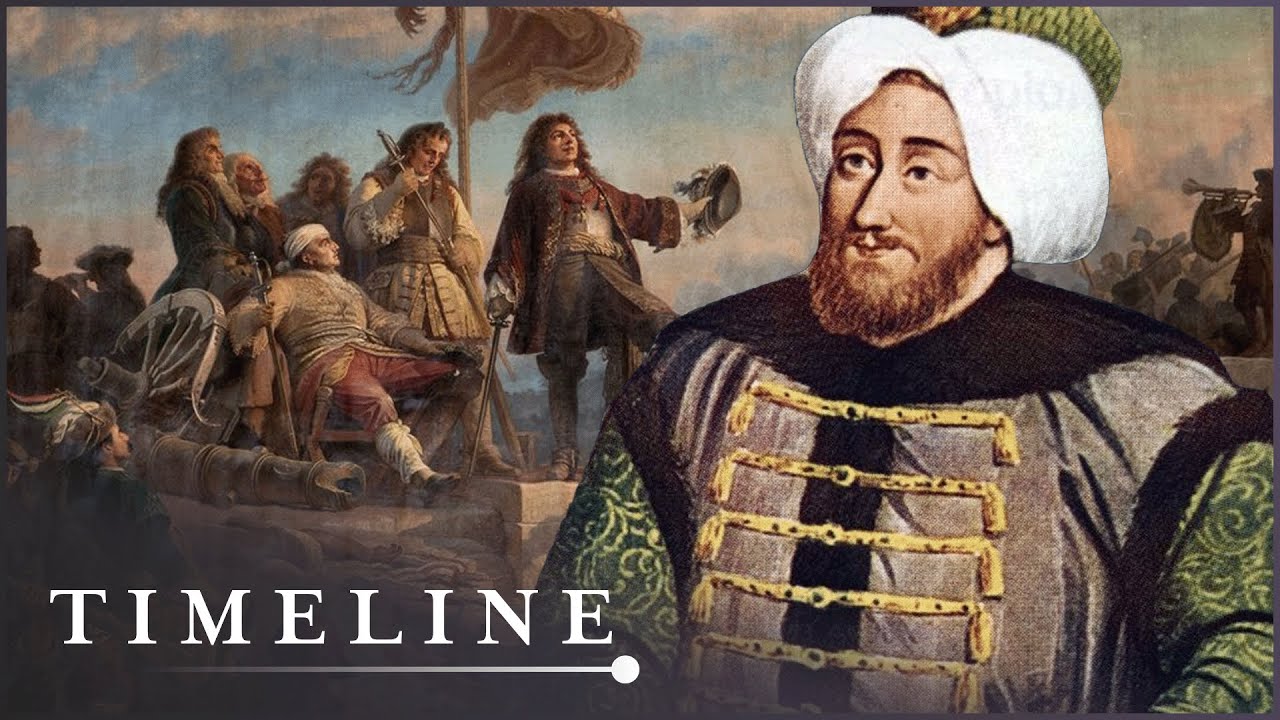
The Overwhelming Defeat of the Ottoman Empire at Zenta: A Turning Point in European History

Introduction: The Pivotal Battle of Zenta

On September 11, 1697, one of the most decisive and catastrophic defeats in the history of the Ottoman Empire unfolded on the battlefield near Zenta, in present-day Serbia. The Ottoman army, once a dominant force that expanded the Empire’s reach across three continents, suffered a devastating blow at the hands of the imperial Habsburg army, commanded by the brilliant military strategist, Prince Eugene of Savoy. In just a few hours, the tide of Ottoman dominance that had surged for centuries was turned, with over 30,000 Ottoman soldiers perishing in a single day.

The Battle of Zenta not only marked a military defeat for the Ottomans but also signaled the end of their steady expansion and the beginning of the Habsburg Empire’s dominance in Central and Eastern Europe. This moment in history, while often overshadowed by other European battles, was crucial in shaping the political landscape of the time. The defeat at Zenta contributed to the decline of the Ottoman Empire’s influence, a trend that would continue into the 19th and 20th centuries. The battle also solidified Prince Eugene of Savoy’s reputation as one of Europe’s greatest military commanders and marked a pivotal shift in the balance of power between the Ottoman Empire and the Habsburgs.

The Road to Zenta: Ottoman-Habsburg Rivalry

By the late 17th century, the Ottoman Empire had long been one of the world’s most powerful civilizations, extending from North Africa to the Middle East, and deeply into Europe. At the height of their expansion, the Ottomans had laid siege to Vienna in 1529 and had almost succeeded in conquering the Habsburg capital. Over the following decades, however, the fortunes of war ebbed and flowed. The 1683 Battle of Vienna had been a significant defeat for the Ottomans, but they remained a force to be reckoned with on the European stage.

The Habsburg Empire, under the Holy Roman Emperor Leopold I, represented one of the primary antagonists to Ottoman expansion in Europe. The long-standing rivalry between these two superpowers was primarily driven by territorial disputes, religious differences, and the desire to exert control over the strategically crucial regions of Central and Southeastern Europe.

After the Ottomans lost at Vienna in 1683, they signed the Treaty of Karlowitz in 1699, which forced them to relinquish large parts of Hungary, Transylvania, and Croatia to the Habsburgs. However, before this treaty, the battle at Zenta in 1697 would deliver a devastating blow that greatly influenced the terms and outcome of peace negotiations.

The Battle of Zenta: An Ottoman Disaster

In 1697, the Ottomans, under Sultan Mustafa II, attempted to regain the initiative and strike against the Habsburgs. Their army, numbering approximately 100,000 men, marched toward the Habsburg-occupied territories in Hungary and Serbia. However, they were pursued by Prince Eugene of Savoy, who commanded a significantly smaller force, estimated at around 50,000 troops. Despite the numerical disadvantage, Prince Eugene’s tactical brilliance and keen understanding of military strategy set the stage for a decisive encounter.

The Ottomans attempted to cross the Tisza River near Zenta, a critical mistake that would cost them dearly. As the Ottoman forces began to ford the river, their army became vulnerable. Sensing the opportunity, Prince Eugene launched a sudden and ferocious attack, catching the Ottomans off guard. The Ottoman army, split between those who had crossed the river and those who had not, fell into disarray. Unable to organize a coherent defense, many Ottoman soldiers were trapped between the river and the advancing Habsburg forces.

The result was nothing short of catastrophic for the Ottoman Empire. In the ensuing chaos, the Habsburg army annihilated their opponents, killing over 30,000 Ottoman soldiers, including many high-ranking officials and commanders. Sultan Mustafa II narrowly escaped with his life, but the defeat marked a severe blow to his reign and the military prestige of the Ottoman Empire. The Habsburg losses, by contrast, were minimal, cementing Prince Eugene’s victory as one of the most lopsided and crushing defeats in military history.

The Aftermath: End of Ottoman Expansion

The Battle of Zenta had far-reaching consequences for both the Ottoman and Habsburg Empires. For the Ottomans, the defeat shattered their aspirations of reclaiming dominance in Europe. The military loss at Zenta not only exposed the weaknesses of the Ottoman military but also undermined the morale of the Empire. Internal strife, administrative inefficiency, and corruption had already begun to weaken the Ottoman state, and this defeat accelerated the Empire’s decline.

Following the Battle of Zenta, the Ottomans were forced to enter into peace negotiations with the Habsburgs, leading to the Treaty of Karlowitz in 1699. This treaty marked a significant territorial loss for the Ottomans, as they ceded much of Hungary and other parts of Eastern Europe to the Habsburg Empire. It also marked the end of Ottoman expansion into Europe, signaling the beginning of a long period of retreat and consolidation that would eventually culminate in the Empire’s dissolution in the early 20th century.

On the other hand, the Habsburg Empire, bolstered by its victory at Zenta, solidified its dominance in Central and Southeastern Europe. Prince Eugene of Savoy, who had orchestrated the victory, became one of the most celebrated military leaders of his time, and his success at Zenta elevated the Habsburgs to new heights of power and influence.

The Ottoman Empire: A Civilizational Force

While the Battle of Zenta marked a turning point in the Ottoman Empire’s military fortunes, it is important to recognize that the Ottomans were not merely a war machine. The Ottoman Empire was a sophisticated and diverse civilization that made significant contributions to art, architecture, science, and culture. From the grand mosques of Istanbul to the development of medical practices and advancements in astronomy, the Ottoman Empire left an indelible mark on world history.

The Ottomans were known for their tolerance of religious diversity, with Muslims, Christians, and Jews coexisting under the Ottoman millet system, which allowed different religious communities to govern their own affairs. The Empire’s cultural achievements during the reigns of sultans like Suleiman the Magnificent showcased the vibrancy and innovation of Ottoman society.

However, by the time of the Battle of Zenta, the Empire’s internal struggles—ranging from bureaucratic corruption to economic challenges—had begun to erode its power. The defeat at Zenta symbolized the larger decline of an empire that had once been one of the world’s most formidable forces.

The Legacy of the Battle of Zenta

The Battle of Zenta remains a significant event in European and Ottoman history, not only for its immediate military impact but for its broader implications on the future of the continent. The battle marked the definitive end of the Ottoman Empire’s expansionist ambitions in Europe and heralded a period of Habsburg dominance that would shape the political landscape of the region for centuries to come.

For modern historians, Zenta stands as a testament to the volatile nature of European power dynamics during the 17th century. It was a period marked by constant warfare, shifting alliances, and the rise and fall of empires. The battle also serves as a reminder of how even the mightiest empires, like the Ottomans, can be brought low by a single, devastating defeat.

Conclusion: A Defining Moment in History

The overwhelming defeat of the Ottoman Empire at the Battle of Zenta on September 11, 1697, marked a pivotal turning point in the history of both the Ottomans and the Habsburg Empire. What began as an Ottoman campaign to regain control of Central Europe ended in disaster, with tens of thousands of soldiers lost and the Empire’s expansion halted. This moment, often overlooked in broader historical discussions, serves as a critical example of how the tides of power in Europe shifted at the end of the 17th century. Today, the legacy of Zenta endures as a defining moment in the story of Europe’s complex and ever-changing history.

Categories
W1 World

Eugene of Savoy: The Legendary Habsburg Commander and the Battle That Shaped Europe

Introduction: The Story of Ottoman Empire

On September 11, 1697, Prince Eugene of Savoy led the imperial Habsburg army to a decisive and devastating victory against the Ottomans at the Battle of Zenta. This clash marked a significant turning point in European history, halting the rise of the Ottoman Empire that had steadily expanded over the previous centuries. Thirty thousand Ottoman soldiers perished in this battle, ending centuries of Ottoman dominance in Central Europe and cementing Prince Eugene’s legacy as one of the most legendary military commanders of the Habsburg dynasty.

While the victory at Zenta was a triumph for the Habsburgs, it was a moment of great loss for the Ottoman Empire, a complex civilization whose cultural and military achievements are often overshadowed in Western history. This article delves into the life of Prince Eugene of Savoy, his rise to prominence within the Habsburg military, and the broader historical context of the Ottoman-Habsburg rivalry. The complex interplay between these two superpowers shaped the geopolitics of Europe for centuries, and their legacies still resonate today. Let’s explore the life of Eugene of Savoy, his military genius, and the impact of the Battle of Zenta on both empires.

Eugene of Savoy: The Man Behind the Legend

Born in Paris in 1663 to an aristocratic family, Eugene of Savoy was never expected to achieve greatness in the military. His early aspirations to serve in the French army were thwarted by King Louis XIV, who deemed him unfit for military service. This rejection turned out to be one of the most significant moments in European history, as it drove Eugene to offer his services to the Habsburg Empire, France’s greatest rival at the time.

At just 19 years old, Eugene joined the Habsburg military and quickly distinguished himself as a capable and daring commander. His talents were recognized by Emperor Leopold I, and Eugene rapidly ascended the ranks. By the time the War of the Grand Alliance (1688–1697) erupted, pitting much of Europe against Louis XIV’s France, Eugene had already made a name for himself as a brilliant strategist.

The Ottoman-Habsburg Rivalry

During Eugene’s rise, Europe was dominated by the rivalry between two major powers: the Habsburg Empire and the Ottoman Empire. The Ottomans, at their peak, were a formidable force that controlled vast territories spanning Southeast Europe, North Africa, and the Middle East. Their expansion into Europe brought them into direct conflict with the Habsburgs, who saw themselves as the protectors of Christendom against the Muslim Ottomans.

The centuries-long struggle between the two empires was marked by numerous battles, sieges, and shifting alliances. The Siege of Vienna in 1683, where the Ottomans attempted to capture the Habsburg capital, was a pivotal moment. It ended in a decisive victory for the Habsburgs, halting the Ottoman advance into Central Europe. Prince Eugene, although not yet in command at the time, would soon play a crucial role in pushing the Ottomans back further.

The Battle of Zenta: A Turning Point

By 1697, the Ottoman Empire was still a major force, but its dominance in Europe was beginning to wane. The Habsburgs, bolstered by victories in previous conflicts, saw an opportunity to strike a decisive blow. The two empires clashed at Zenta, a small town in modern-day Serbia, near the Tisza River.

The Ottoman army, led by Sultan Mustafa II, was attempting to cross the river when Eugene’s forces launched a surprise attack. Using his tactical brilliance, Eugene outmaneuvered the Ottomans, trapping them on the banks of the river with no means of escape. In the ensuing chaos, the Ottoman army was annihilated, with some 30,000 soldiers killed or captured. The loss was catastrophic for the Ottomans, and the victory at Zenta effectively ended Ottoman control of much of Hungary and Serbia.

The battle also marked the beginning of the decline of the Ottoman Empire in Europe. In the years following Zenta, the Ottomans would lose more territory to the Habsburgs and other European powers. Eugene’s victory not only secured Habsburg dominance in Central Europe but also solidified his reputation as one of the greatest military commanders of his time.

The Legacy of Prince Eugene

Prince Eugene of Savoy’s military career did not end with the Battle of Zenta. Over the next few decades, he continued to lead Habsburg forces in numerous conflicts, including the War of the Spanish Succession and the Austro-Turkish Wars. His strategic mind and unflinching determination made him one of the most revered commanders in European history.

Beyond his battlefield achievements, Eugene was also a patron of the arts and an influential political figure. He played a key role in shaping the Habsburg Empire’s policies, and his legacy can still be seen today in the architecture and cultural institutions of Vienna, where he spent much of his life. His palaces, particularly the stunning Belvedere Palace, remain symbols of the grandeur and power of the Habsburg Empire.

The Ottoman Empire: A Civilization Overlooked

While Eugene’s victory at Zenta is often celebrated in European history, it is important to recognize that the Ottoman Empire was not merely a military adversary. The Ottomans were a sophisticated civilization with a rich cultural and intellectual heritage. At their height, they were known for their advancements in architecture, science, and governance.

The Ottomans ruled over a vast and diverse empire, and their ability to manage such a large and multi-ethnic population is a testament to their administrative skill. Cities like Istanbul, then known as Constantinople, were centers of learning and culture, attracting scholars, artists, and traders from across the world. Yet, much of Western history has downplayed or ignored the achievements of the Ottoman Empire, focusing instead on their military conflicts with Europe.

The Enduring Impact of the Battle of Zenta

The Battle of Zenta was more than just a military victory; it was a defining moment in European history that reshaped the balance of power on the continent. The decline of the Ottoman Empire and the rise of the Habsburgs set the stage for the modern nation-states of Central and Eastern Europe. The borders drawn and the alliances forged during this period continue to influence the geopolitics of the region today.

For the Habsburg Empire, Zenta was a stepping stone to greater dominance in Europe. For the Ottomans, it marked the beginning of a long and slow decline. But for both empires, the battle represented a crucial chapter in their shared history, one that still resonates in the present day. It stands as a symbol of the shifting tides of power that defined early modern Europe.

Conclusion: The Legacy of Eugene of Savoy

The rise of Prince Eugene of Savoy and his victory at the Battle of Zenta highlight the complex and often brutal nature of European history. While Eugene’s legacy as a military genius is secure, the broader context of the Ottoman-Habsburg rivalry reminds us that history is rarely a simple tale of good versus evil. Both empires were products of their time, with rich cultures, ambitions, and flaws. The Battle of Zenta may have been a triumph for the Habsburgs, but it was also a moment of profound loss for the Ottomans—a loss that would shape the future of both Europe and the Middle East for centuries to come.

Categories
W1 World

Hidden Treasures of the Sahara: Unearthing Ancient Secrets and Wonders Beneath the Sands

Introduction: Endless Mysteries of Sahara

The Sahara Desert, the vast and unforgiving stretch of arid land that dominates Northern Africa, has long been shrouded in mystery. Stretching over 9 million square kilometers, it remains a place of intrigue, danger, and rebellion. For thousands of years, it has stood as a barrier, sheltering ancient secrets beneath its sands, and only recently have researchers and explorers begun to unveil the hidden wonders that lie beneath its surface. From lost cities to ancient trade routes, the Sahara holds some of the most spectacular and undiscovered treasures of the ancient world.

A Land of Ancient Civilizations

When people think of ancient Egypt, they often envision the fertile lands along the Nile, where towering pyramids and majestic temples arose. However, the Egyptians’ influence stretched far beyond the riverbanks into the Sahara, a place they could never fully control. Despite the desert’s harsh conditions, the Egyptians ventured deep into this vast wilderness, establishing trade routes and uncovering valuable resources like gold, copper, and precious stones.

While Egypt’s ancient treasures are often associated with the banks of the Nile, the Sahara has its own hidden gems. The desert has preserved ancient relics, some untouched for centuries, waiting to be uncovered by archaeologists and adventurers alike. Recent technological advancements, such as satellite imagery, have revealed signs of ancient settlements and irrigation systems, suggesting that much of the Sahara once supported thriving communities long before it became the arid expanse we know today.

The Lost Cities of the Sahara

One of the most intriguing discoveries in the Sahara is the existence of ancient cities that thrived thousands of years ago. The desert has revealed remnants of lost civilizations, some of which predate the pharaohs of Egypt. For example, in modern-day Libya, the ancient city of Garama flourished from around 500 BC to 500 AD, serving as the capital of the Garamantes, a powerful and wealthy people who traded with both the Egyptians and the Romans.

The Garamantes built extensive underground irrigation systems, known as foggaras, which allowed them to cultivate crops in the middle of the desert. These ingenious systems tapped into underground water sources, supporting not only agriculture but also a thriving urban population. Today, the remnants of Garama and its neighboring cities lie buried beneath the sands, a testament to the resourcefulness and innovation of the ancient desert dwellers.

The Sahara as a Trade Hub

Beyond lost cities, the Sahara was once a bustling trade hub that connected North Africa to sub-Saharan regions. Caravans of camels carried goods such as gold, salt, and ivory across the desert, facilitating commerce and cultural exchange between ancient civilizations. The desert was crisscrossed by ancient trade routes, some of which have only recently been mapped by researchers.

These trade routes also carried knowledge, religion, and ideas, influencing cultures across vast distances. The trans-Saharan trade contributed to the spread of Islam throughout North Africa and into sub-Saharan Africa, shaping the religious and cultural landscape of the region. The legacy of this trade is still evident today in the architecture, language, and customs of the desert’s inhabitants.

The Golden Treasures of the Desert

The Sahara is not only a place of lost cities and ancient trade routes; it is also a repository of untold wealth. In ancient times, the desert was rich in valuable resources, including gold, which was highly sought after by Egyptian pharaohs and other ancient rulers.

One of the most famous legends of hidden treasure in the Sahara is the tale of the lost gold mines of King Solomon. According to legend, King Solomon’s mines were located somewhere in the desert, filled with untold riches. While these mines have never been found, the legend continues to captivate treasure hunters and archaeologists alike, inspiring expeditions into the Sahara’s remotest regions.

In more recent times, rumors of hidden Nazi treasures buried in the desert during World War II have also fueled treasure hunts. The German Afrika Korps, led by Field Marshal Erwin Rommel, fought in North Africa during the war, and some believe that valuable artifacts and gold were hidden in the Sahara’s vast expanse as the war drew to a close.

Prehistoric Art and Lost Languages

The Sahara is also home to some of the world’s most remarkable prehistoric art. Scattered throughout the desert are thousands of ancient rock carvings and paintings, depicting animals, hunting scenes, and even early forms of writing. These artworks, some of which are over 10,000 years old, offer a glimpse into a time when the Sahara was not a barren desert but a lush and fertile landscape teeming with wildlife.

One of the most famous sites is the Tassili n’Ajjer plateau in Algeria, where an extensive collection of prehistoric rock art was discovered. These carvings and paintings depict animals such as elephants, giraffes, and rhinoceroses, suggesting that the Sahara once had a much wetter climate. The artworks also feature human figures, some engaged in rituals and dances, offering insight into the spiritual lives of the ancient people who once inhabited the region.

In addition to prehistoric art, the Sahara has also yielded evidence of lost languages. Researchers have uncovered inscriptions in ancient scripts that are still not fully understood, offering tantalizing clues to the existence of forgotten cultures that once thrived in the region.

The Secrets of the Desert’s Ancient Tombs

Much like the Egyptians buried their pharaohs in elaborate tombs, the people of the Sahara also practiced burial rituals that reflected their beliefs in the afterlife. Archaeologists have discovered ancient burial sites scattered across the desert, some of which contain human remains dating back thousands of years. These tombs often contain grave goods, such as pottery, jewelry, and weapons, suggesting that the people of the Sahara believed in an afterlife similar to the Egyptians.

One of the most famous burial sites is the so-called “Black Mummy” of Uan Muhuggiag, a 5,000-year-old mummified child discovered in Libya’s Acacus Mountains. The body was naturally mummified by the desert’s dry conditions, and the discovery of the Black Mummy has provided valuable insight into the burial practices and beliefs of the ancient desert dwellers.

Modern Explorations and Discoveries

Despite centuries of exploration, the Sahara continues to reveal new secrets. In recent years, archaeologists have made significant discoveries in the desert, thanks to advances in technology. Satellite imagery and ground-penetrating radar have allowed researchers to map ancient settlements and trade routes that were previously unknown. These technologies have also helped to locate buried tombs and other archaeological sites, offering new opportunities for discovery.

In addition, the desert’s remote regions remain largely unexplored, leaving the possibility that even more ancient wonders lie hidden beneath the sands. From lost cities to buried treasure, the Sahara continues to captivate the imagination of adventurers and historians alike.

Conclusion: The Timeless Allure of the Sahara

The Sahara, a land of extremes, holds within its sands the stories of ancient civilizations, lost cities, and untold treasures. Whether it be the forgotten kingdoms, the hidden tombs, or the mysterious rock art, the desert continues to be a source of fascination and wonder. As archaeologists continue to uncover its secrets, the Sahara reminds us that even the harshest landscapes can conceal the most extraordinary mysteries. Overall, the legend of the Sahara’s hidden wonders endures, as timeless and enigmatic as the desert itself, waiting for those brave enough to venture into its vast and perilous expanse.

Categories
W1 World

Revisiting the Legacy: How Modern Recruits Face Their First WWII Commando Mission Training

Introduction: Honoring the Past

World War II gave rise to some of the most iconic and elite fighting forces in military history. Among these was the 1st Special Service Force, famously known as the Devil’s Brigade, an elite joint American-Canadian commando unit renowned for its daring missions and relentless determination. Today, modern soldiers from various special forces and military units are often called to honor that legacy, facing grueling training regimes designed to emulate the experience and tactics of the original Devil’s Brigade.

For modern recruits, stepping into the boots of their WWII predecessors isn’t just about physical endurance; it’s a mental, strategic, and emotional challenge that pushes them to their limits. In this article, we explore how modern soldiers prepare for their first mock mission, training in the manner of the WWII Devil’s Brigade, and the hurdles they face while testing their mettle against the past’s rigorous standards.

The Legacy of the Devil’s Brigade

Formed in July 1942, the Devil’s Brigade was a specialized commando unit made up of both American and Canadian soldiers. The unit was established to perform special operations, including stealthy raids, reconnaissance, and guerilla warfare behind enemy lines. Their missions were known for their high level of risk and required exceptional physical stamina, mental resilience, and tactical adaptability.

The Devil’s Brigade earned a fearsome reputation, even gaining the nickname “Black Devils” from the Germans, who feared their stealth tactics and nighttime assaults. Members of the unit were trained in hand-to-hand combat, mountaineering, parachuting, and demolition. Their skill and discipline played a crucial role in key operations, particularly in Italy and Southern France.

In modern times, these traits and tactics still serve as a blueprint for many special forces units worldwide. For today’s recruits, facing a training regime based on the Devil’s Brigade means not only preparing for physically intense missions but also adopting the same psychological fortitude that made their WWII predecessors so effective.

Training Begins: Emulating WWII Commandos

Modern commando recruits stepping into a Devil’s Brigade-style mission begin their journey with a sense of reverence for the past. Their training kicks off in much the same way it did for the original WWII commandos—with intense physical conditioning, map-reading, and weapon-handling courses. Unlike regular soldiers, commando trainees are expected to surpass normal expectations, often performing tasks under extreme conditions to simulate the real-life pressures faced in combat.

Modern recruits understand that they are not just learning military tactics; they are stepping into the shoes of one of history’s most formidable fighting forces. The legacy of the Devil’s Brigade is one of resilience, innovation, and bravery, qualities that recruits must internalize from the very start. Every drill, every march, and every obstacle they encounter is meant to connect them with the mindset of WWII commandos, preparing them to operate with the same level of grit and ingenuity required to survive and succeed behind enemy lines.

The First Challenge: Endurance

The training starts with a focus on physical endurance, pushing the recruits to their breaking point. Modern soldiers are put through grueling exercises that include long marches carrying full gear, simulating the pack loads that WWII commandos would have carried through hostile territory. In extreme weather conditions—whether heat, rain, or snow—recruits must navigate challenging terrain, including mountainous regions similar to those that the Devil’s Brigade scaled in Italy.

Endurance is more than just a test of physical strength; it’s a mental battle. Much like their WWII counterparts, modern recruits quickly learn that their body’s ability to keep moving forward when fatigued comes down to their mindset. The grueling demands of long-distance hikes, often under strict time constraints, teach soldiers the importance of pushing through pain, exhaustion, and self-doubt.

Weaponry and Combat Training

The next phase of training involves familiarization with a range of weapons. For modern soldiers, this is a blend of classic WWII weaponry—like the Thompson submachine gun or the M1 Garand—and modern-day rifles and explosives. This dual focus provides recruits with a link to the past while ensuring they are prepared for contemporary combat scenarios.

Hand-to-hand combat training is another crucial element. Much like the Devil’s Brigade, which was trained in unarmed combat and knife fighting, modern recruits undergo rigorous close-quarters battle (CQB) training. Learning to disarm and neutralize enemies without relying on firearms becomes an essential skill, as it was for WWII commandos operating behind enemy lines.

Recruits practice a combination of martial arts, grappling, and self-defense techniques, drawing from both historical WWII manuals and modern special forces handbooks. They are taught to fight in confined spaces, often in low-light conditions, replicating the challenges the Devil’s Brigade faced during nighttime operations.

Mountaineering and Tactical Navigation

The Devil’s Brigade was famous for its ability to traverse harsh, mountainous terrain, particularly during the Italian Campaign. Modern soldiers facing their first practice mission in the spirit of the WWII commandos must undergo similarly challenging mountaineering exercises.

Recruits are tasked with scaling rock faces, crossing rivers, and navigating forests—often with little more than a map and compass. GPS technology is deliberately removed from these exercises, forcing soldiers to rely on traditional navigation methods. This tests not only their technical skills but also their ability to remain calm and collected when things go wrong.

In many cases, modern recruits have to complete nighttime navigation drills, working as a unit to locate objectives without the luxury of daylight. This level of stealth and precision echoes the Devil’s Brigade’s signature ability to surprise enemy forces with nighttime assaults.

The Psychological Toll: Mental Fortitude and Leadership

One of the most significant challenges modern recruits face during their first mission is the psychological toll of elite commando training. WWII commandos had to be not only physically capable but also mentally tough, able to endure isolation, fatigue, and the constant threat of danger. Modern-day recruits are placed in similar conditions during simulated missions. They experience sleep deprivation, hunger, and continuous pressure to make quick, life-or-death decisions.

One exercise, known as “The Kill House,” places soldiers in a simulated building raid. Here, recruits must work as a team to clear rooms, identify threats, and eliminate enemy targets—all while avoiding civilian casualties. This type of urban warfare training replicates the psychological stress of combat, where mistakes can have deadly consequences. It forces soldiers to balance aggression with control, a hallmark of the Devil’s Brigade tactics.

Leadership is another critical component of this training. Much like the original commandos, modern recruits are often put in leadership roles, requiring them to make difficult decisions under pressure. Whether directing a team through hazardous terrain or leading a high-stakes assault, recruits learn that effective leadership is the key to survival and success.

The Final Test: The Practice Mission

After weeks of intensive training, modern recruits face their final challenge: a full-scale practice mission designed to test all of the skills they’ve acquired. This mission is a tribute to the Devil’s Brigade’s bold, behind-enemy-lines raids. Recruits are tasked with infiltrating a simulated enemy base, gathering intelligence, and executing a series of objectives, all while evading detection. The mission is set up to mimic the chaos and uncertainty of real wartime conditions.

Recruits must operate in small units, relying on stealth, communication, and teamwork to complete their objectives. They face simulated enemy fire, improvised explosive devices (IEDs), and sudden ambushes, all designed to test their tactical adaptability and decision-making under duress. The practice mission not only measures the recruits’ physical and tactical readiness but also their ability to function as a cohesive unit, much like the Devil’s Brigade of WWII.

Conclusion: Shaping the Future

For modern recruits, facing their first mission under the rigorous training style of the Devil’s Brigade is a powerful way to honor the legacy of WWII commandos while preparing for the realities of modern warfare. The endurance, precision, leadership, and resilience required to complete such training echo the values that made the original Devil’s Brigade legendary. By undergoing this intense preparation, modern soldiers gain more than just tactical skills; they gain a deep appreciation for the sacrifices and achievements of those who came before them.

In doing so, they carry forward the spirit of the Devil’s Brigade, ensuring that the lessons of the past continue to shape the future of military excellence. This training instills in them a profound respect for the historical significance of their role, bridging the gap between past and present. By embracing the challenges faced by their WWII predecessors, modern recruits not only enhance their own combat capabilities but also uphold the proud tradition of elite military service, ensuring that the bravery and innovation of the Devil’s Brigade are never forgotten.

Categories
W1 World

America’s Deadliest Mass Shooting: Unanswered Questions About the 2017 Las Vegas Tragedy

Introduction

On October 1, 2017, the United States witnessed a mass shooting that shook the nation and reverberated across the world. It was a night of terror in Las Vegas, Nevada, as a gunman opened fire on a crowd of concertgoers attending the Route 91 Harvest Festival from the 32nd floor of the Mandalay Bay Hotel. This horrific act of violence claimed the lives of 60 people and injured over 850 others, making it the deadliest mass shooting in modern American history. In the days and months that followed, investigators worked to piece together the details of the incident. However, despite their efforts, many questions still linger about the shooter, Stephen Paddock, his motives, and the chilling method in which he executed the attack.

The Events of October 1, 2017

The tragedy unfolded as more than 22,000 people gathered at the Route 91 Harvest Festival, a three-day country music event held annually in Las Vegas. As headliner Jason Aldean performed, the first shots rang out just after 10:00 p.m. The concert, which was full of energy and excitement, quickly turned into a scene of chaos and panic. Concertgoers ducked for cover or fled as rapid bursts of gunfire echoed from high above the plaza.

Stephen Paddock, a 64-year-old man from Mesquite, Nevada, had meticulously planned his attack. He had booked two rooms in the Mandalay Bay Hotel, one on the 32nd floor, which gave him a clear view of the concert grounds. Paddock brought an arsenal of weapons—23 firearms, including semi-automatic rifles modified with bump stocks to mimic fully automatic fire—into his room over several days. From this elevated position, he rained bullets down on the unsuspecting crowd below for approximately 10 minutes, causing mass casualties.

First responders were on the scene within minutes, but the sheer chaos and the distance between the shooter and the concert made it difficult to pinpoint the source of the gunfire. SWAT teams eventually breached Paddock’s hotel room over an hour after the shooting began, only to find him dead from a self-inflicted gunshot wound. The massacre was over, but the trauma would linger for years to come.

The Shooter: Stephen Paddock

In the aftermath of the shooting, investigators and the media quickly turned their attention to Stephen Paddock, a man who had seemingly lived a quiet, unremarkable life. Paddock was a retired accountant and real estate investor who had no prior criminal record, no significant interactions with law enforcement, and no known history of violence. He lived a comfortable, wealthy lifestyle, enjoying gambling and traveling.

Yet, despite exhaustive investigations into his life, relationships, and personal history, authorities were unable to determine a clear motive for the attack. Paddock left no manifesto, no social media footprint indicating political or ideological motivations, and no evidence of mental illness that could explain his actions. His family, friends, and acquaintances were as shocked as the public, describing him as a private, quiet man who gave no signs of being capable of such a horrific act.

This lack of a clear motive has left many baffled and frustrated. How could a man with no apparent grievances or ties to extremist groups commit such a heinous act of violence? The mystery surrounding Paddock’s motives has fueled conspiracy theories and speculation, but no definitive answers have emerged.

The Method: An Elevated Lethal Observation Post

One of the most chilling aspects of the Las Vegas shooting was the meticulous planning and preparation Paddock undertook to establish his lethal observation post on the 32nd floor of the Mandalay Bay Hotel. He had rented two adjoining rooms, giving him ample space to set up multiple shooting positions. Over the course of several days, Paddock brought in suitcases full of weapons, ammunition, and other equipment, all without arousing suspicion.

The firearms Paddock used were modified with bump stocks, devices that allow semi-automatic rifles to fire at a rate similar to fully automatic weapons. These modifications enabled him to unleash a rapid, sustained barrage of gunfire, overwhelming the crowd below. In addition to his firearms, Paddock set up cameras both inside and outside his hotel room, allowing him to monitor the hallway and see when law enforcement was approaching.

The elevated position Paddock chose for his attack gave him a significant tactical advantage. The distance between the hotel and the concert venue made it difficult for law enforcement and first responders to quickly identify the source of the gunfire. The confusion and panic in the crowd further complicated efforts to reach the shooter. Despite the clear evidence of premeditation and careful planning, Paddock’s exact rationale for choosing this particular method of attack remains unknown. Was he inspired by other mass shootings? Did he have a fascination with tactical scenarios? These questions remain unanswered.

Lingering Questions and Unresolved Mysteries

While the FBI and local law enforcement conducted a thorough investigation into the Las Vegas shooting, many questions remain unresolved. Chief among them is the issue of Paddock’s motive. Why did he choose to commit this atrocity? Investigators found no evidence linking him to extremist groups or personal grievances that could explain his actions. The lack of a clear motive has led to frustration among the public and victims’ families, who are left grappling with the incomprehensibility of the tragedy.

Another lingering question concerns how Paddock was able to smuggle such a large number of firearms and ammunition into the hotel undetected. The Mandalay Bay Hotel, like many Las Vegas resorts, is equipped with extensive security and surveillance systems. Yet, Paddock was able to bring in his arsenal over several days without raising any alarms. This has raised concerns about hotel security and the ability of individuals to carry out similar attacks in the future.

Additionally, the use of bump stocks in the attack sparked a nationwide debate about gun control and the regulation of firearms. While bump stocks were not illegal at the time of the shooting, their role in enabling Paddock to carry out such a deadly attack led to calls for stricter gun laws. In 2018, the U.S. Justice Department issued a final rule classifying bump stocks as machine guns, effectively banning their sale and possession. However, the broader issue of gun control remains a contentious topic in the United States, with no clear consensus on how to prevent future mass shootings.

The Aftermath: Healing and Moving Forward

In the wake of the Las Vegas shooting, the victims and their families have had to grapple with immense pain and loss. Survivors have faced physical and emotional scars, while the families of the 60 individuals who lost their lives continue to mourn their loved ones. The city of Las Vegas, known for its vibrant nightlife and entertainment, was forever changed by the tragedy. Efforts to heal and rebuild have been ongoing. Memorials and vigils were held in honor of the victims, and the Las Vegas community came together to support those affected by the shooting.

In the years since the attack, there has been a renewed focus on improving security at large public events and addressing the mental health needs of those impacted by mass shootings. However, for many, the unanswered questions surrounding the shooting continue to haunt them. The lack of a clear motive and the mysteries surrounding Paddock’s actions leave an unsettling sense of incompleteness to the story.

Conclusion

The Las Vegas shooting on October 1, 2017, was a dark and tragic chapter in American history. While the attack itself was horrifying in its scope and execution, the lingering questions about Stephen Paddock’s motives, his methods, and the broader implications for public safety continue to weigh heavily on the nation. As the deadliest mass shooting in U.S. history, it serves as a stark reminder of the challenges we face in preventing such tragedies and the importance of seeking answers and solutions to the ongoing issue of gun violence in America. Ultimately, the haunting legacy of the Las Vegas shooting underscores the urgent need for collective action to prevent such senseless violence from ever happening again.

Categories
W1 World

The Hunt for Japan’s Buried WWII Treasure: Unraveling the Mystery of Yamashita’s Gold

Introduction

World War II was a period marked not only by battles and military strategies but also by hidden agendas and covert operations. One such operation involved the supposed hoarding of treasure by the Japanese Imperial Army, led by General Tomoyuki Yamashita. Dubbed “Yamashita’s Gold,” this legendary treasure is rumored to be worth over $100 billion today, and it has captivated treasure hunters, conspiracy theorists, and historians alike. The quest to uncover this hidden fortune has spanned decades, intertwining tales of bravery, betrayal, and obsession.

The hunt for Yamashita’s Gold has sparked international interest, with treasure hunters from across the globe flocking to the Philippines, driven by hopes of uncovering the elusive fortune. While skeptics dismiss the treasure as a myth, the tantalizing combination of wartime intrigue and hidden riches continues to captivate those who dream of uncovering one of history’s greatest secrets. This article dives deep into the legend of Yamashita’s Gold, the operations of the Golden Lily, and the lifelong efforts of those who seek the treasure.

The Legend of Yamashita’s Gold

The legend of Yamashita’s Gold originates from the waning days of World War II. As Allied forces began closing in on the Japanese Empire, rumors began to swirl that the Japanese military had looted vast amounts of gold, silver, jewels, and other treasures from occupied territories across Asia. This treasure was allegedly collected under a secret Japanese operation known as the Golden Lily. According to these accounts, much of the plundered wealth was buried in various hidden locations across the Philippines, with the goal of retrieving it after the war.

General Tomoyuki Yamashita, a decorated and feared military leader, was said to have been put in charge of safeguarding and concealing the treasure. As Japan faced imminent defeat, Yamashita and his men supposedly buried the gold in secret underground tunnels, caves, and man-made chambers across the Philippines. The operation was shrouded in such secrecy that even the laborers who helped bury the gold were often killed afterward to ensure the locations remained hidden.

Golden Lily: The Secret Operation

The Golden Lily operation, named after a Japanese royal family symbol, was reportedly initiated to finance Japan’s war efforts. As Japan expanded its empire across Southeast Asia, from China to Burma (Myanmar) and the Philippines, its forces seized vast amounts of wealth from banks, temples, and private estates. This loot included gold bullion, rare artifacts, and precious jewels, all of which were systematically collected and shipped to the Philippines for safekeeping.

One of the most intriguing aspects of the Golden Lily operation is the extent of its secrecy. Many historians and researchers believe that the operation involved not just military personnel but also high-ranking members of the Japanese royal family. Some even claim that Emperor Hirohito was aware of the treasure hoarding and its eventual hiding places. Despite these assertions, little concrete evidence has emerged to confirm the full extent of the operation, leading to much speculation and numerous conspiracy theories.

The Post-War Aftermath: Trials and Controversies

After Japan’s surrender in 1945, General Yamashita was captured by Allied forces and later tried for war crimes in a highly controversial trial. Yamashita was executed in 1946, but he never revealed the whereabouts of the hidden treasure, nor did he confirm its existence. His death added another layer of mystery to the legend, fueling speculation that Yamashita took the secret to his grave.

Following the war, the United States and other Allied nations were aware of Japan’s looting activities, but the extent of the treasure hidden in the Philippines remained unclear. Some believe that U.S. intelligence agents discovered portions of the treasure in the years following the war and used it to finance covert Cold War operations. This theory, known as the “Black Gold” theory, suggests that the treasure was quietly recovered and used for secret government projects, leaving no trace for historians or treasure hunters to follow.

Treasure Hunters and Obsession

For many, the legend of Yamashita’s Gold is more than just a story—it’s an obsession. Over the decades, countless amateur and professional treasure hunters have traveled to the Philippines in search of the fabled fortune. Armed with maps, metal detectors, and historical documents, these treasure hunters have risked their lives, fortunes, and reputations in the pursuit of riches.

One of the most famous individuals associated with the hunt is Rogelio Roxas, a Filipino locksmith and treasure hunter who claimed to have found a portion of Yamashita’s Gold in the 1970s. Roxas’ discovery allegedly included a golden Buddha statue and several gold bars. However, his treasure was confiscated by Ferdinand Marcos, the then-dictator of the Philippines, and Roxas was arrested and tortured. Roxas later sued the Marcos estate, leading to a decades-long legal battle that resulted in a U.S. court awarding Roxas’ estate millions of dollars in compensation. However, the golden Buddha and much of the alleged treasure were never recovered, leaving the mystery unresolved.

The Scandals and Political Intrigue

The search for Yamashita’s Gold has not been without controversy. Throughout the years, there have been numerous claims of political involvement, fraud, and cover-ups. Many treasure hunters have accused the Philippine government of hindering their efforts, while others believe that portions of the treasure have already been recovered and sold off in secret.

Ferdinand Marcos’ involvement in the treasure hunt has sparked countless theories. Some believe that Marcos personally profited from Yamashita’s Gold and used the wealth to finance his lavish lifestyle and political ambitions. Others argue that the treasure was used to prop up his regime and suppress political opposition. However, no definitive proof has ever emerged to support these claims, leaving much of the treasure’s fate shrouded in secrecy.

A Mystery That Endures

The enduring allure of Yamashita’s Gold lies not just in its potential monetary value but in the intrigue and mystery surrounding its existence. The possibility that a vast fortune remains hidden beneath the jungles and mountains of the Philippines continues to captivate treasure hunters and historians alike.

Despite decades of searching, no one has definitively proven the existence of the treasure, let alone recovered it. Numerous excavations have been conducted, often with little to show but dirt and debris. However, for many, the treasure hunt itself is as thrilling as the potential discovery. The hunt for Yamashita’s Gold has become a modern-day quest, fueled by stories of hidden riches, political intrigue, and the tantalizing possibility that the truth may one day be uncovered.

Conclusion

The legend of Yamashita’s Gold is one of history’s most captivating mysteries. Whether it is fact or fiction, the story of General Yamashita’s buried treasure has left an indelible mark on those who have pursued it. The tale of Golden Lily, secret wartime operations, and the treasure’s supposed aftermath continues to fascinate and frustrate in equal measure. Perhaps the true value of Yamashita’s Gold lies not in the riches themselves but in the enduring mystery that keeps the legend alive.

The search for Yamashita’s Gold may never yield the definitive answers or treasures that hunters seek, but the legend persists as a reminder of the complex aftermath of World War II. As long as there are adventurers and mystery-seekers, the allure of buried treasure will keep the tale alive, inviting future generations to continue the quest. Ultimately, the story of Yamashita’s Gold serves as a captivating intersection of history, myth, and the relentless human spirit in pursuit of fortune.

Categories
W1 World

Apocalypse Now: The Real-Life Colonel Kurtz – Unmasking Inspiration Behind a Fictional Legend

Introduction

When people think of Apocalypse Now, Francis Ford Coppola’s 1979 war epic, they often think of Marlon Brando’s haunting portrayal of Colonel Kurtz. The character of Kurtz, a rogue officer who descends into madness while leading a guerrilla army in the jungles of Vietnam, is regarded as one of the most complex and enigmatic figures in cinematic history. While many assume Kurtz is purely a creation of fiction, the truth is more complicated. Kurtz was inspired by real individuals and events, particularly in the shadowy world of the Vietnam War.

The enigmatic figure of Colonel Kurtz from Apocalypse Now may seem like pure fiction, but his character is deeply rooted in the real-life experiences of individuals who faced the psychological and moral complexities of the Vietnam War. This article delves into the true-life inspirations for Colonel Kurtz, exploring how reality can often be stranger and darker than fiction.

Origins of Colonel Kurtz: Conrad’s Influence

The character of Colonel Kurtz has its roots in literature, specifically in Joseph Conrad’s 1899 novella Heart of Darkness. In Heart of Darkness, Kurtz is a station chief for a Belgian trading company in the Congo who becomes consumed by the wilderness, turning into a ruthless and god-like figure. Coppola and screenwriter John Milius drew heavily from Conrad’s novella in crafting the Apocalypse Now narrative, transplanting Kurtz from the Congo to Vietnam during the height of the war.

However, while Heart of Darkness served as the primary literary source for Kurtz, real-life events and individuals in Vietnam provided the true-life parallels. During the Vietnam War, there were cases of U.S. military personnel who, much like the fictional Kurtz, strayed far from their original missions and took on darker, unorthodox roles in the conflict.

Operation Phoenix and the Dark Side of Counterinsurgency

One of the significant real-life connections to Colonel Kurtz’s character stems from Operation Phoenix, a controversial CIA-run program during the Vietnam War. Launched in 1968, the goal of Operation Phoenix was to dismantle the Viet Cong infrastructure by capturing, interrogating, and often assassinating key leaders within the communist insurgency. It was a brutal, covert war within the larger conflict, often marked by allegations of human rights abuses, torture, and extrajudicial killings.

The men involved in Operation Phoenix were often Special Forces officers, CIA operatives, and intelligence personnel who operated in the shadowy realms of the war. The operation’s tactics blurred the lines of legality and morality, leaving those involved to grapple with the psychological and ethical consequences. It is in this world that the real-life inspirations for Kurtz emerge—men who were tasked with fighting an elusive enemy by any means necessary, often at the cost of their own humanity.

Tony Poe: The Real-Life Kurtz

One of the most direct real-life inspirations for Colonel Kurtz is Tony Poe, a CIA operative who became infamous for his unorthodox and violent methods while operating in Southeast Asia. Poe was assigned to train and lead the Hmong tribesmen in Laos, a covert theater of the Vietnam War. As part of the CIA’s secret war in Laos, Poe helped organize guerrilla forces to fight the Pathet Lao and North Vietnamese troops.

Poe’s methods became increasingly brutal as the war dragged on. According to various accounts, he would encourage his troops to bring back enemy ears as proof of kills, much like the fictional Kurtz who had become detached from the military’s standard rules of engagement. Poe’s isolation, combined with his growing disillusionment with the war, mirrored Kurtz’s descent into madness in Apocalypse Now. Though Poe vehemently denied some of the more sensational stories about him, his reputation as a rogue operator who had gone “off the grid” contributed to his mystique as a real-life Kurtz.

Colonel Robert Rheault: A Tragic Case of Military Betrayal

Another figure that helped shape the Colonel Kurtz character was Colonel Robert Rheault, a distinguished Special Forces officer in the U.S. Army. Rheault’s story didn’t involve madness or moral corruption, but rather a tragic case of military betrayal. In 1969, Rheault, then the commander of Special Forces in Vietnam, was implicated in the murder of a suspected double agent. Along with several of his men, Rheault was arrested and charged with premeditated murder, sparking a major scandal known as the “Green Beret Affair.”

Though the charges were eventually dropped, Rheault’s case revealed the complexities and ambiguities of counterinsurgency warfare. Much like Kurtz in Apocalypse Now, Rheault found himself caught between the fog of war and the ethical dilemmas that arise when fighting a faceless, unconventional enemy. His downfall, driven by accusations of crossing moral and legal boundaries, paralleled the fictional Kurtz’s break with the military establishment and his descent into a self-imposed exile.

The Myth and Legacy of Colonel Kurtz

By combining elements of Joseph Conrad’s Kurtz with real-life figures like Tony Poe and Colonel Rheault, Coppola and Milius created a character that was larger than life—a man who embodied the dark, chaotic, and morally ambiguous nature of the Vietnam War. Colonel Kurtz, as portrayed by Brando, became a symbol of the war’s psychological toll on those who fought in its most shadowy corners. His famous line, “The horror, the horror,” reflects the internal torment faced by many soldiers and operatives who grappled with the war’s brutality and their own complicity in it.

Though fictional, Kurtz’s character resonates because it speaks to the very real struggles faced by men like Poe and Rheault—men who operated in the “heart of darkness,” where the lines between right and wrong, sanity and madness, became hopelessly blurred. These men, much like Kurtz, found themselves in environments where moral codes were abandoned, and the survival of the mission took precedence over everything else.

Apocalypse Now’s Impact on Pop Culture and History

Since its release, Apocalypse Now has remained one of the most influential war films of all time. Its portrayal of the Vietnam War as a surreal, nightmarish journey into the darkest corners of the human psyche has left an indelible mark on how the conflict is remembered in popular culture. The character of Colonel Kurtz, in particular, has transcended the film, becoming a cultural touchstone for discussions about the moral and psychological costs of war.

Real-life figures like Tony Poe and Robert Rheault continue to be studied by historians and military analysts as cautionary tales about the dangers of losing one’s moral compass in the fog of war. While Apocalypse Now may be a work of fiction, the truth behind its characters serves as a powerful reminder of the complexities and horrors that come with modern warfare.

Conclusion

The real-life inspirations behind Colonel Kurtz remind us that war can drive individuals to the brink of madness, stripping away the veneer of civilization and revealing the darker impulses within. Whether through Tony Poe’s guerrilla warfare tactics in Laos or Colonel Rheault’s entanglement in the Green Beret Affair, the story of Kurtz is rooted in the very real experiences of those who fought in Vietnam’s shadows.

In the end, the myth of Kurtz endures because it captures the essence of war’s ultimate horror—how it can transform even the most noble warriors into something unrecognizable. The legacy of Colonel Kurtz serves as a haunting reminder of how the brutal realities of war can push individuals beyond the bounds of morality and sanity, leaving behind a story that blurs the lines between myth and history.

Categories
W1 World

Operation Fast and Furious: How a U.S. Gun-Walking Program Turned Into a Tragic Scandal

Introduction: A Controversial Operation

Operation Fast and Furious was a U.S. government initiative designed to track illegal gun sales and trace them to Mexican drug cartels. Launched as part of the broader Project Gunrunner, the operation had a controversial and catastrophic outcome. It became a massive public relations disaster for the Obama Administration and led to significant criticism of key figures such as Attorney General Eric Holder, ATF Director Kenneth E. Melson, and other officials involved. The failure of the operation became evident after the death of U.S. Border Patrol Agent Brian Terry and hundreds of others in Mexico, who were killed with firearms linked to the operation.

What was intended to dismantle criminal networks turned into a scandal that exacerbated violence in Mexico and raised questions about government oversight and accountability. Additionally, the inability to track the thousands of firearms that flowed into cartel hands further worsened the crisis, undermining the original goals of the operation. Investigations into the program would reveal a series of missteps and poor communication among agencies, sparking widespread outrage and numerous congressional hearings.

The Concept Behind Operation Fast and Furious

The operation began with seemingly good intentions. Its goal was to identify the major players in Mexico’s violent drug cartels by allowing guns to be purchased illegally in the U.S. and then traced back to high-level cartel members. This concept is known as “gun-walking,” where firearms are intentionally allowed to cross into criminal hands so that authorities can track their final destination and build a case against the cartels.

Fast and Furious was implemented by the Bureau of Alcohol, Tobacco, Firearms, and Explosives (ATF) as part of Project Gunrunner, a larger operation aimed at reducing arms trafficking across the U.S.-Mexico border. The ATF believed that by allowing guns to be sold to straw buyers (individuals who purchase guns legally and then sell them to criminals), they would be able to track the firearms to the cartels and take down key members. In theory, it seemed like a proactive approach to tackling the escalating cartel violence.

What Went Wrong with the Operation?

However, in practice, Operation Fast and Furious was deeply flawed. One of the primary issues was the lack of coordination between U.S. law enforcement agencies and Mexican authorities. While the guns were allowed to cross the border, there was little to no tracking of the weapons once they entered Mexico. The ATF lost track of over 2,000 firearms that had been sold under the operation.

Another major problem was that the weapons sold to these criminals were often high-powered assault rifles, capable of inflicting massive damage. The lack of proper tracking and communication allowed these firearms to be used in numerous crimes, both in the U.S. and Mexico, leading to the deaths of countless people, including U.S. citizens. Among the most notable victims was Border Patrol Agent Brian Terry, whose murder in December 2010 became a turning point in public awareness and outrage over the operation.

The Death of Brian Terry: A Turning Point

Brian Terry’s death was the catalyst for widespread outrage and scrutiny of Operation Fast and Furious. Terry was killed in a shootout near the U.S.-Mexico border in Arizona, and it was later discovered that two of the firearms found at the scene had been part of the Fast and Furious operation. This discovery sparked immediate controversy and led to calls for accountability from the highest levels of government.

Terry’s death also brought attention to the fact that hundreds of Mexicans had been killed with guns linked to the operation. The failure of U.S. law enforcement to track the firearms raised serious questions about the effectiveness and ethics of the program.

Political Fallout and Government Accountability

The political fallout from Operation Fast and Furious was immense, with the Obama Administration facing heavy criticism. Attorney General Eric Holder became the central figure in the controversy, as many called for his resignation, arguing that he had failed to oversee the ATF properly. Holder testified before Congress multiple times, and while he admitted that mistakes were made, he denied having prior knowledge of the details of the operation.

In 2012, the House of Representatives voted to hold Eric Holder in contempt of Congress for failing to provide documents related to the operation. This marked the first time in U.S. history that a sitting Attorney General was held in contempt. The controversy further fueled partisan tensions, with Republicans accusing the Obama Administration of a cover-up and Democrats defending Holder and criticizing the operation’s handling.

The ATF Director at the time, Kenneth E. Melson, was also heavily criticized for his role in overseeing the operation. Melson testified that he had not been fully briefed on the scope of Fast and Furious and that he had been misled by his subordinates. Despite this, his leadership came under fire, and he eventually resigned in the wake of the scandal.

Impact on U.S.-Mexico Relations

The Fast and Furious operation severely strained relations between the U.S. and Mexico. Mexican officials were outraged to learn that thousands of guns had been allowed to flow into their country without their knowledge or consent. Many of these weapons were used in high-profile violent crimes, further fueling the drug war and destabilizing certain regions in Mexico.

The Mexican government demanded answers from the U.S., and there were calls for greater cooperation and transparency between the two nations regarding arms trafficking. The fallout from Fast and Furious only deepened the mistrust between U.S. and Mexican law enforcement agencies, which had already been struggling to collaborate effectively on border security issues.

Legacy and Lessons Learned

In the aftermath of the Operation Fast and Furious scandal, several reforms were proposed and implemented to prevent a similar situation from occurring in the future. The ATF revised its policies on gun-tracking operations and placed greater emphasis on coordination with other federal agencies and foreign governments.

The operation also reignited the gun control debate in the U.S. Critics of lax gun laws pointed to Fast and Furious as an example of how easily firearms could fall into the hands of criminals. The failure of the operation demonstrated the dangers of poor oversight in gun-related operations and highlighted the broader issue of arms trafficking across the U.S.-Mexico border.

While the controversy surrounding Fast and Furious may have faded from public view in recent years, its impact continues to resonate in discussions about law enforcement practices, government accountability, and U.S.-Mexico relations.

Conclusion: A Failed Operation

Operation Fast and Furious will forever be remembered as one of the most ill-conceived and disastrous law enforcement operations in modern U.S. history. What began as an effort to disrupt Mexican drug cartels ended up exacerbating violence and causing unnecessary deaths on both sides of the border. The political fallout and strained U.S.-Mexico relations serve as a reminder of the importance of accountability and transparency in government operations.

Finally, while the program may have failed, the lessons learned from it have led to important changes in how law enforcement agencies handle sensitive and high-risk operations. The legacy of Operation Fast and Furious serves as a stark reminder of the consequences of poor oversight and mismanagement in government programs. Ultimately, it stands as a cautionary tale for future operations aimed at curbing crime without unintended collateral damage.

Categories
W1 World

The Bigfoot War of 1855: A Dark Legend of Cannibalistic Sasquatch in Eastern Oklahoma

Introduction: The Origins of the Bigfoot Legend

For centuries, stories of a large, elusive creature lurking in the forests of North America have captivated the imagination. Known as Bigfoot or Sasquatch, this cryptid is often described as a shy and reclusive creature, avoiding human interaction. Eyewitnesses commonly report fleeting sightings of the creature disappearing into the wilderness. However, one tale from 1855 in Eastern Oklahoma offers a very different perspective on Bigfoot—one that paints the creature as far more aggressive and deadly. This is the story of the so-called “Bigfoot War of 1855,” where a group of Sasquatch, according to local lore, terrorized settlers, allegedly committing acts of murder and cannibalism. Let’s delve into this dark and fascinating chapter of cryptid folklore.

The Setting: Oklahoma in the Mid-19th Century

By the mid-1800s, settlers were expanding westward across the United States, including the untamed lands of Eastern Oklahoma. This was a region dense with forests, rivers, and wildlife, and it held great appeal for those looking to start new lives. However, it also came with its own dangers, from hostile wildlife to conflict with Native American tribes. In this backdrop of wilderness and uncertainty, tales of mysterious creatures and supernatural happenings were not uncommon. It was in this environment that the legend of the “Bigfoot War” emerged—a story of a clash between early settlers and a group of aggressive Sasquatch.

As settlers ventured deeper into these uncharted territories, they often relied on local Native American tribes for guidance and knowledge of the land. Many tribes already had long-standing legends of large, hairy creatures that roamed the forests, beings they regarded with a mix of respect and fear. These stories only fueled the imaginations of the settlers, who soon began to interpret strange noises, missing livestock, and other unexplained occurrences as the work of these mysterious creatures, eventually leading to the infamous events that would later be called the “Bigfoot War.”

The Tale of the Bigfoot War of 1855

The “Bigfoot War of 1855” began when settlers in Eastern Oklahoma began to experience strange occurrences. At first, it was livestock going missing or being found dead under mysterious circumstances. These incidents were blamed on wild animals, but the settlers soon realized that something far more sinister was happening. Eyewitnesses claimed to have seen large, hairy creatures lurking in the forests near their settlements.

According to the legend, the settlers’ encounters with these creatures escalated quickly. The Sasquatch were no longer just stealing livestock but had begun to attack people as well. The settlers described the creatures as massive, standing at least seven to nine feet tall, with incredible strength and an aggressive demeanor. Unlike the typical Bigfoot sightings, these creatures did not flee upon being spotted; instead, they were said to be violent and even cannibalistic.

One particularly chilling account speaks of a group of hunters who ventured deep into the woods, only to encounter a band of these creatures. According to the story, none of the men returned, but their remains were found days later—partially eaten. This incident set off a wave of fear among the settlers, who soon dubbed the situation a “war” against the Sasquatch.

Cannibalistic Sasquatch: Fact or Folklore?

The idea of a cannibalistic, murderous Bigfoot diverges sharply from the typical cryptid folklore that describes Sasquatch as reclusive and timid. However, in many Native American cultures, stories exist of “wild men” or giant creatures living in the woods, and some of these tales involve more aggressive behaviors.

In the case of the Bigfoot War of 1855, it’s important to recognize that this legend, like many others, may have been influenced by the fears and superstitions of the time. As settlers moved into unfamiliar lands, it’s likely that mysterious deaths, missing livestock, and other unexplained events were attributed to supernatural creatures.

Cannibalism, in particular, is a horrifying concept that adds a layer of fear to any story. While there is no concrete evidence that Sasquatch—if it exists—would be cannibalistic, the inclusion of this detail in the legend serves to heighten the terror and mystery surrounding the creatures involved in the Bigfoot War.

The Battle with Bigfoot: How the War Ended

The conflict reached its peak when the settlers decided to band together and confront the Sasquatch head-on. Armed with whatever weapons they had, including rifles and knives, a group of settlers reportedly set out to track down the creatures and put an end to the reign of terror.

According to the legend, the settlers followed the Sasquatch to a cave deep in the wilderness. What they found inside the cave, however, was even more horrifying—remains of human bodies, possibly those of the missing hunters, along with other grisly evidence of cannibalism. It’s said that a bloody battle ensued, with many Sasquatch killed, though several settlers also lost their lives in the fight.

The remaining Sasquatch fled deeper into the wilderness, and the attacks ceased. The settlers returned to their homes, shaken but victorious. Over time, the legend of the Bigfoot War became just that—a legend. Though it was never officially recorded in historical documents, it has been passed down through generations, becoming part of local folklore in Oklahoma.

Examining the Evidence: Could Legend be True?

As with many cryptid stories, separating fact from fiction in the Bigfoot War of 1855 is difficult. There are no contemporary records that document the event, and much of the story exists in the realm of oral tradition and folklore. However, some cryptozoologists argue that there could be a grain of truth to the tale, perhaps rooted in real events that were exaggerated over time.

Some suggest that the settlers may have encountered a group of large, unidentified animals—possibly bears or other wildlife—that were misinterpreted as Sasquatch. The fear and isolation of frontier life, combined with the mysterious deaths and disappearances, may have fueled the creation of the legend. Others believe that there may have been actual encounters with a reclusive group of hominids or another unknown species.

The Haunting Legacy of the Bigfoot War of 1855

Whether based on fact or folklore, the Bigfoot War of 1855 has left an indelible mark on the region’s history and culture. Today, Bigfoot remains a popular subject of cryptozoology, with countless enthusiasts dedicated to proving the existence of this elusive creature. While most modern encounters with Bigfoot are of the shy and reclusive variety, the legend of the cannibalistic Sasquatch of Eastern Oklahoma serves as a reminder that cryptid stories are as much about human imagination as they are about the creatures themselves.

As new sightings and theories continue to emerge, the debate over the existence of Bigfoot only intensifies, drawing in skeptics and believers alike. Ultimately, these tales highlight the intersection of myth and reality, inviting us to explore the unknown in our own backyards. As communities and researchers delve deeper into the folklore, they uncover a rich tapestry of local history that reflects our fascination with the mysteries of nature and the creatures that may inhabit it

Conclusion: Reflections of the Bigfoot War

The Bigfoot War of 1855 is a dark and mysterious chapter in the lore of cryptids. Whether a story born from fear and superstition or a tale with roots in reality, it continues to captivate those interested in Bigfoot and the unexplained. As with many such stories, it may never be fully explained, but its legacy endures in the annals of American folklore. The legend of the Bigfoot War serves as a chilling reminder that the line between myth and reality can often blur, leaving us to wonder what truly lurks in the shadows of our history. In a world where the unexplained still evokes fascination and dread, the tale of the Bigfoot War invites us to confront our deepest fears and curiosities about the unknown.

Categories
W1 World

The Enduring Mystery of Flight 19: The Bermuda Triangle’s Greatest Unsolved Disappearance

Introduction

The Bermuda Triangle has captivated the imagination of people around the world for decades. This stretch of the Atlantic Ocean, roughly bound by Miami, Bermuda, and Puerto Rico, has been the subject of speculation, fear, and countless conspiracy theories, thanks to the mysterious disappearances of ships, aircraft, and people over the last century. Despite scientific explanations for many of these vanishings, the Bermuda Triangle remains one of the most enduring mysteries of modern times.

Among the most famous incidents associated with this enigmatic region is the disappearance of Flight 19, a group of five U.S. Navy torpedo bombers that vanished without a trace on December 5, 1945. This incident occurred just months after the end of World War II and has become one of the most puzzling aviation mysteries in history. In this article, we will explore the story of Flight 19, examine the events that led to the tragedy, and discuss the theories surrounding its disappearance.

The Fateful Flight

Flight 19 consisted of five Grumman TBM Avenger torpedo bombers, each piloted by young and relatively inexperienced airmen. The flight’s commander, Lieutenant Charles C. Taylor, was an experienced pilot, though his past service had been in the Pacific theater of World War II, not over the Atlantic. On December 5, 1945, Taylor was assigned to lead a routine training mission known as “Navigation Problem No. 1,” which involved a triangular flight path starting from Fort Lauderdale Naval Air Station in Florida, flying over the Bahamas, and then returning to base.

At 2:10 p.m., the squadron took off with ideal weather conditions. The flight plan was simple, designed to train the pilots in navigation and bombing techniques. However, what started as a standard training exercise quickly turned into a disaster.

The Confusion Begins

At around 3:40 p.m., Lieutenant Taylor reported that his compasses had malfunctioned and that he had become disoriented. In radio communications with the base, he indicated that he was uncertain of his position. Taylor initially believed that they were over the Florida Keys, a chain of islands south of the Florida mainland, and ordered the flight to head northeast. This decision would have made sense if they had indeed been over the Keys, but in reality, Flight 19 was flying over the open Atlantic, far north of where Taylor believed they were.

As the hours passed, the situation became increasingly desperate. The base attempted to guide the squadron back to safety, but communication with the planes grew faint and erratic. One of the final transmissions from Taylor indicated that the planes were running low on fuel and that they would likely have to ditch in the sea. At 7:04 p.m., the last radio contact with Flight 19 was recorded, after which the squadron disappeared from radar, never to be seen again.

The Search and Rescue Mission

The U.S. Navy immediately launched a massive search and rescue operation to locate the missing planes and their 14 crew members. Dozens of aircraft and ships scoured the waters around the last known location of Flight 19, covering hundreds of miles of ocean. The search was expanded to include areas far beyond the original flight path in case the planes had drifted off course.

Tragically, the search yielded no trace of the aircraft or the crew. In an even more bizarre twist, one of the rescue planes sent to search for Flight 19, a PBM Mariner seaplane with 13 men on board, also disappeared without a trace. Witnesses later reported seeing an explosion in the sky shortly after the Mariner took off, leading investigators to believe that the plane had suffered a catastrophic in-flight fire. No wreckage from the Mariner was ever found.

In total, 27 men were lost in the Flight 19 incident and the search operation that followed. Despite the best efforts of the Navy, no evidence of the planes or their crews was ever recovered. The official Navy report listed the cause of the disaster as “unknown,” adding to the mystery and fueling speculation about what really happened.

Theories and Explanations

Over the years, numerous theories have been proposed to explain the disappearance of Flight 19. Some are grounded in science and aviation, while others delve into the realm of the paranormal. Here are some of the most prominent theories:

  1. Navigation Error and Pilot Disorientation: The most widely accepted theory is that Lieutenant Taylor became disoriented due to faulty compasses, leading him to believe that the squadron was flying over the Florida Keys when, in fact, they were far north of that location. Taylor’s incorrect assessment of their position may have caused him to lead the planes out into the Atlantic Ocean, where they eventually ran out of fuel and crashed into the sea.
  2. Weather Conditions: While the weather was initially reported to be favorable, it’s possible that sudden changes in weather conditions contributed to the disorientation and loss of Flight 19. Storms can develop quickly over the ocean, and turbulence or strong winds could have pushed the planes off course.
  3. Magnetic Anomalies: Some researchers have suggested that the Bermuda Triangle is home to unusual magnetic fields that can interfere with navigation instruments. These anomalies, they claim, could explain why Flight 19’s compasses malfunctioned and why Taylor became disoriented.
  4. Paranormal and Supernatural Theories: As with many disappearances in the Bermuda Triangle, paranormal theories abound. Some suggest that extraterrestrial forces, time warps, or other supernatural phenomena played a role in the disappearance of Flight 19. While there is no scientific evidence to support these claims, they remain a popular part of the mystery’s lore.
  5. Mechanical Failure: Another possible explanation is that mechanical failure contributed to the disappearance. The Grumman TBM Avenger was a reliable aircraft, but it’s possible that some unknown issue caused the planes to malfunction and crash.

The Legacy of Flight 19

The disappearance of Flight 19 remains one of the most enduring mysteries of the 20th century. Despite extensive searches, no wreckage has ever been found, and the fate of the 14 men who vanished that day remains unknown. The incident has become synonymous with the Bermuda Triangle, and it continues to captivate researchers, historians, and mystery enthusiasts alike.

For the families of the men lost on Flight 19, the mystery remains deeply personal. While theories and speculation abound, there has never been definitive closure for those who lost loved ones in the incident. The tragedy serves as a poignant reminder of the dangers of aviation in the early post-WWII years and the mysteries that still lurk beneath the ocean’s surface.

Conclusion

The disappearance of Flight 19 is a tale that blends tragedy, mystery, and speculation. While scientific explanations may offer plausible answers, the lack of concrete evidence leaves the case open to interpretation. Whether the incident was the result of pilot error, mechanical failure, or something far more mysterious, it continues to be a symbol of the Bermuda Triangle’s enigmatic and haunting legacy. The fate of Flight 19 remains a mystery—a puzzle lost to the depths of the Atlantic Ocean. The unanswered questions surrounding Flight 19 ensure that its story will continue to intrigue and mystify for generations to come.

Categories
W1 World

The 1996 Atlanta Olympics Bombing: Unmasking the Tragic Attack That Stunned the World

Introduction

The Summer Olympics in Atlanta, Georgia, in 1996 was supposed to be a celebration of global unity and athletic excellence. However, on the night of July 27, 1996, the festivities turned into chaos when three pipe bombs exploded in Centennial Olympic Park, killing two people and injuring 111 others. This horrifying act of terrorism not only shocked the United States but also sent ripples of fear and outrage across the world.

The attack cast a dark shadow over an event that is typically synonymous with peace, and its effects were felt for years to come. The bombing forever altered the sense of security surrounding large international events, leading to heightened precautions and extensive security measures at future Olympic Games and global gatherings.

The Bombing: July 27, 1996

Centennial Olympic Park, located in the heart of Atlanta, was buzzing with excitement on the night of the bombing. The park served as a gathering spot for spectators, athletes, and tourists, providing a festive atmosphere that represented the spirit of the Olympic Games. However, at approximately 1:20 a.m., this peace was shattered.

Eric Robert Rudolph, a domestic terrorist motivated by anti-government and anti-abortion views, planted a green military-style backpack containing three pipe bombs filled with nails and screws under a bench near the concert stage. As the park’s vibrant atmosphere continued, an anonymous 911 call was made warning of an impending bomb explosion. Law enforcement scrambled to clear the area, but time was running out.

Minutes later, the bomb detonated with devastating force. Alice Hawthorne, a 44-year-old Georgia resident who was enjoying the Olympic festivities with her daughter, was killed instantly when a nail from the bomb penetrated her skull. Meanwhile, 40-year-old Turkish cameraman Melih Uzunyol, who had been covering the Olympics, died of a heart attack while rushing to capture footage of the explosion.

More than 100 others were injured, many of them severely. The park, once a place of joy, was now a scene of blood, chaos, and confusion as medics and bystanders worked frantically to tend to the wounded. The peaceful international celebration of the Olympics had been replaced by the grim reality of a terrorist attack.

The Immediate Aftermath

The world was stunned. What was meant to be a symbol of global unity and peace had been turned into a venue of terror. In the immediate aftermath, security measures were heightened around Atlanta, and the joyous spirit of the Olympic Games was dampened by the weight of fear and uncertainty. Still, despite the tragedy, Olympic officials decided to continue the Games, aiming to preserve the spirit of international solidarity that the Olympics represent.

The investigation began immediately. Authorities, including the FBI and local law enforcement, worked around the clock to identify the perpetrator. The Olympic bombing was the first of its kind in American history, raising significant concerns about the safety of large public events.

Initially, suspicion fell on a man named Richard Jewell, a security guard who had been working the event and discovered the suspicious backpack before the explosion. Hailed as a hero for helping to evacuate the area, Jewell soon became a suspect in the bombing, largely based on a profile suggesting the attacker might be a lone security professional seeking attention. Jewell’s life was upended as he was subjected to intense media scrutiny, despite his continued claims of innocence. After months of investigation, Jewell was exonerated, and the FBI formally cleared him of any wrongdoing, but the damage to his reputation had been done.

Eric Robert Rudolph: The Man Behind the Bomb

For nearly seven years, the identity of the real bomber remained a mystery. It wasn’t until 2003 that authorities arrested Eric Robert Rudolph, a man with a history of violent anti-government extremism, including attacks on abortion clinics and gay bars.

Rudolph had planted the bomb as part of his broader agenda to protest the U.S. government’s actions. He believed that the Olympics represented a symbol of globalism and the “New World Order,” ideologies that he opposed. In his mind, the attack was a statement against the federal government’s tolerance of abortion and LGBTQ+ rights.

After the Centennial Park bombing, Rudolph went on to commit additional bombings, including an attack on an abortion clinic in Birmingham, Alabama, and a lesbian nightclub in Atlanta. For five years, he evaded capture by hiding in the Appalachian wilderness, surviving off the land while the FBI launched one of the largest manhunts in U.S. history. Despite his ability to avoid capture for so long, Rudolph was eventually found in May 2003 in North Carolina while scavenging for food.

In 2005, Rudolph was sentenced to life in prison without the possibility of parole after pleading guilty to the Olympic bombing and the other attacks. His capture and conviction finally brought closure to the long, painful chapter of the bombing, but the scars left behind by his actions remain.

The Legacy of the 1996 Bombing

The Centennial Olympic Park bombing stands as one of the most infamous terrorist attacks on American soil. While not as deadly as other attacks, the event left a profound mark on how large-scale public gatherings are managed and secured. The 1996 bombing prompted a re-evaluation of security measures at major events like the Olympics, leading to more sophisticated screening processes and better intelligence coordination between law enforcement agencies.

The bombing also underscored the dangers of domestic terrorism in the United States. Eric Rudolph’s actions revealed that homegrown terrorists could be just as dangerous as foreign threats. His extremist ideology and willingness to resort to violence highlighted the need for law enforcement to focus more attention on radicalized individuals within U.S. borders.

In addition to the logistical and security lessons learned, the bombing left an emotional toll on the families of the victims. Alice Hawthorne’s death was a tragic reminder of the fragility of life, while Melih Uzunyol’s passing demonstrated how even those covering the news are not immune to its dangers. The survivors of the attack, many of whom were left with physical and emotional scars, have had to live with the trauma of that night for decades.

For Richard Jewell, the security guard wrongly accused of being the bomber, the ordeal was a lesson in the power of media and public perception. Though he was eventually cleared of all wrongdoing, Jewell’s life was forever changed. His story remains a cautionary tale about the rush to judgment, particularly in high-profile investigations.

Conclusion

The 1996 Atlanta Olympics bombing was a shocking act of domestic terrorism that shattered the peace of an international event designed to celebrate unity and human achievement. While justice was eventually served with the capture and conviction of Eric Robert Rudolph, the attack left a lasting impact on the world.

It served as a stark reminder of the vulnerabilities faced by even the most secure of events and emphasized the need for constant vigilance in the fight against terrorism. The victims, survivors, and those wrongfully accused all deserve to be remembered as part of this tragic chapter in Olympic history. Their stories continue to serve as a poignant reminder of the resilience of the human spirit in the face of senseless violence.

Categories
W1 World

The Vietnam POW/MIA Controversy: The Unresolved Pain and Quest for Accountability

Introduction: A Troubling Legacy

The Vietnam War, which unfolded over nearly two decades from the late 1950s until the fall of Saigon in 1975, left an indelible mark not only on American foreign policy but also on the societal fabric of the United States. While the war officially came to a close decades ago, the controversy surrounding American prisoners of war (POWs) and those missing in action (MIAs) continues to evoke strong emotions, sparking debate and scrutiny. Officially, the U.S. government declared that all POWs had been returned and accounted for, allowing many families to breathe a sigh of relief. However, evidence has emerged over the years suggesting a far more complex and troubling reality, one that raises questions about government transparency, accountability, and the treatment of veterans.

The Official Narrative

After the signing of the Paris Peace Accords in January 1973, the United States celebrated the return of American POWs as a significant victory. The government reported that nearly 600 prisoners were released from North Vietnamese custody, which contributed to a collective sense of closure for many families and the nation at large. This narrative was largely accepted by the American public, fostering a belief that the government had fulfilled its ethical and moral obligation to bring home all service members. News coverage and government announcements reinforced this perspective, leading to a general complacency regarding the fates of those who were still unaccounted for.

Yet, this official story began to unravel as the families of POWs and MIAs voiced their growing concerns. They questioned the government’s claims and demanded transparency about the fate of their loved ones. This growing skepticism prompted a series of investigations and inquiries, unearthing a plethora of evidence that contradicted the government’s assertions. As families continued to grieve, they found themselves grappling with a painful reality: the possibility that some of their loved ones might still be alive, trapped in a foreign land, and forgotten by their own government.

The Unfolding Evidence

As the years progressed, various reports began to surface that cast doubt on the official narrative of closure. The Defense Intelligence Agency (DIA) became a focal point for investigating the status of POWs and MIAs, and it received an overwhelming number of reports concerning potential American prisoners still held captive in Vietnam and surrounding areas. According to data collected, more than 1,600 first-hand sightings of live American prisoners were reported, alongside nearly 14,000 second-hand accounts deemed credible by intelligence analysts. These sightings were not merely anecdotal; they were supported by eyewitness testimonies, satellite imagery, and even covert operations aimed at uncovering the truth.

In addition to these reports, there were numerous accounts of individuals claiming to have encountered American POWs during their travels in Southeast Asia. This included veterans of the Vietnam War, journalists, and humanitarian workers who traveled to the region. Their testimonies added weight to the growing belief that some U.S. servicemen remained unaccounted for. However, what emerged was a troubling pattern of systematic disregard for this information. Many families felt abandoned as they continued to receive limited updates regarding the status of their missing relatives. The emotional toll on these families was compounded by a lack of consistent communication from the government, further deepening their sense of loss and abandonment.

The Role of Intelligence Agencies

The CIA and Pentagon played crucial roles in investigating the status of POWs and MIAs, but their efforts were often hindered by bureaucratic obstacles and a lack of coherent communication. Despite their intentions, there was a pervasive lack of coordination between these agencies, leading to inefficiencies that complicated the already complex issue. In many instances, credible reports about potential POWs were dismissed or inadequately pursued, leading to frustration and outrage among families advocating for their loved ones. The bureaucracy seemed more concerned with maintaining a facade of success rather than genuinely seeking the truth.

Moreover, there were accusations that the U.S. government prioritized diplomatic relations with Vietnam over the lives of its citizens. Some critics believed that acknowledging the continued existence of American POWs would undermine the narrative of a successful war conclusion, which the government was keen to maintain for both domestic and international audiences. This prioritization of diplomacy over accountability left many families feeling marginalized and ignored, amplifying their anger and frustration.

High-Profile Cases and Public Advocacy

Several high-profile cases of missing servicemen intensified public interest in the POW/MIA controversy, serving as rallying points for families and advocates alike. Families of these individuals became vocal advocates, demanding answers and accountability. One notable case was that of Lieutenant Colonel Michael “Mike” McGowan, who was shot down during a reconnaissance mission in 1967 and was reported missing in action. His family tirelessly campaigned for information about his fate, highlighting the emotional toll and sense of abandonment felt by many families. McGowan’s case exemplified the anguish experienced by countless families, and his name became synonymous with the broader struggle for justice.

Organizations like the National League of Families of American Prisoners and Missing in Southeast Asia emerged in response to the widespread feelings of neglect and betrayal. These organizations played a pivotal role in advocating for increased government transparency and investigations into the status of POWs. They organized rallies, lobbied Congress, and engaged in grassroots campaigns to keep the issue alive in public discourse. Their advocacy efforts were instrumental in raising awareness, ensuring that the plight of missing servicemen did not fade from public memory.

The Impact of the Controversy

The POW/MIA controversy had significant implications for U.S. foreign policy and military strategy. The government faced increasing pressure to address the concerns raised by families and advocacy groups, leading to a reevaluation of policies regarding POWs. As a result, the U.S. established the Joint Task Force for Full Accounting (JTF-FA) in 1992, dedicated to accounting for missing service members from the Vietnam War and other conflicts. This initiative aimed to provide closure to families by actively investigating and pursuing leads related to missing servicemen.

Despite these efforts, skepticism remained prevalent among families and advocacy groups. Critics argued that the government’s approach lacked urgency and transparency, while many families continued to grapple with the ambiguity surrounding their loved ones’ fates. The lingering doubts and unaddressed questions raised profound ethical concerns about the treatment of veterans and the government’s responsibility to its citizens, especially those who served in war.

Conspiracy Theories and Misinformation

The POW/MIA controversy also gave rise to numerous conspiracy theories and misinformation, complicating the already complex narrative surrounding missing servicemen. Some theorists posited that the U.S. government was complicit in abandoning American POWs or that secret deals had been made with the North Vietnamese to keep certain individuals captive. These claims fueled public distrust and heightened the emotional burden faced by families seeking answers. The lack of definitive proof regarding the status of missing servicemen allowed misinformation to thrive, leading to confusion and division among advocates.

In the absence of clear information, the proliferation of conspiracy theories often overshadowed factual discussions. This phenomenon created a complex environment where families were left navigating a maze of conflicting information and emotions, struggling to separate fact from fiction. The psychological toll on these families was significant, as they battled not only the grief of loss but also the relentless uncertainty regarding the fates of their loved ones.

The Continuing Legacy

Even decades after the Vietnam War, the issue of POWs and MIAs remains unresolved. Annual ceremonies and memorials pay tribute to those who served, ensuring that their sacrifices are not forgotten. Advocacy groups continue to press for further investigations, seeking answers and accountability. The U.S. government has made strides to account for missing servicemen, but many families still await closure. The painful memories of the past persist, shaping the way subsequent generations view military service and government accountability.

The Vietnam POW/MIA controversy has become a symbol of the challenges faced by military families. It serves as a stark reminder of the human cost of war and the ongoing struggles for justice and recognition faced by those left behind. As new conflicts arise and veterans return home, the lessons learned from the Vietnam experience continue to resonate, reminding society of the profound obligations owed to those who serve.

Conclusion: The Unfinished Business of Accountability

The Vietnam POW and MIA controversy encapsulates a dark chapter in American history. It highlights the complexities of war, the struggles for accountability, and the emotional toll on families seeking closure. While the government has made efforts to address these concerns, the lingering doubts and unanswered questions reflect the need for transparency and vigilance in the treatment of those who serve. As the nation remembers its history, it must also confront the unfinished business of accountability for all its servicemen and women. The legacy of the Vietnam War continues to shape discussions about military ethics, government responsibility, and the enduring quest for justice.

Categories
W1 World

The Origins of Concentration Camps: Unraveling the Shadows of a Dark Chapter in Human History

Introduction

When the term “concentration camps” is mentioned, the immediate association for many is World War II and the chilling names of infamous facilities like Auschwitz, Dachau, Buchenwald, Mauthausen, and Treblinka. The haunting imagery of trains packed with Jewish men, women, and children unloading their human cargo destined for gas chambers and crematoria occupies a prominent place in collective memory. However, this perception obscures several critical historical facts that are essential for a comprehensive understanding of these institutions.

Notably, there exists a significant difference between concentration camps, intended primarily for forced labor, and death camps, dedicated extermination centers where mass murder occurred. Importantly, it is essential to recognize that Germany did not invent the concept of concentration camps as we know it today; rather, the origins of such facilities can be traced back to earlier conflicts, ideologies, and political contexts that set the stage for the atrocities of the Holocaust.

Early Instances of Concentration Camps

The roots of concentration camps can be traced back to the late 19th and early 20th centuries, long before the rise of Nazi Germany and the events of World War II. One of the earliest and most notable examples occurred during the Second Boer War (1899-1902) in South Africa, where the British established camps to detain Boer civilians, particularly women and children. This strategy was aimed at undermining the Boer guerrilla fighters by removing their support base.

The conditions in these camps were deplorable, leading to the deaths of thousands due to rampant disease, malnutrition, and inadequate sanitation. In essence, this marked the first significant use of concentration camps in modern warfare, driven by the desire to control a civilian population and disrupt enemy operations. The lessons learned from these early camps would later inform the design and operation of concentration camps during World War II.

The Impact of World War I

The aftermath of World War I saw further developments in the use of concentration camps as a means of controlling and containing populations deemed undesirable by various governments. The Treaty of Versailles imposed harsh penalties on Germany, creating a fertile ground for resentment and political extremism. Various countries, including those in Eastern Europe and the newly formed states after the war, began utilizing concentration camps to detain political dissidents, ethnic minorities, and even former soldiers.

These facilities were often characterized by overcrowding, poor sanitation, and human rights abuses, laying the groundwork for the systematic approaches to mass incarceration that would later manifest in Nazi Germany. The ideological underpinnings of these camps were often rooted in nationalism, racism, and the belief that certain groups were threats to societal stability.

The Rise of the Nazi Regime

The establishment of the Nazi regime in Germany in the early 1930s marked a significant escalation in the use of concentration camps. Initially, these camps were designed to detain political opponents, particularly Communists and Socialists, as well as other groups deemed undesirable by the regime, including Jews, Roma, and homosexuals. The first concentration camp, Dachau, opened in 1933 and served as a model for future facilities, establishing a grim standard for the treatment of inmates.

The Nazis refined the camp system, implementing strict discipline, forced labor, and brutal treatment of prisoners. In these early camps, inmates were subjected to horrific conditions, including beatings, torture, and executions, reflecting the regime’s totalitarian ethos. The propaganda surrounding these camps often depicted them as necessary for maintaining social order, masking the brutal reality of life inside.

Differentiating Concentration Camps and Extermination Camps

Understanding the critical difference between concentration camps and extermination camps is crucial for grasping the full scope of the atrocities committed during the Holocaust. Concentration camps primarily functioned as labor camps where inmates were subjected to forced labor under horrific conditions. Inmates were often worked to the point of exhaustion and death, with little regard for their welfare. These camps were seen by the Nazi regime as a means of extracting economic value from imprisoned populations, particularly Jews, Roma, and political dissidents.

In contrast, extermination camps were specifically designed for mass murder. Facilities such as Auschwitz-Birkenau, Sobibor, and Treblinka were built solely for the purpose of systematic extermination. Inmates arriving at these camps were often met with deception, as they were told they were being relocated for labor. Instead, they were sent directly to gas chambers, where millions perished in horrific conditions. The operational efficiency of extermination camps was horrifyingly methodical, with advanced technology employed to facilitate mass killings, making the Holocaust one of the most organized and industrialized genocides in history.

The Expansion of the Concentration Camp System

As World War II progressed, the Nazi regime expanded its concentration camp system significantly, utilizing the infrastructure established during the early years of their rule. The onset of the war and the subsequent invasion of various European countries allowed for the establishment of new camps across occupied territories, leading to the internment of millions. The Einsatzgruppen, mobile killing units, were deployed to conduct mass shootings, particularly targeting Jews and other perceived enemies of the state.

The concentration camp system evolved into a vast network of incarceration and extermination facilities, encompassing millions of victims. By the end of the war, an estimated 11 million people, including 6 million Jews, had been murdered as part of the Holocaust. The sheer scale and brutality of these operations shocked the world and revealed the depths of human cruelty.

International Response and Human Rights Violations

The existence and operation of concentration camps during the Holocaust raised significant moral and ethical questions that continue to resonate today. While some governments and organizations condemned these practices, the global response was often insufficient, marred by political complexities and prejudices. Many countries remained indifferent to the plight of those imprisoned, and information about the camps was frequently dismissed as propaganda or exaggerated reports.

Human rights organizations struggled to raise awareness, as the scale of the atrocities made it difficult for the international community to comprehend the reality. It wasn’t until the post-war period, with the full revelation of the horrors of the Holocaust, that the international community began to grapple with the implications of such human rights violations, leading to the establishment of the Universal Declaration of Human Rights in 1948.

The Legacy of Concentration Camps

The legacy of concentration camps extends far beyond World War II and the Holocaust. The term has since been used to describe various forms of mass incarceration and political repression throughout history. Countries across the globe have utilized concentration camps or similar facilities to detain dissidents, ethnic minorities, and others viewed as threats to state security.

The implications of such practices continue to reverberate in contemporary discussions surrounding human rights, immigration policies, and state violence. The lessons learned from the history of concentration camps serve as a powerful reminder of the need for vigilance in protecting human rights and dignity, particularly in times of political unrest and societal division.

Conclusion

The origins of concentration camps reveal a complex and harrowing history that predates the Holocaust. While World War II and the atrocities committed within camps like Auschwitz have become synonymous with the term, it is essential to understand the broader context of concentration camps as tools of oppression, control, and extermination. Acknowledging this history is crucial not only for remembering the victims of the past but also for preventing similar atrocities in the future.

The lessons learned from the origins and implications of concentration camps must serve as a reminder of the need for vigilance in protecting human rights and dignity for all individuals, regardless of their background or beliefs. Understanding the historical trajectory of these camps is essential in fostering a culture of remembrance and resilience against the forces of hatred and intolerance in our society.

Categories
W1 World

The 1997 North Hollywood Shootout: A Pivotal Moment in American Law Enforcement History

Introduction

On the morning of February 28, 1997, Los Angeles experienced one of the most intense and significant gun battles in U.S. police history: the North Hollywood Shootout. At the center of this event were two heavily armed men, Larry Phillips Jr. and Emil Mătăsăreanu, who attempted to rob the Bank of America’s North Hollywood branch. What followed was a chaotic and deadly confrontation between the two gunmen and the Los Angeles Police Department (LAPD), an incident that would forever change law enforcement tactics, police armament, and the public’s perception of violent crime in the United States. This article delves into the details of the North Hollywood Shootout, examining the robbers’ motivations, the LAPD’s response, the casualties, and the long-lasting impact of the shootout on policing and gun control in America.

The Lead-Up: Planning the Heist

Larry Phillips Jr. and Emil Mătăsăreanu were no strangers to criminal activity or violence. Both men had a history of crime that dated back several years, having been involved in a series of armed robberies across Southern California. Each of these robberies was meticulously planned and executed with increasing boldness, as they progressively honed their skills in evading law enforcement. Their prior heists provided them not only with financial gains but also a dangerous sense of invincibility, emboldening them for the Bank of America robbery that would escalate into one of the most infamous shootouts in American history.

Phillips and Mătăsăreanu didn’t approach their crimes haphazardly. They planned every detail of the North Hollywood robbery months in advance, showing a level of preparation uncommon even among career criminals. Their planning extended far beyond simply targeting the Bank of America’s North Hollywood branch; it involved the careful acquisition of an arsenal of high-powered weaponry, armor-piercing rounds, and advanced tactical gear that they believed would make them untouchable. The duo had studied previous heists, learned from their mistakes, and prepared for any possible confrontation with law enforcement. In addition to this, they analyzed the LAPD’s response times and patrol patterns, ensuring they could capitalize on any delays or vulnerabilities in the department’s procedures.

The weaponry they gathered for this particular heist was extraordinary. Phillips and Mătăsăreanu weren’t just armed with standard handguns or shotguns, which are common in many robberies. Instead, they equipped themselves with automatic rifles such as AK-47s and Bushmaster XM-15s, along with illegally modified weapons capable of rapid fire. These weapons weren’t just for show; they were designed to outgun the LAPD and anyone who tried to stop them. The rifles were also loaded with armor-piercing rounds, which could penetrate vehicles, walls, and most worryingly, police body armor.

The Fate of Phillips and Mătăsăreanu

These men’s tactical preparation didn’t stop at firearms. Phillips and Mătăsăreanu also wore customized full-body armor, including bulletproof vests, groin protectors, and steel-plated helmets. This protective gear was designed to shield them from nearly any incoming fire, ensuring they could continue their assault even if they were shot at repeatedly. Their body armor covered nearly every vital area, leaving only small, vulnerable spots that would be difficult for officers to target. Essentially, the two men believed they had prepared themselves for a near-impossible-to-stop crime spree, capable of withstanding anything the LAPD might throw at them.

For Phillips and Mătăsăreanu, the goal of the heist was straightforward: to carry out a high-stakes robbery in broad daylight, making off with over $700,000 in cash. Their plan was to walk into the Bank of America, neutralize any resistance swiftly, take the money, and escape with minimal confrontation. However, given their level of firepower and body armor, it was clear that they anticipated and were prepared for a violent standoff if things went awry. They had no intention of surrendering, and their preparation showed that they were willing to engage in a prolonged firefight with law enforcement if necessary. This level of anticipation, combined with their heavy weaponry and tactical gear, set the stage for one of the most intense confrontations between criminals and police in modern American history.

The Robbery: February 28, 1997

At 9:16 a.m. on that fateful morning, Phillips and Mătăsăreanu entered the Bank of America branch in North Hollywood, setting into motion the events that would culminate in the infamous shootout. They were calm, methodical, and heavily armed. Their plan was to force bank employees to hand over the cash quickly and make a swift escape, but they were unaware that their actions had already attracted attention. A civilian, having noticed the suspicious behavior of the two men outside the bank, had alerted the LAPD, prompting a rapid response.

Unbeknownst to Phillips and Mătăsăreanu, the LAPD officers were already en route to the bank as they began the heist. They had barely started their operation when officers began surrounding the building. The criminals found themselves trapped, and what was supposed to be a quick and clean getaway turned into an armed standoff that spiraled out of control. As the robbers exited the bank with their stolen money, they were met with a formidable show of force by the LAPD, sparking a gun battle that would become one of the most intense in U.S. history.

The Shootout Begins

The North Hollywood Shootout stands out in American history not only for the number of shots fired but also for the sheer firepower that Phillips and Mătăsăreanu possessed. The LAPD officers, most of whom were armed only with standard-issue 9mm handguns and 12-gauge shotguns, were woefully outgunned by the criminals’ automatic rifles and armor-piercing rounds. As the shootout began, the officers quickly realized that their weapons were largely ineffective against the robbers, who continued to fire indiscriminately while shrugging off bullets that bounced off their body armor.

Phillips, armed with an automatic rifle, made his way on foot through the streets, engaging in a running gun battle with officers, while Mătăsăreanu attempted to make a getaway in their vehicle. The robbers unleashed a torrent of bullets, targeting police officers, patrol cars, and even civilians in the area. Despite being struck multiple times by police gunfire, the two men seemed nearly invulnerable, thanks to their protective gear. The LAPD found themselves in a desperate situation, with their firearms proving largely ineffective against the criminals’ body armor and high-powered rifles.

In a rare and unprecedented move, LAPD officers, realizing they were outmatched, resorted to commandeering high-powered rifles from a nearby gun store. This marked the first time in U.S. history that civilian-owned semi-automatic weapons were used by police during an active shootout. These rifles allowed officers to finally return fire with weapons that could penetrate the robbers’ body armor, turning the tide of the battle.

The Aftermath of the Shootout

The shootout, which lasted an astonishing 44 minutes, resulted in over 2,000 rounds being fired between the robbers and police. The intense exchange of gunfire led to widespread panic, with nearby schools and businesses locking down to protect civilians from the chaos on the streets. Phillips and Mătăsăreanu showed no signs of retreating, relentlessly spraying bullets at anyone in their path. Despite the overwhelming intensity of the firefight, no officers or civilians were killed, though 11 LAPD officers and 7 civilians sustained injuries.

The North Hollywood Shootout had a profound and lasting impact on law enforcement across the United States. The LAPD, realizing the vulnerability of its officers in situations involving heavily armed criminals, made significant changes to its armament and tactics. Departments across the country began equipping patrol officers with high-caliber weapons and providing more extensive training to handle situations involving heavily armed suspects.

Conclusion

The 1997 North Hollywood Shootout remains one of the most significant and intense gun battles in U.S. police history. It not only highlighted the dangers posed by heavily armed criminals but also forced law enforcement agencies across the country to reevaluate their tactics, equipment, and training. Larry Phillips Jr. and Emil Mătăsăreanu’s deadly rampage left a lasting impact on policing in America, ultimately shaping how future incidents of extreme violence would be handled. Though the two gunmen met their demise, the legacy of the North Hollywood Shootout endures as a reminder of the critical importance of preparedness, training, and adaptation in law enforcement.

Categories
W1 World

The Story of Mark Essex: Unveiling the Racially Charged 1973 New Orleans Sniper Rampage

Introduction

Mass shootings have long been a tragic part of America’s landscape. While many of these episodes share common threads—such as anger, isolation, and personal grievances—each is unique in its motivations and outcomes. Some are racially motivated, others are politically driven, and many arise from personal vendettas. One of the earliest and most notorious mass shooters was Mark Essex, who terrorized New Orleans in January 1973 in a deadly rampage that left a permanent mark on the city and the nation.

Moreover, mass shootings not only devastate communities but also force the nation to confront complex issues such as racial inequality, mental health, and the ease of access to firearms. In Mark Essex’s case, his violent outburst was rooted in deep-seated racial grievances and personal trauma, reflecting the racial tensions of the early 1970s. Understanding the motives behind such acts of violence is crucial in addressing the broader societal factors that contribute to these horrific events. This article delves into the story of Essex, his motivations, and the consequences of his violent spree.

Background: Who Was Mark Essex?

Mark James Robert Essex was born on August 12, 1949, in Emporia, Kansas. Growing up in a relatively integrated Midwestern town, Essex seemed to have an average upbringing. However, after serving a brief stint in the U.S. Navy, Essex’s worldview began to shift. He experienced racism firsthand while stationed at the naval base in San Diego, an experience that reportedly deepened his feelings of alienation and anger toward the U.S. government and white society. Disillusioned by his treatment in the Navy, Essex went AWOL and was subsequently discharged.

In the years that followed, Essex became increasingly radicalized, drawn to the Black Panther movement and black militant ideology. He began to see the systemic racism he experienced as part of a broader conspiracy against Black Americans. By the time he reached New Orleans in the early 1970s, he was harboring deep resentment against the police, the government, and white society. It was in this charged atmosphere of racial unrest that Mark Essex would become one of the most infamous snipers in American history.

The Build-Up: Racial Tensions in the 1970s

The early 1970s was a volatile period for race relations in America, particularly in the South. The civil rights movement had made great strides, but racial inequality, police brutality, and systemic oppression were still rampant. New Orleans, like many other American cities, was struggling with racial tensions that frequently boiled over into violence.

Essex’s disillusionment was not unique; many African Americans felt disenfranchised and were deeply angered by what they saw as continued racial injustice. The Black Panther movement and other militant groups gained traction as they offered a vision of self-defense against the state and called for the empowerment of Black Americans. Essex’s ideology was shaped by this milieu of racial tension and Black militancy.

The Howard Johnson Sniper Attack

On January 7, 1973, Mark Essex unleashed his fury in New Orleans in what would become one of the deadliest sniper attacks in the city’s history. Armed with a .44 caliber carbine rifle, Essex targeted white police officers and civilians, seeing them as representatives of a racist society. His deadly spree began at the New Orleans Police Department, where he shot and killed two police officers before fleeing to the Howard Johnson’s Hotel in downtown New Orleans.

Once inside the hotel, Essex embarked on a violent siege, killing civilians, hotel staff, and police officers. He positioned himself on the roof of the hotel, where he had a strategic vantage point to target anyone who approached. Over the next several hours, Essex engaged in a standoff with law enforcement, all while continuing to fire at anyone within range. By the end of the siege, Essex had killed nine people, including five police officers, and wounded 13 others.

The Siege and Essex’s Death

The New Orleans police, along with federal and state authorities, quickly mobilized to take down Essex. However, his position on the roof of the Howard Johnson’s Hotel made it incredibly difficult to neutralize him without risking more lives. SWAT teams, local officers, and even a Marine helicopter were called in to dislodge Essex from his sniper’s perch.

The standoff came to a bloody end on January 8, 1973, when Essex was finally shot and killed by police snipers and officers aboard a helicopter. His death brought an end to the siege, but the shockwaves of his actions reverberated across the city and the nation.

Essex’s Motives: A Manifesto of Hate

Like many mass shooters, Mark Essex left behind a manifesto of sorts, though it was not as detailed or organized as those of other notorious killers. Essex’s motivations were largely shaped by his anger at the systemic racism he had experienced and his belief that white society, particularly the police, were the enemy of Black Americans. He saw his actions as a form of retribution and a statement against racial oppression.

In the months leading up to his rampage, Essex had reportedly spoken about his desire to strike back against a society that he felt had wronged him and his people. His embrace of black militancy, coupled with his growing sense of alienation, ultimately led him to carry out one of the most devastating sniper attacks in U.S. history. For Essex, the shootings were not random acts of violence; they were, in his mind, a justified response to the oppression of African Americans.

Aftermath and Legacy

The New Orleans sniper attack shocked the nation and intensified debates about race, violence, and policing in America. Essex was seen by some as a symbol of the deep racial divisions that plagued the country, while others condemned his actions as the work of a deranged killer. His attack also highlighted the growing trend of politically and racially motivated mass shootings, a phenomenon that would become more common in the years to come.

In the immediate aftermath, New Orleans grappled with the trauma of the attack, as well as the racial tensions that had been simmering long before Essex’s rampage. The police were criticized for their handling of the situation, though many praised their efforts to stop the siege. Meanwhile, the families of Essex’s victims mourned their losses, and the city was left to pick up the pieces.

Conclusion

Mark Essex’s rampage in New Orleans was one of the earliest examples of a racially motivated mass shooting in the United States. His actions were driven by a toxic mix of personal grievances, racial hatred, and black militant ideology. While his attack was shocking in its scale and brutality, it also reflected the deep racial tensions of the time and the growing anger felt by many African Americans toward systemic racism.

Essex’s story serves as a reminder of the dangerous intersections of race, violence, and political ideology. It also underscores the importance of understanding the underlying motivations of mass shooters, who often see themselves as agents of change or retribution. Today, the legacy of Mark Essex remains a chilling chapter in the history of American mass violence, one that continues to resonate in discussions of race and extremism.

Categories
W1 World

The 1979 Grand Mosque Massacre: A Defining Moment in the Rise of Modern Islamic Terrorism

Introduction: A Dark Day in Islamic History

On November 20, 1979, the holiest site in Islam, the Grand Mosque in Mecca, was plunged into chaos as it became the target of a bloody and audacious attack. A well-organized group of Islamic terrorists stormed the mosque, killing and wounding hundreds of worshippers during the early hours of the dawn prayers. The attackers took hostages, resulting in a violent two-week stand-off with Saudi forces. This massacre not only shocked the Muslim world but also marked a critical turning point in the evolution of modern terrorism. For the first time, no sacred site or civilian was off-limits, as terrorists targeted the most revered location in Islam, exposing the brutal reality of religious extremism.

The Rise of Modern Terrorism and Sectarian Violence

By the late 20th century, the Muslim world was no stranger to sectarian conflict. Sunni and Shia factions had waged brutal campaigns against each other across regions like Africa, the Middle East, and Asia, resulting in massacres and genocidal violence. However, the advent of modern terrorism in the 1970s added a new dimension to this already volatile landscape. Unlike the sectarian violence rooted in centuries of religious and political differences, modern terrorism brought a globalized approach to extremism. No targets were off-limits, including civilian populations, holy places, and historically significant landmarks. The Grand Mosque Massacre underscored this shift, as terrorists violated the sanctity of Islam’s holiest city to promote their radical agenda.

Background to the Attack: Ideological and Political Turmoil

The events leading up to the 1979 Grand Mosque Massacre can be traced back to a mixture of ideological, political, and economic factors. During the 1970s, the Muslim world was grappling with the aftermath of decolonization, shifting political dynamics, and rising discontent with Western influences in the region. Radical Islamic ideologies, particularly Wahhabism in Saudi Arabia, gained traction, fueled by dissatisfaction with the ruling governments, which many saw as corrupt, authoritarian, and too closely aligned with Western powers.

One group in particular, led by Juhayman al-Otaybi, viewed the Saudi royal family as illegitimate rulers who had strayed from the true teachings of Islam. Al-Otaybi was a former member of the Saudi National Guard who became increasingly radicalized by extremist interpretations of Islamic texts. He and his followers believed that the Muslim world was in dire need of purification and a return to fundamentalist principles. They also promoted the idea that the arrival of the Mahdi, an Islamic messianic figure, was imminent and that the Saudi government had to be overthrown to pave the way for this prophesied event.

The Siege of the Grand Mosque

In the early hours of November 20, 1979, the first day of the Islamic year 1400, Juhayman al-Otaybi and his group of heavily armed militants stormed the Grand Mosque in Mecca, taking thousands of worshippers hostage. Al-Otaybi declared his brother-in-law, Mohammed Abdullah al-Qahtani, to be the Mahdi, sent to cleanse Islam and lead the faithful. The militants were well-prepared, having smuggled weapons into the mosque using coffins that they claimed contained the bodies of the deceased.

The Saudi authorities were initially caught off guard by the audacity and scale of the attack. The Grand Mosque, a site that attracts millions of Muslim pilgrims from around the world every year, had never experienced an attack of this magnitude. The militants quickly seized control of key areas of the mosque, including the Kaaba, Islam’s most sacred structure, around which Muslims pray. The attackers issued demands, calling for the abdication of the Saudi royal family and the establishment of a pure Islamic state.

The Saudi Government’s Response

The Saudi government faced a monumental challenge in dealing with the crisis. The Grand Mosque’s location in Mecca made it an incredibly sensitive site, and any attempt to retake it could have significant religious and political ramifications. The Saudi leadership, including King Khalid, was cautious in its approach, knowing that mishandling the situation could lead to backlash from the global Muslim community.

Saudi security forces, alongside the National Guard, were initially hesitant to enter the mosque due to the religious implications of shedding blood within the sacred grounds. However, after securing a fatwa (religious ruling) from senior Saudi clerics that permitted the use of force to reclaim the mosque, the Saudi military launched a series of assaults. The militants had fortified their positions within the mosque, and the battle quickly escalated into a drawn-out siege.

For two weeks, Saudi forces engaged in intense gun battles with the militants. The attackers had taken hostages and used the mosque’s underground chambers as hideouts, making the task of clearing the area particularly challenging. The siege resulted in hundreds of deaths, including both militants and hostages, as well as members of the Saudi forces.

The Aftermath: Repercussions for Saudi Arabia and the Muslim World

The siege ended after two weeks when Saudi forces, with the assistance of French special forces, finally reclaimed control of the Grand Mosque. Juhayman al-Otaybi and several of his surviving followers were captured, tried, and publicly executed. However, the psychological and political impact of the attack was far-reaching.

For Saudi Arabia, the Grand Mosque Massacre represented a profound internal crisis. The fact that an extremist group of Saudis had launched such a brazen attack on Islam’s holiest site revealed deep undercurrents of dissatisfaction with the ruling government. To appease religious conservatives and mitigate further unrest, the Saudi government implemented more stringent Islamic policies in the aftermath of the massacre, strengthening the influence of Wahhabi clerics in the country. This shift marked the beginning of a conservative turn in Saudi society, one that would shape the kingdom’s internal and external policies for decades.

The attack also had broader implications for the global Muslim community. It exposed the vulnerability of even the most sacred Islamic sites to terrorism, a trend that would unfortunately continue in the decades to follow. The Grand Mosque Massacre foreshadowed the rise of more violent and globalized extremist groups, such as Al-Qaeda and ISIS, which would go on to exploit religious symbolism to justify their attacks.

Legacy of the Grand Mosque Massacre

The 1979 Grand Mosque Massacre stands as a pivotal moment in the history of modern terrorism. The attack on such a revered and sacred site shattered any illusions that places of worship were immune to the reach of extremist violence. It also marked a turning point in how the Saudi government, and indeed the world, viewed the threat of religiously motivated terrorism.

The legacy of the massacre can still be felt today. The radical ideologies that motivated Juhayman al-Otaybi and his followers have persisted in various forms, with extremist groups continuing to target religious sites and civilians. The Grand Mosque Massacre serves as a grim reminder of the destructive power of fanaticism and the dangerous intersections of religion, politics, and violence.

Conclusion: A Dark Chapter in Islamic History

The Grand Mosque Massacre of 1979 was a watershed moment in the history of terrorism, marking the first major attack on Islam’s holiest site. It exposed the internal fissures within Saudi Arabia and the broader Muslim world, highlighting the dangers posed by radical ideologies that seek to justify violence in the name of religion. As the world continues to confront the challenges of extremism and terrorism, the lessons of the Grand Mosque Massacre remain as relevant as ever, reminding us of the fragile balance between faith, politics, and power.

Categories
W1 World

The Truth About John McCain’s Service: Heroism, Treason Accusations, and Political Controversies

Introduction

John McCain, a Navy pilot, war hero, and U.S. senator, is a figure who continues to evoke strong emotions in American political and historical discourse. During the Vietnam War, McCain became a prisoner of war (POW) after being shot down over Hanoi, enduring brutal treatment and suffering permanent physical injuries. After his release and return to the United States, McCain’s transition into politics saw him become a maverick in the Republican Party. Despite his achievements and service, allegations surfaced accusing him of treason during his captivity and other forms of misconduct throughout his political career. While these claims have gained traction among his detractors, it’s essential to explore the facts to understand what is true and what is false about John McCain’s service and legacy.

John McCain’s Service in Vietnam: Heroism and Survival

John McCain was born into a distinguished military family, the son of a Navy admiral. Following in his father’s footsteps, McCain attended the U.S. Naval Academy and began his military career as a naval aviator. In 1967, during the height of the Vietnam War, McCain was stationed aboard the aircraft carrier USS Forrestal when his plane was hit by a missile in an accident that killed 134 sailors. Despite the trauma, McCain continued flying combat missions.

On October 26, 1967, while flying his 23rd mission over North Vietnam, McCain’s A-4 Skyhawk was shot down by a missile. He ejected from the aircraft but broke both arms and a leg in the process. McCain was captured by the North Vietnamese and taken to the infamous Hoa Lo Prison, also known as the “Hanoi Hilton.”

McCain’s time as a POW lasted over five years. He endured extreme physical torture, solitary confinement, and relentless psychological pressure. He was offered early release due to his father’s high rank, but McCain refused, abiding by the military code of conduct that required prisoners to be released in the order of their capture. This decision to stay with his fellow POWs became one of the hallmarks of his heroism. McCain’s injuries during his imprisonment left him permanently disabled, with limited mobility in his arms for the rest of his life.

Despite the well-documented accounts of McCain’s bravery, allegations of treason have circulated, particularly on fringe platforms. These claims accuse McCain of collaborating with his captors and providing sensitive information in exchange for better treatment. However, there is no credible evidence to support these accusations. In fact, many of McCain’s fellow POWs have come forward to defend him, describing the conditions they endured and praising McCain’s resolve. The Navy’s official investigation cleared McCain of any wrongdoing, and his reputation as a war hero remains intact in the eyes of most historians and military experts.

The Accusations of Treason: The Conspiracy Theories

The treason accusations against John McCain often stem from misinterpretations or exaggerations of his time in captivity. Some of these conspiracy theories claim that McCain made propaganda broadcasts for the North Vietnamese, a charge he vehemently denied. While it is true that McCain, like many POWs, was forced to sign a false confession under duress, the context of his torture and the extreme conditions of his captivity make it clear that such actions were not voluntary.

In one instance, McCain was recorded making a forced statement while he was in captivity, but experts and those familiar with the situation have pointed out that such statements were common among POWs subjected to severe torture. These broadcasts were scripted and coerced, not willingly given by the prisoners. Moreover, McCain’s refusal to accept early release, despite his injuries and the extreme suffering he endured, is a testament to his adherence to the military code of conduct and his loyalty to his fellow servicemen.

Many of these conspiracy theories gained traction in the digital age, where fringe websites and social media platforms amplified baseless accusations. Following McCain’s death in 2018, some of these claims resurfaced, often politically motivated or rooted in personal animosity toward McCain’s political positions. Despite the persistence of these accusations in certain circles, they have been thoroughly debunked by military investigations, historical research, and testimonies from McCain’s fellow POWs.

McCain’s Political Career: Maverick and Controversy

After returning from Vietnam, McCain continued his military service, eventually retiring as a captain in 1981. He then pursued a career in politics, first as a congressman from Arizona and later as a U.S. senator, serving six terms. McCain’s political career was marked by his willingness to defy party lines and his reputation as a “maverick.” He ran for president twice, securing the Republican nomination in 2008 but ultimately losing to Barack Obama.

Throughout his political career, McCain faced criticism from both ends of the political spectrum. Some Republicans saw him as too moderate, especially regarding immigration reform and campaign finance regulation, while some Democrats criticized his hawkish foreign policy views and support for military intervention in Iraq and Afghanistan.

One of the most significant controversies of McCain’s political career involved his association with the “Keating Five” scandal in the late 1980s. McCain and four other senators were accused of improperly intervening on behalf of Charles Keating, a savings and loan executive whose financial institution was under investigation. McCain acknowledged his error in judgment for meeting with regulators on Keating’s behalf but was ultimately cleared of any serious wrongdoing by the Senate Ethics Committee. The incident, however, lingered in his political career and was used by opponents as an example of alleged misconduct.

Despite these controversies, McCain’s dedication to public service and his principles remained widely respected. His willingness to work across the aisle, especially on issues like immigration reform and healthcare, earned him bipartisan admiration. One of McCain’s defining moments came in 2017, when he famously cast the deciding vote against the repeal of the Affordable Care Act, breaking with his party and demonstrating his independent streak once again.

The Legacy of John McCain: Heroism and Public Service

John McCain’s life was defined by his service to his country, both in the military and in politics. While accusations of treason and misconduct have surfaced at various points, these claims have been largely discredited. McCain’s time as a POW, where he endured torture and refused early release, is widely seen as a testament to his heroism and loyalty to his fellow soldiers.

As a politician, McCain’s reputation as a maverick earned him both praise and criticism, but his commitment to public service was never in question. Even in the face of personal attacks and political opposition, McCain remained steadfast in his convictions, often putting country above party. His final years were marked by his battle with brain cancer, which he faced with the same courage and resilience that defined his entire life.

In the end, John McCain’s legacy is one of sacrifice, service, and principled leadership. While detractors may continue to push unfounded accusations, the truth about John McCain’s life and service stands as a powerful reminder of the complexities of heroism and public service in American history.

Conclusion

John McCain’s life and career were marked by remarkable resilience, sacrifice, and dedication to his country. While conspiracy theories and political attacks have sought to tarnish his reputation, the overwhelming evidence supports his heroism as a POW and his principled leadership in politics. McCain’s refusal to accept early release during captivity, his maverick approach to governance, and his commitment to bipartisanship reflect a legacy that transcends political divides. Despite facing criticism and personal attacks, McCain remained a symbol of courage, integrity, and patriotism, leaving an indelible mark on American history.

Categories
W1 World

The Unabomber Case: Ted Kaczynski’s Manhunt, Motives, and Prophetic Warnings About AI

Introduction

For nearly two decades, the United States was haunted by the enigmatic figure known as the Unabomber—Ted Kaczynski. Between 1978 and 1995, Kaczynski embarked on a calculated campaign of terror, sending a series of homemade bombs through the mail. His targets were individuals and institutions that, in his view, were contributing to the technological advancement of society at the expense of human freedom and environmental integrity. This element of randomness in his attacks made it exceptionally difficult for law enforcement to pinpoint a clear pattern or motive, leading the FBI to undertake what became one of the longest and most resource-intensive manhunts in American history.

Kaczynski’s methods of striking fear, coupled with his intellectual critique of modern society, created a perplexing dichotomy of an individual who sought change through violence. This article delves deeper into the life of Ted Kaczynski, exploring his motivations and the unsettling predictions he made, particularly about the potential rise of artificial intelligence—forecasts that, disturbingly, seem to be gaining relevance in today’s world of rapid technological progress.

Early Life: The Making of the Unabomber

Ted Kaczynski was born on May 22, 1942, in Chicago, Illinois, into a working-class Polish-American family. From a young age, Kaczynski exhibited signs of extraordinary intelligence, with an IQ reportedly around 167, which placed him well within the category of genius. However, despite his intellectual gifts, Kaczynski struggled to form meaningful social connections, often feeling alienated from his peers. By the age of 16, he had already gained admission to Harvard University, where he further distanced himself socially, despite excelling academically.

Kaczynski went on to earn a Ph.D. in mathematics from the University of Michigan, but his experiences in the academic world were marked by increasing disillusionment. He found the pursuit of technological and scientific progress troubling, as it seemed to fuel a societal trajectory toward alienation and environmental degradation. Kaczynski’s isolation grew, and he soon began to reject the academic and technological worlds entirely. In 1969, he abandoned his promising career and retreated to a small cabin in the wilderness of Montana, where he lived a primitive, reclusive lifestyle. It was here that his deep-seated mistrust and rejection of modern society began to solidify into the anti-technology ideology that would later drive his violent actions.

The Bombings: A Random Pattern of Terror

Kaczynski’s bombing campaign, which spanned 17 years, began in 1978 when he sent a homemade explosive device to Northwestern University. The device injured a university professor, marking the beginning of a spree that would result in three deaths and 23 injuries. His targets were varied—university professors, airline officials, and people linked to technological industries—demonstrating his deep opposition to the institutions he blamed for society’s technological acceleration. Over the years, Kaczynski dispatched a total of 16 bombs, carefully crafted from easily accessible materials to avoid detection.

What made his attacks particularly insidious was the lack of personal connection to his victims, choosing them solely based on their involvement with technology. This randomness made it nearly impossible for the FBI to establish a clear profile or predict where and when he would strike next. The bombings spread terror across the country, as individuals in academic and corporate spheres, especially those connected to technological development, lived in fear of being the next target. The investigation became the longest-running and costliest manhunt in FBI history, costing over $50 million. It wasn’t just the physical violence that terrorized the nation but also the psychological unease created by an unseen assailant whose motivations were rooted in a radical ideology.

The Kaczynski Manifesto: A Warning Against Technology

In 1995, after years of carrying out his bombing campaign in the shadows, Kaczynski shifted his strategy by making a public demand that his manifesto, titled Industrial Society and Its Future, be published by major newspapers. He believed that by widely disseminating his ideas, he could incite a societal re-evaluation of technological progress and the dangers it posed to human freedom. The manifesto, published in The Washington Post and The New York Times, outlined Kaczynski’s belief that modern technological and industrial society was inherently destructive. He argued that the industrial system imposes a form of psychological slavery on individuals, limiting their freedom by creating a dependency on technology.

Kaczynski expressed concern that technology was increasingly alienating humans from nature, eroding meaningful connections, and rendering individuals powerless in the face of complex, technological systems. His solution? A radical call for a complete rejection of industrial society in favor of a simpler, more primitive way of life. Kaczynski’s writings resonated with some, especially in environmental and anarchist circles, but the broader public largely viewed him as a dangerous extremist. Nonetheless, the manifesto sparked important conversations about the ethical limits of technological progress and its potential impact on human autonomy.

Prophetic Predictions: Artificial Intelligence and Modern Society

One of the most chilling aspects of Kaczynski’s manifesto is his prescient warning about the future dangers of artificial intelligence (AI) and automation. Long before AI became a mainstream concern, Kaczynski predicted that technology would evolve to the point where machines, specifically AI systems, could surpass human intelligence, potentially threatening human freedom and survival. He speculated that future advancements in AI could lead to a world where autonomous systems control critical aspects of human life, from decision-making to surveillance, further eroding individual freedoms.

While his warnings seemed alarmist at the time, they now appear eerily relevant. Today, as AI and machine learning technologies advance at an unprecedented rate, ethical debates surrounding privacy, surveillance, automation, and the role of humans in an increasingly automated world have gained prominence. Governments and organizations are grappling with the potential for AI to disrupt job markets, reinforce biases, and even shape global power dynamics. Kaczynski’s concerns about the potential for humans to become subjugated by their own creations—systems that they neither fully understand nor control—resonate in modern discussions about the societal implications of AI and advanced technology.

Capture and Trial: The Downfall of the Unabomber

After the publication of his manifesto, a breakthrough in the case came when Kaczynski’s brother, David, recognized the writing style and ideological content of the document as strikingly similar to that of his sibling. David, torn between loyalty to his family and concern for public safety, alerted the FBI, providing the critical lead that led to Ted Kaczynski’s arrest on April 3, 1996. The FBI raided Kaczynski’s remote Montana cabin, where they discovered a wealth of evidence, including bomb-making materials, journals, and drafts of his manifesto.

The trial that followed captivated the nation, as the court grappled with the complexities of Kaczynski’s mental state and his ideological motivations. In 1998, to avoid the death penalty, Kaczynski pleaded guilty to all charges and was sentenced to life in prison without the possibility of parole. His trial raised important questions about the nature of his crimes—whether he was a madman, a misguided revolutionary, or a product of a society he sought to escape. Although Kaczynski was convicted as a terrorist and his violent actions were universally condemned, the debate surrounding his manifesto’s critique of technology lingered long after his trial.

Legacy of the Unabomber: A Cautionary Tale

Ted Kaczynski’s legacy is a deeply conflicted one. On one hand, he is remembered as a domestic terrorist who carried out violent acts that claimed innocent lives. On the other hand, his critiques of technological advancement have sparked broader philosophical debates about the direction of modern society. His warnings about the unchecked growth of technology, particularly in the realm of surveillance, automation, and AI, continue to resonate in contemporary discourse. Kaczynski’s life story serves as a cautionary tale about the dangers of radicalization and the human consequences of extremist ideologies.

Kaczynski’s descent into violent action illustrates how deep personal disillusionment can spiral into acts of terror, especially when fueled by a sense of isolation and philosophical extremism. At the same time, Kaczynski’s ideological concerns have prompted serious discussions about the ethical implications of technological progress and the need for greater attention to human freedom, privacy, and societal well-being in the digital age. His life raises pressing questions about the balance between innovation and ethics, as well as the societal factors that can push individuals toward dangerous radicalism.

Conclusion

The story of Ted Kaczynski, the Unabomber, remains one of the most unsettling and complex chapters in American history. His actions and ideology raise significant questions about the role of technology in modern society, especially in light of his increasingly relevant predictions about artificial intelligence and surveillance. While Kaczynski’s violent methods were reprehensible and his philosophy extreme, his critique of technological progress as a threat to human freedom still finds resonance in contemporary debates about AI, privacy, and the future of humanity.

As the world continues to grapple with rapid technological advancements, Kaczynski’s life and manifesto serve as both a cautionary tale and a stark reminder of the need for ethical reflection in the face of unchecked innovation. The Unabomber’s legacy, while tainted by violence, forces us to confront uncomfortable truths about the impact of technology on our lives and the fragile balance between progress and freedom.

Categories
W1 World

The Untold Story of the American Hitler: George Lincoln Rockwell and the Rise of Nazism in the US

Introduction

Nazism is often associated with Adolf Hitler and the horrors of World War II, but it also found a disturbing foothold in the United States, both before and after the war. The German American Bund, active in the 1930s, sought to bring Nazi ideology to America, but its influence waned following Germany’s defeat. However, the seeds of American Nazism were far from dead. In the post-WWII era, a new figure emerged to carry the torch of hate—George Lincoln Rockwell.

A decorated World War II veteran, Rockwell was captivated by Hitler’s ideas and would go on to found the American Nazi Party in 1959. He was a man whose radicalism and charisma drew comparisons to Hitler himself, and his influence helped to ignite a new wave of white supremacy and neo-Nazism in the U.S. This article will explore the life and rise of George Lincoln Rockwell, his disturbing ideology, and the lasting impact of his neo-Nazi movement in the United States.

The Roots of American Nazism: German American Bund and Early Influences

Nazism in the United States did not begin with George Lincoln Rockwell. In the 1930s, during Hitler’s rise to power in Germany, the German American Bund was formed to promote Nazi ideology on American soil. The Bund organized rallies, published propaganda, and sought to align German-Americans with the Nazi regime. At its height, the group boasted tens of thousands of members, holding parades in New York City where swastikas and American flags flew side by side. However, after the U.S. entered World War II, the Bund’s influence faded, and its leaders were arrested or went underground.

Rockwell, born in 1918, was not a member of the Bund, but his early life was shaped by a series of radical influences. After serving in World War II and later in the Korean War, Rockwell grew increasingly disillusioned with American politics, viewing the post-war world as weak and corrupt. He soon found inspiration in Hitler’s writings, particularly Mein Kampf. Convinced that Hitler’s ideology was the key to rebuilding what he saw as a declining civilization, Rockwell set out to resurrect Nazi ideology in the United States.

The Rise of George Lincoln Rockwell and the American Nazi Party

In 1959, George Lincoln Rockwell founded the American Nazi Party (ANP), initially called the World Union of Free Enterprise National Socialists. Based in Arlington, Virginia, the ANP quickly attracted attention, both for its overt embrace of Nazi symbols and rhetoric, and for Rockwell’s brazen public appearances in Nazi uniforms.

Rockwell’s rhetoric was virulently racist, antisemitic, and anti-communist. He believed that Jews controlled the American government and media, manipulating society to promote racial integration and communism. He also viewed African Americans as inferior and called for the establishment of an all-white ethnostate. Rockwell’s speeches, pamphlets, and demonstrations were aimed at rallying disaffected white Americans who felt threatened by the growing civil rights movement, communism, and the perceived decline of traditional values.

Unlike many fringe extremists, Rockwell was a charismatic and polished public speaker, and his military background lent him a certain credibility among supporters. He was often described as an articulate, sharp-dressed leader who could manipulate media attention to amplify his hateful messages. He held provocative public events, including a failed attempt to stage a “White Man’s March” on Washington, D.C., in the early 1960s.

Ideology and Propaganda: Rockwell’s Version of Nazism

Rockwell’s vision for American Nazism was more than just an admiration for Hitler. He believed that the United States was in danger of being overtaken by a combination of Jewish influence, racial integration, and communist ideology. His solution was a racially pure, fascist state governed by National Socialist principles. In this state, Jews would be expelled, African Americans would be deported to Africa, and communists would be eradicated. His party advocated for the immediate cessation of immigration from non-European countries and the abolition of civil rights for racial minorities.

One of Rockwell’s most disturbing tactics was his use of mass media to spread his ideology. He understood the power of propaganda, much like Hitler, and often sought to gain attention through shock value. The American Nazi Party produced newsletters, pamphlets, and propaganda posters featuring swastikas, hate-filled caricatures of Jews, and calls for the extermination of “racial enemies.”

He also seized on issues that resonated with a portion of the American populace, such as opposition to desegregation and the civil rights movement. By positioning himself as a defender of “white rights,” Rockwell appealed to those who felt disenfranchised by social change, gaining support from fringe white supremacists, neo-Nazis, and disillusioned veterans.

The Antagonist to the Civil Rights Movement

Rockwell’s rise coincided with the peak of the Civil Rights Movement, and he made no secret of his hatred for figures like Martin Luther King Jr. He accused civil rights leaders of being pawns of a Jewish-communist conspiracy and often disrupted civil rights rallies with hate-filled counter-demonstrations. His party members would sometimes show up at rallies, dressed in Nazi uniforms, to antagonize Black activists and their allies.

Despite his extreme views, Rockwell was not without a following. His charismatic leadership and unapologetic advocacy for white supremacy resonated with segments of the population resistant to the social upheavals of the 1960s. While the American Nazi Party never garnered widespread mainstream support, its members frequently clashed with civil rights activists, further contributing to the era’s racial tensions.

The Assassination and Aftermath of George Lincoln Rockwell

On August 25, 1967, George Lincoln Rockwell was assassinated by one of his former followers, John Patler, who had been expelled from the American Nazi Party months earlier. Rockwell was shot while leaving a laundromat in Arlington, Virginia, marking a sudden end to his leadership of the American Nazi movement. Patler, who had grown disillusioned with Rockwell’s tactics and leadership, was arrested and convicted of murder.

Rockwell’s death did not spell the end of American neo-Nazism, however. His influence and ideas continued to inspire subsequent generations of white supremacists and neo-Nazis, including groups such as the National Socialist White People’s Party and the National Alliance. Many of the tactics used by modern-day white supremacist organizations—provocative public demonstrations, media manipulation, and targeting of vulnerable communities—can be traced back to Rockwell’s blueprint.

Legacy and Influence: A Dark Chapter in American History

George Lincoln Rockwell’s legacy is one of hatred, division, and the normalization of Nazism in American politics. While his American Nazi Party never gained significant mainstream traction, Rockwell’s ideas have had a lasting impact on the far-right and white supremacist movements in the United States. His unapologetic racism, antisemitism, and advocacy for violence against minorities paved the way for the resurgence of neo-Nazi groups in the decades following his death.

In modern times, Rockwell’s name still resonates within the ranks of hate groups, where he is often idolized as a martyr for the white supremacist cause. His ability to blend Nazi ideology with American populism made him a uniquely dangerous figure, and his influence can still be felt in the resurgence of far-right extremism in the U.S.

Conclusion

Finally, George Lincoln Rockwell’s rise and fall tell the story of a man consumed by hate, whose vision for America was built on the principles of Nazi ideology. Despite his death, the movement he nurtured continued to evolve, influencing generations of extremists and ensuring that his dark legacy would endure. His role as the “American Hitler” underscores the dangers of unchecked hate and serves as a stark reminder of the persistent threat posed by white supremacist and neo-Nazi ideologies in the United States.

Categories
W1 World

Andrew Jackson: Hero or Villain? A Deep Dive into the Controversial Legacy of America’s 7th President

Introduction

All world leaders, including U.S. presidents, have faced controversy—whether by their actions, policies, or legacies. Some leaders are seen as incompetent, others well-meaning, and a few are labeled as morally questionable or outright malevolent. Andrew Jackson, the 7th president of the United States, is a figure who continues to stir debate, even nearly two centuries after his presidency. His supporters hail him as a war hero, a populist, and a champion of democracy. His detractors view him as a symbol of oppression, particularly for his treatment of Native Americans, his expansion of slavery, and his authoritarian tendencies. This article will explore both the heroic and brutal aspects of Jackson’s life and presidency, leaving readers to assess the true nature of his legacy.

Early Life and Rise to Prominence

Andrew Jackson was born on March 15, 1767, in the border region between North and South Carolina. Orphaned at a young age after the Revolutionary War claimed the lives of his family members, Jackson’s early life was marked by hardship and poverty. Despite these challenges, he became a lawyer and quickly gained a reputation for his fiery temperament and confrontational nature, both of which would define much of his later career.

Jackson first emerged as a national hero during the War of 1812, where he earned the nickname “Old Hickory” for his toughness. His most famous military success came at the Battle of New Orleans in 1815, where he led American forces to a decisive victory against the British. Though the battle occurred after the war had officially ended (due to slow communications), it bolstered Jackson’s popularity and cemented his image as a defender of American independence and honor.

The Heroics: Defender of the Common Man

Andrew Jackson’s presidency was marked by his appeal to the “common man.” He was seen as a populist leader who fought against the entrenched elites and sought to democratize American politics. His election in 1828 was considered a triumph for ordinary Americans, particularly for white male voters, as property requirements for voting were being eliminated in many states during his era.

One of Jackson’s most significant accomplishments was his successful campaign to dismantle the Second Bank of the United States. Jackson viewed the bank as a tool of the wealthy elite that wielded too much influence over the nation’s economy. His war against the bank was a pivotal moment in his presidency and demonstrated his deep mistrust of concentrated financial power. He famously vetoed the bill to renew the bank’s charter, arguing that it favored the rich at the expense of ordinary citizens. This decision, controversial at the time, endeared him to many working-class Americans who felt marginalized by the nation’s economic policies.

Jackson also championed the principles of limited government and individual liberty (for white men), while opposing centralized federal control. His supporters credit him with reinforcing the idea that the president should be directly accountable to the people, rather than merely a figurehead for congressional or elite interests. He firmly believed that the office of the presidency should serve as the ultimate representative of the will of the people.

The Brutality: Indian Removal and Slavery

While Jackson’s populist image and heroic military career are widely celebrated, his presidency is also marked by policies that were both brutal and destructive—particularly toward Native Americans and African Americans.

One of the darkest chapters of Jackson’s presidency was the forced removal of Native American tribes from their ancestral lands in the southeastern United States. The Indian Removal Act, signed by Jackson in 1830, authorized the federal government to negotiate treaties with Native American tribes and relocate them to lands west of the Mississippi River. This policy resulted in the infamous Trail of Tears, during which thousands of Native Americans from the Cherokee, Creek, Seminole, Choctaw, and Chickasaw nations were forcibly removed from their homes and made to march hundreds of miles to what is now Oklahoma. Thousands died along the way due to disease, starvation, and exposure.

Jackson justified this policy by arguing that it would protect Native Americans from the encroachment of white settlers and allow them to live in peace. However, this paternalistic rationale does not absolve the fact that Jackson’s policies resulted in mass suffering and death. The Indian Removal Act is considered one of the most inhumane policies in American history and casts a long shadow over Jackson’s legacy.

In addition to his treatment of Native Americans, Jackson was a staunch supporter of slavery. He owned over 100 slaves at his plantation, The Hermitage, and showed no intention of supporting abolition. His presidency saw the expansion of slavery into new territories, and his personal fortune was built on the backs of enslaved laborers. While Jackson’s defenders argue that his views on slavery were typical of his time, critics maintain that his staunch support for the institution placed him firmly on the wrong side of history.

Controversies and Authoritarian Tendencies

Jackson’s presidency was also notable for his willingness to use presidential power aggressively, sometimes to the point of being accused of authoritarianism. He frequently clashed with Congress and the judiciary, and he is known for ignoring Supreme Court rulings that he disagreed with. The most famous instance of this occurred when the Supreme Court, under Chief Justice John Marshall, ruled in Worcester v. Georgia (1832) that Georgia could not impose its laws on Cherokee lands. Jackson reportedly defied the decision, allegedly saying, “John Marshall has made his decision; now let him enforce it,” although the accuracy of this quote is debated.

Jackson’s use of the presidential veto also set him apart from his predecessors. He vetoed more bills than all six previous presidents combined, often doing so not because he believed the legislation was unconstitutional, but simply because he disagreed with it. This expanded the power of the executive branch and set a precedent for future presidents to use the veto as a political tool.

In addition to his confrontations with other branches of government, Jackson’s actions during the Nullification Crisis of 1832 highlighted his complex relationship with states’ rights. When South Carolina attempted to nullify federal tariffs, Jackson responded with threats of military action, asserting that no state had the right to defy federal law. While this stance preserved the Union, it also demonstrated Jackson’s willingness to exert federal authority when it suited his agenda, despite his professed belief in limited government.

The Legacy of Andrew Jackson

Andrew Jackson remains one of the most polarizing figures in American history. To his admirers, he was a war hero, a champion of democracy, and a defender of the common man. His leadership style, which emphasized direct action and executive power, helped shape the modern presidency and left a lasting imprint on American politics.

However, to his detractors, Jackson was a symbol of oppression. His policies toward Native Americans, including the Trail of Tears, are seen as acts of cruelty that inflicted immense suffering on indigenous peoples. His support for slavery and his refusal to recognize the humanity of African Americans further tarnish his legacy.

Jackson’s complex legacy invites ongoing debate, with his image appearing on U.S. currency while his actions continue to provoke public discussion. Whether viewed as a hero, villain, or a complicated blend of both, Andrew Jackson’s life and presidency serve as a reminder of the contradictions and complexities that often define historical figures.

Conclusion

Andrew Jackson’s presidency exemplifies the duality of leadership—heroic in some aspects and brutally controversial in others. His populism, defense of the common man, and contributions to American democracy are overshadowed by his role in the Indian Removal Act and support for slavery. Ultimately, his legacy is one of contradictions, and history continues to grapple with how to best remember the man who forever changed the trajectory of the United States. In the end, Andrew Jackson’s legacy serves as a stark reminder that leaders can be both celebrated and condemned, leaving future generations to grapple with the lasting consequences of their actions.

Categories
W1 World

The Untold Truth of Malcolm X: A Leader’s Life, Legacy, and Impact on the Civil Rights Movement

Introduction

During the civil rights struggle of the mid-twentieth century, many iconic figures stood out, representing different ideologies and approaches to the fight for racial justice in America. Among them were Martin Luther King Jr., who championed nonviolent resistance; Medgar Evers, a determined advocate for civil rights in Mississippi; and Malcolm X, a fiery orator and staunch defender of Black empowerment and self-determination. Malcolm X’s name remains synonymous with a fierce demand for justice, autonomy, and equality for African Americans, and his journey from criminal to revolutionary leader has been one of the most captivating and transformative stories of the civil rights era.

One of the most significant insights into his life came through his autobiography, The Autobiography of Malcolm X, co-authored by renowned author Alex Haley, who later went on to pen Roots: The Saga of an American Family. Malcolm’s story, however, extends far beyond the pages of this book. It encapsulates the evolution of a man shaped by the harsh realities of systemic racism, a man who changed the discourse on race in America and left an indelible mark on the fight for equality.

Early Life: A Childhood Marked by Tragedy and Injustice

Malcolm X was born Malcolm Little on May 19, 1925, in Omaha, Nebraska, into a world deeply entrenched in racial segregation and violence. His father, Earl Little, was a Baptist preacher and a staunch supporter of Marcus Garvey’s back-to-Africa movement, which promoted Black self-reliance and pride. Malcolm’s father was repeatedly targeted by white supremacists, including the Ku Klux Klan, for his activism. Tragically, Earl Little’s life was cut short in 1931 when he was killed in what was officially ruled an accident, though Malcolm and his family believed he was murdered by a white supremacist group.

This early encounter with violence, compounded by the institutional racism that plagued every aspect of Black life in America, deeply affected young Malcolm. His family was left destitute, and his mother, Louise Little, struggled to raise her children. Eventually, she was committed to a mental institution, and Malcolm and his siblings were scattered across foster homes. These experiences fueled Malcolm’s growing resentment toward white society and set the stage for the path he would eventually follow.

The Detroit Red Years: Crime, Imprisonment, and Transformation

As a teenager, Malcolm moved to Boston and later Harlem, where he adopted a street persona known as “Detroit Red.” He became involved in a range of criminal activities, including drug dealing, gambling, and burglary, which ultimately led to his arrest and imprisonment in 1946. It was during his six-year stint in prison that Malcolm underwent a profound transformation. He was introduced to the teachings of Elijah Muhammad and the Nation of Islam, a Black nationalist and religious organization that preached a doctrine of Black self-sufficiency and separation from white society.

Elijah Muhammad’s teachings resonated with Malcolm, particularly the idea that the systemic oppression faced by Black people was not only a product of white racism but also rooted in the inherent wickedness of white society itself. The Nation of Islam argued that African Americans could only achieve true freedom by rejecting integration and embracing a separate and self-governed Black nation. By the time Malcolm was paroled in 1952, he had converted to Islam, changed his surname to “X” to symbolize the loss of his African ancestry, and was fully committed to the cause of Black liberation.

Rise as a Nation of Islam Leader and Revolutionary Voice

Malcolm X quickly rose through the ranks of the Nation of Islam, becoming its most visible and influential spokesman. His charisma, sharp intellect, and ability to articulate the frustrations and anger of Black America drew both admiration and controversy. Unlike Martin Luther King Jr., who advocated for nonviolent resistance and integration, Malcolm X preached self-defense and racial separatism. He famously declared, “We are nonviolent with people who are nonviolent with us. But we are not nonviolent with anyone who is violent with us.”

His unapologetic stance resonated with many African Americans, particularly those in northern cities who faced de facto segregation, police brutality, and poverty. Malcolm’s speeches struck at the heart of the systemic racism embedded in American society, denouncing white supremacy and advocating for Black pride and unity. His message was a call to arms for a generation of African Americans who were tired of waiting for gradual change and wanted immediate justice.

However, his association with the Nation of Islam would eventually become strained. By the early 1960s, Malcolm began to question the organization’s rigid separatism and the moral integrity of its leader, Elijah Muhammad. In 1964, Malcolm publicly split from the Nation of Islam after learning of Muhammad’s involvement in extramarital affairs, which contradicted the organization’s moral teachings.

The Pilgrimage to Mecca and Malcolm’s Evolving Ideology

After leaving the Nation of Islam, Malcolm X embarked on a pilgrimage to Mecca, a journey that profoundly changed his worldview. In Mecca, Malcolm encountered Muslims of all races and ethnicities, which led him to reconsider his views on race. He rejected the Nation of Islam’s doctrine that all white people were inherently evil and embraced a more inclusive approach to the struggle for justice. Upon his return, he adopted the Muslim name El-Hajj Malik El-Shabazz and founded the Organization of Afro-American Unity (OAAU), an organization dedicated to promoting human rights for African Americans and building solidarity with oppressed peoples around the world.

Malcolm’s evolving ideology began to align more closely with the international human rights movement. He recognized that the fight for Black liberation was not just an American issue but part of a global struggle against colonialism, imperialism, and exploitation. This shift in perspective brought him closer to the broader civil rights movement, although his methods remained more militant than those of leaders like Martin Luther King Jr.

Assassination and Legacy

On February 21, 1965, Malcolm X was assassinated while giving a speech at the Audubon Ballroom in Harlem. His death, at just 39 years old, sent shockwaves through the Black community and beyond. While members of the Nation of Islam were convicted of his murder, questions about who was truly behind the assassination continue to linger.

Despite his relatively short life, Malcolm X’s impact on the civil rights movement and Black liberation is immeasurable. He challenged the mainstream narrative of civil rights by refusing to conform to the ideals of nonviolent resistance and pushed for a more radical approach to achieving justice. His autobiography, co-written with Alex Haley, remains a seminal text in understanding the depth and complexity of his journey. It chronicles not only the personal evolution of a man but also the broader struggle for Black identity, dignity, and freedom.

Malcolm X’s legacy continues to inspire generations of activists who see in him a model of courage, conviction, and an unwavering commitment to justice. He remains a symbol of Black resistance, a voice that demanded America reckon with its history of racial injustice, and a leader whose life and death continue to resonate in the ongoing fight for equality.

Conclusion

Malcolm X’s life was one of profound transformation, from a young man hardened by the streets to a revolutionary leader advocating for Black empowerment and justice. His journey was marked by personal growth, ideological shifts, and an unwavering commitment to the liberation of African Americans. While his methods and views often sparked controversy, his legacy endures as a powerful symbol of resistance against racial oppression. Through his speeches, activism, and autobiography with Alex Haley, Malcolm X challenged America to confront its systemic racism and inspired future generations to fight for equality, dignity, and freedom. His voice, silenced by assassination, continues to resonate as a beacon of courage and truth in the ongoing struggle for human rights.