Categories
W1 World

Why Communism Works: A Brutal Satire of Utopian Promises, Totalitarian Realities

Introduction: The Price of Utopia

Communism, in its ideal form, promises a classless, stateless society built on cooperation and equality. It offers a dream of shared resources, the abolition of exploitation, and freedom from capitalist oppression. But history tells a darker tale. In practice, this utopian vision often gives rise to authoritarian regimes, mass suffering, and horrifying loss of life.

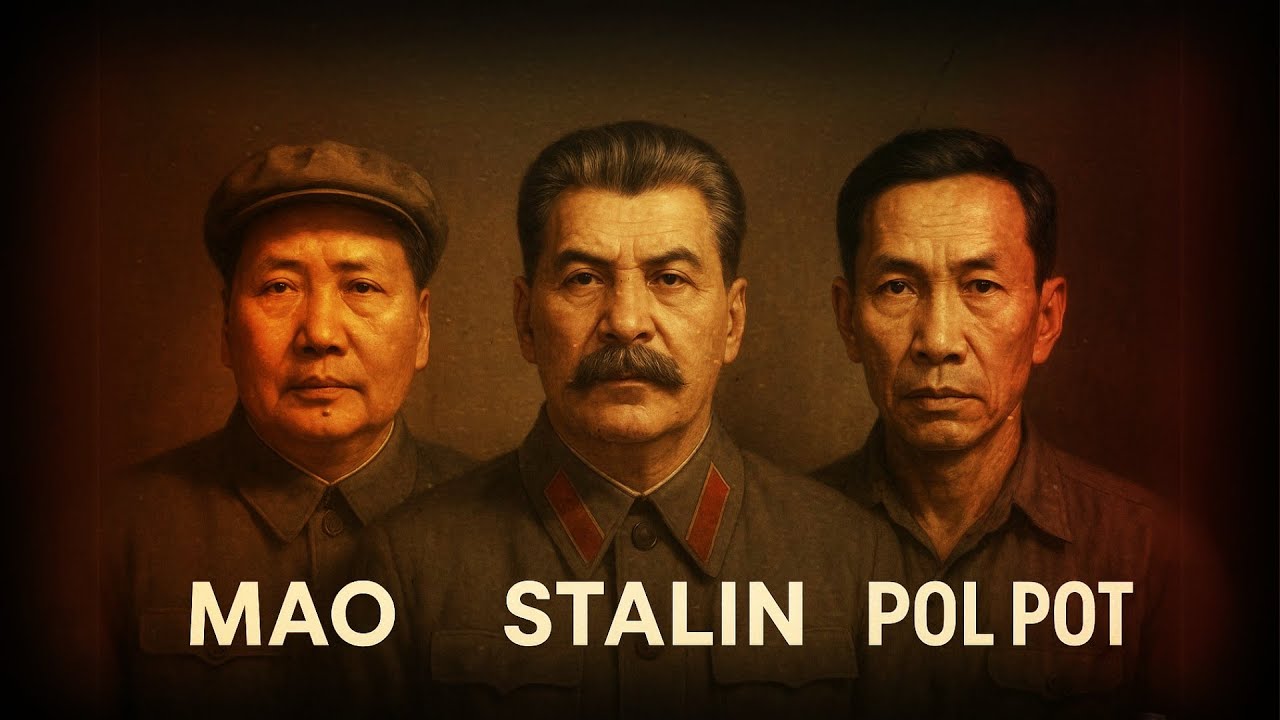
Through the brutal legacies of Stalin, Mao, and Pol Pot, we explore why communism—when turned into policy—so often collapses into tyranny. This article does not present a nuanced philosophical discussion; instead, it delivers a harsh, fact-based indictment of the historical outcomes of unchecked communist rule.

Stalin’s Soviet Union: Terror Behind the Curtain

Joseph Stalin’s reign over the Soviet Union from the 1920s to the 1950s is one of the bloodiest chapters in modern history. Rising to power after Lenin’s death, Stalin transformed the USSR into a totalitarian state through relentless purges, forced collectivization, and a cult of personality. The infamous Great Purge of the 1930s saw millions arrested, exiled, or executed under false pretenses. Even top Communist Party members and military leaders were not safe. Stalin weaponized fear to eliminate opposition, real or imagined.

Meanwhile, the forced collectivization of agriculture led to the Holodomor—an artificial famine in Ukraine that killed millions. Grain quotas were enforced with brutality, and dissenters were sent to gulags, Soviet labor camps infamous for inhumane conditions and staggering death rates. Stalin’s policies left the USSR industrialized but at the cost of tens of millions of lives. His version of communism traded freedom for fear and ideology for iron-fisted control. Any dream of equality was buried beneath the weight of state terror.

Mao’s China: Utopia Through Starvation

Mao Zedong promised a revolutionary new era for China—an end to imperialism, poverty, and inequality. Instead, he unleashed one of the deadliest social engineering experiments in history. His Great Leap Forward (1958–1962) sought rapid industrialization and agricultural reform by mobilizing peasants into communes and redirecting labor from farms to steel production. The result was catastrophic. Poor planning, inflated grain reports, and state propaganda led to mass famine. An estimated 30 to 45 million people died—many from starvation, others from execution or overwork.

But Mao didn’t stop there. In 1966, he launched the Cultural Revolution to purge capitalist and traditional elements from Chinese society. Red Guards—radical youth militia—were encouraged to attack intellectuals, destroy historical artifacts, and denounce their own families. Schools shut down. Chaos reigned. Thousands were killed, millions persecuted. Mao’s vision of communism consumed the very people it claimed to liberate. His legacy is a haunting reminder of the dangers of unchecked ideological zeal.

Pol Pot and the Khmer Rouge: Back to Year Zero

Pol Pot’s Khmer Rouge regime in Cambodia (1975–1979) took communist extremism to its most horrific extreme. Inspired by Maoist thought, Pol Pot envisioned an agrarian utopia, free from modernity, class distinctions, and even money. To realize this dream, he emptied cities, abolished currency, and forced urban dwellers into slave labor in the countryside. Intellectuals, professionals, and those who wore glasses were deemed enemies of the revolution.

What followed was genocide. Nearly a quarter of Cambodia’s population—about 1.7 to 2 million people—died from execution, starvation, disease, or overwork. The Tuol Sleng prison in Phnom Penh became infamous for torture and mass murder. Families were torn apart, religion was banned, and any sign of individuality was punished. Pol Pot’s vision of perfect equality produced unparalleled suffering. The Khmer Rouge collapsed only when Vietnam invaded and overthrew the regime in 1979, revealing a nation devastated by ideology-driven brutality.

Why “Real Communism” Always Fails

Defenders of communism often insist that the ideology has simply never been implemented “correctly.” But history suggests a different pattern: the systemic suppression of dissent, economic mismanagement, and human rights abuses appear consistently wherever communism has been tried at a national scale. Centralized planning eliminates competition and innovation. The promise of equality becomes a justification for silencing individual thought and enforcing conformity. Authoritarianism fills the power vacuum left by the dismantling of democratic institutions.

Every major communist regime has relied on propaganda, censorship, and state terror to maintain control. These aren’t accidents or betrayals of the doctrine—they are symptoms of the doctrine’s flaws when applied in the real world. The dream of a classless paradise becomes a nightmare precisely because of the unchecked power that the ideology demands. When the state owns everything, dissent becomes treason. True progress demands not blind faith in utopia, but critical thought, historical awareness, and unwavering respect for human dignity.

The Modern Myth and Its Appeal

Despite its grim history, communism still finds supporters today, often among those disillusioned with capitalism or inequality. The appeal of its promises—free healthcare, housing for all, and the end of poverty—is undeniable. But these ideals obscure the cost. The romanticization of revolution can blind people to the realities of authoritarian rule. In today’s polarized political climate, it’s more important than ever to confront history honestly and critically.

The ghosts of the 20th century’s failed revolutions should not be forgotten. Their stories serve as warnings about the seductive power of ideology and the danger of mistaking slogans for solutions. While reform is necessary in every society, extremism—whether economic, political, or ideological—inevitably breeds oppression. Only by remembering these dark chapters can we safeguard future generations from repeating the same catastrophic mistakes.

Conclusion: Never Again Forgotten

Communism, as practiced in the 20th century, promised freedom and delivered chains. The regimes of Stalin, Mao, and Pol Pot represent cautionary tales, not blueprints for justice. Their legacies should be studied not to revive their ideals, but to understand the horrors that arise when ideology overrides humanity.

This is why communism “works every time”—not in building utopias, but in creating suffering. The facts speak louder than any revolutionary chant. Let history be a mirror, not a blueprint. History has shown that when ideology overrides humanity, the cost is always measured in lives lost and freedoms destroyed.

Categories
W1 World

The Nuremberg Trials: A Landmark Quest for Justice and Accountability for Nazi Atrocities

Introduction

The Nuremberg Trials stand as a pivotal moment in the history of international law and justice, marking humanity’s first concerted effort to hold individuals accountable for war crimes and crimes against humanity. Following the end of World War II and the collapse of Nazi Germany, the world watched as leading figures of the Nazi regime were brought to trial in Nuremberg, Germany. This monumental event aimed to address the unimaginable atrocities committed during the Holocaust and the broader horrors of the war itself, which left millions dead and countless lives shattered.

As the proceedings unfolded, they not only sought justice for the victims but also aimed to establish a framework to prevent such heinous acts from occurring in the future. However, the question remains: did the Nazis face the sentences they truly deserved? This article explores the trials’ historical context, the proceedings, the verdicts, and the broader implications for justice and accountability, delving into the complexities that shaped this landmark moment in legal history.

The Historical Context

As the Allies advanced into Germany, the extent of the horrors perpetrated by the Nazis became painfully apparent. The liberation of concentration camps unveiled a stark reality that shocked the world, as images of emaciated survivors and mass graves surfaced. Adolf Hitler’s regime had orchestrated a systematic genocide, resulting in the deaths of six million Jews and millions of others deemed undesirable, including Roma, disabled individuals, and political dissidents. With Hitler dead by suicide in 1945 and the Nazi leadership in disarray, the Allied forces faced the daunting task of not only defeating a ruthless regime but also establishing a framework for justice that could address the scale of the crimes committed. This moment called for a response that was not only punitive but also restorative, aiming to heal a world ravaged by hatred and violence.

In a groundbreaking decision, the Allied powers—primarily the United States, the United Kingdom, the Soviet Union, and France—agreed to conduct a trial of key Nazi officials. This decision marked a significant departure from traditional military justice, which often focused on the defeat of enemy combatants without regard for individual accountability. The Nuremberg Trials aimed to establish legal precedents for prosecuting war crimes, fundamentally altering the landscape of international law. The trials were set against the backdrop of a world grappling with the aftermath of unprecedented violence and the moral imperative to prevent such atrocities in the future, reflecting a collective desire for accountability and a commitment to uphold human rights.

The Trials Begin

On November 20, 1945, the Nuremberg Trials commenced, with twenty-four of the most prominent Nazi leaders summoned before the International Military Tribunal (IMT). Among the defendants were key figures like Hermann Göring, Rudolf Hess, and Joachim von Ribbentrop, each representing different facets of the Nazi regime’s atrocities. This was the first time in history that individuals were held accountable on an international stage for crimes including genocide, war crimes, and crimes against peace. The proceedings not only represented a legal challenge but also an ethical one, as they sought to grapple with the moral implications of holding individuals responsible for actions taken within the context of a totalitarian state.

The prosecution, led by Chief United States Prosecutor Robert H. Jackson, presented a compelling case, utilizing extensive documentation and testimonies from survivors and former Nazis. The courtroom became a stage for revealing the depths of human depravity and the moral failings of those who participated in the Nazi machinery. The trials were broadcasted worldwide, drawing global attention and raising hopes for justice, as people from different nations tuned in to witness a critical moment in the fight against tyranny. This unprecedented visibility allowed for a broader dialogue about justice, guilt, and the nature of evil in the post-war world.

A Battle of Defenses

As the trials progressed, the atmosphere grew increasingly tense. Defendants attempted to deflect blame onto one another, claiming they were merely following orders or acting under the directives of their superiors. This “defense” of following orders raised profound ethical questions about individual accountability and the extent to which one could evade responsibility in the face of heinous acts. Some defendants, like Göring, showcased a brazen defiance, even attempting to manipulate the court proceedings to project an image of martyrdom, arguing that they were victims of political persecution rather than perpetrators of war crimes.

The prosecution faced numerous challenges, particularly in addressing the complexities of international law and establishing the legal definitions of the charges brought against the defendants. Notably, the concept of “crimes against humanity” was defined for the first time, with the trials seeking to set a precedent for future accountability. The legal strategies employed by the defense further complicated the proceedings, prompting intense discussions about the moral implications of justice, the role of government in shaping individual actions, and the necessity of accountability in a world striving for peace.

The Verdicts and Sentences

On October 1, 1946, the IMT delivered its verdicts after months of intensive hearings. Twelve defendants were sentenced to death by hanging, three were given life imprisonment, four received prison sentences ranging from 10 to 20 years, and three were acquitted. The stark contrast between the severe penalties for some and the acquittals for others sparked debates about the fairness and thoroughness of the trials. Critics argued that the proceedings favored the victors, raising questions about the impartiality of justice when the stakes were so high.

The executions of prominent figures like Göring—who famously committed suicide the night before his scheduled execution—brought a tragic and dramatic end to the trials. The outcomes, particularly the death sentences, were seen as a necessary step towards achieving justice for the victims of the Holocaust, yet they also raised critical questions about the efficacy of capital punishment as a means of delivering justice. Did these sentences serve as a deterrent for future atrocities, or did they merely symbolize the victors’ resolve to punish the vanquished? These questions lingered long after the trials concluded, shaping the discourse on justice for decades to come.

The Legacy of the Nuremberg Trials

The legacy of the Nuremberg Trials extends far beyond the verdicts and sentences; they laid the groundwork for subsequent trials and shaped international law in profound ways. The principles established during the trials influenced the creation of the Genocide Convention and the establishment of the International Criminal Court (ICC), reflecting a growing international commitment to address crimes against humanity through legal mechanisms. Moreover, the trials prompted a global conversation about human rights and the responsibility of individuals to oppose injustice, regardless of their position within a regime, fostering a collective understanding that accountability is essential for the prevention of future atrocities.

However, the trials also highlighted the limitations of justice. Many key figures, such as Adolf Eichmann, escaped capture and lived in obscurity for years before being brought to justice in other trials. This reality underscores the ongoing struggle to achieve accountability for war crimes and the persistence of impunity in various contexts. Furthermore, the Nuremberg Trials raised important questions about the adequacy of legal frameworks in addressing crimes of such magnitude, prompting ongoing discussions about reforming international law to ensure that justice is not only served but is seen to be served.

Reflection on Justice and Accountability

The question of whether the Nazis faced the sentences they deserved remains complex and multifaceted. While the Nuremberg Trials represented a landmark moment in the pursuit of justice, they did not encompass all perpetrators or address the systemic nature of the atrocities committed. Many perpetrators went unpunished, and the trials could not erase the horrors of the Holocaust or heal the deep wounds inflicted upon millions. The trials served as a reminder that legal proceedings alone cannot fully encapsulate the moral dimensions of justice; they must be complemented by efforts to remember the past and honor the victims.

Moreover, the trials prompted critical discussions about the ethics of punishment and whether the death penalty was an appropriate response to such heinous acts. Critics argue that true justice cannot be achieved solely through punitive measures; rather, it requires acknowledgment of the victims’ suffering and a commitment to prevent future atrocities through education, remembrance, and reconciliation. The Nuremberg Trials thus not only sought to punish the guilty but also aimed to lay the groundwork for a more humane and just world, emphasizing the need for a collective commitment to human rights.

Conclusion

The Nuremberg Trials marked a significant turning point in the quest for justice after the horrors of World War II. They set a precedent for holding individuals accountable for crimes against humanity and emphasized the importance of international law as a framework for addressing atrocities. While the trials achieved notable successes in terms of convictions and the establishment of legal principles, they also highlighted the complexities and challenges of delivering justice in a world fraught with political and ethical dilemmas.

Ultimately, the legacy of the Nuremberg Trials serves as a reminder of the importance of vigilance in safeguarding human rights and ensuring accountability for those who commit atrocities. As we reflect on this moment in history, it is essential to honor the memory of the victims and continue the fight against impunity, fostering a world where justice prevails over cruelty and the lessons of the past inform our collective future. The Nuremberg Trials remain a testament to the enduring struggle for justice and the moral obligation to ensure that such horrors are never repeated.

Categories
W7 World

The Holocaust: Remembering the Horror of Nazi Germany’s Genocide

Introduction

The Holocaust remains one of the most horrific events in human history, and the tactics the Nazis used to keep it hidden are a testament to the depths of their depravity. The scale of the genocide was staggering: of the approximately 9 million Jews who lived in Europe before World War II, around 6 million were murdered by the Nazis. In addition to Jews, the Nazis also targeted other groups, including Roma, homosexuals, people with disabilities, and political dissidents.

Background and Causes of the Holocaust

The Holocaust was a genocide that occurred during World War II, and it was carried out by the Nazi regime in Germany under the leadership of Adolf Hitler. The roots of the Holocaust can be traced back to the rise of the Nazi party in Germany in the 1930s. Hitler and his followers believed in the idea of racial purity and saw Jews, along with other groups such as homosexuals, Roma, and disabled people, as inferior and a threat to the Aryan race.

In 1935, the Nuremberg Laws were introduced, which stripped Jews of their citizenship and banned marriage and sexual relations between Jews and non-Jews. As the Nazi party gained more power, they began to implement more extreme measures against Jews, such as Kristallnacht, a night of coordinated violence and destruction against Jewish homes, businesses, and synagogues in November 1938.

The outbreak of World War II in 1939 provided the Nazi regime with the opportunity to implement their “Final Solution,” a plan to systematically exterminate Jews and other targeted groups. This plan involved the use of concentration camps, ghettos, and mobile killing units to round up and murder millions of people. Here are background and causes of the Holocaust in pointers:

  • The Holocaust was a genocide of Jews and other targeted groups by the Nazi regime in Germany during World War II.
  • Anti-Semitism had a long history in Europe, and the Nazis used this as a basis for their propaganda and policies.
  • The Nazis believed in the concept of Aryan supremacy and sought to create a pure, homogenous race.
  • Hitler’s rise to power and the consolidation of Nazi control over Germany allowed for the implementation of their genocidal plans.
  • The Nuremberg Laws of 1935 deprived Jews of their rights and citizenship, marking the beginning of official persecution.
  • The invasion of Poland in 1939 marked the beginning of the war and the implementation of the “Final Solution,” the systematic extermination of Jews and other targeted groups.

Key Events of the Holocaust

The Holocaust was a complex and multifaceted event that took place over several years. Some of the key events include:

  • The Nuremberg Laws (1935)
  • Kristallnacht (1938)
  • Invasion of Poland (1939)
  • Wannsee Conference (1942)
  • Auschwitz liberation (1945)

The Wannsee Conference in January 1942 was a crucial turning point in the Holocaust. During this meeting, high-ranking Nazi officials discussed the implementation of the “Final Solution” and the coordination of efforts to deport and murder Jews across Europe.

The liberation of Auschwitz in January 1945 marked the beginning of the end of the Holocaust. The Soviet Red Army freed thousands of prisoners from the largest Nazi concentration and extermination camp, revealing the true extent of the horrors that had taken place. Here are Key events of the Holocaust in pointers:

  • The Nuremberg Laws of 1935 deprived Jews of their rights and citizenship.
  • Kristallnacht, or the “Night of Broken Glass,” occurred in 1938, marking a turning point in the violence against Jews.
  • The invasion of Poland in 1939 marked the beginning of the war and the implementation of the “Final Solution.”
  • Jews and other targeted groups were rounded up and transported to ghettos and concentration camps, where they were subjected to forced labor, starvation, and medical experiments.
  • The Wannsee Conference in 1942 marked the formalization of the “Final Solution” and the decision to implement mass extermination in gas chambers.
  • The liberation of the concentration camps by Allied forces in 1945 marked the end of the Holocaust.

Impact of the Holocaust

The impact of the Holocaust was profound and far-reaching, both in terms of the human toll and its lasting effects on society. The Holocaust resulted in the deaths of approximately 6 million Jews, as well as millions of other targeted groups such as Roma, homosexuals, and disabled people.

The Holocaust also had a significant impact on international law and human rights. The Nuremberg Trials, held after the war, established the principle of individual accountability for war crimes, and paved the way for the development of international criminal law. Here is impact of the Holocaust in pointers:

  • The Holocaust resulted in the deaths of approximately 6 million Jews and other targeted groups, including Romani, homosexuals, disabled individuals, and political dissidents.
  • The Holocaust had a profound impact on Jewish culture and identity, leading to the establishment of the state of Israel in 1948.
  • The Nuremberg Trials held after the war established the legal precedent for prosecuting individuals for crimes against humanity.
  • The Holocaust remains a haunting reminder of the dangers of hatred and discrimination, and serves as a call to action for the prevention of genocide and human rights violations.

The Nazis’ Tactics to Conceal Their Crimes

The Nazis’ efforts to conceal their crimes were chillingly effective. They censored all forms of communication, both within Germany and with the outside world, to prevent information about the concentration camps from leaking out. They also used propaganda to portray Jews and other groups as subhuman, making it easier for ordinary Germans to turn a blind eye to the atrocities.

Physical evidence of the genocide was also carefully hidden. The Nazis destroyed documents, burned bodies, and even dug up mass graves to burn the corpses and hide their tracks. They also disguised gas chambers as shower rooms to trick victims into thinking they were being deloused.

The concentration camps themselves were located in remote areas or behind high walls, and the few outsiders who were allowed in were carefully selected and shown only what the Nazis wanted them to see. Visitors were often taken on tours of the camp that excluded areas where prisoners were mistreated or killed.

One of the most insidious tactics the Nazis used was the dehumanization of the victims. By portraying Jews and other groups as subhuman, the Nazis were able to justify their treatment and make it easier for ordinary Germans to turn a blind eye to what was happening. The victims were stripped of their names and identities, reduced to mere numbers on a tattooed arm.

Despite all these efforts, some people managed to get information out of the camps and alert the world to what was happening. The diary of Anne Frank is one of the most famous examples. Her diary, which was published after her death, became a powerful symbol of the Holocaust and a reminder of the importance of speaking out against injustice.

It was only after the Allied forces liberated the concentration camps and exposed the horrors of the Holocaust to the world that the true scale of the genocide became known. The Nuremberg Trials, which were held after the war, brought many of the Nazi leaders to justice and established the principle of holding individuals accountable for crimes against humanity.

Horrific Stories of the Holocaust

The systematic genocide of millions of Jews, Roma, homosexuals, people with disabilities, and political dissidents by the Nazis during World War II remains one of the most horrific events in human history. The scale of the genocide was staggering, with approximately 6 million Jews murdered along with millions of others. Here are a few stories that highlight the tactics used by the Nazis to conceal their crimes during the Holocaust:

  1. The systematic genocide of Jews, Roma, homosexuals, people with disabilities, and political dissidents by the Nazis during World War II is one of the most horrific events in human history. Approximately 6 million Jews were murdered, along with millions of others.
  2. The Nazis used various tactics to conceal their crimes, including censorship of communication to prevent information from leaking out, propaganda to portray the victims as subhuman, and destruction of physical evidence.
  3. The concentration camps were located in remote areas or behind high walls, and visitors were carefully selected and shown only what the Nazis wanted them to see.
  4. The victims were stripped of their names and identities, reduced to mere numbers on a tattooed arm. This dehumanization made it easier for the Nazis to justify their treatment of the victims.
  5. Despite the Nazis’ efforts, some individuals managed to get information out of the camps and alert the world to what was happening, such as the publication of Anne Frank’s diary after her death.
  6. It was only after the Allied forces liberated the concentration camps that the true scale of the genocide became known. The Nuremberg Trials held after the war brought many Nazi leaders to justice.
  7. The Holocaust serves as a reminder of the dangers of hate and intolerance and a call to action to never forget the lessons of history.
  8. The resilience of the human spirit in the face of unimaginable suffering is exemplified by the survivors of the Holocaust.
  9. The memory of the Holocaust is kept alive through memorials and museums around the world, as well as education efforts to ensure that such atrocities never happen again.
  10. Continued efforts are needed to combat hate and intolerance in all forms and promote understanding and empathy among all people.

The memory of the Holocaust is kept alive through memorials and museums around the world, as well as education efforts to ensure that such atrocities never happen again. It serves as a reminder of the dangers of hate and intolerance and a call to action to never forget the lessons of history. By continuing to combat hate and intolerance and promoting understanding and empathy among all people, we can build a better future for ourselves and future generations.

Conclusion

The Holocaust was a tragic and horrific event in human history, resulting in the deaths of millions of people and leaving a lasting impact on society. It is important to remember and honor the victims of the Holocaust, and to continue to educate future generations about the dangers of hatred, prejudice, and discrimination. Today, the Holocaust remains a stark reminder of the dangers of hate and intolerance. It is a testament to the resilience of the human spirit in the face of unimaginable suffering and a call to action to never forget the lessons of history. By confronting the darkness of the past, we can build a better future for ourselves and generations to come.

FAQs

What was the Holocaust? The Holocaust was a systematic genocide of Jews and other targeted groups by the Nazi regime in Germany during World War II. Approximately 6 million people were killed during this period.

Who were the targeted groups in the Holocaust? The primary targeted group in the Holocaust were Jews, but other groups such as Roma, disabled individuals, homosexuals, and political dissidents were also targeted by the Nazi regime.

What were the causes of the Holocaust? The Holocaust was a result of a combination of factors, including anti-Semitism, economic hardship, and the rise of Nazi ideology and power in Germany.

How were Jews and other targeted groups treated during the Holocaust? Jews and other targeted groups were subjected to brutal treatment, including forced labor, imprisonment in concentration camps, and ultimately, extermination in gas chambers.

What was the international response to the Holocaust? The international response to the Holocaust was limited, with many countries failing to intervene or take action to stop the atrocities being committed. It was not until the end of World War II that the full extent of the Holocaust was revealed to the world.

What is the legacy of the Holocaust? The legacy of the Holocaust is a somber reminder of the atrocities that can occur when intolerance and hate go unchecked. It has had a profound impact on society, inspiring efforts to promote human rights and combat prejudice and discrimination.