Categories
W1 World

Why Communism Works: A Brutal Satire of Utopian Promises, Totalitarian Realities

Introduction: The Price of Utopia

Communism, in its ideal form, promises a classless, stateless society built on cooperation and equality. It offers a dream of shared resources, the abolition of exploitation, and freedom from capitalist oppression. But history tells a darker tale. In practice, this utopian vision often gives rise to authoritarian regimes, mass suffering, and horrifying loss of life.

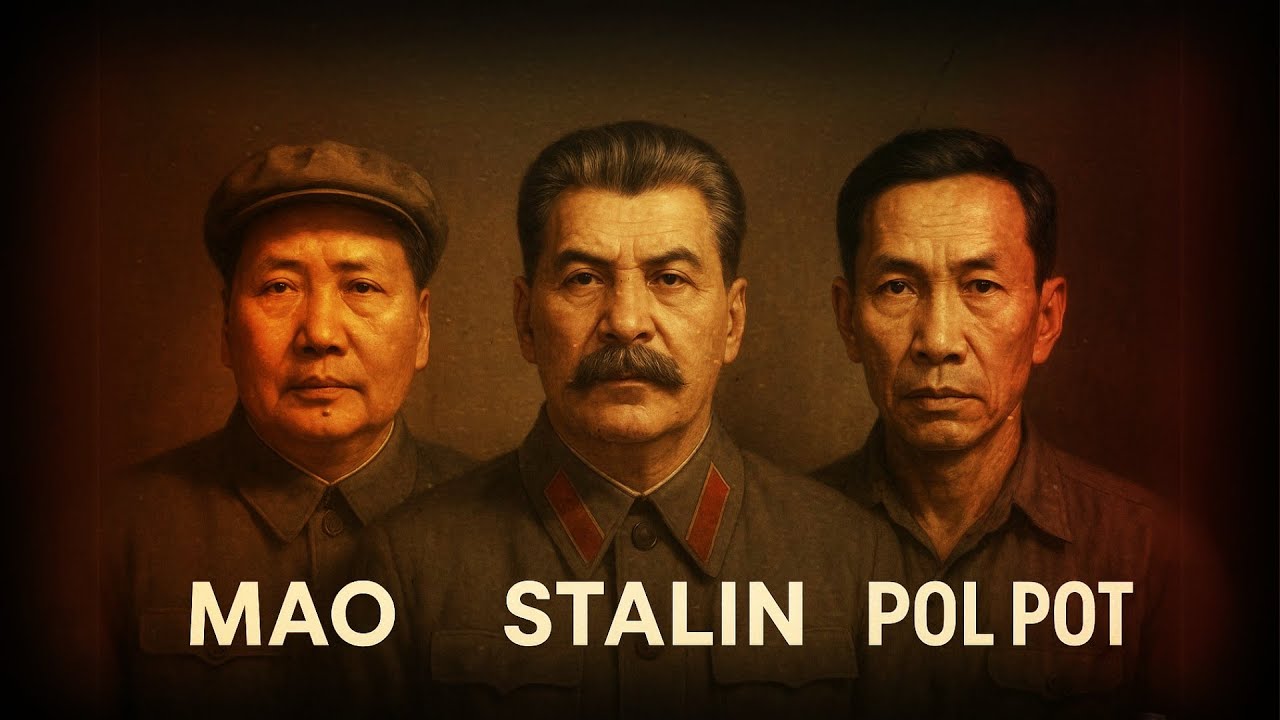
Through the brutal legacies of Stalin, Mao, and Pol Pot, we explore why communism—when turned into policy—so often collapses into tyranny. This article does not present a nuanced philosophical discussion; instead, it delivers a harsh, fact-based indictment of the historical outcomes of unchecked communist rule.

Stalin’s Soviet Union: Terror Behind the Curtain

Joseph Stalin’s reign over the Soviet Union from the 1920s to the 1950s is one of the bloodiest chapters in modern history. Rising to power after Lenin’s death, Stalin transformed the USSR into a totalitarian state through relentless purges, forced collectivization, and a cult of personality. The infamous Great Purge of the 1930s saw millions arrested, exiled, or executed under false pretenses. Even top Communist Party members and military leaders were not safe. Stalin weaponized fear to eliminate opposition, real or imagined.

Meanwhile, the forced collectivization of agriculture led to the Holodomor—an artificial famine in Ukraine that killed millions. Grain quotas were enforced with brutality, and dissenters were sent to gulags, Soviet labor camps infamous for inhumane conditions and staggering death rates. Stalin’s policies left the USSR industrialized but at the cost of tens of millions of lives. His version of communism traded freedom for fear and ideology for iron-fisted control. Any dream of equality was buried beneath the weight of state terror.

Mao’s China: Utopia Through Starvation

Mao Zedong promised a revolutionary new era for China—an end to imperialism, poverty, and inequality. Instead, he unleashed one of the deadliest social engineering experiments in history. His Great Leap Forward (1958–1962) sought rapid industrialization and agricultural reform by mobilizing peasants into communes and redirecting labor from farms to steel production. The result was catastrophic. Poor planning, inflated grain reports, and state propaganda led to mass famine. An estimated 30 to 45 million people died—many from starvation, others from execution or overwork.

But Mao didn’t stop there. In 1966, he launched the Cultural Revolution to purge capitalist and traditional elements from Chinese society. Red Guards—radical youth militia—were encouraged to attack intellectuals, destroy historical artifacts, and denounce their own families. Schools shut down. Chaos reigned. Thousands were killed, millions persecuted. Mao’s vision of communism consumed the very people it claimed to liberate. His legacy is a haunting reminder of the dangers of unchecked ideological zeal.

Pol Pot and the Khmer Rouge: Back to Year Zero

Pol Pot’s Khmer Rouge regime in Cambodia (1975–1979) took communist extremism to its most horrific extreme. Inspired by Maoist thought, Pol Pot envisioned an agrarian utopia, free from modernity, class distinctions, and even money. To realize this dream, he emptied cities, abolished currency, and forced urban dwellers into slave labor in the countryside. Intellectuals, professionals, and those who wore glasses were deemed enemies of the revolution.

What followed was genocide. Nearly a quarter of Cambodia’s population—about 1.7 to 2 million people—died from execution, starvation, disease, or overwork. The Tuol Sleng prison in Phnom Penh became infamous for torture and mass murder. Families were torn apart, religion was banned, and any sign of individuality was punished. Pol Pot’s vision of perfect equality produced unparalleled suffering. The Khmer Rouge collapsed only when Vietnam invaded and overthrew the regime in 1979, revealing a nation devastated by ideology-driven brutality.

Why “Real Communism” Always Fails

Defenders of communism often insist that the ideology has simply never been implemented “correctly.” But history suggests a different pattern: the systemic suppression of dissent, economic mismanagement, and human rights abuses appear consistently wherever communism has been tried at a national scale. Centralized planning eliminates competition and innovation. The promise of equality becomes a justification for silencing individual thought and enforcing conformity. Authoritarianism fills the power vacuum left by the dismantling of democratic institutions.

Every major communist regime has relied on propaganda, censorship, and state terror to maintain control. These aren’t accidents or betrayals of the doctrine—they are symptoms of the doctrine’s flaws when applied in the real world. The dream of a classless paradise becomes a nightmare precisely because of the unchecked power that the ideology demands. When the state owns everything, dissent becomes treason. True progress demands not blind faith in utopia, but critical thought, historical awareness, and unwavering respect for human dignity.

The Modern Myth and Its Appeal

Despite its grim history, communism still finds supporters today, often among those disillusioned with capitalism or inequality. The appeal of its promises—free healthcare, housing for all, and the end of poverty—is undeniable. But these ideals obscure the cost. The romanticization of revolution can blind people to the realities of authoritarian rule. In today’s polarized political climate, it’s more important than ever to confront history honestly and critically.

The ghosts of the 20th century’s failed revolutions should not be forgotten. Their stories serve as warnings about the seductive power of ideology and the danger of mistaking slogans for solutions. While reform is necessary in every society, extremism—whether economic, political, or ideological—inevitably breeds oppression. Only by remembering these dark chapters can we safeguard future generations from repeating the same catastrophic mistakes.

Conclusion: Never Again Forgotten

Communism, as practiced in the 20th century, promised freedom and delivered chains. The regimes of Stalin, Mao, and Pol Pot represent cautionary tales, not blueprints for justice. Their legacies should be studied not to revive their ideals, but to understand the horrors that arise when ideology overrides humanity.

This is why communism “works every time”—not in building utopias, but in creating suffering. The facts speak louder than any revolutionary chant. Let history be a mirror, not a blueprint. History has shown that when ideology overrides humanity, the cost is always measured in lives lost and freedoms destroyed.

Categories
W1 World

The Origins of Concentration Camps: Unraveling the Shadows of a Dark Chapter in Human History

Introduction

When the term “concentration camps” is mentioned, the immediate association for many is World War II and the chilling names of infamous facilities like Auschwitz, Dachau, Buchenwald, Mauthausen, and Treblinka. The haunting imagery of trains packed with Jewish men, women, and children unloading their human cargo destined for gas chambers and crematoria occupies a prominent place in collective memory. However, this perception obscures several critical historical facts that are essential for a comprehensive understanding of these institutions.

Notably, there exists a significant difference between concentration camps, intended primarily for forced labor, and death camps, dedicated extermination centers where mass murder occurred. Importantly, it is essential to recognize that Germany did not invent the concept of concentration camps as we know it today; rather, the origins of such facilities can be traced back to earlier conflicts, ideologies, and political contexts that set the stage for the atrocities of the Holocaust.

Early Instances of Concentration Camps

The roots of concentration camps can be traced back to the late 19th and early 20th centuries, long before the rise of Nazi Germany and the events of World War II. One of the earliest and most notable examples occurred during the Second Boer War (1899-1902) in South Africa, where the British established camps to detain Boer civilians, particularly women and children. This strategy was aimed at undermining the Boer guerrilla fighters by removing their support base.

The conditions in these camps were deplorable, leading to the deaths of thousands due to rampant disease, malnutrition, and inadequate sanitation. In essence, this marked the first significant use of concentration camps in modern warfare, driven by the desire to control a civilian population and disrupt enemy operations. The lessons learned from these early camps would later inform the design and operation of concentration camps during World War II.

The Impact of World War I

The aftermath of World War I saw further developments in the use of concentration camps as a means of controlling and containing populations deemed undesirable by various governments. The Treaty of Versailles imposed harsh penalties on Germany, creating a fertile ground for resentment and political extremism. Various countries, including those in Eastern Europe and the newly formed states after the war, began utilizing concentration camps to detain political dissidents, ethnic minorities, and even former soldiers.

These facilities were often characterized by overcrowding, poor sanitation, and human rights abuses, laying the groundwork for the systematic approaches to mass incarceration that would later manifest in Nazi Germany. The ideological underpinnings of these camps were often rooted in nationalism, racism, and the belief that certain groups were threats to societal stability.

The Rise of the Nazi Regime

The establishment of the Nazi regime in Germany in the early 1930s marked a significant escalation in the use of concentration camps. Initially, these camps were designed to detain political opponents, particularly Communists and Socialists, as well as other groups deemed undesirable by the regime, including Jews, Roma, and homosexuals. The first concentration camp, Dachau, opened in 1933 and served as a model for future facilities, establishing a grim standard for the treatment of inmates.

The Nazis refined the camp system, implementing strict discipline, forced labor, and brutal treatment of prisoners. In these early camps, inmates were subjected to horrific conditions, including beatings, torture, and executions, reflecting the regime’s totalitarian ethos. The propaganda surrounding these camps often depicted them as necessary for maintaining social order, masking the brutal reality of life inside.

Differentiating Concentration Camps and Extermination Camps

Understanding the critical difference between concentration camps and extermination camps is crucial for grasping the full scope of the atrocities committed during the Holocaust. Concentration camps primarily functioned as labor camps where inmates were subjected to forced labor under horrific conditions. Inmates were often worked to the point of exhaustion and death, with little regard for their welfare. These camps were seen by the Nazi regime as a means of extracting economic value from imprisoned populations, particularly Jews, Roma, and political dissidents.

In contrast, extermination camps were specifically designed for mass murder. Facilities such as Auschwitz-Birkenau, Sobibor, and Treblinka were built solely for the purpose of systematic extermination. Inmates arriving at these camps were often met with deception, as they were told they were being relocated for labor. Instead, they were sent directly to gas chambers, where millions perished in horrific conditions. The operational efficiency of extermination camps was horrifyingly methodical, with advanced technology employed to facilitate mass killings, making the Holocaust one of the most organized and industrialized genocides in history.

The Expansion of the Concentration Camp System

As World War II progressed, the Nazi regime expanded its concentration camp system significantly, utilizing the infrastructure established during the early years of their rule. The onset of the war and the subsequent invasion of various European countries allowed for the establishment of new camps across occupied territories, leading to the internment of millions. The Einsatzgruppen, mobile killing units, were deployed to conduct mass shootings, particularly targeting Jews and other perceived enemies of the state.

The concentration camp system evolved into a vast network of incarceration and extermination facilities, encompassing millions of victims. By the end of the war, an estimated 11 million people, including 6 million Jews, had been murdered as part of the Holocaust. The sheer scale and brutality of these operations shocked the world and revealed the depths of human cruelty.

International Response and Human Rights Violations

The existence and operation of concentration camps during the Holocaust raised significant moral and ethical questions that continue to resonate today. While some governments and organizations condemned these practices, the global response was often insufficient, marred by political complexities and prejudices. Many countries remained indifferent to the plight of those imprisoned, and information about the camps was frequently dismissed as propaganda or exaggerated reports.

Human rights organizations struggled to raise awareness, as the scale of the atrocities made it difficult for the international community to comprehend the reality. It wasn’t until the post-war period, with the full revelation of the horrors of the Holocaust, that the international community began to grapple with the implications of such human rights violations, leading to the establishment of the Universal Declaration of Human Rights in 1948.

The Legacy of Concentration Camps

The legacy of concentration camps extends far beyond World War II and the Holocaust. The term has since been used to describe various forms of mass incarceration and political repression throughout history. Countries across the globe have utilized concentration camps or similar facilities to detain dissidents, ethnic minorities, and others viewed as threats to state security.

The implications of such practices continue to reverberate in contemporary discussions surrounding human rights, immigration policies, and state violence. The lessons learned from the history of concentration camps serve as a powerful reminder of the need for vigilance in protecting human rights and dignity, particularly in times of political unrest and societal division.

Conclusion

The origins of concentration camps reveal a complex and harrowing history that predates the Holocaust. While World War II and the atrocities committed within camps like Auschwitz have become synonymous with the term, it is essential to understand the broader context of concentration camps as tools of oppression, control, and extermination. Acknowledging this history is crucial not only for remembering the victims of the past but also for preventing similar atrocities in the future.

The lessons learned from the origins and implications of concentration camps must serve as a reminder of the need for vigilance in protecting human rights and dignity for all individuals, regardless of their background or beliefs. Understanding the historical trajectory of these camps is essential in fostering a culture of remembrance and resilience against the forces of hatred and intolerance in our society.

Categories
W7 World

The Holocaust: Remembering the Horror of Nazi Germany’s Genocide

Introduction

The Holocaust remains one of the most horrific events in human history, and the tactics the Nazis used to keep it hidden are a testament to the depths of their depravity. The scale of the genocide was staggering: of the approximately 9 million Jews who lived in Europe before World War II, around 6 million were murdered by the Nazis. In addition to Jews, the Nazis also targeted other groups, including Roma, homosexuals, people with disabilities, and political dissidents.

Background and Causes of the Holocaust

The Holocaust was a genocide that occurred during World War II, and it was carried out by the Nazi regime in Germany under the leadership of Adolf Hitler. The roots of the Holocaust can be traced back to the rise of the Nazi party in Germany in the 1930s. Hitler and his followers believed in the idea of racial purity and saw Jews, along with other groups such as homosexuals, Roma, and disabled people, as inferior and a threat to the Aryan race.

In 1935, the Nuremberg Laws were introduced, which stripped Jews of their citizenship and banned marriage and sexual relations between Jews and non-Jews. As the Nazi party gained more power, they began to implement more extreme measures against Jews, such as Kristallnacht, a night of coordinated violence and destruction against Jewish homes, businesses, and synagogues in November 1938.

The outbreak of World War II in 1939 provided the Nazi regime with the opportunity to implement their “Final Solution,” a plan to systematically exterminate Jews and other targeted groups. This plan involved the use of concentration camps, ghettos, and mobile killing units to round up and murder millions of people. Here are background and causes of the Holocaust in pointers:

  • The Holocaust was a genocide of Jews and other targeted groups by the Nazi regime in Germany during World War II.
  • Anti-Semitism had a long history in Europe, and the Nazis used this as a basis for their propaganda and policies.
  • The Nazis believed in the concept of Aryan supremacy and sought to create a pure, homogenous race.
  • Hitler’s rise to power and the consolidation of Nazi control over Germany allowed for the implementation of their genocidal plans.
  • The Nuremberg Laws of 1935 deprived Jews of their rights and citizenship, marking the beginning of official persecution.
  • The invasion of Poland in 1939 marked the beginning of the war and the implementation of the “Final Solution,” the systematic extermination of Jews and other targeted groups.

Key Events of the Holocaust

The Holocaust was a complex and multifaceted event that took place over several years. Some of the key events include:

  • The Nuremberg Laws (1935)
  • Kristallnacht (1938)
  • Invasion of Poland (1939)
  • Wannsee Conference (1942)
  • Auschwitz liberation (1945)

The Wannsee Conference in January 1942 was a crucial turning point in the Holocaust. During this meeting, high-ranking Nazi officials discussed the implementation of the “Final Solution” and the coordination of efforts to deport and murder Jews across Europe.

The liberation of Auschwitz in January 1945 marked the beginning of the end of the Holocaust. The Soviet Red Army freed thousands of prisoners from the largest Nazi concentration and extermination camp, revealing the true extent of the horrors that had taken place. Here are Key events of the Holocaust in pointers:

  • The Nuremberg Laws of 1935 deprived Jews of their rights and citizenship.
  • Kristallnacht, or the “Night of Broken Glass,” occurred in 1938, marking a turning point in the violence against Jews.
  • The invasion of Poland in 1939 marked the beginning of the war and the implementation of the “Final Solution.”
  • Jews and other targeted groups were rounded up and transported to ghettos and concentration camps, where they were subjected to forced labor, starvation, and medical experiments.
  • The Wannsee Conference in 1942 marked the formalization of the “Final Solution” and the decision to implement mass extermination in gas chambers.
  • The liberation of the concentration camps by Allied forces in 1945 marked the end of the Holocaust.

Impact of the Holocaust

The impact of the Holocaust was profound and far-reaching, both in terms of the human toll and its lasting effects on society. The Holocaust resulted in the deaths of approximately 6 million Jews, as well as millions of other targeted groups such as Roma, homosexuals, and disabled people.

The Holocaust also had a significant impact on international law and human rights. The Nuremberg Trials, held after the war, established the principle of individual accountability for war crimes, and paved the way for the development of international criminal law. Here is impact of the Holocaust in pointers:

  • The Holocaust resulted in the deaths of approximately 6 million Jews and other targeted groups, including Romani, homosexuals, disabled individuals, and political dissidents.
  • The Holocaust had a profound impact on Jewish culture and identity, leading to the establishment of the state of Israel in 1948.
  • The Nuremberg Trials held after the war established the legal precedent for prosecuting individuals for crimes against humanity.
  • The Holocaust remains a haunting reminder of the dangers of hatred and discrimination, and serves as a call to action for the prevention of genocide and human rights violations.

The Nazis’ Tactics to Conceal Their Crimes

The Nazis’ efforts to conceal their crimes were chillingly effective. They censored all forms of communication, both within Germany and with the outside world, to prevent information about the concentration camps from leaking out. They also used propaganda to portray Jews and other groups as subhuman, making it easier for ordinary Germans to turn a blind eye to the atrocities.

Physical evidence of the genocide was also carefully hidden. The Nazis destroyed documents, burned bodies, and even dug up mass graves to burn the corpses and hide their tracks. They also disguised gas chambers as shower rooms to trick victims into thinking they were being deloused.

The concentration camps themselves were located in remote areas or behind high walls, and the few outsiders who were allowed in were carefully selected and shown only what the Nazis wanted them to see. Visitors were often taken on tours of the camp that excluded areas where prisoners were mistreated or killed.

One of the most insidious tactics the Nazis used was the dehumanization of the victims. By portraying Jews and other groups as subhuman, the Nazis were able to justify their treatment and make it easier for ordinary Germans to turn a blind eye to what was happening. The victims were stripped of their names and identities, reduced to mere numbers on a tattooed arm.

Despite all these efforts, some people managed to get information out of the camps and alert the world to what was happening. The diary of Anne Frank is one of the most famous examples. Her diary, which was published after her death, became a powerful symbol of the Holocaust and a reminder of the importance of speaking out against injustice.

It was only after the Allied forces liberated the concentration camps and exposed the horrors of the Holocaust to the world that the true scale of the genocide became known. The Nuremberg Trials, which were held after the war, brought many of the Nazi leaders to justice and established the principle of holding individuals accountable for crimes against humanity.

Horrific Stories of the Holocaust

The systematic genocide of millions of Jews, Roma, homosexuals, people with disabilities, and political dissidents by the Nazis during World War II remains one of the most horrific events in human history. The scale of the genocide was staggering, with approximately 6 million Jews murdered along with millions of others. Here are a few stories that highlight the tactics used by the Nazis to conceal their crimes during the Holocaust:

  1. The systematic genocide of Jews, Roma, homosexuals, people with disabilities, and political dissidents by the Nazis during World War II is one of the most horrific events in human history. Approximately 6 million Jews were murdered, along with millions of others.
  2. The Nazis used various tactics to conceal their crimes, including censorship of communication to prevent information from leaking out, propaganda to portray the victims as subhuman, and destruction of physical evidence.
  3. The concentration camps were located in remote areas or behind high walls, and visitors were carefully selected and shown only what the Nazis wanted them to see.
  4. The victims were stripped of their names and identities, reduced to mere numbers on a tattooed arm. This dehumanization made it easier for the Nazis to justify their treatment of the victims.
  5. Despite the Nazis’ efforts, some individuals managed to get information out of the camps and alert the world to what was happening, such as the publication of Anne Frank’s diary after her death.
  6. It was only after the Allied forces liberated the concentration camps that the true scale of the genocide became known. The Nuremberg Trials held after the war brought many Nazi leaders to justice.
  7. The Holocaust serves as a reminder of the dangers of hate and intolerance and a call to action to never forget the lessons of history.
  8. The resilience of the human spirit in the face of unimaginable suffering is exemplified by the survivors of the Holocaust.
  9. The memory of the Holocaust is kept alive through memorials and museums around the world, as well as education efforts to ensure that such atrocities never happen again.
  10. Continued efforts are needed to combat hate and intolerance in all forms and promote understanding and empathy among all people.

The memory of the Holocaust is kept alive through memorials and museums around the world, as well as education efforts to ensure that such atrocities never happen again. It serves as a reminder of the dangers of hate and intolerance and a call to action to never forget the lessons of history. By continuing to combat hate and intolerance and promoting understanding and empathy among all people, we can build a better future for ourselves and future generations.

Conclusion

The Holocaust was a tragic and horrific event in human history, resulting in the deaths of millions of people and leaving a lasting impact on society. It is important to remember and honor the victims of the Holocaust, and to continue to educate future generations about the dangers of hatred, prejudice, and discrimination. Today, the Holocaust remains a stark reminder of the dangers of hate and intolerance. It is a testament to the resilience of the human spirit in the face of unimaginable suffering and a call to action to never forget the lessons of history. By confronting the darkness of the past, we can build a better future for ourselves and generations to come.

FAQs

What was the Holocaust? The Holocaust was a systematic genocide of Jews and other targeted groups by the Nazi regime in Germany during World War II. Approximately 6 million people were killed during this period.

Who were the targeted groups in the Holocaust? The primary targeted group in the Holocaust were Jews, but other groups such as Roma, disabled individuals, homosexuals, and political dissidents were also targeted by the Nazi regime.

What were the causes of the Holocaust? The Holocaust was a result of a combination of factors, including anti-Semitism, economic hardship, and the rise of Nazi ideology and power in Germany.

How were Jews and other targeted groups treated during the Holocaust? Jews and other targeted groups were subjected to brutal treatment, including forced labor, imprisonment in concentration camps, and ultimately, extermination in gas chambers.

What was the international response to the Holocaust? The international response to the Holocaust was limited, with many countries failing to intervene or take action to stop the atrocities being committed. It was not until the end of World War II that the full extent of the Holocaust was revealed to the world.

What is the legacy of the Holocaust? The legacy of the Holocaust is a somber reminder of the atrocities that can occur when intolerance and hate go unchecked. It has had a profound impact on society, inspiring efforts to promote human rights and combat prejudice and discrimination.