Categories
W1 World

Why Communism Works: A Brutal Satire of Utopian Promises, Totalitarian Realities

Introduction: The Price of Utopia

Communism, in its ideal form, promises a classless, stateless society built on cooperation and equality. It offers a dream of shared resources, the abolition of exploitation, and freedom from capitalist oppression. But history tells a darker tale. In practice, this utopian vision often gives rise to authoritarian regimes, mass suffering, and horrifying loss of life.

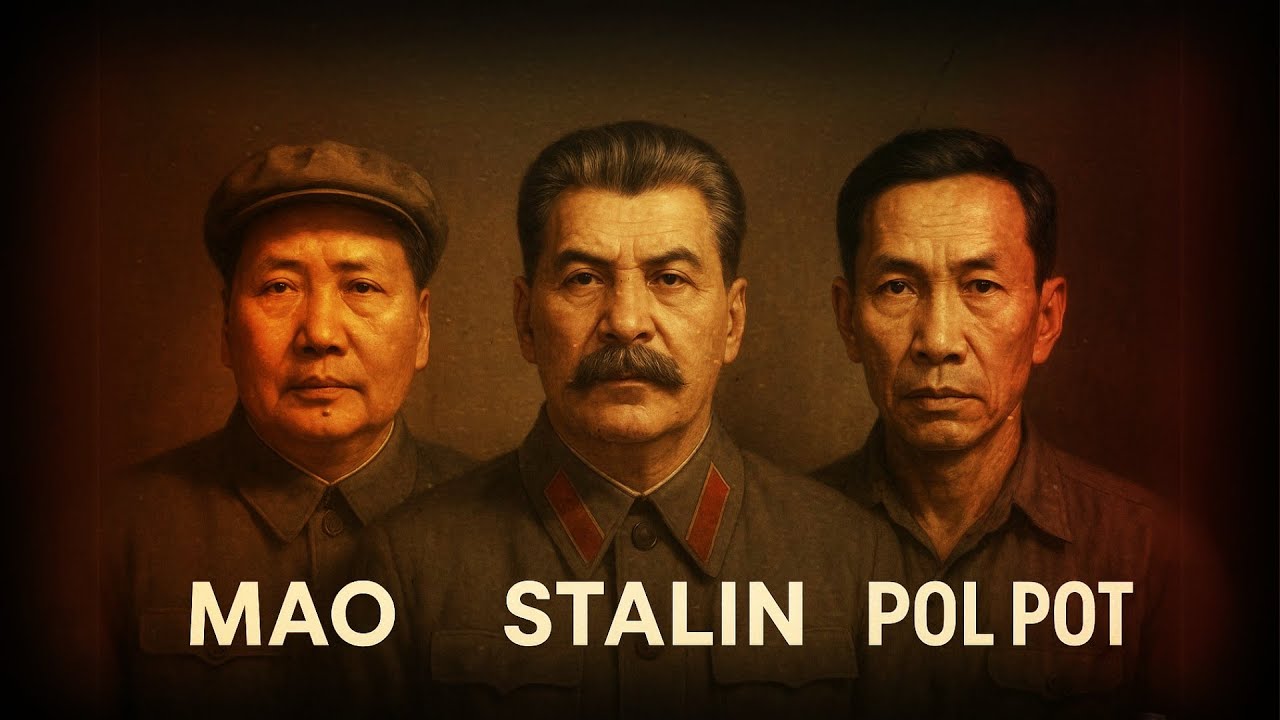
Through the brutal legacies of Stalin, Mao, and Pol Pot, we explore why communism—when turned into policy—so often collapses into tyranny. This article does not present a nuanced philosophical discussion; instead, it delivers a harsh, fact-based indictment of the historical outcomes of unchecked communist rule.

Stalin’s Soviet Union: Terror Behind the Curtain

Joseph Stalin’s reign over the Soviet Union from the 1920s to the 1950s is one of the bloodiest chapters in modern history. Rising to power after Lenin’s death, Stalin transformed the USSR into a totalitarian state through relentless purges, forced collectivization, and a cult of personality. The infamous Great Purge of the 1930s saw millions arrested, exiled, or executed under false pretenses. Even top Communist Party members and military leaders were not safe. Stalin weaponized fear to eliminate opposition, real or imagined.

Meanwhile, the forced collectivization of agriculture led to the Holodomor—an artificial famine in Ukraine that killed millions. Grain quotas were enforced with brutality, and dissenters were sent to gulags, Soviet labor camps infamous for inhumane conditions and staggering death rates. Stalin’s policies left the USSR industrialized but at the cost of tens of millions of lives. His version of communism traded freedom for fear and ideology for iron-fisted control. Any dream of equality was buried beneath the weight of state terror.

Mao’s China: Utopia Through Starvation

Mao Zedong promised a revolutionary new era for China—an end to imperialism, poverty, and inequality. Instead, he unleashed one of the deadliest social engineering experiments in history. His Great Leap Forward (1958–1962) sought rapid industrialization and agricultural reform by mobilizing peasants into communes and redirecting labor from farms to steel production. The result was catastrophic. Poor planning, inflated grain reports, and state propaganda led to mass famine. An estimated 30 to 45 million people died—many from starvation, others from execution or overwork.

But Mao didn’t stop there. In 1966, he launched the Cultural Revolution to purge capitalist and traditional elements from Chinese society. Red Guards—radical youth militia—were encouraged to attack intellectuals, destroy historical artifacts, and denounce their own families. Schools shut down. Chaos reigned. Thousands were killed, millions persecuted. Mao’s vision of communism consumed the very people it claimed to liberate. His legacy is a haunting reminder of the dangers of unchecked ideological zeal.

Pol Pot and the Khmer Rouge: Back to Year Zero

Pol Pot’s Khmer Rouge regime in Cambodia (1975–1979) took communist extremism to its most horrific extreme. Inspired by Maoist thought, Pol Pot envisioned an agrarian utopia, free from modernity, class distinctions, and even money. To realize this dream, he emptied cities, abolished currency, and forced urban dwellers into slave labor in the countryside. Intellectuals, professionals, and those who wore glasses were deemed enemies of the revolution.

What followed was genocide. Nearly a quarter of Cambodia’s population—about 1.7 to 2 million people—died from execution, starvation, disease, or overwork. The Tuol Sleng prison in Phnom Penh became infamous for torture and mass murder. Families were torn apart, religion was banned, and any sign of individuality was punished. Pol Pot’s vision of perfect equality produced unparalleled suffering. The Khmer Rouge collapsed only when Vietnam invaded and overthrew the regime in 1979, revealing a nation devastated by ideology-driven brutality.

Why “Real Communism” Always Fails

Defenders of communism often insist that the ideology has simply never been implemented “correctly.” But history suggests a different pattern: the systemic suppression of dissent, economic mismanagement, and human rights abuses appear consistently wherever communism has been tried at a national scale. Centralized planning eliminates competition and innovation. The promise of equality becomes a justification for silencing individual thought and enforcing conformity. Authoritarianism fills the power vacuum left by the dismantling of democratic institutions.

Every major communist regime has relied on propaganda, censorship, and state terror to maintain control. These aren’t accidents or betrayals of the doctrine—they are symptoms of the doctrine’s flaws when applied in the real world. The dream of a classless paradise becomes a nightmare precisely because of the unchecked power that the ideology demands. When the state owns everything, dissent becomes treason. True progress demands not blind faith in utopia, but critical thought, historical awareness, and unwavering respect for human dignity.

The Modern Myth and Its Appeal

Despite its grim history, communism still finds supporters today, often among those disillusioned with capitalism or inequality. The appeal of its promises—free healthcare, housing for all, and the end of poverty—is undeniable. But these ideals obscure the cost. The romanticization of revolution can blind people to the realities of authoritarian rule. In today’s polarized political climate, it’s more important than ever to confront history honestly and critically.

The ghosts of the 20th century’s failed revolutions should not be forgotten. Their stories serve as warnings about the seductive power of ideology and the danger of mistaking slogans for solutions. While reform is necessary in every society, extremism—whether economic, political, or ideological—inevitably breeds oppression. Only by remembering these dark chapters can we safeguard future generations from repeating the same catastrophic mistakes.

Conclusion: Never Again Forgotten

Communism, as practiced in the 20th century, promised freedom and delivered chains. The regimes of Stalin, Mao, and Pol Pot represent cautionary tales, not blueprints for justice. Their legacies should be studied not to revive their ideals, but to understand the horrors that arise when ideology overrides humanity.

This is why communism “works every time”—not in building utopias, but in creating suffering. The facts speak louder than any revolutionary chant. Let history be a mirror, not a blueprint. History has shown that when ideology overrides humanity, the cost is always measured in lives lost and freedoms destroyed.

Categories
W1 World

How a British Aristocrat Played a Strategic Gamble Paving Communism in Yugoslavia

Introduction: A Secret Mission

In 1943, British Prime Minister Winston Churchill made a momentous decision that would shape the future of Yugoslavia. As the war raged across Europe, intelligence reports from German-occupied Yugoslavia painted a complex and shifting picture of resistance efforts. Two major factions—one royalist and one communist—were waging separate wars against the Axis forces. The British government had initially backed the royalist Chetniks, led by General Draža Mihailović, but growing concerns over their lackluster resistance and suspected collaboration with the Germans led to a reevaluation of British policy.

To assess the situation on the ground, Churchill turned to Fitzroy Maclean, an aristocratic soldier, diplomat, and intelligence officer. Maclean, a dashing and well-connected member of the Special Operations Executive (SOE), was parachuted into Yugoslavia with orders to make contact with the leader of the communist partisans, Josip Broz Tito. His mission was not only to evaluate Tito’s effectiveness against the Germans but also to determine whether British support should shift from the Chetniks to the communists.

Fitzroy Maclean: The Aristocrat

Born into the Scottish aristocracy in 1911, Fitzroy Maclean was educated at Eton and Cambridge before joining the British Foreign Service. He soon gained a reputation for adventure and daring, traveling extensively through the Soviet Union in the 1930s and developing a keen understanding of communist ideology. When World War II broke out, he left the diplomatic corps to join the British Army and quickly rose through the ranks, distinguishing himself in North Africa.

Churchill saw in Maclean the perfect candidate for the Yugoslav mission—an officer with both the physical stamina for clandestine operations and the intellectual acumen to navigate the complexities of Balkan politics. More importantly, Maclean had the prime minister’s trust, a crucial factor in this high-stakes endeavor.

The Meeting With Josip Broz Tito

Parachuting into the Yugoslav countryside in September 1943, Maclean and his SOE team made their way to the partisan headquarters, deep in Axis-occupied territory. There, he met Tito, a man whose reputation as a relentless and strategic leader had already reached London. Over weeks of discussions and firsthand observations, Maclean reported back to Churchill that Tito’s forces were indeed the most effective resistance group in Yugoslavia.

Unlike the Chetniks, who were accused of prioritizing a post-war restoration of the monarchy over fighting the Germans, the communist partisans were waging an uncompromising war against Axis occupiers. They controlled vast swathes of territory, carried out sabotage operations, and engaged in large-scale battles. Maclean’s reports convinced Churchill that supporting Tito was the best way to tie down German forces and assist the Allied war effort.

Churchill’s Calculated Gamble

Despite recognizing the dangers of aiding a communist movement, Churchill was a pragmatist. His primary concern was defeating the Axis, and Tito’s effectiveness against the Germans was undeniable. In December 1943, at the Tehran Conference, Churchill and Franklin D. Roosevelt agreed to shift their full support to the partisans. This decision led to increased British arms supplies, air support, and strategic assistance for Tito’s forces, while aid to the Chetniks was largely cut off.

Churchill harbored no illusions about Tito’s long-term ambitions. He understood that empowering the communists in Yugoslavia could have profound geopolitical consequences, but he was willing to take that risk to hasten the defeat of Germany. In his characteristically wry manner, he later remarked that if the devil himself were fighting Hitler, he would make a favorable reference to the devil in the House of Commons.

The Road To A Communist Yugoslavia

With substantial British and later Soviet backing, Tito’s partisans gained the upper hand. By the end of the war, they had not only expelled the Axis forces but also positioned themselves as the dominant political force in Yugoslavia. In 1945, Tito established a socialist state, and by 1946, he had consolidated power, sidelining political opponents and severing ties with the Yugoslav monarchy. The very movement Churchill had helped strengthen would soon align itself with the Soviet Union—at least until Tito’s famous split with Stalin in 1948.

Maclean, despite his aristocratic background and firm anti-communist beliefs, had played a crucial role in bringing Tito to power. His reports and advocacy had been instrumental in convincing Churchill to abandon the Chetniks, setting Yugoslavia on the path to communist rule. Maclean himself would later write extensively about his wartime experiences, providing rare insights into the secret negotiations and battlefield decisions that had shaped Yugoslavia’s future.

The Aftermath And Historical Debate

The decision to back Tito remains one of the most debated aspects of British wartime strategy. Some historians argue that Churchill and Maclean made the right call, prioritizing military effectiveness over ideological concerns. Others contend that by empowering Tito, Britain inadvertently facilitated the rise of a one-party communist state, leading to decades of authoritarian rule and political repression.

Even within the British government, there were those who remained uneasy about the alliance with Tito. Many feared that the shift in support would alienate the Yugoslav royalists and undermine Britain’s influence in the region. Yet, in the context of World War II, immediate military priorities outweighed long-term political considerations.

Conclusion: A Pragmatic Decision

Fitzroy Maclean’s mission to Yugoslavia was a turning point in the war and in the history of the Balkans. By forging an alliance with Tito, Britain not only secured an effective fighting force against the Germans but also laid the groundwork for Yugoslavia’s post-war communist government. Churchill, ever the pragmatist, made a decision rooted in wartime necessity, but one whose consequences extended far beyond the battlefield.

For Maclean, his experiences in Yugoslavia were among the most defining of his career. Though he remained an anti-communist throughout his life, he recognized the strategic necessity of his mission. His role as Britain’s emissary to Tito showcased the complex interplay between war, diplomacy, and ideology—an episode in history where expedience trumped ideology, with profound and lasting effects on the fate of a nation.

Categories
W1 World

China’s Fall to Communism: The Turbulent Struggle Between Nationalists and Communists

Introduction: A Nation Divided

China’s history is marked by centuries of conflict, from external invasions to internal strife. Among these tumultuous periods, the rivalry between the Nationalist Kuomintang (KMT) and the Chinese Communist Party (CCP) stands out as a defining chapter that ultimately led to the establishment of the People’s Republic of China in 1949. This article explores the intricate dynamics of this rivalry, its historical context, and its lasting impact on the nation, highlighting how the struggles for power not only shaped modern China but also influenced global geopolitics during the 20th century.

Historical Context: The Qing Dynasty’s Fall

The roots of the KMT-CCP rivalry can be traced back to the late 19th and early 20th centuries, during the waning years of the Qing Dynasty. This period was marked by severe internal strife and external pressures. The dynasty’s decline was characterized by rampant corruption, ineffective governance, and an inability to respond to foreign encroachments from Western powers and Japan, leading to widespread discontent among the Chinese populace. This disillusionment fostered a sense of urgency for change, as many sought alternatives to the imperial rule that had dominated China for millennia.

In 1911, the Xinhai Revolution resulted in the overthrow of the Qing Dynasty, marking the end of over two thousand years of imperial rule. This revolution not only paved the way for the establishment of the Republic of China but also set the stage for profound political fragmentation. As the new republic struggled to establish legitimacy and order, various warlord factions emerged, further complicating the political landscape as they vied for control and influence across the country. The lack of a strong central government left the nation vulnerable to further conflict and division, laying the groundwork for future rivalries.

The Rise of the Kuomintang

The Kuomintang (KMT), founded in 1912 by Sun Yat-sen, aimed to unify China under a nationalist banner and establish a government that reflected the will of the people. After Sun’s death in 1925, Chiang Kai-shek ascended to leadership and sought to consolidate power through military campaigns against warlords and leftist factions. In 1926, Chiang launched the Northern Expedition, a military campaign intended to unify China by defeating the regional warlords who had carved out their own domains. This campaign initially enjoyed some success, as it garnered support from various nationalist groups.

While the KMT made significant strides, their increasing authoritarianism and reliance on military force alienated many segments of society, particularly intellectuals and peasants. The KMT’s suppression of dissent fostered an environment ripe for opposition, particularly from the growing Communist movement, which positioned itself as a champion of the disenfranchised. This discontent would later become a critical factor in the shifting allegiances and power dynamics within China.

The Emergence of the Chinese Communist Party

Founded in 1921, the Chinese Communist Party (CCP) initially sought to promote Marxist ideals and build a coalition with the KMT to combat warlordism and foreign imperialism. The two parties formed the First United Front in 1923, which enabled them to work together for a time. However, as the KMT grew more powerful and increasingly authoritarian, tensions between the two factions escalated dramatically.

In 1927, Chiang Kai-shek launched a violent purge against the Communists in what is known as the White Terror. Thousands of Communist Party members and sympathizers were killed, and the CCP was forced underground, leading to a prolonged period of guerrilla warfare and resistance against KMT forces. This violent repression marked the beginning of a bitter struggle that would last for decades, fundamentally reshaping the political landscape of China.

The Long March: A Turning Point

The survival of the CCP hinged on its ability to adapt to the brutal realities of civil war. In 1934, facing overwhelming pressure from KMT forces, the CCP embarked on the Long March, a strategic retreat across thousands of miles intended to evade encirclement. This grueling journey not only allowed the CCP to preserve its core leadership but also solidified Mao Zedong‘s position as the party’s principal leader. The Long March became a legendary symbol of resilience and determination, fostering a profound sense of unity among party members and supporters.

During this period, Mao emphasized the importance of peasant support, which became a cornerstone of the CCP’s strategy. By prioritizing the needs and aspirations of the rural population, the party laid the groundwork for its later successes. As the KMT struggled to maintain control over an increasingly disillusioned populace, the Communists began to gain significant traction, particularly in rural areas where the KMT’s influence was waning.

The Impact of World War II

The Second Sino-Japanese War (1937-1945) further complicated the political landscape in China. The KMT, as the recognized government, received international support, particularly from the United States, while fighting against the Japanese invasion. However, Chiang Kai-shek’s focus on resisting Japanese forces often led to a neglect of the growing Communist threat, as he sought to maintain his authority and legitimacy.

Meanwhile, the CCP adeptly positioned itself as a champion of the Chinese people by actively resisting Japanese forces. They established base areas in rural regions, winning popular support through land reforms and promises of social justice. The party’s commitment to fighting against a common enemy allowed it to expand its influence significantly, showcasing its organizational capabilities and deepening its connection with the masses.

Post-War Power Struggle

After Japan’s defeat in 1945, the power struggle between the KMT and the CCP intensified dramatically. The KMT, emboldened by foreign support and a sense of renewed purpose, sought to reassert control over the country. However, the CCP capitalized on the KMT’s weaknesses, exploiting public discontent over corruption, rampant inflation, and economic hardship that plagued the nation during the war’s aftermath.

In 1946, full-scale civil war erupted again, characterized by fierce battles and shifting alliances. Despite the KMT’s numerical superiority and foreign backing, the CCP’s guerrilla tactics, strategic planning, and grassroots mobilization proved effective. The CCP launched a series of successful military campaigns, capturing key cities and rural areas, while the KMT struggled to maintain cohesion and morale among its ranks.

The Fall of the Kuomintang

By 1949, the tide had decisively turned in favor of the CCP. The KMT, demoralized and overstretched, began to collapse under the weight of its failures. As urban centers fell to Communist forces, public confidence in the KMT dwindled, and mass defections occurred. In October 1949, Mao Zedong declared the establishment of the People’s Republic of China in Tiananmen Square, marking the culmination of the Communist revolution and a new chapter in Chinese history.

The KMT retreated to Taiwan, where it established a government in exile, claiming to be the legitimate government of all China. The division between the People’s Republic of China and the Republic of China remains a contentious issue today, shaping cross-strait relations and influencing geopolitical dynamics in East Asia. The legacy of this rivalry continues to impact the political landscape, illustrating the deep-seated tensions that emerged from this tumultuous period.

Conclusion: The Legacy of the Communist Revolution

The fall of China to communism marked a seismic shift in the nation’s trajectory, leading to profound changes in its social, economic, and political structures. The Communist Party’s rise to power ushered in an era characterized by land reforms, collectivization, and political repression, fundamentally altering the lives of millions. Understanding the KMT-CCP rivalry is crucial for comprehending contemporary China. The legacy of this struggle continues to influence Chinese politics, society, and international relations. The historical narrative of China’s fall to communism serves as a reminder of the complexities of political power and the consequences of ideological conflict.

Categories
W2 World

Unveiling 20th Century China: Exploring Daily Life Through Stunning Footage

Introduction

China’s tumultuous 20th century holds a fascination for many in the West, yet the true essence of daily life during this era often remains obscured by the shadows of monumental events. Delving beyond the surface of history, we uncover the realities of life in 20th century China through a comprehensive compilation of stunning footage, offering a glimpse into the everyday experiences of ordinary citizens.

This exploration not only enriches our understanding of China’s past but also invites us to reflect on the universal themes of resilience, community, and the human spirit that transcend borders and time periods. Through the lens of these captivating visuals, we are reminded of the power of storytelling to illuminate the complexities of history and connect us to the shared humanity that binds us all.

Rediscovering the Past

For decades, Western perceptions of 20th century China have been shaped by a handful of iconic events: the rise of communism, the Cultural Revolution, and the Tiananmen Square protests, to name a few. However, these singular moments only scratch the surface of a rich tapestry of human experiences that defined life for millions of Chinese people throughout the century.

By harnessing the power of meticulously compiled footage, we embark on a journey of rediscovery, peeling back the layers of history to reveal the multifaceted realities of life in China’s cities, towns, and rural villages.

A Glimpse into Daily Life

The footage offers a rare window into the daily rhythms of 20th century China, capturing moments both ordinary and extraordinary. From bustling marketplaces teeming with activity to tranquil countryside scenes imbued with timeless serenity, each frame provides a snapshot of life as it was lived by ordinary Chinese citizens.

Amidst the backdrop of sweeping historical transformations, we witness the resilience and ingenuity of individuals navigating the complexities of everyday existence. Families gather for meals, children play in the streets, and workers toil in fields and factories, all against the backdrop of a rapidly changing society.

Moments of Joy and Sorrow

Embedded within the footage are moments of joy and sorrow, triumph and tragedy. We witness weddings and celebrations, births and graduations, as well as moments of hardship and loss. Through it all, the human spirit endures, finding solace in the bonds of community and the resilience of the human heart.

Cultural Riches and Traditions

China’s rich cultural heritage comes to life through the lens of the camera, as vibrant festivals, traditional ceremonies, and age-old customs are captured in vivid detail. From the exuberant colors of Chinese New Year celebrations to the solemn rituals of ancestor worship, the footage offers a glimpse into the cultural tapestry that has shaped Chinese identity for millennia.

The Impact of Historical Events

While the footage provides a nuanced portrait of everyday life, it also underscores the profound impact of historical events on the lives of ordinary Chinese citizens. The upheavals of war, revolution, and political turmoil cast a long shadow over the nation, leaving indelible marks on the collective psyche of its people.

Unveiling 20th Century China: Beyond the Headlines

As we delve deeper into the stunning footage of 20th century China, it becomes evident that the reality of life for ordinary citizens was far more complex and multifaceted than what the Western world may have previously perceived. Beyond the monolithic events that have dominated historical narratives, such as the rise of communism, the Cultural Revolution, and the economic reforms of the late 20th century, lie the everyday experiences of millions of people.

A Glimpse into Daily Life

Through this tireless compilation of footage, we gain invaluable insights into the daily struggles, triumphs, and aspirations of the Chinese people throughout the 20th century. From bustling marketplaces and bustling city streets to serene rural landscapes and intimate family gatherings, the footage captures the essence of everyday life in China.

We witness moments of joy and celebration, as communities come together to mark festivals and commemorate important milestones. We also witness moments of hardship and adversity, as families grapple with the challenges of poverty, political turmoil, and social upheaval.

Shaping the Course of History

Importantly, the footage allows us to understand the ways in which ordinary citizens played a pivotal role in shaping the course of China’s history. From grassroots movements advocating for social change to acts of defiance against oppressive regimes, the resilience and determination of the Chinese people are evident throughout the footage.

Moreover, the footage sheds light on the vast diversity of experiences within China, highlighting the rich tapestry of cultures, traditions, and identities that have contributed to the country’s complex history. From the urban metropolises of Shanghai and Beijing to the remote villages of the countryside, each region has its own unique story to tell.

A Tapestry of Humanity

As we journey through the 20th century China captured in stunning footage, we are reminded of the shared humanity that binds us all together. Across time and space, the hopes, dreams, and struggles of ordinary people transcend cultural and historical boundaries, reminding us of the universal truths that unite us as members of the human family.

In the faces of the individuals captured on film, we see our own reflections, each frame a testament to the resilience, ingenuity, and enduring spirit of the human condition. As we continue to explore the complexities of China’s past, may we do so with humility, empathy, and a deep appreciation for the rich tapestry of human experience that binds us all together.

Conclusion

The stunning footage of 20th century China offers a glimpse into a world that has long been shrouded in mystery and misconception. By going beyond the monolithic events that have dominated historical narratives, we gain a deeper appreciation for the lived experiences of ordinary Chinese citizens and the myriad factors that have shaped the nation’s trajectory.

As we continue to uncover new sources of historical documentation and storytelling, it is essential to approach the study of history with an open mind and a willingness to challenge preconceived notions. Through a more nuanced understanding of the past, we can foster greater empathy, dialogue, and mutual understanding across cultures and societies.

Categories
W7 World

The Chinese Revolution of 1949: The Rise of Communist Ideology in East Asia

Introduction

The Chinese Revolution of 1949 was a significant turning point in Chinese history that brought about the establishment of the People’s Republic of China and the rise of communist ideology in East Asia. The revolution was a political and social revolution that resulted in the establishment of the People’s Republic of China. After decades of turmoil, China’s communist forces emerged victorious in the Chinese Civil War against the Nationalist Party, also known as the Kuomintang. The revolution was a pivotal moment in Chinese history, as it fundamentally changed the country’s political, economic, and social landscape. Here is an overview of the events and impact of the Chinese Revolution of 1949:

Key Events of Chinese Revolution

In 1945, the United States and the Soviet Union agreed to divide Korea and China at the 38th parallel, with the Soviet Union controlling North Korea and the United States controlling South Korea. This division created tension between the two superpowers and set the stage for the Chinese Revolution. In 1946, a civil war broke out between the Chinese Communist Party (CCP) and the Kuomintang. The war lasted for four years and resulted in the CCP’s victory in 1949. On October 1, 1949, Mao Zedong, the leader of the CCP, declared the establishment of the People’s Republic of China. The country was transformed into a socialist state, and the Kuomintang fled to Taiwan. Here are some key events of the Chinese Revolution of 1949:

  • The Chinese Civil War lasted from 1945 to 1949, fought between the Chinese Communist Party (CCP) and the Nationalist Party (KMT).
  • In 1949, the CCP, led by Mao Zedong, emerged victorious and established the People’s Republic of China.
  • The Nationalist Party, led by Chiang Kai-shek, fled to Taiwan and established the Republic of China.
  • The establishment of the People’s Republic of China marked the beginning of a new era of communist rule in China, and a rejection of the previous government’s nationalist policies.
  • Mao Zedong became the Chairman of the Communist Party and the leader of the new government, which aimed to establish a socialist state and eliminate class distinctions.

These events had a significant impact on China’s history and shaped the country’s political and economic development in the decades to come.

Key Impact of Chinese Revolution

The establishment of the People’s Republic of China marked the beginning of a new era for the country. It ended the era of warlordism, imperialism, and colonialism that had plagued China for centuries. The rise of communism in China had a significant impact on the rest of the world. It led to the spread of communism in East Asia, with North Korea and Vietnam adopting communist systems. The Chinese Revolution also had a significant impact on the Cold War. It gave the Soviet Union an important ally in Asia and led to increased tensions between the United States and the Soviet Union. Here are some key impact of the Chinese Revolution of 1949:

  • The Chinese Revolution of 1949 had a profound impact on China, as it led to the establishment of the People’s Republic of China and the rise of communist ideology in East Asia.
  • The new government implemented sweeping reforms in areas such as land ownership, education, and healthcare, aimed at improving the lives of ordinary citizens.
  • The revolution also had far-reaching consequences for international relations, as it led to the recognition of the PRC by many countries and the subsequent estrangement of diplomatic ties with Taiwan.
  • The Chinese Revolution inspired communist movements in other parts of the world, such as Vietnam and Cuba, and contributed to the polarization of the global political landscape during the Cold War.
  • While the revolution brought about significant changes and achievements, it also resulted in human rights abuses and political repression, including the infamous Cultural Revolution.

The impact of the Chinese Revolution of 1949 was far-reaching, not just for China but for the entire world, as it marked a significant turning point in the spread of communism and the balance of power in East Asia.

Legacy and Future of Chinese Revolution

The Chinese Revolution of 1949 was a significant event that led to the establishment of the People’s Republic of China and the rise of communist ideology in East Asia. The legacy of this revolution can still be seen today in the political, economic, and social systems of China. While the revolution brought about many positive changes, including land reform and the modernization of industry, it also had negative consequences, such as political repression and human rights violations. Looking to the future, China’s leaders face the challenge of balancing economic growth with political reform and ensuring that the legacy of the revolution continues to shape China’s development in a positive way. Here are some key points on the legacy and future of the Chinese Revolution 1949:

  • The Chinese Revolution of 1949 led to the establishment of the People’s Republic of China and the rise of communist ideology in East Asia.
  • The legacy of the revolution can still be seen in China’s political, economic, and social systems.
  • The revolution brought about both positive changes, such as land reform and industrial modernization, and negative consequences, including political repression and human rights violations.
  • China’s leaders must balance economic growth with political reform and ensure that the legacy of the revolution continues to shape the country’s development in a positive way.

As China looks towards the future, it remains to be seen how the ideals and principles of the revolution will continue to shape the country and its place in the global community.

Conclusion

The Chinese Revolution of 1949 was a significant event in world history that drastically altered the political and social landscape of China and East Asia. This was a pivotal moment in Chinese history that transformed the country’s political, economic, and social landscape. It led to the establishment of the People’s Republic of China and the rise of communism in East Asia. The revolution marked the end of the Chinese Civil War and the beginning of a new era for the country. The revolution also had significant implications for the Cold War and the rest of the world.

FAQs

Q: What was the main cause of the Chinese Revolution? A: The Chinese Revolution was caused by a combination of factors, including political, economic, and social issues, as well as tensions between the Kuomintang and the CCP.

Q: What impact did the Chinese Revolution have on China’s economy? A: The Chinese Revolution led to the nationalization of industry and the establishment of a socialist economy. This led to significant changes in China’s economic structure and the redistribution of wealth.

Q: What was the role of Mao Zedong in the Chinese Revolution? A: Mao Zedong was the leader of the CCP and played a significant role in the Chinese Revolution. He led the CCP to victory in the Chinese Civil War and became the first chairman of the People’s Republic of China.

References

  • Chinese Communist Revolution of 1949
  • The Rise of Communism in East Asia
  • Mao Zedong’s Role in the Chinese Revolution
  • The Impact of the Chinese Revolution on China and the World
  • Chinese Communist Party’s Ideology and Policies
  • China’s Political and Economic Development after the Revolution
  • Cold War Politics and the Chinese Revolution
  • Lessons Learned from the Chinese Revolution for Modern Politics
Categories
W7 World

The Cold War: A Historical Overview of Tensions between United States and Soviet Union

Introduction

The Cold War was a period of intense political and military tension between the United States and the Soviet Union, lasting from the end of World War II until the early 1990s. The two superpowers never engaged in direct military conflict, but the threat of nuclear war loomed throughout the entire period. The Cold War shaped international relations and global politics for decades to come and had a profound impact on the world as we know it today.

In short, the Cold War was a defining period of the 20th century, shaping the global political landscape for decades to come. Its impact was felt across the world, as the two superpowers engaged in a prolonged and intense rivalry for influence and power.

The Origins of the Cold War

The roots of the Cold War can be traced back to the end of World War II, when the Soviet Union and the United States emerged as the world’s two superpowers. The Soviet Union, under the leadership of Joseph Stalin, was a communist state that sought to spread its ideology around the world. The United States, on the other hand, was a capitalist democracy that saw itself as the leader of the free world.

The first major point of conflict between the two superpowers came in 1947, when the United States implemented the Truman Doctrine, a policy that aimed to contain the spread of communism. This was followed by the Marshall Plan, which provided aid to Western European countries to help them rebuild after World War II. The Soviet Union saw these policies as a direct threat to its own security and began to develop its own sphere of influence in Eastern Europe.

The Arms Race and the Space Race

One of the defining features of the Cold War was the arms race between the United States and the Soviet Union. Both countries invested heavily in nuclear weapons, with the United States developing the first atomic bomb in 1945 and the Soviet Union developing its own atomic bomb just four years later. The arms race reached its peak in the 1980s with the development of multiple independently targetable reentry vehicles (MIRVs), which allowed both sides to launch multiple warheads from a single missile.

Another important aspect of the Cold War was the space race. The Soviet Union launched the first artificial satellite, Sputnik, in 1957, which was followed by the first human in space, Yuri Gagarin, in 1961. The United States responded with its own space program, culminating in the moon landing in 1969.

The Cuban Missile Crisis

The closest the world ever came to nuclear war during the Cold War was the Cuban Missile Crisis in 1962. The Soviet Union had installed nuclear missiles in Cuba, just 90 miles from the coast of the United States. President John F. Kennedy responded by imposing a naval blockade around Cuba and demanding that the missiles be removed. After several tense days, the Soviet Union agreed to remove the missiles in exchange for a promise from the United States not to invade Cuba and to remove its own missiles from Turkey.

The End of the Cold War

The Cold War began to thaw in the 1980s with the policies of Soviet leader Mikhail Gorbachev, who sought to reform the Soviet economy and political system. The United States, under President Ronald Reagan, pursued a policy of military buildup and confrontation, but also engaged in negotiations with the Soviet Union to reduce nuclear weapons.

The end of the Cold War came suddenly and unexpectedly, with the fall of the Berlin Wall in 1989 and the collapse of the Soviet Union in 1991. The end of the Cold War marked the beginning of a new era in world history, but also left behind a legacy of distrust and suspicion between the United States and Russia.

Timeline of the Cold War

The events during Cold War marked a period of fluctuating tensions between the United States and Soviet Union, as both sides sought to gain advantages in the arms race and promote their respective ideologies around the world. The period between 1968 and 1985 was also marked by significant social and cultural changes, as the United States grappled with issues such as civil rights, feminism, and environmentalism, while the Soviet Union experienced increased public dissatisfaction with the Communist government.

Overall, the timeline of the Cold War shows how it spanned several decades and involved significant political and military events. The tensions between the United States and Soviet Union had far-reaching effects on global politics and international relations. Here is a timeline of the Cold War with details:

1945:

February: The Yalta Conference is held, with leaders of the United States, Great Britain, and the Soviet Union meeting to discuss the post-war reorganization of Europe.

April: President Franklin D. Roosevelt dies and is succeeded by Vice President Harry S. Truman.

July-August: The Potsdam Conference is held, with Truman, British Prime Minister Winston Churchill, and Soviet Premier Joseph Stalin discussing the reorganization of Europe after World War II.

August 6: The United States drops the first atomic bomb on the Japanese city of Hiroshima.

August 9: The United States drops the second atomic bomb on the Japanese city of Nagasaki.

August 14: Japan announces its surrender, ending World War II.

1946:

March: Winston Churchill gives his famous “Iron Curtain” speech, in which he describes the divide between Western Europe and the Soviet Union.

July: The United States proposes the Baruch Plan, calling for the international control of atomic energy.

September: The United States and Great Britain merge their occupation zones in Germany.

1947:

March: President Truman announces the Truman Doctrine, pledging support for countries threatened by communism.

June 5: U.S. Secretary of State George C. Marshall proposes the European Recovery Program (Marshall Plan) to aid European post-war recovery.

June 24: The Berlin Blockade begins as the Soviet Union restricts access to West Berlin.

September: The Soviet Union successfully tests its first atomic bomb.

1948:

February: The Communist Party takes control of Czechoslovakia.

April 4: The North Atlantic Treaty Organization (NATO) is established, forming a military alliance among Western democracies.

June: The Soviet Union blockades Berlin, leading to the Berlin Airlift.

June 24, 1948 – May 12, 1949: The Berlin Airlift takes place, supplying West Berlin with essential goods during the Soviet blockade.

May: The state of Israel is established.

September 21: The German Democratic Republic (East Germany) is founded.

1949:

April: The North Atlantic Treaty Organization (NATO) is formed, creating a military alliance between Western European countries and the United States and Canada.

September: The Soviet Union tests its first atomic bomb.

October: The People’s Republic of China is established.

1950:

June: The Korean War begins, with North Korea invading South Korea.

July: The United States commits troops to the Korean War.

1953:

January: President Truman announces the development of the hydrogen bomb.

March: Joseph Stalin dies and is succeeded by Nikita Khrushchev.

July: The Korean War ends with an armistice.

1954:

July: The Geneva Accords are signed, dividing Vietnam into North and South.

1955:

May: The Warsaw Pact is formed, creating a military alliance between the Soviet Union and its Eastern European satellites.

July: The first meeting of the Bandung Conference is held, bringing together newly independent countries in Asia and Africa.

1956:

October: The Hungarian Uprising takes place, with Hungarians rising up against Soviet control.

November: The Suez Crisis occurs, with Egypt nationalizing the Suez Canal and Britain, France, and Israel responding with military action.

1957:

October: The Soviet Union launches Sputnik, the first artificial satellite.

1961:

April: The Bay of Pigs invasion takes place, with the United States attempting to overthrow Fidel Castro’s government in Cuba.

August 13: The construction of the Berlin Wall begins, physically dividing East and West Berlin.

August: The Soviet Union erects the Berlin Wall.

1962:

October 16-28: The Cuban Missile Crisis escalates tensions as the U.S. and Soviet Union come close to nuclear conflict.

1963:

June: President John F. Kennedy delivers his “Ich bin ein Berliner” speech, showing support for West Berlin.

June 20: The “Hotline Agreement” is established, allowing direct communication between Washington D.C. and Moscow to prevent misunderstandings.

November: President Kennedy is assassinated and is succeeded by Lyndon B. Johnson.

1964:

August: The Gulf of Tonkin incident occurs, leading to increased U.S. involvement in the Vietnam War.

1968:

January: The Tet Offensive takes place, with North Vietnamese forces launching a surprise attack during the Vietnamese New Year.

August 21: The Soviet Union invades Czechoslovakia to suppress the Prague Spring, a period of liberalization and reform.

1969:

January: Richard Nixon becomes the 37th President of the United States.

July: The United States lands astronauts Neil Armstrong and Edwin “Buzz” Aldrin on the moon.

1972:

May: President Nixon visits Moscow, meeting with Soviet leader Leonid Brezhnev to discuss arms control and the reduction of tensions.

June: The Watergate scandal begins to unfold, with five men arrested for breaking into the Democratic National Committee headquarters in Washington, D.C.

1975:

April: North Vietnamese forces capture Saigon, the capital of South Vietnam, ending the Vietnam War.

August: The Helsinki Accords are signed by 35 nations, including the United States and the Soviet Union, promoting human rights and cooperation in Europe.

1980:

January: Ronald Reagan is inaugurated as the 40th President of the United States.

December: The United States and the Soviet Union begin talks on arms control in Geneva.

1983:

March: President Reagan announces the Strategic Defense Initiative (SDI), a program aimed at developing a missile defense system to protect against Soviet nuclear weapons.

September: A Soviet fighter jet shoots down a Korean Air Lines passenger plane, killing all 269 people on board.

1985:

March: Mikhail Gorbachev becomes the General Secretary of the Communist Party of the Soviet Union, initiating a period of reform known as “perestroika” and “glasnost”.

November: Reagan and Gorbachev hold a summit in Geneva, discussing arms control and the reduction of tensions.

1986:

January: Soviet Union launches its space station Mir into orbit.

April: Reacting to Soviet espionage, the United States expels 55 Soviet diplomats.

May: Soviet Union expels 260 Western diplomats in response to the April expulsions.

October: President Reagan and Soviet leader Gorbachev meet in Reykjavik, Iceland, for a summit on nuclear arms reductions.

1987:

December: United States and Soviet Union sign the Intermediate-Range Nuclear Forces (INF) Treaty.

1989:

November: The Berlin Wall falls, symbolizing the end of the Cold War in Europe.

1990:

February: Soviet Union agrees to withdraw its military forces from Afghanistan.

May: East and West Germany officially reunite as a single country.

July: The United States and Soviet Union sign the Strategic Arms Reduction Treaty (START).

1991:

August: Soviet hardliners launch a coup against Soviet leader Gorbachev, but it fails.

December: The Soviet Union officially dissolves, ending the Cold War.

The Cold War lasted for nearly five decades and had a profound impact on global politics and society. The threat of nuclear war loomed over the world for much of this period, and both the United States and the Soviet Union engaged in proxy wars and covert operations around the world. The Cold War also led to the creation of many international organizations, such as NATO and the Warsaw Pact, which played a significant role in shaping the post-war world order.

Conclusion

The Cold War had a profound impact on global politics and international relations, shaping the course of world history for decades to come. Despite the absence of direct military conflict between the two superpowers, the Cold War had a significant impact on countries around the world and resulted in proxy wars, arms races, and political upheavals. While the Cold War officially ended with the collapse of the Soviet Union in 1991, its legacy can still be felt in contemporary geopolitics. The lessons learned from the Cold War continue to inform the way in which countries approach international relations and conflict resolution.

FAQs

What caused the Cold War between the US and the Soviet Union? The Cold War was primarily caused by the ideological differences between the capitalist United States and the communist Soviet Union, as well as geopolitical competition for global influence and power.

How did the Cold War affect global politics? The Cold War had a significant impact on global politics, as it led to the formation of military alliances, proxy wars, and increased military spending. It also fueled the arms race and the development of nuclear weapons, which posed a constant threat of global destruction.

Who won the Cold War? There was no clear winner of the Cold War, as it ended without a direct military conflict. However, the United States emerged as the dominant world superpower, while the Soviet Union dissolved in 1991.

How long did the Cold War last? The Cold War lasted from the end of World War II in 1945 until the collapse of the Soviet Union in 1991, spanning over four decades of intense political and military tension between the United States and the Soviet Union. What were some key events of the Cold War? Some key events of the Cold War include the Cuban Missile Crisis, the Korean War, the Vietnam War, the Berlin Blockade, and the arms race.

Categories
W7 World

The Russian Revolution: Birth of the Soviet Union and the Transformation of History

Introduction

The Russian Revolution is a defining moment in the history of Russia and the world. It was a series of political and social upheavals that began in 1917 and led to the downfall of the Russian Empire and the establishment of the Soviet Union. Therefore, the Russian Revolution marked the end of the Romanov dynasty and the establishment of the Soviet Union, which would have a profound impact on global politics for decades to come. The revolution was also marked by a wave of violence, including mass protests, strikes, and military insurrections, and it brought about significant changes to Russian society, politics, and economy.

Overview and History of the Russian Revolution

The Russian Revolution of 1917 was a complex and multifaceted event that took place over several months. It was sparked by a combination of political, economic, and social factors, including the country’s participation in World War I, widespread discontent with the monarchy and the ruling elite, and growing calls for reform and revolution.

The revolution began in February 1917, when workers and soldiers in Petrograd (now St. Petersburg) staged a mass strike and protest, demanding an end to the war and better working conditions. The protests quickly spread to other parts of the country, and the Tsar was forced to abdicate the throne. A provisional government was established, but it failed to address the country’s pressing issues and was met with opposition from various revolutionary groups.

In October 1917, the Bolshevik Party, led by Vladimir Lenin, staged a coup and seized power. The Bolsheviks quickly established a new government, the Soviet Union, and began implementing radical socialist policies, including the nationalization of land and industry and the redistribution of wealth. The new government also worked to suppress opposition, often through violent means, and established a one-party state.

The impact of the Russian Revolution was significant and far-reaching. It marked the end of the Russian Empire and the beginning of a new era in global politics and international relations. The establishment of the Soviet Union as the world’s first socialist state sparked a wave of revolutionary fervor and inspired leftist movements around the world. The revolution also had profound effects on the Russian people, including significant social, economic, and cultural changes.

The Russian Revolution of 1917 was a turning point in world history, ushering in a new era of political and social upheaval. Its impact can still be felt today, as the ideas and legacies of the revolution continue to shape modern politics and society.

Timeline of the Russian Revolution: 1917-1922

February and March 1917: The February Revolution

Massive uprisings and discontent among the Russian population lead to the abdication of Tsar Nicholas II, ending centuries of Romanov rule. A provisional government is established under the leadership of Prince Georgy Lvov, but Russia’s political situation remains unstable.

September 1917: The Directorate Rules Under Alexander Kerensky

After the February Revolution, Alexander Kerensky takes the helm of the Provisional Government. Despite his efforts to stabilize the country, Russia continues to experience political turmoil and economic hardship.

October 1917: The October Revolution

Vladimir Lenin and the Bolsheviks seize power in Petrograd (formerly St. Petersburg), overthrowing Kerensky’s government. This event, known as the October Revolution, leads to the establishment of the Russian Soviet Federative Socialist Republic (RSFSR), marking the beginning of the socialist state.

1918-1922: The Russian Civil War

The Russian Civil War erupts, pitting the Communist Bolsheviks (Reds) against a coalition of their opponents, including anti-Bolshevik forces (Whites), foreign interventionists, and separatist movements. The war is characterized by a brutal struggle for control of the country, with widespread violence and suffering.

1922: Formation of the USSR

The Russian Soviet Federative Socialist Republic, along with 14 other Soviet republics, is united to form the Union of Soviet Socialist Republics (USSR), often referred to as the Soviet Union. This marks a significant consolidation of power and the beginning of the USSR’s existence as a superpower on the world stage.

Background and Causes of the Russian Revolution

The Russian Revolution had deep roots in the country’s history and social structure. The country’s vast size and diverse population, combined with a weak monarchy and an outdated economic system, created conditions ripe for revolutionary activity. Here are some key points about the background and causes of the Russian Revolution:

  • Political, economic, and social factors all contributed to the outbreak of the Russian Revolution in 1917.
  • Russia’s participation in World War I was a major factor, as the country faced significant economic and military challenges that left many people disillusioned with the government.
  • The monarchy and ruling elite were widely criticized for their corruption and inability to address the country’s problems, leading to growing discontent among the population.
  • The working class and peasant populations were particularly hard-hit by the economic and social issues facing the country, and many began to demand better conditions and greater political representation.
  • Intellectuals and political activists also played a significant role in agitating for change and advocating for various forms of revolutionary action.
  • The February Revolution of 1917, which overthrew the Tsarist government and established a provisional government, was driven by a combination of popular protests and political maneuvering among various factions.
  • The failure of the provisional government to address the country’s problems and the rise of opposition groups, including the Bolsheviks led by Vladimir Lenin, set the stage for the October Revolution and the establishment of the Soviet Union.

These are a few key points about the background and causes of the Russian Revolution. There were many complex factors at play, and the events of 1917 were the culmination of years of political and social unrest in Russia.

Key Events and Turning Points of the Russian Revolution

The Russian Revolution unfolded in several stages, beginning with the February Revolution in 1917, which led to the overthrow of the monarchy. The Bolsheviks, led by Vladimir Lenin, then took power in the October Revolution later that year. The Russian Civil War followed, which resulted in the establishment of the Soviet Union in 1922. Here are some key events and turning points of the Russian Revolution in pointers:

  • February Revolution (1917): Workers and soldiers in Petrograd stage a mass strike and protest, demanding an end to World War I, better working conditions, and political reforms. The protests spread to other cities, and the Tsar is forced to abdicate the throne. A provisional government is established but faces opposition from revolutionary groups.
  • July Days (1917): Leftist groups, including Bolsheviks, stage protests against the provisional government but are suppressed by military forces.
  • Kornilov Affair (1917): General Lavr Kornilov attempts to stage a military coup against the provisional government but fails due to opposition from revolutionary forces.
  • October Revolution (1917): The Bolshevik Party, led by Vladimir Lenin, stages a coup and seizes power. The new government establishes the Soviet Union and begins implementing radical socialist policies.
  • Treaty of Brest-Litovsk (1918): The new Soviet government signs a peace treaty with Germany, ending Russia’s involvement in World War I.
  • Russian Civil War (1918-1922): The new Soviet government faces opposition from various groups, including anti-communist forces, foreign armies, and nationalist movements. The conflict results in widespread destruction and loss of life.
  • Red Terror (1918-1922): The new Soviet government establishes a secret police force and uses violent means to suppress opposition.
  • New Economic Policy (1921): The Soviet government introduces a policy allowing for limited free-market activity to stimulate the economy.

These events and turning points shaped the course of the Russian Revolution and the establishment of the Soviet Union.

Impact of the Russian Revolution

The establishment of the Soviet Union had a significant impact on global politics, as it became a superpower with considerable influence in world affairs. The Soviet Union also served as a model for other countries seeking to establish socialist or communist governments.

Notable Figures of the Revolution: The Russian Revolution produced several notable figures, including Vladimir Lenin, Leon Trotsky, and Joseph Stalin. These leaders played a significant role in the establishment of the Soviet Union and the spread of communism around the world. Here are key impact of the Russian Revolution in pointers:

  • The Russian Revolution had a significant impact on the world, both in its immediate aftermath and in the decades that followed.
  • The establishment of the Soviet Union as a socialist state led to a new global political order, with communism becoming a major force in the 20th century.
  • The Russian Revolution also had a profound impact on the course of World War I, contributing to the collapse of the Eastern Front and ultimately the end of the war.
  • The revolution led to a period of intense social and economic change in Russia, as the new government implemented policies aimed at creating a more equal and just society.
  • However, the revolutionary government also faced significant challenges, including widespread opposition from both within and outside the country, and the impact of World War II.
  • The legacy of the Russian Revolution continues to be felt around the world, with debates over its legacy and impact continuing to shape global politics and society.

In short, the Russian Revolution fundamentally transformed the political, economic, and social landscape of Russia and had a profound impact on the rest of the world.

Conclusion

The Russian Revolution of 1917 was a pivotal event in world history that had far-reaching consequences. The establishment of the Soviet Union and the spread of communism around the world were direct results of this revolution. Despite the collapse of the Soviet Union in 1991, the legacy of the Russian Revolution continues to influence political discourse and global affairs to this day.

FAQs:

What were the causes of the Russian Revolution? The Russian Revolution had several causes, including the country’s weak monarchy, outdated economic system, and social inequality. The country’s involvement in World War I also contributed to the revolution.

What were the key events of the Russian Revolution? The Russian Revolution unfolded in several stages, beginning with the February Revolution in 1917, followed by the October Revolution later that year. The Russian Civil War followed, which resulted in the establishment of the Soviet Union in 1922.

What impact did the Russian Revolution have on the world? The Russian Revolution had a significant impact on global politics, as the establishment of the Soviet Union created a superpower with considerable influence in world affairs. The Soviet Union also served as a model for other countries seeking to establish socialist or communist governments.