Introduction: When Death Was No Defense
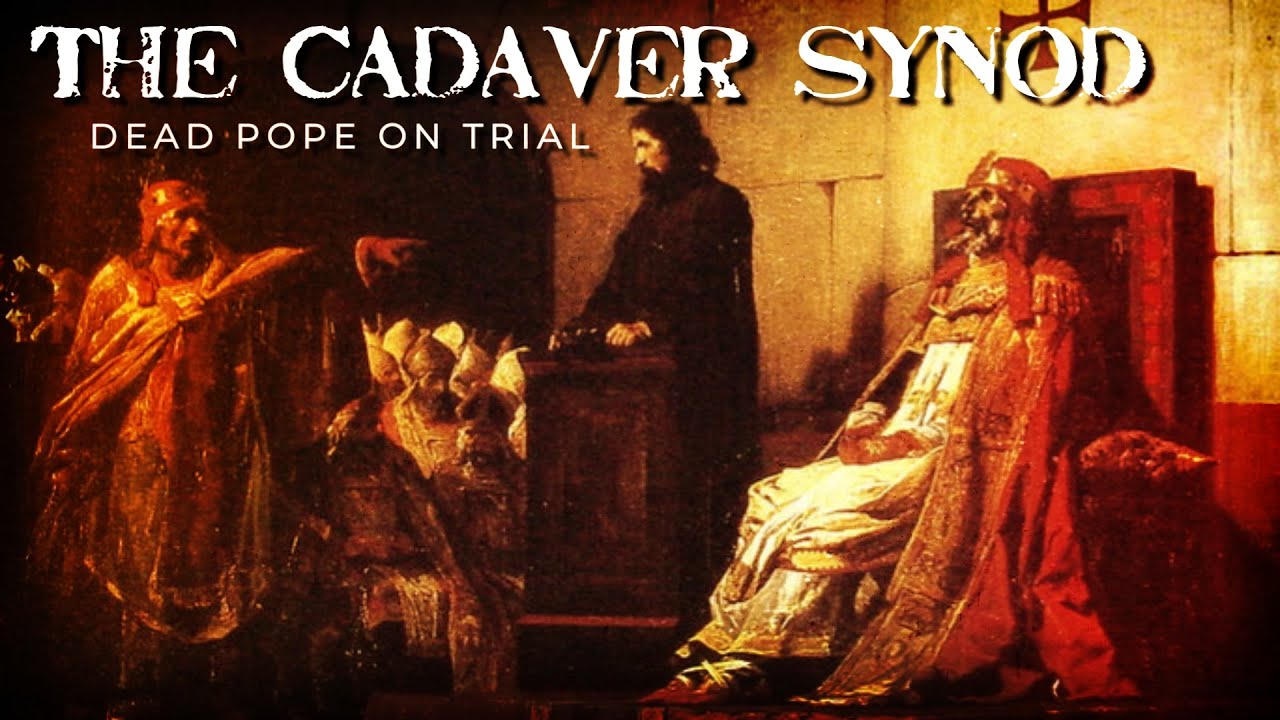
In January 897 A.D., one of the most bizarre and grotesque trials in human history took place—not in secret, not in fiction, but under the watchful eyes of the Catholic Church. The defendant? Pope Formosus, long dead and buried. Exhumed from his tomb, clad in papal vestments, and propped up on a throne, the corpse of Formosus faced a synod of bishops and a hostile successor, Pope Stephen VI, in what history would remember as the Cadaver Synod.
But this was no ordinary trial. It was a manifestation of medieval power struggles, revenge politics, and the often bloody intersection between the sacred and the profane. The Cadaver Synod wasn’t merely an act of religious madness—it reflected the deep political instability of Rome at the time, as papal authority collided with aristocratic ambition and imperial influence. To understand why a dead pope was put on trial, we must first understand the chaos that engulfed the Church in the late 9th century.
Power and Politics: Inside Medieval Papal States
The papacy of the 9th century was a far cry from the spiritual beacon it’s often imagined to be today. Instead, it was a political institution caught in a web of aristocratic rivalries, military alliances, and foreign interference—especially from the Holy Roman Empire. Popes were regularly installed and deposed by powerful Roman families or imperial factions seeking influence over Christendom.
Pope Formosus had a controversial past. Before his election, he had been excommunicated by Pope John VIII, accused of attempting to usurp the throne of Constantinople and refusing to return to Rome. Though the excommunication was lifted, the accusations lingered. When Formosus finally ascended to the papacy in 891, he aligned with Arnulf of Carinthia, a Frankish king vying for the imperial crown, directly opposing the interests of Lambert of Spoleto—a powerful aristocrat whose family considered the papal throne part of their inherited sphere.
This alliance made Formosus many enemies in Rome, especially among the Spoleto faction. After Formosus died in 896, Lambert’s loyalist Pope Stephen VI took the throne. What happened next was both vengeance and spectacle.
The Corpse on Trial: Gruesome Theater of Power
Pope Stephen VI, under pressure from the Spoletans, ordered Formosus’s corpse exhumed and brought before a church tribunal. The body, decomposed and rotting, was dressed in papal robes and seated on a throne in the Basilica of St. John Lateran. A deacon was appointed to “speak” on behalf of the dead pope, while Stephen presided as judge and accuser.
Formosus was charged with multiple crimes: violating canon law by becoming bishop of Rome while already bishop of another see, perjury, and conspiring with Arnulf against Lambert. The charges were rooted in actual church disputes of the time but were clearly politically motivated.
The trial was pure spectacle—medieval propaganda at its most grotesque. Witnesses were summoned, documents read aloud, and gestures of mockery made toward the corpse. In the end, the synod declared Formosus guilty. His papacy was annulled, his acts and ordinations invalidated, and his body stripped of its sacred vestments. Three fingers used for blessing were cut off, and the body was thrown into the Tiber River.
Aftermath: Riots, Retribution, and a Deadly Price
Stephen VI may have momentarily pleased his political patrons, but the grotesqueness of the Cadaver Synod backfired. The Roman public, deeply disturbed by the desecration of a former pope’s body, rose in outrage. Riots broke out in the streets of Rome. Stephen was arrested and imprisoned by his opponents, and soon after, he was strangled to death in his cell—ironically suffering the kind of posthumous disgrace he had tried to bestow on Formosus.
In the wake of this chaos, subsequent popes sought to distance themselves from the Cadaver Synod. Pope Theodore II and later Pope John IX convened synods that annulled Stephen’s decisions, declared the Cadaver Synod invalid, and reburied Formosus with honors. But the damage to the Church’s image and spiritual credibility was profound.
The spectacle also set a precedent for political manipulation of the papacy—a trend that would continue through the Middle Ages, reaching new levels during the Avignon Papacy and the Western Schism centuries later.
The Symbolism: Divine Justice or Vengeance?
The Cadaver Synod raises critical questions about the nature of justice, legitimacy, and power in a religious context. Was Stephen VI seeking justice, or merely revenge? Could a dead man truly be held accountable for his actions? The trial blurred the lines between law, theater, and ritual humiliation, using religious ceremony as a tool for political control.
Symbolically, the Cadaver Synod illustrates how the medieval Church—while often portrayed as purely spiritual—was deeply entangled in the same worldly power struggles that plagued secular rulers. Its ability to anoint kings, crown emperors, and excommunicate heretics made it a force to be both respected and feared. But as the Synod proved, that power could also be grotesquely abused.
Echoes Through History: The Cadaver Synod
The Cadaver Synod is still cited today as one of the strangest and most extreme abuses of power in ecclesiastical history. Historians and theologians alike debate its meaning, wondering whether it represents an isolated moment of madness or a deeper reflection of how vulnerable spiritual institutions are to temporal corruption.
While the Church officially buried the memory of the Synod in later centuries, it has remained a chilling reminder of how far leaders will go to rewrite history—even if they have to dig up the dead to do it.
Today, the Synod is studied not just by religious scholars, but also by legal historians, ethicists, and students of political theatre. Its bizarre images—a dead pope on trial, robed in regalia, accused by the living—linger in the imagination as a symbol of the extreme lengths humans will go to secure power and punish enemies.
Conclusion: Morbid Mirror of Medieval Power
The Cadaver Synod remains one of the most disturbing yet revealing episodes in the history of the Catholic Church. It was not merely a grotesque miscalculation—it was a manifestation of the madness that ensues when religious institutions are hijacked by political ambition. The trial of a dead pope, while deeply unsettling, forces us to confront the darker side of human nature and the institutions we build.
Beneath the spectacle lies a cautionary tale of unchecked power, blurred boundaries between church and state, and how history remembers the absurd as much as the righteous. In the end, the Cadaver Synod may be remembered not only for its horror, but for what it says about the men who believed they could judge the dead—and the system that allowed them to try.