Categories
W1 World

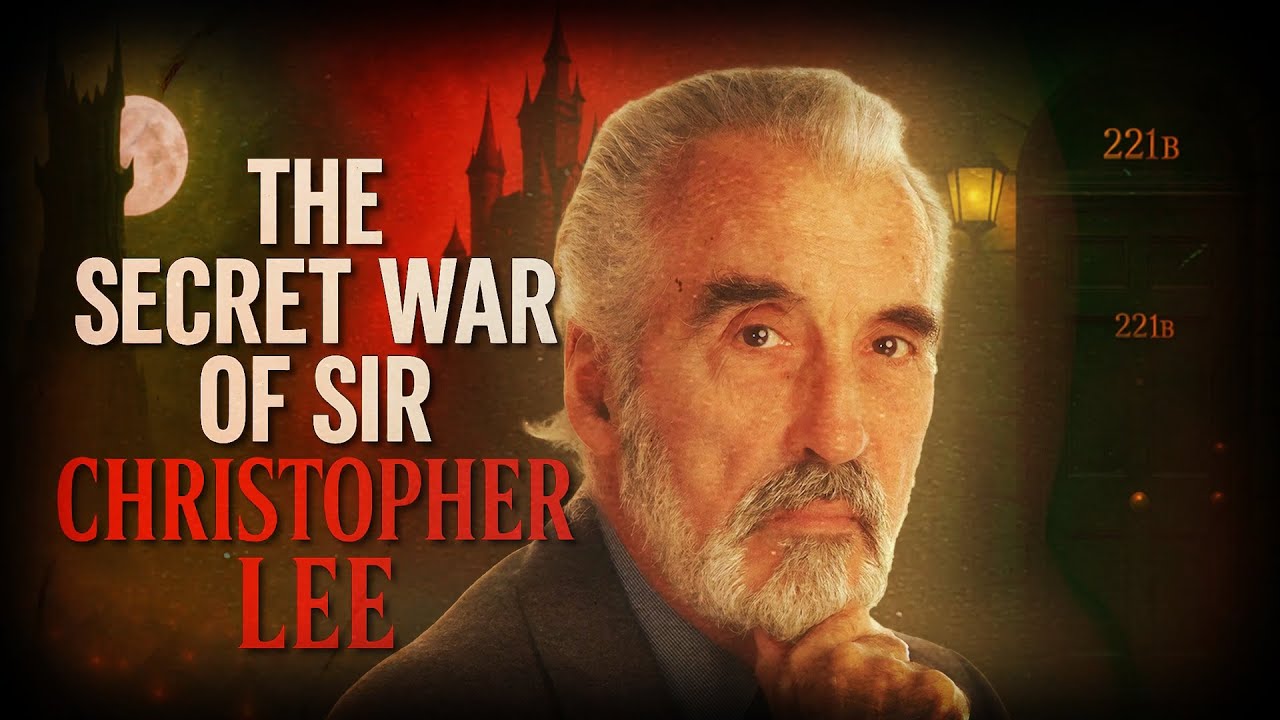
The Secret War of Sir Christopher Lee: From Covert Battlefield Missions to Big Screen Legend

Introduction: The Man Behind the Myths

Sir Christopher Lee is best remembered as a towering presence on screen—Dracula, Saruman, Count Dooku. But behind his cinematic legacy lies a shadowy past more thrilling than any of his film roles. Before Hollywood, before Hammer Horror, Lee was a soldier and a spy. During World War II, he served with distinction in the Royal Air Force and was attached to British intelligence and special forces, including the SAS and the Special Operations Executive (SOE).

Some of his missions remain classified, adding an air of mystery to an already enigmatic man. This is the story of a war hero whose real life may have inspired fictional legends like James Bond, and whose experiences shaped him as both an actor and a man. Long before he wore fangs or wielded a wizard’s staff, he stared down real danger in the shadows of history.

The Making of a Warrior: Early Life, War

Born in 1922 to a military family, Christopher Frank Carandini Lee grew up in a world shaped by war and aristocracy. His father was a decorated army officer, and his mother came from Italian nobility. From an early age, Lee showed an interest in languages, history, and adventure.

Lee was fluent in several languages—skills that would later serve him well in intelligence work. When World War II broke out, Lee enlisted in the Royal Air Force. Initially grounded due to a vision problem, he nonetheless found ways to serve. His aptitude and demeanor quickly led him into intelligence roles, and eventually into elite covert units.

Into the Shadows: SOE, SAS, Missions

Lee was quietly recruited into the SOE—Special Operations Executive, Winston Churchill’s infamous spy organization, often referred to as “the Ministry of Ungentlemanly Warfare.” He also had ties with the SAS, the Special Air Service, known for its deadly raids behind enemy lines. His work included sabotage operations, tracking down Nazi war criminals, and assisting in the liberation of concentration camps.

Lee operated in North Africa, Italy, and possibly Eastern Europe. Although Lee remained tight-lipped about many of his missions, he once told interviewers, with a knowing smile, “Let’s just say I was involved in some very confidential things.”

Hunting Evil: Post-War Pursuit of Nazis

Following the war, Lee worked with the Central Registry of War Criminals and Security Suspects (CROWCASS), the organization tasked with identifying and capturing Nazi war criminals. It was grueling and emotionally exhausting work—digging through evidence of atrocities and helping bring fugitives to justice.

Lee was present at several interrogations and assisted with intelligence that led to arrests. This chapter of his life haunted him and shaped his profound sense of justice. He once said, “If I could take just one man down who committed such acts, it was all worth it.”

Silence and Secrecy: A Code That Endured

Throughout his life, Lee maintained a strict code of silence regarding his military service. He believed that talking too much would dishonor the memory of those who served and died. When Peter Jackson asked him how he knew what a man sounded like when stabbed in the back—a moment while filming The Lord of the Rings—Lee replied, “Because I know what it sounds like.”

This cryptic answer added to the legend, but it was rooted in real, harrowing experience. Even in his autobiography, he glossed over many wartime details, preserving the dignity and confidentiality of those turbulent years.

Hollywood and the Haunted Heroic Past

After the war, Lee returned to civilian life and eventually found his way to the silver screen. His imposing height, deep voice, and stoic demeanor made him perfect for villainous roles. But beneath the horror makeup and menacing characters was a man shaped by unimaginable experiences.

Lee’s time in war gave him an intensity and authenticity that few actors could match. He was not pretending to understand fear or death—he had lived it. His military discipline carried over into his acting career; he was professional, punctual, and precise.

A Real-Life Bond: Spy, Soldier, or Legend?

Many have speculated that Christopher Lee’s cousin, Ian Fleming, drew on Lee’s life for inspiration when creating James Bond. Fleming and Lee were close, and the timeline of Lee’s wartime service overlaps significantly with Fleming’s own intelligence work.

Like Bond, Lee was suave, multilingual, deadly when needed, and accustomed to moving through shadows. While Lee never confirmed the theory, he didn’t deny it either. The parallels are compelling: both were British, both were involved in secretive operations across Europe, and both had a cool, lethal charisma.

Recognition Long Overdue: Hidden Valor

Despite his service, Lee never boasted or sought recognition for his military contributions. It wasn’t until much later in life that many people learned of his wartime record. In 2009, he was knighted for his contributions to drama and charity—but his military service was mentioned with reverence.

Lee’s commitment to duty, silence, and integrity stood in stark contrast to the modern age of oversharing. Lee’s life serves as a reminder that true heroism often resides in humility. In truth, he was the myth behind the myth.

Legacy: From War Rooms to Wizardry

Sir Christopher Lee’s legacy is unique. Few people can claim to have fought Nazis and also portrayed wizards and Sith Lords. His war service adds a profound dimension to his performances. When you see him wield a sword or issue a grave warning as Saruman, remember: this was not an act.

This was a man who had looked evil in the face and lived to tell the tale—if only in hints and whispers. His roles in cinema become even more iconic when framed by the knowledge of the life he led before the camera rolled.

Conclusion: A Hero in Shadow and Light

Sir Christopher Lee lived many lives. Soldier, spy, actor, legend. His wartime service remains a lesser-known but essential part of his story. In a century marked by conflict and change, Lee stood as a bridge between the brutal realities of war and the magical worlds of film. He showed that heroism takes many forms—on the battlefield, on the screen, and in the quiet dignity of a life lived with purpose and honor.

Overall, the world may remember him for Dracula or Saruman, but behind those characters stood a real man—a man who once fought in the shadows to defend the light. Sir Christopher Lee’s legacy is more than cinematic—he lived a life so extraordinary, it rivaled even the legends he portrayed on screen. In many ways, he wasn’t just playing heroes and villains—he was living the kind of story most actors could only dream of.

Categories
W1 World

Who Killed Churchill’s Favorite Spy? Death of Krystyna Skarbek – WWII’s Deadliest Heroine

Introduction: The Spy Who Dared Too Much, Unseen

In the shadowy world of World War II espionage, few figures shone brighter—or died more mysteriously—than Krystyna Skarbek. Known by many names, including her British alias Christine Granville, Skarbek was not only one of Britain’s most effective female spies but also Winston Churchill’s personal favorite. A Polish aristocrat turned Special Operations Executive (SOE) agent, she was beautiful, bold, and unrelentingly courageous.

Skarbek’s daring exploits and psychological resilience made her legendary in the male-dominated world of wartime intelligence. Yet, after surviving the Nazis, torture, and multiple near-death situations, she was murdered in a modest London hotel room in 1952. Her killer confessed—but was he truly acting alone? Or was her death the final act in a life forever entangled in danger, betrayal, and secrecy?

Who Was Krystyna Skarbek? A Woman Built for War

Born in 1908 into a Polish aristocratic family, Krystyna Skarbek was raised in the privileged circles of Warsaw’s high society. Her early life was filled with luxury, equestrian sports, skiing in the Tatra Mountains, and a multilingual education that would later serve her in espionage. But her world crumbled when Germany and the Soviet Union invaded Poland in 1939. Fleeing to Britain, she volunteered her services to fight against the Nazis—not with a gun, but with her wits and nerve. The British were initially reluctant to accept a foreign woman, but she persisted, joining the SOE and quickly proving herself invaluable.

Her assignments led her across enemy territory in Poland, Hungary, and France. Using her natural charm and fluency in multiple languages, she infiltrated Nazi strongholds, gathered crucial intelligence, and often talked her way out of life-threatening situations. Her ability to remain calm under extreme duress, including enduring Gestapo interrogation, set her apart. She once faked a tuberculosis diagnosis by biting her tongue until it bled to avoid revealing information—a testament to her unbreakable spirit.

Churchill’s Favorite: A Spy Who Won Hearts and Wars

Winston Churchill reportedly described Krystyna Skarbek as his “favorite spy,” a rare acknowledgment from the Prime Minister himself. She earned this admiration through her extraordinary wartime contributions. In France, she organized local resistance networks, supplied arms and intelligence, and rescued fellow agents from the clutches of the Gestapo. Her 1944 mission in the Alps, where she secured the release of three fellow agents by intimidating a Nazi collaborator, is considered one of SOE’s most impressive feats.

Her combination of glamor and grit allowed her to defy traditional gender expectations. Skarbek seduced informants, manipulated officers, and charmed border guards, all while transmitting sensitive information and dodging capture. Her methods were unorthodox, but they worked. Her courage earned her high honors from both Britain and France, including the George Medal and the Croix de Guerre. Still, her story remains lesser-known than male counterparts—perhaps a reflection of how women’s contributions to the war were historically sidelined.

A War Hero Without a War: A Spy’s Post-War Life

Despite her wartime valor and decorated record, Skarbek’s post-war life was marked by neglect and disillusionment. The same country that had used her skills during the war offered her no pension, no employment, and little gratitude afterward. As a foreigner and a woman, she fell through the cracks of a system that failed to honor its heroes. The British bureaucracy regarded her as a liability rather than an asset in the Cold War era.

She lived in cheap boarding houses, surviving on odd jobs including working as a telephone operator, shop assistant, and stewardess aboard ocean liners. The transition from celebrated war hero to underpaid worker left her deeply disillusioned. Many of her wartime companions moved on or died, and Skarbek found herself increasingly isolated in a peacetime world that had no place for her. Yet she never sought pity. Despite her economic struggles, she maintained her dignity and never ceased to radiate the charisma that once brought her through the darkest of days.

Murder at the Hotel Room: The Final Betrayal

On June 15, 1952, Krystyna Skarbek was found dead in the hallway of the Kensington Hotel in London. She had been stabbed through the heart with a carving knife. Her killer, Dennis Muldowney, was a fellow steward on the RMS Winchester Castle. He had become obsessed with her during their voyage. When she refused his advances and tried to sever ties, he responded with lethal violence.

Muldowney was arrested, tried, and quickly sentenced to death. He reportedly said, “To kill is the final possession.” His obsession, stalking behavior, and jealousy were well-documented, but many who knew Skarbek found it difficult to accept that such a seasoned and capable operative could fall victim so easily. How did a woman who had survived so many high-stakes encounters fail to see the threat? Was it complacency—or was there more to the story?

A Convenient Culprit? Theories Behind Her Death

Officially, Muldowney was a lone killer, motivated by jealousy and rejection. But over the years, alternative theories have emerged. Some historians and intelligence insiders have suggested that Skarbek’s murder may have had political or espionage-related motives. Given her knowledge of covert operations across Europe, she may have remained a target long after the war ended.

It was the height of the Cold War, and the intelligence world was fraught with paranoia. Could Skarbek have been seen as a threat by former collaborators, or even by Western governments worried about loose ends? Her connections, knowledge, and ambiguous status made her vulnerable. While there’s no hard evidence to support a conspiracy, the rapid conclusion of the investigation and the absence of deeper inquiry have left lingering doubts.

Legacy: A Life That Refused to Be Forgotten

Although long overshadowed by her male counterparts, Krystyna Skarbek’s legacy has enjoyed a resurgence in recent decades. Biographies, documentaries, and academic studies have reintroduced her to new generations. In 2012, the British government unveiled a blue plaque outside the hotel where she was killed, and her life has been honored with memorials in Poland and France.

She is now recognized as one of the most effective and daring SOE agents of World War II. Her story is featured in museums and war archives, where she stands as a powerful example of female bravery, intelligence, and sacrifice. Her life has even been cited as inspiration for fictional spies, including Ian Fleming’s female characters in the James Bond novels.

Conclusion: A Death That Echoes Through History

Krystyna Skarbek was more than a spy. She was a symbol of resistance, a fearless woman who outwitted one of history’s most brutal regimes. Her mysterious death—whether an act of obsession, betrayal, or conspiracy—remains one of the great unsolved stories of post-war espionage. What is certain, however, is that her bravery helped shape the course of the war, and her life continues to inspire.

She defied the odds, challenged gender norms, and gave everything for freedom. Her tragic end may never be fully explained, but her courage and spirit live on. In remembering her, we honor the countless unsung women whose sacrifices changed the world—and remind ourselves that justice, though often delayed, should never be denied. Her life was defined by courage, but her death remains a chilling riddle history has yet to solve.

Categories
W1 World

How a British Aristocrat Played a Strategic Gamble Paving Communism in Yugoslavia

Introduction: A Secret Mission

In 1943, British Prime Minister Winston Churchill made a momentous decision that would shape the future of Yugoslavia. As the war raged across Europe, intelligence reports from German-occupied Yugoslavia painted a complex and shifting picture of resistance efforts. Two major factions—one royalist and one communist—were waging separate wars against the Axis forces. The British government had initially backed the royalist Chetniks, led by General Draža Mihailović, but growing concerns over their lackluster resistance and suspected collaboration with the Germans led to a reevaluation of British policy.

To assess the situation on the ground, Churchill turned to Fitzroy Maclean, an aristocratic soldier, diplomat, and intelligence officer. Maclean, a dashing and well-connected member of the Special Operations Executive (SOE), was parachuted into Yugoslavia with orders to make contact with the leader of the communist partisans, Josip Broz Tito. His mission was not only to evaluate Tito’s effectiveness against the Germans but also to determine whether British support should shift from the Chetniks to the communists.

Fitzroy Maclean: The Aristocrat

Born into the Scottish aristocracy in 1911, Fitzroy Maclean was educated at Eton and Cambridge before joining the British Foreign Service. He soon gained a reputation for adventure and daring, traveling extensively through the Soviet Union in the 1930s and developing a keen understanding of communist ideology. When World War II broke out, he left the diplomatic corps to join the British Army and quickly rose through the ranks, distinguishing himself in North Africa.

Churchill saw in Maclean the perfect candidate for the Yugoslav mission—an officer with both the physical stamina for clandestine operations and the intellectual acumen to navigate the complexities of Balkan politics. More importantly, Maclean had the prime minister’s trust, a crucial factor in this high-stakes endeavor.

The Meeting With Josip Broz Tito

Parachuting into the Yugoslav countryside in September 1943, Maclean and his SOE team made their way to the partisan headquarters, deep in Axis-occupied territory. There, he met Tito, a man whose reputation as a relentless and strategic leader had already reached London. Over weeks of discussions and firsthand observations, Maclean reported back to Churchill that Tito’s forces were indeed the most effective resistance group in Yugoslavia.

Unlike the Chetniks, who were accused of prioritizing a post-war restoration of the monarchy over fighting the Germans, the communist partisans were waging an uncompromising war against Axis occupiers. They controlled vast swathes of territory, carried out sabotage operations, and engaged in large-scale battles. Maclean’s reports convinced Churchill that supporting Tito was the best way to tie down German forces and assist the Allied war effort.

Churchill’s Calculated Gamble

Despite recognizing the dangers of aiding a communist movement, Churchill was a pragmatist. His primary concern was defeating the Axis, and Tito’s effectiveness against the Germans was undeniable. In December 1943, at the Tehran Conference, Churchill and Franklin D. Roosevelt agreed to shift their full support to the partisans. This decision led to increased British arms supplies, air support, and strategic assistance for Tito’s forces, while aid to the Chetniks was largely cut off.

Churchill harbored no illusions about Tito’s long-term ambitions. He understood that empowering the communists in Yugoslavia could have profound geopolitical consequences, but he was willing to take that risk to hasten the defeat of Germany. In his characteristically wry manner, he later remarked that if the devil himself were fighting Hitler, he would make a favorable reference to the devil in the House of Commons.

The Road To A Communist Yugoslavia

With substantial British and later Soviet backing, Tito’s partisans gained the upper hand. By the end of the war, they had not only expelled the Axis forces but also positioned themselves as the dominant political force in Yugoslavia. In 1945, Tito established a socialist state, and by 1946, he had consolidated power, sidelining political opponents and severing ties with the Yugoslav monarchy. The very movement Churchill had helped strengthen would soon align itself with the Soviet Union—at least until Tito’s famous split with Stalin in 1948.

Maclean, despite his aristocratic background and firm anti-communist beliefs, had played a crucial role in bringing Tito to power. His reports and advocacy had been instrumental in convincing Churchill to abandon the Chetniks, setting Yugoslavia on the path to communist rule. Maclean himself would later write extensively about his wartime experiences, providing rare insights into the secret negotiations and battlefield decisions that had shaped Yugoslavia’s future.

The Aftermath And Historical Debate

The decision to back Tito remains one of the most debated aspects of British wartime strategy. Some historians argue that Churchill and Maclean made the right call, prioritizing military effectiveness over ideological concerns. Others contend that by empowering Tito, Britain inadvertently facilitated the rise of a one-party communist state, leading to decades of authoritarian rule and political repression.

Even within the British government, there were those who remained uneasy about the alliance with Tito. Many feared that the shift in support would alienate the Yugoslav royalists and undermine Britain’s influence in the region. Yet, in the context of World War II, immediate military priorities outweighed long-term political considerations.

Conclusion: A Pragmatic Decision

Fitzroy Maclean’s mission to Yugoslavia was a turning point in the war and in the history of the Balkans. By forging an alliance with Tito, Britain not only secured an effective fighting force against the Germans but also laid the groundwork for Yugoslavia’s post-war communist government. Churchill, ever the pragmatist, made a decision rooted in wartime necessity, but one whose consequences extended far beyond the battlefield.

For Maclean, his experiences in Yugoslavia were among the most defining of his career. Though he remained an anti-communist throughout his life, he recognized the strategic necessity of his mission. His role as Britain’s emissary to Tito showcased the complex interplay between war, diplomacy, and ideology—an episode in history where expedience trumped ideology, with profound and lasting effects on the fate of a nation.

Categories
W1 World

Operation Carpetbagger: The Top-Secret Mission That Sabotaged Nazi Europe from Within

Introduction

World War II was a global conflict characterized by large-scale battles, secret intelligence operations, and daring missions that often tipped the balance of power. Among these clandestine efforts was Operation Carpetbagger, a top-secret mission designed to support resistance fighters and sabotage Nazi efforts in occupied Europe. Conducted primarily between January and September 1944, this operation involved specially modified B-24D Liberator bombers flying under the cover of night, delivering weapons, supplies, and agents deep into enemy territory. The courage, skill, and determination of the crews who carried out these perilous flights played a crucial role in weakening Nazi control and aiding the Allied war effort from within.

Origins of Operation Carpetbagger

As the Nazi regime extended its grip over much of Europe, the Allies recognized the importance of resistance movements operating in occupied territories. These underground forces, composed of brave men and women, were instrumental in gathering intelligence, disrupting enemy operations, and staging acts of sabotage. However, they needed supplies, weapons, and communication tools to maximize their effectiveness.

In response to this need, the Office of Strategic Services (OSS) — the forerunner of the CIA — and the British Special Operations Executive (SOE) devised a plan to covertly deliver these essentials to the resistance. This initiative became known as Operation Carpetbagger.

The operation primarily targeted France, Belgium, the Netherlands, and Norway, where resistance movements were actively fighting back against Nazi control. The mission was not just about material support; it also involved the deployment of highly trained OSS and SOE agents who worked alongside local resistance groups to coordinate sabotage efforts and gather intelligence vital to the Allied cause.

The Role of the B-24 Liberator

The Consolidated B-24D Liberator, a heavy bomber, became the aircraft of choice for Operation Carpetbagger. This decision was influenced by the plane’s long range, large cargo capacity, and ability to be modified for special missions. Originally designed for high-altitude bombing raids, the B-24 was retrofitted for low-altitude, nighttime operations, essential for the success of the operation.

Several modifications were made to adapt the B-24 for its new role. The bomb bay was converted to hold parachutes, containers, and other cargo instead of bombs. To minimize detection by enemy radar and spotlights, the aircraft were painted matte black. The nose and tail guns were removed to lighten the load, and special navigational equipment was installed to help pilots locate remote drop zones in the dark.

One of the most critical adjustments was the use of “Rebecca” and “Eureka” radio beacons, which allowed ground operatives in occupied Europe to guide the bombers to precise drop locations. Resistance fighters on the ground would light fires or use other signals to indicate where the supplies should be released.

The Missions: Courage Under Fire

Operation Carpetbagger officially began on January 4, 1944, with missions originating from airbases in the United Kingdom, particularly at Harrington, Northamptonshire. The 492nd and 801st Bombardment Groups (Provisional) were assigned the task of conducting these covert flights, with pilots and crew members handpicked for their skill, bravery, and ability to operate in extreme conditions.

Each mission was fraught with danger. Flying at low altitudes over enemy territory, the B-24s faced anti-aircraft fire, the threat of German night fighters, and the ever-present risk of mechanical failure. The margin for error was minimal, and any misstep could result in the plane being shot down or crashing in hostile territory.

Crews were extensively trained not only in night flying but also in the nuances of the secretive nature of their mission. This included practicing low-level flying, as missions often required pilots to fly at altitudes as low as 500 feet to avoid detection. They also rehearsed precise parachute drops, as timing and accuracy were critical to ensuring the supplies reached the intended recipients.

Among the brave airmen who participated in Operation Carpetbagger was Colonel Clifford Heflin, one of the key figures behind the operation’s success. His leadership and tactical insight helped the 492nd and 801st Bombardment Groups carry out hundreds of successful missions, delivering tons of supplies and dozens of agents behind enemy lines.

Key Players in Operation Carpetbagger

While Colonel Heflin was a key leader, the success of Operation Carpetbagger was a collective effort involving many unsung heroes. Among the notable participants was Major William C. Bailey, who played a crucial role in coordinating the operation’s logistics. His ability to streamline the supply chain ensured that the necessary equipment reached the B-24s for each mission.

Another important figure was Captain John P. R. “Jack” Fuller, a navigator whose expertise in navigating the treacherous night skies of Europe was vital. Fuller’s knowledge of radio navigation and radar systems allowed the B-24s to evade detection and reach their targets.

Additionally, many OSS and SOE agents who parachuted into occupied territories during Operation Carpetbagger became legends in their own right. These individuals, such as Virginia Hall (an American spy known as “The Limping Lady” due to her prosthetic leg), operated deep within enemy territory, providing intelligence, organizing sabotage operations, and coordinating supply drops.

Impact on the Resistance and the War

Operation Carpetbagger had a significant impact on the course of the war in Europe. By providing resistance groups with the resources they needed, the operation helped disrupt key German supply lines, communications, and military infrastructure. Resistance fighters, armed with Allied weapons and explosives, carried out countless acts of sabotage, from blowing up bridges and railways to attacking Nazi convoys.

The operation also played a critical role in preparations for D-Day, the Allied invasion of Normandy on June 6, 1944. Resistance groups, bolstered by the supplies and support they received through Operation Carpetbagger, carried out diversionary attacks and gathered intelligence on German troop movements, helping to ensure the success of the invasion.

In total, Operation Carpetbagger flew more than 3,000 sorties, delivering nearly 5,000 tons of supplies and deploying hundreds of agents into occupied Europe. Its contribution to the success of the Allied war effort cannot be overstated, as it significantly weakened Nazi control and laid the groundwork for the liberation of Europe.

Conclusion

Operation Carpetbagger remains one of the most daring and secretive missions of World War II. The courage of the men who flew the B-24 Liberators, coupled with the bravery of the OSS and SOE agents who risked their lives behind enemy lines, played a pivotal role in the defeat of Nazi Germany. Their efforts not only armed and supported resistance movements but also helped to erode the Nazi war machine from within, proving that even in the darkest of times, acts of courage and defiance can make a difference. This clandestine operation exemplified the strategic importance of unconventional warfare and laid the groundwork for modern special operations in future conflicts.