Categories
W1 World

Why Communism Works: A Brutal Satire of Utopian Promises, Totalitarian Realities

Introduction: The Price of Utopia

Communism, in its ideal form, promises a classless, stateless society built on cooperation and equality. It offers a dream of shared resources, the abolition of exploitation, and freedom from capitalist oppression. But history tells a darker tale. In practice, this utopian vision often gives rise to authoritarian regimes, mass suffering, and horrifying loss of life.

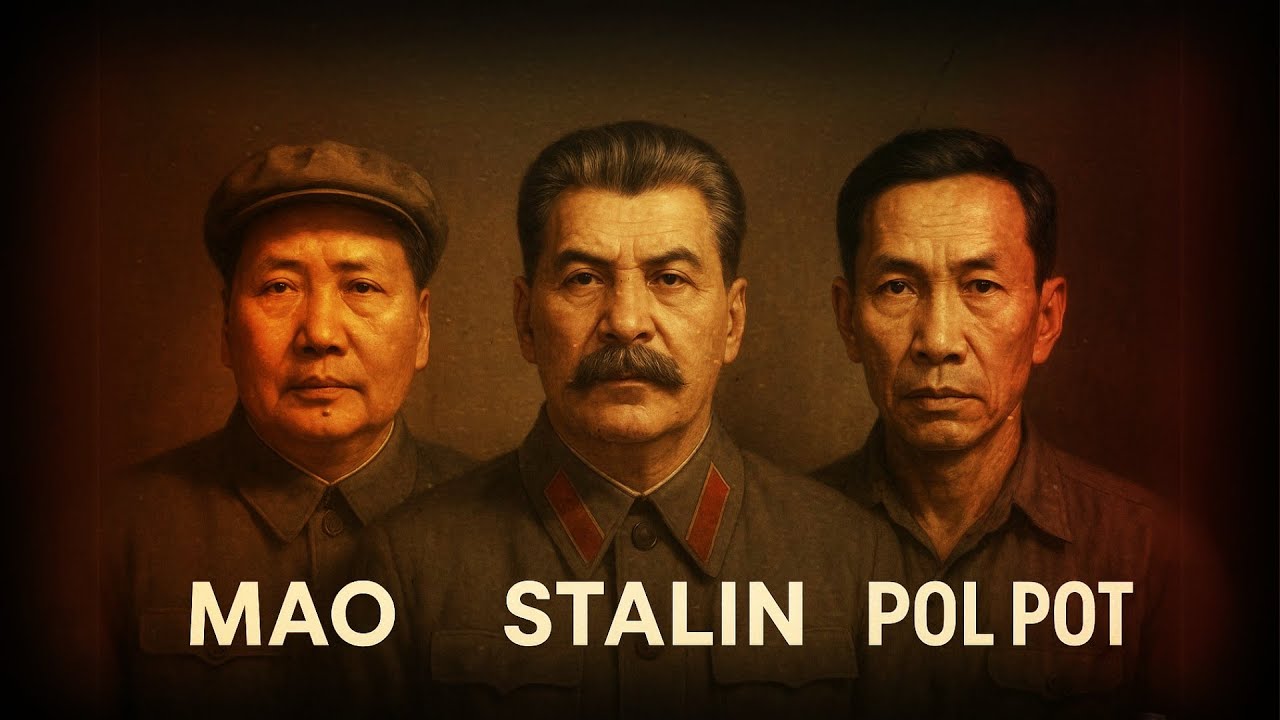
Through the brutal legacies of Stalin, Mao, and Pol Pot, we explore why communism—when turned into policy—so often collapses into tyranny. This article does not present a nuanced philosophical discussion; instead, it delivers a harsh, fact-based indictment of the historical outcomes of unchecked communist rule.

Stalin’s Soviet Union: Terror Behind the Curtain

Joseph Stalin’s reign over the Soviet Union from the 1920s to the 1950s is one of the bloodiest chapters in modern history. Rising to power after Lenin’s death, Stalin transformed the USSR into a totalitarian state through relentless purges, forced collectivization, and a cult of personality. The infamous Great Purge of the 1930s saw millions arrested, exiled, or executed under false pretenses. Even top Communist Party members and military leaders were not safe. Stalin weaponized fear to eliminate opposition, real or imagined.

Meanwhile, the forced collectivization of agriculture led to the Holodomor—an artificial famine in Ukraine that killed millions. Grain quotas were enforced with brutality, and dissenters were sent to gulags, Soviet labor camps infamous for inhumane conditions and staggering death rates. Stalin’s policies left the USSR industrialized but at the cost of tens of millions of lives. His version of communism traded freedom for fear and ideology for iron-fisted control. Any dream of equality was buried beneath the weight of state terror.

Mao’s China: Utopia Through Starvation

Mao Zedong promised a revolutionary new era for China—an end to imperialism, poverty, and inequality. Instead, he unleashed one of the deadliest social engineering experiments in history. His Great Leap Forward (1958–1962) sought rapid industrialization and agricultural reform by mobilizing peasants into communes and redirecting labor from farms to steel production. The result was catastrophic. Poor planning, inflated grain reports, and state propaganda led to mass famine. An estimated 30 to 45 million people died—many from starvation, others from execution or overwork.

But Mao didn’t stop there. In 1966, he launched the Cultural Revolution to purge capitalist and traditional elements from Chinese society. Red Guards—radical youth militia—were encouraged to attack intellectuals, destroy historical artifacts, and denounce their own families. Schools shut down. Chaos reigned. Thousands were killed, millions persecuted. Mao’s vision of communism consumed the very people it claimed to liberate. His legacy is a haunting reminder of the dangers of unchecked ideological zeal.

Pol Pot and the Khmer Rouge: Back to Year Zero

Pol Pot’s Khmer Rouge regime in Cambodia (1975–1979) took communist extremism to its most horrific extreme. Inspired by Maoist thought, Pol Pot envisioned an agrarian utopia, free from modernity, class distinctions, and even money. To realize this dream, he emptied cities, abolished currency, and forced urban dwellers into slave labor in the countryside. Intellectuals, professionals, and those who wore glasses were deemed enemies of the revolution.

What followed was genocide. Nearly a quarter of Cambodia’s population—about 1.7 to 2 million people—died from execution, starvation, disease, or overwork. The Tuol Sleng prison in Phnom Penh became infamous for torture and mass murder. Families were torn apart, religion was banned, and any sign of individuality was punished. Pol Pot’s vision of perfect equality produced unparalleled suffering. The Khmer Rouge collapsed only when Vietnam invaded and overthrew the regime in 1979, revealing a nation devastated by ideology-driven brutality.

Why “Real Communism” Always Fails

Defenders of communism often insist that the ideology has simply never been implemented “correctly.” But history suggests a different pattern: the systemic suppression of dissent, economic mismanagement, and human rights abuses appear consistently wherever communism has been tried at a national scale. Centralized planning eliminates competition and innovation. The promise of equality becomes a justification for silencing individual thought and enforcing conformity. Authoritarianism fills the power vacuum left by the dismantling of democratic institutions.

Every major communist regime has relied on propaganda, censorship, and state terror to maintain control. These aren’t accidents or betrayals of the doctrine—they are symptoms of the doctrine’s flaws when applied in the real world. The dream of a classless paradise becomes a nightmare precisely because of the unchecked power that the ideology demands. When the state owns everything, dissent becomes treason. True progress demands not blind faith in utopia, but critical thought, historical awareness, and unwavering respect for human dignity.

The Modern Myth and Its Appeal

Despite its grim history, communism still finds supporters today, often among those disillusioned with capitalism or inequality. The appeal of its promises—free healthcare, housing for all, and the end of poverty—is undeniable. But these ideals obscure the cost. The romanticization of revolution can blind people to the realities of authoritarian rule. In today’s polarized political climate, it’s more important than ever to confront history honestly and critically.

The ghosts of the 20th century’s failed revolutions should not be forgotten. Their stories serve as warnings about the seductive power of ideology and the danger of mistaking slogans for solutions. While reform is necessary in every society, extremism—whether economic, political, or ideological—inevitably breeds oppression. Only by remembering these dark chapters can we safeguard future generations from repeating the same catastrophic mistakes.

Conclusion: Never Again Forgotten

Communism, as practiced in the 20th century, promised freedom and delivered chains. The regimes of Stalin, Mao, and Pol Pot represent cautionary tales, not blueprints for justice. Their legacies should be studied not to revive their ideals, but to understand the horrors that arise when ideology overrides humanity.

This is why communism “works every time”—not in building utopias, but in creating suffering. The facts speak louder than any revolutionary chant. Let history be a mirror, not a blueprint. History has shown that when ideology overrides humanity, the cost is always measured in lives lost and freedoms destroyed.

Categories
W4 World

The Evolution of Democracy: Challenges and Opportunities in the 21st Century

Introduction

The 20th century witnessed the rise of democracy as a dominant form of government, which brought significant changes in political systems and the role of citizens in shaping government policy. Democracy has become a dominant form of government in the 20th century, and its rise has led to significant changes in political systems and the role of citizens in shaping government policy. The article explores the history of democracy, its different forms, the benefits and challenges of democracy, and the role of citizens in shaping the democratic process.

Evolution of Democracy: An Overview

The rise of democracy in the 20th century has not been without its challenges and setbacks. The spread of democratic values and institutions has often been met with resistance and opposition from authoritarian regimes and entrenched political elites. In some cases, democratic transitions have been marred by violence and conflict, as seen in countries such as South Africa and Iraq. The emergence of populist movements and the erosion of democratic norms and institutions in some countries, such as Hungary and Brazil, have also raised concerns about the sustainability of democratic governance in the 21st century.

Despite these challenges, the spread of democracy has been a remarkable achievement, providing citizens around the world with a voice in their own governance and promoting greater respect for human rights and the rule of law. The rise of democracy has also brought about significant changes in the way governments interact with each other on the global stage. Democratic nations have tended to form alliances based on shared values and interests, leading to the development of international organizations such as the United Nations and the European Union. These organizations have played a key role in promoting democracy and human rights around the world, while also serving as a platform for addressing global challenges such as climate change, poverty, and conflict.

The History of Democracy

Democracy has its roots in ancient Greece, where it was a form of government where citizens had the right to participate in the decision-making process. The idea of democracy was later revived during the Enlightenment era in Europe, where it was seen as a way to challenge the authoritarian monarchies of the time. The American and French revolutions in the late 18th century brought democracy to the forefront, and it became a dominant form of government in the 20th century.

The spread of democracy in the 20th century was largely driven by the rise of political systems based on liberal democratic principles, such as free and fair elections, the protection of individual rights and freedoms, and the rule of law. These principles were adopted by many countries around the world, including those in Western Europe and North America, as well as in newly independent countries in Africa and Asia.

However, the path to democracy has not always been smooth, and many countries have struggled with democratic transitions, facing challenges such as coups, civil unrest, and external interference. Despite these challenges, the idea of democracy continues to inspire people around the world, and the struggle to protect and promote democratic principles remains a pressing issue in many countries today.

Different Forms of Democracy

There are different forms of democracy, including direct democracy, representative democracy, and participatory democracy. Direct democracy is a system where citizens directly participate in decision-making, such as through referendums or town hall meetings. Representative democracy is where citizens elect representatives to make decisions on their behalf. Participatory democracy is a more recent form of democracy that seeks to involve citizens in the decision-making process through various mechanisms, such as citizen assemblies and participatory budgeting.

Another form of democracy is deliberative democracy, which emphasizes the importance of informed and inclusive public deliberation in decision-making. In deliberative democracy, citizens are brought together to engage in thoughtful and respectful dialogue about public issues, with the goal of reaching a shared understanding and consensus on the best course of action.

This approach emphasizes the importance of giving voice to all segments of society and creating spaces for dialogue and collaboration, rather than simply relying on elections and representatives to make decisions. Deliberative democracy has been used in a variety of contexts, from local community planning to national policy-making, and has been shown to increase civic engagement and enhance the quality of democratic decision-making.

Benefits and Challenges of Democracy

Democracy has many benefits, including the protection of individual rights and freedoms, the promotion of political stability, and the ability to hold government officials accountable. However, democracy also faces many challenges, such as the risk of the tyranny of the majority, the potential for corruption and polarization, and the difficulty of balancing individual freedoms with the common good.

Another challenge that democracy faces is the threat of disinformation and propaganda. With the rise of social media and the internet, it has become easier for individuals and groups to spread false information and manipulate public opinion. This can lead to a distortion of the democratic process and undermine trust in democratic institutions.

Furthermore, the increasing complexity of society and the economy means that citizens may not have the necessary knowledge or expertise to make informed decisions on certain issues, making them more susceptible to manipulation. Therefore, ensuring the integrity of information and promoting media literacy are crucial for the maintenance of a healthy democratic society.

The Role of Citizens in Shaping Democracy

Citizens play a crucial role in shaping the democratic process, from participating in elections to engaging in civic activism and advocacy. The rise of social media has also given citizens a new platform to express their opinions and influence policy decisions. However, citizen engagement in democracy can also face challenges, such as voter suppression and disinformation campaigns.

Moreover, citizen engagement in democracy also requires a certain level of education and awareness about the issues at stake. In order for citizens to make informed decisions and participate meaningfully in the democratic process, they need access to accurate information and a basic understanding of how government works. Therefore, promoting civic education and media literacy is essential for ensuring that citizens are equipped to engage in democracy effectively.

Additionally, creating a culture of active citizenship and encouraging diverse perspectives can help to promote a more vibrant and inclusive democratic society. Moreover, promoting transparency and accountability in government institutions can strengthen citizens’ trust in the democratic process. Building strong and independent institutions such as an impartial judiciary and free press can also help safeguard democracy from authoritarianism and corruption.

Conclusion

The rise of democracy has transformed political systems and the role of citizens in shaping government policy. While democracy has its benefits, it also faces many challenges, and the role of citizens in shaping the democratic process is crucial in addressing these challenges. As the world continues to face political, economic, and social challenges, the importance of democracy in promoting individual rights and freedoms, political stability, and accountability cannot be overstated.

FAQs

What is democracy? Democracy is a form of government where power is held by the people through the election of representatives who make decisions on their behalf.

What led to the rise of democracy in the 20th century? The rise of democracy in the 20th century can be attributed to factors such as the decline of colonialism, the spread of education and literacy, and the influence of the United States as a democratic superpower.

What are the key features of a democratic government? The key features of a democratic government include free and fair elections, the rule of law, protection of individual rights, separation of powers, and accountability of elected officials.

How has democracy impacted the role of citizens in shaping government policy? Democracy has given citizens a voice in the political process and a means to hold elected officials accountable. Citizens have greater opportunities to participate in shaping government policy through voting, advocacy, and other forms of civic engagement.

What are the challenges that democracy faces today? Some of the challenges that democracy faces today include the rise of authoritarianism, polarization and division among citizens, the influence of money in politics, and the spread of disinformation and propaganda.

What are the benefits of living in a democratic society? The benefits of living in a democratic society include greater political freedom, protection of individual rights, accountability of elected officials, and opportunities for civic engagement and participation.

How does democracy compare to other forms of government? Democracy is often compared to other forms of government such as authoritarianism, monarchy, and communism. Democracy emphasizes the role of citizens in decision-making and provides greater protection of individual rights compared to other forms of government.

Can democracy be imposed on other countries, and if so, how? Democracy cannot be imposed on other countries through military force or coercion. Sustainable democratic institutions must be developed through a gradual process of political reform and civic engagement.

How has technology impacted democracy in the 21st century? Technology has had both positive and negative impacts on democracy in the 21st century. It has increased access to information and facilitated greater citizen participation, but has also enabled the spread of disinformation and propaganda.

What is the future of democracy in the world? The future of democracy in the world is uncertain, but it will likely continue to face challenges from authoritarianism, political polarization, and technological changes. The success of democracy will depend on the ability of citizens and political leaders to address these challenges and strengthen democratic institutions.

References

  • Democratic government structure and functions
  • Role of citizens in democracy
  • Democratic values and principles
  • Democratic reforms and movements
  • Democratic institutions and processes
  • Democratic participation and representation
  • Democratic accountability and transparency
  • Democratic challenges and crises
  • Democratic transitions and consolidations
  • Democratic innovations and technologies
  • Democratic foreign policy and diplomacy
  • Democratic education and civic engagement
  • Democratic diversity and inclusion
  • Democratic human rights and freedoms
Categories
W7 World

The Rise of Totalitarianism: A Dark Chapter in 20th Century History

Introduction

The 20th century was a time of great change, progress, and also of devastating violence. The century was a tumultuous time in world history, marked by wars, political upheaval, and the rise of totalitarian regimes. One of the most notable developments during this period was the rise of totalitarian regimes in Europe, including Nazi Germany and the Soviet Union. These regimes exerted a profound influence on world history and continue to be studied and debated today. In this article, we will explore the history and impact of these two of the most notorious of these regimes – Nazi Germany and the Soviet Unions – on the world.

The Rise of Totalitarian Regimes

The early 20th century saw the emergence of several new political movements that sought to overthrow traditional forms of government and establish new social orders. These movements included fascism, communism, and socialism. In Germany, the Nazi Party led by Adolf Hitler rose to power in 1933 and quickly began implementing its fascist ideology. In the Soviet Union, the Bolsheviks, led by Vladimir Lenin, had already established a communist government in 1917, and by the mid-1920s, Joseph Stalin had assumed complete control of the country. Here are some key points on the overview and history of the rise of totalitarianism in the 20th century:

Overview of Totalitarian Regimes

  • The rise of Nazi Germany began in 1933, when Adolf Hitler became chancellor and eventually assumed absolute power as Führer.
  • The Nazi regime was characterized by extreme nationalism, racism, and anti-Semitism, leading to the persecution and murder of millions of Jews and other groups during the Holocaust.
  • The Soviet Union, under the leadership of Joseph Stalin, rose to power in the aftermath of the Russian Revolution in 1917.
  • Stalin’s regime was characterized by totalitarian control, state terror, and the implementation of a command economy, leading to the deaths of millions of people through famine and political purges.

History of Totalitarian Regimes

  • Totalitarian regimes emerged in the 20th century, with Nazi Germany and the Soviet Union being the most notable examples.
  • These regimes were characterized by a strong centralized government, often led by a dictator or small group of leaders.
  • They sought to control all aspects of society, including politics, economics, culture, and even private life.
  • The rise of totalitarianism was influenced by factors such as the aftermath of World War I, economic instability, and the failure of democratic institutions.
  • Nazi Germany, led by Adolf Hitler, rose to power in 1933 and pursued a policy of aggression and expansionism that eventually led to World War II.
  • The Soviet Union, led by Joseph Stalin, emerged as a superpower after World War II and pursued a policy of communism that led to widespread repression and human rights abuses.
  • Both regimes were ultimately defeated, with Nazi Germany falling in 1945 and the Soviet Union collapsing in 1991.
  • The legacy of totalitarianism has had a lasting impact on global politics, with many countries adopting measures to prevent the rise of such regimes in the future.

The Impact of Totalitarianism

The totalitarian regimes of the 20th century had a profound impact on world history, both during their lifetimes and in the decades that followed. In Germany, the Nazi regime instituted a policy of aggressive expansionism, which led to the outbreak of World War II and the deaths of millions of people. The Soviet Union, meanwhile, established a system of government that was characterized by repression, censorship, and political purges. The legacy of these regimes is still felt today, both in the countries where they once ruled and in the global political landscape. Here are some key points on the impact of totalitarianism in the 20th century:

  • The impact of Nazi Germany and the Soviet Union on the world was immense and far-reaching.
  • The atrocities committed by the Nazi regime during the Holocaust led to the deaths of approximately six million Jews and other groups, and had a profound impact on world history and international relations.
  • The Soviet Union’s policies and actions under Stalin had a similarly devastating impact on its citizens, leading to the deaths of millions of people and a legacy of repression and fear that persisted for decades.
  • Totalitarian regimes led to the deaths of millions of people through policies such as forced labor, executions, and concentration camps.
  • The rise of totalitarianism also led to the devastation of entire cities and countries, particularly during World War II.
  • Totalitarianism resulted in the suppression of individual rights and freedoms, including freedom of speech, assembly, and the press.
  • The propaganda and censorship used by totalitarian regimes created a culture of fear and conformity.
  • The atrocities committed by totalitarian regimes have had a lasting impact on the international community, leading to efforts to prevent the rise of such regimes and to hold those responsible for their actions accountable.
  • Totalitarianism has also had a profound impact on the societies and cultures affected by it, with many struggling to rebuild and reconcile in the aftermath.

These are a few of the ways in which totalitarianism has impacted the world during the 20th century.

The Aftermath of Totalitarianism

The end of World War II marked the beginning of a new era in world history. The defeat of the Axis powers led to the collapse of Nazi Germany, and the Soviet Union emerged as one of the two superpowers in the world. In the decades that followed, the world witnessed a Cold War between the Soviet Union and the United States, as well as the gradual dismantling of communist governments in Eastern Europe. Today, the legacy of the totalitarian regimes of the 20th century is still felt around the world, as countries continue to grapple with issues of authoritarianism and human rights abuses. Here are some key points on the aftermath of totalitarianism in the 20th century:

  • The fall of Nazi Germany and the defeat of the Axis powers in World War II marked the end of one of the most destructive and heinous totalitarian regimes in history. The atrocities committed by the Nazis, including the Holocaust, had a profound impact on the world and the collective consciousness of humanity.
  • The Soviet Union, which had been a key ally in defeating Nazi Germany, emerged as a global superpower and a dominant force in international politics. However, the Soviet regime under Stalin was also marked by totalitarianism, with the brutal repression of dissent and the use of terror as a tool of state control.
  • The aftermath of World War II saw the emergence of the Cold War, a period of intense rivalry and tension between the United States and the Soviet Union. The two superpowers engaged in a global struggle for influence and power, with many proxy conflicts and ideological battles fought across the world.
  • The fall of the Soviet Union in 1991 marked the end of the Cold War and the collapse of one of the last remaining totalitarian regimes in the world. The end of the Soviet era was a transformative moment in world history, with many countries in Eastern Europe and elsewhere transitioning to democracy and free market economies.
  • However, the legacy of totalitarianism continues to be felt in many parts of the world, with authoritarian regimes and human rights abuses still prevalent in many countries. The need to protect and promote democratic values and human rights remains a critical challenge in the 21st century.

Overall, the rise and fall of totalitarian regimes in the 20th century had a profound impact on world history, shaping the political and social landscape of the modern era.

Conclusion

The rise of totalitarian regimes in the 20th century was a defining moment in world history. The rise of totalitarian regimes such as Nazi Germany and the Soviet Union in the 20th century represents a dark period in world history. These regimes, which were marked by repression, violence, and a commitment to radical ideologies, had a profound impact on the world both during their lifetimes and in the decades that followed. While the legacy of these regimes is still being debated today, there can be no doubt that their impact will be felt for generations to come. The legacies of these regimes continue to shape our understanding of the world and the importance of democracy, human rights, and freedom.

FAQs

Q: What is a totalitarian regime? A: A totalitarian regime is a form of government that exercises total control over all aspects of society, including the economy, media, and political life.

Q: What was the Holocaust? A: The Holocaust was the systematic persecution and murder of approximately six million Jews and other groups by the Nazi regime during World War II.

Q: How did the Soviet Union’s policies impact its citizens? A: The Soviet Union’s policies, under Stalin’s regime, led to the deaths of millions of people through famine and political purges, and created a legacy of repression and fear that persisted for decades.

Q: What lessons can we learn from the rise of totalitarian regimes in the 20th century? A: The rise of totalitarian regimes in the 20th century serves as a stark reminder of the importance of democracy, human rights, and freedom, and the need to remain vigilant against the erosion of these values.

Q: What were some of the key characteristics of Nazi Germany and the Soviet Union? A: Nazi Germany was characterized by its fascist ideology, aggressive expansionism, and policies of genocide against Jews and other groups. The Soviet Union, meanwhile, was marked by its communist ideology, repression, censorship, and political purges.

Q: How did the totalitarian regimes of the 20th century impact the world? A: The totalitarian regimes of the 20th century had a profound impact on world history, both during their lifetimes and in the decades that followed. They were responsible for millions of deaths and ushered in a new era of global conflict and competition.

Q: What is the legacy of the totalitarian regimes of the 20th century? A: The legacy of the totalitarian regimes of the 20th century is still being debated today. Some argue that they represent a cautionary tale about the dangers of authoritarianism and extremism, while others argue that they were necessary responses to the challenges of their time.

References

  • Totalitarianism in 20th century
  • Rise of totalitarian regimes
  • Impact of totalitarianism
  • Nazism and Soviet Union
  • Fascism and communism
  • World War II and Cold War
  • Authoritarianism and dictatorship
  • Human rights violations
  • Political repression
  • Historical atrocities
  • Totalitarianism in modern times