Introduction: Power Thrives in Secrecy
Each July, in a remote redwood forest in Monterey County, Northern California, some of the most influential men on Earth disappear behind guarded gates and armed checkpoints. This annual gathering, known as Bohemian Grove, has for over 150 years hosted presidents, CEOs, bankers, military brass, and global influencers for a two-week retreat far from the prying eyes of the public.
What happens there—amid towering trees and torch-lit rituals—remains largely a mystery. Officially, it’s a celebration of arts, music, and camaraderie. Unofficially, it’s rumored to be a place where world-shaping policies are born, future leaders are groomed, and strange rites blur the line between symbolic theater and occult performance.
From whispered tales of the Cremation of Care ceremony to hidden recordings and alleged deals brokered in private cabins, Bohemian Grove occupies a unique—and controversial—place in America’s power structure. Is it simply an elite summer camp, or is something deeper at work?
Boho Club – From Artists to Power Brokers
The Bohemian Club was founded in San Francisco in 1872, originally as a gathering for journalists, actors, writers, and artists. The name “Bohemian” reflected a spirit of counterculture and intellectual freedom. But by the late 19th century, the club had evolved into something much different—a place where wealth and power quietly took the reins.
As the years went by, the club began attracting America’s industrial and political elite. Railroad tycoons, Wall Street financiers, and future presidents joined its ranks. What began as a fraternity of free thinkers became a sanctum for global decision-makers, where art and influence fused into something more potent.
The club eventually purchased a 2,700-acre redwood grove near Monte Rio, California, and began hosting their annual July encampment there. From that point on, the Bohemian Grove became a meeting ground where policy, power, and secrecy intertwined.
Cremation of Care – Theater or Occult Ritual?
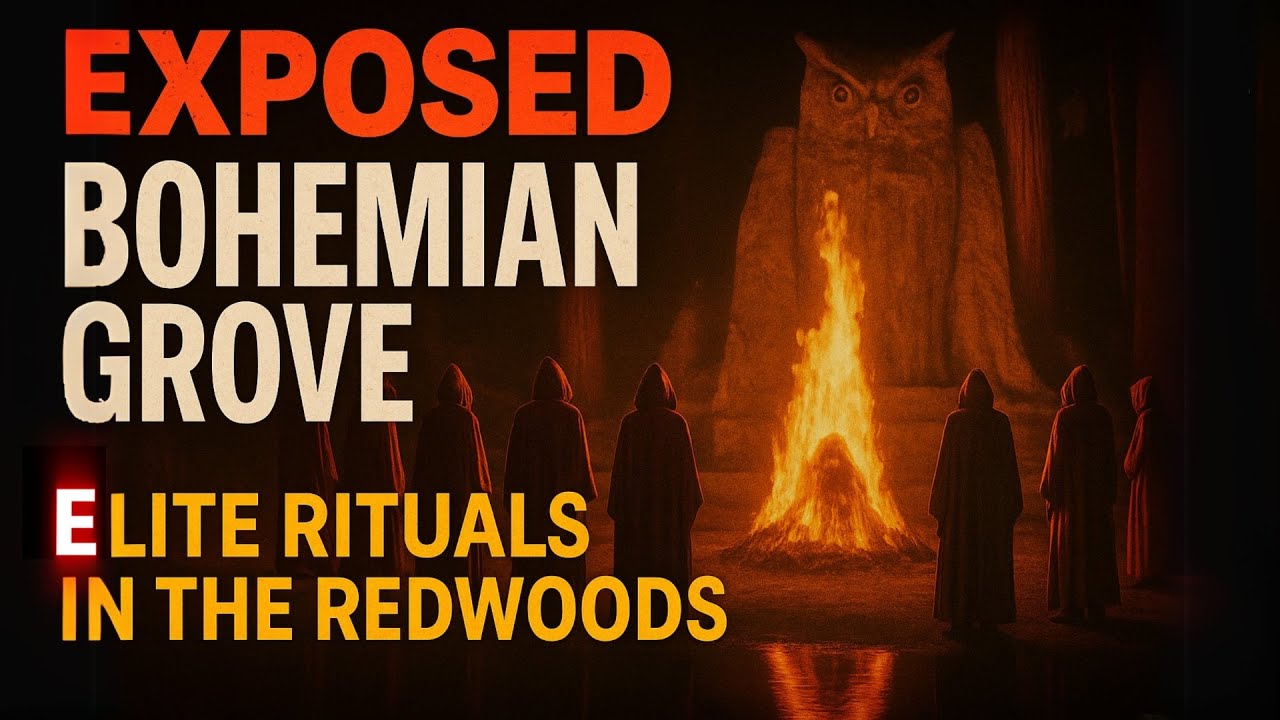
Perhaps the most infamous aspect of Bohemian Grove is the Cremation of Care, a nighttime ceremony performed at the start of each retreat. In it, robed men gather before a 40-foot stone owl—the club’s symbol—and conduct a mock sacrifice to rid themselves of “worldly concern.”
Participants burn an effigy named “Dull Care” in a fire-lit pageant involving incantations, music, and ritual drama. While club members describe it as harmless performance art—designed to release stress and open the way for uninhibited bonding—others see something more sinister.
The secrecy and symbolism have sparked allegations of paganism, occult worship, and even satanic undertones. In 2000, right-wing activist Alex Jones infiltrated the grove and filmed the Cremation of Care ceremony, fueling public suspicion and viral conspiracy theories.
Whether metaphor or mysticism, the ceremony is undeniably strange—and its symbolic abandonment of “care” by the powerful has become an unsettling metaphor for elite detachment from real-world consequences.
Presidents, Power Plays, and Locked Gates
Bohemian Grove’s guest list reads like a who’s who of American political history. Richard Nixon, Ronald Reagan, Dwight Eisenhower, and both Bush presidents attended. Nixon once called it “the most faggy goddamn thing you could imagine” but admitted its influence. Reagan and Nixon are said to have cemented their political alliance at the Grove in the 1960s.
Members of Congress, corporate titans, military generals, and global financiers also attend—often relaxing in the nude, drinking, and participating in high-end musical performances and mock plays. But amid the revelry, many believe serious conversations are taking place. While official club policy prohibits “business talk” during the retreat, numerous accounts suggest otherwise.
One of the most notable examples: the Manhattan Project, which some historians claim was first informally discussed at Bohemian Grove in the early 1940s. This pattern of “relaxation alongside influence” raises questions: How much world policy is quietly drafted here? Who gets access to this space? And who is left out?
Whistleblowers, Leaks, the Wall of Silence
Despite the Grove’s tight security, some details have emerged—leaked guest lists, whistleblower accounts, and investigative reports have shed light on what goes on beneath the redwoods.
Former attendees and staff have described a mix of opulent comfort, bizarre performances, drunken camaraderie, and pointed exclusion of women (who are not allowed full membership). Camps within the grove are often divided by status, with names like Mandalay, Caveman, and Owl’s Nest, each with their own culture and hierarchy.
Those who break the code of silence often face backlash. In addition to the Alex Jones footage, journalists like Philip Weiss (who infiltrated the Grove for Spy Magazine) and Jon Ronson (Them) have published first-hand accounts of the surreal experience.
Common themes emerge: ritualistic behavior, excessive alcohol consumption, and a strong sense of tribal identity among the ultra-elite. Yet, the Grove remains largely untouched by scandal or reform. Its private land, legal protections, and connections ensure a cloak of invulnerability few other institutions enjoy.
The Debate – Conspiracy or Consequence?
Bohemian Grove sits at the intersection of fact, speculation, and cultural anxiety. Is it truly a center of dark ritual and backroom governance—or just an eccentric vacation for powerful men?
For conspiracy theorists, the Grove is a symbol of the global elite’s unaccountable rule—a shadowy gathering where decisions are made without input from the public. The secrecy, the symbolism, and the guest list seem to confirm their worst fears.
For skeptics, it’s just an elitist version of a fraternity reunion, where political theater and ritualized bonding reinforce existing relationships but don’t necessarily determine the fate of the world.
Yet perhaps the truth lies somewhere in between. Even if no specific policies are signed, the relationships and understandings formed in such spaces are real. Trust, loyalty, and consensus—especially among those in power—are often built not in public forums, but in private rituals, shared myths, and secluded forests.
Conclusion: The Hidden Mirror of Power
Bohemian Grove remains a powerful symbol of secrecy, privilege, and ritual in modern political culture. Whether viewed as harmless tradition or a forum for elite consolidation, its existence forces us to ask uncomfortable questions about access, transparency, and who really shapes the future.
In an age where surveillance is constant and secrets are rare, Bohemian Grove stands out—not for what we know, but for what we’re not allowed to know. Its redwood canopy may hide laughter, theater, and old friendships—or it may conceal the quiet forging of tomorrow’s world order.
Either way, Bohemian Grove is not just a gathering. It is a ritual in its own right—a reflection of how power celebrates, shields, and sustains itself, out of sight, and far from accountability. In the shadows of the redwoods, the world’s most powerful men don’t just retreat from view—they remind us that true power often thrives where no one is watching.