Categories
W1 World

Heaven’s Gate and the Man Who Led 39 to Death: The Disturbing Story of Marshall Applewhite?

The Cult That Shocked America

In March 1997, police entered a luxurious mansion in Rancho Santa Fe, California, and uncovered a scene that would haunt America for decades: 39 people lying peacefully in bunk beds, covered with purple shrouds, all dressed identically in black shirts, sweatpants, and brand-new Nike Decades sneakers. Each of them had committed suicide as part of what they believed was an act of cosmic salvation.

They were all members of the Heaven’s Gate cult, led by a man named Marshall Applewhite. The mass suicide stunned the world not only for its scale but for its eerie calm and precision—raising haunting questions about how one man could convince so many educated, seemingly rational people to die for a belief in UFOs and ascension.

Who Was Marshall Applewhite?

Marshall Herff Applewhite Jr. was not always a cult leader. Born in Texas in 1931, he was the son of a Presbyterian minister and raised in a deeply religious household. Applewhite pursued a conventional life at first—earning a degree in philosophy and a master’s in music. He became a college music professor and was even married with children.

But his life took a drastic turn in the early 1970s after he was dismissed from his teaching position, allegedly due to an inappropriate relationship with a male student. Suffering from a nervous breakdown and searching for a new sense of purpose, Applewhite met Bonnie Nettles, a nurse with an interest in astrology and New Age spirituality. Together, they formed the philosophical core of what would later become Heaven’s Gate.

Applewhite and Nettles believed they were the “Two Witnesses” mentioned in the Book of Revelation and that they had been sent from another planet to help selected individuals ascend to a higher plane of existence. Their teachings combined elements of Christianity, science fiction, and conspiracy theory, creating a bizarre but strangely compelling belief system.

The Beliefs Behind Heaven’s Gate

The Heaven’s Gate theology was a confusing blend of apocalyptic Christianity, UFO mythology, and pseudoscience. Members believed that the Earth was on the verge of being “recycled,” and that only a select few would be saved by extraterrestrial beings traveling on a spaceship hidden behind the Hale-Bopp comet. According to Applewhite, in order to ascend—or “exit the human vehicle”—members had to purify themselves of earthly attachments, including sex, family, money, and individual identity.

Celibacy was a central doctrine, and at least eight male members, including Applewhite himself, underwent voluntary castration to remove any temptation of sexual urges. Members cut off all contact with their families, lived communally, and gave up their personal belongings. They were assigned new names, wore matching uniforms, and were subject to strict rules and surveillance. Over time, this isolation and regimentation created an echo chamber of belief where doubt was nearly impossible.

Heaven’s Gate: The Internet Age Cult

Heaven’s Gate was one of the first cults to take full advantage of the early internet. In the mid-1990s, the group ran a web design business called Higher Source to fund their activities. Their website, heavensgate.com, is still online today, preserved in its original form as a chilling digital artifact. Through their site and email lists, they recruited new members and disseminated Applewhite’s teachings.

The group saw the internet as a divine tool that allowed them to bypass traditional media and spread their message directly to “seekers.” This use of emerging technology gave them a sense of modernity and legitimacy and helped reinforce their sense of mission and urgency. It was also through the internet that many of the members first learned about the approaching Hale-Bopp comet, which they interpreted as the long-awaited sign to ascend.

The Shocking Final Exit: March 1997

As the Hale-Bopp comet approached Earth in 1997, Applewhite told his followers that their time had come. He believed that a spaceship trailing the comet would collect their souls, but only if they left their physical bodies behind. Over three days, in a carefully choreographed process, the group members consumed phenobarbital mixed with applesauce and vodka, followed by plastic bags placed over their heads to induce asphyxiation.

They died in waves—some helping others to die before taking their own lives. In total, 39 people (including Applewhite) perished in what remains one of the largest mass suicides on American soil. The chilling orderliness of the event—matching outfits, identical bags, and farewell videos recorded before the act—further disturbed the public and raised deeper questions about belief, vulnerability, and psychological manipulation.

What Made People Follow Him?

How could so many people be convinced to end their lives so willingly? Experts in psychology and cult behavior point to a number of factors. Many of the Heaven’s Gate members were intelligent, tech-savvy individuals who were searching for meaning in a fast-changing, uncertain world. The group offered them community, purpose, and clarity in an increasingly complex society.

Applewhite’s calm demeanor and soft-spoken charisma masked his authoritarian control. He presented himself not as a prophet or god but as a humble “teacher” helping his students evolve. Over time, this paternal dynamic created deep emotional dependency. The members weren’t coerced in the traditional sense—they were brainwashed into believing they were taking part in a divine mission.

The Cult’s Aftermath and Legacy

The media frenzy following the suicides focused on the cult’s strangeness—its obsession with UFOs, castration, and the internet. But beneath the sensationalism, Heaven’s Gate exposed real vulnerabilities in human psychology. It showed how intelligent, rational individuals could be swept into a delusional worldview when isolated and emotionally manipulated.

The incident also prompted deeper investigations into cult behavior, sparking broader conversations about religious freedom, mental health, and the power of charismatic leaders. It raised ethical questions for the press, law enforcement, and mental health professionals—how could this have been prevented? And what does it say about our society that such a tragedy could unfold so quietly?

A Cult’s Persistent Digital Ghost

Today, Heaven’s Gate lives on in the corners of the internet. Their website remains, and two surviving former members still maintain it, answering emails and sharing Applewhite’s teachings. For some, it’s a grim memorial; for others, a cautionary tale. In an age of misinformation and online radicalization, the Heaven’s Gate tragedy feels more relevant than ever.

We may never fully understand what drew 39 people to follow Marshall Applewhite into death, but their story reminds us that belief—when untethered from reality—can become deadly. The legacy of Heaven’s Gate is not just one of death, but a chilling warning about the seductive power of belonging, and how easily it can turn blind devotion into catastrophic destruction.

Categories
W1 World

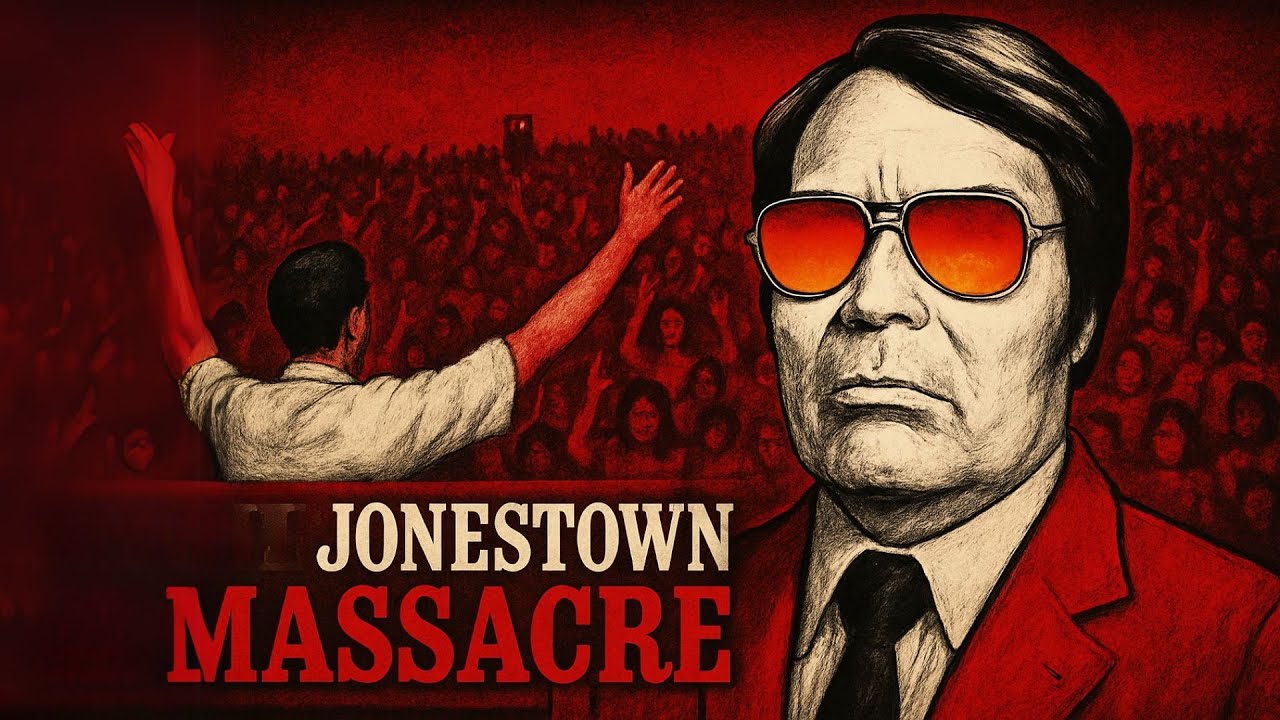
The Truth About the Jonestown Massacre: The Tragic Legacy of Jim Jones and the Peoples Temple

Introduction

On November 18, 1978, the world was stunned by a harrowing tragedy in the jungles of Guyana—the Jonestown Massacre. Over 900 members of the Peoples Temple, a religious organization led by the charismatic yet controversial figure Jim Jones, lost their lives in an event that would become synonymous with cult indoctrination, mass suicide, and the dark side of charismatic leadership.

The shockwaves of this incident rippled through society, prompting questions about the nature of belief, manipulation, and the fragility of human autonomy. As the details of the massacre emerged in the following days and weeks, it became clear that this was not merely an isolated incident but rather the culmination of years of manipulation, deception, and a relentless pursuit of power that ultimately led to an unspeakable tragedy.

The Rise of the Peoples Temple

Founded in 1955 in Indianapolis, Indiana, by Jim Jones, the Peoples Temple initially aimed to promote social justice and racial equality in a racially divided America. Jones, who claimed to be a Christian minister, blended elements of Christianity with socialist ideology, drawing in a diverse group of followers seeking purpose and community. The Peoples Temple flourished during the civil rights movement, advocating for social change, integrating congregations, and providing food and support to the needy.

However, beneath this façade of altruism lay a more sinister reality. As the organization attracted attention and membership, Jones’s control over his followers grew increasingly authoritarian. He employed a range of psychological tactics to maintain loyalty and obedience, including intense group meetings, public confessions, and the manipulation of members’ fears. Over time, dissent was quashed, and the temple’s ideology shifted from genuine community service to an increasingly paranoid worldview, where loyalty to Jones superseded personal autonomy.

Moving to Guyana: A Utopian Vision or a Cultic Nightmare?

In the early 1970s, facing mounting scrutiny and legal challenges in the United States—including allegations of financial improprieties and abuse—Jones relocated the Peoples Temple to Guyana, where he established a settlement called Jonestown. He marketed this move as an opportunity to create a utopian society free from the racism, oppression, and capitalism that he claimed plagued America. Jones portrayed himself as a messianic figure, promising his followers that together they could build a new world where social justice and equality thrived.

Life in Jonestown, however, was far from idyllic. Initially depicted as a paradise where members could live out their ideals, reports of human rights abuses, forced labor, and psychological manipulation soon began to surface. Residents lived under constant surveillance and were subjected to harsh punishments for even minor infractions. The environment was one of fear, where questioning Jones’s authority could result in severe repercussions. Jones maintained a tight grip on power, employing fear tactics to keep followers compliant and dependent on his vision, reinforcing the isolation that had already begun to define their lives.

The Deterioration of Trust and the Final Crisis

As conditions in Jonestown worsened, concerns among family members and former members in the United States grew increasingly urgent. In October 1978, Congressman Leo Ryan, motivated by reports of abuses and the plight of families seeking answers, visited Jonestown to investigate. Accompanied by a delegation of concerned relatives and journalists, Ryan’s visit was initially welcomed; however, the atmosphere quickly escalated into chaos as the realities of life in Jonestown became undeniable.

On November 18, as Ryan and his party prepared to leave Jonestown, members of the Peoples Temple attacked them, resulting in the congressman’s assassination along with several journalists and defectors. This brutal act marked a turning point, prompting Jones to initiate what he called a “revolutionary suicide.” In a twisted and fatal demonstration of loyalty, he urged his followers to take poison-laced Kool-Aid, promising that death would bring them liberation from a corrupt world. This horrific decision was framed as a final act of defiance against an oppressive society, illustrating the depths of Jones’s manipulation and the tragic consequences of blind allegiance.

The Massacre: A Shocking End

The events of that fateful day were horrific and chaotic. In total, over 900 members of the Peoples Temple died, including many children who were forced to drink the poison. The scenes of devastation were harrowing, with bodies strewn across the grounds of Jonestown, a grim testament to the unchecked power wielded by Jones. Some members attempted to escape or resist, but the overwhelming pressure to conform and the manipulation they had endured led to mass compliance.

The horror of the event was compounded by the realization that many who died were not seeking death but were caught in a web of psychological control. News of the massacre reverberated around the world, shocking the public and raising urgent questions about how such a tragedy could occur. Images of the aftermath were broadcasted, revealing the staggering loss of life and the implications of unchecked cultic influence. The sheer scale of the tragedy forced society to confront uncomfortable truths about the nature of belief, authority, and the potential for exploitation.

Aftermath and Legacy

The Jonestown Massacre had profound implications for society, law enforcement, and the way cults were perceived. It prompted investigations into the practices of the Peoples Temple and sparked a broader conversation about cult behavior and psychological manipulation. The U.S. government faced criticism for its inability to intervene and prevent the tragedy, leading to discussions on how to protect vulnerable populations from such groups.

In the wake of Jonestown, legislative efforts were made to improve the monitoring of religious organizations and cults, aiming to prevent future tragedies. The legacy of Jonestown continues to be felt today, serving as a cautionary tale about the dangers of charismatic leadership, groupthink, and the human capacity for manipulation. Documentaries, books, and films have explored the events surrounding the massacre, keeping the memory alive and educating future generations about the complexities of cults and their influence on individuals and society.

Cultural Impact and Representation

The Jonestown Massacre has become a significant cultural reference point, often depicted in various media forms. From documentaries to dramatizations, the story serves as a lens through which to examine themes of power, control, and the fragility of human belief. The phrase “drinking the Kool-Aid” has entered popular culture, symbolizing blind obedience to a dangerous ideology and cautioning against the perils of unquestioning loyalty.

This cultural footprint illustrates how deeply the events at Jonestown have resonated in the collective consciousness, prompting discussions about leadership and vulnerability in modern contexts. As society grapples with the rise of cult-like movements and extremist ideologies, the lessons from Jonestown remain painfully relevant. The continued exploration of this tragedy in popular media serves not only to memorialize the victims but also to educate audiences about the importance of critical thinking and personal agency.

Understanding the Victims

It is essential to remember that behind the statistics were real individuals—mothers, fathers, children, and friends—whose lives were irrevocably changed by their commitment to a vision that ultimately turned tragic. Many members believed they were part of a revolutionary movement aimed at social justice and equality, only to find themselves trapped in a nightmare of manipulation and coercion. The personal stories of those who died reveal the depth of their beliefs and the tragic reality of their circumstances.

Families of the victims have sought to preserve the memory of their loved ones and to educate others about the dangers of cults. Survivors who escaped Jonestown have also shared their stories, contributing to the ongoing discourse about recovery, resilience, and the importance of recognizing the signs of manipulation. Their testimonies serve as vital reminders of the humanity behind the tragedy and the imperative to remain vigilant against such exploitation.

Conclusion

The Jonestown Massacre remains one of the most chilling events in modern history, encapsulating the dangers of fanaticism and the potential for charismatic leaders to exploit vulnerable individuals. As we reflect on this tragic episode, it serves as a reminder to remain vigilant against the seduction of absolute ideologies and to prioritize critical thinking, compassion, and open dialogue.

By understanding the complexities of the Jonestown Massacre, we honor the memory of those who lost their lives and work toward preventing such tragedies in the future. The lessons of Jonestown resonate today, urging us to examine our beliefs, question authority, and foster communities that value individual autonomy and critical thought over blind allegiance.