Introduction: Deadly Precision in the Shadows
They were never meant to be seen. The world’s deadliest snipers operated not in open confrontation, but in the ghostly realm of silence, patience, and a single well-placed bullet. They turned the battlefield into a psychological chessboard, unnerving entire armies and altering the course of wars from hidden vantage points.
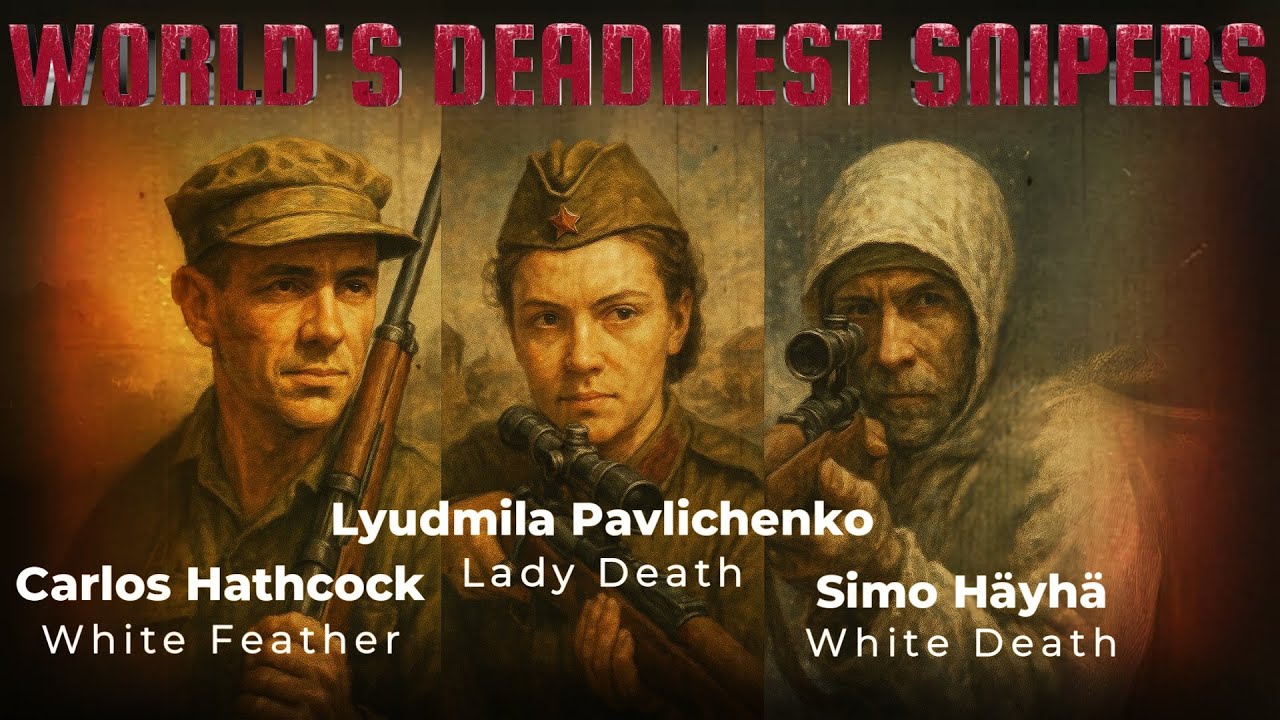
Snipers are more than just shooters—they are master tacticians, survivalists, and psychological weapons. In this article, we trace the lives and legends of three of the most lethal snipers in military history: Carlos Hathcock, Lyudmila Pavlichenko, and Simo Häyhä. Each hailed from different corners of the globe, but all shared one thing in common: they became mythic figures cloaked in deadly precision.
Carlos Hathcock: White Feather of Vietnam
In the dense, humid jungles of Vietnam, Gunnery Sergeant Carlos Hathcock II became a whispered nightmare among North Vietnamese troops. Born in Arkansas in 1942, Hathcock joined the U.S. Marine Corps at the age of 17, bringing with him a love for shooting that had defined his childhood.
What made Hathcock legendary wasn’t just his 93 confirmed kills—although many estimate the real number to be much higher—but his ability to stalk enemy lines for days, undetected. His most famous mission involved crawling over 1,500 yards of open field, inch-by-inch, for four days and three nights to eliminate a high-ranking North Vietnamese Army officer. He did it without being spotted once.
His use of a white feather in his bush hat led to a bounty being placed on his head, reportedly $30,000—the highest for any American sniper. The Viet Cong called him “White Feather Sniper”, and even elite enemy teams failed to track him down.
Hathcock’s legacy wasn’t just built on lethality, but on a code of discipline and honor. He later helped establish the U.S. Marine Corps Sniper School, shaping future generations of military marksmen. Severely burned while rescuing fellow Marines from a burning vehicle, Hathcock retired with a legacy unmatched and a spirit never broken.
Lyudmila Pavlichenko: Lady Death Rises
In the rubble-strewn battlefields of World War II, a young Soviet woman emerged as one of the most lethal snipers in history. Lyudmila Pavlichenko, nicknamed “Lady Death,” recorded 309 confirmed kills, including 36 enemy snipers, making her the most successful female sniper of all time.
Born in Ukraine in 1916, she was a student and amateur sharpshooter when the German invasion of the Soviet Union in 1941 changed her life. She joined the Red Army’s 25th Rifle Division and quickly became a symbol of Soviet resistance.
Pavlichenko fought in the sieges of Odessa and Sevastopol, enduring hellish trench warfare and constant German offensives. She was wounded four times but kept returning to the front. Her reputation spread not only due to her impressive kill count but also because she defied gender expectations, becoming a propaganda icon.
In 1942, the Soviet Union sent her on a goodwill tour of the United States, where she met Eleanor Roosevelt and gave speeches that shocked American audiences. One famous quote remains:
“I am 25 years old and I have killed 309 fascist invaders. Do you not think, gentlemen, that you have been hiding behind my back for too long?”
Pavlichenko retired from active service due to injury and trained other snipers for the rest of the war. Her life remains a testament to courage, intellect, and unflinching resolve.
Simo Häyhä: The White Death of Finland
The winter of 1939 was brutal in Finland, and the invading Soviet forces learned that the cold was the least of their problems. Simo Häyhä, a quiet Finnish farmer and hunter, became the most feared sniper of the Winter War—a 105-day conflict between Finland and the Soviet Union.
Nicknamed “The White Death,” Häyhä killed over 500 Soviet soldiers, with 505 confirmed sniper kills and an additional 200 with submachine guns, all in less than four months. Remarkably, he used iron sights, not a scope, to avoid the sun’s reflection and remain hidden in the snow.
Häyhä built snowbanks to conceal himself, kept snow in his mouth to prevent breath mist from giving away his position, and endured temperatures as low as -40°C. The Soviets tried everything—artillery, snipers, ambushes—to eliminate him, all in vain.
He was eventually hit by an explosive round that shattered his jaw and left him in a coma for a week. Yet, Häyhä survived, recovered, and lived until 2002. Despite his incredible kill count, he remained humble and quiet, rarely speaking about the war.
His battlefield genius, patience, and resilience have earned him legendary status in military circles and beyond.
Tools of the Trade: Lethal Sniper’s Edge
The common thread among these snipers wasn’t just deadly aim—it was discipline, patience, and intimate knowledge of terrain and human behavior. A great sniper blends into their environment, waits for the perfect moment, and disappears before anyone even realizes a shot was fired.
Whether using scoped rifles or iron sights, these warriors demonstrated that warfare isn’t only fought with massed troops and artillery. Sometimes, one person—hidden, silent, and unseen—can shape the entire outcome.
Snipers often had to endure isolation, extreme weather, and psychological strain, but those like Hathcock, Pavlichenko, and Häyhä turned these obstacles into advantages. Their kills weren’t just numbers—they were missions accomplished under impossible odds.
Legacy: When Shadows Become Legend
What makes the legacy of these snipers endure is not just the body count—it’s what they represented in their times. Carlos Hathcock became a symbol of the Marine Corps’ elite skill. Lyudmila Pavlichenko stood as a feminist icon of power in a male-dominated world. And Simo Häyhä showed how one man could hold the line against an army.
Today, militaries around the world continue to study their tactics. Modern sniper training programs—from the U.S. Navy SEALs to Russian Spetsnaz—teach lessons rooted in these legends’ real-life experiences.
Their stories remind us that in war, visibility does not equal power. The most dangerous threats are often the ones you never see coming.
Conclusion: Death in Silence, Legends in Echoes
The world’s most lethal snipers were not monsters—they were soldiers shaped by the brutal realities of their time. They didn’t seek fame, yet they became myths. They didn’t roar into battle—they waited in silence, letting their rifles speak only once.
Their names—White Feather, Lady Death, The White Death—have become part of military folklore. But behind the nicknames were real people, who endured loneliness, injury, and unimaginable tension. In the shadows of history, they remain not just as killers, but as symbols of strategic brilliance, resilience, and the haunting power of one well-aimed shot.