Categories
W1 World

Redefining Boundaries: The Global Impact of World War II’s Aftermath

The aftermath of World War II, the most destructive event in human history, brought about profound changes on a global scale. The war’s end marked a significant turning point, leading to the redrawing of national boundaries, the rise and fall of empires, and a new geopolitical landscape characterized by the division between democratic freedom in the West and authoritarian repression in the East. This article explores the transformative effects of World War II and the factors that led to the bifurcation of the world into two distinct spheres of influence.

The Redrawing of the Map

One of the most immediate consequences of World War II was the redrawing of national boundaries. Europe, the epicenter of the conflict, witnessed significant territorial changes. Germany, the primary aggressor, was divided into four occupation zones controlled by the United States, the Soviet Union, the United Kingdom, and France. This division laid the groundwork for the eventual establishment of two separate German states: the Federal Republic of Germany (West Germany) and the German Democratic Republic (East Germany).

In Eastern Europe, the Soviet Union expanded its influence, incorporating the Baltic states (Estonia, Latvia, and Lithuania) and gaining control over territories such as Eastern Poland, Bessarabia, and Northern Bukovina. Poland itself was shifted westward, losing territory to the Soviet Union but gaining former German lands. These changes were part of a broader Soviet strategy to create a buffer zone against potential future invasions.

In Asia, the aftermath of World War II saw the end of Japanese imperial expansion. Japan was stripped of its overseas territories, including Korea, Taiwan, and Manchuria. Korea was divided along the 38th parallel into Soviet and American occupation zones, eventually leading to the creation of two separate states: North Korea and South Korea. The independence movements in Asia and Africa also gained momentum, leading to the decolonization of many regions and the birth of new nations.

The Collapse of Major Empires

The war accelerated the decline of major European empires. The British Empire, weakened by the immense cost of the war, began to dismantle its colonial holdings. India, the “jewel in the crown,” gained independence in 1947, followed by the partition into India and Pakistan. The independence of Burma (Myanmar) and Ceylon (Sri Lanka) soon followed.

The French Empire faced similar challenges. The war had weakened French control over its colonies, and independence movements gained strength. In 1945, Vietnam declared its independence from France, leading to the First Indochina War. Algeria’s fight for independence culminated in the Algerian War, which ultimately led to Algeria gaining independence in 1962.

Other European powers, such as the Netherlands and Belgium, also faced decolonization pressures. The Dutch East Indies (Indonesia) and the Belgian Congo (Democratic Republic of Congo) achieved independence in the years following the war. The process of decolonization continued throughout the mid-20th century, fundamentally altering the political landscape of Asia and Africa.

The Birth of the United Nations

In the wake of World War II, the international community sought to establish a framework for preventing future conflicts and promoting peace. The result was the creation of the United Nations (UN) in 1945. The UN aimed to provide a platform for dialogue and cooperation among nations, addressing issues related to security, human rights, and development.

The establishment of the UN marked a significant shift in international relations, reflecting the lessons learned from the failures of the League of Nations. The UN Charter emphasized the principles of sovereign equality, non-interference in domestic affairs, and the peaceful resolution of disputes. The formation of specialized agencies, such as the World Health Organization (WHO) and the United Nations Educational, Scientific and Cultural Organization (UNESCO), further demonstrated the commitment to global cooperation.

The Emergence of the Cold War

While the end of World War II brought relief and hope for many, it also set the stage for a new conflict: the Cold War. The ideological differences between the United States and the Soviet Union, coupled with their respective spheres of influence, led to a protracted struggle for global dominance.

The division of Europe into Eastern and Western blocs was a key feature of the Cold War. The United States and its Western allies promoted democracy, capitalism, and individual freedoms, while the Soviet Union and its Eastern European satellites enforced communist ideologies and centralized control. This division was symbolized by the Iron Curtain, a term popularized by Winston Churchill to describe the boundary separating the free West from the repressive East.

The Cold War manifested in various forms, including political, economic, and military confrontations. The Marshall Plan, initiated by the United States in 1948, aimed to rebuild and stabilize Western European economies to prevent the spread of communism. In response, the Soviet Union established the Council for Mutual Economic Assistance (COMECON) to coordinate economic activities among its Eastern European allies.

Military alliances further solidified the division. The North Atlantic Treaty Organization (NATO) was formed in 1949 as a collective defense pact among Western nations, while the Warsaw Pact, established in 1955, united the Soviet Union and its Eastern European allies in a similar defense arrangement. These alliances created a balance of power that deterred direct conflict but fueled proxy wars and arms races.

The Impact on Global Politics and Society

The aftermath of World War II reshaped global politics and society in profound ways. The war’s devastation highlighted the need for international cooperation and humanitarian efforts. The Universal Declaration of Human Rights, adopted by the UN in 1948, set forth fundamental human rights and freedoms that nations were urged to uphold.

Economically, the war accelerated technological advancements and industrial growth. The United States emerged as the dominant economic power, leading efforts to rebuild war-torn Europe and Japan. The Bretton Woods Conference in 1944 established the International Monetary Fund (IMF) and the World Bank, laying the foundation for a new global economic order.

Socially, the war brought about significant changes in attitudes and norms. The contributions of women and minorities to the war effort challenged traditional gender roles and racial discrimination, paving the way for civil rights movements in the subsequent decades. The horrors of the Holocaust and other wartime atrocities also prompted a reevaluation of human rights and the necessity of preventing genocide and crimes against humanity.

In conclusion, the aftermath of World War II was a period of immense transformation and complexity. The war’s end brought about the redrawing of national boundaries, the collapse of major empires, and the emergence of new nations. The establishment of the United Nations reflected a collective desire for peace and cooperation, while the onset of the Cold War highlighted the deep ideological divisions between East and West.

The impact of World War II continues to resonate in contemporary global politics, economics, and society. The lessons learned from the war and its aftermath remain relevant, reminding us of the importance of international cooperation, the protection of human rights, and the pursuit of peace in an ever-changing world.

Categories
W1 World

Herbert Hoover: A Hero of Humanity or a Villain of the Great Depression?

Herbert Hoover, the 31st President of the United States, is a figure who has sparked considerable debate among historians and the public alike. His career was marked by significant accomplishments and controversies, leading to his legacy being viewed through a lens of contradictions. Some praise him for his humanitarian efforts and administrative skills, while others criticize him for his role in the Great Depression. This article aims to explore both perspectives, painting a comprehensive picture of Herbert Hoover as both a hero and a villain, depending on one’s viewpoint.

Herbert Hoover: The Humanitarian Hero

Herbert Hoover’s early life and career were characterized by a profound commitment to humanitarianism. Born in 1874 in West Branch, Iowa, Hoover was orphaned at a young age and raised by relatives. His early experiences of hardship perhaps fueled his later dedication to alleviating human suffering.

Hoover’s humanitarian reputation was cemented during World War I, when he organized the Commission for Relief in Belgium (CRB). The CRB provided food and aid to millions of Belgians who were caught in the crossfire of the war. Hoover’s efforts in Belgium were extraordinary, showcasing his organizational prowess and deep compassion. He navigated complex political landscapes, securing cooperation from the Allies and Central Powers to ensure the delivery of aid. His work saved countless lives and earned him international acclaim as a humanitarian hero.

In 1917, Hoover was appointed as the head of the U.S. Food Administration, where he continued his humanitarian efforts by implementing programs to conserve food and boost agricultural production. His slogan, “Food will win the war,” emphasized the importance of food security for the war effort. Hoover’s leadership ensured that both the American military and European allies were well-supplied, further solidifying his reputation as a capable and compassionate leader.

Herbert Hoover: The Innovative Administrator

Beyond his humanitarian work, Hoover was also an innovative administrator. After World War I, he served as the U.S. Secretary of Commerce under Presidents Warren G. Harding and Calvin Coolidge. In this role, Hoover promoted economic modernization and efficiency. He championed the use of new technologies and scientific management in industry, which contributed to economic growth during the 1920s.

Hoover’s tenure as Secretary of Commerce saw significant achievements, including the standardization of commercial practices, the promotion of aviation and radio, and the improvement of infrastructure. His forward-thinking approach helped lay the groundwork for modern economic policies and practices. Hoover’s ability to anticipate and adapt to technological advancements demonstrated his visionary leadership.

Herbert Hoover: The Villain of the Great Depression

Despite his earlier successes, Herbert Hoover’s presidency is often overshadowed by the onset of the Great Depression. Elected in 1928, Hoover inherited a booming economy, but the stock market crash of 1929 plunged the nation into economic turmoil. Hoover’s response to the crisis has been widely criticized, and he is often depicted as a villain who failed to alleviate the suffering of millions of Americans.

Critics argue that Hoover’s adherence to a conservative economic philosophy, which emphasized limited government intervention, exacerbated the Depression. He believed that the economy would naturally recover and that direct federal relief would undermine individual initiative. As a result, his administration’s response to the crisis was perceived as inadequate and indifferent to the plight of ordinary citizens.

Hoover did implement some measures to combat the Depression, such as the creation of the Reconstruction Finance Corporation (RFC) to provide loans to struggling businesses and banks. However, these efforts were seen as too little, too late. Hoover’s reluctance to provide direct aid to individuals and his focus on balancing the federal budget further alienated the public.

The infamous “Bonus Army” incident in 1932, where World War I veterans were forcibly removed from Washington, D.C. after demanding early payment of promised bonuses, further tarnished Hoover’s image. The violent clash between veterans and federal troops under Hoover’s command painted him as callous and out of touch with the needs of the people.

Herbert Hoover: A Man of Contradictions

Herbert Hoover’s legacy is undeniably complex. On one hand, he was a compassionate humanitarian whose efforts saved millions of lives during and after World War I. His work in Belgium and his leadership in the U.S. Food Administration showcased his dedication to alleviating human suffering. As Secretary of Commerce, he demonstrated innovative thinking and a commitment to economic modernization.

On the other hand, Hoover’s presidency during the Great Depression is often viewed as a period of failure and insensitivity. His conservative economic policies and reluctance to provide direct federal aid to individuals are seen as contributing to the prolonged suffering of millions of Americans. The Bonus Army incident and his perceived indifference to the struggles of ordinary citizens further damaged his reputation.

In many ways, Herbert Hoover was a man of his time, shaped by the values and beliefs of his era. His humanitarian efforts were groundbreaking, but his conservative economic philosophy was ill-suited to the unprecedented challenges of the Great Depression. Hoover’s legacy serves as a reminder of the complexities of historical figures, who can be both heroes and villains depending on the context and perspective.

Ultimately, Herbert Hoover’s life and career illustrate the duality of human nature and the impact of individual actions on the course of history. Whether viewed as a hero or a villain, Hoover remains a significant figure whose contributions and failures continue to be studied and debated. His story is a testament to the challenges and contradictions inherent in leadership, and the enduring question of how best to balance compassion and pragmatism in times of crisis.

Categories
W1 World

The Fatal Error: How Hitler’s Strategic Blunders Led to His Death in the Führerbunker

In April 1945, the world was on the brink of a monumental shift. Adolf Hitler, the architect of the most devastating conflict in human history, found himself cornered in his bunker beneath the Reich Chancellery in Berlin. As the relentless advance of Stalin’s Red Army pressed from the east and the Western Allied forces surged through France and Belgium, the once seemingly invincible Führer faced the collapse of his empire. As the walls of the bunker seemed to close in, Hitler had ample time to reflect on the critical errors that had led to his downfall. Among these mistakes, one stands out as the most fatal: his decision to invade the Soviet Union.

The Invasion of the Soviet Union: Operation Barbarossa

The decision to invade the Soviet Union, codenamed Operation Barbarossa, was driven by Hitler’s long-held ideological goals. He envisioned a vast eastern empire, rich in resources, that would secure Germany’s dominance and provide Lebensraum, or “living space,” for the German people. On June 22, 1941, Germany launched a massive invasion of the Soviet Union, initially achieving stunning success with rapid advances and huge encirclements of Soviet troops.

However, the invasion quickly became mired in difficulties. Hitler had underestimated the Soviet Union’s ability to recover from initial losses and underestimated the logistical challenges of fighting on such a vast front. The harsh Russian winter further compounded these difficulties, leading to severe casualties and equipment losses among German forces. By the end of 1941, the war on the Eastern Front had become a protracted, brutal struggle that would drain German resources and morale.

Strategic Miscalculations and Hubris

One of Hitler’s most glaring strategic miscalculations was his belief in a quick victory over the Soviet Union. His disdain for Soviet military capabilities and his ideological contempt for Slavic people led him to underestimate both the resilience of the Soviet state and the will of its people to resist. This hubris was evident in the logistical planning, which failed to adequately prepare for a prolonged campaign in a vast, inhospitable terrain.

The failure to capture Moscow in 1941 was a turning point. Hitler’s insistence on capturing economically significant targets like Ukraine and the Caucasus oil fields diverted resources and attention from a more focused approach on the Soviet capital. This dispersion of effort weakened the German offensive and allowed the Soviets to regroup and counterattack, culminating in the Battle of Moscow, which marked the first major defeat of the Wehrmacht in World War II.

The Turning Point: The Battle of Stalingrad

The Battle of Stalingrad (1942-1943) was the next pivotal moment that sealed Hitler’s fate. Determined to capture the city named after his arch-enemy, Joseph Stalin, Hitler ordered his forces into a grueling, house-to-house battle that stretched German resources to the breaking point. Despite the strategic insignificance of Stalingrad itself, Hitler’s obsession with taking the city led to a catastrophic loss of manpower and equipment.

When the Soviet forces launched a massive counteroffensive, codenamed Operation Uranus, they encircled the German 6th Army, cutting off all supply lines. Hitler’s refusal to allow a retreat led to the annihilation of an entire German army group. The defeat at Stalingrad was not just a military disaster but also a psychological blow to the German war effort, marking the beginning of a steady decline that Hitler could not reverse.

Overextending the War: Opening Multiple Fronts

Another critical mistake was Hitler’s decision to declare war on the United States following the Japanese attack on Pearl Harbor in December 1941. This brought the world’s most industrialized nation into the European conflict, dramatically shifting the balance of power. The United States’ vast industrial capacity and manpower would prove decisive in the war’s outcome, providing the Allies with the resources needed to launch offensives on multiple fronts.

By 1944, the Allies had opened a second front in Western Europe with the D-Day landings in Normandy, forcing Germany to fight a two-front war. This stretched German forces thin and compounded the already severe resource shortages. The relentless Allied bombing campaigns further crippled German industrial capacity, making it impossible to replace lost equipment and vehicles.

The Final Days: Hitler’s Isolation and Delusion

In the final days of the war, Hitler’s isolation and detachment from reality became increasingly apparent. Encased in the Führerbunker, he continued to issue orders to non-existent armies and clung to the hope of a miraculous reversal. His refusal to negotiate or consider a ceasefire condemned countless more lives to the war’s final, brutal months.

Hitler’s health deteriorated, and his once formidable charisma and energy waned. Those around him described a man increasingly consumed by paranoia and despair, unable to accept responsibility for the catastrophe he had brought upon Germany and Europe. His worldview, rooted in racial ideology and a belief in Germany’s destined dominance, crumbled under the weight of defeat.

The Legacy of a Fatal Mistake

As Hitler sat in his bunker, awaiting the inevitable, the consequences of his decisions became painfully clear. The invasion of the Soviet Union, rooted in hubris and ideological fervor, was the fatal mistake that not only led to Germany’s military defeat but also ensured the complete destruction of the Nazi regime. It drained the country’s resources, manpower, and morale, leaving it vulnerable to the Allied offensives that would eventually bring about its downfall.

Hitler’s suicide on April 30, 1945, was the final act in a life marked by violence, destruction, and unyielding ambition. His death symbolized the end of the Nazi regime, but the scars of his rule—millions of lives lost, cities destroyed, and a continent in ruins—would take generations to heal.

A Cautionary Tale

The story of Adolf Hitler’s rise and fall is a cautionary tale about the dangers of totalitarianism, unchecked power, and ideological extremism. His decision to invade the Soviet Union, driven by delusions of grandeur and racial superiority, was a strategic blunder of immense proportions. It not only hastened his own demise but also brought untold suffering to millions. As history continues to reflect on World War II, the lessons of Hitler’s fatal mistake remain as relevant as ever, reminding us of the catastrophic consequences that can arise from the hubris of leaders.

Categories
W1 World

The Sunken Train: Rediscovering Locomotive No. 3512 in Canada’s Slocan Lake

In 1947, a dramatic incident unfolded on the tranquil waters of Slocan Lake, nestled in the remote mountains of British Columbia, Canada. Locomotive No. 3512, along with its entire assembly, sank to the lake’s depths, creating a mystery that would linger for decades. Seventy-five years later, a daring expedition was launched to locate and potentially recover this historic steam locomotive, driven by a team of divers and historians. Among them was a remarkable 99-year-old brakeman, one of the last living survivors of the sunken train incident, whose firsthand accounts brought the story to life once more.

The Incident of 1947

The story of Locomotive No. 3512 begins in the early 20th century, a period when trains were a vital lifeline for the remote communities of British Columbia. On that fateful day in 1947, the train was navigating a treacherous section of track that ran perilously close to Slocan Lake’s edge. A series of unfortunate events, possibly exacerbated by weather conditions and mechanical failure, led to the train derailing and plunging into the lake. The locomotive and its cars quickly disappeared into the cold, dark waters, settling on the lake bed, some parts lying up to 1000 feet below the surface.

Miraculously, there were no fatalities, but the incident left an indelible mark on the local community. The train was never recovered, its resting place a mystery and a source of local lore and intrigue for generations.

The Expedition Begins

The expedition to locate and recover Locomotive No. 3512 was the brainchild of diver and historian Alex Johnson, who had long been fascinated by the tales of the sunken train. With the help of advanced sonar technology and underwater robots, Johnson’s team hoped to pinpoint the exact location of the locomotive and assess the feasibility of its recovery.

Joining the team was Thomas McAllister, a former brakeman who had been aboard the train on that fateful day. At 99 years old, McAllister’s memories were invaluable, providing critical insights into the conditions and events that led to the derailment. His involvement added a poignant, personal dimension to the expedition, bridging the gap between past and present.

Challenges of the Deep

Slocan Lake, one of Canada’s deepest lakes, posed significant challenges for the team. The lake’s depths reach up to 1000 feet, with frigid temperatures and low visibility complicating the search. The team had to carefully plan each dive, balancing the need for thorough exploration with the dangers inherent in deep-water diving.

The use of sonar and remotely operated vehicles (ROVs) proved crucial in mapping the lake bed and identifying potential wreck sites. After weeks of searching, the team finally located a large object believed to be the remains of Locomotive No. 3512. The discovery was a milestone, but the work was far from over. The condition of the locomotive and the surrounding terrain needed to be carefully assessed before any recovery attempt could be made.

An Unexpected Discovery

As the expedition continued, the team began to uncover more than just the remnants of the train. They stumbled upon a collection of artifacts, including personal items that had belonged to the train’s crew and passengers. These artifacts, preserved by the cold lake waters, provided a tangible connection to the past, bringing to light the human stories intertwined with the locomotive’s history.

The recovery of these items also revealed a broader narrative about the communities around Slocan Lake. The team discovered letters, photographs, and tools that painted a vivid picture of life in the mid-20th century in this remote part of British Columbia. These finds underscored the close-knit nature of the communities, where the railway played a central role in daily life and local identity.

The Recovery Effort

With the wreck site confirmed, the team faced the daunting task of planning the recovery of Locomotive No. 3512. The depth and weight of the locomotive, combined with the challenging underwater conditions, made this a complex and costly operation. Despite these obstacles, there was a strong desire among the team and the local community to see the locomotive raised and preserved as a piece of regional history.

The logistics of the recovery involved engineering experts, divers, and historians working together to design a plan that minimized risk to both the team and the historic locomotive. As preparations advanced, the project garnered widespread interest, drawing attention from history enthusiasts and media outlets across the country.

Reflections on History and Legacy

While the primary goal of the expedition was the recovery of Locomotive No. 3512, the journey also fostered a deeper appreciation for the historical and cultural significance of the railway in Canada’s development. The train was more than just a machine; it was a symbol of connection, progress, and the shared experiences of those who lived and worked along its routes.

The involvement of Thomas McAllister added a poignant human element to the story, highlighting the importance of preserving not only physical artifacts but also the memories and stories of those who witnessed history firsthand. His recollections offered invaluable context and nuance, reminding us that history is lived and experienced, not just recorded.

In conclusion, the expedition to recover Locomotive No. 3512 from the depths of Slocan Lake was a remarkable blend of historical research, technological innovation, and human determination. While the challenges of deep-water recovery remain formidable, the discoveries made during the search have already enriched our understanding of the region’s history and the lives of the people who once called it home.

As plans for the locomotive’s recovery continue, the story of Locomotive No. 3512 serves as a powerful reminder of the enduring impact of history on our present and future. It is a testament to the resilience of communities, the importance of preserving our shared heritage, and the enduring allure of the mysteries that lie beneath the surface, waiting to be uncovered.

Categories
W1 World

Oliver Cromwell: Hero or Villain? The Complex Legacy of England’s Controversial Leader

Oliver Cromwell is a figure who continues to provoke debate and controversy centuries after his death. Revered by some as a champion of liberty and despised by others as a ruthless dictator, Cromwell’s legacy is a complex tapestry woven from both heroic and villainous threads. This article delves into the different facets of Cromwell’s life and rule, examining why perceptions of him vary so widely and exploring the lasting impact of his actions on English and Irish history.

Early Life and Rise to Power

Oliver Cromwell was born in 1599 into a moderately wealthy family in Huntingdon, England. His early life was relatively uneventful, marked by a brief period of study at Cambridge and some years of managing family estates. It wasn’t until the outbreak of the English Civil War in 1642 that Cromwell’s life took a dramatic turn. He joined the Parliamentary forces, quickly rising through the ranks due to his military acumen and leadership skills. Cromwell’s New Model Army played a pivotal role in the defeat of the Royalist forces, leading to the capture and eventual execution of King Charles I.

The Protectorate and Dictatorial Rule

Following the king’s execution, England was declared a commonwealth, with Cromwell eventually assuming the role of Lord Protector in 1653. During his rule, Cromwell wielded considerable power, dissolving the Rump Parliament and later the Barebones Parliament, consolidating authority in his hands. His government enacted various reforms, including efforts to promote religious tolerance for Protestant sects, though this did not extend to Catholics or other religious minorities.

Cromwell’s rule is often characterized by his use of military force to maintain order and his strict moral code, which included the suppression of activities considered sinful, such as theater and gambling. These actions have led some historians to view him as a dictator who curtailed personal freedoms and governed with an iron fist.

Controversy and Criticism: The Irish Campaign

Cromwell’s military campaigns in Ireland remain one of the most contentious aspects of his legacy. In 1649, he led a brutal campaign against Irish Catholic forces, which culminated in the massacres at Drogheda and Wexford. These events are often cited as evidence of Cromwell’s ruthlessness and are a primary reason for his vilification in Irish historical memory. To this day, many Irish view Cromwell as a tyrant responsible for atrocities and a figure of deep-seated resentment.

Cromwell justified his actions in Ireland as a necessary measure to quell rebellion and secure Protestant rule. However, the severity of his actions has left a lasting scar, contributing to the complex and often strained relationship between England and Ireland.

Reforms and the Legacy of Republicanism

Despite his authoritarian tendencies, Cromwell did implement several reforms that some view as progressive. He championed religious tolerance for various Protestant groups, attempted to reform the legal system, and supported educational initiatives. His promotion of meritocracy within the military and government can be seen as a precursor to more modern democratic principles.

Moreover, Cromwell’s establishment of the Protectorate marked a significant departure from absolute monarchy, laying the groundwork for the eventual development of constitutional monarchy in England. His actions challenged the notion of divine right, reinforcing the idea that rulers could be held accountable by their subjects—a concept that would resonate through subsequent centuries.

Hero or Villain?

The question of whether Cromwell is a hero or villain largely depends on one’s perspective and the specific aspects of his rule that are emphasized. For some, particularly in England, Cromwell is seen as a defender of parliamentary sovereignty and a figure who stood against tyranny. His military leadership and administrative reforms are often highlighted as evidence of his positive contributions.

Conversely, many in Ireland and those who focus on his more authoritarian measures view him as a villain. His role in the subjugation of Ireland and the harshness of his rule are cited as examples of his despotic tendencies. The destruction and suffering caused by his policies in Ireland are still remembered as a dark chapter in history.

A Legacy of Complexity

Oliver Cromwell’s legacy is one of profound complexity, marked by a mixture of authoritarianism, reform, and military prowess. He was a figure of his time, shaped by the turbulent political and religious landscape of 17th-century Britain. Whether viewed as a hero or a villain, Cromwell undeniably altered the course of English and Irish history, with effects that reverberate to this day.

His life and actions serve as a reminder of the multifaceted nature of historical figures, who often embody both admirable and condemnable traits. In studying Cromwell, we are reminded that history is rarely black and white, and that the legacies of influential figures are often subject to interpretation and reevaluation over time. Finally, Oliver Cromwell remains a potent symbol of the complexities of leadership and the enduring struggle over power and governance.

Categories
W1 World

The Top 5 Ancient Assassination Missions: History’s Stealthy Game-Changers

Assassination has long been a tool of power, a shadowy means to reshape the world by removing key individuals. Throughout history, rulers and leaders have sought the services of elite troops, capable of carrying out covert and highly dangerous missions. These warriors, often trained to perfection in the arts of stealth, combat, and strategy, have performed acts that have changed the course of history. Their stories are a testament to the lengths to which individuals and empires would go to secure their power and eliminate their enemies.

From Ancient Greece to the frozen North, rulers have always needed their elite troops. These specialized warriors, revered and feared in equal measure, were often the deciding factor in political and military conflicts. Here, we explore five notorious groups of elite assassins, detailing the intricate complexity of their missions and how they operated.

1. The Assassins

The Assassins, also known as the Nizari Ismailis, were a secretive Islamic sect that emerged in the late 11th century in Persia. Led by Hassan-i Sabbah, they established their base in the fortress of Alamut. The Assassins became infamous for their targeted killings of political and religious figures who opposed their cause.

Operation Methodology: The Assassins employed a combination of stealth, intelligence, and strategic infiltration. Young men were rigorously trained in martial arts, disguise, and the languages and customs of their enemies. They would blend into communities, sometimes for years, before striking.

Notable Assassination: One of their most famous assassinations was that of Nizam al-Mulk, the vizier of the Seljuk Empire, in 1092. The Assassin disguised as a Sufi mystic approached Nizam al-Mulk during his travels and fatally stabbed him. This act sent shockwaves through the empire, highlighting the Assassins’ reach and influence.

2. The Berserkers

The Berserkers were Norse warriors known for their ferocity and reckless courage, often described as fighting in a trance-like fury. Though primarily known for their role in battle, Berserkers were also used in targeted killings and intimidation missions.

Operation Methodology: Berserkers utilized their fearsome reputation and physical prowess to achieve their objectives. They were believed to enter a berserk state, a form of altered consciousness, which made them impervious to pain and fear, allowing them to take on seemingly impossible missions.

Notable Assassination: King Harald Hardrada of Norway, himself a former Berserker, employed them to eliminate rivals and secure his throne. One such mission involved the assassination of Einar Thambarskelfir, a powerful noble who opposed Harald. The Berserkers ambushed and killed Einar during a feast, cementing Harald’s control.

3. The Varangian Guard

The Varangian Guard was an elite unit of the Byzantine Army, primarily composed of Norse and later Anglo-Saxon mercenaries. Known for their loyalty and formidable skills in combat, they served as personal bodyguards to the Byzantine emperors and were often used for special missions, including assassinations.

Operation Methodology: Varangians were highly disciplined and trained in various combat techniques. They utilized their imposing presence and combat skills to infiltrate and eliminate targets. Their foreign origins also made them ideal for missions requiring discretion and deniability.

Notable Assassination: In 969, the Varangian Guard was tasked with assassinating Emperor Nikephoros II Phokas. The plot involved his wife, Theophano, who conspired with her lover, John I Tzimiskes. The Varangians gained entry to the palace and killed Nikephoros in his sleep, paving the way for John’s ascension to the throne.

4. Aztec Eagle Warriors

The Aztec Eagle Warriors were a prestigious military order in the Aztec Empire, renowned for their bravery and effectiveness in warfare. They were often employed in missions that required not just brute strength but also tactical acumen and stealth.

Operation Methodology: Eagle Warriors were experts in ambush tactics and guerrilla warfare. They used their knowledge of the terrain and advanced combat training to approach and eliminate high-value targets with precision.

Notable Assassination: During the reign of Emperor Montezuma II, Eagle Warriors played a crucial role in the assassination of rival leaders within the empire. One such mission involved the elimination of a rebellious noble who had amassed significant support against Montezuma. The Eagle Warriors infiltrated his stronghold and killed him, effectively quelling the rebellion.

5. The Ninja

Ninjas, or shinobi, were covert agents in feudal Japan, skilled in espionage, sabotage, and assassination. Originating in the Iga and Kōga regions, they served various feudal lords and were known for their secrecy and unconventional warfare tactics.

Operation Methodology: Ninjas employed a wide range of skills, including disguise, stealth, and the use of specialized weapons and poisons. They gathered intelligence and used it to plan precise and often undetectable attacks on their targets.

Notable Assassination: One of the most famous ninja assassinations was that of Uesugi Kenshin, a powerful daimyo during the Sengoku period. It is believed that a ninja infiltrated Kenshin’s camp and poisoned his food, leading to his death in 1578. This assassination significantly altered the power dynamics of the time.

In conclusion, from the Assassins of Persia to the Ninja of Japan, each of these elite groups played a crucial role in the power struggles of their respective regions. Their methods varied widely, from the berserk fury of the Norse warriors to the calculated stealth of the ninja, yet they all shared a common objective: to eliminate those who stood in the way of their masters’ ambitions. Their stories continue to captivate us, offering a glimpse into the darker, often hidden side of history.

The legacy of these elite assassins is a reminder of the lengths to which individuals and empires have gone to achieve their aims. Their tales of intrigue, skill, and ruthlessness provide a fascinating look at the underbelly of historical power struggles. These warriors not only shaped the destinies of their own times but also left an indelible mark on the annals of history, illustrating the complex interplay between power, ambition, and the human capacity for both creation and destruction.

Categories
W1 World

Forgotten Riches: Uncovering the Lost Copper Mines of the Lake District

The Lake District, renowned for its breathtaking landscapes, picturesque lakes, and rolling hills, has long captivated the hearts of poets, artists, and nature lovers. However, beneath its serene beauty lies a forgotten chapter of the nation’s industrial heritage: the Lake District was once a significant source of valuable copper. This hidden history beckons archaeologists and historians on an expedition that takes them both higher into the mountains and deeper into the earth than ever before.

The Industrial Significance of Copper

Copper has been a vital metal throughout human history, used for tools, weapons, and later, for industrial applications such as electrical wiring and plumbing. In Britain, the demand for copper surged during the Industrial Revolution, fueling advancements in technology and infrastructure. The Lake District, with its rich deposits of copper ore, played a crucial role in this period of industrial growth.

Early Mining in the Lake District

Mining in the Lake District dates back to ancient times, with evidence suggesting that the Romans exploited the region’s mineral resources. However, it was during the 16th and 17th centuries that copper mining in the area reached its peak. The most significant mining activities took place in areas such as Coniston, Borrowdale, and Keswick, where rich veins of copper ore were discovered.

These early mines were rudimentary by modern standards. Miners used basic tools to extract the ore, often working in dangerous and harsh conditions. Despite the challenges, the Lake District’s mines produced substantial quantities of copper, contributing to the region’s economy and the broader industrialization of Britain.

The Rise and Fall of Copper Mining

By the 18th century, technological advancements led to more efficient mining techniques, and the Lake District continued to be a key player in the copper industry. Steam engines and improved transportation networks allowed for deeper mining and easier shipment of ore to processing facilities. The picturesque village of Coniston became a bustling mining town, with a thriving community centered around the copper industry.

However, the prosperity was not to last. By the late 19th century, the decline of copper prices, coupled with the depletion of accessible ore veins, led to the gradual closure of many mines. Competition from other mining regions, both within Britain and abroad, also contributed to the downturn. By the early 20th century, most of the Lake District’s copper mines had ceased operations, leaving behind a landscape dotted with abandoned shafts and tunnels.

Rediscovering the Past

Today, the remnants of the Lake District’s mining heritage are being rediscovered and studied by archaeologists and historians. These expeditions aim to uncover the forgotten stories of the miners and the communities that once thrived on copper extraction. Using a combination of historical records, local folklore, and modern technology, researchers are piecing together a more comprehensive picture of the region’s industrial past.

One of the most notable rediscoveries has been the ancient mines of Coniston. Explorations have revealed extensive networks of tunnels and shafts, some of which date back centuries. These sites offer invaluable insights into the mining techniques and tools used by early miners. Artefacts such as picks, shovels, and even remnants of miners’ clothing have been found, providing a tangible connection to the lives of those who worked in the mines.

The Challenges of Exploration

Exploring the lost copper mines of the Lake District is not without its challenges. The rugged terrain and remote locations of many mine sites make access difficult. In some cases, archaeologists must hike for hours through dense forests and over steep hills to reach the abandoned mines. Once there, they often face the dangers of unstable tunnels and the risk of landslides.

To overcome these obstacles, researchers use advanced technologies such as ground-penetrating radar and 3D mapping to locate and safely explore the mines. Drones equipped with cameras and sensors provide aerial surveys of the terrain, helping to identify potential sites for excavation. These modern tools allow archaeologists to delve deeper into the earth and uncover hidden aspects of the region’s mining heritage.

Preserving the Heritage

The rediscovery of the Lake District’s copper mines has sparked efforts to preserve this important part of Britain’s industrial history. Local communities, historians, and conservationists are working together to protect and promote the mining heritage. Some abandoned mine sites have been stabilized and opened to the public, offering guided tours that educate visitors about the region’s industrial past.

Museums and heritage centers in the Lake District showcase artifacts and exhibits related to the copper mining industry. These institutions play a crucial role in preserving the history and ensuring that the stories of the miners and their communities are not forgotten. Educational programs and interactive displays help visitors understand the significance of copper mining and its impact on the region’s development.

The Legacy of the Copper Mines

The legacy of the Lake District’s copper mines is a testament to the ingenuity and perseverance of those who worked in the industry. The copper extracted from these mines contributed to the technological advancements and industrial growth that shaped modern Britain. While the mines themselves have long since fallen silent, their impact can still be felt in the region’s cultural and historical landscape.

The rediscovery and preservation of the Lake District’s mining heritage offer a unique opportunity to connect with the past. By exploring the forgotten tunnels and unearthing the stories of the miners, archaeologists and historians are bringing to light a hidden chapter of Britain’s industrial history. These efforts ensure that the legacy of the copper mines, and the people who worked them, will be remembered for generations to come.

In conclusion, the lost copper mines of the Lake District are a fascinating and integral part of Britain’s industrial heritage. From their early beginnings in Roman times to their peak during the Industrial Revolution, these mines played a vital role in the nation’s development.

Today, the efforts of archaeologists and historians to uncover and preserve this history offer valuable insights into the region’s past and ensure that the legacy of the copper mines is not forgotten. As we continue to explore and understand this hidden heritage, we gain a deeper appreciation for the ingenuity and resilience of the people who helped shape the modern world.

Categories
W1 World

The Mystery of Lake Toplitz: Is Nazi Gold Really Hidden Beneath Its Surface?

Nestled in the Austrian Alps, Lake Toplitz is a serene and picturesque body of water surrounded by dense forests and rugged terrain. Despite its tranquil appearance, the lake has long been shrouded in mystery and intrigue, primarily due to persistent rumors that it hides a cache of Nazi gold. The legend dates back to the final days of World War II, when Nazi officers were allegedly seen dumping heavy boxes into its depths. This tale of hidden treasure has captivated the imagination of treasure hunters and historians alike, prompting numerous expeditions to uncover the truth.

The Origin of the Legend

The story of Nazi gold in Lake Toplitz began in the chaos and desperation of the war’s final months. As Allied forces closed in on the Third Reich, Nazi officials sought to conceal their ill-gotten gains. Eyewitnesses, including local residents and former soldiers, claimed to have seen SS officers transporting and dumping mysterious crates into the lake. These crates were rumored to contain gold, valuable art, and other plundered treasures.

Adding to the allure, Lake Toplitz’s location in a remote, hard-to-reach part of Austria made it an ideal hiding place. The lake is deep, cold, and surrounded by steep cliffs, making access difficult and dangerous. The dense forest that encircles the lake further adds to its seclusion and mystery.

Early Searches and Discoveries

The first serious attempt to explore Lake Toplitz for hidden treasure occurred in the 1950s. In 1959, a German magazine, Stern, sponsored an expedition to investigate the lake’s depths. Divers discovered a cache of counterfeit British currency, known as Operation Bernhard notes, used by the Nazis in an attempt to destabilize the British economy. The discovery of these notes confirmed that the Nazis had indeed used Lake Toplitz for secret operations, fueling speculation about what else might be hidden beneath its surface.

In subsequent years, other expeditions uncovered more artifacts, including ammunition, weapons, and documents. However, the elusive gold remained unfound, and the lack of definitive proof only served to deepen the mystery. Each new discovery, while significant, raised more questions than it answered and kept the legend of Nazi gold alive.

Modern Explorations and Technological Advances

In recent decades, advances in technology have allowed for more sophisticated searches of Lake Toplitz. Sonar mapping, remotely operated vehicles (ROVs), and advanced diving equipment have all been employed to explore the lake’s depths more thoroughly. These modern expeditions have yielded fascinating results, including the recovery of more counterfeit notes and other wartime relics. However, no gold or significant treasure has been found, perpetuating the myth and keeping the legend alive.

One of the most notable modern expeditions took place in 2000 when a team led by American journalist and adventurer Mark Felton conducted an extensive search of the lake. Using advanced sonar and diving technology, Felton’s team mapped the lakebed and recovered several artifacts. While the expedition did not uncover any gold, it provided valuable data and insights into the lake’s history and the extent of Nazi activities in the area.

The Persistent Allure of the Legend

The legend of Nazi gold in Lake Toplitz continues to captivate the imagination for several reasons. First, the story is rooted in the broader narrative of Nazi looting during World War II. The Nazis plundered vast amounts of gold, art, and other valuables from occupied territories and persecuted groups, including Jews. Many of these treasures are still unaccounted for, fueling speculation about their whereabouts.

Second, the remote and mysterious nature of Lake Toplitz itself adds to the allure. The lake’s inaccessibility and the danger involved in exploring its depths create an aura of adventure and intrigue. Treasure hunters are drawn to the challenge of uncovering hidden secrets in such a forbidding and enigmatic location.

Finally, the legend is sustained by the tantalizing mix of historical fact and speculation. The discovery of Operation Bernhard notes and other artifacts confirms that the Nazis used Lake Toplitz for secret operations. This factual basis gives credibility to the more sensational claims of hidden gold and treasure, making the legend more compelling and difficult to dismiss.

The Impact on Popular Culture

The legend of Nazi gold in Lake Toplitz has permeated popular culture, inspiring books, documentaries, and even feature films. Stories of treasure hunters braving the lake’s treacherous waters in search of lost riches have captured the public’s imagination, reinforcing the myth and keeping it in the public eye. This cultural fascination ensures that the legend remains a topic of interest and debate, drawing new generations of adventurers and researchers to the lake.

The Ongoing Search and Future Prospects

Despite the lack of definitive evidence, the search for Nazi gold in Lake Toplitz continues. New expeditions are planned, and advances in technology offer the hope of finally solving the mystery. Some researchers believe that more sophisticated sonar mapping and underwater drones could reveal hidden caches that have eluded previous searches. Others argue that the gold, if it exists, may have been moved or recovered by unknown parties in the years following the war.

While the ultimate fate of the alleged Nazi gold in Lake Toplitz remains uncertain, the legend endures. It serves as a reminder of the dark history of World War II and the lengths to which the Nazis went to hide their stolen wealth. Whether or not the gold is ever found, the story of Lake Toplitz continues to captivate and intrigue, embodying the timeless allure of hidden treasure and the enduring mystery of the past.

In conclusion, the legend of Nazi gold hidden beneath Lake Toplitz is a compelling blend of history, mystery, and adventure. Rooted in the chaos of World War II’s final days and sustained by eyewitness accounts and tantalizing discoveries, the story has fascinated treasure hunters and historians for decades. While modern technology has yet to uncover definitive proof of the gold’s existence, the allure of the legend remains strong. Finally, as new expeditions continue to explore the lake’s depths, the mystery of Lake Toplitz endures, a testament to the enduring power of history and the human fascination with hidden treasure.

Categories
W1 World

Harry S. Truman: Navigating a World in Transition and Shaping Modern History

In April 1945, the sudden death of President Franklin D. Roosevelt thrust Vice President Harry S. Truman into the highest office during a critical juncture in history. Truman took on the monumental task of concluding World War II and managing the complex alliances in Europe, Asia, and the Pacific. Unlike his predecessor, Truman foresaw a different and equally perilous world emerging after the war, one where the threat of communism loomed large. His presidency would soon reflect his unwavering stance against the communist ideology.

Early Life and Political Ascent

Harry S. Truman was born on May 8, 1884, in Lamar, Missouri. Raised in a modest family, Truman worked on the family farm after high school and later served in World War I as a captain in the Field Artillery. Upon returning home, he married his childhood sweetheart, Bess Wallace, and ventured into various businesses, including a haberdashery, which eventually failed.

Truman’s political career began in 1922 when he was elected as a judge of the Jackson County Court. His reputation for integrity and efficient administration caught the attention of the Kansas City political machine led by Tom Pendergast. With Pendergast’s support, Truman was elected to the U.S. Senate in 1934. Despite the controversial backing, Truman quickly established himself as a diligent and honest public servant, earning national recognition for his chairmanship of the Senate Special Committee to Investigate the National Defense Program, which aimed to reduce waste and inefficiency in wartime contracts.

Ascension to the Presidency

Truman’s vice presidency began on January 20, 1945, but he was largely kept out of the loop on major issues, including the development of the atomic bomb and the intricacies of wartime diplomacy. When Roosevelt died on April 12, 1945, Truman was suddenly thrust into the highest office in the land during one of the most critical periods in modern history.

Leading the End of World War II

One of Truman’s first major decisions as president was the authorization to use atomic bombs against Japan. Faced with the prospect of a costly invasion that could result in massive Allied and Japanese casualties, Truman decided to deploy the bombs on Hiroshima and Nagasaki in August 1945. The bombings led to Japan’s unconditional surrender on September 2, 1945, effectively ending World War II.

The Truman Doctrine and Containment of Communism

Unlike Roosevelt, who had maintained a wartime alliance with Soviet leader Joseph Stalin, Truman was deeply suspicious of Soviet intentions. He perceived communism as a global threat to democratic values and free-market economies. This ideological clash laid the foundation for the Cold War.

In 1947, Truman articulated the Truman Doctrine, which declared that the United States would support free peoples resisting subjugation by armed minorities or outside pressures. This policy was initially applied to Greece and Turkey, where communist insurgencies threatened to destabilize the governments. The Truman Doctrine marked the beginning of the U.S. policy of containment, aimed at preventing the spread of communism worldwide.

The Marshall Plan

Truman also oversaw the implementation of the Marshall Plan, an ambitious program to rebuild war-torn Europe. Announced in 1947 by Secretary of State George Marshall, the plan provided over $12 billion (approximately $130 billion in today’s dollars) in economic assistance to help rebuild European economies. The Marshall Plan was a resounding success, revitalizing the economies of Western Europe, preventing the spread of communism, and fostering long-term political and economic alliances with the United States.

The Berlin Airlift

In 1948, the first major confrontation of the Cold War occurred when the Soviet Union blockaded West Berlin in an attempt to force the Allies out of the city. In response, Truman authorized the Berlin Airlift, a massive operation to supply West Berlin with food, fuel, and other essentials by air. For almost a year, Allied planes flew around the clock to sustain the city’s population. The success of the Berlin Airlift demonstrated Truman’s commitment to containing communism and defending democratic enclaves in hostile environments.

NATO and Collective Security

In 1949, Truman played a pivotal role in the formation of the North Atlantic Treaty Organization (NATO), a military alliance between the United States, Canada, and several Western European nations. NATO was established as a collective security arrangement to deter Soviet aggression and provide a united front in the event of an attack. Truman’s advocacy for NATO underscored his belief in multilateralism and the importance of alliances in maintaining global security.

Domestic Policies and Civil Rights

Truman’s presidency was also marked by significant domestic achievements and challenges. Recognizing the need for post-war economic adjustment, he proposed the Fair Deal, a series of social and economic reforms aimed at improving the standard of living for all Americans. The Fair Deal included measures for expanding social security, increasing the minimum wage, and promoting public housing.

One of Truman’s most enduring legacies was his commitment to civil rights. In 1948, he issued Executive Order 9981, which desegregated the armed forces. This landmark decision set the stage for subsequent civil rights advancements and demonstrated Truman’s willingness to confront racial inequality, even at the risk of political backlash.

The Korean War

In June 1950, the Korean War broke out when North Korean forces, backed by the Soviet Union and China, invaded South Korea. Truman viewed the invasion as a test of the United Nations’ resolve and the broader U.S. policy of containment. He swiftly committed American forces to a UN-led coalition to repel the invasion.

The Korean War was a brutal and costly conflict, resulting in significant casualties on both sides. It also marked the first major military engagement of the Cold War. Truman’s decision to intervene in Korea underscored his commitment to containing communism and supporting international peacekeeping efforts. The war ended in a stalemate with the signing of an armistice in 1953, establishing the Korean Demilitarized Zone (DMZ), which remains in place today.

Legacy of Harry S. Truman

Harry S. Truman left office in January 1953 with mixed popularity but an enduring legacy. His presidency was characterized by bold decisions in the face of unprecedented challenges, both domestically and internationally. Truman’s leadership in the final months of World War II, his unwavering stance against the spread of communism, and his commitment to civil rights and social reform significantly shaped the course of the 20th century.

Truman’s plainspoken demeanor and decisiveness earned him respect and criticism alike. Over time, historians have come to appreciate the difficult choices he made and the principles that guided his presidency. From the Truman Doctrine to the Marshall Plan, from the Berlin Airlift to NATO, his policies laid the groundwork for America’s role as a global leader during the Cold War era.

In conclusion, President Harry S. Truman’s tenure was marked by a steadfast dedication to promoting democracy, ensuring global stability, and advancing civil rights. His vision and actions helped shape the modern world, establishing a legacy of leadership and resilience in the face of formidable challenges.

Categories
W1 World

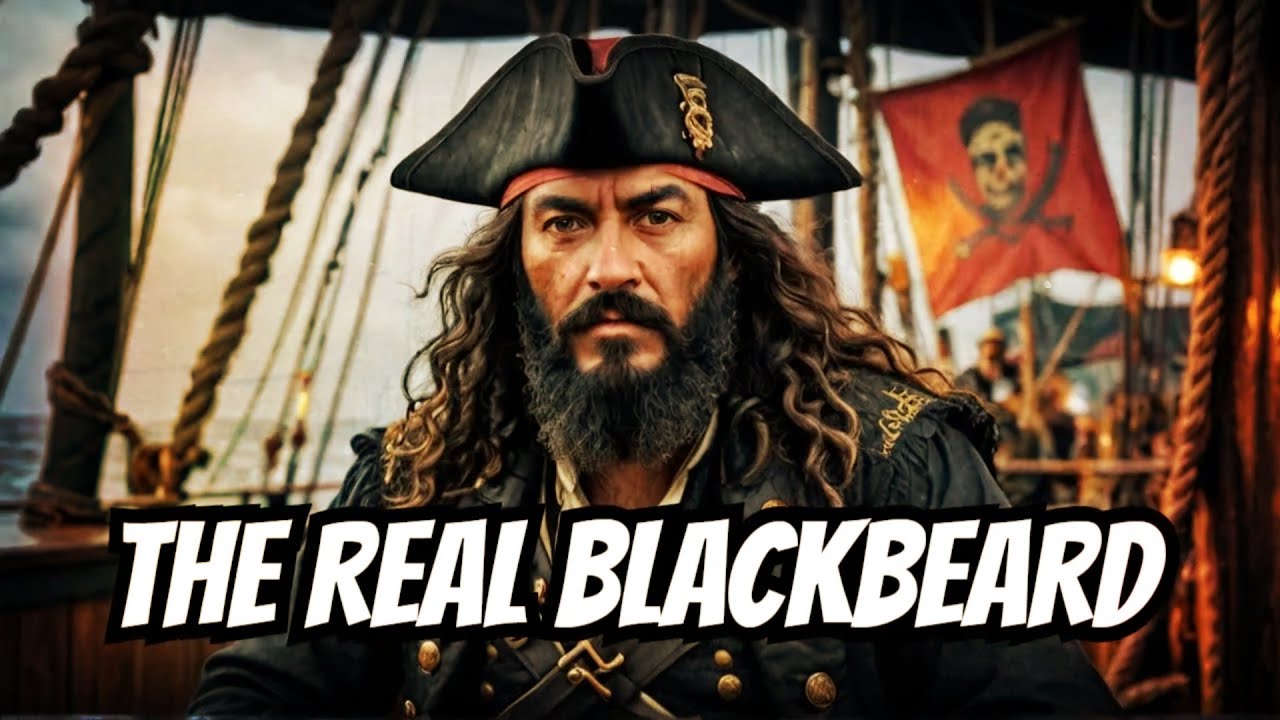
Blackbeard Unveiled: The True Story Behind the Infamous Pirate Edward Teach

Since humans first set sail on the open seas, piracy has been a persistent threat to commerce and personal safety. As maritime technology evolved, so did the tactics and efficiency of seafarers, including pirates. During the Golden Age of Piracy, numerous men and even a few women became infamous, their exploits turning them into legends in their own time. Among these notorious figures, one man stood out for his ruthless mastery of the pirate trade and became the most wanted man in the New World: Edward Teach, better known as Blackbeard. His fearsome reputation and larger-than-life persona continue to captivate the imagination to this day.

Early Life and Path to Piracy

Edward Teach, or Thatch as his name is sometimes recorded, was likely born in Bristol, England, around 1680. Little is known about his early life, but by the early 18th century, he had found his way to the Caribbean, a hotspot for piracy. Teach served as a privateer during the War of the Spanish Succession (1701-1714), a common entry into piracy for many seamen of that era. After the war ended, many privateers found themselves without work, and with their skills and predilections, they turned to piracy.

Rise to Infamy

Edward Teach’s transition from privateer to pirate marked the beginning of his infamy. By 1716, he had joined the crew of the notorious pirate Benjamin Hornigold. Hornigold was a significant figure in the pirate community, and Teach quickly rose through the ranks under his tutelage. Teach’s fearsome appearance, particularly his thick black beard, which he braided and tied with ribbons, earned him the moniker “Blackbeard.”

In 1717, Hornigold retired from piracy, accepting a pardon from the British government. Blackbeard then took command of his own ship, a captured French slave vessel which he renamed Queen Anne’s Revenge. This formidable ship, armed with 40 guns, became the scourge of the Atlantic and the Caribbean under Blackbeard’s command.

Terror on the High Seas

Blackbeard’s reign of terror on the high seas was marked by his strategic use of fear and intimidation. His appearance alone was enough to strike terror into the hearts of his enemies. Blackbeard was known to weave slow-burning fuses into his beard and light them during battle, creating a fearsome, hellish image of a man with smoke and flames encircling his face. This psychological warfare was often enough to cause merchant crews to surrender without a fight, thereby reducing the need for actual combat and bloodshed.

Blackbeard’s flagship, Queen Anne’s Revenge, became infamous for its role in blockading the port of Charleston, South Carolina, in May 1718. Blackbeard’s crew captured several ships and took prominent citizens hostage, demanding a chest of medicine as ransom. This bold and successful operation exemplified Blackbeard’s audacity and tactical acumen.

The Reality Behind the Legend

Despite his fearsome reputation, historical records suggest that Blackbeard was not as bloodthirsty as popular culture has often depicted. There are few accounts of him actually killing captives or torturing prisoners. Instead, his reputation for ruthlessness was largely a carefully crafted image designed to instill fear and ensure compliance without unnecessary violence. This calculated brutality made him an efficient and effective pirate leader.

Blackbeard’s alliances with other pirates also played a crucial role in his success. He formed a loose coalition with several other notorious pirates of the era, including Charles Vane and Israel Hands. These alliances allowed them to coordinate their activities, share resources, and maintain a formidable presence in the Caribbean and along the eastern seaboard of the American colonies.

The Beginning of the End

Blackbeard’s career, like that of many pirates, was relatively short-lived. After the blockade of Charleston, he sailed north and accepted a royal pardon from the governor of North Carolina, Charles Eden. However, Blackbeard did not give up piracy entirely. He settled in Bath, North Carolina, where he reportedly married and attempted to integrate into colonial society while secretly continuing his piratical activities.

This tenuous balance between his new life and old habits did not last long. The governor of Virginia, Alexander Spotswood, viewed Blackbeard as a significant threat and took decisive action to eliminate him. In November 1718, Spotswood sent a naval expedition under the command of Lieutenant Robert Maynard to hunt down Blackbeard.

The Final Battle

The confrontation between Maynard and Blackbeard took place on November 22, 1718, near Ocracoke Island off the coast of North Carolina. Blackbeard’s crew was outnumbered, and after a fierce and brutal battle, Blackbeard was killed. According to accounts, he sustained multiple gunshot wounds and sword cuts before finally succumbing. His head was severed and hung from the bow of Maynard’s ship as a grim trophy and warning to other pirates.

Legacy of Blackbeard

Blackbeard’s death marked the end of one of the most notorious pirate careers in history, but his legend lived on. The stories of his exploits, both real and exaggerated, contributed to the enduring mythos of pirates in popular culture. Blackbeard became a symbol of the Golden Age of Piracy, embodying the fear, danger, and allure associated with the pirate life.

Over the centuries, Blackbeard has been depicted in countless books, movies, and television shows, often as the quintessential pirate. His image, with the flaming beard and menacing demeanor, continues to captivate the imagination and evoke the romanticized notion of the swashbuckling pirate.

In conclusion, Edward Teach, known to the world as Blackbeard, was a complex figure whose legacy has been shaped by both his real-life actions and the myths that grew around him. While he was undoubtedly a ruthless and effective pirate, much of his fearsome reputation was the result of careful image management and psychological warfare. His ability to instill fear without excessive violence made him one of the most successful pirates of his time.

The truth about Blackbeard is a fascinating blend of history and legend. He was a man who understood the power of fear and used it to his advantage, ensuring his place as one of the most infamous figures of the Golden Age of Piracy. His story serves as a reminder of the enduring impact of piracy on maritime history and the enduring allure of the pirate mythos.