Categories
W1 World

Colfax 1873: The Massacre That Betrayed Reconstruction, Resurrected White Supremacy

Introduction: Easter Sunday Turned Tragic

On Easter Sunday, April 13, 1873, the town of Colfax, Louisiana, witnessed an atrocity so brutal it remains a stain on the history of American democracy. This rural settlement in Grant Parish became the battleground for one of the most violent racial confrontations during the Reconstruction era.

In the aftermath of the Civil War, newly freed Black citizens were trying to assert their constitutional rights, guaranteed under the 13th, 14th, and 15th Amendments. They sought to participate in local government and maintain control of a contested courthouse after a disputed election. But the dream of racial equality was met with an explosion of violence, as armed white supremacists laid siege to their hope, their community, and their very lives.

The Fragile Progress of Reconstruction

Reconstruction, the period from 1865 to 1877, was meant to rebuild the South and integrate formerly enslaved African Americans into political and civil life. Federal laws and Constitutional Amendments gave Black men the right to vote, hold office, and enjoy equal protection under the law.

In places like Grant Parish, freedmen took these rights seriously—forming local militias, voting blocs, and participating in government. But their progress was fiercely contested by many white Southerners, particularly former Confederates who viewed Black empowerment as a threat to their social dominance. Louisiana, still smoldering from the ashes of war, became a powder keg where politics and racial hatred ignited with deadly results.

The Election That Sparked a Massacre

In 1872, Louisiana’s gubernatorial election ended in bitter dispute, with both Democrats and Republicans claiming victory. At the parish level in Grant, a similar political battle played out. Black Republicans, representing the majority of the electorate, occupied the courthouse in Colfax to support the Republican claim.

Tensions soared. White Democrats, largely consisting of ex-Confederates and members of white supremacist groups like the White League and the Ku Klux Klan, considered the occupation illegitimate. Mobilizing hundreds of armed men, they plotted to retake the courthouse by force. On April 13, they acted—with devastating consequences.

Colfax Massacre: The Day of Blood

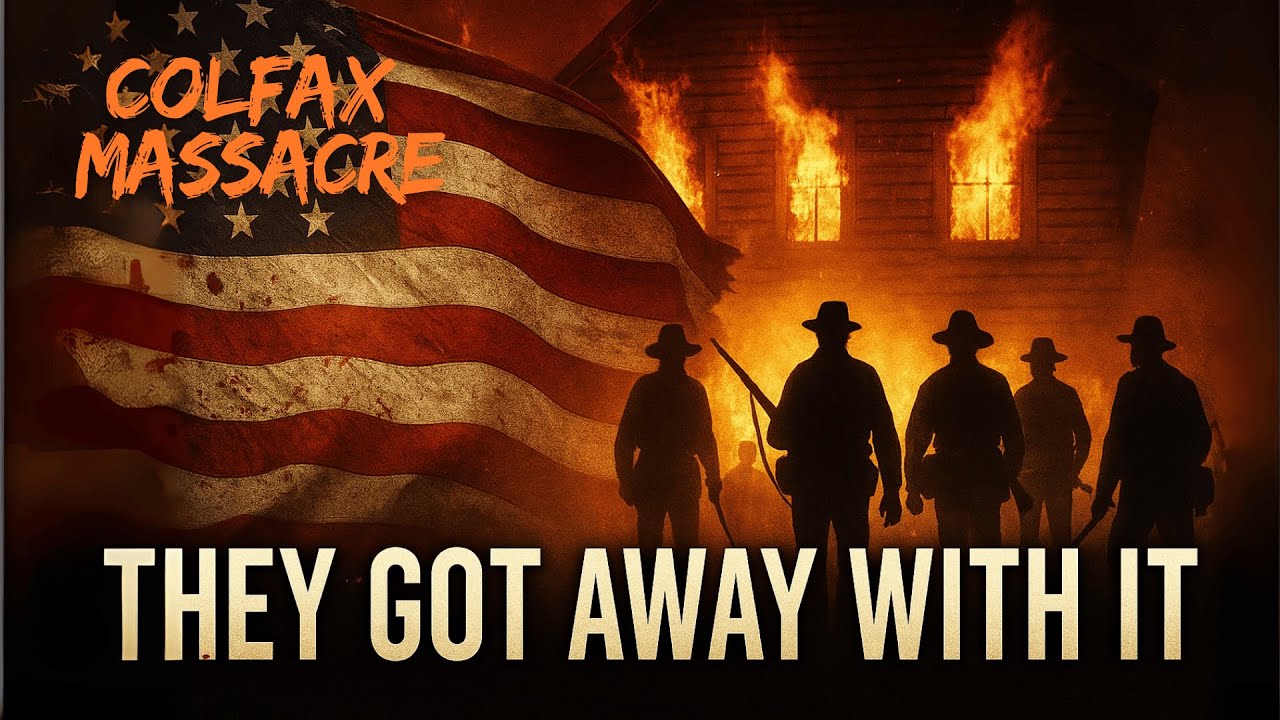
The massacre began with an organized assault by white militias. The courthouse, filled with around 150 Black defenders and supporters, became a burning trap. After the attackers set the building on fire, many occupants fled or surrendered. But instead of taking them as prisoners, the attackers executed them—some in groups, some individually. Survivors were hunted down and shot, their bodies discarded in the Red River or burned in mass graves.

Historians estimate that as many as 150 Black men were killed, the vast majority after they had laid down their arms. Only a handful of white attackers died, underscoring the one-sided nature of the violence. The scene was so gruesome that even some contemporary white newspapers expressed shock at the scale of the brutality.

The Aftermath: Justice Denied

Rather than outrage leading to justice, the response to the Colfax Massacre revealed the deep flaws in the federal commitment to Reconstruction. Federal officials initially tried to pursue charges under the Enforcement Acts, which were designed to protect Black citizens’ civil rights. Several attackers were arrested and indicted, leading to the landmark Supreme Court case, United States v. Cruikshank in 1876.

The Court’s ruling was catastrophic: it decided that the federal government had limited authority to prosecute private individuals for civil rights violations. By placing the burden of enforcement on individual states—many of which were actively hostile to Black rights—the ruling effectively gutted the protections of the 14th Amendment and rendered federal civil rights laws toothless. It was a signal to white supremacists across the South that racial violence would go unpunished.

The Collapse of Reconstruction

The Colfax Massacre became a symbol of the broader collapse of Reconstruction. Despite initial federal efforts, Northern political will to enforce racial justice waned. White Democrats regained political control across the South in what became known as the “Redemption.” Federal troops withdrew, Black political participation plummeted, and new state laws systematically stripped African Americans of their rights.

Jim Crow laws took root in this fertile soil of federal inaction and white resentment. The massacre was not an isolated incident but part of a broader campaign of racial terror meant to destroy Reconstruction and reassert white dominance. In many ways, the battle over the Colfax courthouse was the funeral of the Reconstruction dream.

The Lost Cause and Historical Amnesia

In the years that followed, white Southern historians and civic leaders rewrote the story of the Civil War and Reconstruction to suit their agenda. This became known as the Lost Cause narrative, which glorified Confederate soldiers and portrayed Reconstruction as a time of chaos, misrule, and Black incompetence.

In this retelling, massacres like Colfax were downplayed, rationalized, or completely ignored. A 1950s-era historical marker in Colfax claimed that the massacre was an event where whites “fought for white supremacy.” It wasn’t until the 21st century that efforts began to reassess the history with greater accuracy, and to recognize the massacre as an act of racial terrorism.

Why the Massacre Still Matters

The legacy of the Colfax Massacre is not confined to the 19th century. It resonates in today’s struggles over voting rights, racial justice, and historical memory. The same tactics of voter suppression, racially motivated violence, and distorted history echo in debates over Confederate monuments, gerrymandering, and educational curricula.

Remembering Colfax is not about assigning guilt but about understanding the systemic forces that have shaped—and continue to shape—American democracy. When civil rights are treated as negotiable and justice becomes selective, tragedies like Colfax become not just history, but warnings.

Conclusion: Truth, Memory, Reckoning

The Colfax Massacre stands as one of the deadliest examples of racial violence during Reconstruction, and its shadow looms over the history of American civil rights. It revealed the fragility of federal protection, the depth of racial hatred, and the extent to which white supremacy would go to reclaim power.

Today, remembering Colfax isn’t just about mourning the dead—it’s about demanding that the truth be told and justice be honored. Only by confronting the darkest chapters of our past can we hope to build a future where democracy lives up to its promise for all Americans.

Categories
W1 World

The Story of Mark Essex: Unveiling the Racially Charged 1973 New Orleans Sniper Rampage

Introduction

Mass shootings have long been a tragic part of America’s landscape. While many of these episodes share common threads—such as anger, isolation, and personal grievances—each is unique in its motivations and outcomes. Some are racially motivated, others are politically driven, and many arise from personal vendettas. One of the earliest and most notorious mass shooters was Mark Essex, who terrorized New Orleans in January 1973 in a deadly rampage that left a permanent mark on the city and the nation.

Moreover, mass shootings not only devastate communities but also force the nation to confront complex issues such as racial inequality, mental health, and the ease of access to firearms. In Mark Essex’s case, his violent outburst was rooted in deep-seated racial grievances and personal trauma, reflecting the racial tensions of the early 1970s. Understanding the motives behind such acts of violence is crucial in addressing the broader societal factors that contribute to these horrific events. This article delves into the story of Essex, his motivations, and the consequences of his violent spree.

Background: Who Was Mark Essex?

Mark James Robert Essex was born on August 12, 1949, in Emporia, Kansas. Growing up in a relatively integrated Midwestern town, Essex seemed to have an average upbringing. However, after serving a brief stint in the U.S. Navy, Essex’s worldview began to shift. He experienced racism firsthand while stationed at the naval base in San Diego, an experience that reportedly deepened his feelings of alienation and anger toward the U.S. government and white society. Disillusioned by his treatment in the Navy, Essex went AWOL and was subsequently discharged.

In the years that followed, Essex became increasingly radicalized, drawn to the Black Panther movement and black militant ideology. He began to see the systemic racism he experienced as part of a broader conspiracy against Black Americans. By the time he reached New Orleans in the early 1970s, he was harboring deep resentment against the police, the government, and white society. It was in this charged atmosphere of racial unrest that Mark Essex would become one of the most infamous snipers in American history.

The Build-Up: Racial Tensions in the 1970s

The early 1970s was a volatile period for race relations in America, particularly in the South. The civil rights movement had made great strides, but racial inequality, police brutality, and systemic oppression were still rampant. New Orleans, like many other American cities, was struggling with racial tensions that frequently boiled over into violence.

Essex’s disillusionment was not unique; many African Americans felt disenfranchised and were deeply angered by what they saw as continued racial injustice. The Black Panther movement and other militant groups gained traction as they offered a vision of self-defense against the state and called for the empowerment of Black Americans. Essex’s ideology was shaped by this milieu of racial tension and Black militancy.

The Howard Johnson Sniper Attack

On January 7, 1973, Mark Essex unleashed his fury in New Orleans in what would become one of the deadliest sniper attacks in the city’s history. Armed with a .44 caliber carbine rifle, Essex targeted white police officers and civilians, seeing them as representatives of a racist society. His deadly spree began at the New Orleans Police Department, where he shot and killed two police officers before fleeing to the Howard Johnson’s Hotel in downtown New Orleans.

Once inside the hotel, Essex embarked on a violent siege, killing civilians, hotel staff, and police officers. He positioned himself on the roof of the hotel, where he had a strategic vantage point to target anyone who approached. Over the next several hours, Essex engaged in a standoff with law enforcement, all while continuing to fire at anyone within range. By the end of the siege, Essex had killed nine people, including five police officers, and wounded 13 others.

The Siege and Essex’s Death

The New Orleans police, along with federal and state authorities, quickly mobilized to take down Essex. However, his position on the roof of the Howard Johnson’s Hotel made it incredibly difficult to neutralize him without risking more lives. SWAT teams, local officers, and even a Marine helicopter were called in to dislodge Essex from his sniper’s perch.

The standoff came to a bloody end on January 8, 1973, when Essex was finally shot and killed by police snipers and officers aboard a helicopter. His death brought an end to the siege, but the shockwaves of his actions reverberated across the city and the nation.

Essex’s Motives: A Manifesto of Hate

Like many mass shooters, Mark Essex left behind a manifesto of sorts, though it was not as detailed or organized as those of other notorious killers. Essex’s motivations were largely shaped by his anger at the systemic racism he had experienced and his belief that white society, particularly the police, were the enemy of Black Americans. He saw his actions as a form of retribution and a statement against racial oppression.

In the months leading up to his rampage, Essex had reportedly spoken about his desire to strike back against a society that he felt had wronged him and his people. His embrace of black militancy, coupled with his growing sense of alienation, ultimately led him to carry out one of the most devastating sniper attacks in U.S. history. For Essex, the shootings were not random acts of violence; they were, in his mind, a justified response to the oppression of African Americans.

Aftermath and Legacy

The New Orleans sniper attack shocked the nation and intensified debates about race, violence, and policing in America. Essex was seen by some as a symbol of the deep racial divisions that plagued the country, while others condemned his actions as the work of a deranged killer. His attack also highlighted the growing trend of politically and racially motivated mass shootings, a phenomenon that would become more common in the years to come.

In the immediate aftermath, New Orleans grappled with the trauma of the attack, as well as the racial tensions that had been simmering long before Essex’s rampage. The police were criticized for their handling of the situation, though many praised their efforts to stop the siege. Meanwhile, the families of Essex’s victims mourned their losses, and the city was left to pick up the pieces.

Conclusion

Mark Essex’s rampage in New Orleans was one of the earliest examples of a racially motivated mass shooting in the United States. His actions were driven by a toxic mix of personal grievances, racial hatred, and black militant ideology. While his attack was shocking in its scale and brutality, it also reflected the deep racial tensions of the time and the growing anger felt by many African Americans toward systemic racism.

Essex’s story serves as a reminder of the dangerous intersections of race, violence, and political ideology. It also underscores the importance of understanding the underlying motivations of mass shooters, who often see themselves as agents of change or retribution. Today, the legacy of Mark Essex remains a chilling chapter in the history of American mass violence, one that continues to resonate in discussions of race and extremism.