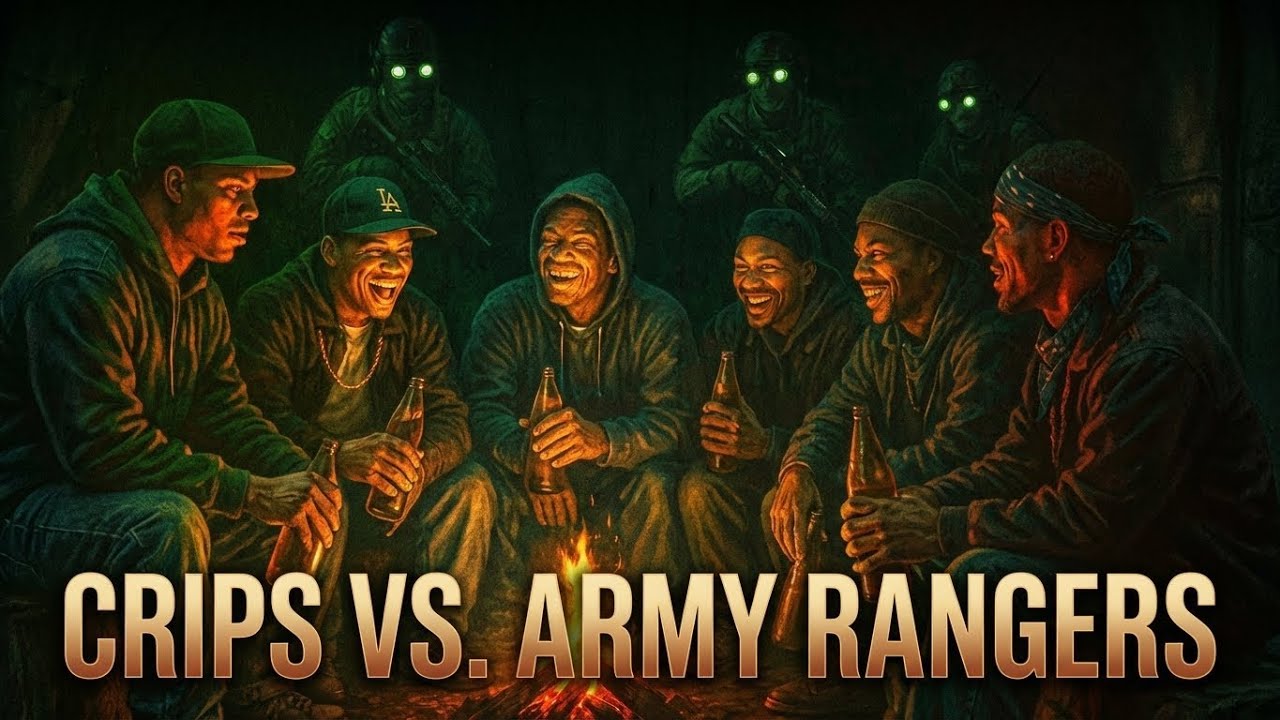
Introduction: Unseen War Breaks Out
In January 1989, a quiet residential neighborhood in Tacoma, Washington, became the backdrop for one of the most bizarre and explosive clashes in American street history. On one side stood the Crips—an infamous and violent street gang with roots in Los Angeles and a growing influence in the Pacific Northwest. On the other stood a group of U.S. Army Rangers—elite, highly trained soldiers stationed at nearby Fort Lewis. When these two forces collided on Ash Street, what unfolded was not a typical police call—it was a full-blown firefight that shook the nation.
The Ash Street Shootout blurred the lines between law, justice, and chaos. It raised questions that still resonate: Can elite soldiers be vigilantes? What happens when civilians, frustrated with law enforcement inaction, take matters into their own hands? And who is to blame when bullets start flying? The answers weren’t easy then, and they remain controversial to this day.
The shootout wasn’t just a clash between individuals—it was a symptom of deeper problems: institutional failure, eroded public trust, and the desperation that arises when people feel abandoned by the system. It showed how quickly the illusion of peace can collapse when communities are left to fend for themselves.
The Setup: One Man’s Breaking Point
Bill Foulk, a retired U.S. Army Ranger and Vietnam veteran, had bought a modest home on Ash Street with hopes of settling into a peaceful post-military life. But the neighborhood, like many parts of Tacoma at the time, was in decline. What had once been a safe middle-class area had become plagued with crime, drug activity, and increasing gang presence. Residents lived in fear, especially at night, as gunshots, vandalism, and intimidation became routine.
Foulk, trained to handle high-stress combat situations, couldn’t sit idly by. He began recording drug deals with a camcorder from his porch, kept detailed logs, and made dozens of complaints to local police. But the response was slow and ineffective. Determined not to be driven out, Foulk took matters into his own hands. He contacted fellow Rangers and soldiers he trusted, asking them to help protect his home and community. For him, it wasn’t just about safety—it was about reclaiming the neighborhood from lawlessness.
The Crips Move In: Expansion & Fear
By the late 1980s, the Crips had expanded far beyond their Los Angeles origins. Tacoma’s underserved neighborhoods provided fertile ground for recruitment and drug operations. Ash Street became one of their unofficial strongholds. The gang’s presence brought not just crime, but a climate of intimidation. Residents feared retaliation if they spoke out, and many did not trust the police to protect them.
Members of the Crips established a near-constant presence across from Foulk’s house, turning a rented property into a base of operations. From this location, they hosted parties, sold narcotics, and occasionally threatened residents. Foulk, ever watchful, was perceived as a dangerous agitator to their dominance. Over time, tensions escalated. The situation became a standoff—on one side, a gang staking its claim; on the other, a veteran determined not to back down.
The Night It All Finally Went Down
January 15, 1989, marked the boiling point. That evening, the gang hosted a loud party that escalated into a gathering of over 20 individuals, many suspected to be armed. Reports circulated that they intended to confront Foulk. Fearing a direct attack, Foulk called in reinforcements. Over a dozen Army Rangers and military friends arrived at his house, some off-duty, others on leave, all armed. They took defensive positions and waited.
As the night deepened, shouting between the two groups escalated. Then, without warning, gunfire erupted. Witnesses later claimed that the first shots came from the street toward Foulk’s property. The Rangers responded with military precision—returning fire, using their training to maintain cover and suppress threats. Neighbors dove to the floor as bullets flew across lawns and through windows. The exchange lasted several minutes, and though no one died, several people were wounded, and the street resembled a war zone.
When police finally arrived, they found a surreal scene—civilians in camouflage, armed and organized, facing off against known gang members. The scale and intensity of the shootout shocked even hardened law enforcement.
Vigilantes or Heroes in Uniform?
Public opinion quickly split. Some hailed Foulk and his comrades as heroes who stood up to gang violence when the authorities wouldn’t. To these supporters, the Rangers were not vigilantes—they were protectors, using their skills to defend an abandoned community. Media interviews with neighbors revealed both fear and gratitude, with many saying they felt safer knowing the Rangers were there.
Critics, however, saw the incident as dangerous vigilantism. They argued that even trained soldiers had no business taking the law into their own hands, especially in a civilian setting. Local officials feared the precedent—what if others followed suit? Would neighborhoods become battlegrounds of private justice?
The legal system had its own struggle. Foulk and the participating Rangers were detained and questioned extensively. Prosecutors considered charges, but ultimately, none were filed against the soldiers due to lack of evidence of unlawful conduct. Several gang members, however, faced prosecution for illegal weapons possession and inciting violence. Still, the debate raged in public forums and media for months.
Legal Fallout and Lasting Legacy
In the aftermath, Ash Street and the city of Tacoma became national talking points. The incident led to increased police funding in the area and reforms in gang intervention strategies. The city was forced to acknowledge the growing threat of gang activity, and new community outreach programs were launched to prevent future violence.
For the Army, the shootout raised complex questions about military conduct in civilian life. Soldiers were reminded of the legal boundaries they must respect off-base. However, the bond between service members and their communities remained a potent force. The Rangers involved never saw themselves as outlaws—they saw themselves as doing what they were trained to do: protect those who couldn’t protect themselves.
The Ash Street Shootout is now studied in criminal justice courses and military ethics discussions. It remains one of the few recorded instances of organized military-trained civilians engaging directly with a domestic gang in an urban setting—a clash where both sides brought firepower, but only one fought with discipline.
Conclusion: Discipline Meets Chaos
The Ash Street Shootout remains one of the most surreal episodes in modern American criminal history. A quiet street became a warzone, not in Iraq or Afghanistan, but in the Pacific Northwest. What began as a neighborhood dispute spiraled into a firefight involving one of the most feared gangs in the country and some of the most elite soldiers in the world.
Decades later, it still raises hard questions: What would you do if the law failed you? Can ordinary citizens—or even soldiers—draw a line in the sand without crossing into vigilantism? The shootout on Ash Street was more than a gun battle; it was a clash of order versus disorder, of community frustration against criminal terror.
Finally, in Bill Foulk’s front yard, military precision met street chaos—and for a few terrifying minutes, war came home. The echoes of that night still resonate, reminding America that sometimes, the battle for safety begins just beyond your doorstep.