Categories
W1 World

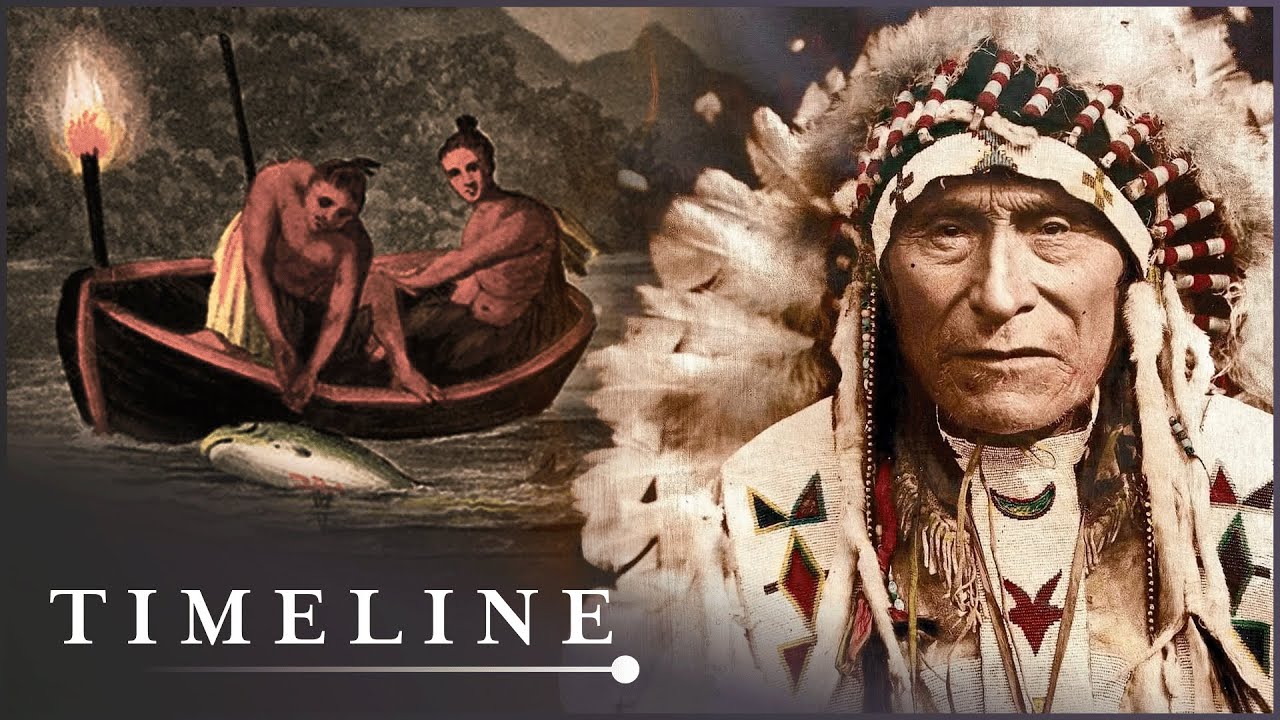
Before the Conquest: How Native American Civilizations Flourished Across North America

Introduction: A Tapestry Before the Arrival

Long before European colonists set foot on the shores of North America, the continent was home to a vast array of complex, thriving Indigenous civilizations. These societies—spanning from the forests of the Northeast to the deserts of the Southwest and the plains of Canada—had their own systems of governance, agriculture, architecture, and trade. Far from being scattered or primitive, Native nations had developed sophisticated ways of life deeply rooted in harmony with the land and each other.

When French and English colonizers arrived and began claiming territory, they encountered not an empty wilderness, but a continent shaped and stewarded by countless generations of Indigenous people. What followed was centuries of displacement, disease, and cultural erasure—but the legacy of these early civilizations continues to challenge long-held myths about North American history.

Complex Societies Spanning a Continent

At the time of first contact, there were over 500 distinct Native nations in what is now Canada and the United States. Each had its own language, traditions, and social systems. The Haudenosaunee Confederacy (Iroquois), for example, was a powerful political alliance formed by five (later six) nations in the Northeast. It operated under a sophisticated constitution known as the Great Law of Peace—one that some scholars believe influenced the framing of the U.S. Constitution.

To the West, the Mississippian culture had built massive cities like Cahokia, with a population that rivaled or exceeded that of London in the 1200s. With ceremonial mounds, wide plazas, and complex trade networks stretching across the continent, Cahokia was a hub of commerce, spirituality, and governance.

Meanwhile, in the Southwest, the Ancestral Puebloans (often called Anasazi) constructed vast cliff dwellings and multi-story stone buildings in places like Chaco Canyon and Mesa Verde. These communities had highly developed irrigation systems and astronomical knowledge that aligned their structures with solar and lunar events.

Agriculture and Land Stewardship

Contrary to colonial myths of untouched wilderness, Native peoples across North America actively shaped the environment through sustainable agricultural and land-management practices. The “Three Sisters” method—planting corn, beans, and squash together—was widely used for its efficiency and nutritional value. The crops supported one another physically and chemically, enriching the soil and providing balanced diets.

In Canada, First Nations people such as the Wendat (Huron) cultivated large communal gardens, while coastal groups relied on salmon fisheries and sea harvesting. Plains nations such as the Blackfoot and Cree developed strategic methods of hunting buffalo that supported entire communities without depleting the species. Fire was also used intentionally to manage forests, clear underbrush, and promote the growth of certain plant species.

These techniques weren’t just about survival—they reflected deeply rooted cultural relationships with the land. Knowledge was passed down through generations via oral traditions, ensuring that stewardship remained central to Indigenous identity and livelihood. These methods maintained the ecological balance for generations, demonstrating a profound understanding of local ecosystems.

Trade and Cultural Exchange

Pre-contact Native America was a vast network of trade routes and cultural exchange. Shells from the Atlantic coast, obsidian from the Rocky Mountains, and copper from the Great Lakes have all been found thousands of miles from their origins. This indicates not only extensive travel but sophisticated economic systems. Art, language, and religious practices also moved along these routes.

Ceremonial traditions, songs, and stories were shared and adapted, fostering a dynamic cultural landscape that belies stereotypes of static or isolated tribes. The exchange of knowledge was equally important, with innovations in agriculture, medicine, and technology spreading across the continent. Native American communities not only traded goods but also exchanged ideas, forming a network of interconnected cultures. This vast, pre-existing web of exchange was disrupted only by the arrival of European colonization.

Governance and Diplomacy

Indigenous political systems were remarkably diverse and often more democratic than their European counterparts. The aforementioned Haudenosaunee Confederacy functioned on a council system where decisions were made by consensus, emphasizing collective well-being over individual power.

In the Pacific Northwest, complex social hierarchies and potlatch ceremonies governed distribution of wealth and leadership transitions. Among Plains nations, councils of elders or warrior societies made key decisions, and many groups selected leaders based on merit and wisdom rather than inheritance. These systems were not only effective but adaptable—many nations formed diplomatic alliances or adjusted their governance in response to changing conditions or new relationships.

Spirituality and Connection to the Land

Central to all Native American civilizations was a deep spiritual relationship with the land. Mountains, rivers, animals, and celestial bodies were not simply resources or scenery—they were sacred beings with which communities had reciprocal relationships. Ceremonies, storytelling, and everyday practices reinforced this connection.

Many Indigenous creation stories emphasize the interconnectedness of all life, and this worldview shaped everything from hunting rituals to political decisions. This spiritual foundation provided resilience through the catastrophic disruptions that followed colonization. It also fostered a profound sense of stewardship, ensuring that Indigenous peoples viewed themselves as caretakers of the land for future generations, rather than exploiters of its resources.

The Devastation of First Contact

The arrival of Europeans in the 15th and 16th centuries unleashed a wave of devastation. Disease, particularly smallpox, decimated Indigenous populations, often before direct contact even occurred. In some regions, it’s estimated that over 90% of the population perished within decades of first exposure.

As France and England vied for control of North America, Native nations were often caught in the crossfire—or manipulated into alliances that would later be betrayed. Land theft, violent conflict, forced displacement, and the destruction of cultural practices became systematic tools of colonization.

In Canada, treaties were frequently broken or imposed under coercion. Indigenous children were taken from their families and placed in residential schools where they were forbidden to speak their languages or practice their traditions—a practice that continued well into the 20th century.

Resilience and Continuity

Despite these assaults, Native American and First Nations cultures have survived. Many communities are now actively reviving languages, traditions, and governance structures that were suppressed for centuries. Indigenous scholars, artists, and leaders are reclaiming their stories and asserting their rights to land, self-determination, and cultural identity.

This resurgence is not only a reclaiming of the past but a powerful movement to shape the future, with Native communities leading efforts in environmental stewardship, education, and social justice. Modern recognition of Indigenous knowledge—particularly in areas like climate science, sustainable development, and conflict resolution—is also helping to reframe Native contributions not as relics of the past but as vital assets to the present and future.

Conclusion: Rewriting the Narrative

The history of North America did not begin with colonization—it stretches back thousands of years, woven through the lives of Indigenous civilizations that built cities, developed agriculture, governed with wisdom, and lived in balance with nature. Understanding and honoring this legacy is not just an academic exercise—it is a necessary step toward truth, reconciliation, and respect for the original stewards of this land.

The story of Native America before colonization is not one of loss, but of extraordinary achievement, resilience, and enduring wisdom. By acknowledging this rich history, we can begin to repair the damage done and build a more inclusive and equitable future for all peoples. This journey of recognition and healing is essential for the survival of both Native cultures and the broader society in which we all coexist.

Categories
W1 World

Guadalcanal, 1942: The Epic Dogfight Between American Ace Southerland and Japanese Sakai

Introduction: A Duel in the Skies Over Guadalcanal

In the blistering summer of 1942, as World War II raged across the Pacific, two pilots found themselves locked in a battle that would become the stuff of legend. On August 7, 1942, over the embattled island of Guadalcanal, Lieutenant James “Pug” Southerland, a seasoned 30-year-old American fighter pilot, squared off against Saburo Sakai, a 25-year-old Japanese ace.

Southerland, flying a rugged Grumman F4F Wildcat, represented the raw determination of the U.S. Navy. Sakai, piloting the nimble and lethal Mitsubishi A6M Zero, was already a rising star of the Imperial Japanese Navy Air Service, credited with numerous kills. Their fateful dogfight would highlight the strengths and flaws of both aircraft and showcase the skill and courage of two exceptional aviators.

Guadalcanal: The Crucible of the Pacific War

The backdrop for this iconic encounter was the Guadalcanal Campaign, a pivotal struggle in the Pacific Theater. Following Japan’s aggressive expansion, the U.S. launched Operation Watchtower in August 1942, aiming to secure the island’s vital airfield.

Guadalcanal’s strategic importance drew both Japanese and American forces into fierce combat. The skies above the island became a battleground for dominance. Daily dogfights between Japanese and American pilots defined the conflict, turning the tropical skies into a deadly arena.

The Pilots: American Wildcat vs. Japanese Zero

On the morning of August 7, 1942, Southerland was flying as part of Fighter Squadron VF-5 from the aircraft carrier USS Saratoga. The squadron’s mission was to protect the landing force during the initial phase of the Guadalcanal invasion.

Lieutenant James “Pug” Southerland:

  • Age: 30
  • Aircraft: Grumman F4F Wildcat
  • Experience: A skilled naval aviator with previous combat experience in the Pacific
  • Strengths: Exceptional gunnery skills and situational awareness

Petty Officer First Class Saburo Sakai:

  • Age: 25
  • Aircraft: Mitsubishi A6M Zero
  • Experience: One of Japan’s top aces, with over 50 confirmed kills at the time
  • Strengths: Incredibly agile flying, precision marksmanship, and an unyielding fighting spirit

Their aircraft were a stark contrast in design and capability.

The Grumman F4F Wildcat:

  • Slower and less maneuverable but heavily armored
  • Armed with four .50 caliber machine guns
  • Could sustain significant damage and keep flying

The Mitsubishi A6M Zero:

  • Faster and far more agile, with exceptional climb and turning capabilities
  • Lightly armored, making it vulnerable to machine-gun fire
  • Armed with two 20mm cannons and two 7.7mm machine guns, making it highly lethal in close combat

The Dogfight: Clash of Titans Over the Pacific

As the Guadalcanal invasion began, Japanese Zeros scrambled to intercept the American air cover. Southerland and his fellow Wildcat pilots engaged the incoming Zeros. During the chaotic engagement, Southerland became separated from his squadron and found himself facing Saburo Sakai—one of Japan’s deadliest pilots.

The First Engagement:
Southerland spotted Sakai’s Zero streaking toward him. Relying on the Wildcat’s durability, he attempted a head-on pass, opening fire with his .50 caliber machine guns. Despite the Zero’s superior speed, Southerland’s well-aimed burst forced Sakai to break off and reposition.

Dogfight in the Sun:
The two aces circled each other, climbing and diving through the clouds, pushing their machines to the limit. Sakai’s Zero had a significant edge in speed and maneuverability, allowing him to get on Southerland’s tail multiple times. Yet, Southerland’s Wildcat, despite its sluggish handling, proved incredibly resilient.

Tactical Maneuvering:
As the duel intensified, Sakai made multiple passes, raking Southerland’s aircraft with machine-gun fire. The Wildcat’s rugged design allowed it to absorb punishment, withstanding hits that would have downed lighter aircraft. Despite the damage, Southerland managed to perform evasive maneuvers, twisting and diving to escape Sakai’s deadly aim.

A Near-Fatal Moment:
Sakai eventually scored direct hits on Southerland’s Wildcat, setting parts of the aircraft ablaze. Despite the heavy damage, Southerland kept his aircraft aloft, fighting with remarkable skill and determination. However, with his Wildcat critically damaged, he was forced to bail out.

The Aftermath: Survival, Impact, and Legacy

Though Saburo Sakai had bested Southerland in the duel, the encounter nearly cost him his life. During the broader battle, Sakai was struck by American gunfire, suffering severe wounds to his face and body. Despite being partially blinded, Sakai miraculously managed to fly his crippled Zero over 560 miles back to base—an astonishing feat of endurance and skill.

Southerland, meanwhile, survived his bailout, floating in the Pacific until he was rescued. Despite losing his aircraft, his valiant defense became a celebrated episode of American aviation resilience.

Tactical Lessons: Strengths and Weaknesses Revealed

The dogfight between Southerland and Sakai highlighted the stark contrasts between the Wildcat and the Zero, as well as the skills of the pilots who flew them.

Strengths of the Wildcat:

  • Remarkable durability allowed it to sustain significant damage.
  • Superior firepower in sustained bursts.
  • Effective in diving and defensive tactics.

Weaknesses of the Wildcat:

  • Slower and less agile than the Zero.
  • Vulnerable to more maneuverable enemy aircraft.

Strengths of the Zero:

  • Exceptional agility and speed in aerial combat.
  • Highly effective in close-quarters dogfights.
  • Lethal armament with cannons and machine guns.

Weaknesses of the Zero:

  • Light armor made it highly vulnerable to machine-gun fire.
  • Limited durability in drawn-out battles.

The Guadalcanal Dogfight in Historical Context

The duel between Southerland and Sakai was just one of many ferocious encounters over Guadalcanal. The broader air battle was part of a larger struggle for air superiority during the Solomon Islands campaign. The lessons learned from these encounters shaped U.S. aerial strategies throughout the Pacific War.

The ruggedness of American aircraft like the Wildcat, combined with improved tactics, gradually helped U.S. pilots overcome the early dominance of Japanese fighters. Meanwhile, Japanese aces like Sakai would remain deadly adversaries, but the attrition of experienced pilots weakened Japan’s air power over time.

Conclusion: A Duel That Defined Pacific Air Combat

Finally, the legendary dogfight between James Southerland and Saburo Sakai was more than just a battle between two aces—it symbolized the larger clash of technology, skill, and resilience that defined the Pacific air war. Though Sakai emerged victorious in the duel, the encounter highlighted the durability and fighting spirit of American pilots.

Their showdown, immortalized in military history, serves as a testament to the bravery and skill of the pilots who fought over Guadalcanal. It also offers a window into the deadly ballet of aerial combat, where the courage and cunning of individual pilots could shape the course of war. Their epic duel, etched into the annals of aviation history, remains a powerful symbol of skill, resilience, and the brutal realities of aerial combat in the Pacific War.

Categories
W1 World

American Made: Barry Seal, the CIA, and the Shadowy World of Drug Smuggling in the 1980s

Introduction: A Tale of Intrigue and Illicit Operations

For decades, whispers of covert operations and drug-running have lingered in the shadows of American history. Evidence and conjecture suggest that rogue elements within the CIA and NSA were deeply involved in transporting drugs from South America to fund clandestine activities. These operations allegedly bypassed Congressional oversight and supported controversial initiatives, such as supplying weapons to Iran and the Contra rebels in Nicaragua.

At the heart of this complex and controversial story lies Barry Seal, a charismatic pilot turned drug smuggler. But Seal was not acting alone. Together with his associate Roger Reaves, he became one of the most prolific drug traffickers of his time. Let’s delve into this enigmatic tale to uncover the truth about their operations, alliances, and ultimate fate.

Barry Seal: The Pilot with a Double Life

Barry Seal, born in 1939 in Baton Rouge, Louisiana, was a gifted aviator from an early age. By his mid-20s, he had joined Trans World Airlines (TWA) as a commercial pilot, earning respect for his skill and precision in the cockpit. However, Seal’s career took a dramatic turn when he was dismissed from TWA in the early 1970s for alleged involvement in smuggling activities.

Seal’s transition from pilot to drug runner was fueled by his connections in South America. Leveraging his aviation expertise, Seal became a key player in the Medellín Cartel’s drug trafficking network. His ability to fly large quantities of cocaine undetected into the United States made him invaluable. But Seal’s story is far more complicated than that of a mere smuggler.

The Connection Between Drugs and Covert Operations

The 1980s were marked by the Iran-Contra affair, a political scandal that exposed the U.S. government’s covert efforts to fund Nicaraguan Contra rebels despite Congressional prohibitions. Rogue elements within the CIA are believed to have used drug trafficking as a financial mechanism to circumvent these restrictions. Seal’s flights to South America allegedly served dual purposes: transporting drugs for the cartels and delivering arms to Contra forces.

Seal’s alleged collaboration with government operatives remains a contentious issue. Some reports suggest he was recruited by the DEA as an informant in the early 1980s, adding another layer of intrigue to his story. While working for the DEA, Seal conducted a sting operation that implicated prominent members of the Medellín Cartel, including Pablo Escobar. However, this collaboration may have been a double-edged sword, as it placed him in the crosshairs of both the cartel and the public spotlight.

Roger Reaves: The Unsung Smuggler

While Barry Seal’s exploits have captured public attention, his associate Roger Reaves’ story is equally compelling. Reaves, a former pilot turned drug smuggler, played a pivotal role in the global narcotics trade. His operations spanned continents, involving key figures from South America to Europe. Reaves’ ability to build an extensive network of contacts made him a significant player in the drug trade, though he operated largely in the shadows compared to Seal.

Reaves and Seal’s collaboration enabled them to transport massive quantities of cocaine into the U.S. with remarkable efficiency. Using advanced aviation techniques and insider knowledge, they outmaneuvered law enforcement agencies. Despite their successes, both men’s lives were fraught with danger and betrayal.

The Fall and Capture of Barry Seal

Seal’s life began unraveling in the mid-1980s. His decision to cooperate with the DEA and testify against cartel members brought him temporary immunity from prosecution but also marked him as a target. In 1984, Seal’s role in a sting operation exposed the Nicaraguan government’s alleged involvement in drug trafficking, a revelation that fueled the Iran-Contra controversy.

Seal’s cooperation came at a high cost. On February 19, 1986, he was assassinated outside a Salvation Army halfway house in Baton Rouge. The hit was reportedly ordered by the Medellín Cartel, though conspiracy theories suggest other motives and players might have been involved. Seal’s death cemented his legacy as a key figure in one of America’s most controversial chapters.

The Consequences for Roger Reaves

Unlike Seal, Reaves’ story didn’t end in assassination but rather imprisonment. Over the years, Reaves faced multiple arrests and extraditions, eventually serving significant time behind bars. His memoirs shed light on the scale of his operations and the people he worked with, offering a rare glimpse into the clandestine world of drug smuggling.

Reaves remains a controversial figure, both admired and vilified for his role in the narcotics trade. Despite his imprisonment, Reaves has expressed little regret for his actions, often framing his story as one of survival and entrepreneurial spirit in a high-stakes underworld. His accounts highlight not only the risks and rewards of the drug trade but also the systemic corruption and complicity that enabled it to thrive for decades.

The Role of the U.S. Government

The allegations of U.S. government involvement in drug trafficking remain a contentious topic. Critics argue that agencies like the CIA turned a blind eye to, or even facilitated, drug smuggling to achieve political goals. Documents and testimonies have surfaced over the years suggesting that individuals within the government exploited figures like Seal and Reaves for their agendas.

The Iran-Contra affair further complicates the narrative. The revelation that profits from arms sales to Iran were funneled to Contra rebels underscores the lengths to which these covert operations went. While direct evidence linking the CIA to drug trafficking remains elusive, the circumstantial evidence has fueled decades of speculation and distrust.

Cultural Impact and Media Portrayals

Barry Seal’s story has transcended history to become a part of popular culture. Films like American Made (2017), starring Tom Cruise, dramatize Seal’s life and exploits, blending fact with fiction to create a compelling narrative. These portrayals, while entertaining, often oversimplify the complexities of Seal’s role and the broader geopolitical context.

Books, documentaries, and investigative journalism have also explored Seal’s life, each offering different perspectives on his motivations, alliances, and betrayals. The fascination with Seal and his contemporaries reflects broader societal intrigue with the murky intersection of crime, politics, and power.

Lessons, Impact, and the Legacy of Crime

The stories of Barry Seal and Roger Reaves serve as cautionary tales about the unintended consequences of covert operations. They highlight the ethical dilemmas and risks inherent in using extralegal means to achieve political objectives. Their lives also underscore the human cost of the drug trade, from addiction and violence to broken families and lost lives.

Despite their criminal activities, Seal and Reaves remain enigmatic figures whose lives were shaped by the volatile dynamics of their time. Their stories continue to spark debates about accountability, transparency, and the true cost of pursuing national interests at any cost.

Conclusion: A Story That Reshaped History

The saga of Barry Seal, Roger Reaves, and the covert operations they were entangled in is a stark reminder of the complexities of history. Their lives intersected with some of the most controversial events of the late 20th century, leaving behind a legacy of intrigue and unanswered questions. As we continue to uncover the truth, their stories challenge us to reflect on the balance between security, morality, and the rule of law.

The legacy of Barry Seal and the shadowy operations of the 1980s serve as a cautionary tale of the dangers of unchecked power and covert agendas. As history continues to reveal its secrets, the story of “American Made” remains a testament to the murky intersection of politics, crime, and human ambition.

Categories
W1 World

The Untold Story of the American Hitler: George Lincoln Rockwell and the Rise of Nazism in the US

Introduction

Nazism is often associated with Adolf Hitler and the horrors of World War II, but it also found a disturbing foothold in the United States, both before and after the war. The German American Bund, active in the 1930s, sought to bring Nazi ideology to America, but its influence waned following Germany’s defeat. However, the seeds of American Nazism were far from dead. In the post-WWII era, a new figure emerged to carry the torch of hate—George Lincoln Rockwell.

A decorated World War II veteran, Rockwell was captivated by Hitler’s ideas and would go on to found the American Nazi Party in 1959. He was a man whose radicalism and charisma drew comparisons to Hitler himself, and his influence helped to ignite a new wave of white supremacy and neo-Nazism in the U.S. This article will explore the life and rise of George Lincoln Rockwell, his disturbing ideology, and the lasting impact of his neo-Nazi movement in the United States.

The Roots of American Nazism: German American Bund and Early Influences

Nazism in the United States did not begin with George Lincoln Rockwell. In the 1930s, during Hitler’s rise to power in Germany, the German American Bund was formed to promote Nazi ideology on American soil. The Bund organized rallies, published propaganda, and sought to align German-Americans with the Nazi regime. At its height, the group boasted tens of thousands of members, holding parades in New York City where swastikas and American flags flew side by side. However, after the U.S. entered World War II, the Bund’s influence faded, and its leaders were arrested or went underground.

Rockwell, born in 1918, was not a member of the Bund, but his early life was shaped by a series of radical influences. After serving in World War II and later in the Korean War, Rockwell grew increasingly disillusioned with American politics, viewing the post-war world as weak and corrupt. He soon found inspiration in Hitler’s writings, particularly Mein Kampf. Convinced that Hitler’s ideology was the key to rebuilding what he saw as a declining civilization, Rockwell set out to resurrect Nazi ideology in the United States.

The Rise of George Lincoln Rockwell and the American Nazi Party

In 1959, George Lincoln Rockwell founded the American Nazi Party (ANP), initially called the World Union of Free Enterprise National Socialists. Based in Arlington, Virginia, the ANP quickly attracted attention, both for its overt embrace of Nazi symbols and rhetoric, and for Rockwell’s brazen public appearances in Nazi uniforms.

Rockwell’s rhetoric was virulently racist, antisemitic, and anti-communist. He believed that Jews controlled the American government and media, manipulating society to promote racial integration and communism. He also viewed African Americans as inferior and called for the establishment of an all-white ethnostate. Rockwell’s speeches, pamphlets, and demonstrations were aimed at rallying disaffected white Americans who felt threatened by the growing civil rights movement, communism, and the perceived decline of traditional values.

Unlike many fringe extremists, Rockwell was a charismatic and polished public speaker, and his military background lent him a certain credibility among supporters. He was often described as an articulate, sharp-dressed leader who could manipulate media attention to amplify his hateful messages. He held provocative public events, including a failed attempt to stage a “White Man’s March” on Washington, D.C., in the early 1960s.

Ideology and Propaganda: Rockwell’s Version of Nazism

Rockwell’s vision for American Nazism was more than just an admiration for Hitler. He believed that the United States was in danger of being overtaken by a combination of Jewish influence, racial integration, and communist ideology. His solution was a racially pure, fascist state governed by National Socialist principles. In this state, Jews would be expelled, African Americans would be deported to Africa, and communists would be eradicated. His party advocated for the immediate cessation of immigration from non-European countries and the abolition of civil rights for racial minorities.

One of Rockwell’s most disturbing tactics was his use of mass media to spread his ideology. He understood the power of propaganda, much like Hitler, and often sought to gain attention through shock value. The American Nazi Party produced newsletters, pamphlets, and propaganda posters featuring swastikas, hate-filled caricatures of Jews, and calls for the extermination of “racial enemies.”

He also seized on issues that resonated with a portion of the American populace, such as opposition to desegregation and the civil rights movement. By positioning himself as a defender of “white rights,” Rockwell appealed to those who felt disenfranchised by social change, gaining support from fringe white supremacists, neo-Nazis, and disillusioned veterans.

The Antagonist to the Civil Rights Movement

Rockwell’s rise coincided with the peak of the Civil Rights Movement, and he made no secret of his hatred for figures like Martin Luther King Jr. He accused civil rights leaders of being pawns of a Jewish-communist conspiracy and often disrupted civil rights rallies with hate-filled counter-demonstrations. His party members would sometimes show up at rallies, dressed in Nazi uniforms, to antagonize Black activists and their allies.

Despite his extreme views, Rockwell was not without a following. His charismatic leadership and unapologetic advocacy for white supremacy resonated with segments of the population resistant to the social upheavals of the 1960s. While the American Nazi Party never garnered widespread mainstream support, its members frequently clashed with civil rights activists, further contributing to the era’s racial tensions.

The Assassination and Aftermath of George Lincoln Rockwell

On August 25, 1967, George Lincoln Rockwell was assassinated by one of his former followers, John Patler, who had been expelled from the American Nazi Party months earlier. Rockwell was shot while leaving a laundromat in Arlington, Virginia, marking a sudden end to his leadership of the American Nazi movement. Patler, who had grown disillusioned with Rockwell’s tactics and leadership, was arrested and convicted of murder.

Rockwell’s death did not spell the end of American neo-Nazism, however. His influence and ideas continued to inspire subsequent generations of white supremacists and neo-Nazis, including groups such as the National Socialist White People’s Party and the National Alliance. Many of the tactics used by modern-day white supremacist organizations—provocative public demonstrations, media manipulation, and targeting of vulnerable communities—can be traced back to Rockwell’s blueprint.

Legacy and Influence: A Dark Chapter in American History

George Lincoln Rockwell’s legacy is one of hatred, division, and the normalization of Nazism in American politics. While his American Nazi Party never gained significant mainstream traction, Rockwell’s ideas have had a lasting impact on the far-right and white supremacist movements in the United States. His unapologetic racism, antisemitism, and advocacy for violence against minorities paved the way for the resurgence of neo-Nazi groups in the decades following his death.

In modern times, Rockwell’s name still resonates within the ranks of hate groups, where he is often idolized as a martyr for the white supremacist cause. His ability to blend Nazi ideology with American populism made him a uniquely dangerous figure, and his influence can still be felt in the resurgence of far-right extremism in the U.S.

Conclusion

Finally, George Lincoln Rockwell’s rise and fall tell the story of a man consumed by hate, whose vision for America was built on the principles of Nazi ideology. Despite his death, the movement he nurtured continued to evolve, influencing generations of extremists and ensuring that his dark legacy would endure. His role as the “American Hitler” underscores the dangers of unchecked hate and serves as a stark reminder of the persistent threat posed by white supremacist and neo-Nazi ideologies in the United States.

Categories
W1 World

Fort Sumter: The Provocative Prelude that Ignited the American Civil War

The origins of the American Civil War are deeply rooted in the nation’s complex and contentious history, with the bombardment of Fort Sumter serving as the catalytic event that ignited the conflict. This flashpoint, which marked the beginning of the most bitter and bloody period in American history, was not an isolated incident but the culmination of escalating tensions between the North and the South. These tensions were driven by profound differences in economic interests, political ideologies, and social structures, particularly around the issue of slavery. The events leading up to the bombardment of Fort Sumter reveal the intricate web of causes that ultimately led to war.

The Antebellum Tensions

In the decades leading up to the Civil War, the United States experienced significant growth and change. The industrial revolution transformed the Northern economy, which became increasingly diverse and industrialized. In contrast, the Southern economy remained predominantly agrarian, heavily dependent on the labor of enslaved African Americans to sustain its agricultural production, particularly of cotton.

Slavery was the central point of contention. The North, where abolitionist sentiment was growing, pushed for the containment and eventual eradication of slavery. Meanwhile, the South sought to protect and expand the institution to new territories and states. The Missouri Compromise of 1820 and the Compromise of 1850 were temporary measures that attempted to maintain a balance between slave and free states, but they did little to resolve the underlying conflicts.

The Road to Secession

The 1850s were marked by increasing sectional strife. The Kansas-Nebraska Act of 1854, which allowed territories to decide the issue of slavery through popular sovereignty, led to violent conflicts known as “Bleeding Kansas.” The Dred Scott decision of 1857 by the Supreme Court further polarized the nation by ruling that African Americans could not be citizens and that Congress had no authority to prohibit slavery in the territories.

The election of Abraham Lincoln in 1860 was the final straw for many in the South. Lincoln’s Republican Party was founded on the principle of halting the expansion of slavery. Although Lincoln repeatedly stated that he had no intention to abolish slavery where it already existed, Southern states perceived his election as an existential threat to their way of life. South Carolina was the first to secede on December 20, 1860, followed by six other states: Mississippi, Florida, Alabama, Georgia, Louisiana, and Texas.

The Fort Sumter Crisis

Fort Sumter, located in Charleston Harbor, South Carolina, became the focal point of the secession crisis. As a federal fort in a seceded state, it was a symbol of federal authority that the Confederacy sought to eliminate. Major Robert Anderson, a Union officer, commanded the fort, but his position was increasingly precarious as supplies dwindled and Confederate forces surrounded the fort.

President James Buchanan, in his final months in office, took a passive approach, hoping to avoid conflict. However, when Lincoln took office on March 4, 1861, he faced an immediate crisis. Lincoln was determined to maintain federal authority without provoking war. He informed South Carolina authorities of his intent to resupply the fort, emphasizing that the mission was peaceful.

The Bombardment Begins

Confederate leaders, led by President Jefferson Davis, faced a dilemma. Allowing the resupply would undermine their sovereignty claims, but attacking the fort could provoke a war. On April 12, 1861, after failed negotiations, Confederate forces under General P.G.T. Beauregard opened fire on Fort Sumter. The bombardment lasted for 34 hours, with over 3,000 shells fired at the fort. Major Anderson and his men, outgunned and outnumbered, eventually surrendered on April 14. Remarkably, there were no casualties during the bombardment, though two Union soldiers died during the subsequent evacuation.

Aftermath and Outbreak of War

The fall of Fort Sumter galvanized the North. Lincoln called for 75,000 volunteers to suppress the rebellion, leading to an outpouring of support in the Union states. The call for troops, however, prompted four more states—Virginia, Arkansas, Tennessee, and North Carolina—to join the Confederacy, completing the secession.

The bombardment of Fort Sumter marked the official start of the Civil War, but it was more than a military engagement; it symbolized the irreconcilable differences between the North and South. The event crystallized the nation’s division, making war inevitable.

Legacy and Significance

The bombardment of Fort Sumter is remembered not just as the opening battle of the Civil War but as a symbol of the deep-seated divisions within the United States. It underscored the failure of political compromise and highlighted the profound moral and ideological rifts over slavery and states’ rights.

The Civil War that followed would become the deadliest conflict in American history, leading to the end of slavery and significant social and political transformations. The events at Fort Sumter remind us of the complex causes of war and the devastating consequences of a nation divided.

In conclusion, the bombardment of Fort Sumter was the spark that ignited the American Civil War, but the fire had been smoldering for decades. The episode encapsulates the culmination of escalating tensions over slavery, state sovereignty, and national unity, reflecting a nation on the brink of transformation.

In reflecting on Fort Sumter’s bombardment, we gain insights into the perils of unresolved conflicts and the profound impact of leadership decisions during crises. The legacy of this pivotal event continues to shape America’s ongoing struggle for unity and justice.

Categories
W1 World

Through the Crosshairs: Understanding Chris Kyle – The American Sniper

The United States Navy SEALs, renowned for their elite status and specialized training, epitomize the pinnacle of military prowess. Among their ranks, few have captured the imagination of the public like Chris Kyle, hailed as the deadliest sniper in US military history. Yet, beyond the Hollywood portrayal in the box office hit “American Sniper,” lies the enigmatic figure of Chris Kyle, whose life and legacy are far more complex than the silver screen narrative suggests.

Born on April 8, 1974, in Odessa, Texas, Christopher Scott Kyle’s journey to becoming a legendary Navy SEAL marks the trajectory of a quintessential American hero. Enlisting in the Navy in 1999, Kyle underwent rigorous training to earn the coveted Trident insignia, signifying his entry into the elite fraternity of SEALs. His skills as a sniper quickly garnered attention, earning him the nickname “Legend” among his comrades.

As a member of SEAL Team 3, Kyle deployed to the heart of some of the most hostile environments on the planet, from the deserts of Iraq to the mountains of Afghanistan. Tasked with missions ranging from direct action raids to intelligence gathering behind enemy lines, Kyle’s expertise proved invaluable in the fight against terrorism.

It was Kyle’s lethal precision as a sniper that earned him notoriety on the battlefield. With a record number of confirmed kills, Kyle became a symbol of American military might, embodying the SEAL ethos of “The Only Easy Day Was Yesterday.” His exploits earned him the respect of his peers and the admiration of a nation hungry for heroes in the wake of the September 11 attacks.

Yet, the reality of war is far from the glorified image portrayed in Hollywood films. For Kyle, the toll of combat weighed heavily on his conscience, leaving scars that would haunt him long after the guns fell silent. In his autobiography, also titled “American Sniper,” Kyle candidly reflects on the moral complexities of warfare, grappling with the conflicting emotions of duty, honor, and the human cost of conflict.

Beyond his prowess as a sniper, Kyle’s legacy is also defined by his commitment to his fellow veterans. Following his military service, Kyle dedicated himself to supporting those who had served alongside him, founding the nonprofit organization FITCO Cares to provide assistance to wounded veterans suffering from post-traumatic stress disorder (PTSD).

Tragically, Chris Kyle’s life was cut short on February 2, 2013, when he was fatally shot at a shooting range in Texas by a troubled veteran he was trying to help. His untimely death sent shockwaves through the military community and beyond, underscoring the profound challenges faced by veterans reintegrating into civilian life.

In the aftermath of his death, Kyle’s legacy has been subject to both adulation and scrutiny. While hailed as a hero by many for his service and sacrifice, others have raised questions about the morality of his actions as a sniper and the broader implications of America’s military interventions abroad. The release of “American Sniper” further fueled the debate, sparking discussions about the portrayal of war in popular culture and the glorification of violence.

Yet, amidst the controversy, one fact remains undeniable: Chris Kyle was a man who answered the call of duty, risking life and limb to defend his country and protect his fellow soldiers. His story serves as a poignant reminder of the sacrifices made by those who serve in the armed forces, and the complexities of warfare that defy easy categorization.

As the legend of Chris Kyle continues to reverberate through the annals of military history, it is essential to remember the man behind the myth—a warrior, a patriot, and a flawed human being grappling with the profound moral dilemmas of war. In honoring his memory, we must strive to confront the harsh realities of armed conflict and work towards a world where peace reigns supreme, and the sacrifices of those like Chris Kyle are never forgotten.

Kyle’s impact extended far beyond the battlefield. He was a devoted husband and father, striving to balance his military duties with his responsibilities at home. His wife, Taya Kyle, has since become an advocate for veterans and their families, carrying on his legacy of service and sacrifice.

In addition to his military service, Kyle’s contributions to the understanding of warfare and its aftermath cannot be overstated. Through his candid memoir, “American Sniper,” he provided insight into the harrowing experiences of combat and the toll it takes on the human psyche. His willingness to confront the moral ambiguities of war sparked important conversations about the nature of conflict and its impact on individuals and societies.

Moreover, Kyle’s efforts to support veterans suffering from PTSD through organizations like FITCO Cares exemplify his commitment to his fellow servicemen and women. By providing assistance and resources to those in need, he sought to ease the burden carried by those who had borne the brunt of war’s horrors.

Despite the controversies and debates surrounding his legacy, one thing remains clear: Chris Kyle’s life and contributions continue to shape our understanding of war, heroism, and the enduring struggles faced by those who serve in uniform. As we reflect on his legacy, let us honor his memory by supporting those who have sacrificed for our country and striving for a world where peace prevails over conflict.

Categories
W1 World

Pioneering Justice: The Legacy of Shirley Chisholm – First Black Congresswoman

Shirley Anita Chisholm, a titan in American politics, left an indelible mark on history through her unwavering commitment to justice, equality, and empowerment. Born on November 30, 1924, in Brooklyn, New York, Chisholm’s journey from humble beginnings to becoming the first African American woman elected to the United States Congress is a testament to her resilience, courage, and unwavering dedication to social change.

Raised in a working-class neighborhood by immigrant parents from Barbados, Chisholm experienced firsthand the challenges of discrimination and prejudice. However, her upbringing instilled in her a deep sense of pride, determination, and a belief in the power of education to uplift individuals and communities. Her early experiences fueled her passion for social justice and shaped her lifelong commitment to fighting for equality.

Chisholm’s academic pursuits led her to Brooklyn College, where she earned a Bachelor’s degree in Sociology, and later to Columbia University, where she obtained a Master’s degree in Early Childhood Education. Armed with her education and a passion for social justice, Chisholm embarked on a career in education, serving as a teacher and later as a director of daycare centers in New York City. Her experience in education gave her insight into the struggles faced by marginalized communities, particularly women and people of color, and fueled her determination to advocate for their rights.

Inspired by the civil rights movement and motivated by a desire to effect meaningful change, Chisholm transitioned to politics in the 1960s. In 1968, she made history by winning election to the United States House of Representatives, representing New York’s 12th congressional district. Her victory shattered barriers and sent a powerful message of hope and empowerment to marginalized communities across the nation. Chisholm’s election marked a significant milestone in American history, highlighting the growing influence of African American women in politics and paving the way for future generations of women and people of color to enter public service.

As a congresswoman, Chisholm quickly established herself as a formidable advocate for social and economic justice. She used her platform to champion causes such as civil rights, women’s rights, education reform, and access to healthcare. Her outspoken advocacy and unwavering commitment to her principles earned her respect and admiration from colleagues and constituents alike. Chisholm’s willingness to speak truth to power and challenge the status quo made her a fearless and effective leader in Congress, earning her the nickname “Fighting Shirley.”

In addition to her legislative work, Chisholm played a pivotal role in shaping the political landscape of the United States. As a founding member of both the Congressional Black Caucus and the National Organization for Women, she helped amplify the voices of marginalized communities and advance the cause of equality and justice. Chisholm’s leadership and vision paved the way for important legislative victories, including the passage of the Equal Rights Amendment and the expansion of social welfare programs.

In 1972, Chisholm made history once again by becoming the first African American woman to seek the nomination for President of the United States from a major political party. Though her campaign faced numerous challenges and obstacles, Chisholm’s candidacy inspired a new generation of activists and challenged the status quo of American politics. Her historic run for president brought issues of race, gender, and social justice to the forefront of the national conversation, sparking important debates about the direction of the country and the role of women and people of color in politics.

Despite facing opposition and hostility from within her own party and the broader political establishment, Chisholm remained steadfast in her pursuit of justice and equality. Her courage, resilience, and unwavering commitment to her principles continue to inspire and empower individuals around the world. Chisholm’s legacy as a trailblazer and champion of justice and equality lives on, serving as a beacon of hope and inspiration for generations to come. Her groundbreaking achievements and unwavering dedication to social change remind us of the power of one individual to make a difference and the importance of fighting for equality and justice for all.

Shirley Anita Chisholm, an American politician and trailblazer, made history in 1968 by becoming the first black woman elected to the United States Congress. Born on November 30, 1924, in Brooklyn, New York, Chisholm represented New York’s 12th congressional district, which was centered in Bedford–Stuyvesant, Brooklyn, for an impressive seven terms from 1969 to 1983. Her groundbreaking election shattered racial and gender barriers, paving the way for greater diversity and representation in American politics.

Chisholm’s journey to Congress was shaped by her upbringing and education. Raised in a working-class neighborhood, she was the daughter of Ruby Seale and Charles Christopher St. Hill. Chisholm’s early experiences with discrimination fueled her passion for social justice and equality. She pursued higher education at Brooklyn College and later earned a Master’s degree from Teachers College, Columbia University, in 1952. Armed with her education and a deep commitment to making a difference, Chisholm embarked on a career dedicated to public service.

Throughout her tenure in Congress, Chisholm was a fierce advocate for marginalized communities, championing causes such as civil rights, women’s rights, and access to education and healthcare. Her impassioned speeches and fearless advocacy earned her respect and admiration from colleagues and constituents alike. Chisholm’s leadership and vision helped shape important legislative victories, including the passage of landmark civil rights legislation and the expansion of social welfare programs.

In addition to her legislative achievements, Chisholm made history once again in 1972 by becoming the first African American woman to seek the nomination for President of the United States from a major political party. Though her presidential campaign faced numerous challenges and obstacles, Chisholm’s candidacy inspired a new generation of activists and brought issues of race, gender, and social justice to the forefront of the national conversation.

Outside of politics, Chisholm was a devoted wife and mother. She was married to Conrad Chisholm from 1949 to 1977 and later to Arthur Hardwick from 1977 to 1986. Despite facing personal and professional challenges, Chisholm remained steadfast in her commitment to her principles and her belief in the power of ordinary people to effect meaningful change.

Chisholm’s legacy as a trailblazer and champion of justice and equality lives on, inspiring future generations to pursue their dreams and fight for a more just and equitable society. In recognition of her contributions, Chisholm was posthumously awarded the Presidential Medal of Freedom, the highest civilian honor in the United States. Shirley Anita Chisholm’s remarkable life and legacy continue to serve as a beacon of hope and inspiration for people around the world.

Categories
W1 World

Lost Fortune Found: The Epic Journey of the Nuestra Señora de Atocha

In the annals of maritime history, few tales are as captivating as that of the Nuestra Señora de Atocha, a Spanish galleon that met its tragic fate off the coast of Florida in 1622. Laden with a treasure trove of riches from the New World, the Atocha’s sinking has since become the stuff of legend, sparking centuries-long quests to uncover its lost bounty. This is the story of the hunt for the world’s most valuable shipwreck and the fortunes it has bestowed upon those who dared to seek its hidden treasures.

The Nuestra Señora de Atocha was part of a fleet of Spanish vessels known as the Tierra Firme fleet, which sailed annually between the New World and Spain, carrying precious metals, gemstones, and other valuable cargo. On September 4, 1622, the Atocha, along with several other ships, fell victim to a powerful hurricane off the coast of the Florida Keys, sinking to the ocean floor along with its priceless cargo.

For centuries, the Atocha remained lost to the depths of the sea, its whereabouts shrouded in mystery and speculation. It wasn’t until the 20th century that the first significant breakthrough in the search for the sunken galleon occurred. In 1969, a treasure hunter named Mel Fisher set out on a quest to locate the Atocha and its rumored riches, fueled by a relentless determination and an unwavering belief that the treasure was within his grasp.

Fisher’s search was not without its challenges. For years, he and his team endured setbacks, financial struggles, and even tragedy, including the loss of Fisher’s son and daughter-in-law in a diving accident. Despite the hardships, Fisher remained undeterred, driven by a singular vision of uncovering the lost treasures of the Atocha and rewriting the course of maritime history.

Finally, in 1985, Fisher’s perseverance paid off when his team discovered the long-lost wreck of the Atocha, resting in the depths of the ocean, nearly 55 feet below the surface. What they found was nothing short of extraordinary: a treasure trove of gold and silver bars, coins, jewelry, and artifacts, valued at hundreds of millions of dollars.

The discovery of the Atocha’s treasure catapulted Mel Fisher and his team to fame and fortune, forever cementing their place in the annals of maritime exploration. Yet, the saga of the Atocha did not end with the discovery of its riches. Legal battles ensued over ownership rights to the treasure, with the state of Florida and Spain both laying claim to a portion of the spoils. In the end, Fisher and his team prevailed, retaining the rights to the majority of the treasure they had painstakingly recovered.

Today, the legacy of the Nuestra Señora de Atocha lives on, a testament to the enduring allure of lost treasure and the indomitable spirit of those who seek it. The story of the Atocha serves as a reminder of the perils and rewards of maritime exploration, as well as the timeless allure of the sea and its mysteries. And while the treasure of the Atocha may have been found, the legend of its lost riches continues to captivate the imagination of adventurers and dreamers around the world.

The treasure recovered from the Atocha wasn’t merely a collection of riches; it was a tangible connection to a bygone era, offering insights into the economic, cultural, and political landscape of 17th-century Spain and the New World. The coins and artifacts recovered from the wreck provided valuable historical artifacts, shedding light on trade routes, navigation techniques, and the daily lives of sailors and merchants of the time.

Moreover, the Atocha’s discovery sparked renewed interest in maritime archaeology and underwater exploration, leading to further discoveries of lost ships and their treasures. Fisher’s success inspired countless others to embark on their own quests for sunken riches, fueling a global fascination with shipwrecks and lost treasures.

Beyond the material wealth it yielded, the Atocha’s treasure also had a profound impact on the local economy and culture of Key West, Florida, where Fisher’s treasure-hunting operations were based. The influx of tourists and treasure hunters brought new opportunities for economic growth and development to the region, transforming it into a hub for maritime history and adventure tourism.

In many ways, the story of the Nuestra Señora de Atocha is a testament to the enduring allure of lost treasure and the human spirit of perseverance and discovery. It serves as a reminder that even in the face of seemingly insurmountable challenges, dreams can be realized, and legends can come to life, deep beneath the waves of the ocean.

As long as there are mysteries to unravel and treasures to be found, the legacy of the Atocha will continue to captivate and inspire generations to come. In the silent depths of the ocean, the legend of the Nuestra Señora de Atocha continues to whisper its tale of lost riches and the indomitable spirit of those who dare to chase their dreams beneath the waves.

Categories
W2 World

An American Odyssey: How America Learned of the End of World War II

Introduction

The end of World War II marked a momentous chapter in history, and how the American public received the news of this monumental event was as diverse as the theaters of war in which the conflict had unfolded. From the Battle of the Bulge in Europe to the fierce Pacific campaigns on Leyte and Iwo Jima, the road to victory was fraught with challenges.

The war’s conclusion was punctuated by significant events, including the passing of President Franklin D. Roosevelt, the deaths of Axis leaders Mussolini and Hitler, and the unprecedented use of atomic bombs against Japan. In this article, we delve into the various ways in which the American public learned of the end of World War II and the mixed emotions that accompanied this historic moment.

The Battle of the Bulge and the European Theater

As 1945 dawned, the European Theater of World War II was still ablaze with conflict. The Battle of the Bulge, a massive German offensive launched in December 1944, had caught the Allies off guard and plunged them into one of the war’s bloodiest and most bitter confrontations. American forces, along with their British and Belgian allies, fought valiantly to halt the German advance.

The battle raged on into the new year, with brutal winter conditions making the fighting even more arduous. News from the front lines trickled back to the United States through a mix of official communications and reports from correspondents embedded with the troops. Families anxiously awaited letters and updates, and newspapers carried headlines about the ongoing struggle.

The Pacific Front: Leyte and Iwo Jima

While the Battle of the Bulge unfolded in Europe, the Pacific Theater was no less intense. American forces were engaged in grueling battles to liberate Japanese-occupied territories. The battles of Leyte in the Philippines and Iwo Jima in the Volcano Islands were emblematic of the fierce island-hopping campaigns that characterized the Pacific War.

News from the Pacific frontlines reached the American public through radio broadcasts and newspaper articles, often accompanied by vivid imagery and firsthand accounts from war correspondents. The struggles and sacrifices of American servicemen were vividly portrayed, forging a connection between the home front and the far-flung battlefields of the Pacific.

The Passing of President Roosevelt

As the war continued to unfold, an event of profound significance occurred on April 12, 1945 – the death of President Franklin D. Roosevelt. Roosevelt, who had led the nation through much of the war, did not live to see its conclusion. His passing sent shockwaves across the country and added a layer of complexity to the American experience of the war’s end.

Vice President Harry S. Truman, thrust into the presidency, faced the monumental task of navigating the final stages of the war and making critical decisions about the use of the atomic bomb against Japan. For many Americans, Roosevelt’s death marked the end of an era and the beginning of a new and uncertain chapter.

The Fall of Axis Leaders: Mussolini and Hitler

In the spring of 1945, the war in Europe reached its climax with the fall of two of the Axis Powers’ most notorious leaders – Benito Mussolini and Adolf Hitler. Mussolini, the fascist dictator of Italy, was captured and executed by Italian partisans on April 28, 1945. Hitler, the architect of Nazi Germany, took his own life in his bunker in Berlin on April 30, 1945.

News of these developments reached the American public through radio broadcasts, newspaper headlines, and newsreels. Images of Mussolini’s lifeless body hanging from a Milan gas station and reports of Hitler’s suicide stunned the world and provided a sense of vindication and closure for the Allied nations.

The Unprecedented Use of Atomic Bombs

While the fall of Mussolini and Hitler marked significant milestones in the war’s conclusion, it was the unprecedented use of atomic bombs against Japan that ultimately brought the conflict to an end. On August 6, 1945, the United States dropped an atomic bomb on the Japanese city of Hiroshima, followed by another on Nagasaki on August 9, 1945. These devastating attacks ushered in a new era of warfare and led to Japan’s surrender on August 15, 1945.

The news of Japan’s surrender was officially announced by President Truman on August 14, 1945, and it was met with a mixture of relief, celebration, and reflection across the United States. The atomic bombings and Japan’s surrender were broadcast through radio addresses and prominently featured in newspapers. For many Americans, the use of atomic weapons raised profound ethical and moral questions, even as it brought an end to the long and grueling conflict.

The Complexity of Victory

The end of World War II, while marked by jubilation and relief, was a multifaceted experience for the American public. It carried with it the weight of sacrifices made, the mourning of a beloved leader in President Roosevelt, and the profound moral questions raised by the unprecedented use of atomic weapons. Victory was not a singular moment but a tapestry of events, from the battles still raging to the fall of Axis leaders and the atomic bombings in Japan. This complexity underscored the war’s immense human and emotional toll, leaving an indelible imprint on the collective memory of a generation that had navigated the most significant conflict in human history.

Conclusion

The end of World War II was a complex and multifaceted experience for the American public. It was marked by the relief of victory, the mourning of a beloved president, and the reflection on the immense human and moral cost of the war. The news of victory reached the American people through a variety of media, each conveying a different facet of the war’s conclusion.

Ultimately, the end of World War II was not a singular moment but a series of events that unfolded over time. It was a moment of triumph and sorrow, of reflection and uncertainty, and it left an indelible mark on the collective memory of a generation that had endured the most significant conflict in human history.

Categories
W2 World

Native American Slave Ownership: Exploring the Complexities and Contradictions

Slavery, a dark aspect of human history, has existed in various forms across cultures and societies throughout time. It is a painful reminder of the depths to which humanity can sink, as both oppressors and victims. When examining the history of slavery in North America, it is essential to acknowledge that Native American tribes were not exempt from engaging in this practice. This article delves into the complexities and contradictions surrounding Native American slave ownership, shedding light on a lesser-known aspect of their history.

It is crucial to recognize that the concept of slavery among Native American tribes differed from the institution of chattel slavery imposed by European colonizers. Native American slavery was often rooted in intertribal warfare, where captives from defeated tribes were taken as prisoners. These captives would be integrated into the capturing tribe, often serving as laborers or adopting new roles within the community. It is important to note that the treatment of slaves varied among different tribes, with some displaying more lenient or assimilative practices than others.

Native American tribes engaged in slavery for various reasons, including economic, social, and even cultural factors. Slaves could provide labor, contribute to the productivity of the tribe, and enhance their military strength. Moreover, the adoption of captives from other tribes served to increase the population and replenish losses suffered in conflicts. Slavery within Native American societies was a complex system influenced by a range of factors, including tribal customs, intergroup dynamics, and historical context.

Another significant aspect of Native American slave ownership was the capture and enslavement of Europeans. During the colonial period, conflicts arose between European settlers and Native American tribes, resulting in instances where both sides took captives. These captives, whether settlers or traders, would be integrated into Native American communities as slaves. This phenomenon highlights the intricate dynamics of power and conquest that characterized the early interactions between Native Americans and Europeans.

Additionally, it is important to acknowledge that Native American tribes also owned African slaves during the colonial and antebellum periods. The transatlantic slave trade, initiated by European colonizers, introduced African slaves to the Americas. As Native American tribes interacted with European settlers, they, too, became involved in the institution of slavery and the ownership of African slaves. The motivations behind Native American ownership of African slaves were diverse, ranging from economic considerations to intertribal alliances influenced by European power dynamics.

However, it is crucial to understand that Native American ownership of African slaves occurred within a broader context of colonization and European influence. The transatlantic slave trade, driven by European demand for labor, facilitated the introduction of African slaves to the Americas. Native American tribes, like many other groups, adapted to this new reality and engaged in the practice of slave ownership, albeit within their own cultural and historical frameworks.

It is important to approach the topic of Native American slave ownership with nuance and avoid generalizations. While some tribes participated in the institution of slavery, it does not define the entirety of Native American history and culture. The complex dynamics of intertribal relations, colonization, and cultural adaptation must be taken into account when examining this aspect of Native American history.

As we strive to understand the complexities of Native American slave ownership, it is essential to avoid oversimplification and recognize the diverse experiences and perspectives within Native American tribes. It is a reminder that no society or culture is immune to the dark impulses that lead to the enslavement of others. By exploring this complex history, we gain a more comprehensive understanding of the diverse tapestry of human experience.

Overall, Native American slave ownership forms an important but often overlooked aspect of their history. Engaging in the practice of slavery, whether through intertribal conflicts or as a result of interactions with European settlers, reflects the complexities and contradictions within Native American societies. Recognizing this historical reality allows for a more nuanced understanding of Native American history and contributes to a broader dialogue on the history of slavery and its impact on different cultures and societies.

While Native American slave ownership is a part of their historical record, it is crucial to contextualize this practice within the broader dynamics of colonization and power struggles in North America. The enslavement of individuals, regardless of their cultural or ethnic background, is a dark and painful aspect of human history that cannot be excused or justified. It is essential to condemn the institution of slavery in all its forms and recognize the deep suffering and injustices endured by those who were enslaved.

Furthermore, understanding Native American slave ownership should not overshadow the larger narrative of Native American history, which encompasses rich cultural traditions, diverse societies, and enduring struggles for autonomy and self-determination. Native American tribes have faced centuries of dispossession, marginalization, and forced assimilation at the hands of European colonizers. Recognizing and addressing the historical and ongoing injustices faced by Native peoples is paramount.

As we examine the complexities of Native American slave ownership, it is crucial to approach the topic with sensitivity, empathy, and a commitment to truth-telling. This means acknowledging the dark chapters of history while also highlighting the resilience, resistance, and cultural vibrancy of Native American communities. It is through this lens that we can gain a more comprehensive understanding of Native American history and work towards healing, justice, and reconciliation.

In conclusion, Native American slave ownership existed as a complex facet of their history, influenced by intertribal conflicts, European colonization, and the introduction of African slaves to the Americas. While it is important to acknowledge this aspect of Native American history, it must be contextualized within the broader dynamics of power, conquest, and historical circumstances. Recognizing the diverse experiences and perspectives within Native American tribes is crucial for a more nuanced understanding of their history and contributes to a more comprehensive dialogue on the history of slavery.

Above all, it is essential to continue efforts towards truth, justice, and healing for all communities affected by the legacy of slavery. In the pursuit of a more just and inclusive society, it is imperative to confront the complexities of Native American slave ownership, acknowledging the past while working towards a future of healing and reconciliation.

Categories
W3 World

The Battle of Gettysburg: Shaping the Course of the US Civil War and Defining American History

Introduction

During four dark years of bitter and bloody fighting between the Northern and Southern states, more than 600,000 troops lost their lives. The country was torn apart as the military, political, and ideological struggle dragged on and on. For those who lived through it, life would never be the same again. Among the many battles that defined the US Civil War, the Battle of Gettysburg stands out as one of the most pivotal and devastating encounters. Fought from July 1 to July 3, 1863, in the town of Gettysburg, Pennsylvania, this battle would forever change the course of the war and leave an indelible mark on American history.

Battle of Gettysburg: An Overview

The Battle of Gettysburg, fought from July 1 to July 3, 1863, in Gettysburg, Pennsylvania, was a pivotal and devastating event during the US Civil War. As the war raged on for four years, the nation was torn apart by a bitter and bloody struggle between the Northern and Southern states. With over 600,000 lives lost, this battle marked a turning point in the war and had profound consequences for the future of the United States.

The battle unfolded amidst a backdrop of deep divisions and escalating tensions between the Union and the Confederacy. The Northern states, fighting to preserve the Union and end slavery, clashed with the Southern states, who sought to maintain their way of life and protect the institution of slavery. The Battle of Gettysburg was a critical moment in this conflict, where both sides converged in a brutal and decisive engagement that would shape the course of the war.

Taking place in the small town of Gettysburg, Pennsylvania, the battle witnessed fierce fighting and immense casualties on both sides. The Union Army, led by General George G. Meade, faced off against the Confederate Army, commanded by General Robert E. Lee. The three-day battle saw a series of intense assaults, desperate defense, and strategically significant maneuvers, as both armies fought for control of the crucial battlefield.

Ultimately, the Union forces successfully repelled the Confederate attacks, forcing Lee’s army to retreat, and securing a significant victory for the Union. The Battle of Gettysburg proved to be a major setback for the Confederacy, diminishing their hopes of achieving a decisive victory and altering the course of the war in favor of the Union.

Prelude to Conflict

The Civil War

A Nation Divided The battle lines of the US Civil War were drawn along the ideological and political differences between the Northern states, known as the Union, and the Southern states, which formed the Confederacy. The Southern states had seceded from the Union, seeking to preserve their way of life and protect the institution of slavery. President Abraham Lincoln, determined to maintain the Union, called for troops to suppress the rebellion and restore order.

Military Campaigns and the Road to Gettysburg

Leading up to the Battle of Gettysburg, the Union and Confederate forces engaged in a series of major battles across different theaters of the war. Notable clashes included the Battle of Antietam and the Battle of Fredericksburg. Confederate General Robert E. Lee had achieved several victories, causing concern among Union commanders. In June 1863, General George G. Meade assumed command of the Union Army of the Potomac, tasked with confronting Lee’s Army of Northern Virginia.

The Battle Unfolds

Clash of Armies

In late June 1863, the Confederate and Union forces converged on the town of Gettysburg. The town’s strategic location and road network made it a crucial target for both armies. Initial skirmishes occurred as Confederate and Union troops encountered each other, leading to the deployment and positioning of forces.

The Three-Day Battle

  • Day One: July 1, 1863

The battle commenced with Confederate forces attacking Union troops northwest of Gettysburg. Fierce fighting erupted as Confederate troops pushed Union forces back. However, the Union defenders successfully held the high ground on Cemetery Hill and Culp’s Hill.

  • Day Two: July 2, 1863

The second day witnessed intense fighting at various locations, including Devil’s Den, Little Round Top, and the Peach Orchard. Union forces, under heavy pressure, defended key positions against determined Confederate assaults.

  • Day Three: July 3, 1863

On the final day of the battle, Confederate General Robert E. Lee ordered a massive assault on the center of the Union line known as Pickett’s Charge. Thousands of Confederate soldiers marched across open ground toward Cemetery Ridge but were met with devastating Union artillery and rifle fire. The assault was repulsed, marking a turning point in the battle.

The Human Toll

The Cost of Battle

The Battle of Gettysburg resulted in staggering casualties. Both sides suffered heavy losses, with estimates ranging from 46,000 to 51,000 total casualties. The battlefields and surrounding areas were strewn with the wounded and dead, creating a harrowing scene of devastation.

Heroism and Sacrifice

Amidst the chaos and violence, countless acts of heroism and sacrifice occurred. Soldiers on both sides displayed exceptional courage and resilience. Medical personnel worked tirelessly to care for the wounded, establishing makeshift field hospitals and providing critical aid amid the carnage.

Turning Point of the War

Union Victory and Confederate

Retreat The Battle of Gettysburg proved to be a turning point in the war. Despite fierce resistance, the Union defenders prevailed, halting General Lee’s ambitious invasion of the North. Lee’s army suffered heavy casualties and was forced to retreat back to Virginia. The Union victory at Gettysburg boosted Northern morale and shattered Confederate hopes of a decisive victory on Northern soil.

The Gettysburg Address

Months after the battle, President Abraham Lincoln visited the battlefield to dedicate the Soldiers’ National Cemetery. In his famous Gettysburg Address, delivered on November 19, 1863, Lincoln eloquently honored the fallen soldiers and articulated the principles of liberty, equality, and democracy that would guide the nation’s future.

Legacy and Impact

The Broader Context of the Civil War

The Battle of Gettysburg had significant implications for the overall course of the Civil War. It marked a turning point in the conflict, with the Union gaining momentum and ultimately prevailing. The battle provided a psychological and strategic blow to the Confederate cause, diminishing their prospects of victory.

Historical and Cultural Significance

In recognition of its importance, Gettysburg National Military Park was established in 1895 to preserve the battlefield and commemorate the soldiers who fought there. The park serves as a solemn reminder of the sacrifices made during the battle and the larger struggle for national unity and freedom.

Conclusion

The Battle of Gettysburg stands as a testament to the brutal realities of war and the resilience of a nation torn apart by internal strife. Its profound impact on the US Civil War and American history cannot be overstated. The battle’s legacy continues to remind us of the sacrifices made by those who fought and died, and it serves as a lasting symbol of the ongoing struggle for unity, equality, and the pursuit of a more perfect union.

Categories
W3 World

The Battle of Bull Run: Unveiling the Chasms of a Divided Nation – The First Major Battle of the Civil War

Introduction

The American Civil War, one of the most significant and transformative periods in the nation’s history, commenced with a thunderous clash on July 21, 1861. This fateful day marked the beginning of a brutal and protracted conflict that would shape the course of the United States. Known as the Battle of Bull Run, this engagement stands as a pivotal moment in American history, representing the first major battle of the Civil War. Fought near Manassas, Virginia, the Battle of Bull Run would set the stage for the turbulent years that lay ahead, ultimately revealing the magnitude of the struggle and the profound impact it would have on the nation.

The Battle of Bull Run

The Battle of Bull Run, fought on July 21, 1861, near Manassas, Virginia, was the first major engagement of the American Civil War. The battle unfolded amidst a deeply divided nation, with the Northern states fighting to preserve the Union and the Southern states seeking to protect their states’ rights, including the institution of slavery. Strategically positioned at a vital rail junction, Bull Run held great significance.

The battle saw the Confederate forces, under General Beauregard, clash with the Union Army, commanded by General McDowell. While the Union initially gained ground, the Confederate forces rallied and emerged victorious, dealing a blow to the Union’s morale and revealing the harsh realities of the conflict. The Battle of Bull Run set the stage for the long and brutal war that would follow, leaving a lasting impact on the course of the Civil War and the nation’s history.

A Divided Nation

The battle unfolded against the backdrop of a deeply divided nation. The Northern states, known as the Union, were driven by the desire to preserve the United States and abolish the institution of slavery. Conversely, the Southern states, known as the Confederacy, sought to protect their states’ rights, including the right to maintain slavery. These irreconcilable differences in ideology and political interests had simmered for years, and it was only a matter of time before they erupted into a full-scale conflict.

Strategic Significance

Strategically positioned near a vital rail junction, the small creek known as Bull Run held great importance for both the Union and the Confederacy. The control of this crucial transportation route would provide a significant advantage in the war. Located just 25 miles southwest of Washington, D.C., Bull Run presented an opportunity for the Union to strike a decisive blow against the Confederate forces and bring a swift end to the rebellion. However, the Confederacy recognized the strategic value of the area and sought to defend it at all costs.

The Commanders

On the Union side, General Irvin McDowell assumed command of the Army of Northeastern Virginia. McDowell, an inexperienced officer, faced the daunting task of leading his troops into their first major engagement of the war. His opponent, General P.G.T. Beauregard, commanded the Confederate Army of the Potomac. Beauregard, a seasoned veteran of the Mexican-American War, possessed a keen tactical mind and was determined to protect Confederate interests in the region.

The Battle Unfolds

As dawn broke on July 21, 1861, the Union Army began its march towards the Confederate positions along Bull Run. McDowell aimed to deliver a swift and decisive blow that would crush Confederate resistance. However, the plan quickly unraveled as the Union forces encountered unexpectedly fierce resistance from the Confederate defenders.

The Battle Commences

The initial stages of the battle saw fierce skirmishes and exchanges of fire between the opposing forces. Union troops, initially making progress, pushed the Confederates back. However, the Confederate forces, displaying remarkable resilience and determination, mounted a counterattack that caught the Union troops off guard. The Confederates rallied under Beauregard’s leadership and launched a ferocious assault that forced the Union forces to retreat.

Union Retreat and Confederate Triumph

The Union retreat quickly turned into a chaotic and disorganized rout. Union soldiers, many of whom had entered the battle with a sense of optimism and confidence, now found themselves in a desperate struggle to escape the advancing Confederate forces. The Confederate victory at Bull Run was a significant blow to the Union’s morale and shattered their illusions of a quick and decisive victory.

Consequences and Reflections

The Battle of Bull Run exposed the harsh realities of the Civil War to both the Union and Confederate forces. The high casualties suffered by both sides served as a stark reminder that this would not be a short and easy conflict. The battle highlighted the need for better training, organization, and leadership on both sides. It also revealed the determination and fighting spirit of the Confederate forces, dispelling any notions of a swift Union victory.

Legacy and Impact

The Battle of Bull Run, the first major clash of the American Civil War, left a profound legacy and had a significant impact on the conflict. The shocking outcome and high casualty rates served as a stark wake-up call for both the Union and Confederate forces, underscoring the arduous nature of the war ahead. The battle exposed the need for improved training, organization, and strategic planning, shaping the subsequent military strategies employed by both sides. It highlighted the complexities and challenges of the Civil War and set the stage for a protracted and bloody conflict. The Battle of Bull Run also shattered any illusions of a swift and decisive victory, ushering in a new era of grim determination and a realization that the war would be long and costly.

Conclusion

Overall, the Battle of Bull Run, the first major engagement of the American Civil War, marked the beginning of a long and arduous struggle that would tear the nation apart. As the Union and Confederacy clashed on the fields near Manassas, Virginia, the profound impact of the conflict became evident. Bull Run shattered the illusions of a quick and decisive victory and set the stage for the brutal years that lay ahead. The battle revealed the resilience of the Confederate forces and the challenges that the Union would face in its quest to preserve the United States. The Battle of Bull Run stands as a reminder of the sacrifices made and the profound impact of the Civil War on American history.

Categories
W3 World

The Flourishing Legacies: Unveiling the Mysteries of Ancient Native American Civilizations

The history of the indigenous peoples of the Americas is a testament to the rich and diverse cultures that thrived on the continent long before the arrival of Christopher Columbus and the Spanish explorers. This article aims to shed light on the hidden mysteries and remarkable achievements of ancient Native American civilizations, offering a glimpse into their advanced societies, remarkable architectural feats, sophisticated agricultural practices, and profound spiritual beliefs.

Prior to Columbus’ arrival in 1492, the Americas were home to a myriad of diverse and advanced civilizations. These included the Aztecs, Mayans, Incas, Anasazi, Hopewell, Cahokia, and many more. Each civilization had its unique characteristics, but they shared remarkable advancements in various fields.

Native American civilizations are renowned for their extraordinary architectural achievements. The Mayans, for instance, constructed grand cities such as Tikal and Chichen Itza, boasting imposing pyramids, intricate temples, and sophisticated astronomical observatories. The Aztecs created magnificent structures like the Templo Mayor in Tenochtitlan, showcasing intricate stone carvings and religious significance.

Ancient Native American civilizations developed innovative agricultural practices that enabled them to sustain large populations. The Inca civilization, for instance, cultivated terraced fields high in the Andes Mountains, using sophisticated irrigation systems to support crops such as corn, potatoes, and quinoa. The Maya mastered the technique of creating raised fields called chinampas, allowing them to grow crops in swampy areas.

Indigenous peoples of the Americas had well-established trade networks that facilitated the exchange of goods and ideas across vast distances. The Aztecs, for example, built an extensive system of roads and canals, connecting their capital city to other regions of Mesoamerica. This network allowed for the exchange of valuable commodities like cacao, textiles, obsidian, and feathers.

Native American civilizations had a profound understanding of astronomy and its connection to their religious and agricultural practices. The Mayans, in particular, developed a highly accurate calendar system based on astronomical observations. They constructed observatories to track celestial bodies and accurately predict celestial events.

Spirituality played a central role in the lives of ancient Native American civilizations. They had complex belief systems intertwined with their natural surroundings. The Aztecs, for instance, worshiped numerous gods, with rituals involving human sacrifice. The Hopi tribe revered the spirits of their ancestors and practiced elaborate ceremonies to ensure harmony with the natural world.

Ancient Native American cultures left a rich artistic legacy, reflected in their intricate pottery, stone carvings, and vibrant textiles. The intricate patterns and symbols found in their artwork often carried deep spiritual and cultural meanings. The Haida people of the Pacific Northwest, for example, produced elaborate totem poles that depicted ancestral spirits and clan histories.

Many indigenous peoples of the Americas relied on oral traditions to pass down their history, legends, and cultural knowledge from generation to generation. These oral traditions were often accompanied by music, dance, and storytelling, serving as a vital means of preserving their heritage.

The indigenous knowledge and inventions of ancient Native American civilizations have had a lasting impact that continues to evolve and shape various aspects of society today. While many of these civilizations have declined, their contributions and wisdom persist, influencing fields such as medicine, agriculture, environmental stewardship, and cultural preservation. This article explores how their indigenous knowledge and inventions are still visible, evolving, and impacting the world.

Medicinal Traditions: Ancient Native American civilizations possessed a deep understanding of medicinal plants and their healing properties. Many of their traditional remedies and herbal medicines are still used today. For instance, the knowledge of plants like echinacea, sage, and yarrow as natural remedies has been passed down through generations. Indigenous healing practices are now gaining recognition and integration into conventional medicine, showcasing the relevance and efficacy of this traditional knowledge.

Sustainable Agriculture: Indigenous agricultural practices have long emphasized sustainable approaches to land use and cultivation. Techniques such as crop rotation, companion planting, and terracing are still employed in modern agriculture to enhance soil fertility and reduce environmental impact. The wisdom of these practices resonates in the growing movement towards organic and regenerative farming methods, recognizing the importance of preserving soil health and biodiversity.

Environmental Stewardship: Native American civilizations understood the interconnectedness of humans and the natural world. Their spiritual beliefs and practices often centered on living in harmony with nature. Today, this perspective continues to inspire environmental stewardship and conservation efforts. Indigenous communities play a vital role in protecting and preserving ecosystems, advocating for land rights, and raising awareness about sustainable practices that benefit both people and the planet.

Cultural Preservation: The rich cultural heritage of indigenous peoples is being actively preserved and celebrated in various ways. Efforts to revitalize indigenous languages, arts, music, and dance help keep their traditions alive and ensure their knowledge is passed on to future generations. Indigenous storytelling, for instance, remains an essential tool for preserving cultural wisdom and reinforcing cultural identity.

Indigenous Rights and Activism: Indigenous communities are actively engaged in advocacy and activism, working to reclaim their rights, sovereignty, and land stewardship. Their struggles and resilience have brought attention to issues such as environmental justice, cultural appropriation, and the protection of sacred sites. Through social movements and legal battles, indigenous peoples continue to assert their voice and assert their place in the modern world.

Contributions to Science and Research: The indigenous knowledge systems of Native American civilizations have contributed valuable insights to scientific research. Traditional ecological knowledge, for instance, offers holistic perspectives on the environment and has contributed to fields such as ethnobotany, ecology, and climate change studies. Collaboration between indigenous communities and scientists is increasing, leading to a more inclusive and comprehensive approach to understanding the natural world.

Cultural Exchange and Appreciation: In recent years, there has been a growing recognition and appreciation of indigenous cultures worldwide. Indigenous art, music, and crafts are gaining popularity, fostering cross-cultural exchange and understanding. Indigenous voices and perspectives are being amplified, challenging dominant narratives and fostering a more inclusive and diverse society.

Overall, the indigenous knowledge and inventions of ancient Native American civilizations continue to evolve and impact the world in meaningful ways. Their contributions in medicine, agriculture, environmental stewardship, cultural preservation, and scientific research are valued and recognized. As society increasingly acknowledges the importance of indigenous wisdom and perspectives, it is crucial to support and respect the rights, sovereignty, and cultural heritage of indigenous peoples. By embracing and learning from their knowledge, we can forge a more sustainable and inclusive future for all.

In conclusion, the ancient Native American civilizations that thrived prior to Columbus’ arrival hold a treasure trove of hidden mysteries and remarkable achievements. Their advanced societies, architectural marvels, agricultural innovations, spiritual beliefs, and rich artistic traditions are a testament to their ingenuity and resilience. Exploring the history and culture of these indigenous peoples allows us to gain a deeper appreciation for the diversity and complexity of human civilizations throughout time. It is essential to recognize and honor the contributions of these ancient civilizations and the legacies they have left behind.

Categories
W3 World

The Socialist Experiment in Milwaukee: Unraveling the Realities of Socialism in Action

In the annals of American political history, a remarkable experiment took place in the early 20th century that challenged the prevailing notions of capitalism and brought socialism to the forefront of local governance. Milwaukee, a bustling industrial city, elected a Socialist mayor, offering a unique case study for examining how socialism functions in practice. This article delves into the story of Milwaukee’s “Sewer Socialists” and their impact, providing real-world examples for those interested in understanding the successes and failures of socialism beyond mere philosophy or labels.

In the early 20th century, Milwaukee, a thriving industrial city, embarked on a unique political experiment by electing a Socialist mayor. The Sewer Socialists, led by figures like Victor Berger and Emil Seidel, sought to challenge the prevailing capitalist system and implement progressive policies that prioritized the well-being of the working class. Their platform centered around municipal ownership of utilities, public health initiatives, and workers’ rights.

Despite facing opposition and legal challenges, the Sewer Socialists made significant strides in improving public infrastructure, labor conditions, and social welfare programs during their time in office. Their story offers valuable insights into how socialism functions in practice and remains relevant in contemporary discussions about economic inequality and the role of government in shaping a more equitable society.

The election of Emil Seidel as Milwaukee’s first Socialist mayor in 1910 marked a turning point in American politics. The Sewer Socialists’ governance focused on public works projects, labor reforms, and social welfare policies. They invested in improving the city’s sanitation systems, roads, and parks, while advocating for fair wages, safer workplaces, and the right to collective bargaining.

Their legacy extends beyond their time in office, as their progressive policies set a precedent for future governance in Milwaukee and influenced the national conversation about socialism in America. The Sewer Socialists’ real-world example offers valuable lessons for policymakers and citizens grappling with the complexities of socialism and its potential impact on society.

The seeds of Milwaukee’s socialist movement were sown during a period of rapid industrialization, economic inequality, and labor unrest. Socialist leaders, such as Victor Berger and Emil Seidel, emerged as advocates for workers’ rights and champions of social justice. They sought to challenge the entrenched power of corporations and implement policies that would benefit the working class.

At the core of the Sewer Socialists’ platform was the belief in municipal ownership of utilities. They argued that essential services such as water, electricity, and public transportation should be under public control to ensure fair and affordable access for all. Additionally, they championed public health initiatives, workers’ rights, and social welfare programs aimed at reducing poverty and providing a safety net for the most vulnerable members of society.

In 1910, Milwaukee made history by electing Emil Seidel as the city’s first Socialist mayor. Seidel’s victory was a significant milestone for the Socialist movement in America. It demonstrated that a major industrial city was willing to embrace a political ideology traditionally seen as radical or unattainable in the American context.

Once in office, the Sewer Socialists wasted no time in implementing their progressive agenda. They prioritized public works projects, investing in infrastructure to improve the city’s sanitation systems, roads, and parks. Their initiatives aimed to enhance public health and quality of life for all residents.

Furthermore, the Sewer Socialists worked to improve labor conditions, advocating for fair wages, safer workplaces, and the right to collective bargaining. They were instrumental in establishing one of the first municipal workers’ compensation programs in the country, providing protection for workers injured on the job.

The Sewer Socialists faced considerable opposition from powerful business interests and conservative political forces. Their attempts to challenge the existing capitalist system were met with resistance and legal challenges. Critics argued that their policies were overly interventionist and threatened the free market.

Despite the challenges, the Sewer Socialists maintained their commitment to social reform. They weathered political storms and legal battles, demonstrating resilience and dedication to their cause.

The social experiment in Milwaukee was spearheaded by notable figures who played instrumental roles in advancing the Socialist movement. Victor Berger, a charismatic leader and journalist, was a driving force behind the movement, advocating for workers’ rights and social justice. Emil Seidel, the first Socialist mayor of Milwaukee, brought the ideals of socialism into practice, implementing progressive policies and championing municipal ownership of utilities.

Together, they inspired and mobilized the working class, challenging the status quo and leaving a lasting impact on the city’s governance. The vision and leadership of these key individuals were crucial in shaping the trajectory of Milwaukee’s socialist experiment and influencing the broader discourse on socialism in America.

The Sewer Socialists’ impact extended beyond their time in office. Their progressive policies and reforms left an indelible mark on the city of Milwaukee. The municipal ownership of utilities, investment in public infrastructure, and emphasis on workers’ rights set a precedent for future governance in the city.

Furthermore, the Sewer Socialists’ success in Milwaukee had a broader impact on the national conversation about socialism in America. Their achievements and the lessons learned from their governance contributed to the ongoing debate surrounding economic inequality, workers’ rights, and the role of government in shaping a more equitable society.

The story of Milwaukee’s socialist experiment remains relevant in contemporary political discourse. As socialism reemerges as a topic of debate, the successes and failures of the Sewer Socialists provide valuable insights. Their experiences demonstrate the complexities and nuances of implementing socialist-inspired policies, offering lessons for policymakers and citizens alike.

By studying the tangible outcomes of the Sewer Socialists’ governance, we can foster a more informed and nuanced discussion about the potential impact of socialist-inspired policies in modern America. Rather than relying on abstract philosophy or ideological rhetoric, we can draw on the real-world examples of Milwaukee’s Sewer Socialists to inform our understanding and shape the future of public policy.

Overall, the election of a Socialist mayor in Milwaukee during the early 20th century was a groundbreaking moment in American political history. The Sewer Socialists’ progressive policies and commitment to social reform provide valuable insights into the successes and challenges of socialism in practice. By examining their governance, we can move beyond abstract debates and labels to understand the tangible impact of socialist-inspired policies on a local level. Milwaukee’s socialist experiment remains a significant chapter in American history, offering lessons and perspectives that continue to shape contemporary discussions about the role of government and the pursuit of social justice.

Categories
W3 World

The Clinton Chronicles: Unraveling the Journey of Unparalleled Scrutiny in American Politics

Bill and Hillary Clinton have undeniably been one of the most scrutinized couples in the history of American politics. From their early forays in Arkansas to their time in the White House, the Clintons have faced intense public scrutiny and relentless investigations. This article aims to shed light on the factors that propelled them into the spotlight, making them a focal point of attention and controversy throughout their political careers.

The journey of the Clintons began in Arkansas, where Bill Clinton served as the state’s attorney general and governor. Their rise in local politics eventually catapulted them onto the national stage. The ambition and charisma of Bill Clinton, coupled with the intelligence and determination of Hillary Clinton, allowed them to navigate the treacherous waters of American politics. However, their ascent to power also attracted an increasing level of scrutiny from the media and political opponents.

The Clintons’ political career has been punctuated by a series of scandals and controversies that heightened public scrutiny. One of the earliest controversies involved the Whitewater real estate venture in the 1980s, which led to investigations into alleged financial improprieties. While no charges were filed against the Clintons, the investigations fueled speculation and created an atmosphere of mistrust.

The most prominent and enduring controversy surrounding the Clintons emerged during Bill Clinton’s presidency—the Monica Lewinsky scandal. The revelation of President Clinton’s affair with the White House intern resulted in a protracted impeachment process. Bill Clinton faced allegations of perjury and obstruction of justice, which ultimately led to his impeachment by the House of Representatives. Although he was acquitted by the Senate, the scandal tarnished his reputation and intensified public scrutiny of the Clintons.

Hillary Clinton also faced her fair share of controversies. Her tenure as First Lady was marked by contentious issues such as the failed attempt at healthcare reform, which drew criticism and opposition from various quarters. Additionally, her use of a private email server while serving as Secretary of State sparked allegations of mishandling classified information, leading to investigations that shadowed her 2016 presidential campaign.

The deep political polarization in the United States played a significant role in magnifying the scrutiny surrounding the Clintons. Their political opponents, primarily from the Republican Party, seized every opportunity to launch investigations, propagate conspiracy theories, and cast doubt on the integrity of the Clintons. The highly partisan environment created an atmosphere where scrutiny became a weapon, perpetuating a cycle of investigations and public mistrust.

The emergence of the 24-hour news cycle and the proliferation of media outlets intensified the scrutiny faced by the Clintons. The media’s insatiable appetite for sensationalism, combined with the constant need for breaking news, led to an incessant focus on the personal and political lives of the Clintons. This unrelenting media attention further contributed to the perception that they were the most scrutinized couple in American politics.

Despite the relentless scrutiny, the Clintons have managed to maintain a significant impact on American politics. Their accomplishments, such as the passage of welfare reform, the Balanced Budget Act, and the expansion of healthcare access for children, cannot be overlooked. Furthermore, the Clinton Foundation’s philanthropic efforts have made a tangible difference in areas such as global health, economic development, and disaster relief.

William Jefferson Clinton, known as Bill, was born on August 19, 1946, in Hope, Arkansas. Hillary Diane Rodham, on the other hand, was born on October 26, 1947, in Chicago, Illinois. Both individuals displayed exceptional intellect and ambition from an early age.

Bill Clinton’s charismatic personality and political aspirations were evident during his youth. He attended Georgetown University, where he cultivated his interest in politics. Later, he studied at Oxford University as a Rhodes Scholar before earning a law degree from Yale Law School.

Hillary Clinton, too, possessed a remarkable intellect and drive for success. She attended Wellesley College and became an active student leader, delivering a famous commencement speech that caught the attention of the nation. Hillary then pursued a law degree from Yale Law School, where she met Bill.

Bill and Hillary Clinton crossed paths at Yale Law School and embarked on a remarkable journey together. They married in 1975 and established a strong political partnership that would endure throughout their lives. Hillary’s legal and political acumen complemented Bill’s charisma and ambition, forming the foundation of their shared aspirations.

The Clintons’ political career took off in Arkansas, where Bill served as the state’s attorney general and later as its governor. Despite facing early setbacks, their commitment to public service propelled them forward. However, their rise to prominence also attracted increasing scrutiny, particularly concerning their financial dealings and ethical controversies.

In 1992, Bill Clinton secured the Democratic nomination and successfully ran for the presidency, defeating incumbent President George H. W. Bush. The Clinton administration was marked by notable achievements, such as the passage of the North American Free Trade Agreement (NAFTA) and welfare reform. However, the presidency was not without its share of controversies.

The most infamous scandal that dogged the Clinton presidency was the Monica Lewinsky affair. Bill Clinton’s affair with the White House intern led to impeachment proceedings, as he was charged with perjury and obstruction of justice. Although he was ultimately acquitted by the Senate, the scandal tarnished his reputation and forever impacted the Clinton legacy.

While Bill Clinton served as president, Hillary Clinton carved out her own political path. She became the First Lady of the United States and played an active role in shaping policy, notably advocating for healthcare reform. Despite facing criticism and intense scrutiny, Hillary’s resilience remained unwavering.

Following her husband’s presidency, Hillary embarked on her own political journey, eventually becoming the United States Senator for New York in 2001. Her tenure as senator showcased her commitment to various issues, including healthcare, women’s rights, and national security.

In 2008, Hillary Clinton sought the Democratic nomination for president, engaging in a highly competitive primary race against Barack Obama. Although she narrowly lost the nomination, her campaign broke barriers and solidified her status as a prominent political figure.

In 2016, Hillary Clinton became the Democratic Party’s nominee for president, making history as the first woman to lead a major party’s ticket. The election campaign was marred by controversies surrounding her use of a private email server during her tenure as Secretary of State. These controversies, coupled with deep political divisions, ultimately resulted in her defeat to Donald Trump in the general election.

Since the 2016 election, the scrutiny on the Clintons has continued, with ongoing investigations and conspiracy theories. Despite the relentless challenges they have faced, the Clintons remain active in public life, advocating for causes they believe in and engaging in philanthropy through the Clinton Foundation.

In conclusion, the Clintons’ journey through American politics has been marked by extraordinary levels of scrutiny and controversy. From Arkansas to the national stage, they faced relentless investigations, media attention, and partisan attacks. While their political legacy will forever be entangled with scrutiny, it is essential to recognize their contributions and resilience in navigating the challenges of public life. Regardless of personal opinions, the Clintons have undoubtedly left an indelible mark on American politics, serving as a cautionary tale of the perils and pressures faced by those in the public eye.

Categories
W3 World

D-Day Unveiled: Unforgettable Stories of American Heroes Storming the Beaches

On June 6, 1944, a pivotal moment in World War II, thousands of Allied servicemen embarked on a perilous mission to liberate western Europe from the clutches of Nazi tyranny. This historic event, famously known as D-Day, saw courageous American soldiers storming the beaches of northern France in a valiant effort to secure a foothold and turn the tide of the war. In this article, we will delve into the harrowing accounts of American veterans who participated in this monumental invasion, shedding light on their heroic actions and the immense sacrifices they made.

As the sun rose on that fateful day, the air was thick with anticipation and apprehension. Allied forces, predominantly comprised of American, British, and Canadian troops, prepared to embark on a daring assault against heavily fortified German defenses along the Normandy coastline. Their objective: to establish a beachhead and pave the way for the liberation of Europe. However, little could prepare them for the ferocity of the enemy’s resistance.

As the landing crafts approached the shores of Omaha, Utah, Gold, Juno, and Sword beaches, the men aboard braced themselves for the onslaught that awaited them. The German defenders, well aware of the impending invasion, unleashed a barrage of devastating firepower upon the vulnerable soldiers. Decimating machine-gun fire, mortars, and artillery rained down upon the landing forces, inflicting a staggering number of casualties. Chaos and carnage ensued as brave American soldiers fought for their lives and struggled to gain a foothold on the treacherous shores.

Amidst the chaos, countless acts of heroism and selflessness unfolded. American soldiers displayed unwavering bravery as they pushed forward, despite the overwhelming odds stacked against them. Individual stories of valor emerged from the battlefield, illustrating the indomitable spirit of these courageous men. From medics risking their lives to tend to the wounded, to soldiers braving enemy fire to drag their fallen comrades to safety, the acts of heroism were both awe-inspiring and heartbreaking.

While the initial assault on the beaches was a critical first step, the battle for Normandy was far from over. American troops faced the daunting task of fighting their way inland, overcoming enemy resistance and challenging terrain. Despite heavy casualties and the chaos of war, these determined soldiers pressed forward, determined to fulfill their mission. Their tenacity and resolve would ultimately lead to the liberation of France and pave the way for the Allied victory in Europe.

The price of freedom came at a steep cost on that infamous day. The sheer scale of the casualties suffered by American forces was staggering. Lives were lost, families were shattered, and futures were forever altered. It is crucial to remember and honor the sacrifice of these brave men who laid down their lives in the pursuit of liberty. Their unwavering dedication and resilience continue to inspire generations, reminding us of the immense debt we owe to those who fought and died for our freedom.

As time passes and the number of surviving veterans dwindles, it becomes increasingly important to preserve their stories and honor their legacy. The firsthand accounts of these American heroes provide invaluable insights into the reality of war and serve as a reminder of the enduring human spirit in the face of adversity. By listening to their stories and sharing them with future generations, we ensure that their sacrifices are never forgotten and their bravery continues to inspire.

The events of June 6, 1944, forever etched in history as D-Day, witnessed the remarkable bravery and sacrifice of thousands of Allied servicemen as they stormed the beaches of northern France. Their mission: to free western Europe from the grip of Nazi tyranny. Facing a barrage of machine-gun fire, mortars, and artillery, these courageous men fought their way inland, leaving behind a staggering number of casualties.

In the decades since that fateful day, American veterans have shared their stories, offering firsthand accounts of the heroism, resilience, and indomitable spirit displayed on the beaches of Normandy. These narratives serve as a testament to the extraordinary bravery and the enduring legacy of those who fought to change the course of history.

  1. Private James Thompson: Braving Enemy Fire to Save Lives Private James Thompson’s harrowing account recounts his selfless actions on Omaha Beach. Despite facing overwhelming enemy fire, Thompson courageously ventured into the chaos to pull wounded comrades to safety, saving numerous lives amidst the relentless barrage of bullets and explosions.
  2. Sergeant John Reynolds: Leading the Charge on Utah Beach Sergeant John Reynolds vividly recalls his role in leading the assault on Utah Beach. Under heavy fire, he fearlessly guided his men through the treacherous waters, inspiring them to push forward and secure a vital foothold in the face of fierce German resistance.
  3. Corporal Mary Johnson: A Woman’s Perspective on D-Day Corporal Mary Johnson’s unique perspective offers insight into the contributions of women on D-Day. Serving as a nurse, she tended to wounded soldiers, displaying unwavering courage and compassion in the midst of the chaos and devastation.
  4. Lieutenant William Anderson: Overcoming Obstacles at Juno Beach Lieutenant William Anderson recounts the challenges faced by Canadian forces at Juno Beach. Despite encountering extensive German fortifications, he led his men with remarkable resolve, navigating through minefields and barbed wire to establish a crucial beachhead.
  5. Private Robert Thompson: From Omaha Beach to the Battle of the Hedgerows Private Robert Thompson’s story spans beyond the initial beach assault, detailing his experiences in the grueling Battle of the Hedgerows. Thompson vividly describes the intense fighting and the relentless struggle to advance through the dense hedgerow-lined fields of Normandy.
  6. Sergeant Margaret Adams: Nursing the Wounded in the Aftermath Sergeant Margaret Adams provides a poignant account of the aftermath of D-Day. As a medic, she tended to the wounded, witnessing the physical and emotional toll that the battle took on her fellow soldiers, and offering comfort and care in their darkest moments.
  7. Lieutenant James Harris: Overcoming Adversity on the Cliffs of Pointe du Hoc Lieutenant James Harris’s story sheds light on the daring assault on Pointe du Hoc, where American Rangers scaled the towering cliffs under heavy fire. Harris’s account details the challenges, the losses suffered, and the indomitable spirit that drove the Rangers to successfully accomplish their mission.
  8. Private Charles Carter: The Battle for Hill 192 Private Charles Carter’s tale centers around the fierce Battle for Hill 192, a strategic objective in the Normandy campaign. Carter vividly describes the intense combat, the determination of the soldiers, and the ultimate capture of the heavily defended hill, marking a significant Allied victory.
  9. Corporal Joseph Davis: Overcoming Fear in the Face of Mortar Fire Corporal Joseph Davis recounts his experiences as mortar rounds rained down on his position. Despite the terrifying and chaotic environment, Davis and his fellow soldiers demonstrated incredible resilience, carrying out their duties and pushing forward amidst the constant threat of death.
  10. Captain Sarah Mitchell: Leadership and Resilience in the Chaos of Omaha Beach Captain Sarah Mitchell’s story highlights the leadership and resilience displayed on Omaha Beach. Leading her platoon under withering fire, Mitchell’s unwavering composure and strategic decision-making proved instrumental in rallying her troops and establishing a foothold amidst the chaos.

Overall, these ten stories represent a small glimpse into the multitude of experiences and acts of heroism witnessed on D-Day. They serve as a testament to the extraordinary courage, sacrifice, and determination of American veterans who fought bravely on that pivotal day in history. As we reflect on the events of D-Day, let us never forget the immense debt we owe to these extraordinary individuals who fought to secure the freedom we cherish today.

In conclusion, the stories of American veterans who stormed the beaches on D-Day offer a glimpse into the unimaginable courage and resilience displayed on that historic day. These men faced insurmountable odds, enduring relentless enemy fire and staggering losses, yet they pressed on with unwavering determination. Their sacrifice and heroism shaped the course of history, and it is our duty to honor their memory and ensure that their stories are passed down through the generations.

Categories
W4 World

The Battle of Brandy Station: Shattering Myths and Paving the Way for Change

Introduction

The Battle of Brandy Station, also known as the Battle of Fleetwood Hill, stands as a significant milestone in the American Civil War. Fought on June 9, 1863, it holds the distinction of being the largest predominantly cavalry engagement of the war and the largest battle ever to take place on American soil. This article delves into the details of the Battle of Brandy Station, exploring its historical significance, key events, and the impact it had on the trajectory of the Civil War.

Prelude to Battle

In the spring of 1863, General Robert E. Lee’s Confederate Army of Northern Virginia and General Joseph Hooker’s Union Army of the Potomac faced off across the Rappahannock River in Virginia. As Lee planned his audacious invasion of the North, he sought to gather vital intelligence on the Union army’s strength and movements. The cavalry forces on both sides were tasked with reconnaissance and raiding, setting the stage for the momentous clash at Brandy Station.

The Confederate cavalry, commanded by General J.E.B. Stuart, had gained a reputation for their skill and daring. Stuart’s cavalry had previously conducted successful raids behind Union lines, but their encounters with the Union cavalry had mostly been limited to small skirmishes. The Union cavalry, led by General Alfred Pleasonton, sought to challenge Stuart’s dominance and gather intelligence on Lee’s army.

The Battle of Brandy Station

On June 9, 1863, Pleasonton launched a surprise attack on Stuart’s forces near Brandy Station, Virginia. The initial Union assault caught the Confederates off guard, disrupting their breakfast and compelling them to hastily mount their horses. Despite the element of surprise, the Union cavalry encountered fierce resistance from Stuart’s men, who quickly organized themselves and fought back.

The battle raged throughout the day, with intense cavalry charges and countercharges taking place across the rolling hills and open fields around Brandy Station. Both sides displayed remarkable courage and tenacity, engaging in close-quarters combat with sabers, pistols, and carbines. The Union forces pushed back the Confederates initially, capturing Fleetwood Hill, the key strategic position of the battlefield. However, Confederate reinforcements arrived, and a series of fierce counterattacks ensued.

The Battle of Brandy Station was characterized by chaotic and fluid cavalry actions. Units on both sides became disorganized, and individual regiments and squadrons fought separate engagements. The fighting was fierce and bloody, with numerous cavalrymen falling on both sides. The battle eventually came to a halt as darkness fell, with the Union forces withdrawing across the Rappahannock River.

Significance and Impact of the Battle

The Battle of Brandy Station had far-reaching consequences for the course of the Civil War. Despite being tactically inconclusive, the battle had a profound impact on the morale and confidence of the Union cavalry. They realized that they could stand toe-to-toe with the vaunted Confederate cavalry and hold their own. It marked a turning point in the Union’s cavalry operations, leading to a greater emphasis on training, organization, and mounted warfare.

The battle also shattered the myth of Confederate invincibility. The ferocity and resilience displayed by the Union cavalry shattered the perception that Stuart’s forces were unbeatable. The outcome of the battle led to a reassessment of Confederate cavalry tactics and spurred Stuart to adopt more defensive strategies rather than risking his forces in audacious raids.

Furthermore, the Battle of Brandy Station provided valuable intelligence to both armies. The Union cavalry gained critical insights into Lee’s invasion plans, enabling the Union Army of the Potomac to prepare for the impending clash at Gettysburg. Conversely, the Confederates learned of the Union army’s strength and intentions, allowing Lee to adjust his strategy accordingly. The battle highlighted the importance of effective cavalry reconnaissance and emphasized the need for heightened vigilance on both sides.

Beyond the Military Implications

Beyond its immediate military implications, the Battle of Brandy Station had a significant impact on the civilian population. The battle took place in close proximity to several farms and plantations, resulting in extensive damage to properties and livelihoods. Civilians in the area, already burdened by the hardships of war, were further affected by the destructive nature of the conflict.

The Battle of Brandy Station also served as a precursor to the larger and more consequential Gettysburg campaign. The intelligence gathered from the battle played a crucial role in shaping the Union’s defensive strategy, contributing to their eventual victory at the Battle of Gettysburg in July 1863. The Battle of Brandy Station showcased the increasing importance of cavalry in the evolving nature of warfare during the Civil War and highlighted the need for adaptable tactics and effective use of mounted forces.

Today, the battlefield at Brandy Station is preserved as part of the Brandy Station and Cedar Mountain State Park. Visitors can explore the historic site and learn about the events that unfolded on that fateful day in 1863. The battle’s legacy lives on as a testament to the bravery and sacrifice of the soldiers who fought, reminding us of the human toll and enduring impact of the American Civil War.

Conclusion

The Battle of Brandy Station, the largest cavalry engagement of the American Civil War, marked a significant turning point in the conflict. Despite being tactically inconclusive, the battle shattered the myth of Confederate invincibility and boosted the morale of the Union cavalry. It emphasized the importance of effective reconnaissance and highlighted the evolving nature of warfare during the Civil War.

The battle provided valuable intelligence to both sides, influencing subsequent strategic decisions. Today, the legacy of the Battle of Brandy Station serves as a reminder of the courage and sacrifice displayed by the soldiers who fought, contributing to our understanding of this pivotal period in American history.

Categories
W3 World

Forged in the Fire of the Civil War: Grant vs Lee and the Battle for America’s Future

The Civil War, spanning from 1861 to 1865, stands as one of the most significant and defining periods in American history. It was a time of intense conflict and division, pitting brother against brother and tearing the nation apart. At the heart of this epic struggle were two commanding figures: Ulysses S. Grant and Robert E. Lee. Their leadership, strategies, and the battles they fought would shape the future of the United States and leave an indelible mark on the nation’s history.

The American Civil War erupted as a result of deep-seated tensions between the Northern states, known as the Union, and the Southern states, known as the Confederacy. The fundamental issue at stake was the institution of slavery, with the Southern states fighting to preserve it, while the Union sought to abolish it and preserve the unity of the nation.

Ulysses S. Grant, a West Point graduate and seasoned military officer, emerged as one of the Union’s most successful and influential generals. Known for his tenacity and strategic brilliance, Grant played a crucial role in several key battles throughout the war. His determination and willingness to press on in the face of adversity earned him the nickname “Unconditional Surrender” Grant.

On the other side of the conflict stood Robert E. Lee, a distinguished military leader and a symbol of the Confederate cause. Lee’s military expertise and tactical genius made him a formidable opponent for the Union forces. Known for his audacious battlefield maneuvers and unwavering commitment to the Southern cause, Lee commanded the loyalty and respect of his troops.

The Battle of Gettysburg, fought from July 1 to July 3, 1863, stands as one of the most pivotal moments in the Civil War and a turning point in the Union’s favor. This brutal clash, which took place in Pennsylvania, resulted in staggering casualties on both sides. Grant was not directly involved in this battle, as he would later rise to prominence, but the Union victory at Gettysburg dealt a significant blow to the Confederacy and marked a major shift in the war’s momentum.

Another crucial battle that unfolded under Grant’s command was the Siege of Vicksburg, which lasted from May to July 1863. Grant’s relentless pursuit of the Confederate stronghold on the Mississippi River eventually led to its surrender, granting the Union control of a vital transportation artery and dividing the Confederacy in two.

Grant’s most famous campaign, however, was the Overland Campaign of 1864, which pitted him against Lee in a series of grueling battles in Virginia. From the Wilderness to Spotsylvania and Cold Harbor, the two commanders engaged in deadly confrontations that would forever be etched in the annals of history. Grant’s strategy of attrition, grinding down the Confederate forces through relentless attacks, showcased his determination to bring the war to an end.

The Battle of Appomattox Court House, fought on April 9, 1865, marked the culmination of Grant’s efforts. Lee’s Army of Northern Virginia was surrounded and outnumbered, leading to its surrender to Grant. This decisive moment effectively ended the Civil War and signaled the Union’s victory.

The battles between Grant and Lee were characterized by immense sacrifice and courage on both sides. Over 600,000 American patriots lost their lives in the brutal firefights and hand-to-hand combat that ensued. The battles raged across diverse landscapes, from open fields to dense forests, leaving scars on the land and the souls of those involved.

The legacy of the Civil War and the battles between Grant and Lee is complex and multifaceted. While the conflict brought an end to slavery and preserved the unity of the nation, it also left a deep divide and long-lasting wounds that would take generations to heal. The heroes and horrors of the Civil War shaped the future of the United States in profound ways.

For Ulysses S. Grant, his successful military career extended beyond the Civil War. In 1869, he became the 18th President of the United States, serving two terms. As President, Grant worked to protect the rights of African Americans and combat the lingering effects of the war. However, his presidency was not without controversy and challenges. Economic issues and political scandals tarnished his administration, but Grant’s commitment to civil rights remained a significant aspect of his legacy.

Robert E. Lee, on the other hand, faced a different path after the war. He became an influential figure in the post-war South, advocating for reconciliation and unity. Lee’s actions and stance earned him respect and admiration from both sides of the conflict, and he became an enduring symbol of the “Lost Cause” in the Southern narrative. Lee’s leadership and character continue to be subjects of debate and reflection in American history.

The battles fought by Grant and Lee and the sacrifices made by the soldiers under their command are a testament to the strength and resilience of the American people. From the blood-soaked fields of Gettysburg to the sieges and campaigns that defined the war, the bravery and determination displayed by both sides underscored the unwavering commitment to their respective causes.

The Civil War forever transformed the United States, shaping its identity as a nation. The conflict set the stage for subsequent struggles for civil rights and social justice, as the country grappled with the lasting impact of slavery and the divisions that had torn it apart. The battles fought by Grant and Lee were not just clashes of armies, but pivotal moments in the nation’s history, where the future of America hung in the balance.

Today, the memory of the Civil War lives on through monuments, memorials, and historical accounts that seek to preserve the lessons learned from this tumultuous era. The heroism displayed by soldiers on both sides and the horrors they endured serve as a reminder of the tremendous costs of war and the importance of striving for peace and unity.

As the United States continues to grapple with its past and confront ongoing challenges, it is essential to reflect on the lessons of the Civil War and the battles between Grant and Lee. By understanding the complexities and legacies of this pivotal conflict, we can strive for a more just and inclusive society, where the ideals of freedom, equality, and unity are upheld.

Overall, the battles fought by Grant and Lee, their leadership, and the sacrifices made by countless individuals during the Civil War continue to resonate and shape the nation’s narrative. The story of the Civil War is a story of America itself—a tale of division, resilience, and the ongoing pursuit of a more perfect union.

Categories
W4 World

Fighting for a New Home: The Story of the Irish Brigade in the American Civil War

The American Civil War, fought from 1861 to 1865, was a pivotal moment in American history. The conflict between the Union and the Confederacy saw some of the bloodiest battles in American history. Among the many soldiers who fought in the war, the Irish Brigade is often mentioned as one of the toughest and most feared. But is this reputation justified? Let’s take a closer look.

The Irish Brigade was a brigade of Irish immigrants who fought for the Union during the American Civil War. The brigade was formed in 1861 and was composed of Irish immigrants who had recently arrived in the United States. The brigade was commanded by Thomas Francis Meagher, an Irish revolutionary who had been exiled to Australia before he made his way to America.

The Irish Brigade saw action in some of the most brutal battles of the Civil War, including Antietam, Fredericksburg, and Gettysburg. The brigade was known for its bravery and tenacity in battle. They earned a reputation for never backing down from a fight and for their willingness to charge headlong into battle, even in the face of overwhelming odds.

The Irish Brigade’s most famous battle was the Battle of Fredericksburg. The battle was fought on December 13, 1862, and was one of the bloodiest battles of the Civil War. The Irish Brigade was part of a larger Union assault on Confederate positions on Marye’s Heights. The Irish Brigade charged up the hill, taking heavy casualties from Confederate fire. Despite the losses, the Irish Brigade continued to press forward, eventually reaching the top of the hill. They were the only Union troops to do so.

The Irish Brigade’s reputation as one of the toughest fighting units in the Civil War was not just based on their bravery in battle. The Irish Brigade was also known for its discipline and training. The soldiers of the Irish Brigade were drilled relentlessly, with a focus on close-order drill and marksmanship. They were also known for their esprit de corps and loyalty to their fellow soldiers.

The Irish Brigade was also unique in that it was one of the few units in the Civil War that was made up entirely of immigrants. The soldiers of the Irish Brigade were motivated by a desire to prove their loyalty to their new country and to fight for the cause of freedom. They were also motivated by a desire to prove their worth as soldiers. Many Irish immigrants faced discrimination in the United States, and joining the Union army was a way to prove that they were just as capable and patriotic as any other American.

Despite the Irish Brigade’s reputation as one of the toughest fighting units in the Civil War, they were not invincible. Like any other unit, the Irish Brigade suffered heavy losses in battle. At the Battle of Fredericksburg alone, the Irish Brigade lost over half of its men.

The Irish Brigade’s reputation also suffered after the Battle of Chancellorsville. During that battle, the brigade was used as a sacrificial unit by Union commander Joseph Hooker. Hooker ordered the Irish Brigade to charge directly into Confederate fire, without any cover or support. The brigade suffered heavy losses and was unable to accomplish its objective. Many soldiers felt that they had been needlessly sacrificed by Hooker and his commanders. Here are 10 stories about the Irish Brigade during the American Civil War:

  1. At the Battle of Antietam, Private John Dooley of the Irish Brigade found himself pinned down by Confederate fire. Undeterred, he climbed to the top of a fence and fired his rifle until he was shot in the arm. Despite his wound, he refused to leave the field until he had fired his last shot.
  2. During the Battle of Fredericksburg, Lieutenant Colonel Richard Byrnes of the Irish Brigade led his men up Marye’s Heights. He was shot in the arm, but refused to leave the field. Instead, he continued to lead his men until he was shot a second time and fell unconscious.
  3. Private Patrick DeLacy of the Irish Brigade earned a Medal of Honor for his actions during the Battle of Gettysburg. When his unit was forced to retreat, DeLacy stayed behind to care for the wounded. He was captured by Confederate soldiers and held as a prisoner of war for several months.
  4. At the Battle of Malvern Hill, the Irish Brigade was ordered to charge up a steep hill under heavy fire. Despite the odds, they charged forward and reached the top of the hill, where they engaged in fierce hand-to-hand combat with Confederate soldiers.
  5. During the Battle of Chancellorsville, Lieutenant Colonel Patrick Kelly of the Irish Brigade was shot in the leg. He refused to be carried from the field, instead crawling on his hands and knees to continue to lead his men.
  6. Sergeant Michael Dougherty of the Irish Brigade was wounded during the Battle of Gaines’ Mill. Despite his injury, he continued to fight until he was shot again. He survived the war and went on to receive the Medal of Honor for his bravery.
  7. Private James McKay of the Irish Brigade was shot in the arm during the Battle of Malvern Hill. He refused to leave the field and continued to fight until he was shot a second time, this time in the chest. Despite his wounds, he survived and went on to receive the Medal of Honor.
  8. During the Battle of Fredericksburg, Private John O’Neill of the Irish Brigade was shot in the leg. Rather than leave the field, he tied a tourniquet around his leg and continued to fight until he was shot again, this time in the shoulder. He survived and went on to receive the Medal of Honor.
  9. At the Battle of Antietam, Lieutenant Colonel William O’Brien of the Irish Brigade was shot in the chest. Rather than leave the field, he continued to lead his men until he was shot a second time and fell unconscious. He died of his wounds a few days later.
  10. Private Thomas Plunkett of the Irish Brigade earned the Medal of Honor for his actions during the Battle of Fredericksburg. When his unit was pinned down by Confederate fire, he crawled forward and used his bayonet to kill several Confederate soldiers, allowing his unit to advance.

In conclusion, the Irish Brigade’s reputation as one of the toughest fighting units in the Civil War is well-deserved. The soldiers of the Irish Brigade were brave, disciplined, and loyal. They earned their reputation on the battlefield, charging headlong into battle and never backing down from a fight. Their motivation to prove themselves as Americans and as soldiers made them a force to be reckoned with.

However, like any other unit in the Civil War, they suffered heavy losses and were not invincible. The legacy of the Irish Brigade lives on, as a testament to the bravery and sacrifice of the Irish immigrants who fought in the American Civil War. The Irish Brigade’s contribution to the Union cause cannot be understated, and their legacy continues to be remembered today.

Categories
W4 World

The Hunt for Erich Priebke: The Nazi War Criminal and His Capture 50 Years Later

Erich Priebke, one of the highest-ranking Gestapo officers in Rome during the Second World War, was responsible for one of Italy’s worst atrocities, the Ardeatine Cave massacres. On a direct order from Adolf Hitler, Priebke orchestrated the assassination of 335 Italian civilians, including 75 Jews.

After the war, Priebke fled to Argentina and lived in hiding for more than 50 years. But in 1994, a team of American TV journalists stumbled onto his trail and helped bring him to justice.

Priebke was born in 1913 in Hennigsdorf, Germany. He joined the Nazi Party in 1933 and became a member of the SS in 1939. During the war, he served as an officer in the SS and the Gestapo, and was responsible for the torture and execution of numerous prisoners.

In March 1944, Priebke was appointed the head of the Gestapo in Rome. On March 23, 1944, a group of Italian partisans attacked a column of German soldiers, killing 33. In retaliation, Priebke ordered the execution of 10 Italian civilians for every German soldier killed.

The following day, 335 Italian civilians were rounded up and taken to the Ardeatine Caves, outside Rome. There, they were shot and killed by SS troops under Priebke’s command.

After the war, Priebke fled to Argentina, where he lived under an assumed name for more than 50 years. But in 1994, a team of American TV journalists working for ABC’s “PrimeTime Live” stumbled onto his trail.

The journalists were in Argentina investigating the Nazi war criminal Klaus Barbie, known as the “Butcher of Lyon,” when they received a tip that Priebke was also living in the country. They tracked him down to the town of Bariloche, where he was living under the name “Erich Priecker.”

The journalists arranged for an interview with Priebke, posing as tourists interested in the town’s German history. During the interview, Priebke admitted to his role in the Ardeatine Cave massacres.

The journalists secretly recorded the interview and passed the tape to the Italian authorities. The Italian government requested Priebke’s extradition, and after a lengthy legal battle, he was extradited to Italy to stand trial.

In 1998, Priebke was found guilty of war crimes and sentenced to life in prison. He died in 2013 at the age of 100, while still serving his sentence.

The case of Erich Priebke demonstrates the importance of holding war criminals accountable, even decades after the atrocities they committed. It also highlights the role that investigative journalists can play in uncovering hidden truths and bringing justice to victims and their families.

Erich Priebke was born on July 29, 1913, in Hennigsdorf, Germany, to a working-class family. He grew up in a strict household with his father, who was a railroad worker, and his mother, who was a homemaker. Priebke was an athletic young man and became involved in sports, particularly rowing and boxing, which he continued to participate in throughout his life.

Priebke joined the Nazi party in 1933, shortly after Adolf Hitler came to power in Germany. He served in the German military during World War II and was assigned to the SS, the paramilitary organization responsible for many of the Nazi regime’s atrocities. Priebke quickly rose through the ranks, becoming an officer in the Gestapo, the secret police force known for its brutality and role in the Holocaust.

As one of the highest-ranking Gestapo officers in Rome during the war, Priebke was responsible for one of Italy’s worst atrocities — the Ardeatine Cave massacres. On March 24, 1944, Priebke orchestrated the assassination of 335 Italian civilians in retaliation for an attack on German soldiers. The victims, who ranged in age from 15 to 75, were rounded up and shot in the back of the head. Priebke personally oversaw the killings and later bragged about his role in the massacre.

After the war, Priebke fled to Argentina, where he lived under a false identity for nearly 50 years. He worked as a schoolteacher and eventually became a citizen of Argentina. However, in 1994, a high-profile team of American TV journalists stumbled onto his trail, leading to his eventual capture and extradition to Italy to face trial for his role in the Ardeatine Cave massacres.

During his trial, Priebke showed no remorse for his actions and denied responsibility for the massacre. He was sentenced to life in prison, but his sentence was later commuted to house arrest due to his advanced age and poor health. Priebke remained under house arrest until his death on October 11, 2013, at the age of 100.

Priebke’s personal life is not well documented, but it is known that he was married and had children. His wife, Hilda, was also a Nazi sympathizer and reportedly shared his beliefs in the superiority of the Aryan race. Priebke’s son, Jorge, has also been involved in far-right politics and has expressed support for his father’s actions during the war.

Overall, Erich Priebke’s life was marked by his involvement in the Nazi regime and his role in one of Italy’s worst atrocities. Despite living for nearly 50 years as a fugitive from justice, he was eventually brought to trial and held accountable for his actions. His case serves as a reminder of the importance of holding war criminals accountable and seeking justice for victims of atrocities.

In conclusion, the story of how an American news crew found the last Nazi officer, Erich Priebke, is a testament to the power of investigative journalism and the importance of holding war criminals accountable. It is a reminder that justice can be served, even many years after the crimes were committed, and that we must never forget the atrocities of the past.

Categories
W4 World

Armored Vehicles: A Brief History of The Humvee and Their Vital Role in Modern Warfare

The Humvee, also known as the High Mobility Multipurpose Wheeled Vehicle (HMMWV), remains one of America’s most versatile mobile military vehicles. But the history of the armored truck and armored vehicles, in general, has played an absolutely vital role in the military success of America and the West.

Armored vehicles have been used in warfare for over a century. In World War I, armored cars were used to protect troops and transport goods to the front lines. The first armored car was built in 1902 by the French firm, Panhard, and was followed shortly after by similar designs in Britain and Russia.

The development of the tank in World War I revolutionized armored warfare. Tanks allowed soldiers to advance through no-man’s land and break through enemy lines. The first tanks were slow, cumbersome and often broke down, but their impact on the battlefield was undeniable. The British Mark I tank, introduced in 1916, was the first successful design, and its influence can still be seen in modern tanks today.

During World War II, armored vehicles were used on a much larger scale. Tanks, armored cars, and half-tracks were used by all sides. The Germans developed the Panther and Tiger tanks, which were among the most feared vehicles of the war. The Russians also developed a series of highly effective tanks, including the T-34, which is still considered one of the best tanks of all time.

In the post-World War II era, the use of armored vehicles continued to evolve. The Korean War saw the widespread use of the M4 Sherman tank, which had been updated with better armor and a more powerful gun. The Vietnam War saw the introduction of the M113 armored personnel carrier, which provided transport for troops in dangerous areas.

The modern era of armored vehicles began with the introduction of the Bradley Fighting Vehicle in the 1980s. The Bradley was designed to replace the aging M113 and provide a versatile, all-purpose vehicle that could be used for a variety of missions. It is armed with a 25mm cannon, TOW anti-tank missiles, and a 7.62mm machine gun. The Bradley has seen action in the Gulf War, Iraq War, and the War in Afghanistan.

The Humvee was also introduced in the 1980s as a replacement for the Jeep. The Humvee is a multi-purpose vehicle that can be used for troop transport, cargo transport, and reconnaissance. It is also used as a platform for various weapons systems, including machine guns, grenade launchers, and anti-tank missiles. The Humvee has seen action in the Gulf War, Iraq War, and the War in Afghanistan.

Armored vehicles have played a vital role in the success of American and Western military forces. They have provided protection for troops, allowed for the transport of troops and supplies, and have been used to break through enemy lines. They have also been used as a platform for weapons systems, allowing for effective fire support for ground troops.

The development of the armored vehicle has not been without its challenges. Armored vehicles are expensive to produce and maintain, and they require skilled personnel to operate and maintain them. They are also vulnerable to modern anti-tank weapons, such as rocket-propelled grenades and anti-tank missiles.

Despite these challenges, the use of armored vehicles in modern warfare remains essential. They continue to play a vital role in the success of American and Western military forces. The Humvee and Bradley Fighting Vehicle are just two examples of the many types of armored vehicles that are used in modern warfare. They are the unsung heroes of the battlefield, providing vital support to ground troops and helping to ensure the success of military operations.

In conclusion, the armored vehicle has played a crucial role in the military success of America and the West. From the first armored cars in World War I to the modern-day Bradley Fighting Vehicle and Humvee, these vehicles have provided vital protection and support for troops on the ground. While the development of armored vehicles has faced challenges, their continued use in modern warfare is essential.

The cost of producing and maintaining these vehicles, as well as the need for skilled personnel to operate and maintain them, underscores the importance of their role on the battlefield. As warfare continues to evolve, so too will the role of armored vehicles. Advances in technology will bring new challenges and opportunities for these vehicles, and their continued development and use will be essential for the success of future military operations.

In short, the armored vehicle is the unsung hero of the American military. Its history and evolution tell a story of innovation, perseverance, and the commitment to protecting and supporting our troops on the ground. In addition to their use in warfare, armored vehicles have also played a significant role in civilian life. They have been used by law enforcement agencies for high-risk operations and by SWAT teams to protect citizens during hostage situations.

Armored vehicles have also been used in disaster relief efforts, providing support and transportation to rescue workers and victims in areas affected by natural disasters. The versatility and durability of armored vehicles have made them an essential tool not only for the military but also for first responders and law enforcement agencies in times of crisis.

Categories
W4 World

America’s Naval Dominance: The Most Powerful Warships in U.S. Military History

Throughout military history, American warships have been at the forefront of naval power. From the early days of wooden ships to the modern era of nuclear-powered giants, the United States Navy has been a dominant force on the world’s oceans. The technological advancements in naval warfare have allowed American warships to become even more formidable, with each generation of ships boasting more advanced weapons and systems than the last. As the US Navy continues to push the boundaries of naval engineering and design, it’s likely that we’ll see even more powerful and awe-inspiring warships in the future.

The United States has a long history of building some of the most powerful and technologically advanced warships in the world. These ships have played a crucial role in various conflicts throughout history, including World War II, the Korean War, and the Gulf War. From aircraft carriers to nuclear submarines, the American military has invested heavily in its naval forces, making them an integral part of the country’s defense strategy. In this article, we’ll take a closer look at some of the most powerful American warships of all time, examining their capabilities, their impact on warfare, and their place in history.

Another significant warship in American military history is the Iowa-class battleships. Four Iowa-class battleships were built during World War II, and they were the largest and most powerful battleships ever constructed by the United States. The Iowa-class battleships were heavily armed with nine 16-inch guns, twenty 5-inch guns, and numerous anti-aircraft guns. They were also heavily armored, making them difficult to sink. The Iowa-class battleships served in various conflicts, including World War II, the Korean War, and the Gulf War, and their imposing presence on the high seas made them a formidable force to be reckoned with.

  • USS Constitution

Commissioned in 1797, the USS Constitution is the oldest commissioned warship afloat in the world. The ship, affectionately known as “Old Ironsides,” saw action in the Quasi-War with France and the Barbary Wars, and played a key role in the War of 1812. Despite being over 200 years old, the USS Constitution remains an active duty warship, serving as a museum ship and symbol of American naval power.

  • USS Monitor

The USS Monitor, commissioned in 1862, was the first ironclad warship in American naval history. Designed to counter the threat posed by Confederate ironclads, the Monitor was armed with two powerful Dahlgren guns and a unique rotating turret that allowed it to fire in any direction. The ship saw action in the Battle of Hampton Roads, where it famously engaged in a battle with the Confederate ironclad CSS Virginia.

  • USS Missouri

Commissioned in 1944, the USS Missouri is perhaps best known as the site of the Japanese surrender that ended World War II. But before that historic moment, the Missouri was a fearsome battleship that saw action in the Pacific Theater of the war. The ship was armed with nine 16-inch guns, 20 5-inch guns, and dozens of smaller weapons, making it one of the most heavily armed warships of its time.

  • USS Nautilus

Commissioned in 1954, the USS Nautilus was the world’s first nuclear-powered submarine. Powered by a nuclear reactor, the Nautilus could stay underwater for weeks at a time and travel at speeds of over 20 knots. The ship was also armed with torpedoes and cruise missiles, making it a formidable weapon in the Cold War.

  • USS Enterprise

The USS Enterprise was one of the world’s first nuclear-powered aircraft carriers, commissioned in 1961. The ship was armed with a formidable array of weapons, including over 90 aircraft and dozens of missiles and bombs. The Enterprise saw action in the Vietnam War, the Gulf War, and Operation Enduring Freedom in Afghanistan, making it one of the most versatile and powerful warships in American history.

  • USS Zumwalt

Commissioned in 2016, the USS Zumwalt is the most technologically advanced warship in the world. The ship is equipped with stealth technology that makes it difficult to detect, and is armed with a powerful array of weapons, including missiles, guns, and lasers. The Zumwalt is also the first American warship to be powered by an electric drive system, which allows it to operate with a smaller crew and lower fuel costs.

In conclusion, American warships have played a pivotal role in naval warfare throughout history. From the USS Constitution to the USS Zumwalt, these ships represent the pinnacle of nautical engineering and military power. As the United States continues to maintain its position as a global superpower, it’s clear that American warships will continue to play a vital role in maintaining peace and security on the world’s oceans.

Moreover, the continuous advancements in technology and design have ensured that American warships remain at the forefront of naval warfare. With the incorporation of AI, stealth technology, and unmanned systems, the American navy continues to push the boundaries of what is possible in terms of military capabilities. It is likely that in the future, American warships will only become more powerful and more critical to maintaining global stability.

Categories
W4 World

The Pivotal Role of U.S. Marine Tanks in the Pacific Campaign of World War II

When one thinks of the Pacific Campaign in World War II, images of naval battles, island hopping, and intense air combat come to mind. However, many people don’t realize the pivotal role played by armoured units, particularly U.S. Marine tanks, in the Pacific theater. These tanks provided crucial support to infantry troops, helped to neutralize enemy fortifications, and played a significant role in the eventual defeat of Japan.

At the start of the Pacific Campaign, the United States had a significant disadvantage in terms of armour compared to Japan. The Japanese had already been at war for years, giving them a head start in the development and deployment of tanks. On the other hand, the United States had only recently started ramping up its production of tanks and had a relatively small number available for deployment.

Despite this disadvantage, the U.S. Marine Corps recognised the importance of armoured units and began to incorporate them into their operations. The Marine Corps had two main types of tanks, the M3 Stuart light tank and the M4 Sherman medium tank. The M3 was relatively nimble and fast, making it ideal for reconnaissance and support roles. The M4, on the other hand, was heavily armoured and had a powerful 75mm gun, making it ideal for taking out enemy fortifications and supporting infantry assaults.

One of the earliest uses of U.S. Marine tanks in the Pacific Campaign was during the Battle of Guadalcanal in 1942. The Marines had a total of 12 M3 Stuart tanks and 4 M4 Sherman tanks available for the battle. These tanks provided crucial support to the infantry, allowing them to advance through the dense jungle and neutralize Japanese positions. The tanks were also used to take out Japanese machine gun nests and other fortifications that would have been difficult to overcome without armoured support.

The success of the tanks during the Battle of Guadalcanal led to their expanded use in subsequent battles. During the Battle of Tarawa in 1943, the Marines had a total of 75 tanks available for use, including 50 M4 Shermans. These tanks played a key role in taking out Japanese fortifications on the island, including concrete bunkers and pillboxes. The tanks also provided critical support to the infantry during the amphibious assault, allowing them to establish a beachhead and begin their advance inland.

The importance of U.S. Marine tanks in the Pacific Campaign was further highlighted during the Battle of Iwo Jima in 1945. The Marines had a total of 88 tanks available for use, including both M3 and M4 tanks. These tanks provided critical support to the infantry during the assault on the island, allowing them to overcome the heavily fortified Japanese defenses. The tanks were also used to clear out caves and other defensive positions that were difficult to neutralize with infantry alone.

One of the key advantages of U.S. Marine tanks in the Pacific Campaign was their ability to operate in difficult terrain. The tanks were specifically designed to be able to traverse the dense jungles and rugged terrain found in the Pacific islands. This allowed them to provide support to the infantry even in areas where other types of armoured units would have been unable to operate effectively.

The U.S. Marine tanks were also highly effective in neutralizing enemy fortifications. The tanks were able to take out concrete bunkers, pillboxes, and other fortifications that would have been difficult to overcome with infantry alone. This allowed the Marines to advance more quickly and with fewer casualties than would have been possible without armoured support. Another key advantage of U.S. Marine tanks was their mobility. The tanks were able to move quickly and provide support wherever it was needed most.

The U.S. Marine tanks continued to play a pivotal role in the Pacific Campaign throughout the rest of the war. They were used in numerous battles, including the Battle of Okinawa, where they helped to neutralize Japanese fortifications and clear out defensive positions.

The U.S. Marine Corps continued to improve and develop their tanks throughout the war. In 1944, they introduced the M26 Pershing, a heavy tank that was designed to take on the Japanese tanks directly. The Pershing was equipped with a powerful 90mm gun and heavy armor, making it highly effective in combat.

Despite the successes of U.S. Marine tanks in the Pacific Campaign, they did face some challenges. One of the biggest challenges was the difficulty in maintaining and repairing the tanks in the harsh Pacific environment. The dense jungle and rugged terrain made it difficult to transport and repair the tanks, which often suffered from mechanical breakdowns.

To sum up, U.S. Marine tanks played a crucial role in the Pacific Campaign during World War II. Despite starting at a disadvantage compared to Japan in terms of armor, the Marines recognized the importance of armoured units and incorporated them into their operations. The M3 Stuart and M4 Sherman tanks provided critical support to infantry troops, neutralized enemy fortifications, and helped the United States eventually defeat Japan. The tanks were specifically designed to operate in difficult terrain and were highly effective in neutralizing enemy fortifications. Their mobility also allowed them to provide support wherever it was needed most.

Categories
W4 World

The Evolution of American Military Aviation: A History of Air Superiority

Introduction

From the Wright Brothers to modern day drones, the United States has always been at the forefront of military aviation technology. Over the past century, American military aviation has seen tremendous advancements, ranging from the Sopwith Camel to the Apache helicopter, and the F-16 to the Harrier Jump Jet. In this article, we will explore the legendary world of American military aviation and the role it has played in air superiority.

American Military Aviation: An Overview

The United States has always been at the forefront of military aviation technology, leading the way in advancements from the early days of the Sopwith Camel to modern-day drones. American military aviation has played a crucial role in air superiority, with planes like the P-51 Mustang and the F-16 Fighting Falcon making significant contributions to various conflicts. The role of American military aviation expanded during the Cold War, and the technological advancements continue to this day with planes like the F-35 Lightning II and the increasing use of drones. This article explores the legendary world of American military aviation and its history of air superiority.

Early Years of American Military Aviation

The United States’ interest in aviation started during World War I when the country supplied aircraft and pilots to the Allies. One of the most famous planes of that era was the Sopwith Camel, which was widely used by British and American pilots. The Sopwith Camel was a single-seat fighter plane that had an excellent maneuverability, making it the ideal plane for dogfights.

During World War II, American aviation saw a massive advancement in technology. The United States was one of the few countries that had the resources to design and produce planes at an unprecedented rate. Planes like the P-51 Mustang and the B-17 Flying Fortress played a crucial role in the Allied victory.

Role of American Military Aviation in Cold War

The end of World War II marked the beginning of the Cold War, a period of heightened tension between the United States and the Soviet Union. This period saw the development of some of the most iconic planes in American military aviation history.

The F-86 Sabre was one of the first planes designed during the Cold War. It was a single-seat, swept-wing fighter that was designed to counter the Soviet MiG-15. The F-86 was a massive success, with a kill ratio of 10:1 against the MiG-15.

Another iconic plane of the Cold War era was the F-4 Phantom II. It was a two-seat, all-weather interceptor that could carry a range of missiles and bombs. The F-4 was used in various conflicts, including the Vietnam War, and was eventually retired from service in the 1990s.

Role of American Military Aviation in Modern Times

As technology has continued to advance, so has American military aviation. The F-16 Fighting Falcon is one of the most iconic planes of modern times. It is a multi-role fighter that is highly maneuverable and has been used in various conflicts, including the Gulf War and the Iraq War.

The Harrier Jump Jet is another plane that has made significant contributions to American military aviation. It is a vertical take-off and landing (VTOL) plane that can operate from small aircraft carriers and amphibious assault ships. The Harrier has been used in various conflicts, including the Falklands War and the Gulf War.

The Apache helicopter is one of the most iconic helicopters in American military aviation history. It is a highly advanced attack helicopter that can operate in all weather conditions. The Apache has been used in various conflicts, including the Gulf War and the War in Afghanistan.

The Future of American Military Aviation

As technology continues to advance, the future of American military aviation looks bright. Drones have become increasingly popular, with the United States military leading the way in drone technology. Drones offer a range of advantages, including increased endurance and reduced risk to pilots.

The F-35 Lightning II is another plane that has been making waves in the aviation world. It is a fifth-generation fighter that is highly advanced and is designed to be used by multiple branches of the military. The F-35 is expected to be in service for decades to come.

As technology continues to advance, the future of American military aviation looks promising, and we can only imagine what new and innovative aircraft will be developed in the years to come. But one thing is for sure, American military aviation will continue to be at the forefront of innovation, leading the way in air superiority, and defending the nation against any threat that may arise.

Conclusion

American military aviation has come a long way since the early days of the Sopwith Camel. From the P-51 Mustang to the F-35 Lightning II, American aviation technology has played a crucial role in air superiority and has been used in various conflicts around the world. Throughout history, American military aviation has pushed the boundaries of what is possible, constantly innovating and improving their technology to stay ahead of the game. From World War I to modern-day drones, American military aviation has played a significant role in air superiority and has helped to shape the world as we know it today.

Categories
W4 World

The Unsung Heroes: How American Workers Helped Secure Allied Victory

From the factories of Detroit to the shipyards of California, American workers played a crucial role in the Allied victory in World War II. With their ingenuity, hard work, and dedication, they transformed the United States into the dominant military force of the war, producing everything from revolvers to battleships, jetfighters to nuclear bombs.

At the outset of the war, the United States faced significant challenges in terms of military production. Its factories were outdated, its workforce was untrained, and its resources were limited. However, the country quickly mobilized to meet the demands of the war effort. Under the leadership of President Franklin D. Roosevelt, the federal government established a number of programs to increase production and streamline the manufacturing process.

One of the most important programs was the War Production Board, which was established in 1942. The board had the authority to allocate resources, regulate production, and oversee the conversion of factories to wartime production. It also implemented a system of priorities that ensured that the most critical items were produced first.

The War Production Board’s efforts were bolstered by the work of millions of American workers. These workers included men and women of all ages and backgrounds, who were eager to contribute to the war effort in any way they could. Many of them left their homes and families to work in factories and shipyards across the country, working long hours and often under difficult conditions.

One of the most famous examples of American wartime production was the Ford Motor Company’s Willow Run plant. The plant, which was located in Ypsilanti, Michigan, was built specifically to produce B-24 bombers. At the peak of production, the plant was producing one bomber every hour, around the clock. This remarkable feat was made possible by the dedication and hard work of thousands of Ford workers, who worked tirelessly to ensure that the bombers were produced quickly and efficiently.

Other factories across the country were similarly dedicated to producing the equipment and supplies that the military needed to win the war. General Motors produced tanks and armored vehicles, while Chrysler produced engines for airplanes and tanks. Bethlehem Steel produced battleships and aircraft carriers, while Boeing produced the iconic B-17 Flying Fortress and B-29 Superfortress bombers.

The workers in these factories were not just skilled laborers; they were also innovators and problem solvers. They found ways to increase production, improve efficiency, and reduce waste. They also made important contributions to the development of new technologies, such as radar, jet engines, and nuclear weapons.

Women played a particularly important role in American wartime production. With so many men serving in the military, women stepped up to fill the labor shortages in factories and shipyards across the country. They worked as welders, machinists, and electricians, among other jobs. Their contributions were vital to the war effort and helped pave the way for greater opportunities for women in the workforce.

One of the most famous examples of women’s contributions to the war effort was the “Rosie the Riveter” campaign. The campaign featured posters and other media that encouraged women to take jobs in factories and shipyards. The campaign was a huge success, and it helped to change the way that many Americans thought about women and their role in the workforce.

The efforts of American workers had a profound impact on the outcome of World War II. The United States was able to produce the equipment and supplies that the military needed to win the war, and it did so quickly and efficiently. This allowed the Allied forces to gain the upper hand in the war and ultimately led to victory.

In addition to its military impact, American wartime production also had a significant impact on the country’s economy. The production of war materials created millions of jobs and spurred economic growth across the country. It also paved the way for the postwar economic boom, which helped to establish the United States as a global economic superpower.

However, the impact of wartime production was not without its challenges. The rapid expansion of factories and the intense demand for labor led to overcrowding, long working hours, and poor working conditions. There were also concerns about the environmental impact of wartime production, particularly in terms of pollution and resource depletion.

Despite these challenges, the contributions of American workers to the war effort cannot be overstated. They worked tirelessly to ensure that the military had the resources it needed to win the war, and their efforts helped to shape the course of history.

Today, many of the factories and shipyards that played a crucial role in American wartime production have been repurposed or dismantled. However, the legacy of the men and women who worked in these facilities lives on. Their hard work and dedication helped to transform the United States into a military and economic superpower, and their contributions continue to inspire future generations of workers and innovators.

In conclusion, the contributions of American workers during World War II were crucial to the Allied victory and had a significant impact on the country’s economy and society. Through their hard work and dedication, they transformed the United States into the dominant military force of the war, producing everything from revolvers to battleships, jetfighters to nuclear bombs.

The success of American wartime production was made possible by the ingenuity and innovation of millions of workers who found ways to increase production, improve efficiency, and develop new technologies. Their efforts not only helped to win the war but also paved the way for greater opportunities for women in the workforce and established the foundation for the postwar economic boom. The legacy of their contributions is still felt today, and they will always be remembered as heroes of World War II.

Categories
W4 World

The Cannibalistic Anasazi: Unraveling the Dark Secrets of the Ancient American Tribe

The Anasazi, also known as the Ancient Pueblo People, were a Native American tribe that lived in the Four Corners region of the southwestern United States from around 200 BCE to 1300 CE. They were known for their advanced architecture, agriculture, and art, but new discoveries have revealed a dark and gruesome side to their culture – cannibalism.

In 1997, archaeologists excavating the ruins of an Anasazi settlement at Cowboy Wash, Colorado, discovered bones with cut marks that suggested they had been butchered and cooked. Further investigation revealed that the bones belonged to members of the tribe, indicating that they had been eaten by their own people.

This discovery challenged the previous assumption that cannibalism was a rare and isolated phenomenon among Native American tribes. It also raised questions about the motivations behind this gruesome act. Was it a ritual practice, a response to a food shortage, or a form of punishment?

Further evidence of Anasazi cannibalism was found at another site in New Mexico, where researchers discovered bones that had been broken and scraped clean of flesh. They also found evidence of a fire pit nearby, suggesting that the victims had been cooked and eaten.

The discovery of cannibalism among the Anasazi is not the only instance of such practices among ancient cultures. Investigations in Mexico and England have also revealed evidence of cannibalism among ancient peoples. In Mexico, the remains of at least 17 individuals were found in a cave, with evidence of being butchered and cooked. In England, bones with cut marks were found in Cheddar Gorge, indicating that they had also been consumed.

While the discovery of cannibalism among the Anasazi is shocking, it is important to remember that these practices occurred in a different time and cultural context. It is also important to note that not all members of the Anasazi tribe engaged in cannibalism, and it is not indicative of their entire culture.

New discoveries and ongoing research may shed further light on the motivations and extent of cannibalism among the Anasazi. Some researchers have suggested that cannibalism was a response to environmental factors, such as drought and famine. Others speculate that it was a ritualistic practice related to their religion or social structures.

Whatever the motivations behind the Anasazi’s cannibalism, it is a sobering reminder of the complexity and diversity of human cultures and the depths to which they can sink. While it may be uncomfortable to confront the darker aspects of our shared history, it is important to do so in order to gain a fuller understanding of the human experience.

The Anasazi people, also known as the Ancient Puebloans, lived in the southwestern United States from approximately 200 AD to 1300 AD. For years, there have been rumors and legends about the tribe practicing cannibalism. New discoveries and research have shed some light on this dark and mysterious aspect of Anasazi culture.

The ancient assumptions and legends about the Anasazi people suggest that they practiced cannibalism. There were stories of human bones and flesh being found in Anasazi settlements, and many believed that this was evidence of the tribe’s cannibalistic practices. However, there was no concrete evidence to support these claims, and some archaeologists dismissed them as mere myths and rumors.

Old theories about the Anasazi people suggest that they were a peaceful and sophisticated tribe who lived in harmony with nature. They were known for their impressive architecture, including the iconic cliff dwellings in Mesa Verde, Colorado. However, there were also stories of violence and warfare between different tribes in the region, which led some to believe that the Anasazi may have been involved in brutal conflicts.

New discoveries and research have provided some answers to the mystery of the Anasazi cannibalism. In 1994, archaeologist Christy Turner discovered evidence of cannibalism in a site known as Cowboy Wash, located in southwestern Colorado. The site contained human bones that had been butchered and broken open to extract the marrow, which is a common practice among cannibalistic societies.

Further research at other Anasazi sites also revealed evidence of cannibalism, including the presence of human bones with cut marks and evidence of cooking. In addition, DNA analysis of bones found at Anasazi sites showed that some of the remains belonged to people who were not genetically related to each other, suggesting that they were outsiders who may have been captured and eaten by the tribe.

These new discoveries counter the old theories that the Anasazi were a peaceful and harmonious tribe. It appears that the tribe was involved in violent conflicts with neighboring tribes and may have practiced cannibalism as a way to intimidate and control their enemies. It is also possible that the Anasazi may have faced food shortages or other hardships that led them to resort to cannibalism as a means of survival.

Overall, the dark secrets of the Anasazi cannibalism have been revealed through new discoveries and research. The ancient assumptions and legends about the tribe have been confirmed, and the old theories about their peaceful nature have been debunked. While the reasons behind their cannibalistic practices may never be fully understood, these discoveries have provided a glimpse into the brutal and violent world of the Anasazi people.

In conclusion, the discovery of cannibalism among the Anasazi is a shocking revelation that challenges previous assumptions about ancient Native American cultures. Ongoing research may provide further insights into the motivations and extent of these practices, but it is important to remember that they occurred in a different time and cultural context. The Anasazi were a complex and diverse people, and we must strive to understand the full range of their experiences, even the darker aspects.

Categories
W4 World

Unraveling the Mysteries of the American Stonehenge: Lake Titicaca’s Secret Monument

Lake Titicaca, situated in the Andes Mountains between Bolivia and Peru, is famous for its stunning scenery and unique ecosystem. However, the area is also home to a mysterious complex of stone structures that resemble the famous Stonehenge in England. Known as the American Stonehenge, these structures have been the subject of intense study and speculation for decades.

The American Stonehenge is located on the island of the Sun, in Lake Titicaca. The complex consists of a series of walls, terraces, and stone pillars, all carefully arranged in geometric patterns. The largest structure, known as the Kalasasaya, is a rectangular enclosure with massive stone pillars that stand over 12 feet tall. The Kalasasaya is believed to have been a ceremonial center and may have been used for astronomical observations.

Archaeologists believe that the American Stonehenge was built by the Tiwanaku culture, which flourished in the region between 300 and 1000 CE. The Tiwanaku were skilled builders and engineers, known for their use of massive stone blocks and precise stone-cutting techniques. They were also accomplished astronomers and may have used the structures at the American Stonehenge for astronomical observations and ceremonies.

Recent studies have shed new light on the construction of the American Stonehenge. Researchers have used sophisticated techniques to analyze the stones used in the construction of the complex, revealing new insights into how they were quarried, transported, and shaped. For example, it has been discovered that some of the stones used in the Kalasasaya were quarried over 10 miles away, and transported to the site using a system of canals and ramps.

One of the most fascinating aspects of the American Stonehenge is its astronomical alignments. Researchers have discovered that the complex is aligned with the solstices and equinoxes, suggesting that the Tiwanaku used it to mark the changing seasons and track the movements of the sun and stars. The alignment of the Kalasasaya, in particular, has been found to be highly precise, with the pillars aligning with the rising and setting of the sun on the solstices.

Another intriguing aspect of the American Stonehenge is the presence of strange carvings and symbols. These include depictions of mythical creatures, geometric patterns, and images of human figures. Some researchers believe that the carvings may be a form of ancient writing or communication, although this theory remains controversial.

Despite the recent discoveries and increased understanding of the American Stonehenge, many mysteries remain. For example, it is still unclear how the Tiwanaku were able to transport and maneuver the massive stone blocks used in the construction of the complex. Some researchers have suggested that the Tiwanaku used a combination of ramps, canals, and sledges, while others have proposed more exotic theories involving levitation or advanced technology.

The new studies on the American Stonehenge of Lake Titicaca differ from the old ones in several ways. Firstly, the old studies focused more on the site’s astronomical alignments and the significance of the stone structures in relation to the sun and stars. The new studies, on the other hand, take a more interdisciplinary approach and incorporate data from geological surveys, archaeology, anthropology, and history to provide a more comprehensive understanding of the site.

Secondly, the new studies also challenge some of the previously held assumptions about the site’s purpose and construction. For instance, the old studies suggested that the site was primarily used for astronomical observations and rituals. However, the new studies suggest that the site was also used for agricultural purposes, as evidenced by the terraces and irrigation systems found nearby.

Finally, the new studies also offer new insights into the technology and engineering techniques used to build the stone structures at the site. For instance, some studies have suggested that the builders of the site used a combination of stone carving and cement to create the structures, which is different from what was previously assumed.

Overall, the new studies on the American Stonehenge of Lake Titicaca provide a more holistic and nuanced understanding of the site’s purpose, construction, and significance, and challenge some of the previously held assumptions about the site.

The American Stonehenge remains a fascinating and enigmatic site, with much left to discover and explore. Its precise astronomical alignments, intricate carvings, and massive stone structures continue to inspire awe and fascination, and offer a tantalizing glimpse into the lives and beliefs of the ancient Tiwanaku people.

As new discoveries are made and new technologies are developed, the secrets of the American Stonehenge may finally be revealed, unlocking a new chapter in the history of the Andes and the ancient cultures that flourished there.

In conclusion, the American Stonehenge of Lake Titicaca is a fascinating piece of history that offers a glimpse into the lives and beliefs of the ancient peoples of South America. While much is still unknown about the structure, recent studies and discoveries have shed new light on its construction and purpose.

With continued research, we may uncover even more information about this mysterious site and the people who built it. The study of the American Stonehenge is a reminder of how much we still have to learn about our planet’s past and the ancient civilizations that once thrived on it.

Categories
W5 World

The Inspiring Story of Eugene Jacques Bullard, America’s First Black Combat Pilot

The story of the first black American combat pilot is a remarkable tale of perseverance, courage, and determination. Eugene Jacques Bullard was born in Georgia in 1895, and he faced many obstacles throughout his life due to the color of his skin. Despite the racial discrimination he experienced, Bullard never gave up on his dream of becoming a pilot.

When World War I broke out, Bullard left the United States and headed to France, where he hoped to enlist in the French army. However, he was initially turned away due to his race. Undeterred, Bullard persisted and eventually joined the French Foreign Legion, where he served as a machine gunner.

After the United States entered World War I, Bullard transferred to the French Air Service and trained as a pilot. In May 1917, he received his wings and became the first black American combat pilot. Bullard flew many missions during the war, and he was highly respected by his fellow pilots for his bravery and skill.

Bullard’s military service continued even after the end of World War I. He fought in World War II, serving with the French army and the U.S. Office of Strategic Services (OSS). Despite his accomplishments and service, Bullard still faced discrimination in the United States due to his race.

Bullard’s story is an inspiration to all those who have faced discrimination and adversity. His determination and courage in the face of obstacles are a testament to the human spirit and the power of perseverance. Bullard’s legacy lives on today, and he remains an important figure in the history of aviation and the struggle for civil rights.

The story of Eugene Jacques Bullard is a reminder that the pursuit of our dreams can overcome even the greatest of obstacles. His legacy as the first black American combat pilot has inspired generations of people, and his bravery and determination will never be forgotten. Bullard’s story serves as an example of the power of human perseverance, and the impact that one person can make on the world.

Continuing with the story of Eugene Bullard, he flew 20 combat missions with the Lafayette Escadrille, one of the most famous American fighter units in WWI. He became the first Black combat pilot, earning a reputation as a skilled fighter and earning the nickname “The Black Swallow of Death.”

Despite his heroism in the war, Bullard returned to a segregated America where he continued to face discrimination and racism. He worked as a jazz musician and boxer, but eventually left the country and moved to France, where he lived for the rest of his life.

In 1954, Bullard was invited to Paris to relight the flame at the Tomb of the Unknown Soldier under the Arc de Triomphe. In 1959, the French government awarded him the Croix de Guerre and in 1994, the U.S. Air Force posthumously commissioned him as a second lieutenant.

Bullard’s story is an inspiring example of determination and courage in the face of discrimination. His legacy serves as a reminder of the obstacles that Black Americans have faced and continue to face in their fight for equal rights and opportunities.

Today, Bullard’s memory lives on through various memorials and honors, including the Eugene Bullard Award, presented by the American Society of Military Comptrollers to recognize African Americans in military finance. In 2019, the city of Macon, Georgia, where Bullard was born, unveiled a statue in his honor.

Eugene Bullard’s remarkable achievements as a pilot and a soldier make him a true American hero, and his legacy continues to inspire future generations.

After returning from his service in World War I, Eugene Bullard was faced with the harsh reality of racism and segregation in the United States. Despite being a war hero, he found it difficult to find employment and was even denied service at restaurants and other public establishments due to the color of his skin.

Determined to find a better life, Bullard moved to Paris in the 1920s and became part of the vibrant expatriate community of artists and writers. He worked odd jobs, including as a professional boxer and nightclub performer, and eventually found a job as a bouncer at a famous Parisian nightclub.

However, when World War II broke out, Bullard once again answered the call to serve. Despite being in his 50s, he volunteered to join the French army and fought valiantly in the Battle of Orleans in 1940. When France fell to the Nazis, Bullard fled to Spain and eventually made his way back to the United States.

Despite his heroic service in two world wars, Bullard still faced racism and discrimination upon his return to the United States. He continued to work odd jobs and eventually settled in New York City, where he lived in poverty for many years.

In 1954, Eugene Bullard was finally recognized for his service to France and awarded the Croix de Guerre, France’s highest military honor. It was not until many years later, after his death in 1961, that he was posthumously awarded the Distinguished Flying Cross by the United States Air Force.

Today, Eugene Bullard’s legacy lives on as a trailblazer for African American military pilots and as a symbol of courage and determination in the face of adversity. His story serves as a reminder of the sacrifices and contributions made by black Americans in the fight for freedom and equality.

In summary, the legacy of Eugene Bullard as the first black American combat pilot is a testament to his courage, perseverance, and dedication to serving his country despite the adversity he faced. His story serves as an inspiration to generations of African Americans who have followed in his footsteps, and his contribution to the history of aviation and the military will never be forgotten.

Categories
W5 World

The Japanese Nisei – 442nd: A Legacy of Bravery and Sacrifice in WWII

During World War II, Japanese Americans faced discrimination and prejudice in the United States, with many being forced into internment camps. However, despite this mistreatment, many Japanese Americans volunteered to serve in the military and prove their loyalty to their country.

One of the most remarkable units to emerge from this effort was the 442nd Regimental Combat Team, made up of Nisei (second-generation Japanese Americans) who fought in the European theater of the war. The 442nd became the most decorated unit in U.S. military history, earning 18,143 awards, including 21 Medals of Honor.

The 442nd was formed in 1943 and initially trained in Mississippi, but soon moved to Camp Shelby, Mississippi, and then to Camp Patrick Henry, Virginia, where they prepared for deployment to Europe. They arrived in Italy in June 1944 and fought in some of the bloodiest battles of the war, including the campaigns in Italy, France, and Germany.

The unit’s most famous battle was the rescue of the “Lost Battalion,” a group of 275 Texas soldiers who were surrounded by German troops in the Vosges Mountains of France. The 442nd was sent in to rescue them, and despite heavy casualties, they managed to save the survivors and earn the respect of their fellow soldiers.

The Nisei soldiers of the 442nd faced many challenges, including discrimination and suspicion from their fellow soldiers and superiors. They were often given the most dangerous missions and were subjected to extra scrutiny, but they persevered and proved their bravery and dedication to their country.

After the war, the 442nd returned home to a country that still struggled with racism and discrimination. However, their heroism and sacrifice helped to change the perception of Japanese Americans and paved the way for greater acceptance and equality.

The legacy of the 442nd lives on today, with their story inspiring future generations of Japanese Americans and all Americans to stand up for what is right and fight for justice and equality.

In recognition of their bravery and service, the 442nd Regimental Combat Team was awarded the Presidential Unit Citation, the highest honor that can be bestowed upon a military unit. The Nisei soldiers of the 442nd may have faced discrimination and prejudice, but their courage and sacrifice will never be forgotten.

Despite facing significant discrimination and suspicion from their own government, the Japanese Americans of the 442nd Regimental Combat Team distinguished themselves as one of the most formidable fighting units of World War II. Their bravery and sacrifice helped to dispel the notion that Japanese Americans were disloyal and untrustworthy, and paved the way for future generations to serve their country with pride and honor.

In recognition of their heroic service, the 442nd Regimental Combat Team received numerous awards and decorations, including 18,143 individual awards for valor and bravery. They also earned the distinction of being the most decorated unit for its size and length of service in the history of the United States Armed Forces.

More than 800 members of the 442nd Regimental Combat Team made the ultimate sacrifice in service to their country, a staggering loss that underscores the depth of their commitment and dedication. Their legacy lives on through the countless lives they touched and the enduring impact of their service on the nation as a whole.

In recent years, the Japanese American community has sought to ensure that the story of the 442nd Regimental Combat Team is not forgotten. Through educational initiatives, memorials, and public commemorations, they have sought to honor the legacy of these brave soldiers and preserve their history for future generations.

As the nation continues to grapple with issues of discrimination and racial inequality, the example set by the Japanese Americans of the 442nd Regimental Combat Team serves as a powerful reminder of the importance of inclusion, diversity, and the contributions of all Americans to the ongoing struggle for freedom and justice.

Despite facing discrimination and suspicion from their fellow Americans, the Japanese Americans of the 442nd proved themselves to be some of the most heroic soldiers in World War II. Their bravery and sacrifice not only helped to defeat the Axis powers but also helped to pave the way for greater acceptance and recognition of Japanese Americans in the United States.

Today, the legacy of the 442nd lives on through their numerous awards and recognition, as well as through the stories and memories of the soldiers who fought in the unit. Their example serves as an inspiration to all who strive to overcome adversity and prejudice in pursuit of a better world.

In conclusion, the Japanese American soldiers of the 442nd Regimental Combat Team and the Military Intelligence Service played a crucial role in the Allied victory in World War II, despite facing discrimination and racism both before and during the war. They demonstrated bravery and dedication to their country, even as they faced unfair treatment and suspicion. Their contributions helped pave the way for greater acceptance and recognition of Japanese Americans in the United States. The legacy of their service continues to inspire future generations, and their sacrifices and achievements will never be forgotten.

Categories
W5 World

The Power of Campaigning: A Look at the Most Impactful Presidential Campaigns in US History

Introduction

Presidential campaigns are often marked by their intense emotions, high stakes, and the potential to shape the course of the nation’s history. Throughout the years, these campaigns have been fought on a variety of fronts, from issues of war and peace to social justice and civil rights. In this article, we will explore some of the most important presidential campaigns in US history, and the role that financing, crime and corruption, and TV debates have played in shaping political opinion on the way to the White House.

The Power of Campaigning: An Overview

The United States of America has a long history of presidential campaigns that have played a significant role in shaping the country’s political landscape. From the early days of the republic to the present day, these campaigns have been fought on multiple fronts, from financing and crime to corruption and TV debates, all with the ultimate goal of winning the White House. The history of presidential campaigns in the United States is a complex and fascinating subject.

From the earliest days of the republic to the present day, campaigns have been shaped by a wide range of factors, including financing, crime and corruption, and media coverage. These campaigns have often been marked by drama, controversy, and high stakes. This article explores some of the most important presidential campaigns in US history, as viewed through the lens of former campaigners, journalists, and researchers. It examines how these campaigns have changed America and analyzes the various strategies used to sway political opinion during the race to the presidency.

The Election of 1800: Jefferson vs. Adams

The election of 1800 marked the first peaceful transfer of power between political parties in American history. The incumbent Federalist president, John Adams, was challenged by Thomas Jefferson, the Democratic-Republican candidate. The campaign was marked by vicious attacks on both sides, including accusations of infidelity, treason, and even murder. Ultimately, Jefferson emerged victorious, winning 73 electoral votes to Adams’ 65.

The Election of 1860: Lincoln vs. Douglas

The election of 1860 was a pivotal moment in US history, as it ultimately led to the secession of several Southern states and the outbreak of the Civil War. The Republican candidate, Abraham Lincoln, ran on a platform of opposition to the expansion of slavery, while the Democratic candidate, Stephen A. Douglas, advocated for popular sovereignty. The campaign was marked by bitter debates, including the famous Lincoln-Douglas debates, and allegations of voter fraud. In the end, Lincoln won the presidency with just 40% of the popular vote, but a clear majority in the electoral college.

The Election of 1960: Kennedy vs. Nixon

The election of 1960 was notable for being the first to feature televised debates between the candidates. Democrat John F. Kennedy and Republican Richard Nixon faced off in four debates, which were watched by millions of Americans. The debates were seen as a turning point in the campaign, as Kennedy’s youthful energy and charisma played well on TV, while Nixon’s appearance was widely criticized. The election was also marked by allegations of voter fraud and intimidation, particularly in Illinois and Texas, which were crucial swing states. Ultimately, Kennedy won the presidency with a narrow margin of victory in both the popular vote and the electoral college.

The Election of 1972: Nixon vs. McGovern

The election of 1972 was marked by allegations of political corruption and dirty tricks. Republican incumbent Richard Nixon faced off against Democratic challenger George McGovern, who ran on a platform of ending the Vietnam War and promoting social justice. However, the election was overshadowed by the Watergate scandal, in which members of Nixon’s campaign were caught breaking into the Democratic National Committee headquarters in Washington, DC. Nixon won the election in a landslide, but the Watergate scandal eventually led to his resignation in 1974.

The Election of 2008: Obama vs. McCain

The election of 2008 was notable for being the first to feature an African American major party nominee, Democrat Barack Obama. Obama ran on a platform of change and hope, while Republican John McCain emphasized his experience and record of service. The campaign was marked by intense fundraising efforts, with both candidates raising record-breaking amounts of money. The use of social media and online organizing also played a major role in the campaign, with Obama’s team being particularly effective in mobilizing young voters. Ultimately, Obama won the presidency with a decisive victory in both the popular vote and the electoral college.

Conclusion

Presidential campaigns have the power to shape the course of American history, and they are often marked by intense emotions, high stakes, and bitter partisan divides. From the earliest days of the republic to the present day, these campaigns have been fought on a variety of fronts, from town hall meetings and newspaper ads to radio broadcasts and social media. Each campaign has been shaped by its unique political, social, and economic context, as well as the personalities of the candidates themselves.