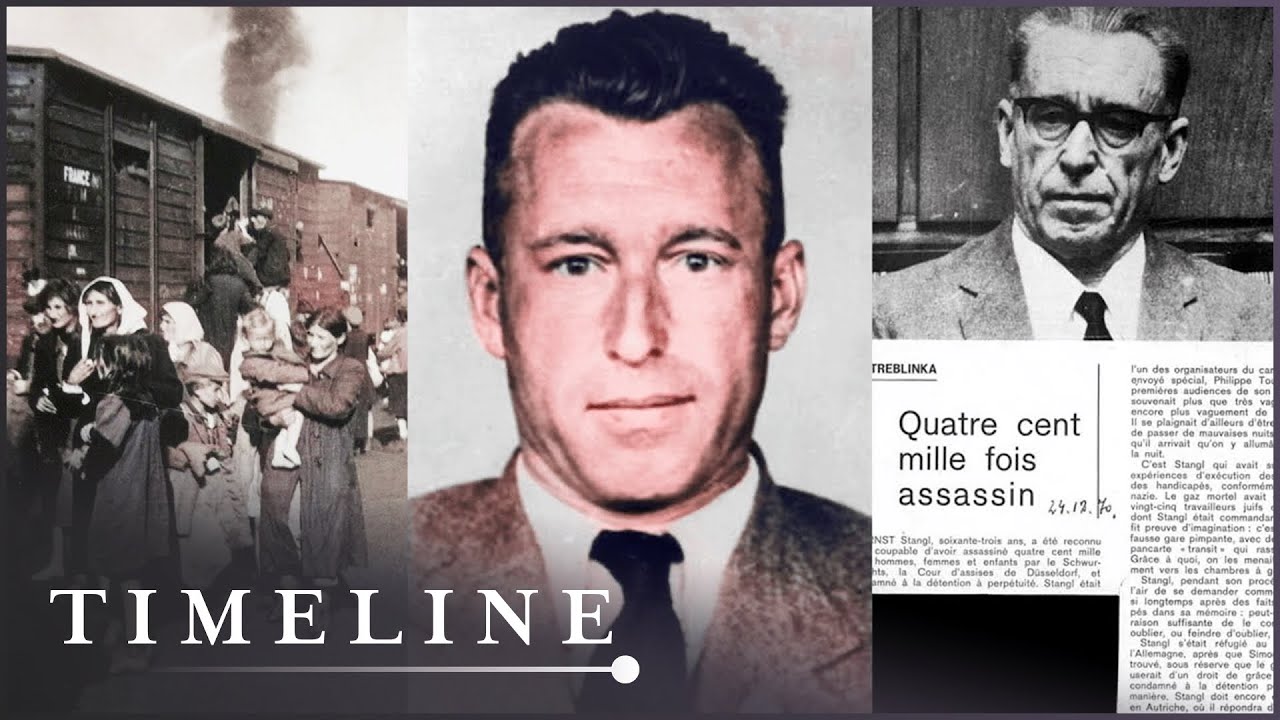
The hunt for Nazi war criminals has been a long and arduous process, with many escaping justice for decades. One such individual was Franz Stangl, a former Austrian police officer turned mass murderer responsible for the genocide of 800,000 people during World War II. The incredible hunt for Stangl, who fled to Brazil following the war, serves as a testament to the tireless efforts of Nazi hunters to bring war criminals to justice.
Stangl, a fervent believer in Hitler’s theories on race and Aryan superiority, joined the Nazi party and worked his way up the ranks. He proved to have a knack for mass murder and was eventually put in charge of three Polish extermination camps, where he oversaw the genocide of hundreds of thousands of people.
After the war ended, Stangl followed a well-worn ‘ratline’ to escape justice. He fled to Rome, where he assumed a false identity and worked for the Vatican for a brief period of time. From there, he made his way to Syria and eventually to Brazil, where he spent nearly two decades living in comfortable exile.
Despite the passage of time, Nazi hunters never gave up on the search for Stangl. In the 1960s, Simon Wiesenthal, a renowned Nazi hunter, received a tip that Stangl was living in Brazil. Wiesenthal passed this information along to the West German authorities, who began an investigation into Stangl’s whereabouts.
The investigation ultimately led to Stangl’s arrest in Brazil in 1967. He was extradited to West Germany, where he stood trial for his crimes. Stangl was found guilty of war crimes and crimes against humanity and was sentenced to life in prison.
The hunt for Stangl was a monumental undertaking, requiring cooperation between various governments and organizations. It was a testament to the dedication and perseverance of those who worked tirelessly to bring Nazi war criminals to justice.
Franz Stangl was born in 1908 in Austria and grew up in a small town called Altmünster. His father was a railway worker, and his mother was a homemaker. Stangl left school at the age of 14 and started working as a machinist apprentice. Later, he joined the Austrian police force, and his career as a law enforcement officer began.
In 1931, Stangl joined the Nazi party, believing in Hitler’s ideology of Aryan superiority. He quickly rose through the ranks, becoming a member of the Gestapo, the secret police of Nazi Germany. Stangl was known for his efficiency and dedication to the Nazi cause, and he quickly caught the attention of his superiors.
During World War II, Stangl was assigned to the T-4 program, which was responsible for the extermination of people with disabilities. In this program, Stangl worked as an administrator and was responsible for organizing the transportation of disabled individuals to the killing centers. He was later transferred to the euthanasia program in the occupied territories, where he worked as an inspector and was responsible for the killing of tens of thousands of people.
In 1942, Stangl was assigned to the Sobibor extermination camp in Poland, where he served as the commandant. He oversaw the killing of over 800,000 people, mostly Jews, in Sobibor and other extermination camps. Stangl was known for his brutality and indifference to the suffering of others.
Despite his crimes, Stangl managed to evade capture by Allied forces after the war. He fled to Italy and then to Syria, where he lived under a false name for several years. In 1951, Stangl managed to obtain a passport and fled to Brazil, where he lived for nearly two decades under the protection of the local government.
It wasn’t until 1967 that Stangl was finally arrested in Brazil and extradited to Germany to stand trial for his crimes. He was found guilty of multiple counts of murder and sentenced to life in prison. In 1971, Stangl died in prison of heart failure.
Stangl’s life is a stark reminder of the dangers of blind obedience to authority and the consequences of unchecked power. His involvement in the extermination of millions of people is a sobering reminder of the atrocities committed during the Holocaust, and serves as a warning against the rise of extremist ideologies.
Today, the legacy of Stangl and his crimes lives on as a reminder of the atrocities committed during World War II. The hunt for Nazi war criminals continues to this day, with efforts to bring those responsible for these heinous crimes to justice ongoing.
In conclusion, Franz Stangl was a former Austrian police officer who became a mass murderer responsible for the genocide of 800,000 people during World War II. His escape to Brazil following the war did not deter Nazi hunters, who continued to search for him for decades. The hunt for Stangl serves as a reminder of the atrocities committed during World War II and the ongoing efforts to bring Nazi war criminals to justice.