Categories
W1 World

From Fort to Palace: The Fall of Medieval Military Fortresses and the Rise of Regal Splendor

Introduction: From Battlefield to Fairytale

In the Middle Ages, castles loomed over the countryside as formidable military fortresses, centers of power, and homes to nobility. Built for defense and dominance, they were strategic strongholds that shaped the political and military landscapes of their time. Their towering walls and moats were not only barriers against invasion but symbols of authority and feudal control.

But as centuries passed, their thick walls and moats gave way to balconies, gardens, and banquets. Increasingly, castles transitioned into lavish residences that served more as symbols of authority and refinement than bastions of war. This transformation offers a window into the shifting currents of military technology, cultural ideals, and royal ambition.

Windsor Castle and the Royal Reinvention

One of the most striking examples of this shift is Windsor Castle during the reign of Edward III in the 14th century. Edward, a monarch steeped in chivalric ideals and a deep sense of royal prestige, initiated sweeping renovations that turned the fortress into a grand palace reflecting his imperial aspirations. At the heart of this transformation was the establishment of the Order of the Garter, Edward’s own revival of Arthurian legend. It brought together England’s most loyal and powerful knights in a circle modeled after the fabled Knights of the Round Table.

Windsor became more than a castle—it was a stage upon which the king dramatized his divine right to rule. The Garter ceremonies, held in St George’s Chapel, symbolized unity, loyalty, and the glamour of chivalry. These rituals helped elevate Edward’s image across Europe and left a lasting architectural and cultural legacy. The towered silhouette of Windsor no longer warned of incoming armies but stood as a proud emblem of royal continuity.

Warfare: Changing Tools, Changing Roles

The fading role of castles in warfare was also due to advancements in military technology. The arrival of gunpowder and cannon made even the thickest walls vulnerable. Siege warfare changed dramatically; traditional battlements and towers could no longer withstand prolonged bombardment. Cannons such as the French “Basilisk” or the Ottoman Empire’s famed bombards during the 1453 siege of Constantinople demonstrated the vulnerability of stone walls.

Castles began to lose their primary function as defensive structures. Instead, military priorities shifted to newer fortification designs such as star forts, which could better deflect artillery. As a result, many older castles were repurposed, abandoned, or rebuilt as elaborate homes reflecting Renaissance and Baroque ideals. Castles became showcases of heritage and wealth rather than frontline defenses.

Burg Eltz: Noble Identity Without the War

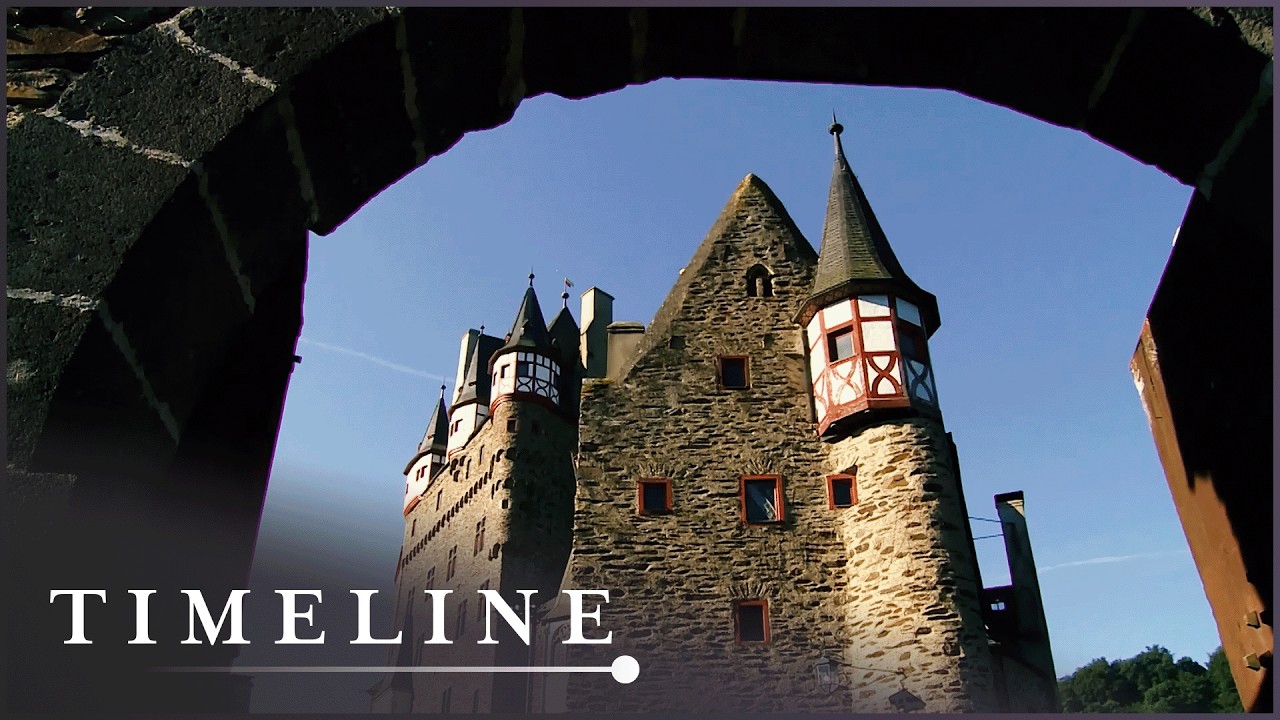
Burg Eltz in Germany illustrates a different aspect of this evolution. Nestled in the Moselle hills, this 15th-century stronghold is less about warfare and more about continuity and status. Remarkably untouched by conflict or decay, Burg Eltz survived because it adapted to changing times. Rather than being a garrison, it became a multigenerational home that balanced medieval design with increasing comfort.

Burg Eltz exemplifies how smaller noble families preserved their legacy without engaging in warfare. The castle’s elegant wooden balconies, intricate armory, and frescoed rooms speak to a period when appearance and symbolism mattered more than military readiness. The Eltz family maintained its independence through diplomacy and allegiance, allowing the castle to stand as a preserved monument to aristocratic life.

Loire Valley: Castles Become Grand Châteaux

Nowhere is the shift from fort to palace more visible than along the Loire Valley in France. By the 16th century, powerful nobles and royals commissioned opulent châteaux such as Chambord and Chenonceau—structures more akin to Renaissance palaces than medieval fortresses. They reflected ideals of leisure, proportion, and classical beauty, inspired by Italy’s flourishing art and architecture.

These châteaux were built not for war, but for entertainment, courtship, and artistic patronage. Wide staircases, decorative facades, and expansive gardens signaled a dramatic departure from defensive necessity. The Renaissance’s humanist values found a home in these buildings, where the celebration of intellect, beauty, and culture supplanted the grit of feudal struggle.

Chambord, with its iconic double helix staircase, is rumored to have been influenced by Leonardo da Vinci himself. The Loire châteaux became the blueprint for palaces across Europe, culminating in extravagant structures like Versailles. This trend represented a broader cultural pivot—royal and noble residences were now curated experiences, not military instruments.

Cardiff Castle and 19th-Century Gothic Revival

By the 19th century, the military function of castles was virtually obsolete, yet public fascination with them only grew. The Gothic Revival period saw a resurgence in castle building—not for defense, but for nostalgia, drama, and national pride. Cardiff Castle in Wales, extensively remodeled by the Marquess of Bute and architect William Burges, was transformed into a fantasy vision of the medieval past.

Richly decorated interiors, heraldic motifs, and whimsical towers gave Cardiff Castle an almost theatrical presence. This revival was part of a larger Victorian fascination with Gothic architecture, which found parallels in literature (such as Tennyson’s Arthurian poems) and historical fiction (like Sir Walter Scott’s Ivanhoe). These castles projected an idealized version of the Middle Ages, one that emphasized myth over history.

They also mirrored the British Empire’s self-image: powerful, ancient, and cultured. The medieval castle became a canvas for imperial identity and architectural storytelling.

Stone and Symbol: A Rich Legacy of Nostalgia

Though medieval castles have long since lost their role as military outposts, their cultural and architectural legacy continues to shape our world. Today, they serve as museums, tourist attractions, and filming locations, preserving a visual memory of power, romance, and resistance. The fantasy genre, from Game of Thrones to Harry Potter, has reinvigorated global fascination with castles, making them enduring icons of both history and imagination.

Their transformation from fortresses to palaces—and ultimately to symbols—reflects broader shifts in human society: from conflict to courtly life, from survival to splendor. The story of castles is not just about stone and steel; it’s about how civilizations evolve, repurpose their past, and enshrine their values in architecture that outlasts empires.

Why Castles Changed: Power, Prestige, Peace

So what truly caused the decline of the military fortress? The answer lies in a confluence of factors:

  • Advancements in warfare made stone walls ineffective.
  • Political centralization reduced the need for local lords to defend territory.
  • Economic growth allowed the elite to invest in luxury, not logistics.
  • Cultural movements like the Renaissance and Gothic Revival shifted architectural priorities toward beauty and symbolism.

Ultimately, castles changed because the world around them changed. Peace, prosperity, and progress allowed people to imagine a life beyond defense—a life of art, ideals, and architectural wonder.

Conclusion: Stones, Symbols, and Stories Past

Medieval castles may have lost their military relevance, but they gained something equally powerful—a lasting legacy as symbols of imagination, identity, and culture. From Edward III’s Arthurian vision at Windsor to the romantic daydream of Cardiff Castle, these fortresses evolved into stages for royal narratives and social aspiration.

Today, they survive not as outposts of war, but as monuments to history, where each stone tells a story—not just of battles fought, but of identities shaped, myths revived, and a world in transition. Their silent walls now echo with the legacy of changing empires, evolving tastes, and the enduring human desire to leave a mark on the landscape of time.

Categories
W1 World

Betrayal at Fort Hood: Ignored Warnings Before America’s Deadliest Military Base Shooting

Introduction: A Day of Unthinkable Tragedy and Betrayal

On November 5, 2009, Fort Hood—one of the largest and most important military installations in the United States—became the scene of unspeakable horror. Major Nidal Hasan, a U.S. Army psychiatrist, opened fire on his fellow soldiers in broad daylight, killing 13 and wounding more than 30 others. It was the deadliest mass shooting to ever occur on a U.S. military base.

But instead of acknowledging the attack as an act of terrorism fueled by radical ideology, government officials controversially labeled it “workplace violence.” Why was the truth downplayed? What institutional failures allowed a radicalized insider to plot and carry out a massacre without intervention? The answers reveal a sobering tale of ignored warnings, political sensitivity, and a tragic betrayal of trust.

The Killer: How Major Nidal Hasan Became Radicalized

Nidal Hasan was not an obscure figure quietly harboring dark ideas. He was an officer in the U.S. Army Medical Corps, entrusted with the mental health of soldiers returning from war. Yet, beneath the surface, Hasan was undergoing a dangerous transformation. Years before the shooting, Hasan began openly expressing extremist views, justifying suicide bombings and suggesting that Muslims in the military should be exempt from fighting fellow Muslims abroad.

His communications with radical cleric Anwar al-Awlaki, a known al-Qaeda figure based in Yemen, were intercepted by U.S. intelligence agencies. In these emails, Hasan asked questions about the religious justification for killing American soldiers. Although analysts flagged the messages as deeply concerning, higher-ups dismissed them, concluding they fell within the bounds of academic research. Meanwhile, Hasan’s behavior at Walter Reed Medical Center and later at Fort Hood continued to deteriorate, raising multiple red flags that were consistently ignored.

How the FBI and Army Failed to Stop a Known Threat

The Fort Hood shooting was not a surprise attack from a faceless enemy—it was a preventable disaster. Investigations after the massacre revealed a disturbing pattern of negligence across multiple agencies:

  • Intercepted Emails: The FBI was fully aware of Hasan’s email exchanges with Anwar al-Awlaki months before the shooting. Analysts who reviewed them expressed alarm, yet the case was dropped to avoid potential accusations of profiling or religious discrimination.
  • Disturbing Behavior Reports: Hasan’s colleagues and supervisors repeatedly warned about his radical views. He gave PowerPoint presentations framing the War on Terror as a war against Islam and described suicide bombers as “heroes.” Instead of reprimanding him, the Army quietly promoted him.
  • Cultural Sensitivities: The military leadership, worried about appearing intolerant toward Muslim soldiers, chose caution over confrontation. This environment of political correctness ultimately paralyzed the system that was supposed to safeguard service members.

The failure to act decisively, despite glaring evidence, allowed a self-radicalized soldier to remain armed, in uniform, and poised to kill.

The Attack: Unleashing Horror at the Heart of Fort Hood

On that tragic afternoon, Major Hasan entered the Soldier Readiness Processing Center—where troops were preparing for deployment—with a handgun in each hand. Shouting “Allahu Akbar!” he unleashed a brutal and calculated assault, firing more than 200 rounds in just minutes. Soldiers, most of them unarmed, scrambled for safety as the processing center, once a hub of energy and camaraderie, transformed into a battlefield soaked with blood.

Civilian police officer Kimberly Munley responded quickly, bravely confronting Hasan in a shootout, but she was critically wounded. It was Sgt. Mark Todd who ultimately managed to subdue Hasan, shooting him and ending the rampage. Hasan survived his wounds but was paralyzed from the waist down.

The human toll was devastating: 13 men and women lost their lives, including a pregnant soldier, and over 30 others suffered life-altering injuries. Families across America were shattered in the aftermath.

Government Denial, Survivor Betrayal, and Political Spin

In the aftermath of the shooting, many survivors faced not only their physical and emotional scars but also a battle for recognition. Initially labeled as “workplace violence” rather than terrorism, the attack denied victims the honors and benefits typically granted to those wounded in combat.

Survivors struggled with PTSD, financial hardship, and bureaucratic indifference. It wasn’t until years later—after mounting public outrage—that Congress passed legislation awarding Purple Hearts and extended benefits. For many, however, the long wait for justice only deepened their wounds. The lack of immediate recognition left many survivors feeling abandoned by the very system they had served.

Why It Was Labeled “Workplace Violence” Instead of Terrorism

Despite clear ideological motives, including Hasan’s own admission that he was acting to protect Taliban fighters in Afghanistan, the U.S. government labeled the attack “workplace violence.” This classification denied the victims the recognition and benefits usually granted to combat casualties or victims of terrorist attacks.

The decision, seen by many as politically motivated, sparked outrage. Critics argued that officials were more concerned with preserving the image of political correctness and avoiding stoking anti-Muslim sentiment than with telling the truth. Survivors and the families of the slain were left not only to grieve but also to fight for basic acknowledgment of the reality they had endured.

Survivors’ Long Battle for Recognition, Purple Hearts, Justice

The wounded soldiers faced a painful recovery—physically, emotionally, and financially. Many could not return to active duty and struggled to get the treatment and support they deserved. Worse, the designation of the attack as workplace violence denied them critical military honors, such as the Purple Heart, and the associated benefits, including medical coverage and compensation.

Led by voices like Sgt. Alonzo Lunsford, who survived seven gunshot wounds, survivors mounted a determined public and legal campaign for justice. It took nearly six years, but finally in 2015, Congress passed legislation reclassifying the attack as terrorism, granting Purple Hearts and full benefits to the victims. However, the years-long delay added insult to injury, deepening the survivors’ sense of betrayal by the very institution they had served.

How Political Sensitivities Undermined National Security

The Fort Hood massacre revealed how paralyzing fear of political backlash and accusations of discrimination can undermine national security. Both the FBI and Department of Defense had abundant evidence that Hasan posed a real and growing threat but chose to do nothing substantial.

A 2011 Senate Homeland Security Committee report concluded bluntly that the attack was “preventable.” It criticized a culture of bureaucratic paralysis where warning signs were ignored and difficult conversations about religious extremism were avoided for fear of controversy.

The report was a damning indictment of systemic failure—a clear warning that national security cannot be sacrificed on the altar of political correctness without grave consequences.

Conclusion: Preventing Future Betrayals Inside the Ranks

The tragedy of Fort Hood stands as a dark milestone in American history—a painful reminder that the threats facing the nation are not always from foreign enemies abroad, but sometimes from radicalized insiders within. Safeguarding military and civilian lives requires vigilance, honesty, and the courage to confront uncomfortable realities.

Institutions must prioritize security over political optics, ensuring that credible threats are taken seriously regardless of background, religion, or race. Ultimately, honoring the fallen of Fort Hood means learning from the mistakes that led to their deaths—and vowing never to let fear of offense outweigh the duty to protect. The Fort Hood tragedy remains a stark reminder of the devastating cost of ignored warnings and political denial.

Categories
W1 World

Fort Sumter: The Provocative Prelude that Ignited the American Civil War

The origins of the American Civil War are deeply rooted in the nation’s complex and contentious history, with the bombardment of Fort Sumter serving as the catalytic event that ignited the conflict. This flashpoint, which marked the beginning of the most bitter and bloody period in American history, was not an isolated incident but the culmination of escalating tensions between the North and the South. These tensions were driven by profound differences in economic interests, political ideologies, and social structures, particularly around the issue of slavery. The events leading up to the bombardment of Fort Sumter reveal the intricate web of causes that ultimately led to war.

The Antebellum Tensions

In the decades leading up to the Civil War, the United States experienced significant growth and change. The industrial revolution transformed the Northern economy, which became increasingly diverse and industrialized. In contrast, the Southern economy remained predominantly agrarian, heavily dependent on the labor of enslaved African Americans to sustain its agricultural production, particularly of cotton.

Slavery was the central point of contention. The North, where abolitionist sentiment was growing, pushed for the containment and eventual eradication of slavery. Meanwhile, the South sought to protect and expand the institution to new territories and states. The Missouri Compromise of 1820 and the Compromise of 1850 were temporary measures that attempted to maintain a balance between slave and free states, but they did little to resolve the underlying conflicts.

The Road to Secession

The 1850s were marked by increasing sectional strife. The Kansas-Nebraska Act of 1854, which allowed territories to decide the issue of slavery through popular sovereignty, led to violent conflicts known as “Bleeding Kansas.” The Dred Scott decision of 1857 by the Supreme Court further polarized the nation by ruling that African Americans could not be citizens and that Congress had no authority to prohibit slavery in the territories.

The election of Abraham Lincoln in 1860 was the final straw for many in the South. Lincoln’s Republican Party was founded on the principle of halting the expansion of slavery. Although Lincoln repeatedly stated that he had no intention to abolish slavery where it already existed, Southern states perceived his election as an existential threat to their way of life. South Carolina was the first to secede on December 20, 1860, followed by six other states: Mississippi, Florida, Alabama, Georgia, Louisiana, and Texas.

The Fort Sumter Crisis

Fort Sumter, located in Charleston Harbor, South Carolina, became the focal point of the secession crisis. As a federal fort in a seceded state, it was a symbol of federal authority that the Confederacy sought to eliminate. Major Robert Anderson, a Union officer, commanded the fort, but his position was increasingly precarious as supplies dwindled and Confederate forces surrounded the fort.

President James Buchanan, in his final months in office, took a passive approach, hoping to avoid conflict. However, when Lincoln took office on March 4, 1861, he faced an immediate crisis. Lincoln was determined to maintain federal authority without provoking war. He informed South Carolina authorities of his intent to resupply the fort, emphasizing that the mission was peaceful.

The Bombardment Begins

Confederate leaders, led by President Jefferson Davis, faced a dilemma. Allowing the resupply would undermine their sovereignty claims, but attacking the fort could provoke a war. On April 12, 1861, after failed negotiations, Confederate forces under General P.G.T. Beauregard opened fire on Fort Sumter. The bombardment lasted for 34 hours, with over 3,000 shells fired at the fort. Major Anderson and his men, outgunned and outnumbered, eventually surrendered on April 14. Remarkably, there were no casualties during the bombardment, though two Union soldiers died during the subsequent evacuation.

Aftermath and Outbreak of War

The fall of Fort Sumter galvanized the North. Lincoln called for 75,000 volunteers to suppress the rebellion, leading to an outpouring of support in the Union states. The call for troops, however, prompted four more states—Virginia, Arkansas, Tennessee, and North Carolina—to join the Confederacy, completing the secession.

The bombardment of Fort Sumter marked the official start of the Civil War, but it was more than a military engagement; it symbolized the irreconcilable differences between the North and South. The event crystallized the nation’s division, making war inevitable.

Legacy and Significance

The bombardment of Fort Sumter is remembered not just as the opening battle of the Civil War but as a symbol of the deep-seated divisions within the United States. It underscored the failure of political compromise and highlighted the profound moral and ideological rifts over slavery and states’ rights.

The Civil War that followed would become the deadliest conflict in American history, leading to the end of slavery and significant social and political transformations. The events at Fort Sumter remind us of the complex causes of war and the devastating consequences of a nation divided.

In conclusion, the bombardment of Fort Sumter was the spark that ignited the American Civil War, but the fire had been smoldering for decades. The episode encapsulates the culmination of escalating tensions over slavery, state sovereignty, and national unity, reflecting a nation on the brink of transformation.

In reflecting on Fort Sumter’s bombardment, we gain insights into the perils of unresolved conflicts and the profound impact of leadership decisions during crises. The legacy of this pivotal event continues to shape America’s ongoing struggle for unity and justice.

Categories
W7 World

Uncovering the Mysteries of Caerau Hillfort: Exploring Ancient Hill Settlement in Cardiff

Introduction

The Caerau Hillfort is a remarkable archaeological site that sheds light on the ancient history of Cardiff. Located in the western outskirts of Cardiff, Wales, this is an important archaeological site that has been yielding valuable information about the Iron Age and Roman period in the region. The hillfort dates back to the Iron Age, around 600 BC, and was occupied until the Roman conquest of Britain in AD 43. Excavations at the site, which began in 2012, have unearthed a wealth of artefacts and structures, shedding light on the lives of the people who inhabited the area over two millennia ago.

Unearthing of the Caerau Hillfort: An Overview

The Caerau Hillfort is an ancient hill settlement located in Cardiff, Wales. The site has been subject to a series of excavations and research since 2013, revealing a fascinating insight into the history of the area. The site is believed to have been inhabited during the Iron Age, and the discoveries made at the site have provided a valuable glimpse into the daily lives of the people who lived there.

The excavations have uncovered evidence of dwellings, fortifications, and various artifacts, including pottery and metalwork. The site has become a popular destination for archaeologists and history enthusiasts, offering a unique opportunity to explore the rich history of the region. In addition to revealing the ancient history of the Caerau Hillfort, the excavation project has also provided a unique opportunity for the local community to engage with their heritage.

The project has involved local volunteers, school children, and community groups, allowing them to learn about the site’s rich history and contribute to its preservation. This collaborative effort between archaeologists and the community has not only uncovered fascinating artifacts but also fostered a sense of pride and connection to the area’s past.

Discovery of the Caerau Hillfort

The existence of Caerau Hillfort was known to locals for decades, but it was not until 2010 that archaeologists from Cardiff University conducted a geophysical survey of the area and found evidence of an extensive Iron Age settlement. Excavations at the site began in 2012, and since then, a team of archaeologists, students, and volunteers have been working to uncover the mysteries of this ancient hillfort.

The Layout of the Hillfort

Caerau Hillfort is situated on top of a hill, providing a commanding view of the surrounding area. The fortifications of the hillfort include a series of ramparts and ditches, built in the Iron Age and later modified during the Roman period. The hillfort is also divided into several distinct areas, including a central enclosure and a series of terraces and platforms, which were likely used for housing, storage, and other activities.

Artefacts and Structures

Excavations at Caerau Hillfort have unearthed a wide range of artefacts and structures, providing valuable insights into the lives of the people who lived there. One of the most significant finds was a Roman villa, which was built on the site in the 2nd century AD. The villa had a central courtyard, surrounded by a series of rooms, and was likely used as a residence for the Roman governor or other high-ranking officials.

Other artefacts found at the site include pottery, coins, metalwork, and jewellery, which provide evidence of the trade networks and artistic skills of the inhabitants. Structures such as roundhouses, granaries, and workshops have also been uncovered, giving a glimpse into the daily lives of the people who lived at the hillfort.

Community Involvement

One of the most notable aspects of the Caerau Hillfort project is the extensive involvement of the local community. The excavation project was designed to be inclusive, with a focus on engaging with the local community and providing opportunities for people to participate in the project. Volunteers from the local area, including schoolchildren, have been involved in every aspect of the excavation, from digging and processing artefacts to creating interpretive displays and conducting tours of the site.

The Future and Legacy of Caerau Hillfort

Excavations at Caerau Hillfort are ongoing, and the project has already yielded a wealth of new information about the history of the area. The project has also served as a model for community-based archaeology, demonstrating the importance of engaging with local communities and providing opportunities for people to participate in the excavation and interpretation of archaeological sites.

The continued study of Caerau Hillfort is crucial to further our understanding of the Iron Age and Roman period in Wales and to provide a better understanding of the lives of the people who inhabited the area over two thousand years ago. With ongoing community involvement and continued excavations, there is no doubt that Caerau Hillfort will continue to yield new discoveries and reveal the secrets of the past.

Conclusion

The excavations carried out by the community-led project have revealed the fascinating remains of an Iron Age hill settlement and provided insights into the way of life of the people who lived there over 2,000 years ago. The discovery of the Roman coins suggests that the site may have had a significant role to play in the region’s history, and further research and excavation could reveal even more valuable information. The project’s success also highlights the importance of community involvement in archaeological research and the power of local initiatives to uncover hidden treasures and preserve our cultural heritage.

Categories
W7 World

Discovering Roman Treasures: Exploring the River Tees and its Roman Past

Introduction

The River Tees, which flows through northern England, is home to some of the most fascinating archaeological discoveries from the Roman era. In recent years, local divers have uncovered more than 2,000 high-quality Roman finds in this stretch of the river. This area is particularly interesting because it passes by one of the most impressive Roman forts in northern Britain. Over the course of three days, archaeologists cast their net far and wide, investigating the buildings, roads, and structures around this strategic crossing.

The History of River Tees and the Romans: An Overview

The River Tees has been an important transportation route since prehistoric times. The Romans recognized its strategic importance and built a series of forts along its banks to protect the northern frontier of their empire. The Roman fort at Piercebridge, located on the north bank of the River Tees, was built in the 1st century AD and was one of the largest forts in the region. It served as a base for the Roman army until the end of the 4th century AD.

The River Tees has played an important role in the history of northern England. It was a significant transportation route for goods and people, and it was also strategically important for military purposes. The Romans recognized the importance of the River Tees and established several forts and settlements along its banks.

The Roman Empire first invaded Britain in AD 43, and by AD 70, they had established a major military presence in the north of England. They built forts and roads, and the River Tees was an important transportation route for supplies and soldiers. One of the most significant Roman forts in northern Britain was located at Piercebridge, just a few miles upstream from where the recent discoveries were made.

The Romans remained in control of Britain for almost 400 years, and during this time, they left a lasting impact on the landscape and culture of the country. The River Tees was just one of many areas where their influence can still be seen today. The recent discoveries made by local divers are a testament to the enduring legacy of the Romans in this part of the world.

The Roman Finds in the River Tees

Local divers have made a series of amazing discoveries in the River Tees over the past few years. They have found everything from pottery to coins to jewelry, all dating back to the Roman era. The artifacts are of high quality and offer a glimpse into the lives of the Romans who lived and worked in this area more than 1,500 years ago.

Some of the most significant finds include a Roman cavalry helmet, which is believed to date back to the 2nd or 3rd century AD. This helmet is unique in that it was found intact, with its cheek pieces and neck guard still in place. Other important discoveries include a number of Roman coins, pottery fragments, and a silver ring with a unique design.

Exploring the Roman Fort at Piercebridge

One of the most impressive Roman forts in northern Britain, Piercebridge Fort, is located on the north bank of the River Tees. The fort was built in the 1st century AD and was used by the Roman army until the end of the 4th century AD. The fort is situated on a strategic crossing point on the River Tees, which made it an important base for the Roman army.

The fort was constructed using stone and timber, and consisted of a series of buildings and defensive walls. The remains of the fort can still be seen today, including the remains of a bathhouse and a granary. Visitors can also see the remains of the fort’s defensive walls and the gateway, which is believed to have been the main entrance to the fort.

The Impact of Roman Finds on the Local Community

The discovery of these Roman artifacts has had a significant impact on the local community. It has helped to raise awareness of the area’s rich history and has attracted tourists from all over the world. The artifacts are also an important educational resource and have been used to teach local school children about the Roman era.

In addition, the discovery of these artifacts has helped to shed new light on the lives of the Romans who lived and worked in this area. It has helped historians and archaeologists to better understand the Roman occupation of northern Britain and the daily lives of the soldiers and civilians who lived here.

Conclusion

The River Tees and the surrounding area are rich in Roman history and offer a fascinating glimpse into life in northern Britain more than 1,500 years ago. The recent discoveries made by local divers and archaeologists have helped to shed new light on this important period in history and have made a significant contribution to our understanding of the Roman occupation of northern Britain.