Categories
P1 People UN

Hillary Clinton’s Speech at the 4th World Conference on Women: A Landmark in Gender Equality

Introduction

On September 5, 1995, then First Lady of the United States, Hillary Rodham Clinton, delivered a speech at the United Nations’ Fourth World Conference on Women in Beijing, China. The conference, attended by representatives from 189 countries, marked a significant moment in the global discourse on gender equality. Clinton’s declaration that “women’s rights are human rights” became a defining statement that galvanized the international community and significantly advanced the cause of women’s rights worldwide. Her words resonated across borders, becoming a catalyst for global activism and legislative change. The speech also highlighted the urgent need to address the systemic barriers that continued to oppress women in all aspects of life.

Background: The Road to Beijing

The Fourth World Conference on Women was not an isolated event but rather the culmination of decades of activism and international efforts to address gender inequality. The first World Conference on Women was held in Mexico City in 1975, followed by conferences in Copenhagen (1980) and Nairobi (1985). These gatherings were instrumental in putting women’s issues on the global agenda, leading to the establishment of the United Nations Decade for Women (1976-1985).

The 1995 conference in Beijing built upon these earlier efforts, but it came at a time when the world was witnessing significant changes. The end of the Cold War, the rise of globalization, and the growing recognition of human rights as a universal principle created an environment ripe for advancing gender equality. The conference’s ambitious goal was to assess progress made since the previous conferences, address ongoing challenges, and create a comprehensive platform for action to advance women’s rights globally.

Hillary Clinton’s Address: “Women’s Rights Are Human Rights”

Hillary Clinton’s address at the Beijing conference was both a reflection of her longstanding commitment to women’s rights and a powerful call to action. She began by acknowledging the diverse experiences of women around the world, from those living in poverty to those suffering under oppressive regimes. Clinton’s speech was notable for its explicit condemnation of the various forms of violence and discrimination faced by women, including domestic abuse, forced labor, and the denial of reproductive rights.

The most memorable and impactful moment of her address came when she declared, “If there is one message that echoes forth from this conference, let it be that human rights are women’s rights, and women’s rights are human rights, once and for all.” This statement was a bold assertion that the rights of women were not separate from, but integral to, the broader human rights agenda.

Clinton’s words resonated deeply because they articulated a truth that had long been recognized but not fully embraced by the international community. By framing women’s rights as human rights, she was challenging governments and institutions to confront gender inequality not as a marginal issue but as a fundamental human rights concern.

The Global Impact of the Beijing Conference

The Beijing Conference was a turning point in the global movement for gender equality. The conference produced the Beijing Declaration and Platform for Action, a comprehensive agenda for advancing women’s rights that included commitments to address issues such as poverty, education, health care, violence against women, and political participation. The Platform for Action was groundbreaking in its scope and ambition, setting out 12 critical areas of concern and calling for governments, NGOs, and international organizations to take concrete steps towards achieving gender equality.

The impact of Clinton’s speech was immediate and far-reaching. Her words became a rallying cry for women’s rights activists around the world, inspiring movements and campaigns that sought to hold governments accountable to the commitments made in Beijing. In the years following the conference, many countries enacted laws and policies aimed at improving the status of women, from anti-discrimination legislation to initiatives promoting women’s education and economic empowerment.

A Broader Perspective: The Continuing Struggle for Gender Equality

While the Beijing Conference and Clinton’s address were landmark moments, the struggle for gender equality is far from over. The progress made since 1995 has been significant, but it has also been uneven and, in many cases, fragile. Women continue to face discrimination and violence in many parts of the world, and gender inequality persists in areas such as political representation, economic opportunity, and access to education and healthcare.

Moreover, the backlash against gender equality, often rooted in cultural and religious conservatism, has been a persistent challenge. In some countries, there have been efforts to roll back the gains made since Beijing, with governments and political movements pushing for policies that restrict women’s rights, particularly in areas such as reproductive health and family law.

In this context, the message that “women’s rights are human rights” remains as relevant as ever. It serves as a reminder that the fight for gender equality is not just about improving the lives of women but about ensuring that all people are treated with dignity and respect. The continued relevance of Clinton’s words is evident in the ongoing work of organizations like UN Women, which was established in 2010 to accelerate progress on gender equality, and in the global feminist movements that continue to advocate for women’s rights in all their diversity.

The Legacy of Hillary Clinton’s Address

Hillary Clinton’s address at the Fourth World Conference on Women in Beijing was a defining moment in the global struggle for gender equality. By declaring that “women’s rights are human rights,” she articulated a vision of a world where women’s rights are recognized as an essential part of the human rights framework. Her speech helped to galvanize a global movement that has made significant strides in advancing women’s rights, even as challenges remain.

Conclusion

As we reflect on the legacy of the Beijing Conference nearly three decades later, it is clear that the message of gender equality is as urgent today as it was in 1995. The fight for women’s rights continues, driven by the same spirit of determination and resilience that brought delegates from 189 countries to Beijing. In this ongoing struggle, Hillary Clinton’s words serve as both a reminder of how far we have come and a call to action for the work that still lies ahead.

Categories
P1 People UN

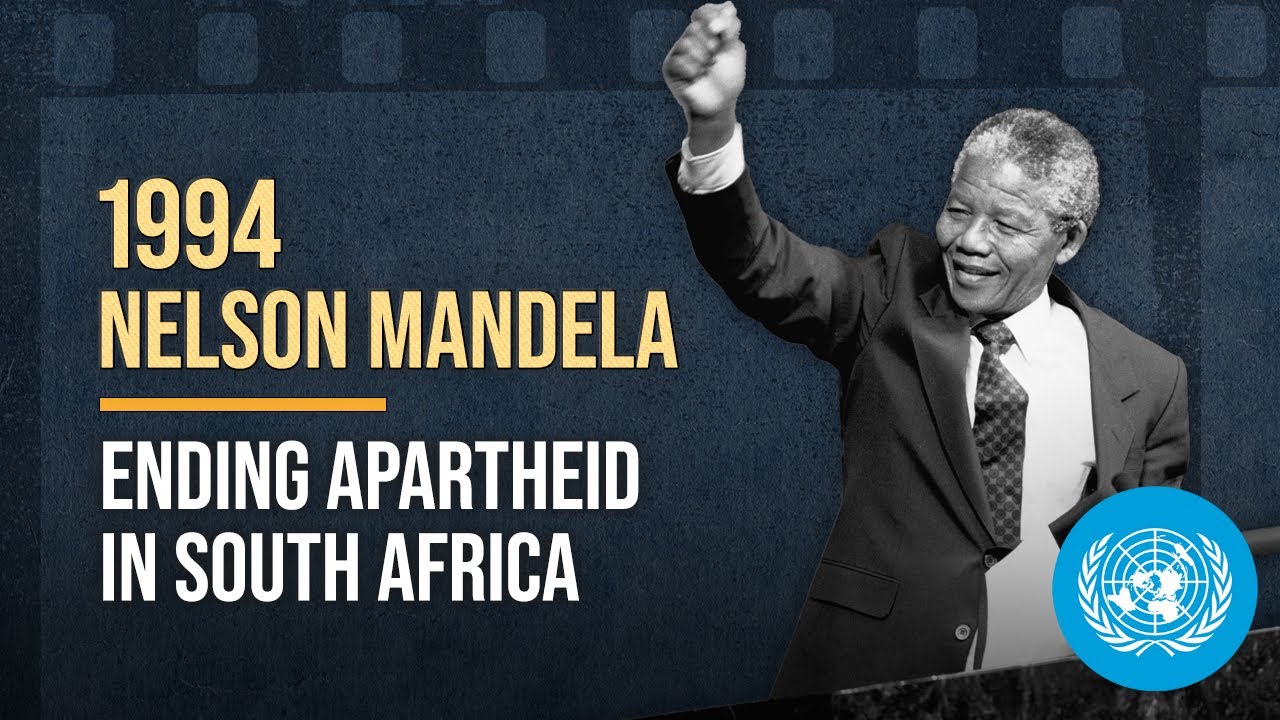
Nelson Mandela’s Historic First Address to the UN General Assembly as President of South Africa

Introduction

On October 3, 1994, Nelson Mandela stood before the United Nations General Assembly to deliver his first address as the President of South Africa. This moment was not just a milestone for Mandela and his nation, but a profound historical event for the entire world. It symbolized the victory of justice and equality over the brutal system of apartheid that had oppressed millions of South Africans for decades. Mandela’s speech conveyed a message of hope, reconciliation, and a call for continued international solidarity in building a new, democratic South Africa.

The Long Journey to Freedom

Nelson Mandela’s path to the presidency was a journey marked by immense struggle, sacrifice, and unyielding determination. Born in 1918 in the rural village of Mvezo in the Eastern Cape, Mandela was deeply influenced by the African nationalist movements of his youth. He joined the African National Congress (ANC) in 1944, becoming actively involved in the resistance against the oppressive apartheid regime that institutionalized racial segregation and discrimination.

Mandela’s activism led to numerous arrests and trials. In 1962, he was arrested and later sentenced to life imprisonment for his role in planning acts of sabotage against the apartheid government. Mandela spent 27 years in prison, primarily on Robben Island, where he endured harsh conditions and forced labor. Despite these hardships, he remained a symbol of hope and resilience, both within South Africa and globally.

During his imprisonment, the anti-apartheid movement gained momentum internationally. Countries around the world imposed economic sanctions and cultural boycotts against South Africa, and the United Nations condemned the apartheid regime. The global campaign for Mandela’s release became a powerful force, drawing attention to the injustices of apartheid and pressuring the South African government to initiate reforms.

In 1990, President F.W. de Klerk, under increasing internal and external pressure, announced Mandela’s release. This pivotal moment set the stage for negotiations to end apartheid. These negotiations culminated in the first multiracial elections in April 1994, in which the ANC won a decisive victory, and Nelson Mandela was inaugurated as South Africa’s first black president on May 10, 1994.

Mandela’s Address to the UN General Assembly

Nelson Mandela’s address to the UN General Assembly on October 3, 1994, was a momentous occasion, not only for South Africa but for the entire world. Standing before representatives from nations across the globe, Mandela expressed deep gratitude for the international support that had been crucial in the fight against apartheid. He acknowledged the United Nations and its member states for their unwavering solidarity and efforts in isolating the apartheid regime, which played a significant role in its eventual downfall.

Mandela’s speech was imbued with a sense of profound humility and appreciation. He recognized that the struggle against apartheid had been a collective effort, involving countless individuals and organizations worldwide who had stood in solidarity with the oppressed people of South Africa. This international support had been instrumental in bringing about the end of apartheid and paving the way for a democratic South Africa.

In his address, Mandela also articulated his vision for the future of South Africa. He emphasized the importance of reconciliation and nation-building, highlighting the need to heal the deep wounds inflicted by decades of racial discrimination and violence. Mandela spoke of the new South Africa as a nation committed to the principles of equality, justice, and human rights. He envisioned a society where all citizens, regardless of their race or background, could live in peace, dignity, and prosperity.

Furthermore, Mandela called on the international community to continue its support for South Africa during its transition. He stressed the urgent need for economic assistance, investment, and cooperation to address the legacies of apartheid, such as poverty, inequality, and underdevelopment. Mandela’s appeal was not just for South Africa, but for a broader global commitment to supporting developing nations in their pursuit of growth and stability.

The Global Impact of Mandela’s Speech

Mandela’s address to the UN General Assembly resonated deeply with audiences around the world. It was hailed as a powerful statement of hope, resilience, and the triumph of human dignity over oppression. The speech reinforced South Africa’s commitment to democracy and human rights, reassuring the international community that the country was on a path of peaceful transformation and inclusive nation-building.

Mandela’s words underscored the ongoing challenges facing South Africa. The legacy of apartheid had left deep scars on the nation’s social and economic fabric. The road to full recovery would be long and fraught with difficulties. Mandela’s call for continued international support highlighted the need for sustained efforts to address the structural inequalities and injustices that persisted in the post-apartheid era.

The address also had a significant impact on South Africa’s standing in the international community. Mandela’s leadership and vision inspired confidence in South Africa’s ability to overcome its troubled past and build a brighter future. His speech served as a reminder of the potential for positive change when people unite in the pursuit of a just cause.

Reflections on Mandela’s Legacy

Nelson Mandela’s first address to the UN General Assembly as President of South Africa remains a defining moment in the history of the struggle for human rights and equality. It was a powerful affirmation of the international community’s role in supporting the fight against apartheid and a call to action for continued solidarity and cooperation in building a democratic and equitable society in South Africa.

Mandela’s speech is a timeless testament to the enduring values of freedom, equality, and human rights. It serves as an inspiration to all who strive for a better world and a reminder that, even in the face of seemingly insurmountable challenges, the spirit of humanity can prevail. His vision of a united and prosperous South Africa continues to guide the nation as it navigates the complexities of its post-apartheid journey.

Conclusion

Nelson Mandela’s first address to the UN General Assembly as President of South Africa was more than just a speech; it was a beacon of hope and a call to action. It marked the beginning of a new chapter in South Africa’s history, one defined by reconciliation, nation-building, and a steadfast commitment to the principles of justice and human dignity. As the world continues to face challenges of inequality and injustice, Mandela’s words remain a powerful reminder of the transformative power of unity, resilience, and the enduring quest for freedom.